Destinations / Europe
Aarhus, Denmark travel guide
Denmark's second city: a rainbow-roofed art museum, Viking history and Scandinavia's easiest hygge.
- Best time to visit: May-September
- Daily budget (budget traveller): $130 to $260 USD
- Ideal trip length: 3 days
Aarhus is Copenhagen without the crowds or the prices. The ARoS art museum wears a rainbow panorama on its roof, Den Gamle By reassembles four centuries of Danish town life street by street, and the Latin Quarter's cobbled lanes are packed with cafés and design shops. A huge student population keeps it young, the harbour bath and forest beaches are minutes from the centre, and everything is walkable. Joy Plus balances museums, coastline and café hours in a compact loop.
Aarhus is the Danish city you visit when you want Copenhagen's design brain without Copenhagen's queues or its bill. It is small enough that you walk almost everywhere, yet it carries a major art museum, one of Europe's best open-air history museums and a Michelin-listed dining scene. Around 50,000 students keep the cafés loud, the bars cheap by Danish standards and the bike lanes busy before 8am.
The big sights are a handful of very different experiences. ARoS puts a glowing rainbow circle on its roof. Den Gamle By rebuilds Danish towns of 1864, 1927 and 1974 down to the smell of the bakery. Moesgaard, a grass-roofed museum out in the forest, keeps the Grauballe Man, a 2,000-year-old bog body whose hair and fingerprints survive. Between them are the Latin Quarter's cobbled lanes, the sea-water pools at the Aarhus Ø harbour bath, and Marselisborg's forest and beaches, 15 minutes south of the centre.
The trick is rhythm. Danes eat lunch at noon, shops close early, museums shut on Mondays (ARoS and Moesgaard both do outside peak season), and daylight swings from 17 hours in June to 7 in December. Plan one museum per morning, spend afternoons by the water, and use the AarhusCARD if you are doing three attractions. A full week works if you add day trips to Silkeborg and Ebeltoft. Three days is enough if you want the greatest hits.
How many days in Aarhus?
For Aarhus, we recommend 3 days. With more time, add a day trip to Billund.
| Trip length | What you'll see | Itinerary |
|---|---|---|
| 2 days | Latin Quarter and the cathedral; ARoS and the waterfront | Aarhus in 2 days |
| 3 days · Recommended | Adds: Den Gamle By and Godsbanen | Aarhus in 3 days |
| 4 days | Adds: Moesgaard and Marselisborg | Aarhus in 4 days |
| 5 days | Adds: Silkeborg day trip | Aarhus in 5 days |
| 7 days | Adds: Ebeltoft and Mols Bjerge; Møllestien, last coffee | Aarhus in 7 days |
Aarhus itinerary
Arrive, Latin Quarter and the cathedral
Morning: Train or airport bus to Aarhus H and drop bags. Coffee and a cardamom bun at La Cabra on Åboulevarden.
Afternoon: Walk Åboulevarden to Aarhus Domkirke, Denmark's longest church, then wander the Latin Quarter, Skolegyde and Volden.
Evening: Lunch-style dinner at Aarhus Street Food on Ny Banegårdsgade. Pints at Fatter Eskil on Skolegyde, or a gig at Ris Ras Filliongongong on Mejlgade.
ARoS and the waterfront
Morning: ARoS opens at 10 (closed Mondays). Go straight up to Your Rainbow Panorama before the groups, then work down to Ron Mueck's giant Boy.
Afternoon: Lunch on Åboulevarden, then walk to Dokk1, the waterfront library. Check the gong that rings for every birth.
Evening: Walk to Aarhus Ø. Sunset by the Iceberg buildings, dinner at one of the harbour restaurants.
Den Gamle By and Godsbanen
Morning: Den Gamle By at 10. Start in the 1864 quarter, then jump to the 1927 and 1974 streets. Coffee at Simonsens Have.
Afternoon: Walk to Godsbanen for the rooftop and creative workshops, then wander Frederiksbjerg.
Evening: Dinner on Jægergårdsgade. Natural wine, small plates, early night.
Moesgaard and Marselisborg
Morning: Bus 18 from Aarhus H to Moesgaard (about 25 min). See the Grauballe Man and the Viking and Iron Age rooms. Walk the green roof.
Afternoon: Follow the Prehistoric Trail through the forest to Moesgaard beach. Swim if it's summer.
Evening: Bus back, then dinner at Frederikshøj if you want a splurge, or a pizza by the harbour.
Silkeborg day trip
Morning: Direct train to Silkeborg (about 1 hour). Visit Museum Silkeborg and the Tollund Man, the other great bog body.
Afternoon: Take the Hjejlen paddle steamer on Silkeborg Langsø (May to September), and visit Museum Jorn.
Evening: Train back, easy dinner near your hotel.
Ebeltoft and Mols Bjerge
Morning: Bus 123 to Ebeltoft (about 1h15). Walk the cobbled old town and visit Fregatten Jylland, the long wooden warship.
Afternoon: Lunch in town, then a short coastal hike in Mols Bjerge National Park if the weather holds.
Evening: Bus back to Aarhus. Drinks at Bryggeriet Sct. Clemens or a Voxhall gig.
Møllestien, last coffee, depart
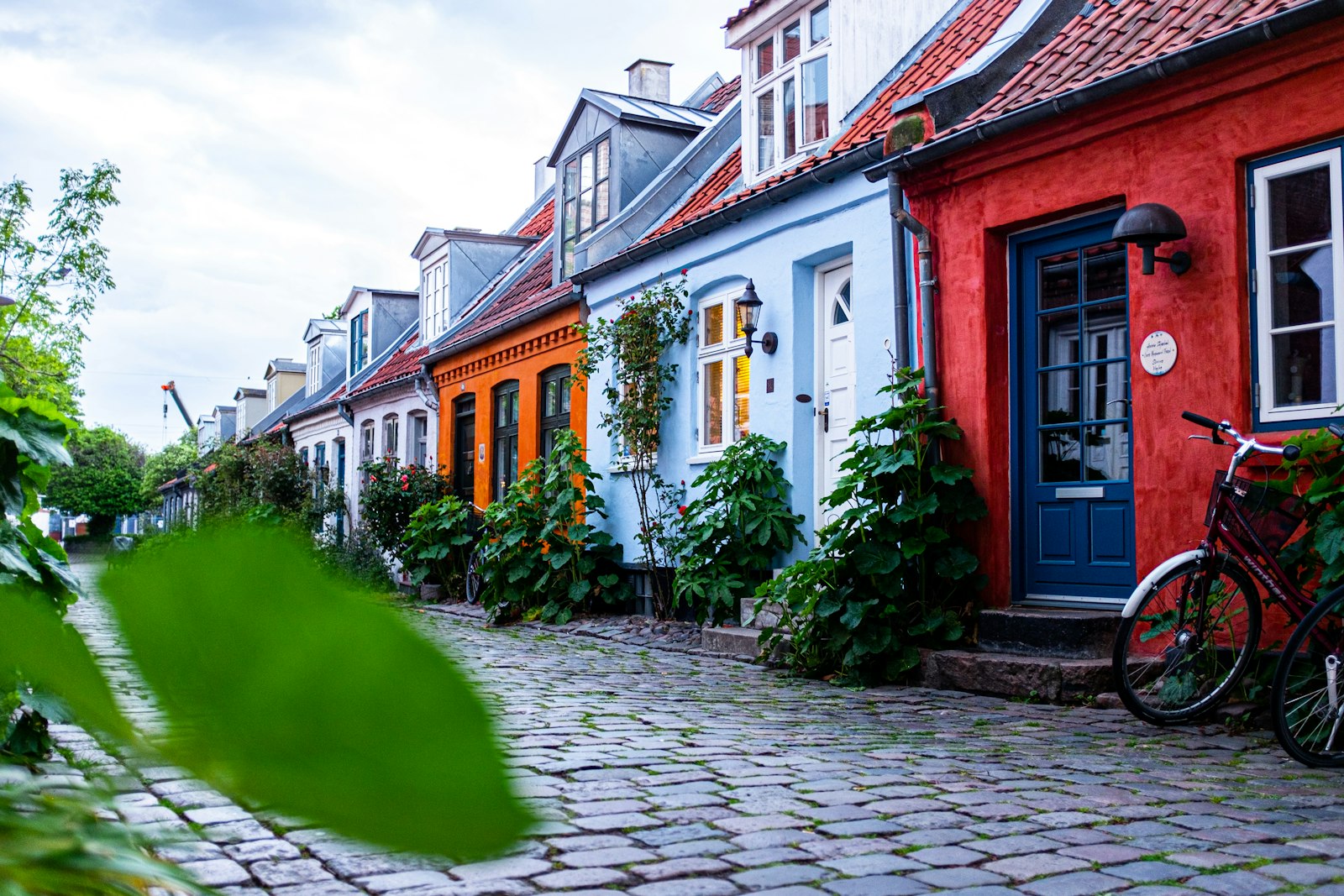
Morning: Walk Møllestien, the cobbled lane lined with hollyhocks and tiny houses. Last pastry at a Latin Quarter bakery.
Afternoon: Pick up bags, then the express bus to Billund or a train to Copenhagen.
Evening: Fly out or land in Copenhagen for the next leg.
Best neighbourhoods
- Latin Quarter: The oldest part of town: cobbles, pastel houses, boutiques, wine bars and the cathedral.
- Aarhus Ø (Harbour City): Bold new waterfront architecture including the Iceberg building, plus the harbour bath and sea views.
- Frederiksbjerg: Residential and food-focused, with Jægergårdsgade's independent restaurants and coffee roasters.
- Marselisborg: Forest, deer park, royal summer palace and beaches, 15 minutes south of the centre.
Must-do experiences
- Walk Your Rainbow Panorama at ARoS: Olafur Eliasson's circular glass walkway on the museum roof, where you see the whole city through every colour of the spectrum.
- Step into Den Gamle By: An open-air museum of relocated Danish buildings recreating 1864, 1927 and 1974 town life, staffed in period costume.
- See the Grauballe Man at Moesgaard: A stunning grass-roofed museum holding one of the best-preserved Iron Age bog bodies in the world, plus Viking collections.
- Swim at the harbour bath: Aarhus Ø's architect-designed sea pool, open in summer and used year-round by winter bathers with a sauna alongside.
- Eat along Jægergårdsgade: The city's best street for small independent restaurants, natural wine, bakeries and coffee.
Hidden gems
- Marselisborg Palace park, open to the public when the royals aren't in residence, with free-roaming deer nearby.
- The Infinite Bridge, a circular wooden pier in the sea at Varna beach (summer only).
- Dokk1's waterfront library with the giant gong that rings for every Aarhus birth.
- Godsbanen, a former freight yard turned production and arts space with a rooftop.
Daily budget
- Accommodation: budget DKK 250-400 / night (hostel dorm), mid-range DKK 1,000-1,500 (boutique double), splurge DKK 2,500+ (Hotel Royal, grand suite). Cabinn Aarhus (a budget hotel) and Danhostel Aarhus City give the cheapest central beds. The Latin Quarter is the best mid-range base.
- Food: budget DKK 200-300 / day (bakery, Aarhus Street Food, supermarket), mid-range DKK 450-700 (café lunch plus a good dinner), splurge DKK 1,500+ (Frederikshøj tasting menu). Too Good To Go surprise bags from bakeries and supermarkets cost DKK 30-45 and are a local hack. Tap water is free.
- Transport: budget DKK 25-50 / day (walk plus one bus), mid-range DKK 100-150 (Midttrafik app plus day bike hire), splurge DKK 600+ (taxis plus a Copenhagen train day). Single bus tickets run about DKK 25 in the city zone. The AarhusCARD includes unlimited local transport.
- Activities: budget DKK 0-100 (harbour bath, Dokk1, cathedral, forest), mid-range DKK 200-450 (ARoS plus Moesgaard or Den Gamle By), splurge DKK 700+ (AarhusCARD plus Silkeborg lake steamer). ARoS, Den Gamle By and Moesgaard each cost around DKK 200. The AarhusCARD pays for itself on the third.
- Drinks & nightlife: budget DKK 70-110 (supermarket beer plus one bar pint), mid-range DKK 250-400 (Latin Quarter bar crawl), splurge DKK 600+ (cocktails plus Train club). Pints in student bars run DKK 50-70. Wine bars on Mejlgade are pricier than the Latin Quarter dives.
Where to stay
- Social hostel in City centre (DKK 250-450 / night): Danhostel Aarhus City, a short walk from the station and the Latin Quarter. Good for solos, with a shared kitchen.
- Boutique hotel in Latin Quarter (DKK 1,200-1,900 / night): Villa Provence on Fredens Torv, a tiny, romantic hotel on a cobbled square, walking distance to everything.
- Apartment in Frederiksbjerg (DKK 700-1,200 / night): Residential streets, Jægergårdsgade restaurants on your doorstep, and a 10-minute walk to ARoS. Best value for 4+ nights.
- Splurge in Store Torv (cathedral square) (DKK 2,400-4,000 / night): Hotel Royal, Aarhus's grand 1838 hotel on the main square, with Radisson Collection service, steps from the cathedral and Latin Quarter.
What to eat
- Smørrebrød with pickled herring and remoulade
- New Nordic tasting menus at a fraction of Copenhagen prices
- Danish pastries from Latin Quarter bakeries
- Local Jutland craft beer and natural wine bars
Day trips
- Silkeborg (1 hour by train): Lake district town with Museum Silkeborg and the Tollund Man, the Hjejlen paddle steamer and Museum Jorn. A good companion to Moesgaard's Grauballe Man. Direct train from Aarhus H, about DKK 90 each way. The Hjejlen steamer runs May to September, around DKK 150 return.
- Ebeltoft and Mols Bjerge (1h15 by bus): Cobbled harbour town with the long wooden warship Fregatten Jylland, plus hiking in Mols Bjerge National Park. Bus 123 from Aarhus bus station, about DKK 110 each way. Check times on Rejseplanen.
- Billund (LEGO House) (1h30 by express bus): LEGO House is a playful, hands-on museum and fun even without kids. Legoland is next door but pricey. Express bus from Aarhus, as Billund has no railway station. LEGO House tickets from about DKK 250.
When to visit
- Spring (April - May): 7-16°C, bright but breezy, showers pass quickly. Crowds: Light. Underrated. Danes celebrate the first warm weekend in the parks and on the harbour steps. Pack a jacket, May is the sweet spot.
- Summer (June - August): 16-24°C, up to 28°C in a heatwave, light until about 22:00. Crowds: Moderate, peaks with NorthSide in June and Aarhus Festuge at the end of August. The best window. Harbour bath open, Moesgaard beach swims, outdoor tables everywhere. Book hotels early for festival weekends.
- Autumn (September - October): 8-16°C, grey and damp, golden forests. Crowds: Low. Quiet museums, cheaper rooms, good cycling weather in early September. Bring a proper rain shell.
- Winter (November - March): -2 to 5°C, dark by 15:30 in December, some ice. Crowds: Very low. Cosy rather than pretty. Den Gamle By's Christmas market and candlelit Latin Quarter cafés are the draw, plus winter bathing and sauna culture.
Entry rules for your passport
Visa rules for Denmark depend on the passport you travel on. Check the official source before you book: European Commission: Schengen visa policy
Getting there
Aarhus Airport (AAR) is in Tirstrup, about 40 km north-east of the centre. The airport bus (Flybussen) takes about 40 minutes to Aarhus H and costs roughly DKK 130. Most visitors fly into Billund (BLL), about an hour and a half away by express bus, as Billund has no railway station, or Copenhagen (CPH), where direct DSB trains reach Aarhus H in about 3h15 to 3h45 every hour. Book DSB Orange tickets ahead for fares from about DKK 200-300, against DKK 450+ for full price. Flixbus from Copenhagen is cheaper but slower. From Sweden, Stena Line sails Varberg to Grenaa, then the Letbanen light rail reaches Aarhus in about 70 minutes. Aarhus H is in the middle of town, so most hotels are a short walk away.
Border checks: non-EU visitors (other than Swiss, Norwegian, Icelandic, Liechtenstein, Andorran, Monegasque, San Marinese and Vatican citizens, and holders of an EU residence permit or long-stay visa) are registered in the EU's Entry/Exit System (EES) instead of getting a passport stamp. On your first crossing, officers take your photo and/or fingerprints, so allow extra time at passport control. ETIAS, the planned travel authorisation, is not in operation yet, so don't pay any website for one.
Getting around
The centre is flat and easily walkable, and Aarhus is one of Europe's better cycling cities with widespread bike hire. Buses and the light rail cover Moesgaard, Marselisborg and the beaches. Trains reach Copenhagen in about three hours, and an express bus reaches Billund, for Legoland, in about an hour and a half. Aarhus Airport is 40 minutes out by shuttle bus, though many visitors fly into Billund or Copenhagen instead.
Safety
Aarhus is very safe, with low crime and reliable infrastructure. Main practicalities: watch for cyclists when crossing bike lanes, since they have right of way and move fast. Card payment is universal and cash is rarely needed. Winter days are short and pavements icy, and swimming spots have cold water year-round, so check flags at the harbour bath.
Solo travel tips
- Use the Too Good To Go app: Bakeries, cafés and supermarkets sell unsold food in surprise bags for DKK 30-45. It's a cheap way to eat well in a pricey country, and locals do it too.
- Eat at shared tables: Aarhus Street Food and most Latin Quarter cafés have long communal tables. Order, sit down and you'll usually end up talking to a student within ten minutes.
- Hostel pick: Danhostel Aarhus City: Danhostel Aarhus City sits in the centre near the cathedral and has a proper social kitchen.
- Respect the bike lanes: Cyclists have right of way and move fast. Look both ways before crossing, even when the lane looks empty, and never stand in it to take photos.
- Solo female travellers: Aarhus is one of Europe's safest cities for women alone. The centre is lit and busy until late, and night buses run on Friday and Saturday. Standard rules apply: watch drinks, use Dantaxi or the Midttrafik app, and keep your phone charged.
- Find your tribe at the harbour bath or a walking tour: In summer the harbour bath is a social hub, and in winter the sauna crowd is chatty. English-language walking tours run daily in peak season.
Cultural etiquette
- Bikes have right of way. Look both ways before stepping into a bike lane and never walk in one.
- Tipping is not expected. Service is included, so round up at cafés or leave 5-10% for exceptional service.
- Take a number. Bakeries and many shops use number machines, so don't crowd the counter.
- Danes wait at red lights even on empty streets. Follow suit, locals do notice.
- Keep your voice down on buses and trains. Quiet is the norm and chatty tourists stand out.
- Take your shoes off if invited to someone's home. Say tak for mad (thanks for the food) after a meal.
- Shower before using pools and saunas. In Danish sauna culture, a quick wash is expected and nudity is normal in gender-separated spaces.
Frequently asked questions
How many days do you need in Aarhus?
Three days is ideal: one for ARoS and the Latin Quarter, one for Den Gamle By and the harbour, and one for Moesgaard Museum plus Marselisborg forest and beaches. Two days covers the highlights if you're passing through.
Is Aarhus worth visiting?
Yes. It gives you Danish design, world-class museums, Viking history and a walkable waterfront at noticeably lower prices and with far fewer tourists than Copenhagen. The student population keeps the food and nightlife scene genuinely lively.
Is Aarhus cheaper than Copenhagen?
Yes, meaningfully. Hotels, restaurants and drinks typically run 20-30% below Copenhagen, and the city is small enough that you spend little on transport. It's still Scandinavia, so budget $130 to $260 a day.
When is the best time to visit Aarhus?
May to September for long days, harbour swimming and outdoor café life, peaking with the NorthSide and Aarhus Festuge festivals. Winter is dark and cold but the Latin Quarter and Den Gamle By Christmas market are properly atmospheric.
How do you get from Copenhagen to Aarhus?
Direct trains take about three hours and run hourly, with cheaper Orange fares if booked ahead. Domestic flights take 45 minutes but rarely save time door to door. Driving takes roughly three hours including the Great Belt Bridge toll.
What is Den Gamle By and is it worth it?
It's an open-air museum of 75 relocated historic Danish buildings recreating town life in 1864, 1927 and 1974, with costumed staff, working shops and period apartments. It's one of the best museums of its kind in Europe and worth a half day minimum.
Is Aarhus good for solo travellers?
Very. It's compact, extremely safe, almost everyone speaks English, and the student cafés and harbour areas make solo days easy. Hostels and coworking cafés in the centre give you a social base, and walking tours run in English through summer.
Tours and activities in Aarhus | Aarhus in 2 days | Aarhus in 3 days | Aarhus in 4 days | Aarhus in 5 days | Aarhus in 7 days
Can't decide? Compare Aarhus with...
Joy Plus home | Destinations | Itineraries | Activities | Flights | Budget planner | Calendar | Map | Blog | Lifetime access