Destinations / Europe
Albarracín, Spain travel guide
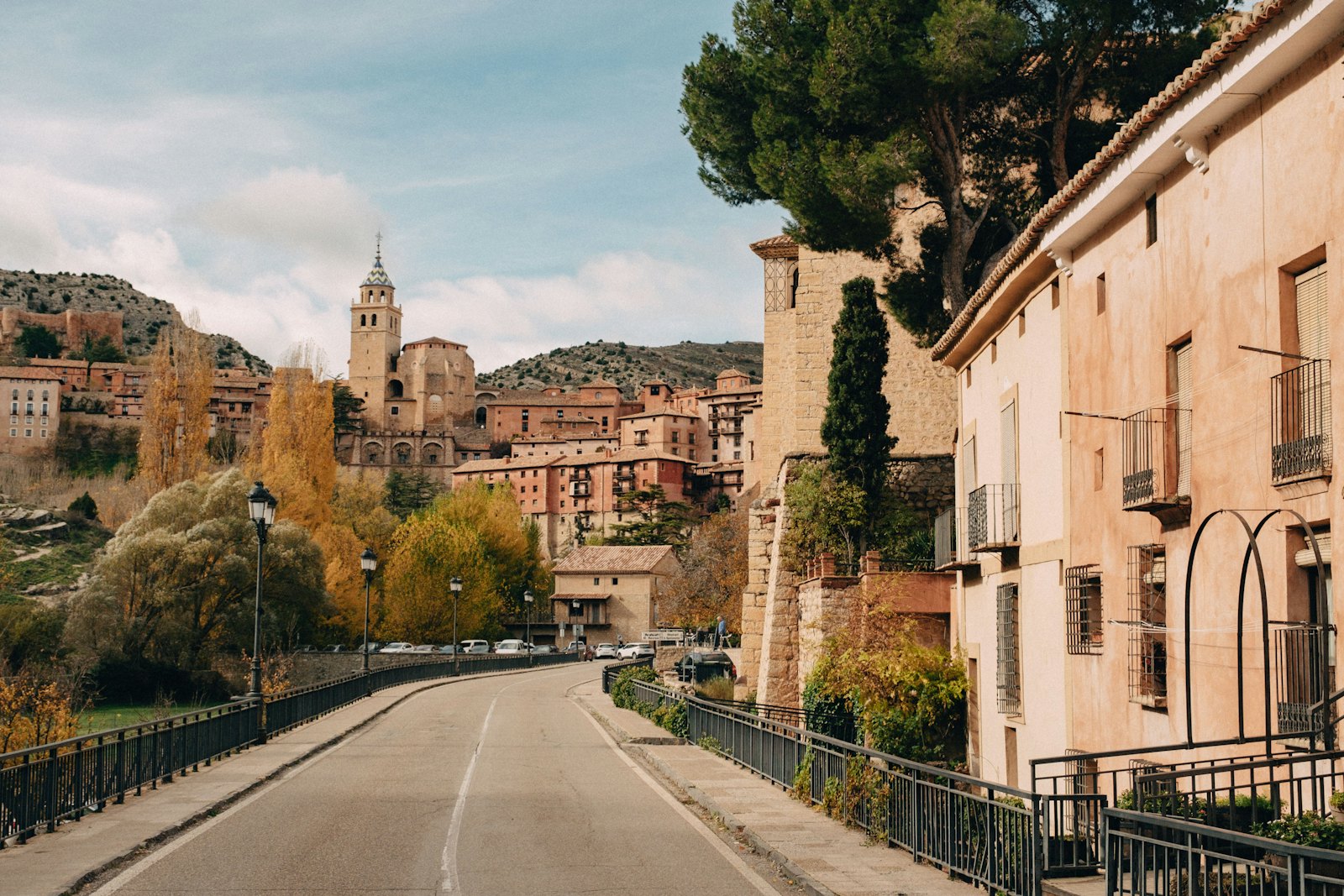
A walled hill town of rust-pink houses above a tight bend in the Guadalaviar river, with steep lanes, a castle to tour and prehistoric rock art in the pine forest a short walk away.
- Best time to visit: April to June and September to October
- Daily budget (budget traveller): $70 to $270 USD
- Ideal trip length: 3 to 5 days
Albarracín is in the mountains of Teruel province in Aragón, about 40km west of the city of Teruel, at roughly 1,180m. The town wraps around a rocky ridge, with the Guadalaviar river curling round it on three sides. A long line of medieval walls climbs the hill behind it. The houses are plastered in a reddish local gypsum, so the whole place glows pink in the evening light. It was the seat of a small Moorish kingdom under the Banu Razín family, and later an independent Christian lordship. That history shows in the castle ruins, the cathedral and the crooked lanes, where overhanging upper floors almost touch. Day-trippers fill the centre at weekends and in summer. Stay a few nights and you see the quieter side: empty lanes after dark, a climb to the Torre del Andador at sunrise, and walks into the Pinares de Rodeno, where Neolithic paintings of bulls sit under red sandstone overhangs. Getting here without a car takes some planning, because buses are few. But once you arrive, everything in town is on foot, and the hostel inside the old town keeps it affordable for a solo traveller.
Albarracín sits on a narrow rocky spur above the Guadalaviar river in the Sierra de Albarracín, about 40km west of Teruel and roughly 1,180m above sea level. It has around 1,000 residents and a medieval centre of crooked lanes, timber balconies and houses washed in reddish gypsum plaster. Above it, a long line of walls and towers runs up the hillside. In the 11th century it was a small Moorish kingdom ruled by the Banu Razín, and the town's name comes from them. Later it was an independent lordship under the Azagra family before Aragón absorbed it. Today Albarracín is one of the most visited small towns in Spain, and on a sunny Saturday the centre fills with day-trippers. Stay overnight and it changes: quiet lanes, church bells, and the walls lit up against a dark sky.
Logistics take more thought than the town itself. Most travellers reach Teruel first, by train from Valencia in about two and a half hours, by bus from Valencia, Zaragoza or Madrid, or by train from Madrid with a change in Zaragoza. From Teruel, Albarracín Movilidad's line 1053 runs to Albarracín in under an hour. Departures are few and there is no service on Sundays or public holidays, so check the timetable first. Once you arrive, everything is on foot. The cathedral and castle are only open on guided tours run by the Fundación Santa María de Albarracín, so book slots ahead in busy periods. The Pinares de Rodeno rock art is about 5km away, and you can walk there.
Timing shapes the trip. Spring and early autumn are the best seasons, with warm days, cool nights and good hiking. Summer is warm and busy, and the September fiestas bring crowds and music. Winter is cold, often frosty, sometimes snowy, and very quiet, with some places shutting midweek. Weekdays are calmer than weekends all year. Albarracín is safe and friendly, and Spanish is the language. English is spoken in the hostel and the larger hotels, but less in bars, so a few words of Spanish help. If you want nightlife, go to Valencia. If you want a castle, a cathedral, prehistoric bulls on red rock and a quiet terrace at dusk, stay a few nights here.
Albarracín itinerary
Arrive and first lap of the lanes
Morning: This plan assumes you arrive on a Tuesday. Take a morning train from Valencia to Teruel, about two and a half hours, and grab lunch near the bus station.
Afternoon: Catch the line 1053 bus to Albarracín (under an hour, check times first). Check in at the Albergue Rosa Bríos or your hotel and drop your bag.
Evening: Wander from Plaza Mayor towards Portal de Molina as the day-trippers leave. Watch the houses turn pink at sunset, then have tapas in a bar near the square.
Walls at dawn and the cathedral
Morning: Climb the walls to the Torre del Andador early, while the air is cool and the lanes below are empty. Allow about an hour return.
Afternoon: Join the Fundación's combined town and cathedral tour (about €8.50, booked in advance). Then visit the Museo Diocesano in the bishop's palace if you have the combined pass.
Evening: A weekday menú del día-style dinner of migas or ternasco. Walk the lit-up lanes before bed.
Rock art in the Pinares de Rodeno
Morning: Walk the PR-TE 117 from town to the Área Recreativa del Navazo, about 5km through pine and red sandstone. Start early in warm weather and carry plenty of water.
Afternoon: Do the short SL-TE 20 loop past the Cocinilla del Obispo and the other painted shelters. Then add the walkway to the Abrigo del Arquero and the Mirador de Peñas Royas. Picnic in the recreation area, then walk back.
Evening: Rest your legs on a terrace in the Plaza Mayor. Early night.
Castle, Torre Blanca and the river
Morning: Take the castle tour (about €4.50, around 50 minutes, Spanish only) for the old Moorish alcázar and the best view over the town.
Afternoon: Visit the Torre Blanca exhibition space and the Museo de Albarracín. Then follow the riverside path around the bend of the Guadalaviar to the Torre de Doña Blanca.
Evening: Self-cater with jamón de Teruel, local cheese and bread from the town shops. Eat in the hostel dining room or on your balcony.
Gea de Albarracín or Dornaque
Morning: If the bus times work, ride line 1053 to Gea de Albarracín and look for the remains of the Roman aqueduct that once carried water towards Cella. With a car, drive instead to the Dornaque interpretation centre in the Rodeno, which opens on a seasonal calendar.
Afternoon: At Dornaque, walk the easy SL-TE 26 towards Fuente Buena. In Gea, have a slow lunch in the village before the afternoon bus back.
Evening: Back in Albarracín for sunset from the walls. Book Saturday's dinner, because it fills up at weekends.
A slow weekend day in Azagra
Morning: Saturdays are busy, so go out very early for photos of the Casa de la Julianeta and Portal de Molina before the coaches arrive.
Afternoon: Escape the crowds with a second loop in the Rodeno, or rest and read in a quiet corner of the upper town. Pick up cheese or ham to take home.
Evening: Farewell dinner of ternasco and a bottle of Aragonese wine. Pack and check Monday's bus times.
Teruel and onward
Morning: There are no buses on Sundays, so this plan has you leaving on Monday. Take the morning bus to Teruel and leave your bag at the station or your hotel.
Afternoon: See Teruel's Mudéjar towers, the cathedral ceiling and the Plaza del Torico. Try a Suspiro de Amante in a pastry shop.
Evening: Take the train back to Valencia, or stay a night in Teruel and move on in the morning.
Best neighbourhoods
- Plaza Mayor and the old centre: The heart of town, with the arcaded town hall, a balcony looking down on the river and the lanes that lead up to the cathedral. Bars, restaurants and shops are clustered here. It is the most convenient base, and also the busiest at midday.
- Calle Santa María and the cathedral quarter: The higher streets around the cathedral and the bishop's palace, where the Fundación Santa María runs its tours. The Albergue Rosa Bríos youth hostel is here on Calle Santa María. Expect steps and views from almost every window.
- Subida a las Torres and the walls: The steep streets below the medieval walls, leading up to the Torre del Andador. Casa de Santiago, a small hotel, is on this climb. It is quiet at night and close to the best sunrise walks, but your legs will notice.
- Azagra and Portal de Molina: The western end of the old town, home to the photogenic Portal de Molina gateway, the Casa de la Julianeta and the Torre de Doña Blanca. It has some of the prettiest lanes and fewer crowds once the tour groups move on.
- El Arrabal and the lower town: The flatter areas by the river below the old town, including Barrio de San Antonio near the main road. You will find apartments, car parks and the bus stop down here. It is easier with luggage, and the old centre is a short uphill walk away.
Must-do experiences
- Walk the walls to the Torre del Andador: A steep path follows the medieval walls up the hill behind town to the Torre del Andador, the highest tower. It is free and always open. Go at sunrise or late afternoon, when the light turns the houses pink and the lanes below are still quiet.
- Take the cathedral tour: The 16th-century Catedral del Salvador can only be visited on guided tours run by the Fundación Santa María de Albarracín. A cathedral tour costs about €5.50, or €8.50 combined with a guided walk around the town. Book a slot online in summer and at weekends.
- Tour the castle: The castle is the old Islamic alcázar of the Banu Razín, now an archaeological site on a rocky spur above the river. Guided visits last about 50 minutes and cost around €4.50. They run in Spanish only, but the views make it worthwhile anyway.
- See the rock art at El Navazo: In the Pinares de Rodeno, about 5km from town, Neolithic paintings of bulls and hunters survive under red sandstone shelters. The short SL-TE 20 loop from the Área Recreativa del Navazo passes the Cocinilla del Obispo and several more shelters. You can walk there from town on the PR-TE 117.
- Get lost in the lanes around Azagra: Wander from Plaza Mayor through Portal de Molina and past the Casa de la Julianeta, with its upper floors leaning out over the street. Wooden balconies, iron door knockers and tiny squares appear at every turn. Early morning is best, before the day-trippers arrive.
- Visit the museums with a combined pass: The Fundación's combined ticket covers the town and cathedral tours, the castle, the Museo de Albarracín, the Museo Diocesano and the Torre Blanca. It has been around €16, against a full price of about €23. It is sold at the desk or by phone, so ask at the information centre.
- Spend a day in Teruel: Teruel is about 35 minutes by car or under an hour by bus. Its Mudéjar towers and the cathedral ceiling are part of a UNESCO World Heritage listing. Pair it with your arrival or departure, because the train station is there.
Hidden gems
- The Torre de Doña Blanca at the western end of town, a lonely old tower by the river that most visitors walk straight past
- The riverside path around the bend of the Guadalaviar, a flat, quiet walk with views up to the walls and the cathedral
- The Abrigo del Arquero de los Callejones Cerrados in the Pinares de Rodeno, reached by a wooden walkway, with a small archer figure painted on the rock
- The Mirador de Peñas Royas, a viewpoint over the sandstone cliffs on the accessible SL-TE 27 trail near El Navazo
- The Torre Blanca, a tower near Portal de Molina that the Fundación uses for exhibitions, with views over the rooftops
Daily budget
- Accommodation: budget €20-35 / night (dorm at Albergue Rosa Bríos), mid-range €70-120 (small hotel or apartment), splurge €150+ (best rooms in the top hotels). There is one hostel, so book ahead for weekends. Prices rise on Saturdays, bank holidays and during the September fiestas. Weekdays in winter are the cheapest.
- Food: budget €20-30 / day (picnic lunch and a menú del día), mid-range €40-60 (café breakfast, set lunch, dinner with wine), splurge €80+ (tasting menu and good wine). A weekday menú del día with three courses and a drink is usually around €15-22. Tapas and raciones in bars keep dinner cheap. Prices are rough guides, so check.
- Transport: budget €0-5 / day (walking, plus the local bus), mid-range €40-60 (hire car and fuel), splurge €60-70 (taxi between Teruel and Albarracín). The Teruel bus costs a few euros, paid on board. Trains from Valencia to Teruel have been around €15-30. A car makes Dornaque and the sierra villages much easier.
- Activities: budget €0-10 / day (walls, Rodeno trails, lanes), mid-range €8.50-16 (town and cathedral tour, or the combined pass), splurge €50+ (private guide). Cathedral tour around €5.50, town plus cathedral €8.50, castle €4.50. The combined pass with the museums has been about €16, sold at the desk or by phone.
- Drinks & nightlife: budget €5-10 (a caña or two on a terrace), mid-range €15-30 (wine and tapas), splurge €40+ (a long dinner with a good bottle). Nightlife means terraces and bars around the Plaza Mayor. Things are quiet by midnight, except during the fiestas.
Where to stay
- Social hostel in Calle Santa María (cathedral quarter) (€20-35 / night (dorm)): The Albergue de Albarracín Rosa Bríos is an old townhouse inside the walls with dorms, private rooms, a dining room and views over the rooftops. It is the only real hostel in town and the cheapest bed in the centre.
- Boutique hotel in Subida a las Torres (€70-120 / night): Casa de Santiago is a small, characterful hotel on the climb towards the walls. It is quiet at night, a short walk from Plaza Mayor and well placed for an early walk up to the Torre del Andador.
- Apartment in El Arrabal or Barrio de San Antonio (€60-100 / night): Apartments in the lower town are easier to reach with luggage and close to the bus stop and parking. With a kitchen you can save money by cooking with local ham, cheese and bread.
- Splurge in Azagra (€120-200 / night): Hotel Albarracín, in a restored old building at the western end of town, has views across the valley and a restaurant. It is the comfortable choice for a final night or a winter stay.
What to eat
- Jamón de Teruel: cured ham from a protected designation of origin, aged in the cold, dry mountain air and served in thin slices with bread and tomato
- Ternasco de Aragón: young roast lamb, the classic Sunday lunch across the region, often roasted with potatoes
- Migas: fried breadcrumbs with garlic, chorizo and bacon, a shepherds' dish that is very welcome on a cold evening
- Sopa de ajo: a garlic soup thickened with bread and finished with egg, found on winter menus
- Sheep's cheese from the Sierra de Albarracín, sold in local shops and served at the end of a meal
- Suspiros de Amante: small cheese and egg sweets from Teruel, named after the city's legend of the Lovers of Teruel
Day trips
- Pinares de Rodeno rock art (El Navazo) (About 5km from Albarracín, 10 minutes by car or around 1.5 hours on foot): A protected landscape of pine forest and red sandstone. Neolithic paintings of bulls, horses and hunters survive in shelters such as the Cocinilla del Obispo and the Abrigo de los Toros del Prado del Navazo. Short, easy loops link several shelters and viewpoints. Walk the PR-TE 117 from town, or drive the paved forest road towards Dornaque to the Área Recreativa del Navazo car park. Start the short SL-TE 20 loop from there.
- Teruel (About 40km, 35 minutes by car or under an hour by bus): Teruel is the provincial capital. Its Mudéjar towers and decorated cathedral ceiling are part of a UNESCO World Heritage listing, and it is home to the Lovers of Teruel legend. It is a natural stop on your way in or out. Take Albarracín Movilidad's line 1053 to Teruel bus station on weekdays and check return times first. A taxi costs roughly €50-65, or drive and park outside the centre.
- Gea de Albarracín and the Roman aqueduct (About 10km east of Albarracín, 15 minutes by car): A quiet village in the Guadalaviar valley, near sections of the Roman aqueduct that carried water from Albarracín towards Cella, partly through tunnels cut in the rock. It is a gentle half day away from the crowds. Line 1053 between Teruel and Albarracín stops at Gea, but there are few buses, so check times carefully. A car or taxi is more flexible.
When to visit
- Spring (April - June): 12-25°C by day, cool nights, some showers in April. Crowds: Moderate, busy at Easter and on weekends. One of the best times to come. Green hills, flowers in the Rodeno and comfortable walking. Book Easter and long weekends early.
- Summer (July - August): 25-32°C by day, much cooler at night. Crowds: Busy, with Spanish holidaymakers and coach tours. Long evenings and lively terraces, but the lanes are crowded at midday. Walk early, take tours in the afternoon and book accommodation well ahead.
- Autumn (September - October): 12-24°C, mostly dry, crisp evenings. Crowds: Busy during the mid-September fiestas, calmer afterwards. The locals' pick. Golden light on the pink walls, good hiking weather and fewer crowds once the fiestas finish.
- Winter (November - March): -5 to 10°C, frequent frosts, occasional snow. Crowds: Quiet except around Christmas and long weekends. Cheap and peaceful, and beautiful after snow. Lanes can be icy, some restaurants close midweek and tour times are reduced, so check ahead.
Entry rules for your passport
Visa rules for Spain depend on the passport you travel on. Check the official source before you book: European Commission: Schengen visa policy
Getting there
Albarracín has no train station or airport. The nearest major airports are Valencia, about 2 hours' drive away, and Zaragoza, roughly 2 hours 15 minutes away. Madrid is around 3.5 hours by road. Most people travel to Teruel first. Renfe trains from Valencia Estació del Nord take about two and a half hours, with a handful of departures a day and fares from around €15-30. Buses from Valencia take about 2 hours. ALSA buses from Madrid Estación Sur take about 3.5 hours, and Zaragoza has buses and trains of between 2 and 3 hours. From Teruel bus station, Albarracín Movilidad's line 1053 takes under an hour. Recent timetables show weekday departures from Teruel at about 9:15 and 13:45, with no service on Sundays or public holidays. Fares are a few euros, paid on board. Always check albarracinmovilidad.es before travelling. A taxi from Teruel costs roughly €50-65. If you drive, pick up a car in Valencia or Zaragoza and leave it in the car parks below the old town, as the lanes are not for cars.
Border checks: non-EU visitors (other than Swiss, Norwegian, Icelandic, Liechtenstein, Andorran, Monegasque, San Marinese and Vatican citizens, and holders of an EU residence permit or long-stay visa) are registered in the EU's Entry/Exit System (EES) instead of getting a passport stamp. On your first crossing, officers take your photo and/or fingerprints, so allow extra time at passport control. ETIAS, the planned travel authorisation, is not in operation yet, so don't pay any website for one.
Getting around
Albarracín's old town is very small and best explored on foot. Cars cannot really get into most of it. The lanes are steep, cobbled and full of steps, so wear shoes with grip and pack light. If you arrive with a big case, drop it at your accommodation from the lower town car parks or bus stop. Albarracín Movilidad runs the local bus (line 1053) between Teruel bus station and Albarracín in under an hour. Recent timetables show Teruel departures at around 9:15 and 13:45 on weekdays, with no service on Sundays and public holidays, so check albarracinmovilidad.es before you travel. Fares have been a few euros, paid on board. A taxi from Teruel costs roughly €50-65. The Pinares de Rodeno rock art at El Navazo is about 5km away. You can walk there on the PR-TE 117 trail, but Dornaque and the wider sierra are much easier with a car. Hire cars are easiest to pick up in Valencia or Zaragoza, with fewer options in Teruel. Roads in the sierra are twisty, and they can be icy in winter.
Safety
Albarracín is a very safe small town, and crime against visitors is rare. The main risks come from the terrain. The lanes are steep, worn smooth and slippery when wet or icy, and the path up to the Torre del Andador has steep drops and loose ground in places. Take it slowly and avoid it in strong wind or after dark. Winters at this altitude are properly cold, often below freezing at night, and snow can close mountain roads. Summers are hot by day, but the evenings cool off quickly. In the Pinares de Rodeno, stay on marked trails, carry water and download offline maps, because mobile signal can drop. Do not touch the rock art or climb near the shelters. Climbing is regulated and banned within 30m of the painted shelters. Forest fire risk is high in summer, so never light fires or drop cigarette ends. The emergency number is 112.
Solo travel tips
- Sleep inside the old town: Stay up in the old town, not on the main road below, so that the evening walks, sunrise climbs and quiet lanes are right outside your door. The Albergue Rosa Bríos is on Calle Santa María, close to the cathedral.
- Plan around the bus, not the other way round: With few departures and none on Sundays, the bus timetable decides your arrival and departure days. Check albarracinmovilidad.es a week before and again the day before, and keep a Teruel taxi number as a backup.
- Book the guided tours early: The cathedral and castle are only open on guided tours with limited places. Weekend and summer slots sell out, so book online when you know your dates.
- Come on weekdays if you can: From Monday to Friday the town is calm and accommodation is cheaper. On Saturdays and bank holidays the centre is crowded from late morning, so explore early and late.
- Safety for solo travellers: The real risks are slips on steep, polished lanes, the exposed wall path and getting lost or overheated in the Rodeno. Wear grippy shoes, tell your host your route and carry water and a charged phone with offline maps.
- Join a tour to meet people: Guided walks and the hostel dining room are the easiest places to chat to other travellers. Locals are happy to help if you try a little Spanish, even just buenos días and gracias.
Cultural etiquette
- Greet people with 'buenos días' or 'buenas tardes' when you enter a shop or bar, and say 'gracias' when you leave.
- Spain eats late. Lunch is usually from 14:00 to 16:00 and dinner from about 21:00, and many kitchens close in between.
- Albarracín is a lived-in town, not a museum. Keep your voice down in residential lanes at night and do not sit on doorsteps or peer into homes.
- Dress modestly for the cathedral and other churches, with covered shoulders, and stay quiet if a service is on.
- Never touch the rock art or the wooden fences protecting it, and do not wet the paintings for photos.
- Siesta hours are real. Small shops often close in the early afternoon and on Sunday afternoons.
- Ask before photographing locals, especially older residents sitting outside their homes.
Frequently asked questions
How do I get to Albarracín without a car?
Travel to Teruel first. Trains from Valencia take about two and a half hours, there are buses from Valencia, Zaragoza and Madrid, and Madrid also has train connections via Zaragoza. From Teruel bus station, Albarracín Movilidad's line 1053 reaches Albarracín in under an hour. There are only a few departures, Monday to Friday mainly, and no buses on Sundays or public holidays. Check the timetable at albarracinmovilidad.es, and book a taxi if your times do not line up.
How many days do I need in Albarracín?
Two nights is the minimum to see the town properly, with a walk on the walls, the cathedral and castle tours and an evening after the day-trippers leave. Three to five nights gives you time for the Rodeno rock art, a slow day in the lanes and a day in Teruel. Because buses are limited, plan around them rather than trying to rush.
When is the best time to visit Albarracín?
April to June and September to October bring mild days, clear light and good walking weather. July and August are warm and busy, with Spanish holidaymakers and coach tours. Winter is cold and quiet, sometimes with snow, which looks lovely but makes the lanes slippery. Weekends and bank holidays are much busier than weekdays all year.
Can I visit the cathedral and castle on my own?
Not really. The cathedral can only be visited on guided tours run by the Fundación Santa María de Albarracín, at around €5.50, or €8.50 combined with a guided town walk. The castle tour costs about €4.50, lasts around 50 minutes and is in Spanish only. Book online in busy periods. A combined ticket covering the museums too has been around €16 at the desk.
Is Albarracín a good place for solo travellers?
Yes. It is small, safe and easy to walk, and the youth hostel inside the old town is a friendly, affordable base. Evenings are quiet rather than lively, so expect a drink on a terrace and an early night instead of a nightlife scene. Guided tours and the hostel dining room are the easiest places to meet other people.
Can I walk to the rock art?
Yes. The PR-TE 117 trail links Albarracín with the Área Recreativa del Navazo in the Pinares de Rodeno, about 5km away. From there the short SL-TE 20 loop passes the Cocinilla del Obispo and other shelters. Allow a full morning or afternoon for the return walk, bring water and sturdy shoes, and avoid the hottest part of a summer day.
Is Albarracín safe for solo female travellers?
Yes, it is a very relaxed and safe town. The main precautions are practical ones. Let someone know where you are going if you hike alone in the Rodeno, avoid the wall path after dark and carry a torch for unlit lanes. Locals are used to visitors and are generally helpful.
Do I need cash in Albarracín?
Cards are accepted in most hotels, restaurants and the Fundación's ticket office. Some small bars and shops prefer cash for small amounts, so carry a little. There are limited cash machines in town, so it is sensible to withdraw euros in Teruel before you arrive.
More about Albarracín
Tours and activities in Albarracín | Albarracín in 2 days | Albarracín in 3 days | Albarracín in 4 days | Albarracín in 5 days | Albarracín in 7 days
Joy Plus home | Destinations | Itineraries | Activities | Flights | Budget planner | Calendar | Map | Blog | Lifetime access