Destinations / Europe
Alberobello, Italy travel guide
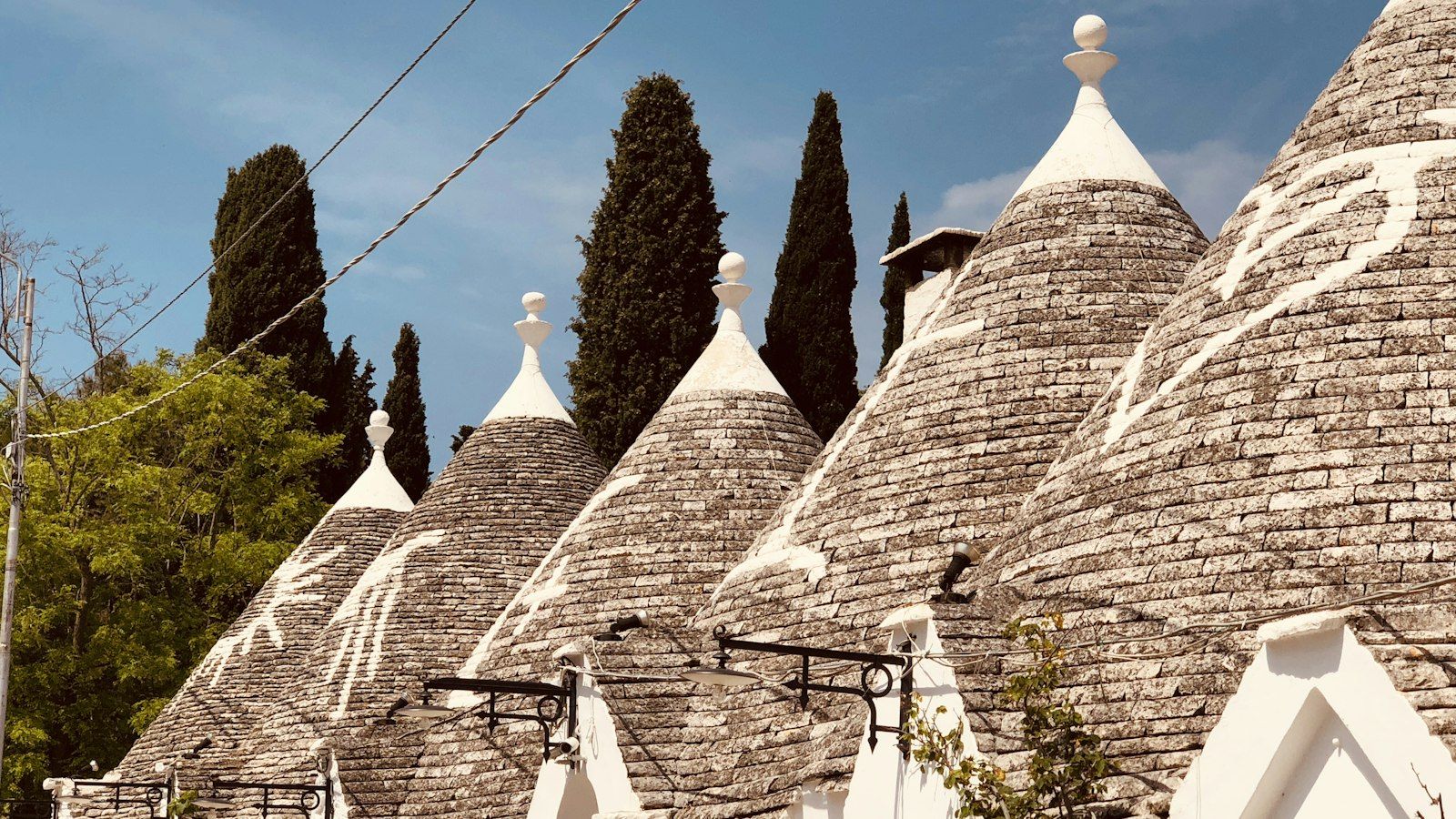
Puglia's town of trulli: whitewashed limestone huts with cone roofs, set on a cool plateau of olive groves, with slow trains to the Valle d'Itria's hill towns.
- Best time to visit: April to June and September to October
- Daily budget (budget traveller): $85 to $270 USD
- Ideal trip length: 3 to 7 days
Alberobello is a small town of around 10,000 people on the Murge plateau, about 55km south-east of Bari. It owns a UNESCO listing and a skyline unlike anywhere else in Europe. More than 1,000 trulli climb the hill of Rione Monti, and around 400 more fill the quieter Rione Aia Piccola across the road. These are dry-stone houses with conical grey roofs, many painted with white symbols. Coach tours arrive mid-morning and leave by late afternoon. That rhythm suits solo travellers who sleep in town, because early mornings and evenings bring empty lanes, soft light and a real neighbourhood feel. Use Alberobello as a base for the Valle d'Itria. Locorotondo is ten minutes away by the slow Ferrovie del Sud Est train, Martina Franca a little further, and Cisternino and Ostuni are a short drive. The food is rich and cheap: orecchiette, bombette, capocollo and Locorotondo white wine. Spring and early autumn are best, when the plateau is green and warm but not baking.
Alberobello has about 10,000 residents and roughly 1,500 trulli, most of them in two districts across the road from each other. Rione Monti is the one in the photos: a hill of cone roofs with souvenir shops, linen sellers and olive-oil tastings in almost every doorway. Rione Aia Piccola is smaller and residential, with washing lines, potted geraniums and very few shops. The town has been a UNESCO site since 1996, and in high season coach tours from Bari, Polignano and cruise ships fill it by mid-morning. Most day visitors see it at its busiest and leave before it calms down. If you stay the night, you get the evening and early morning, when the lanes are close to empty.
Alberobello also works well as a solo base for the Valle d'Itria. The slow Ferrovie del Sud Est line runs from Bari through Putignano, Alberobello, Locorotondo and Martina Franca. Locorotondo is one stop and about ten minutes away, so a half-day trip by train is easy. The Grotte di Castellana are reachable by FS Sud Est via Putignano. Cisternino, Ostuni and the coast at Polignano a Mare and Monopoli are slow by public transport but under an hour by car. The practical plan is four or five days car-free, then one or two days with a hire car. Trains are cheap and timetables change often. Sundays and holidays bring fewer services and more replacement buses, so check the night before.
Timing shapes the experience. April to June brings green fields, poppies along the dry-stone walls, and warm days with cool evenings on the plateau. September and October bring the grape harvest, softer light and the feast of the Santi Medici in late September. July and August are hot, crowded and the most expensive. Winter is quiet and atmospheric but cold, because trulli are stone and the town sits around 400m above sea level. The food alone justifies the trip. You can eat a three-course trattoria lunch for €25 to €35, buy a slab of focaccia for a few euros, or choose your meat at a butcher's counter in Cisternino and have it grilled on the spot. If you want nightlife, go to Bari or Lecce. If you want to sleep under a stone cone and walk empty lanes at sunrise, Alberobello is the right base.
Alberobello itinerary
Arrive in Bari, slow train to the trulli
Morning: Land at Bari (BRI). Take the airport train to Bari Centrale (about 20 minutes), then find the FS Sud Est platforms for the Alberobello service. Allow about two hours, and check whether part of the route runs as a bus.
Afternoon: Walk 10 to 15 minutes from the station and check in. Take a slow first wander along Largo Martellotta and into Piazza del Popolo, then rest. The afternoon is coach-tour peak.
Evening: Watch sunset from the Belvedere Santa Lucia over the cones of Rione Monti, then walk Monti once the shops close. Dinner at La Cantina on Vico Lippolis. Book ahead, as it is small.
Rione Monti, Trullo Sovrano and Aia Piccola
Morning: Be in Monti by 7:30am. Climb to the trullo church of Sant'Antonio, find the double-coned Trullo Siamese, and accept a free rooftop view from a shop that has just opened. Coffee and a pastry on Corso Vittorio Emanuele.
Afternoon: Visit the Trullo Sovrano behind the Santi Medici basilica (about €2.50, closed at lunch). Then cross to Aia Piccola for Casa Pezzolla's 15 linked trulli and Casa D'Amore on Piazza del Popolo.
Evening: Aperitivo near Largo Martellotta, then fixed-menu orecchiette and fave e cicoria at Trattoria Casa Amatulli on Via Garibaldi.
Locorotondo and Martina Franca by train
Morning: Take FS Sud Est one stop (about 10 minutes) to Locorotondo. Walk up into the circular white old town and follow the balcony viewpoint over the Valle d'Itria vineyards.
Afternoon: Long lunch with a carafe of Locorotondo DOC white. Continue by train to Martina Franca to see the baroque Basilica of San Martino and the old-town lanes.
Evening: Grilled bombette and capocollo at a fornello pronto butcher in Martina Franca. Check the last train or bus back to Alberobello before you sit down.
Grotte di Castellana and a slow afternoon
Morning: Take FS Sud Est towards Putignano and on to the Grotte di Castellana stop. Book the full guided tour online (about 3km, close to two hours). Photography is only allowed in the first big cavern.
Afternoon: Return to Alberobello. Walk out to Bosco Selva for shade and quiet, or join an orecchiette-making class if your B&B can recommend one.
Evening: Pizza or a casual dinner at Coppino Alberobello, then a final night walk through the lit lanes of Monti.
Hire car: Polignano a Mare and Monopoli
Morning: Pick up a hire car (book in advance, many agencies are in Bari or nearby towns). Drive about 45 minutes to Polignano a Mare. Park outside the ZTL and walk to the Lama Monachile cove and the clifftop terraces.
Afternoon: Swim in season, then drive 15 minutes to Monopoli for the old port, the fishing boats and a seafood lunch.
Evening: Drive back to Alberobello before dark if you can, as the rural roads are unlit. Easy dinner at Pane e Mozza.
Cisternino, Ostuni and the masserie
Morning: Drive about 25 minutes to Cisternino and wander its whitewashed alleys and viewpoints. Then continue to Ostuni, the hilltop white town, about 25 minutes further.
Afternoon: Lunch in Ostuni, climb to the cathedral, and stop at an olive-oil mill or masseria on the drive back. Many offer tastings, so book ahead.
Evening: Back in Cisternino for the classic fornello pronto dinner: choose meat at the butcher's counter and they grill it for you. Drive slowly back, or drop the car and stay sober.
Back to Bari, orecchiette and the old town
Morning: Return the car. Take the FS Sud Est train or bus to Bari Centrale. On Sundays and holidays, check the timetable the night before.
Afternoon: Leave luggage near the station, then walk to Bari Vecchia. Watch the women making orecchiette on Strada Arco Basso, visit the Basilica of San Nicola, and grab focaccia barese.
Evening: Airport train to BRI for an evening flight, or stay one night in Bari for seafront drinks on the Lungomare.
Best neighbourhoods
- Rione Monti: The hillside of more than 1,000 trulli that fills every postcard. It has souvenir shops, rooftop terraces and the trullo church of Sant'Antonio at the top. It is busy from about 10am to 5pm and peaceful at dawn and after dark.
- Rione Aia Piccola: The residential trullo quarter east of Largo Martellotta, with around 400 trulli, people still living in many of them, few shops and the Casa Pezzolla museum. Walk here for a sense of daily life rather than shopping.
- Piazza del Popolo and Largo Martellotta: The practical heart of town between the two trullo districts. You will find Casa D'Amore, the town hall, cafés, gelaterie and the best spots for an evening passeggiata.
- Corso Vittorio Emanuele and Santi Medici: The main street leading north to the Basilica of Santi Medici Cosma e Damiano, with the two-storey Trullo Sovrano tucked behind it. Bakeries and bars here are more local than in Monti.
- Station area and the newer town: Ordinary streets near the Ferrovie del Sud Est station, about 10 to 15 minutes' walk from Monti. B&Bs and guesthouses here cost less and are handy for early trains.
Must-do experiences
- Walk Rione Monti at dawn and after dark: Climb the lanes of Monti before 9am and again after sunset, when the shops close, the coaches have gone and the lit cone roofs look their best.
- Visit the Trullo Sovrano: Behind the Basilica of Santi Medici stands the only two-storey trullo in town, now a small house museum with period furniture. Entry is a few euros.
- Watch sunset from the Belvedere Santa Lucia: The terrace by the church of Santa Lucia in Aia Piccola gives the classic view across the cone roofs of Monti. Go at golden hour.
- Step inside the trullo church of Sant'Antonio: A 1920s church at the top of Rione Monti, built with a conical trullo-style dome. It is quiet and cool after the souvenir lanes. Opening hours are short, so check the door times.
- Explore Casa Pezzolla and Casa D'Amore: Casa Pezzolla is a museum of 15 connected trulli covering local crafts and building methods. Casa D'Amore, from 1797, was the town's first house built with mortar after it was freed from feudal rule.
- Take the slow train to Locorotondo: Ride the Ferrovie del Sud Est one stop to Locorotondo, a circular white hill town with balconies of flowers and a long viewpoint over the Valle d'Itria.
- Go underground at the Grotte di Castellana: Join a guided tour of one of Italy's most impressive karst cave systems. The full route is about 3km and ends at the glittering Grotta Bianca.
- Eat bombette at a fornello pronto: In Cisternino or Martina Franca, choose meat at a butcher's counter and have it grilled on the spot. The classic order is bombette, small rolls of pork stuffed with cheese.
Hidden gems
- Rione Aia Piccola before 9am, when residents sweep doorsteps, cats sun themselves on steps and you can walk entire lanes without meeting a tour group
- The Trullo Siamese in Monti, an odd double-coned trullo with two front doors, linked to a local legend about two feuding brothers
- Locorotondo's balcony viewpoint along the edge of the old town, looking over dry-stone walls, vineyards and scattered trulli in the countryside
- Bosco Selva, a patch of oak woodland on the edge of Alberobello where locals walk dogs and picnic, a good break from the stone lanes
- The rooftop terraces of family shops in Monti, which often let you climb up for free for a close view of the cones. A polite thank-you or a small purchase is appreciated
Daily budget
- Accommodation: budget €55-95 / night (single room in a B&B or guesthouse near the station), mid-range €110-180 (restored trullo room or suite in the centre), splurge €300+ (Le Alcove Luxury Hotel nei Trulli, top trullo suites). Many trulli are priced for two, so single supplements are common. Alberobello charges a municipal tourist tax of roughly €2 to €4 per person per night depending on accommodation type, usually paid on arrival in cash. Minimum stays apply in August.
- Food: budget €25-35 / day (bar breakfast, focaccia lunch, one trattoria plate), mid-range €50-75 (two sit-down meals with wine), splurge €100+ (tasting menu at Il Poeta Contadino). Expect a coperto (cover charge) of about €2 to €3 at sit-down restaurants. Trattoria Casa Amatulli offers fixed-price three-course menus. Butcher-grills in Cisternino and Martina Franca sell by weight, so a filling meal can cost €15 to €25.
- Transport: budget €3-15 / day (FS Sud Est trains and buses), mid-range €45-80 (compact hire car plus fuel and parking), splurge €150+ (private driver for a Valle d'Itria day). Bari to Alberobello is about €5 to €7. Locorotondo is a couple of euros. Buy tickets before boarding where possible and validate paper tickets. Watch for ZTL camera zones in every historic centre.
- Activities: budget €5-15 / day (Trullo Sovrano about €2.50, Casa Pezzolla a few euros, free viewpoints), mid-range €25-60 (Grotte di Castellana full tour, wine or olive-oil tasting), splurge €100+ (private guided tour, cooking class with lunch at a masseria). Grotte di Castellana tickets have risen. Recent listings show roughly €20 to €28 for the full 3km route, so check the official site. Casa D'Amore and the belvedere are free.
- Drinks & nightlife: budget €5-10 (a glass of local wine or a Raffo beer), mid-range €15-30 (aperitivo with snacks, a bottle of Primitivo with dinner), splurge €50+ (wine bar tasting, premium bottles). Nightlife here means a late passeggiata, gelato and a glass of wine on Largo Martellotta. Bars close early outside summer. A spritz is usually €5 to €8.
Where to stay
- Social hostel in Station area, Alberobello (€50-90 / night): Alberobello has no real dorm hostels. The nearest budget equivalent is a simple guesthouse like Trulli Bbalberobello on Via Monte Pasubio, which has a shared kitchen where you can cook and chat. It is a short walk to the FS Sud Est station and 10 to 15 minutes from Monti.
- Boutique hotel in Rione Monti and Aia Piccola (€110-200 / night): Trulli Holiday Albergo Diffuso spreads its rooms across restored trulli in the historic centre, with central check-in. You get to sleep under a stone cone with hotel-style service and step straight into empty lanes at dawn.
- Apartment in Rione Monti (€90-170 / night): Self-catering trulli such as Romantic Trulli on Via Monte San Michele give you a kitchen and your own front door in the trullo zone. Shop at a local salumeria and eat burrata on your doorstep.
- Splurge in Rione Monti (€300-600+ / night): Le Alcove Luxury Hotel nei Trulli combines restored trulli, stone vaults and spa touches in the historic centre. Trulli e Puglia Resort's top suites are another option if you want a hot tub under a cone roof.
What to eat
- Orecchiette con cime di rapa: ear-shaped pasta tossed with turnip tops, garlic, anchovy and chilli, the region's signature plate
- Bombette: small rolls of capocollo pork stuffed with caciocavallo cheese and grilled over coals, sold by weight at fornello pronto butchers in Cisternino and Martina Franca
- Capocollo di Martina Franca: lightly smoked cured pork neck, sliced thin as part of almost every antipasto platter in the Valle d'Itria
- Fave e cicoria: a silky broad bean purée with boiled bitter chicory and a heavy pour of local olive oil, a classic peasant dish
- Focaccia barese: a thick, oily focaccia topped with cherry tomatoes and olives, bought by the slice from bakeries for a cheap lunch
- Burrata and stracciatella: soft Puglian fresh cheeses, best eaten the day they are made with bread and tomatoes
- Locorotondo DOC and Primitivo: crisp local whites made from Verdeca and Bianco d'Alessano grapes, and the big, ripe red of southern Puglia
Day trips
- Locorotondo and Martina Franca (About 10 minutes (Locorotondo) and 20 to 30 minutes (Martina Franca) by train): Locorotondo is a white circular town with flower-filled balconies and views over vineyards and trulli. Martina Franca adds baroque churches, palazzi and some of the best capocollo and bombette in Puglia. Take Ferrovie del Sud Est from Alberobello station. Tickets are a few euros. Check return times, especially on Sundays, when service is thin or bus-only.
- Grotte di Castellana (About 40 to 60 minutes by FS Sud Est via Putignano, or 25 minutes by car): A huge karst cave system discovered in 1938, with guided routes of roughly 1km and 3km. The full route ends at the Grotta Bianca, known for its brilliant white crystals. FS Sud Est train or bus to the Grotte di Castellana stop, changing at Putignano where needed. Book a timed guided tour on the official site, especially in summer. Full-route tickets run roughly €20 to €28.
- Polignano a Mare and Monopoli (About 40 to 50 minutes by car): Polignano's houses sit on limestone cliffs above the Lama Monachile cove. Monopoli has a working old port, sea walls and good seafood. You can see both easily in a day. A hire car is the practical choice. Public transport via FS Sud Est buses or Bari can take 2 to 3 hours with changes. Park outside the ZTL zones in both towns.
- Cisternino and Ostuni (About 25 minutes to Cisternino, 50 minutes to Ostuni by car): Cisternino is a whitewashed hill town famous for its fornello pronto butcher-grills. Ostuni, the 'white city', is spread across a hill above olive groves and the Adriatic. Drive, as bus links from Alberobello are infrequent. Combine both in one day, and leave Cisternino for dinner.
When to visit
- Spring (March - May): 12-23°C, green countryside, cool evenings, occasional showers. Crowds: Moderate, busy around Easter and Italian bank holidays. The best all-round season. Wildflowers along the walls, comfortable walking weather and fair prices. Book Easter and the 25 April and 1 May weekends early.
- Summer (June - August): 26-35°C, dry, hot afternoons, warm nights. Crowds: Heavy, peak day-tripper coaches and Ferragosto in mid-August. June is lovely. July and August are hot and packed, with the highest room rates. Walk Monti at 7am and after 8pm, rest in the afternoon, and book a room with air conditioning.
- Autumn (September - October): 17-27°C, warm days, crisp evenings, first rains late October. Crowds: Moderate, a spike around the Santi Medici feast in late September. The local favourite. Grape harvest, Locorotondo whites at their freshest, swimmable sea into early October and noticeably fewer coaches.
- Winter (November - February): 3-13°C, damp, foggy mornings, rare snow on the plateau. Crowds: Very low, a bump around Christmas and New Year. Atmospheric and cheap, with Christmas lights on the trulli. Some restaurants and B&Bs close, and FS Sud Est services are thinner. Confirm that your trullo has proper heating.
Entry rules for your passport
Visa rules for Italy depend on the passport you travel on. Check the official source before you book: European Commission: Schengen visa policy
Getting there
The nearest airport is Bari Karol Wojtyła (BRI), with direct flights from many European cities on airlines including Ryanair, easyJet, Wizz Air and ITA Airways. Brindisi (BDS) is an alternative but is easier with a car. From BRI, the Ferrotramviaria airport train reaches Bari Centrale in about 20 minutes. From there, Ferrovie del Sud Est services run to Alberobello in roughly 1 hour 50 minutes to 2 hours 10 minutes for about €5 to €7. Some runs use a replacement bus for part of the trip, and the timetable changed on 14 September 2026, so check the current FS Sud Est schedule. Sunday and holiday services are limited. By car, Alberobello is about 55km and roughly an hour from Bari. Non-EU travellers entering Italy now register in the EU Entry/Exit System at the border. ETIAS is expected but had not launched as of early November 2026, so check official EU and Italian government sites before flying.
Border checks: non-EU visitors (other than Swiss, Norwegian, Icelandic, Liechtenstein, Andorran, Monegasque, San Marinese and Vatican citizens, and holders of an EU residence permit or long-stay visa) are registered in the EU's Entry/Exit System (EES) instead of getting a passport stamp. On your first crossing, officers take your photo and/or fingerprints, so allow extra time at passport control. ETIAS, the planned travel authorisation, is not in operation yet, so don't pay any website for one.
Getting around
Alberobello's centre is small and best explored on foot. Rione Monti, Aia Piccola, Piazza del Popolo and the Trullo Sovrano are all within 10 minutes' walk of each other, though the lanes are steep and the limestone gets slippery when wet. For trips further out, Ferrovie del Sud Est (FS Sud Est) runs the line from Bari through Putignano, Alberobello, Locorotondo and Martina Franca. Bari to Alberobello takes about 1 hour 50 minutes to 2 hours 10 minutes. Some services use replacement buses for part of the route, and Sunday and holiday service is limited. Always check the current FS Sud Est timetable the day before. Taxis are scarce, so book a licensed driver (NCC) ahead for airport runs. Places like Polignano a Mare, Monopoli, Cisternino and Ostuni are slow by public transport, so a one- or two-day car hire makes sense. Avoid the ZTL limited-traffic zones in historic centres, where cameras issue automatic fines, and use the paid car parks around Alberobello's centre.
Safety
Alberobello is a very safe small town, and violent crime against visitors is rare. In peak months, watch your phone and wallet in the crowded lanes of Rione Monti and on busy trains and buses. Some Monti shops invite you onto their rooftop terraces for free. This is friendly, but you are never obliged to buy anything. The worn limestone steps can be slick after rain, so wear shoes with grip. Summer afternoons can pass 35°C, so carry water and do your walking early or late. Driving brings the biggest risks: narrow country lanes with dry-stone walls, unlit roads at night and fast local drivers. Respect ZTL signs to avoid fines. Many trulli are private homes, so do not climb roofs, look through windows or touch the pinnacles. Solo women generally feel comfortable here, and the usual precautions apply on late trains and in quiet car parks. The emergency number is 112.
Solo travel tips
- Sleep at least two nights in town: Day-trippers see Alberobello at its worst, from about 10am to 5pm. Overnight guests get sunrise and evening in the lanes. Staying two nights gives you one dusk walk and one dawn walk without rushing.
- Read the FS Sud Est timetable every night: The line from Bari to Martina Franca is cheap and scenic, but some runs become replacement buses, and Sundays and holidays have far fewer services. Check the official FS Sud Est site the night before, screenshot your connections, and allow plenty of time for airport days.
- Hire a car for one or two days, not the whole trip: You do not need a car in Alberobello. You do want one for Cisternino, Ostuni, the masserie and the coast. Rent for the days you need it, park outside ZTL zones, and try to drive back before dark.
- Make lunch your big meal: Trattoria lunches are often cheaper and more relaxed than dinners. Many places offer a fixed menu, and eating alone at 1pm is completely normal. Dinner starts late, rarely before 8pm.
- Safety for solo travellers: The Valle d'Itria is very safe. Watch your bag in crowded Monti, take care on slippery stone steps, and plan late arrivals so you are not waiting at an empty station. Save 112 for emergencies.
- Meet people over pasta: Orecchiette-making classes, wine tastings at local cantinas and small-group Valle d'Itria walks are the easiest way to meet other travellers. Ask your host. Many B&B owners know a nonna, a winemaker or a guide.
Cultural etiquette
- Greet first. A 'buongiorno' before noon and 'buonasera' after mid-afternoon is expected in shops, bars and B&Bs.
- Many trulli are private homes, especially in Aia Piccola. Keep voices down, do not peer through windows, and never climb roofs or touch the painted symbols and pinnacles.
- Monti shopkeepers often invite you onto their roofs for a view. Accepting is fine. A sincere thank-you is enough, and a small purchase is a nice gesture.
- Cover shoulders and knees in churches, including Sant'Antonio and the Basilica of Santi Medici, and stay quiet during Mass.
- Expect the riposo. Many shops and some sights close from about 1pm to 4pm, and the Trullo Sovrano also closes at lunch.
- Dinner starts late, usually 8pm or later. Cappuccino is a morning drink, and coffee is drunk standing at the bar for less.
- A coperto (cover charge) is normal and is not a scam. Tipping is optional. Rounding up or leaving a few euros for good service is plenty.
Frequently asked questions
How do I get from Bari airport to Alberobello?
From Bari Karol Wojtyła Airport (BRI), take the Ferrotramviaria airport train to Bari Centrale. It takes about 20 minutes. From there, Ferrovie del Sud Est services run to Alberobello in roughly 1 hour 50 minutes to 2 hours 10 minutes, sometimes with a change or a replacement bus. Tickets are around €5 to €7. A pre-booked private driver costs much more but takes about an hour. Check the FS Sud Est timetable before you fly, especially for Sunday arrivals.
How many days do I need in Alberobello?
Two nights covers the town itself, with time for an evening and an early morning in Rione Monti. Three to seven days lets you use Alberobello as a base for Locorotondo, Martina Franca, the Grotte di Castellana, Cisternino, Ostuni and the Adriatic coast at Polignano a Mare.
When is the best time to visit Alberobello?
April to June and September to October bring mild weather, green countryside and manageable crowds. July and August are hot and packed with day-trippers. Alberobello sits on a plateau at around 400 metres, so winters are cold and damp, and some restaurants and B&Bs close for part of the season.
Is Alberobello too touristy?
In the daytime, Rione Monti is full of shops and tour groups. But the coaches mostly leave by late afternoon, and Aia Piccola stays residential all day. Sleep in town, walk at dawn and after dark, and eat away from the main souvenir lanes, and it feels like a different place.
Do I need a car to visit Alberobello and the Valle d'Itria?
Not for Alberobello, Locorotondo, Martina Franca or the Grotte di Castellana, which you can reach on Ferrovie del Sud Est trains or buses. For Cisternino, Ostuni, the masserie and the coast at Polignano and Monopoli, a car saves hours. Most solo travellers hire one for one or two days.
Can I sleep in a trullo as a solo traveller?
Yes. Many B&Bs, apartments and the Trulli Holiday Albergo Diffuso rent restored trulli in the centre. Some quote prices per person with a single supplement, and some have minimum stays in high season, so compare totals carefully. Ask about heating in winter and air conditioning in summer.
Is Alberobello safe for solo female travellers?
Yes, Alberobello and the surrounding Valle d'Itria towns are generally very safe and relaxed. Take normal care on late trains and buses, at quiet stations and in empty car parks after dark. If you are arriving late, arrange your transfer or check-in in advance.
What entry rules apply to travellers visiting Italy in 2026?
Italy is in the Schengen Area. Since April 2026, the EU Entry/Exit System has fully replaced passport stamps for most non-EU visitors, with fingerprints and a facial image taken on first entry. The separate ETIAS travel authorisation for visa-exempt nationals had not launched as of early November 2026, but it is expected. Visa rules depend on your nationality and length of stay. Always confirm the latest requirements on the official Italian government visa site (Ministero degli Affari Esteri) and the EU's official travel site before you book.
More about Alberobello
Tours and activities in Alberobello | Alberobello in 2 days | Alberobello in 3 days | Alberobello in 4 days | Alberobello in 5 days | Alberobello in 7 days
Can't decide? Compare Alberobello with...
Joy Plus home | Destinations | Itineraries | Activities | Flights | Budget planner | Calendar | Map | Blog | Lifetime access