Destinations / Europe
Antibes, France travel guide
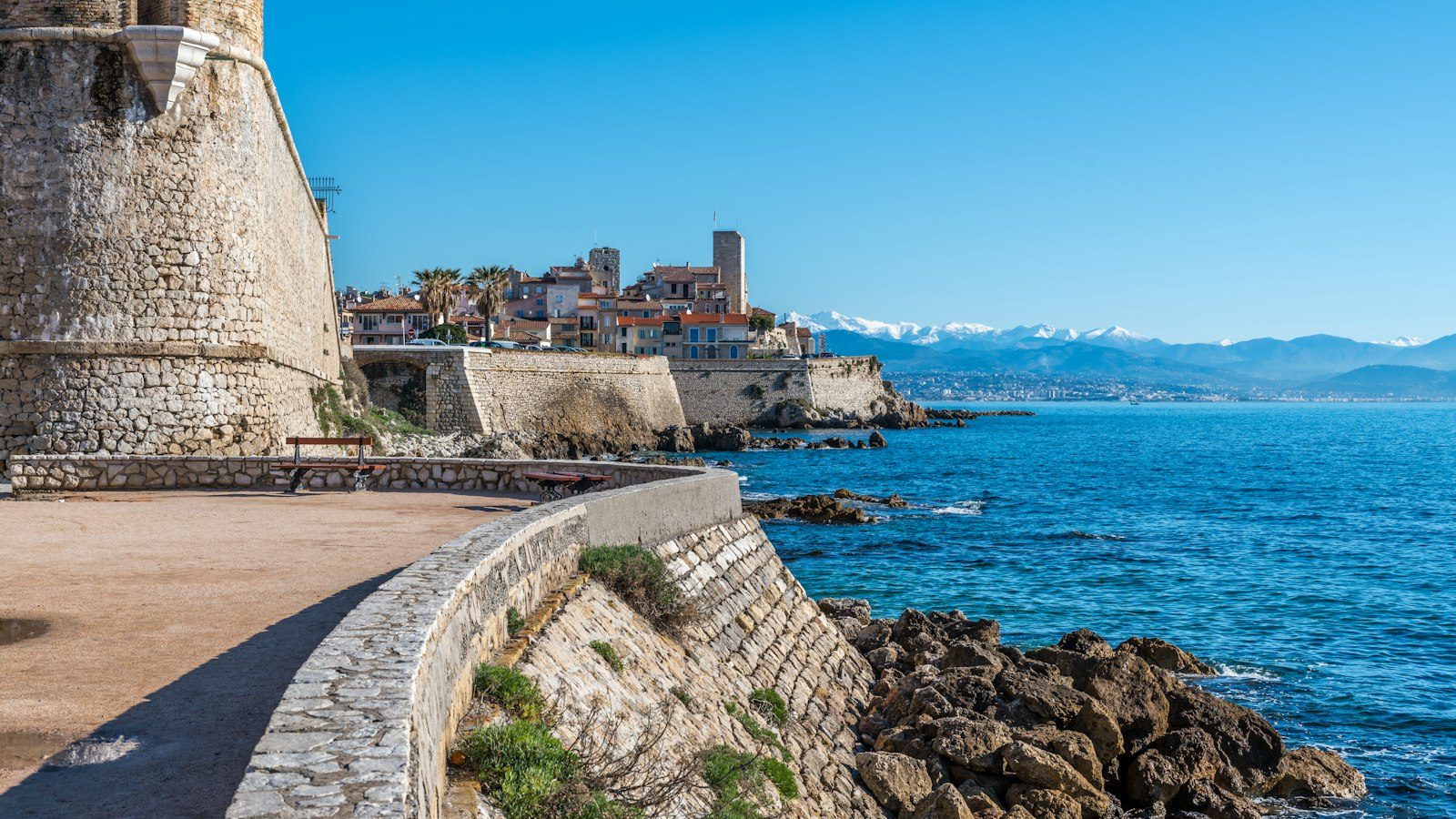
A walled old port between Nice and Cannes, with Picasso's old studio on the ramparts and a morning market under an iron hall. You walk the rocky path around the Cap, swim from small sandy coves and eat socca by the harbour as the yachts come in.
- Best time to visit: May to June and September
- Daily budget (budget traveller): $95 to $300 USD
- Ideal trip length: 3 to 5 days
Antibes sits on the Côte d'Azur between Nice and Cannes, about 20 minutes by train from either. The Greeks founded it as Antipolis, and the old town still sits behind sea walls, with a castle on the ramparts that is now the Musée Picasso. Picasso painted there in the autumn of 1946. Below the walls is Port Vauban, one of the biggest yacht harbours in the Mediterranean, and across the bay is the star-shaped Fort Carré. South of town, the wooded Cap d'Antibes has grand villas, a lighthouse on the hill and a coastal path over white rocks. On the far side of the Cap is Juan-les-Pins, the beach resort with the July jazz festival and the late bars. Vieil Antibes is compact and lived in. Locals do their shopping at the covered market on Cours Masséna, play boules in the squares and drink coffee on Place Nationale. It is not a cheap place to stay, and budget beds are scarce. Still, the €1 local buses, the free beaches, the free coastal path and cheap trains along the coast mean a solo traveller can see a lot of the Riviera from here without spending a fortune.
Antibes is the most lived-in of the Riviera's old towns. About 78,000 people live in the wider commune, which includes Juan-les-Pins and the Cap, but the walled old town is small enough to cross in 10 minutes. The Greeks named it Antipolis, the Grimaldis built a castle on the sea wall, and Vauban fortified the port for the French kings. Today the castle holds Picasso's paintings, the port holds some of the biggest private yachts in the world, and the market under the iron hall on Cours Masséna still opens most mornings. Day trippers from Nice and Cannes come for a few hours. Stay a few nights and you get the better version: the market at 8am, a swim at La Salis before the crowds, the ramparts at sunset and a late dinner in the Safranier lanes.
Getting here is easy. Nice Côte d'Azur airport is about 20 minutes away by train from Nice Saint-Augustin station, and ZOU! regional trains run all day along the coast to Nice, Cannes, Monaco and Ventimiglia. TGVs from Paris also stop here. In town, walk. For the Cap, Juan-les-Pins and the villages inland, use Envibus at €1 a ride if you buy in the app, or get the free Pass Navette for the town shuttles. Base yourself in Vieil Antibes for atmosphere, in Juan-les-Pins for beaches and late bars, or near La Salis for quiet swims.
Timing matters. May, June and September bring warm sea, open beach cafés and fair room prices. July and August are hot and full, with Jazz à Juan, night markets and high prices. From November to March, Antibes is mild and calm, which suits museums and the coastal path, though Juan-les-Pins mostly shuts down. Mondays are worth planning around, as the Picasso museum and Fort Carré are closed, and so is the market outside summer. French is the language of daily life, but English is widely spoken in the old town. Learn a few phrases and greet people when you walk into a shop, and you will be treated well.
Antibes itinerary
Arrive and find your feet
Morning: Take the train from Nice Saint-Augustin (about 20 minutes). Drop your bag and walk into the old town for a coffee on Place Nationale.
Afternoon: Wander the lanes of the Safranier and down to La Gravette for a first swim inside the harbour walls.
Evening: Walk the ramparts along Port Vauban to the Nomade statue for sunset, then eat in the old town lanes.
Market, Picasso and the ramparts
Morning: Be at the Cours Masséna market by 8.30am for socca, olives and fruit. Then go into the Musée Picasso (€12, closed Mondays) when it opens at 10am.
Afternoon: Visit the Archaeology museum in the Bastion Saint-André and the cathedral next to the Picasso museum. Take a picnic to La Salis beach.
Evening: Climb the Chemin du Calvaire to the Garoupe lighthouse for the late light, then walk back down for dinner.
The Cap coastal path
Morning: Take Envibus line 2 towards the Cap and start the Tire-Poil path at Garoupe beach early, before the heat. Allow about two hours.
Afternoon: Swim off the rocks near Villa Eilenroc, then look into the free Jardin Thuret on a weekday. Pack plenty of water.
Evening: Bus or walk over to Juan-les-Pins for a beach sunset and a drink under the pines.
Fort Carré and Biot
Morning: Walk along the port to Fort Carré (about €5) for the classic view back over the old town. Book ahead if you can.
Afternoon: Take an Envibus bus up to the hill village of Biot. Watch the glassblowers and see the Fernand Léger museum.
Evening: Back in Antibes, browse the afternoon craft market on Cours Masséna (Thursday to Sunday in summer, weekends the rest of the year).
Lérins islands via Cannes
Morning: Take the train to Cannes (about 15 minutes) and a morning boat to Île Sainte-Marguerite.
Afternoon: Walk the pine trails, swim in a rocky cove and see the fort where the Man in the Iron Mask was held. If you have time, add Saint-Honorat and its monks' vineyards.
Evening: Boat back to Cannes, a stroll on the Croisette, then the train home to Antibes.
A day in Nice
Morning: Take the train to Nice (about 20 minutes, around €6-7). Explore the flower market and the lanes of Vieux Nice.
Afternoon: Climb Castle Hill for the view over the Baie des Anges, then walk the Promenade des Anglais or visit the Matisse museum.
Evening: Train back to Antibes for a farewell dinner in the old town.
Slow morning and depart
Morning: Have a last swim at La Salis and breakfast at the market before it closes at 1pm.
Afternoon: Buy olive oil, herbes de Provence or soap to take home, then take the train back to the airport. Check times the day before.
Evening: Fly out of Nice, or carry on along the coast to your next stop.
Best neighbourhoods
- Vieil Antibes: The old town inside the sea walls, with the Musée Picasso, the cathedral, the Cours Masséna market and Place Nationale. Most restaurants, bars and small hotels are here, and the train station is a 10-minute walk away. It is lively on summer nights, so ask for a room off the main squares if you sleep lightly.
- Port Vauban and La Gravette: The harbour edge of the old town, with superyachts, the Nomade statue on the Bastion Saint-Jaume and the small sandy Plage de la Gravette tucked inside the walls. It is the nicest area for evening walks. There are fewer places to stay right on the port, but you are only minutes from everything.
- Juan-les-Pins: The beach resort on the west side of the Cap, with long sandy beaches, the Pinède Gould pine grove where Jazz à Juan is held, and the town's late-night bars. It has its own train station. Busy and fun in July and August, very quiet in winter, when many places close.
- La Salis and Cap d'Antibes: The leafy residential peninsula south of the old town. La Salis beach has views back to the ramparts, and the Garoupe beach marks the start of the coastal path. Stay here for calm nights and morning swims, but expect to rely on buses or long walks after dark.
- Centre and the station: The modern town around the train station, Place de Gaulle and the streets leading to the old town. It is less pretty but practical, with cheaper hotels, supermarkets and the main Envibus hub. Everything in the old town is about 10 minutes away on foot.
Must-do experiences
- See Picasso in the Château Grimaldi: The castle on the ramparts was Picasso's studio in 1946, and the works he made there are still on show above the sea. Adult entry is €12, and it is closed on Mondays. Entry is free for everyone for a week each November and February, and a €15 pass covers four city sites over seven days.
- Shop the Provençal market: The covered market on Cours Masséna sells cheese, olives, socca, flowers and fish from 7.30am to 1pm. It is closed on Mondays from September to May. Go before 9am for the best choice, and come back in the afternoon at weekends, when artists and craftspeople take over the hall.
- Walk the Tire-Poil coastal path: The Sentier du Littoral runs about 5km around the tip of Cap d'Antibes, from the Garoupe beach car park towards Villa Eilenroc. It takes about two hours, it is free and most of it has no shade. It closes when the sea is rough, so check the weather before you go.
- Visit Fort Carré: This 16th-century star-shaped fort guards the north side of Port Vauban, and you get the best view of the old town from its walls. Entry is about €5, and it is closed on Mondays. It also shuts without notice in bad weather, and booking ahead is recommended.
- Walk the ramparts to the Nomade: Follow the sea walls from the Picasso museum to Port Vauban. At the end of the harbour, the Bastion Saint-Jaume holds Jaume Plensa's giant Nomade, a seated figure made of white steel letters. It is free, and it is best at sunset, when the light turns gold on the Alps.
- Climb to the Garoupe lighthouse: From La Salis beach, the steep Chemin du Calvaire climbs past old Stations of the Cross to the Garoupe chapel and lighthouse at the top of the Cap. Allow about 25 minutes. The view stretches from the Estérel hills to the Alps, and on very clear days you can sometimes make out Corsica.
- Swim at La Salis or La Gravette: Antibes has small public sandy beaches that cost nothing. La Gravette sits inside the old harbour walls, and La Salis has the classic view of the ramparts. Go in the morning in summer, when the sand is still empty, and leave the paid beach clubs to Juan-les-Pins.
Hidden gems
- Rue du Safranier and the little Safranier quarter behind the ramparts, a village within the old town that proudly calls itself a 'free commune', with flowers on every doorstep
- The Musée d'Archéologie in the Bastion Saint-André, a quiet €5 stop with Greek and Roman finds from ancient Antipolis and from wrecks off the coast
- The Jardin Thuret on the Cap, a free botanical garden run by a research institute, full of exotic trees and almost always empty
- The brocante on Place Nationale on Thursday and Saturday, where you can browse old prints, glassware and books over a coffee
- The rocky coves below Villa Eilenroc at the end of the Tire-Poil path, where locals swim off the flat rocks away from the beach crowds
Daily budget
- Accommodation: budget €35-55 / night (seasonal hostel dorm) or €75-110 (simple hotel single), mid-range €130-220 (old town boutique hotel or apartment), splurge €450+ (seafront hotel in Juan-les-Pins or on the Cap). Hostel beds are few and seasonal, so book early. Prices peak in July, August and during the Cannes festivals. A per-night tourist tax is added on top.
- Food: budget €25-35 / day (market picnic, socca, bakery breakfast), mid-range €50-80 (set lunch menu and a sit-down dinner), splurge €120+ (bouillabaisse, seafood and wine). Set lunch menus (formules) of €18-25 are the best value. Dinner mains run roughly €20-35. Restaurants on the port and in Juan-les-Pins charge more.
- Transport: budget €1-4 / day (Envibus tickets or day pass), mid-range €10-20 (buses plus a coastal train trip), splurge €40+ (taxis or a Lérins boat trip). Envibus tickets cost €1 in the app or €1.50 on board. A day pass is €3.50 and a 7-day pass €10. The train to Nice is about €6-7.
- Activities: budget €0-5 / day (beaches, coastal path, ramparts, Fort Carré at €5), mid-range €12-20 (Picasso museum €12, or the €15 four-site pass), splurge €40+ (guided tours, boat trips, jazz festival tickets). The €15 pass covers the Picasso museum, Fort Carré and the Archaeology and Peynet museums over seven days. The Picasso museum is free for a week each November and February.
- Drinks & nightlife: budget €5-10 (a glass of rosé or a beer on a square), mid-range €20-40 (a few drinks in the old town), splurge €60+ (cocktails at a Juan-les-Pins beach club). A coffee costs about €2-3 and a glass of wine €5-7. The old town has bars and terraces, while Juan-les-Pins stays open later in summer.
Where to stay
- Social hostel in Cap d'Antibes or near the station (€35-55 / night (dorm)): Antibes has only a handful of budget beds, including a seasonal youth hostel on the Cap that usually opens from spring to autumn. Check the opening dates, or pick a simple budget hotel near the station, 10 minutes from the old town.
- Boutique hotel in La Salis (€140-280 / night): Small family-run hotels such as La Jabotte sit a short walk from La Salis beach, with a garden feel and a quiet setting. The old town is about 15 to 20 minutes away on foot along the seafront.
- Apartment in Vieil Antibes (€100-180 / night): Flats in old stone houses give you a kitchen for market shopping and the best evening atmosphere. Expect steep stairs, no lift and some noise from the lanes in summer.
- Splurge in Juan-les-Pins (€500-1,000+ / night): Hôtel Belles Rives is a 1930s seafront hotel where F. Scott Fitzgerald once stayed, with a private beach and a jetty. You get art deco glamour and the beach, and the old town is a short bus or taxi ride away.
What to eat
- Socca: the thin, peppery chickpea pancake cooked in a wood oven, sold hot by the slice at the Cours Masséna market for a few euros
- Pissaladière and pan bagnat: onion and anchovy tart, and a big Niçoise tuna sandwich, both ideal for a beach picnic
- Salade niçoise: the real local version, with tuna or anchovies, eggs, olives and raw vegetables but no potatoes
- Daube provençale and tourte de blettes: slow-cooked beef in red wine, and a sweet or savoury Swiss chard pie, often on set lunch menus
- Bouillabaisse: the fish stew is a pricey treat, often €50 or more and sometimes ordered a day ahead, so save it for one special dinner
- Provençal rosé, pastis on the square, or a glass of absinthe at the old cellar bar on Cours Masséna
Day trips
- Îles de Lérins (About 15 minutes by train to Cannes, then 15 to 30 minutes by boat): Two quiet islands off Cannes. Sainte-Marguerite has pine forest, swimming coves and the fort where the Man in the Iron Mask was held. Saint-Honorat has a working monastery and vineyards. Take the train to Cannes and walk to the Quai Laubeuf ferry terminal by the old port. Return boats cost roughly €17-20. Bring a picnic, as food on the islands is limited and expensive.
- Biot (About 8km north of Antibes, 20 to 30 minutes by bus): A hill village known for its bubbled glassware, with arcaded squares, glassblowing workshops and the Fernand Léger national museum below the village. Take an Envibus bus from the Antibes hub for €1 with an app ticket. Check return times, as evening buses are less frequent. Combine it with an afternoon swim back on the coast.
- Nice (About 20 minutes by train): The Riviera's big city, with the Promenade des Anglais, the baroque old town, the flower market on Cours Saleya, Castle Hill and the Matisse and Chagall museums. ZOU! trains run all day from Antibes to Nice-Ville for around €6-7 one way. Use the tram to reach Cimiez for the Matisse museum.
When to visit
- Spring (April - May): 16-22°C, sunny and fresh, sea still cool until late May. Crowds: Moderate, busier at Easter and on May bank holidays. Great for the coastal path, museums and fair room prices. Swimming is chilly until late May, and the Cannes Film Festival pushes up prices along the coast in mid-May.
- Early summer (June): 23-27°C, sunny, sea around 21-23°C. Crowds: Moderate, rising towards the end of the month. Arguably the best month. Long evenings, warm water, the market open daily and the summer night markets just starting.
- High summer (July - August): 27-31°C, hot and humid, sea up to about 25-26°C. Crowds: Very busy, especially in Juan-les-Pins and on the beaches. Best for nightlife and Jazz à Juan, but rooms cost the most and the beaches fill by mid-morning. Book well ahead and walk the Cap early.
- Autumn and winter (September - March): September 22-26°C, then cooling to 10-15°C by day in winter. Crowds: Moderate in September, quiet from November. September is the locals' pick, with warm water and calm streets. Winter is mild and cheap, and good for walking and museums, but many beach places close.
Entry rules for your passport
Visa rules for France depend on the passport you travel on. Check the official source before you book: European Commission: Schengen visa policy
Getting there
Nice Côte d'Azur airport is about 20km away. The quickest public route is the train from Nice Saint-Augustin station, a short walk or one tram stop from Terminal 1, which reaches Antibes in about 20 minutes for around €6-7. The ZOU! 200 bus runs along the coast from Nice to Cannes via Antibes and is cheaper but often slow. The express 82 bus links the airport with Antibes and Vallauris, and a taxi costs roughly €70-80. Antibes station is on the main coastal line, with ZOU! trains to Nice, Cannes, Monaco and Ventimiglia every 15 to 30 minutes and direct TGVs from Paris in about six hours. The station is about 10 minutes' walk from the old town, and the main Envibus hub is next to it. If you drive, parking in the old town and port is expensive and scarce in summer. The free car park at Garoupe beach is handy for the Cap.
Border checks: non-EU visitors (other than Swiss, Norwegian, Icelandic, Liechtenstein, Andorran, Monegasque, San Marinese and Vatican citizens, and holders of an EU residence permit or long-stay visa) are registered in the EU's Entry/Exit System (EES) instead of getting a passport stamp. On your first crossing, officers take your photo and/or fingerprints, so allow extra time at passport control. ETIAS, the planned travel authorisation, is not in operation yet, so don't pay any website for one.
Getting around
Vieil Antibes is small and mostly pedestrian, so you will walk everywhere in town. It takes about 10 minutes from the train station to the Picasso museum and about 20 minutes along the port to Fort Carré. Envibus runs the local buses. A single ticket costs €1 in the Envibus CapAzur app or at a machine, or €1.50 from the driver. It is valid for an hour including changes. A day pass costs €3.50 and a 7-day pass €10. The free Pass Navette, available in the app or at machines, gives free rides on the town-centre shuttles (lines 14 to 17) and the Bus-Tram lines A and B. Line 2 runs out to Cap d'Antibes. Envibus does not go to Nice or Cannes, so use the regional ZOU! trains, which run about every 15 to 30 minutes along the coast. Nice takes about 20 minutes and costs around €6-7. The ZOU! 200 bus also runs along the coast and is cheaper but slow in traffic. Taxis are expensive, so keep them for late nights. Parking in summer is costly and hard to find.
Safety
Antibes is safe and relaxed, and violent crime against visitors is rare. The main problem is theft. Watch your phone and bag on the busy coastal trains, at the station and on summer beaches, and never leave valuables on the sand while you swim. Juan-les-Pins can get rowdy late on summer nights, so keep an eye on your drink and take a taxi rather than walking back alone along the dark Cap roads. The Tire-Poil path is rocky and uneven, gets very hot in summer and closes in rough seas. Do not ignore the barriers, as waves can sweep across the rocks. Watch for jellyfish in some summers and sea urchins on rocky entries. Tap water is safe to drink. The EU emergency number is 112. EU travellers should carry an EHIC and UK travellers a GHIC, and everyone else needs travel insurance with medical cover.
Solo travel tips
- Book a bed early: Antibes has very few hostel beds, and good single rooms go fast from May to September. Book months ahead for summer, or look at the cheaper hotels near the station.
- Plan around Mondays: The Musée Picasso and Fort Carré are closed on Mondays, and so is the market from September to May. Use Mondays for the coastal path, the beach or a day in Nice.
- Buy bus tickets in the app: An Envibus ticket costs €1 in the CapAzur app but €1.50 on board. Get the free Pass Navette too, as it makes the town shuttles and lines A and B free.
- Eat well at lunch: Set lunch menus are much cheaper than dinner. Have a market picnic or socca on most days, and save the bouillabaisse for one special night.
- Safety for solo travellers: Watch your phone on coastal trains and beaches, check that the Tire-Poil path is open before you go, and take a bus or taxi rather than walking the dark Cap roads at night.
- Meet people at markets and walks: Join a tourist office walking tour or a guided nature walk on the Cap. Market cafés, the night markets and the jazz festival in July are easy places to start a conversation.
Cultural etiquette
- Always say 'bonjour' when you walk into a shop, café or bakery, and 'merci, au revoir' when you leave. Skipping it comes across as rude.
- Cover up when you leave the beach. Walking through the old town or into shops in swimwear is frowned upon.
- Dress modestly in the cathedral and the Garoupe chapel, with covered shoulders, and keep quiet during services.
- Do not touch produce at market stalls. Point or ask, and let the seller pick for you.
- Lunch runs roughly from noon to 2pm and dinner rarely before 7.30pm. Outside those hours, many kitchens are closed.
- Service is included in French bills. Rounding up or leaving a few euros for good service is appreciated but not expected.
- Keep to the path and take your rubbish with you on the Cap, which is a protected Natura 2000 site.
Frequently asked questions
How do I get from Nice airport to Antibes?
The easiest way is the train. Walk or take the tram one stop from Terminal 1 to Nice Saint-Augustin station, then catch a ZOU! regional train to Antibes. The ride takes about 20 minutes and costs around €6-7. The ZOU! 200 coastal bus is cheaper but can take over an hour in traffic. There is also an express airport bus, line 82. A taxi costs roughly €70-80. Antibes station is about 10 minutes' walk from the old town.
How many days do I need in Antibes?
Two nights covers the old town, the Picasso museum, the market, the ramparts and a swim. Three to five nights lets you add the Cap coastal path, Fort Carré, the Garoupe lighthouse and a day in Juan-les-Pins or Biot. With a week you can use Antibes as a base for Nice, Cannes and the Lérins islands.
When is the best time to visit Antibes?
May, June and September are best. The sea is warm enough to swim, the coastal path is pleasant and prices are below their peak. July and August are hot, crowded and expensive, though Jazz à Juan and the night markets are a draw. Winter is mild and quiet, and good for museums and walking, but many beach businesses in Juan-les-Pins close.
Is Antibes expensive for solo travellers?
Rooms are the expensive part, as there are few hostel beds and single rooms in summer often cost €100 or more. Everything else can be cheap. Local buses cost €1, the beaches and coastal path are free, market socca costs a few euros and trains along the coast cost a few euros too. Travelling in May, June or September keeps room prices down.
Is the Musée Picasso worth it, and when is it open?
Yes, even if you are not a big art fan, because the setting on the ramparts over the sea is half the appeal. It is open Tuesday to Sunday from 10am to 6pm in summer, with a lunch break from 1pm to 2pm between mid-September and mid-June. Adult tickets cost €12. Entry is free for a week each November and February, starting on the first Tuesday after 1 November and the first Tuesday in February.
Can I swim in Antibes?
Yes. The public beaches are free: La Gravette inside the old port walls, La Salis on the edge of the Cap, the Garoupe beach and the long sandy stretches of Juan-les-Pins. Paid beach clubs rent loungers in summer. Locals also swim off the rocks along the Cap coastal path. Take water shoes for the urchins.
Is Antibes safe for solo female travellers?
Yes. The old town is busy and well lit in the evenings, and it is a comfortable place to eat and drink alone. Take normal care with drinks in Juan-les-Pins bars, watch your bag on the coastal trains and avoid walking the quiet, unlit Cap roads late at night. Use a bus or taxi instead.
What entry rules apply to France in 2026?
France is in the EU and the Schengen area. Many non-EU visitors, including those from the UK, US, Canada and Australia, can stay visa-free for up to 90 days in any 180-day period across Schengen. The EU's Entry/Exit System has been fully running since April 2026 and records non-EU travellers' fingerprints and photos at the external border. The ETIAS travel authorisation has not started yet, so check whether a launch date has been announced before you travel. Confirm the rules on official EU and French government websites, and check your own government's travel advice.
Tours and activities in Antibes | Antibes in 2 days | Antibes in 3 days | Antibes in 4 days | Antibes in 5 days | Antibes in 7 days
Can't decide? Compare Antibes with...
Joy Plus home | Destinations | Itineraries | Activities | Flights | Budget planner | Calendar | Map | Blog | Lifetime access