Destinations / Europe
Antwerp, Belgium travel guide
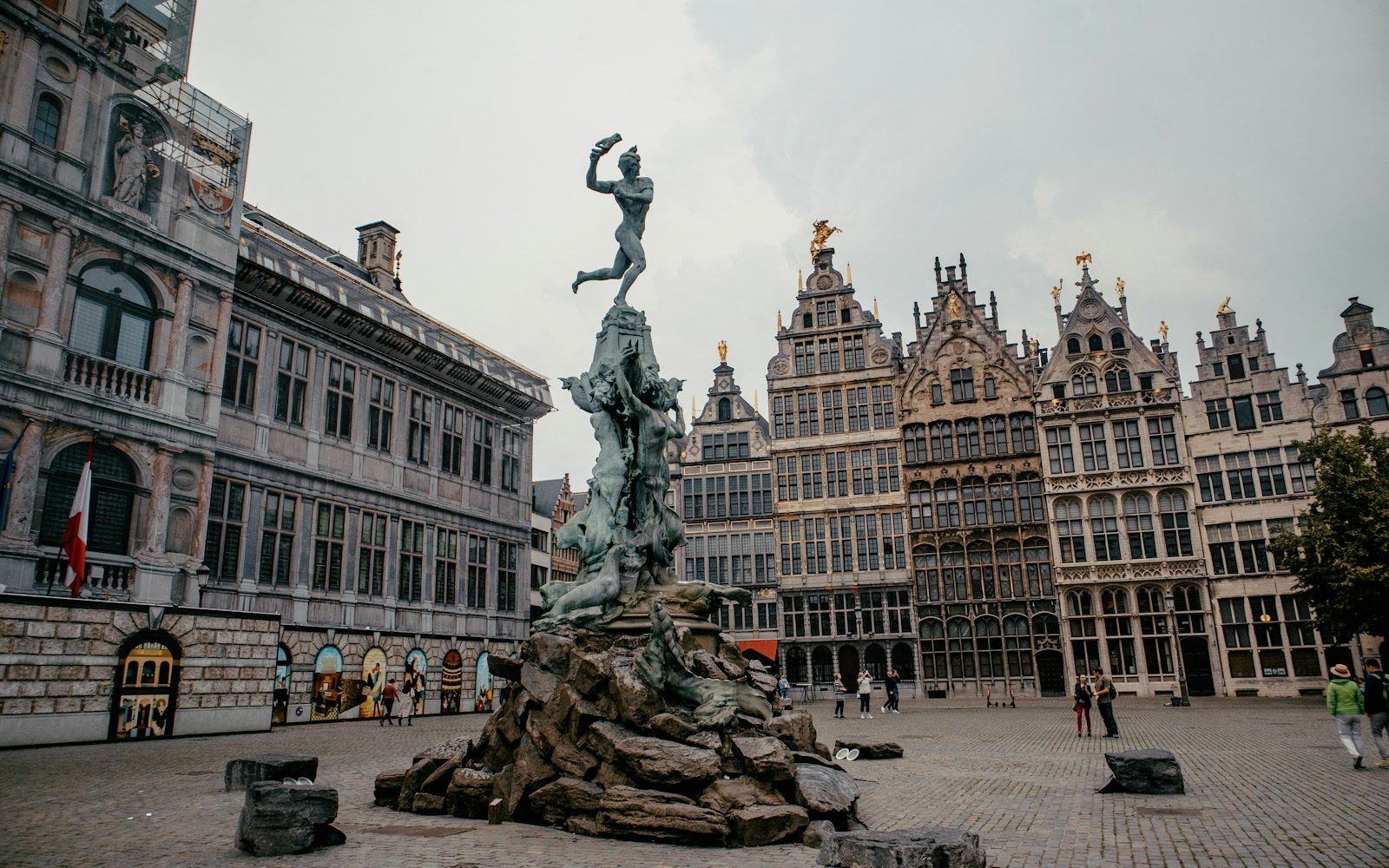
Belgium's stylish second city: a grand cathedral, Rubens, diamonds, cutting-edge fashion and a buzzing port.
- Best time to visit: May-September
- Daily budget (budget traveller): $95 to $160 USD
- Ideal trip length: 2 days
Antwerp is Belgium's coolest city, a wealthy port that pairs a glorious Gothic cathedral, Rubens masterpieces and a beautiful guildhall square with world-leading fashion, a famous diamond trade and a confident creative edge. Compact and walkable, it rewards art lovers, shoppers and food fans alike. Joy Plus shapes the cathedral, the museums, the fashion district and the riverside into an easy couple of days.
Antwerp is a port city that never apologised for being rich, and you can read that in the stone. The Cathedral of Our Lady has the tallest Gothic spire in the Low Countries. The Grote Markt is ringed by gilded guildhalls. Peter Paul Rubens painted his biggest altarpieces here and lived in a house on the Wapper that is closed for restoration until 2030 at the earliest, though its garden, library and the Rubens Experience are open. Then there is the modern layer: the Antwerp Six, the fashion graduates who put the city on the style map in the 1980s, and a diamond trade that, by most estimates, still handles the large majority of the world's rough stones. Add Antwerpen-Centraal, a 1905 railway station with a stone dome that looks like it hosts opera, and you get a city that feels both grand and slightly irreverent.
It is compact, flat and built around a bend in the river Scheldt. The Old Town and Grote Markt sit on the water, the Fashion District fans out to the west around Nationalestraat, Het Zuid (the South) holds the museums and the best dinners, and Het Eilandje, the old docks, tops out at the MAS tower with a free rooftop terrace. You can walk between nearly all of it in 20 minutes, and a Velo bike share or the De Lijn trams handle the rest. The big planning trap is the calendar. Rubenshuis, MAS, MoMu, KMSKA and Plantin-Moretus all close on Mondays, and many fashion boutiques and Jewish-owned diamond shops keep short hours on Sundays and Saturdays. Build around that and the city flows.
Antwerp suits people who like to eat, drink and look at things in no particular order. It is the home of the bolleke (a De Koninck amber ale in a round goblet), the Antwerpse hand biscuit, a serious frites culture and brown cafés that have been pouring beer since before your grandparents were born. It is cheaper and calmer than Brussels, and far less crowded than Bruges. Two days covers the essentials, four lets you slow down, and the train network turns it into a base for Ghent, Bruges and Mechelen without ever changing hotels. Bring a rain jacket and comfortable shoes for cobbles, and leave the car at home.
How many days in Antwerp?
For Antwerp, we recommend 2 days. With more time, add a day trip to Bruges or Mechelen.
| Trip length | What you'll see | Itinerary |
|---|---|---|
| 2 days · Recommended | Station, Meir and the Old Town (Monday-proof); Rubens, printing and the Scheldt | Antwerp in 2 days |
| 3 days | Adds: Fashion District and Sint-Andries | Antwerp in 3 days |
| 4 days | Adds: Het Eilandje, MAS and the docks | Antwerp in 4 days |
| 5 days | Adds: Ghent day trip | Antwerp in 5 days |
| 7 days | Adds: Het Zuid and Zurenborg; Handjes, a slow morning | Antwerp in 7 days |
Antwerp itinerary
Station, Meir and the Old Town (Monday-proof)
Morning: Arrive at Antwerpen-Centraal and look up at the 1905 hall. Coffee under the clock, then walk De Keyserlei and the Meir to Groenplaats.
Afternoon: Cathedral of Our Lady (about €10, Mon-Fri opens 10am, Sunday 1pm), with four Rubens including the Descent from the Cross. Frites from Frituur No 1 on Hoogstraat. Wander the Grote Markt and the Brabo fountain.
Evening: Beer at Paters Vaetje in the cathedral's shadow. Dinner at a brown café or Dock's Café for mussels, then genever at De Vagant (Reyndersstraat 20).
Rubens, printing and the Scheldt
Morning: Rubenshuis (Wapper 9): the house is closed for restoration until 2030 at the earliest, but the garden, library and Rubens Experience are open. Walk the Wapper, stop for a coffee in the old centre.
Afternoon: Plantin-Moretus Museum on Vrijdagmarkt 22 (UNESCO, about €12). Then Museum Mayer van den Bergh for Bruegel's Dulle Griet if you have energy.
Evening: Walk through the wooden-escalator Sint-Annatunnel (free) under the Scheldt for the skyline view at golden hour. Return to the Steen for a beer on the riverbank.
Fashion District and Sint-Andries
Morning: MoMu on Nationalestraat 28 at opening, about €13, then Het Modepaleis at number 16 for Dries Van Noten's old flagship.
Afternoon: Lunch at Graanmarkt 13, then browse Lombardenvest (Louis), Kammenstraat for vintage and Kloosterstraat for antiques.
Evening: Kulminator (Vleminckveld 32) for aged Belgian ales, then a late dinner back in the Old Town.
Het Eilandje, MAS and the docks
Morning: Walk or ride a Velo bike to the MAS. The rooftop terrace is free (Tue-Sun 10-5), the museum ticket extra. Next door, the Red Star Line Museum tells the emigrant story to America.
Afternoon: See Zaha Hadid's Port House, then stroll Het Eilandje's marina and old warehouses.
Evening: Dinner at Het Pomphuis in the former pump house, then drinks around Verversrui. Dancers continue to Café d'Anvers.
Ghent day trip
Morning: Train from Antwerpen-Centraal to Gent-Sint-Pieters (about 55 min, around €14 each way), then tram 1 to Korenmarkt. Visit St Bavo's Cathedral for the Ghent Altarpiece.
Afternoon: Graslei and Korenlei canalside, lunch at a quayside café, then Gravensteen castle.
Evening: Train back to Antwerp. Easy dinner of moules-frites and an early night.
Het Zuid and Zurenborg
Morning: KMSKA (Leopold De Waelplaats 1) at 10am opening, about €20, for Rubens, Ensor and Van Eyck's Saint Barbara.
Afternoon: Coffee in Het Zuid, FOMU photography museum, then train to Berchem and walk Cogels-Osylei, Antwerp's art nouveau street, around 10 minutes.
Evening: Aperitivo at Café Hopper (Leopold De Waelstraat 2), then dinner in Het Zuid.
Handjes, a slow morning and departure
Morning: On a Sunday, Vogelenmarkt at Theaterplein. Otherwise coffee and a last browse of the Meir. Buy Antwerpse handjes at Del Rey (Appelmansstraat 5).
Afternoon: Optional 20 minute train to Mechelen for the Sint-Romboutstoren. Last frites.
Evening: Train from Antwerpen-Centraal to Brussels Airport (30-45 min, direct).
Best neighbourhoods
- Old Town & Grote Markt: The historic heart around the cathedral, the guildhall square and the riverside Het Steen castle.
- Het Zuid (The South): An elegant district of galleries, museums, leafy squares and a strong restaurant and bar scene.
- Fashion District: The streets around the Nationalestraat and the MoMu fashion museum, full of avant-garde boutiques.
- Het Eilandje: The revitalised old docklands with the striking MAS museum, marina and waterfront dining.
Must-do experiences
- Cathedral of Our Lady: See the soaring Gothic cathedral with its tower and four masterpieces by Rubens.
- Rubens House (Rubenshuis): The painter's house itself is closed for restoration until 2030 at the earliest. The garden, the library and the immersive Rubens Experience are open, and his masterpieces hang in the cathedral.
- MAS Museum & Het Eilandje: Ride to the rooftop of the striking MAS for panoramic views over the port and city.
- Fashion & shopping: Browse avant-garde boutiques and the MoMu fashion museum in the design district.
Hidden gems
- The opulent, palatial Central Station, often called the world's most beautiful.
- The Plantin-Moretus Museum, a UNESCO-listed historic printing house.
- Sunset and a beer on the riverbank by Het Steen castle.
- The hidden baroque St Charles Borromeo Church near the centre.
Daily budget
- Accommodation: budget €30-50 / night (hostel dorm, Pulcinella), mid-range €130-200 (boutique double, Old Town), splurge €350+ (Botanic Sanctuary, Hotel Julien suites). Het Zuid and the Old Town cost most. Zurenborg and Berchem are noticeably cheaper and a 10 minute train ride from the centre.
- Food: budget €25-35 / day (frites, bakery lunch, snack dinner), mid-range €60-90 (set lunch plus a proper dinner), splurge €250+ (The Jane, two Michelin stars). A cone of frites is €4-6, and many restaurants run a dagschotel or lunch menu at €18-30 that costs half the dinner price.
- Transport: budget €0-8 / day (walk, 24h De Lijn pass about €8), mid-range €15-30 (Velo bikes, tram, train to Ghent or Mechelen), splurge €80+ (private driver to Bruges, taxis). The centre is walkable. Under 26s get a flat Belgian rail ticket of about €7 to €8, and weekend return fares are half price.
- Activities: budget €0-15 / day (MAS rooftop free, Central Station free, Sint-Anna tunnel free, one cathedral visit), mid-range €30-55 (KMSKA about €20, MoMu about €13), splurge €100+ (private fashion or diamond tour, Rubens guide, harbour boat). Many museums are closed Mondays, so use Monday for free sights and shopping.
- Drinks & nightlife: budget €10-15 (bolleke €3.50-4.50 at a brown café), mid-range €25-45 (Kulminator, De Vagant, a cocktail), splurge €80+ (late cocktails, Café d'Anvers entry and drinks). Order a bolleke for De Koninck, a genever at De Vagant, and expect €4-5 for pints at busy terraces.
Where to stay
- Social hostel in Old Town (€30-55 / night): Pulcinella Hostel, a short walk from the Grote Markt, with a social bar, mixed dorms and a central base. You can walk to the cathedral in five minutes.
- Boutique hotel in Old Town (€150-260 / night): Hotel Julien on Korte Nieuwstraat, a design hotel in a restored mansion, quiet and close to the cathedral and Meir. Hotel Rubens-Grote Markt is a more classic alternative.
- Apartment in Het Zuid (€90-150 / night): Residential streets, galleries and the best restaurants within five minutes. Self-catering works well since weekday lunches are cheap. Zurenborg is a good cheaper alternative.
- Splurge in Old Town, off the Meir (€350-600 / night): Botanic Sanctuary Antwerp, a converted monastery with a spa, garden and breakfast made for lingering. Hotel Julien suites are the next step down.
What to eat
- Antwerpse handjes, hand-shaped biscuits and chocolates
- Moules-frites, mussels with fries
- Belgian frites with sauce and local craft beer
- De Koninck, the city's signature amber ale (a 'bolleke')
Day trips
- Ghent (About 55 min by train): Canals, guildhalls, Gravensteen castle and the Ghent Altarpiece at St Bavo's. Livelier and less touristy than Bruges. Train from Antwerpen-Centraal to Gent-Sint-Pieters, about €14 one way, then tram 1 to Korenmarkt. Weekend returns are half price.
- Bruges (About 1h20 by train): The medieval postcard, best before 10am and after 5pm when day trippers leave. Climb the Belfry and walk the quiet canals. Train from Antwerpen-Centraal to Brugge, about €19 each way, with a change in Ghent on some services. Walk 20 minutes to the centre.
- Mechelen (About 20 min by train): A compact, quieter Flemish town with the 97 m Sint-Romboutstoren and the Gouden Carolus brewery, Het Anker. Train from Antwerpen-Centraal to Mechelen, about €5 each way, every 10 to 15 minutes.
When to visit
- Spring (April - June): 9-20°C, changeable, short showers, sunny spells by May. Crowds: Building, manageable. The best window. Terraces open along the Scheldt, days run past 9pm in June, and museum queues are still short.
- Summer (July - August): 19-25°C on average, heat spikes to 30°C+, thundery showers. Crowds: Moderate, locals travel in August. Lively with free open-air events, but some boutiques and small restaurants close for holiday weeks in August. Check opening times.
- Autumn (September - October): 11-19°C, damp, golden light in early October. Crowds: Moderate to low. Locals' favourite. Fashion shops launch new collections, brown cafés fill up, and hotels dip in price after the first week of October.
- Winter (November - March): 1-8°C, grey, drizzle, occasional frost. Crowds: Low, except December weekends. Atmospheric with the Christmas market and ice rink on the Grote Markt and Groenplaats. Cheapest hotels outside December, and perfect museum and beer weather.
Entry rules for your passport
Visa rules for Belgium depend on the passport you travel on. Check the official source before you book: European Commission: Schengen visa policy
Getting there
Brussels Airport (BRU) has a direct train to Antwerpen-Centraal in 30 to 45 minutes, about €15-17 including the airport supplement. Buy it on the SNCB app or at the station, and it runs every 15 to 30 minutes. Antwerp's small airport (ANR) is about 5 km from the centre, with a taxi or Uber at roughly €15-25. Amsterdam Centraal has direct trains in around 1h50, and Eurostar from London to Brussels-Midi in 2 hours connects to Antwerp in 30 more minutes. Antwerpen-Centraal itself is the arrival point for most visitors and is a destination in its own right. Do not rent a car, the city has a low emission zone and parking is pricey.
Border checks: non-EU visitors (other than Swiss, Norwegian, Icelandic, Liechtenstein, Andorran, Monegasque, San Marinese and Vatican citizens, and holders of an EU residence permit or long-stay visa) are registered in the EU's Entry/Exit System (EES) instead of getting a passport stamp. On your first crossing, officers take your photo and/or fingerprints, so allow extra time at passport control. ETIAS, the planned travel authorisation, is not in operation yet, so don't pay any website for one.
Getting around
Antwerp's centre is compact and very walkable, and it's a wonderfully bike-friendly city. An extensive tram, premetro and bus network (De Lijn) covers the wider city cheaply, and trains link Brussels and its airport in well under an hour from the magnificent Central Station. A day pass is good value, and the flat, walkable layout makes getting around easy.
Safety
Antwerp is generally safe and comfortable for solo travellers including women. Violent crime is rare; the main cautions are pickpocketing around Central Station, the diamond district and busy shopping streets, and some areas near the station and parts of the north that feel rougher at night. Use normal city sense and stick to busy streets after dark.
Solo travel tips
- Drink at the bar in a brown café: Pelgrim, Den Engel and Paters Vaetje all have bar counters. Order a bolleke, sit there, and chat to whoever is pouring. Regulars are talkative if you are polite and patient.
- Use the free tunnel and the free rooftop: The Sint-Annatunnel under the Scheldt (wooden escalators, free, open daily) and the MAS rooftop are free and spectacular. Do both on the same day for a solo-friendly budget.
- Hostel pick: Pulcinella: Pulcinella Hostel, a short walk from the Grote Markt, is the main social base. Shared dorms from about €30, a lively bar and easy-going staff.
- Mind the Central Station area at night: The streets around Koningin Astridplein and parts of the Schipperskwartier (Verversrui) feel rough after midnight. Take the tram or an Uber instead of walking if you are alone.
- Solo female travellers: Antwerp is generally safe for women alone. Keep the usual rules: watch your drink, stick to busy streets after dark, and lock your bike with two locks. Pickpockets work Meir and Central Station.
- Find your tribe at Café Hopper or the Vogelenmarkt: Café Hopper in Het Zuid has live jazz and a mixed crowd. On Sunday mornings, the Vogelenmarkt at Theaterplein is easy for conversation with stallholders.
Cultural etiquette
- Antwerp is in Dutch-speaking Flanders. Say 'goeiedag' or 'dag', don't open in French, and expect English to be fluent everywhere.
- Service is included on bills. Round up or leave €1-2, nothing like American tipping.
- Every Belgian beer has its own glass and an Antwerp bolleke comes in a round goblet. Wait for your pour and don't ask for a pint of lager in a brown café.
- In a brown café or frituur, order at the counter or wait to be seen, and pay at the end. Locals tell the bartender when they are ready to settle up.
- Many Jewish-owned diamond shops close from Friday afternoon through Saturday. Dress modestly in the diamond district and ask before taking photos of people.
- Museums close on Mondays, many shops close on Sundays, and kitchens often stop at 9:30 or 10pm. Plan meals and visits accordingly.
- Cyclists have priority in bike lanes and ride fast. Stay out of the red lanes and look both ways before stepping out.
Frequently asked questions
How many days do you need in Antwerp?
Two days cover the cathedral, the Rubens House, the MAS museum, the fashion district and the riverside, with time for great food and beer. A third day suits the museums of Het Zuid, more shopping, or a quick train trip to Ghent or Brussels.
Is Antwerp safe for solo travellers?
Yes, Antwerp is generally safe and welcoming for solo travellers including women. The main cautions are pickpockets around Central Station, the diamond district and busy shopping streets, and a rougher feel near the station at night, so use normal city sense.
When is the best time to visit Antwerp?
May to September brings warm weather and lively riverside and café terraces. Spring and early autumn are pleasant and quieter, while December's Christmas market and lights are atmospheric but cold. Antwerp can be rainy year-round, so pack a jacket.
Is Antwerp worth visiting?
Yes. Antwerp is Belgium's most stylish city, blending a magnificent Gothic cathedral, Rubens masterpieces, the world's diamond capital, cutting-edge fashion, a striking modern museum and a great food and beer scene. It's an easy, rewarding alternative to Brussels or Bruges.
How do I get from Brussels Airport to Antwerp?
A direct train links Brussels Airport to Antwerp's Central Station in around 30 to 45 minutes and is the easiest option. From the smaller Antwerp Airport, the city centre is just 10 to 15 minutes away by bus or taxi.
What is Antwerp famous for?
Antwerp is famous for being the world's diamond-trading capital, the home of Baroque painter Rubens, a leading fashion city (the 'Antwerp Six' designers), its magnificent Gothic cathedral, its grand Central Station and its busy port, one of Europe's largest.
Can you do day trips from Antwerp?
Yes. The medieval cities of Ghent and Bruges, the capital Brussels and the historic university town of Leuven are all within about an hour by train (Bruges about 1.5 hours), making Antwerp a great base for exploring Flanders.
Tours and activities in Antwerp | Antwerp in 2 days | Antwerp in 3 days | Antwerp in 4 days | Antwerp in 5 days | Antwerp in 7 days
Can't decide? Compare Antwerp with...
Joy Plus home | Destinations | Itineraries | Activities | Flights | Budget planner | Calendar | Map | Blog | Lifetime access