Destinations / Oceania
Aoraki / Mount Cook, New Zealand travel guide
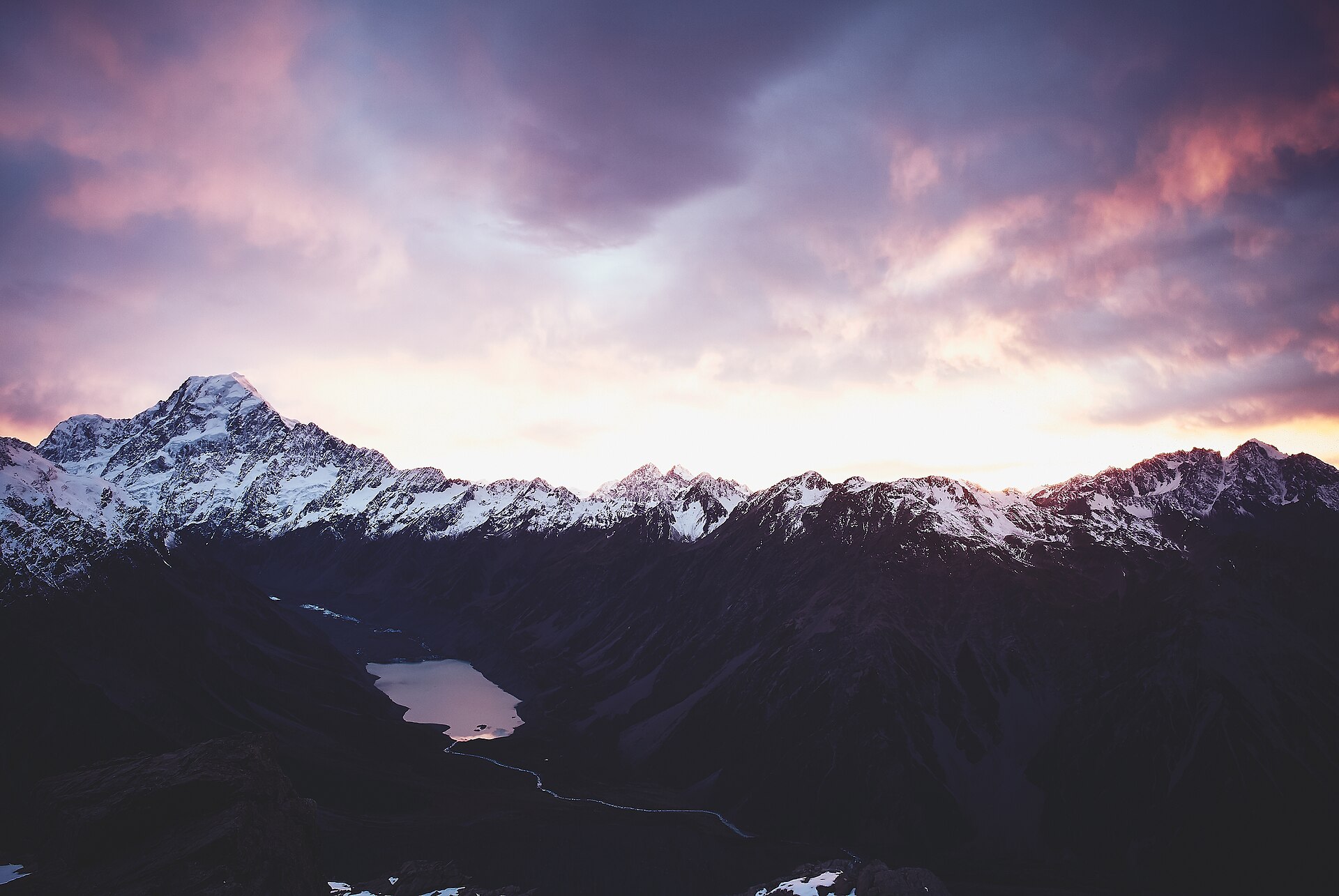
New Zealand's highest mountain at the end of a long, quiet road. Here you walk swing bridges to iceberg lakes, climb to alpine tarns and watch the stars in one of the darkest skies on earth.
- Best time to visit: November to April
- Daily budget (budget traveller): $90 to $355 USD
- Ideal trip length: 3 to 7 days
Aoraki / Mount Cook Village sits at the very end of State Highway 80, about 55km up the shore of Lake Pukaki from the main road. There is no way through, so the road just stops beneath the mountains. Aoraki itself is 3,724m high and the tallest peak in New Zealand. It is sacred to Ngāi Tahu, and the park around it has 19 peaks over 3,000m and the Tasman, the country's longest glacier. The village is tiny. It has the Hermitage Hotel, a free DOC visitor centre, a hostel, a few motels and lodges, a café and a single fuel pump. There is no supermarket and no nightlife, and the weather sets the pace. Most people come on a day trip, walk the Hooker Valley and leave. Stay a few nights and you get a quieter place: an early start on the swing bridges, icebergs on Tasman Lake, the steps up to Sealy Tarns and a sky full of stars over the Aoraki Mackenzie Dark Sky Reserve. Beds are expensive and food has to be planned. But the walking is free, the park has no entry fee, and a daily bus means you can manage without a car. It suits solo travellers who like early nights and big views.
Aoraki / Mount Cook National Park covers about 700 square kilometres of ice and rock on the dry eastern side of the Southern Alps. It forms part of the Te Wāhipounamu World Heritage Area. Aoraki rises to 3,724m above a single village of a few hundred beds. Most visitors arrive on a coach in the late morning, walk the Hooker Valley and leave by late afternoon. That works if time is short, but you miss the best of it. Stay a few nights and you get the Hooker swing bridges at dawn, icebergs drifting on Tasman Lake, the long climb to Sealy Tarns and night skies so dark the Milky Way casts a glow. It is not a cheap place to sleep or eat. But the park is free to enter, the best walks cost nothing, and a hostel kitchen and a bag of groceries from Twizel go a long way.
Logistics are simpler than they look. InterCity buses run daily from Christchurch, taking about five hours, and from Queenstown, taking about four. They stop at the Hermitage, a few minutes' walk from the hostel and the visitor centre. Drivers should fill up and shop in Twizel, an hour south. The village has one card-only fuel pump and no supermarket. Base yourself in the village if you are on foot. Pick Twizel or Glentanner if you have a car and want lower prices. Do the Hooker Valley on your first clear morning. Book Glacier Explorers and stargazing for the next settled day, and keep one day free for weather. Bad days are common, because the mountains catch a lot of rain.
Timing shapes everything here. From November to April the days are long, tracks are mostly clear of snow and boat, kayak and scenic flight trips run fully. December to February is busiest, and the Mueller Hut sells out months ahead. Autumn is the locals' favourite, with settled spells and fewer coaches. Winter is cold and quiet. Snow sits on the valley floor, microspikes are wise on the Hooker, and nights are long and clear for stars, though State Highway 80 can close after heavy snow. Phone signal fades quickly once you leave the village, and the weather can turn fast, so plan for both. If you want nightlife, go to Queenstown. If you want a big walk, a hot meal and a sky full of stars, this is the place.
Aoraki / Mount Cook itinerary
Bus in and settle into the village
Morning: Take the 7.20am InterCity from Christchurch, or drive. Stop at Fairlie for a pie and at Lake Tekapo or Lake Pukaki to stretch your legs. Sit on the right going up SH80 for lake views.
Afternoon: Arrive around 1pm and check in at Haka House or your motel. Head to the free DOC visitor centre for the forecast and exhibits, then walk the Governors Bush loop.
Evening: Cook dinner with your own groceries, or eat at the Old Mountaineers' Café. Step outside after dark for your first look at the stars.
Hooker Valley Track
Morning: Walk the 2km to White Horse Hill and start the Hooker Valley Track by 7.30am. Pause at the Alpine Memorial, cross the three swing bridges and reach Hooker Lake for breakfast with Aoraki in front of you.
Afternoon: Back in the village by lunchtime. Rest your legs, then visit the Sir Edmund Hillary Alpine Centre museum and theatre at the Hermitage.
Evening: A slow dinner and an early night. Book Glacier Explorers and stargazing for tomorrow if the forecast is clear.
Tasman Valley and the stars
Morning: Join Glacier Explorers from the Hermitage (about NZ$219). A bus takes you to the Tasman Valley, then a short walk leads to the boats among the icebergs.
Afternoon: If you have a car, return to the Tasman Valley car park for the Blue Lakes and Tasman Glacier viewpoint, then walk the lake shore track. Otherwise take the short Bowen Bush loop.
Evening: Big Sky Stargazing from the Hermitage (about NZ$165). In summer, tours leave late, around 10.30pm, so have a nap first and bring every warm layer you own.
Sealy Tarns, the big climb
Morning: Set off early on the Kea Point track, then turn up the roughly 2,200 steps to Sealy Tarns. Allow 3 to 4 hours return and carry plenty of water and lunch.
Afternoon: Eat at the tarns with views over the Mueller Glacier and the Hooker Valley. If you have a Mueller Hut booking, carry on up the alpine route and stay the night instead.
Evening: Celebrate with a meal and a beer at the Old Mountaineers' Café. Stretch, eat well and sleep early.
Kea Point and Red Tarns
Morning: An easy walk to Kea Point for the Mueller Glacier lake and the moraine walls, taking about two hours return from the village.
Afternoon: Spare time for weather. If it is clear and your budget allows, book a scenic flight with Mount Cook Ski Planes and Helicopters from the nearby airport. If it is wet, try the planetarium show.
Evening: Walk up to Red Tarns for evening light on Aoraki. Allow about two hours return, and carry a head torch.
Lake Pukaki and Twizel
Morning: Drive, or take a shuttle, down SH80 along Lake Pukaki. Stop at Peters Lookout and the Lake Pukaki visitor centre for Mt Cook Alpine Salmon.
Afternoon: Lunch at a café in Twizel and restock at the supermarket. If you are driving, take the short loop past Lake Ruataniwha.
Evening: Head back to the village, or stay a night in a self-contained unit in Twizel if you are moving on south.
Sunrise and move on
Morning: Catch sunrise from Kea Point or the first Hooker bridge as the light hits Aoraki. Breakfast, then pack.
Afternoon: Take the InterCity to Queenstown or Christchurch from the Hermitage, checking departure times, or drive out via Lake Tekapo.
Evening: Arrive in Queenstown or Christchurch for the night, ready for onward travel.
Best neighbourhoods
- Mount Cook Village: The only settlement inside the park. The Hermitage Hotel, the DOC visitor centre, Haka House hostel, motels, lodges and the Old Mountaineers' Café are all within a 10-minute walk of each other. The bus stops here and short tracks start from the doorstep, so you can manage without a car.
- White Horse Hill: About 2km up the road from the village. It has the DOC campsite, the car park and the start of the Hooker Valley and Mueller Hut tracks. Pitch a tent here for the cheapest night in the park and the earliest start on the Hooker. Parking is now paid and card only.
- Tasman Valley: A side road east of the village leads up the Tasman Valley to the Blue Lakes and the Tasman Glacier viewpoint. Glacier Explorers boats leave from the lake edge here. Nobody stays out here, but without a car you will need the Glacier Explorers bus or a lift.
- Glentanner: A lakeside spot on State Highway 80, about 20 minutes south of the village. Glentanner Park Centre has a campground, cabins and a booking desk for flights and tours. You get wide views of Lake Pukaki and the mountains, and prices are often lower, but you need a car.
- Twizel: A small town about 65km south, and an hour's drive from the village. It has a supermarket, cafés, petrol, self-contained motels and holiday homes. It is the budget base if you have a car, and the place to stock up before heading up the valley.
Must-do experiences
- Walk the Hooker Valley Track: Ten kilometres return, nearly flat, with three swing bridges and Hooker Lake at the end, often with ice floating in it. Allow about three hours. The second bridge is new, opened in July 2026, and is 189m long. Start before 8am for parking and quiet bridges.
- See icebergs on Tasman Lake: Glacier Explorers takes small boats among the icebergs to the face of the Tasman Glacier. It costs about NZ$219 per adult and takes about 2 hours 45 minutes, including a 1.5km walk to the lake. Check the season when you book.
- Climb to Sealy Tarns: About 2,200 steps take you up from the Kea Point track to small tarns with views over the Hooker Valley, Mueller Glacier and Aoraki. It is steep and hard work, so allow 3 to 4 hours return and carry water.
- Look down on the Tasman Glacier: From the end of the Tasman Valley road, a short, steep path climbs past the Blue Lakes to a viewpoint above Tasman Lake. It takes under an hour return and is free, but you need transport to reach the car park.
- Go stargazing in the dark sky reserve: Big Sky Stargazing runs telescope tours from the Hermitage for about NZ$165 per adult. Tours last 75 to 90 minutes, with a minimum age of 8. If the sky is cloudy, the planetarium at the Sir Edmund Hillary Alpine Centre is the backup.
- Spend time in the DOC visitor centre: Entry is free. It covers the park's geology, wildlife, climbing history and Ngāi Tahu stories, and the rangers post the daily weather. Check conditions here and sign in your intentions before any longer walk.
- Walk up to Red Tarns: A steep track behind the village climbs to small red-tinged pools with a view straight up the Hooker Valley to Aoraki. It takes about two hours return and works well in the evening light.
Hidden gems
- The Alpine Memorial near White Horse Hill, a quiet stone cairn remembering climbers lost in the park, right at the start of the Hooker Valley Track
- Freda's Rock on the Hooker Valley Track, named after Freda du Faur, the first woman to climb Aoraki, in 1910
- The Blue Lakes in the Tasman Valley, small lakes beside the glacier viewpoint path that most people walk straight past
- Bowen Bush, a short loop through old mountain totara and broadleaf right in the village, good for a rainy-day stroll
- The Tasman Lake shore track, a flat side path from the viewpoint car park down to the water's edge, where you can see icebergs without paying for the boat
Daily budget
- Accommodation: budget NZ$25-80 / night (campsite or hostel dorm), mid-range NZ$220-400 (motel room or lodge), splurge NZ$500-750+ (Hermitage Premium room). Haka House dorms start from about NZ$55, while its private rooms often top NZ$200. Beds are scarce in summer, so book early. Twizel is cheaper if you have a car.
- Food: budget NZ$35-55 / day (self-catering from Twizel groceries), mid-range NZ$80-120 (café lunch and a restaurant dinner), splurge NZ$150+ (Hermitage buffet or Panorama dining). There is no supermarket, so bring food. Café mains run about NZ$25-40. Prices are rough guides, so check.
- Transport: budget NZ$60-100 each way (InterCity bus), mid-range NZ$70-120 / day (small hire car plus fuel), splurge NZ$250+ (private transfer or scenic flight in). Fill up in Twizel, because the village pump is card only and expensive. White Horse Hill parking is about NZ$25 a day.
- Activities: budget NZ$0 (Hooker Valley, Kea Point, Red Tarns, Sealy Tarns, Tasman viewpoint), mid-range NZ$165-220 (stargazing or Glacier Explorers), splurge NZ$400-600+ (glacier kayaking or a heli-hike). Glacier Explorers costs about NZ$219, Big Sky Stargazing about NZ$165, the planetarium about NZ$35 and the Alpine Centre museum and theatre NZ$20. Glacier Sea Kayaking lists NZ$399 for 2026-27.
- Drinks & nightlife: budget NZ$0-15 (a shop beer at the hostel), mid-range NZ$30-60 (drinks at the Old Mountaineers' or a hotel bar), splurge NZ$80+ (wine with dinner at the Hermitage). Nightlife means a drink with a view, then stars. Bars close early and most people are in bed by 10pm before an early start.
Where to stay
- Social hostel in Mount Cook Village (NZ$55-90 / night (dorm), NZ$200+ private): Haka House Aoraki Mt Cook (formerly the YHA) has dorms from about NZ$55, a big kitchen, a sauna and mountain views. It is walking distance to the bus, the visitor centre and Governors Bush.
- Boutique hotel in Mount Cook Village (NZ$250-450 / night): Aoraki Court Motel or Mt Cook Lodge & Motels give you a private room a few minutes from the visitor centre, and the lodge has a bar and restaurant on site. They are good for a quieter stay without the Hermitage price.
- Apartment in Twizel (NZ$150-280 / night): Self-contained motel units and holiday homes in Twizel have full kitchens and cost much less than the village. The supermarket and cafés are on the doorstep, but it is an hour's drive to the trailheads.
- Splurge in Mount Cook Village (NZ$370-750+ / night): The Hermitage Hotel has run since 1884. Premium rooms on the upper floors look straight up at Aoraki, and stargazing, Glacier Explorers and the Alpine Centre are all inside the building.
What to eat
- Mt Cook Alpine Salmon: king salmon raised in the cold hydro canals of the Mackenzie Basin, sold as sashimi and smoked fillets at the shop by the Lake Pukaki visitor centre
- A pie from Fairlie Bakehouse, the classic stop on the drive or bus ride from Christchurch
- Mackenzie high-country lamb, often on the dinner menu at the Hermitage and the village restaurants
- A post-hike meal and a beer at the Old Mountaineers' Café, with mountain views and old climbing photos on the walls
- A self-catered dinner in the Haka House kitchen, made from food you bought in Twizel or Christchurch, which is by far the cheapest way to eat here
- A thermos of tea and a bag of scroggin (trail mix) for the Sealy Tarns steps or the Hooker Lake shore
Day trips
- Lake Tekapo (About 104km, around 1 hour 20 minutes by car): A turquoise lake with the small stone Church of the Good Shepherd on its shore, plus hot pools at Tekapo Springs and the Dark Sky Project. The church grounds close at night, and the interior opens only on limited days. Drive back down SH80 and east on SH8, or take a shuttle. InterCity Christchurch buses also pass through.
- Twizel and Lake Pukaki (About 65km, under an hour by car): Stop at Peters Lookout for the classic view up Lake Pukaki to Aoraki. Then visit the Lake Pukaki visitor centre and the salmon shop next door. Twizel has cafés, a supermarket and quiet lake walks. Hire a car, or use the shuttles that link the village with Twizel. The InterCity Queenstown bus also passes nearby.
- Clay Cliffs, Omarama (About 95km, around 1 hour 15 minutes by car): Sharp pinnacles and gullies of eroded gravel, a short walk from the car park. The cliffs are on private land, and a small fee is usually paid at the gate. Car only. Drive south via Twizel on SH8 towards Omarama, then follow the signs down a gravel road.
When to visit
- Summer (December - February): 10-22°C in the valley, long days, sudden storms and strong sun. Crowds: Busiest, with day-trip coaches from late morning. Best for the big walks and the Mueller Hut, if you booked months ahead. Start before 8am to beat the crowds, and book beds early.
- Autumn (March - May): 3-17°C, settled spells, cold clear mornings. Crowds: Moderate, easing after Easter. The locals' pick. Golden tussock, sharp light and quieter tracks. Some summer-only trips wind down by mid-April.
- Winter (June - August): -5 to 8°C, snow on the valley floor, short days. Crowds: Low, apart from school holidays. Beautiful and quiet, with the best stargazing. Bring microspikes and warm layers. SH80 can need chains, so leave flexible days.
- Spring (September - November): 2-15°C, changeable, windy, late snow possible. Crowds: Low to moderate. Lupins along the lake roads by November and fresh snow on the peaks. Avalanche risk lingers on alpine routes, so check with DOC.
Entry rules for your passport
Visa rules for New Zealand depend on the passport you travel on. Check the official source before you book: Immigration New Zealand
Getting there
Most visitors fly into Christchurch or Queenstown. From Christchurch, InterCity runs a daily bus to Mount Cook Village that takes around five hours. The current timetable leaves at about 7.20am and arrives just before 1pm. A daily service also links the village with Queenstown in about four hours. In the village, both stop at the Aoraki Lobby of the Hermitage Hotel. Fares are roughly NZ$60-100 one way, and a FlexiPass can work out cheaper if you are touring. Cheeky Kiwi Travel and other shuttles also connect Christchurch, Queenstown, Twizel and Lake Tekapo. Driving takes about four to five hours from Christchurch and three and a half from Queenstown. Turn onto SH80 at the south end of Lake Pukaki for the final 55km. Fill up in Twizel, because the village has one card-only pump and no other fuel past there. In winter, carry chains and check NZTA road reports, as snow can close SH80. Day tours from Queenstown and Lake Tekapo exist but make for very long days. Most visitors need an NZeTA and the NZ$100 International Visitor Levy before they fly.
Getting around
Inside the village everything is walkable, and Governors Bush, Bowen Bush, Red Tarns, Kea Point and the Hooker Valley all start on foot from the village or White Horse Hill, about 2km away. The Tasman Valley viewpoint and Blue Lakes are around 8km by road, so without a car you will need a lift or the Glacier Explorers bus, which runs from the Hermitage. InterCity runs daily buses to Christchurch and Queenstown that leave from the Hermitage's Aoraki Lobby. Shuttles such as Cheeky Kiwi Travel link the village with Twizel, Lake Tekapo, Christchurch and Queenstown. If you drive, fill up in Twizel. The village has one self-service fuel pump, card only, and prices are high. White Horse Hill parking now costs about NZ$2.50 per half hour or NZ$25 per day, paid by card. In winter, State Highway 80 can need chains or be closed by snow, so check the NZTA road report before you set off. Traffic drives on the left, and watch for sheep and tour coaches on the lake road.
Safety
Crime is rare. The real risks are the mountains and the weather. Conditions change within an hour, so check the daily forecast at the DOC visitor centre and carry a warm layer, a waterproof jacket, food and water even on short walks. Above Sealy Tarns, the Mueller Hut route is alpine terrain, not a maintained track. Snow, ice and avalanche risk make it dangerous outside summer unless you have the right skills and gear. Fill in the intentions system at the visitor centre before any longer trip, and consider hiring a personal locator beacon, because phone signal drops quickly outside the village. In winter, flat shaded parts of the Hooker Valley Track turn icy, and DOC recommends microspikes. DOC has set a limit of 20 people at a time on the first Hooker bridge, so wait your turn. The sun is fierce at altitude, so wear sunscreen and sunglasses. Do not feed the kea, the cheeky alpine parrots, and keep food and boots away from them. Serious injuries are evacuated by helicopter to larger hospitals, so get travel insurance that covers it.
Solo travel tips
- Stay at Haka House if you want company: The shared kitchen and lounge are the social centre of the village. It is the easiest place to find a walking partner for Sealy Tarns or someone to split petrol to the Tasman Valley.
- Bring your food with you: There is no supermarket. Shop in Twizel, Christchurch or Queenstown and bring several days of meals. It will save you a lot.
- Keep a spare weather day: Low cloud can hide Aoraki for days, and trips get cancelled. Book Glacier Explorers and stargazing after a day or two in the village so you can move them.
- Sign the intentions system: Walking alone is common here. Record your plans at the DOC visitor centre or on the AdventureSmart website before longer routes, and tell your hostel when you expect to be back.
- Safety for solo travellers: The real risks are cold, sudden weather, ice and alpine terrain, not people. Carry layers, food and a head torch, turn back early, and hire a locator beacon for the Mueller Hut.
- Join a group trip: Stargazing and the glacier boat are naturally social. Small groups, a shared hot chocolate or a cold walk to the lake mean you will be chatting to strangers before long. Download offline maps, because signal disappears quickly.
Cultural etiquette
- Aoraki is the most sacred ancestor of Ngāi Tahu. Use the name Aoraki alongside Mount Cook, and respect requests not to stand on the summit.
- Say 'kia ora' (hello and thanks). It is used everywhere in New Zealand, and staff and rangers will often greet you with it.
- Do not feed the kea. Human food harms them, and they will happily shred boots, bags and car rubber, so keep your gear close.
- Stay on marked tracks and take all your rubbish out, including food scraps. Alpine plants recover very slowly.
- On the Hooker swing bridges, keep to the posted limits, give way and do not stop for long photos when people are waiting.
- Keep quiet in the village late at night. Many people are up at 5am for climbs, flights or sunrise.
- Use the toilets at trailheads and huts, and never leave toilet paper on the track.
Frequently asked questions
How do I get to Aoraki / Mount Cook without a car?
InterCity runs a daily bus from Christchurch that takes about five hours. The current timetable leaves around 7.20am and arrives just before 1pm. There is also a daily service from Queenstown, which takes about four hours. In the village, buses stop at the Hermitage Hotel. Fares are roughly NZ$60-100 one way depending on how early you book. Shuttles such as Cheeky Kiwi Travel also run from Christchurch, Queenstown, Twizel and Lake Tekapo.
How many days do I need at Aoraki / Mount Cook?
Two nights is the minimum to walk the Hooker Valley and see Tasman Lake without rushing. Three to four nights gives you a spare weather day, plus time for Sealy Tarns and stargazing. A week works if you want to add the Mueller Hut, a day in Twizel or at Lake Pukaki and plenty of slow mornings. Day trips from Queenstown or Christchurch are possible but very long.
Is there an entry fee for the national park?
No. There is currently no general entry ticket, and the DOC visitor centre and the main day walks are free. You do pay for White Horse Hill parking (about NZ$2.50 per half hour or NZ$25 a day), huts, camping and guided trips. The government has proposed an access charge for international visitors at Aoraki and a few other busy sites. DOC consulted on it in mid-2026, but it needs a law change first, so check the DOC website before you travel.
When is the best time to visit?
November to April brings the longest days, the most reliable tracks and the full programme of boat, kayak and flight trips. December to February is busiest. March and April are calmer, with crisp mornings and good light. Winter, from June to August, is quiet and snowy, with clear, cold nights for stargazing, but expect icy tracks, shorter days and possible road closures.
Do I need to book the Mueller Hut?
Yes, in summer. For stays from 2 November 2026 to 2 May 2027, every bunk must be booked online with DOC, and no beds are held for walk-ins. Adults pay roughly NZ$50-62 a night depending on the date. The hut has only 28 bunks, so popular dates go fast. Outside the booking season, buy a hut ticket at the visitor centre and check avalanche conditions with the rangers first.
Where can I buy food in the village?
There is no supermarket. The village has the Old Mountaineers' Café, the restaurants and bars at the Hermitage and a small range of snacks, all at mountain prices. Buy groceries in Twizel, Christchurch or Queenstown before you arrive, and stay somewhere with a kitchen, such as Haka House or a motel unit, to keep costs down.
Is Aoraki / Mount Cook safe for solo female travellers?
Yes. The village is small, quiet and very safe, and the popular tracks are busy in daylight. The precautions are about the outdoors rather than people. Tell your hostel or the visitor centre where you are going, stick to marked tracks if walking alone, turn back if the weather turns and carry a locator beacon on longer routes.
What entry rules apply to New Zealand in 2026?
Many visitors from visa-waiver countries, including the UK, the US and most of Europe, need a New Zealand Electronic Travel Authority (NZeTA) before they fly. Most also pay the NZ$100 International Visitor Conservation and Tourism Levy at the same time. This levy is not a park ticket. You will need a passport valid for at least three months beyond your departure date and an onward ticket. Rules vary by nationality, so check Immigration New Zealand before booking.
Tours and activities in Aoraki / Mount Cook | Aoraki / Mount Cook in 2 days | Aoraki / Mount Cook in 3 days | Aoraki / Mount Cook in 4 days | Aoraki / Mount Cook in 5 days | Aoraki / Mount Cook in 7 days
Can't decide? Compare Aoraki / Mount Cook with...
Joy Plus home | Destinations | Itineraries | Activities | Flights | Budget planner | Calendar | Map | Blog | Lifetime access