Destinations / Europe
Arles, France travel guide
A compact Provençal town on the Rhône where Roman arenas still host summer events. You eat bull stew under plane trees, follow Van Gogh's footsteps through the lanes and take a cheap bus out to the flamingos and white horses of the Camargue.
- Best time to visit: April to June and September to October
- Daily budget (budget traveller): $85 to $250 USD
- Ideal trip length: 3 to 5 days
Arles sits on the Rhône in the west of Provence, where the river splits before it reaches the Camargue delta. It is about 20 minutes by train from Avignon and an hour from Marseille. The town was an important Roman city, and eight of its monuments are on the UNESCO World Heritage list. The 1st-century amphitheatre still dominates the old centre, and the Roman theatre, a Romanesque cloister and underground galleries are all within a few minutes' walk. Van Gogh lived here in 1888 and 1889 and painted hundreds of works, and you can stand where he set up his easel by the river and in the hospital garden. Modern Arles is just as interesting. Frank Gehry's shining LUMA tower rises above old railway workshops, and every summer the Rencontres d'Arles photography festival fills chapels, cloisters and warehouses with exhibitions. The centre is small, flat and easy to walk, and the Saturday market is one of the best in the south of France. Hostel beds are scarce and summer is very hot, but cheap trains, a good-value monuments pass and buses to the Camargue make Arles an easy and rewarding base for a solo traveller.
Arles is a small town of around 50,000 people, but it has more Roman remains than anywhere in France. Eight of its monuments are on the UNESCO World Heritage list. The amphitheatre, theatre, forum galleries and baths all sit within the old walls, and you can walk between them in minutes. Later centuries added the Romanesque church of St-Trophime, and in 1888 and 1889 Van Gogh lived here and painted hundreds of works. More recently, the LUMA arts campus and the Rencontres d'Arles photography festival have made the town a serious place for contemporary art. Many visitors come for a few hours from Avignon. Stay a few nights and you get the better version: the arena with hardly anyone in it at opening time, a long lunch menu under the plane trees and sunset on the Rhône quays.
Getting here is easy. TER trains link Arles with Marseille in about an hour, and Avignon and Nîmes are 20 to 30 minutes away. A few direct TGVs run from Paris. Marseille Provence airport is about an hour away by train via the Vitrolles Aéroport station, and Nîmes airport is closer but has fewer flights. Once you are here, walk. The old centre is compact and flat. Base yourself around Place du Forum for cafés and monuments, in La Roquette for a local feel, or near Place Lamartine for the station. Use Envia buses for the Camargue and regional trains for Avignon, Nîmes and Tarascon.
Timing shapes the trip. Spring and early autumn bring warm days, full opening hours and manageable crowds. July and August are hot, often above 35°C, and busy with the photography festival, which runs into early October. Easter and early September bring the ferias, with bull events in the arena that close it to visitors on some days. In winter Arles is quiet and cheap, but the mistral can blow for days. Arles is relaxed rather than glamorous. It is less polished and less expensive than Aix or the Luberon, and that is much of its charm. Most people in tourist businesses speak some English, but a few words of French go a long way.
Arles itinerary
Arrive and find your feet
Morning: Take a morning train from Marseille or Avignon. Drop your bag and walk through Place Lamartine, past the Yellow House site, into the old town.
Afternoon: Have a lunch menu near Place du Forum, then wander the lanes of La Roquette and look at the St-Trophime portal on Place de la République.
Evening: Walk the Rhône quays at sunset where Van Gogh painted Starry Night, then have a glass of rosé on Place du Forum.
Roman Arles
Morning: Buy a Pass Liberté (€15) and be at the amphitheatre when it opens. Climb the tower, then walk 200 metres to the Roman theatre.
Afternoon: Escape the heat in the Cryptoportiques under the town hall, then visit the St-Trophime cloister. Finish at the Thermes de Constantin by the river.
Evening: Dinner of gardianne de taureau with Camargue rice at a bistro in the centre.
Van Gogh and LUMA
Morning: Follow the Van Gogh panels around town, then visit the Fondation Vincent van Gogh (€10). Pop into the garden of the Espace Van Gogh.
Afternoon: Walk to the LUMA campus. Go up the free tower for the view, then see the exhibitions if they interest you (€9 in winter, €15 in summer). Avoid Tuesdays.
Evening: Walk back past the Alyscamps in the evening light, then have a drink on Place Paul Doumer in La Roquette.
A day in the Camargue
Morning: Take Envia bus A50 from the station (about 50 minutes). Get off at the Pont de Gau bird park to see flamingos close up.
Afternoon: Carry on to Saintes-Maries-de-la-Mer. Climb onto the church roof for views across the marshes, then hire a bike or walk the sea dyke.
Evening: Eat tellines by the sea, then take an early-evening bus back. Check the last departure before you leave in the morning.
Museums and the market
Morning: If it is Saturday, start at the market on the Boulevard des Lices. Otherwise, walk the Alyscamps while it is cool.
Afternoon: Spend two hours in the Musée départemental Arles antique with the Roman barge. Add the Musée Réattu on your pass if you have time.
Evening: Picnic on the quays with market cheese and saucisson, then go back to the arena area for an evening stroll.
A day in Avignon or Nîmes
Morning: Take a 20-minute train to Avignon for the Palais des Papes and the bridge, or 30 minutes to Nîmes for its arena and the Maison Carrée.
Afternoon: Have lunch in town and see the main sights. In Nîmes, add the Jardins de la Fontaine. In Avignon, walk the ramparts.
Evening: Take the train back to Arles for a farewell dinner. Book a table if it is a weekend.
Montmajour and depart
Morning: Cycle or take a taxi to Montmajour Abbey, about 5km north-east, for its cloister, tower and the views Van Gogh drew. Check opening hours first.
Afternoon: Buy Camargue rice or salt for home, then catch an afternoon train onwards. Check times the day before.
Evening: Arrive in Marseille, Avignon or Paris, or carry on to your next stop.
Best neighbourhoods
- Historic centre and Place du Forum: The heart of Arles, where cafés fill the plane-shaded Place du Forum and the amphitheatre, Roman theatre and St-Trophime are all a few minutes away. Most restaurants and small hotels are here. It is lively until late in summer, so choose a room on a side street if you sleep lightly.
- La Roquette: The old sailors' and fishermen's quarter, set between the centre and the Rhône to the west. Its narrow lanes are full of washing lines, small bars and neighbourhood bakeries. It feels more lived-in than touristy, and the river quays are right there for sunset walks.
- Place Lamartine and Porte de la Cavalerie: The northern edge of the old town, near the station and the site of Van Gogh's Yellow House. It is about a 10-minute walk from the station to the arena. It is practical for arrivals and has cheaper hotels, but it is less pretty and quieter at night.
- Boulevard des Lices and the south side: The wide boulevard that marks the southern edge of the old town, home to the big Saturday market. You are close to the Alyscamps, the LUMA campus and the Espace Van Gogh. It works well if you want easy access to both the old centre and the newer art sites.
- Trinquetaille: The residential district across the Rhône, reached by a bridge from La Roquette. It is calmer and a little cheaper, with views back to the old town skyline. You walk 10 to 15 minutes into the centre, and the bridge is a good spot for evening photos.
Must-do experiences
- Explore the amphitheatre and Roman theatre: The arena was built around 90 AD and once held about 21,000 spectators. A combined ticket for the amphitheatre and the theatre costs €11. Climb the medieval tower for views over the roofs, and check it is not closed for a feria or show on your day.
- See the St-Trophime portal and cloister: The carved west portal of St-Trophime on Place de la République is free to admire from the square. The cloister next door, with its Romanesque and Gothic arcades, is one of the finest in Provence. It is included in both city monument passes.
- Go up the LUMA tower: Frank Gehry's twisting steel tower stands on the old railway workshops south-east of the centre. The tower, the landscaped park and the permanent works are free, and you reserve a slot on site or online. Temporary exhibitions cost €9 from November to June and €15 from July to October. It is closed on Tuesdays.
- Follow Van Gogh around town: Walk the trail of easel-shaped panels that mark where he painted, from the Café Terrace on Place du Forum to the Rhône quays. The Fondation Vincent van Gogh shows a few of his works alongside modern art. Entry is €10, or €3 for students under 26, and it is free on the first Sunday of the month except in July and August.
- Walk the Alyscamps: This Roman and medieval burial ground lies just outside the old walls. An avenue of stone sarcophagi leads to a ruined church, and both Van Gogh and Gauguin painted it. It is quiet and shady, and is one of the six monuments covered by the city passes.
- Visit the Musée départemental Arles antique: The blue museum on the Rhône holds one of France's best Roman collections. The highlight is a 31-metre Roman barge raised from the river, still with its cargo. Allow two hours. It is included in the Pass Liberté as your museum of choice.
- Shop the Saturday market: On Saturday mornings, stalls stretch along the Boulevard des Lices selling Camargue rice, saucisson d'Arles, olives, cheese, linen and herbs. Arrive before 10am for the best produce and fewer crowds. It is a cheap way to put together a picnic lunch.
Hidden gems
- The Cryptoportiques under the Hôtel de Ville, cool underground Roman galleries beneath the old forum, where a single ticket costs just €4 while works continue
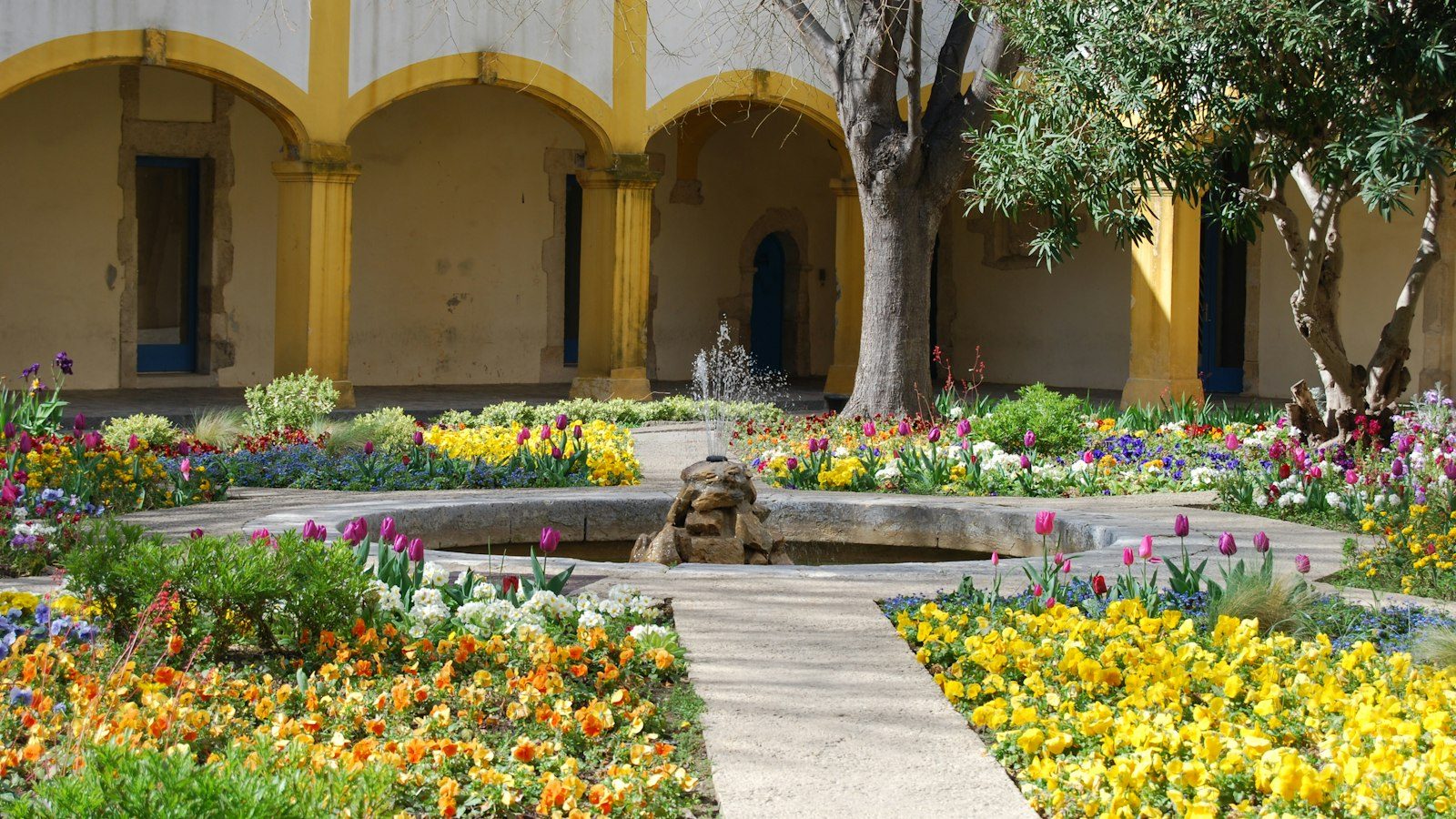
- The courtyard garden of the Espace Van Gogh, the old hospital where Vincent was treated, replanted to match his painting and free to walk into
- The Rhône quays near Place Lamartine after dark, where Van Gogh painted Starry Night over the Rhône and the lights still reflect in the water
- The Thermes de Constantin by the river, the remains of a 4th-century Roman bath house that most visitors walk straight past, with entry around €5
- The lanes of La Roquette early on a weekday morning, when locals queue at the bakeries and the streets are almost empty
Daily budget
- Accommodation: budget €35-60 / night (hostel bed or basic hotel room), mid-range €90-160 (3-star hotel or old town apartment), splurge €250+ (L'Arlatan or a boutique suite). Hostel beds are very limited, so solo travellers often use cheap hotels. Prices jump in July, during the ferias and the festival opening week. Tourist tax is added per night.
- Food: budget €20-30 / day (bakery breakfast, market picnic, cheap lunch menu), mid-range €45-70 (bistro lunch and a sit-down dinner), splurge €100+ (tasting menu with wine). Lunch menus of €18-25 are the best value. Dinner mains are usually €18-30. Coffee is around €2-3 and a glass of wine €4-6.
- Transport: budget €0-5 / day (walking, local buses), mid-range €10-25 (trains to Avignon or Nîmes), splurge €40+ (taxis, car or bike hire). A full-fare TER single from Marseille costs about €20. Envia buses to the Camargue are cheap. The Zou! Malin card gives 30% off regional trains if you plan several trips.
- Activities: budget €0-15 / day (Pass Liberté €15, free LUMA tower, free church portal), mid-range €20-35 (Pass Avantage €19, Fondation Van Gogh €10, LUMA exhibitions), splurge €50+ (Rencontres pass, guided Camargue trips). The Pass Liberté lasts a month and the Pass Avantage six months. The Fondation is free on the first Sunday of the month except in July and August. Everything was free on Heritage Days in September.
- Drinks & nightlife: budget €5-10 (a glass of rosé or a beer on a square), mid-range €15-30 (a few drinks around Place Paul Doumer), splurge €50+ (cocktails at a hotel bar). Nightlife means terraces, wine bars and summer events rather than clubs. Festival weeks are much livelier, with open-air screenings and parties.
Where to stay
- Social hostel in South of the Boulevard des Lices (€35-60 / night (bed or basic room)): Arles has very few hostel beds. Check whether the youth hostel near the Boulevard des Lices is open for your dates, or look at simple one- and two-star hotels in the centre. Book early in summer and for the ferias.
- Boutique hotel in Near the Roman theatre (€130-230 / night): Hôtel du Cloître is a colourful design hotel in an old building between the theatre and St-Trophime, with a rooftop terrace. The main monuments are all a few minutes' walk away.
- Apartment in La Roquette and the historic centre (€80-150 / night): Small apartments in old stone houses give you a kitchen for market shopping and a local feel. Expect steep stairs and no lift, and check whether the street is noisy on summer nights.
- Splurge in Historic centre (€250-500+ / night): L'Arlatan is a historic mansion transformed by the artist Jorge Pardo, with tiled floors in every colour, a pool and a garden. It is close to Place du Forum and has some Roman remains in the building.
What to eat
- Gardianne de taureau: a slow-cooked Camargue bull stew in red wine, usually served with Camargue rice, on most traditional menus
- Camargue red rice: the nutty local rice grown in the delta, sold in bags at the market and served with fish or stews
- Saucisson d'Arles: a dry, finely flavoured sausage that has been made here for centuries, good for a market picnic
- Tellines: tiny Camargue clams cooked in garlic and parsley, a summer favourite as a starter or in Saintes-Maries
- Lunch menus (formules): two courses for roughly €18-25 at small bistros around the centre, much better value than dinner
- A glass of Costières de Nîmes or Provence rosé on Place du Forum or Place Paul Doumer, at around €4-6 a glass
Day trips
- Camargue and Saintes-Maries-de-la-Mer (About 38km south-west, roughly 50 minutes by bus): Flat marshes, pink flamingos, white horses and black bulls, ending at a whitewashed seaside town with a fortress church. The Pont de Gau bird park is the easiest place to see flamingos close up. Take Envia bus A50 from Arles station. It runs roughly every hour in summer and less often in winter. Hire a bike in Saintes-Maries for the sea dykes, and check the last bus back.
- Avignon (About 37km north, around 20 minutes by train): The city of the popes, with the huge Palais des Papes, the famous broken bridge and long stretches of medieval ramparts. It is bigger and busier than Arles and makes a good contrast. Regional TER trains run frequently from Arles to Avignon Centre, which is just outside the city walls. Buy tickets at the station machines or on the SNCF Connect app.
- Nîmes (About 30km west, around 30 minutes by train): Another great Roman city, with a very well-preserved arena, the temple of the Maison Carrée and the Jardins de la Fontaine. The Pont du Gard is a bus ride further on if you start early. Take a TER train from Arles to Nîmes, which is in the neighbouring Occitanie region. Check return times, as evening services are less frequent.
When to visit
- Spring (April - May): 16-24°C, sunny with occasional showers and mistral days. Crowds: Moderate, busy at Easter and on bank holiday weekends. A great time for walking and the Camargue, with flowers in the marshes and birds on the move. The Easter feria closes the arena on some days, and the Saintes-Maries pilgrimage is in late May.
- Early summer (June): 24-30°C, hot and dry, long evenings. Crowds: Moderate, rising towards July. Arguably the best month. Long evenings and full opening hours, and the town is still calm before the festival crowds arrive. Book outdoor sightseeing for the mornings.
- High summer (July - August): 30-36°C, very hot, with occasional storms. Crowds: Busy, especially in the Rencontres opening week. Brilliant for photography exhibitions and evening events in the Roman theatre, but rooms cost the most and the heat is tiring. Book early and plan indoor visits for the afternoon.
- Autumn and winter (September - March): September 22-28°C, then cooling to 3-13°C in winter, with mistral. Crowds: Moderate in September and October, quiet from November. September and October are the locals' pick, with the rice harvest, the Feria du Riz and the end of the festival. Winter is cheap and peaceful, but cold winds and shorter hours limit day trips.
Entry rules for your passport
Visa rules for France depend on the passport you travel on. Check the official source before you book: European Commission: Schengen visa policy
Getting there
There is no airport in Arles. The nearest major airport is Marseille Provence, about an hour by train from Vitrolles Aéroport station, sometimes with a change at Miramas. Nîmes-Garons airport is closer but has only a few flights, and Montpellier is about an hour and a half away. TER trains from Marseille Saint-Charles take about an hour, and a full-fare single costs around €20. Avignon Centre is about 20 minutes away and Nîmes about half an hour, with regular trains. A few direct TGVs run from Paris in roughly four hours. Otherwise, take the TGV to Avignon TGV, then a shuttle train to Avignon Centre and a TER to Arles. Arles station is about a 10-minute walk north of the amphitheatre. If you drive, park on the edge of the old town, for example at the Minimes car park with its shuttle into the centre, as the medieval lanes are narrow and partly restricted.
Border checks: non-EU visitors (other than Swiss, Norwegian, Icelandic, Liechtenstein, Andorran, Monegasque, San Marinese and Vatican citizens, and holders of an EU residence permit or long-stay visa) are registered in the EU's Entry/Exit System (EES) instead of getting a passport stamp. On your first crossing, officers take your photo and/or fingerprints, so allow extra time at passport control. ETIAS, the planned travel authorisation, is not in operation yet, so don't pay any website for one.
Getting around
Arles' old centre is compact and mostly flat, so you will walk almost everywhere. It takes about 10 minutes from the station to the amphitheatre and around 15 minutes from the arena to the LUMA tower or the Musée départemental Arles antique. The streets are cobbled in places and some are narrow with no pavement, so watch for cars and scooters. Envia runs the local bus network, including small electric shuttles around the centre that link the Minimes car park, LUMA and the antique museum. Check the current fares, as some shuttles have been free. Envia bus A50 runs from the station to Saintes-Maries-de-la-Mer in the Camargue in about 50 minutes, roughly every hour in summer and less often in winter. Regional TER trains link Arles with Avignon, Nîmes, Tarascon and Marseille. Cycling is a good way to reach Montmajour Abbey or to explore the Camargue from Saintes-Maries. If you drive, use the car parks on the edge of the centre, as the old town lanes are narrow and partly restricted. Taxis wait at the station, but book through your accommodation in the evening.
Safety
Arles is generally safe, but it is a working town with some rough edges. Watch your bag on Place du Forum, at the Saturday market and on busy trains. Some streets around the station and the edges of the centre feel empty late at night, so walk along the main boulevards. The biggest risks are the summer heat, which often goes above 35°C, and the mistral, a strong cold wind that can blow for days in winter and spring. Carry water, wear a hat and visit outdoor monuments early. In the Camargue, bring mosquito repellent, stay on marked paths and keep away from the bulls and horses in the fields. Strong currents make some beaches risky, so swim only where lifeguards are on duty. Tap water is safe to drink. The EU emergency number is 112. EU travellers should carry an EHIC and UK travellers a GHIC, and everyone else needs travel insurance with medical cover.
Solo travel tips
- Stay inside the old walls: You can walk to the arena at opening time, nip back for a rest in the heat of the day and stroll home after dinner. Rooms near Place du Forum or in La Roquette make Arles feel like a village.
- Get to the arena early: Tour groups arrive mid-morning. Be at the amphitheatre when it opens and do the theatre straight after, and you will have both almost to yourself.
- Check closing days: LUMA closes on Tuesdays, some museums close on other weekdays, and the arena shuts on feria and show days. Plan your big visits first and fit the rest of the week around them.
- Eat at lunchtime: A two-course lunch menu costs far less than the same meal at dinner. Combine it with a market picnic or a bakery supper and food costs stay low.
- Safety for solo travellers: The main risks are heat, wind and pickpockets in crowds. Keep to the main streets near the station after dark, carry water in summer and tell someone your plans before cycling into the Camargue.
- Meet people through art: Join a guided tour of the amphitheatre or the Fondation, or go to a free talk or screening during the Rencontres. Bars on Place Paul Doumer are easy places to chat to locals.
Cultural etiquette
- Always say 'bonjour, madame' or 'bonjour, monsieur' when you walk into a shop or café, and 'merci, au revoir' when you leave.
- Lunch is usually served from about 12pm to 2pm and dinner from about 7.30pm. Many kitchens close in between.
- Dress modestly in St-Trophime and other churches, with covered shoulders, and keep quiet if a service is on.
- Bull culture is part of local identity. The course camarguaise does not kill the bull, but corridas at the ferias do, so decide in advance what you are comfortable watching.
- Keep noise down in the old town lanes at night. Sound carries between the stone houses.
- Service is included in French bills. Leaving small change or rounding up for good service is appreciated but not expected.
- Do not climb on the Roman stones or sarcophagi, and ask before photographing people at markets or festivals.
Frequently asked questions
How do I get to Arles and from the station to my room?
Most people arrive by train. TER trains from Marseille take about an hour, and a full-fare single costs around €20. Avignon is about 20 minutes away and Nîmes about half an hour, and a few direct TGVs run from Paris. The station is on the northern edge of town, and the amphitheatre is about a 10-minute walk away through Place Lamartine. Most of the old town is within 15 minutes on foot, though some streets are cobbled, so wheeled cases can be noisy and slow.
How many days do I need in Arles?
Two nights covers the amphitheatre, the Roman theatre, St-Trophime and a Van Gogh walk. Three to five nights lets you add LUMA, the antique museum, the Saturday market and a bus day in the Camargue. A week works if you want to add day trips to Avignon, Nîmes or Montmajour Abbey at a slower pace.
Is the Arles monuments pass worth it?
Usually, yes. The Pass Liberté costs €15 and is valid for a month. It covers four of the six monuments, the Musée Réattu and one other museum, such as the antique museum. The Pass Avantage costs €19 and covers all six monuments and all four museums for six months. If you only want the arena and the theatre, the combined ticket at €11 is enough. Under-18s go free with a parent.
When is the best time to visit Arles?
April to June and September to October are the best months. Days are warm, evenings are pleasant and everything is open. July and August are very hot and busy, but it is also when the Rencontres d'Arles photography festival is on. Winter is quiet and cheap, but the mistral can be bitter and some places shorten their hours.
When is the Rencontres d'Arles photography festival?
In 2026 it ran from 6 July to 4 October. The opening week in early July brought evening events in the Roman theatre. A pass to all the exhibitions cost €42, or €33 at the reduced rate. Dates for 2027 have not been announced yet, but it normally starts in early July. Rooms book up months ahead for the opening week, so plan early if you want to go.
Can I visit the Camargue without a car?
Yes. Envia bus A50 runs from Arles station to Saintes-Maries-de-la-Mer in about 50 minutes. It stops near the Pont de Gau bird park on the way. Fares are low, but services are less frequent in winter, so check the return times. In Saintes-Maries you can hire a bike, walk the sea dykes, swim or take a boat trip into the marshes.
Is Arles safe for solo female travellers?
Yes, as long as you take normal precautions. The centre is busy and friendly in the evenings, especially around Place du Forum and Place Paul Doumer. Some streets near the station and on the edges of town are quiet after dark, so stick to the main boulevards or take a taxi late at night. Take the usual care with drinks in bars and keep your bag closed at the market.
What entry rules apply to France in 2026?
France is in the EU and the Schengen area. Many non-EU visitors, including those from the UK, US, Canada and Australia, can stay visa-free for up to 90 days in any 180-day period across Schengen. The EU's Entry/Exit System now records non-EU travellers' fingerprints and photos at the external border, and the ETIAS travel authorisation is due to follow, so check whether it has started before you travel. Confirm the rules on official EU and French government websites and check your own government's travel advice.
Tours and activities in Arles | Arles in 2 days | Arles in 3 days | Arles in 4 days | Arles in 5 days | Arles in 7 days
Can't decide? Compare Arles with...
Joy Plus home | Destinations | Itineraries | Activities | Flights | Budget planner | Calendar | Map | Blog | Lifetime access