Destinations / Europe
Aveiro, Portugal travel guide
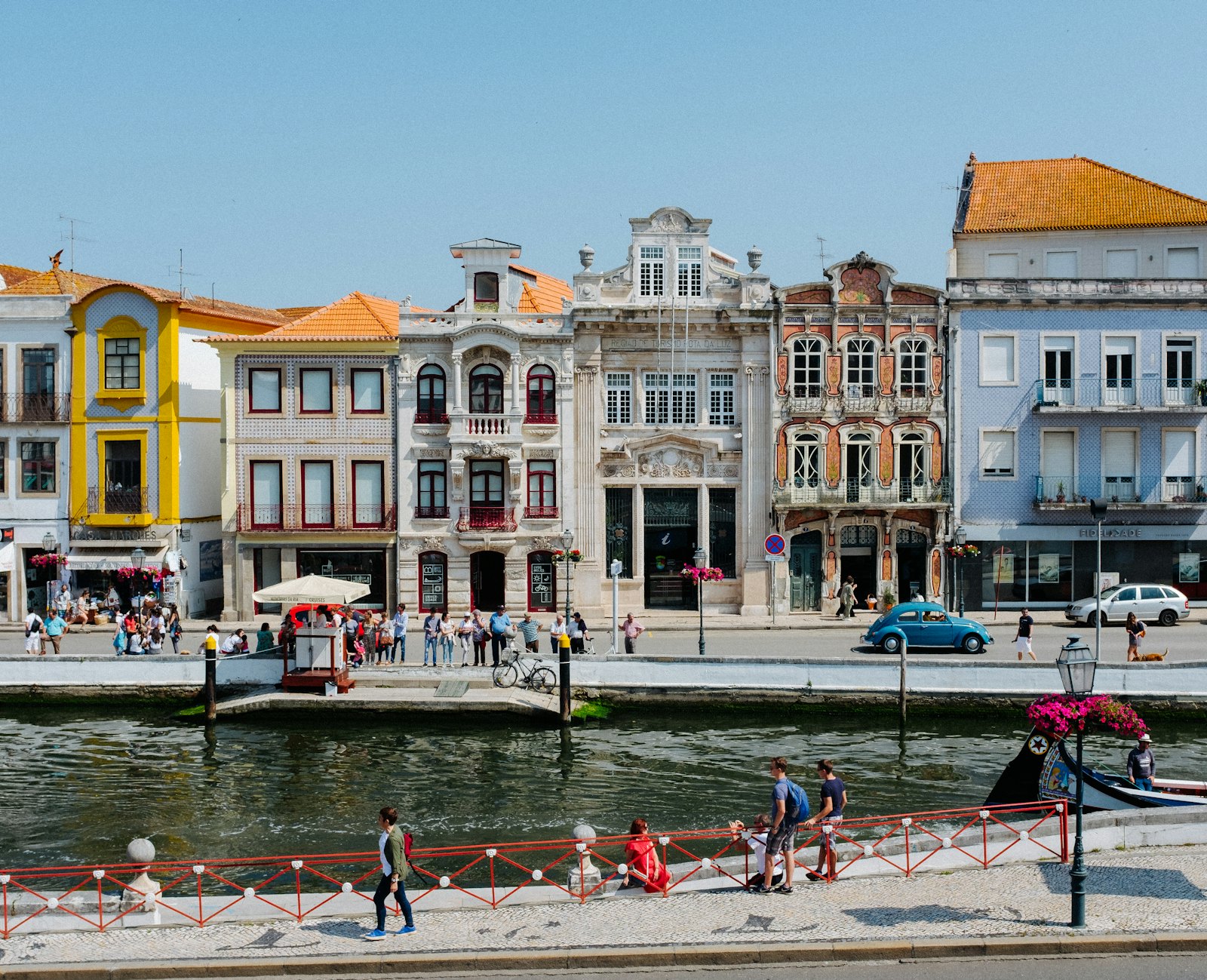
A flat, easy-going canal city by a huge lagoon, where you ride painted moliceiro boats, eat ovos moles warm from the bakery and catch a bus to the striped houses of Costa Nova.
- Best time to visit: May to September
- Daily budget (budget traveller): $70 to $250 USD
- Ideal trip length: 2 to 4 days
Aveiro sits on the edge of the Ria de Aveiro, a wide, shallow lagoon about 70km south of Porto. People often call it the Venice of Portugal. That sets the wrong expectations. It is a small, flat university city with a few short canals, painted moliceiro boats and plenty of Art Nouveau facades. The boats once carried seaweed and salt. Now they carry visitors on 45-minute loops through the centre. Most people come on a day trip from Porto, ride a boat, buy a box of ovos moles and leave. Stay a few nights and you get more for your time. You can watch sunset over the salt pans, eat grilled fish by the old fish market, take the bus to the striped houses at Costa Nova and catch a small ferry over to the dunes at São Jacinto. Aveiro is cheap by western European standards and very safe. It is also easy to walk, and trains are frequent. For a solo traveller it is a gentle, low-stress base with the Atlantic twenty minutes away.
Aveiro is a city of about 80,000 people on the eastern edge of the Ria de Aveiro, a lagoon that stretches some 45km along the coast. Its wealth came from the water: salt, seaweed for fertiliser and cod brought home by fleets from nearby Ílhavo. The canals that cut through the centre once carried all of that. Today the painted moliceiros carry visitors instead, and their bows still show cheeky cartoons and saints. Most people see Aveiro in a few hours on a day trip from Porto. That is enough for a boat ride and a box of ovos moles, but it misses the best of it. Stay a little longer and you get quiet early mornings by the canals, sunset over the salt pans, grilled fish in Beira Mar and lazy afternoons at Costa Nova. Prices are lower than in Porto or Lisbon. A dorm bed costs well under €30, and lunch menus are often around €10-14.
Logistics are easy. Trains run from Porto in roughly 35 minutes to 1 hour 15 minutes, depending on the service. The cheapest is the urban train from São Bento at €3.95. Lisbon is about 2 to 2.5 hours away by Alfa Pendular or Intercidades, and Coimbra is under an hour. Base yourself around Rossio or Beira Mar, so the canals, restaurants and boat kiosks are on your doorstep. The station is about 15 to 20 minutes' walk away, and most bags roll fine on the flat streets. Busway buses go out to Barra and Costa Nova, and a bus plus a short ferry gets you to the São Jacinto dunes. Taxis and Uber fill the gaps cheaply.
Timing changes the feel of the place. From May to September the weather is warm, the beaches are lifeguarded and the canals are busy. July and August bring Portuguese families to Costa Nova, the Festival dos Canais and the Festas da Ria, with moliceiro races. Spring and autumn are mild and calmer. Winter is cool, wet and windy, with some beach restaurants shut, but it is cheap and peaceful. Aveiro is very safe and English is widely spoken by younger people. It does not have big-city nightlife, but the students keep Beira Mar lively at weekends. If you want a slow, easy stop between Porto and Lisbon, this is a good one.
Aveiro itinerary
Arrive and meet the canals
Morning: This plan assumes you arrive on a Monday. Take the train from Porto, then walk down Avenida Lourenço Peixinho to drop your bag around Rossio. Stop at the old railway station on the way for its azulejo panels.
Afternoon: Ride a moliceiro from the Central Canal kiosks (about €13-15, 45 minutes). Then walk the canal edges past the Ponte dos Laços de Amizade and try warm ovos moles at Confeitaria Peixinho.
Evening: Sunset drink around the Mercado do Peixe, then grilled fish in Beira Mar. Walk back along the lit canals.
Convent, Arte Nova and salt pans
Morning: Museu de Aveiro at 10:00, when it opens, for the gilded chapels and the tomb of Santa Joana. Remember it closes from 12:30 to 13:30. Pop into the Sé next door.
Afternoon: Lunch menu of the day nearby, then a slow loop of Parque Infante D. Pedro. Head to the Museu Arte Nova and walk the Art Nouveau facades along the Central Canal.
Evening: Walk west along the canals to the Marinha da Troncalhada salt pans for sunset. Dinner back in Beira Mar.
Costa Nova and Barra
Morning: Catch a Busway bus (about €2-4, 45 minutes) to Costa Nova. Photograph the striped palheiros along the lagoon-side avenue before the crowds, then look round the small fish market.
Afternoon: Lunch at a seafood place in Costa Nova, then walk the beach north to Barra. The Farol da Barra lighthouse has opened for visits on Wednesday afternoons, so check if that is still running.
Evening: Stay for sunset over the Atlantic, then bus or Uber back (about €12-17). Light dinner and an early night.
Ferry to the São Jacinto dunes
Morning: Bus to Forte da Barra and take the short passenger ferry to São Jacinto. Check the return times before you set off, because crossings are limited.
Afternoon: Walk the boardwalk trails in the Reserva Natural das Dunas de São Jacinto. Bring water and a picnic, as there is little on the trail. Visit the bird hides, then cool off on the empty beach.
Evening: Ferry and bus back to Aveiro. Dinner of caldeirada de enguias (eel stew) if you are feeling brave.
Day trip to Coimbra
Morning: Early train to Coimbra (under an hour on faster trains, longer on regionals). Fast trains stop at Coimbra-B, so change to the shuttle train to central Coimbra-A, then walk uphill to the old university.
Afternoon: University tour with a time slot for the Biblioteca Joanina (book ahead, about €15-20). Lunch in the old town, then wander down through the lanes to the river.
Evening: Train back to Aveiro. Easy dinner and a drink near Rossio.
Market morning and Ílhavo
Morning: Mercado Manuel Firmino for fruit, cheese and a coffee with locals. Pick up picnic food or a pastry for later.
Afternoon: Bus or Uber to Ílhavo. Visit the Vista Alegre porcelain museum and chapel (€6, or €9 including the Museu Marítimo de Ílhavo), then the maritime museum for the cod-fishing story and the cod aquarium.
Evening: Back to Beira Mar for a Saturday night. Students fill Praça do Peixe late, so eat first around 20:00, then join the crowd for a drink.
Slow Sunday and depart
Morning: Hire a bike or walk the flat lagoon paths beyond the salt pans while the city is quiet. If it is raining, go to the Fábrica Centro Ciência Viva instead.
Afternoon: Last tripas de Aveiro and a box of ovos moles for the road, then the train on to Porto, Coimbra or Lisbon.
Evening: Arrive at your next stop, or catch an evening train to Porto for a flight the next morning.
Best neighbourhoods
- Beira Mar: The old fishermen's quarter between the canals, with low tiled houses, the Mercado do Peixe and the busiest cluster of bars and seafood restaurants. It is lively on summer evenings and the most atmospheric place to stay, but rooms facing the squares can be noisy at weekends.
- Rossio and the Central Canal: The heart of town, where the moliceiro kiosks, the Ponte dos Laços de Amizade and most of the Art Nouveau buildings sit. Aveiro Rossio Hostel is here. You can walk to everything, including the station in about 15 to 20 minutes.
- Glória and the Sé: The quieter area south of the Central Canal, around the cathedral, the Museu de Aveiro and Parque Infante D. Pedro. It is greener and calmer, with the university a short walk further on, and suits travellers who want peace at night.
- Avenida Lourenço Peixinho: The long, straight avenue running from the railway station to the canals. It is practical rather than pretty, with banks, shops, cafés and cheaper hotels. Good if you have an early train or plan lots of day trips.
- Costa Nova and Barra: The beach strip about 10km west, on the thin sand bar between the lagoon and the Atlantic. Costa Nova has the famous striped palheiros (old wooden beach houses), and Barra has the lighthouse. It is lovely in summer, and very quiet with some places shut in winter.
Must-do experiences
- Ride a moliceiro along the canals: The painted, high-prowed boats leave from kiosks along the Central Canal and loop through the city's canals in about 45 minutes. Shared trips cost around €13-15 per adult. Go late morning or late afternoon for softer light, and book ahead on summer weekends.
- Eat ovos moles from a proper confeitaria: Aveiro's signature sweet is sweet egg yolk cream in thin wafer shells shaped like shells and fish. Confeitaria Peixinho has been making them since the 19th century. Buy a small box rather than a big one. They are very rich.
- See the convent at the Museu de Aveiro: The former Convento de Jesus holds gilded Baroque chapels, tiles and the marble tomb of Princess Saint Joana. It is closed on Mondays and shuts for lunch from 12:30 to 13:30. Ticket prices have been listed anywhere from about €4 to €10, so check the current fee.
- Take the bus to Costa Nova: Busway buses from the centre reach the striped houses of Costa Nova in about 45 minutes for roughly €2-4. Walk the lagoon-side avenue for photos, then cross the dunes to the long Atlantic beach.
- Watch sunset over the salt pans: Walk west along the canals to the Marinha da Troncalhada, a working salt pan kept as an open-air eco-museum. The flat water turns pink and gold at dusk, and you often see wading birds.
- Walk the Art Nouveau trail: Aveiro has some of Portugal's best Arte Nova facades, many along the Central Canal and Rua João Mendonça. Start at the Museu Arte Nova in the Casa Major Pessoa, a small museum that costs a few euros, then look up as you wander.
- Cross to the São Jacinto dunes: Take a bus to Forte da Barra and the short ferry across the lagoon mouth to São Jacinto. The dune reserve has boardwalk trails through pine woods and sand, plus bird hides and an empty Atlantic beach.
Hidden gems
- The old railway station, a short walk from the modern one, covered in blue and white azulejo panels showing scenes from around the region
- Marinha da Troncalhada, a free salt pan eco-museum where, in summer, you can sometimes see salt being raked by hand
- Mercado Manuel Firmino on a weekday morning, the city's covered food market, for fruit, cheese and a coffee among locals
- The Vista Alegre workers' village in Ílhavo, a 19th-century factory settlement with a chapel and an outlet shop, which you can walk around for free
- Fábrica Centro Ciência Viva, a hands-on science centre in a converted ceramics factory, a good rainy-day stop
Daily budget
- Accommodation: budget €18-30 / night (dorm bed at Aveiro Rossio Hostel or HI Aveiro), mid-range €80-140 (central guesthouse or 3-star hotel), splurge €180+ (MS Collection Palacete de Valdemouro, Montebelo Vista Alegre). Prices jump in July, August and during festivals. Breakfast is often included at hostels and guesthouses. Rooms in Beira Mar can be noisy on Friday and Saturday nights.
- Food: budget €25-35 / day (pastries, set lunch, market picnic), mid-range €45-70 (seafood lunch and a sit-down dinner), splurge €90+ (tasting menu at Salpoente, seafood platters). Look for the 'prato do dia' or 'menu do dia' at lunch, often around €10-14 with a drink. Bread, olives and butter brought to the table are charged if you eat them.
- Transport: budget €0-8 / day (walking, Busway bus to the beaches), mid-range €10-25 (taxis or Uber, train to Coimbra), splurge €60+ (car hire or private tours). The urban train from Porto São Bento is €3.95 one way. Busway tickets to Costa Nova are roughly €2-4. A taxi or Uber to the beaches is about €12-17.
- Activities: budget €0-15 / day (free canals, salt pans, beaches, one boat ride over the trip), mid-range €20-35 (moliceiro ride plus a museum or two), splurge €80-200 (private moliceiro or lagoon boat tour). Shared moliceiro rides are about €13-15. The Vista Alegre museum and chapel are €6, or €9 with the Ílhavo Maritime Museum. Check the Museu de Aveiro price, because listings vary.
- Drinks & nightlife: budget €5-15 (coffee, an imperial or two), mid-range €20-35 (wine and cocktails in Beira Mar), splurge €50+ (a good bottle of Bairrada wine with dinner). An espresso (bica or café) is often around €1. A small beer costs roughly €1.50-3. Students fill the bars around Praça do Peixe late on Thursday to Saturday nights.
Where to stay
- Social hostel in Rossio (€18-30 / night (dorm)): Aveiro Rossio Hostel is in a restored house on Praça do Rossio, with a shared kitchen, a common room and breakfast included. It is well rated by solo travellers and steps from the boats and Beira Mar.
- Boutique hotel in Central Canal (€100-180 / night): Hotel Moliceiro is a small, stylish hotel close to the canals and the fish market. You walk out of the door into the old centre, and it is quieter than the squares in Beira Mar.
- Apartment in Beira Mar or Glória (€60-110 / night): Self-catering flats in old houses let you shop at Mercado Manuel Firmino and cook fresh fish. Choose Glória for quieter nights or Beira Mar to be in the middle of things.
- Splurge in Central Aveiro or Ílhavo (€180-350+ / night): MS Collection Aveiro Palacete de Valdemouro is a restored palace in the centre. Montebelo Vista Alegre Ílhavo is a five-star hotel in the porcelain village, on the lagoon.
What to eat
- Ovos moles: sweet egg yolk cream in wafer shells, protected by EU status and best bought fresh from a confeitaria such as Confeitaria Peixinho
- Tripas de Aveiro: thin rolled crêpes filled with ovos moles, chocolate or savoury fillings, sold hot from stalls near the canals
- Caldeirada de enguias: a stew of lagoon eels with potato and tomato, the traditional dish of the Ria
- Grilled fish around the Mercado do Peixe: sardines in summer, sea bass, skate and whatever came in that day, usually with boiled potatoes and salad
- Bacalhau: salt cod in its many forms, a big deal in nearby Ílhavo, whose fleets once fished cod off Newfoundland
- Leitão da Bairrada: crisp suckling pig from the inland Bairrada area, best with a glass of local Bairrada sparkling wine
Day trips
- Costa Nova and Praia da Barra (About 10km west, 45 minutes by bus or 10-15 minutes by car): The striped wooden palheiros of Costa Nova face the lagoon, and a long Atlantic beach runs behind the dunes. Walk north to Barra and its lighthouse, one of the tallest in Portugal. Busway lines 35 and 36 from the centre, about €2-4 on board, roughly hourly. Timetables are at busway-cira.pt. A taxi or Uber costs about €12-17.
- São Jacinto Dunes Natural Reserve (Across the lagoon mouth, about 45-60 minutes by bus and ferry): Pine woods, tall dunes and boardwalk trails, with bird hides for lagoon birds and a wild, quiet beach. A good half day, and very different from busy Costa Nova. Bus towards Barra and get off at Forte da Barra, then take the short passenger ferry to São Jacinto. Ferry times are limited, so check them and the reserve's opening days before you go.
- Coimbra (About 60km south, 30-60 minutes by train): Portugal's old university city, built on a hill above the Mondego river. See the Biblioteca Joanina, the old cathedral and steep lanes full of student cafés. Frequent CP trains. Fast trains stop at Coimbra-B, where you change to a short shuttle train to central Coimbra-A. Book the university ticket and library time slot online.
When to visit
- Spring (March - May): 14-21°C, mild with regular showers, windy days. Crowds: Low to moderate, busier at Easter and on 12 May (Santa Joana holiday). A pleasant time for walking and museums. The Feira de Março fair runs from late March into April. Bring layers and a rain jacket, because beach days are not guaranteed.
- Summer (June - August): 20-27°C, mostly dry, strong afternoon north winds, sea around 16-18°C. Crowds: Busy, especially at weekends and in August at Costa Nova. The best beach weather and the liveliest evenings, with the Festival dos Canais and the Festas da Ria. Book rooms early and expect queues for boats at midday.
- Early autumn (September - October): 17-24°C, often settled in September, rain returning in October. Crowds: Moderate, then quiet. The locals' pick. Warm days, emptier beaches and lower room prices. Lifeguards usually finish in mid to late September, so check before swimming.
- Winter (November - February): 8-15°C, wet, grey and windy, occasional bright cold days. Crowds: Very low. Cheap and calm, with good museum and café days. Some Costa Nova restaurants close and boat trips may be cut short. Pack a proper waterproof.
Entry rules for your passport
Visa rules for Portugal depend on the passport you travel on. Check the official source before you book: European Commission: Schengen visa policy
Getting there
The nearest airport is Porto (OPO), about 80km north. From the airport, take Metro line E to Campanhã for a few euros, then a train to Aveiro. Intercidades and Alfa Pendular trains take about 35 to 45 minutes and cost roughly €11-18. Regional and urban trains are slower but cheaper. From central Porto, the CP urban train leaves from São Bento, costs €3.95 one way and needs no reservation, though you need a reusable card bought at the station. There is no return ticket, so buy two singles. Lisbon is about 2 to 2.5 hours away by Alfa Pendular or Intercidades, with fares roughly €20-35 depending on the train and how early you book on cp.pt. Coimbra is under an hour away. Long-distance buses from FlixBus and Rede Expressos also stop in Aveiro, but the train is usually easier. A taxi from Porto airport is expensive, often around €80-100. Aveiro station is about 15 to 20 minutes' walk from the canals, or a short taxi ride.
Border checks: non-EU visitors (other than Swiss, Norwegian, Icelandic, Liechtenstein, Andorran, Monegasque, San Marinese and Vatican citizens, and holders of an EU residence permit or long-stay visa) are registered in the EU's Entry/Exit System (EES) instead of getting a passport stamp. On your first crossing, officers take your photo and/or fingerprints, so allow extra time at passport control. ETIAS, the planned travel authorisation, is not in operation yet, so don't pay any website for one.
Getting around
Central Aveiro is flat and compact, and you can walk almost everywhere. The station to the Central Canal takes about 15 to 20 minutes on foot along Avenida Lourenço Peixinho. Busway runs local buses, and its timetables are at busway-cira.pt. Lines 35 and 36 reach Barra and Costa Nova in about 45 minutes for roughly €2-4, buying the ticket on board. Buses run roughly hourly, and less often on weekends and in winter. A taxi or Uber to the beaches takes 10 to 15 minutes and costs about €12-17. To reach São Jacinto, take a bus towards Barra and get off at Forte da Barra, then catch the passenger ferry across the lagoon mouth. Ferry times are limited, so check the return before you go. Cycling is easy on the flat roads and lagoon paths. Aveiro's BUGA bike scheme has changed over the years, so check what is running now or hire a bike from a private shop. Trains to Coimbra, Porto and Lisbon leave from the main station.
Safety
Aveiro is one of the safest small cities in Portugal, and serious crime against visitors is rare. Watch for pickpockets in the crowds around the Central Canal and on busy summer weekends, and do not leave bags hanging on chairs at terrace bars. The Atlantic beaches at Barra and Costa Nova have strong currents and cold water, around 16-18°C even in summer. Swim only at lifeguarded beaches in season, roughly June to September, and follow the flags. Stay away from the breakwaters at the lagoon mouth in rough weather. The wind can be strong and the sun stronger than it feels, so use sunscreen. Mosquitoes can bite near the salt pans at dusk. Beira Mar is noisy but fine late at night. The emergency number is 112.
Solo travel tips
- Base yourself near Rossio: You will be a few minutes from the boats, the fish market bars and the bus stops for the beaches, so you never have a long walk back alone at night. Aveiro Rossio Hostel is popular with solo travellers and easy for meeting people.
- Take the cheap train, not a tour: Organised tours from Porto charge €40 or more for what you can do yourself on a €3.95 train and a €14 boat ride. Go independently and spend the difference on dinner.
- Eat lunch as your main meal: The menu of the day at lunchtime is the best value in town and easy to order alone at a counter. Dinner starts later, from about 19:30, and is pricier.
- Plan around Mondays: The Museu de Aveiro is closed on Mondays, and some restaurants and the Ílhavo Maritime Museum may close early in the week. Use Monday for boats, canals and the beach.
- Safety for solo travellers: The main risks are the Atlantic, pickpockets in crowds and cycling on busy roads. Swim at lifeguarded beaches only, keep your phone zipped away at the canal kiosks and take a taxi back from the beaches after dark.
- Check bus and ferry returns: Beach buses run roughly hourly and São Jacinto ferries less often. Screenshot the timetable before you leave, and keep enough phone battery for an Uber if you miss the last one.
Cultural etiquette
- Say 'bom dia' (good morning) or 'boa tarde' (good afternoon) when you walk into a shop or café, and 'obrigado' (if you are a man) or 'obrigada' (if you are a woman) for thank you.
- Try a little Portuguese before switching to English. Do not open with Spanish, as many Portuguese find that grating.
- Bread, olives and butter brought to the table are not free. If you do not want them, say so politely and they will be taken away.
- Lunch runs from about 12:30 to 14:30 and dinner from about 19:30. Many kitchens close between the two.
- Dress modestly in churches and the convent chapels, with shoulders covered, and keep your voice down if a service is on.
- Do not climb into or sit on moored moliceiros for photos. They are working boats and someone's livelihood.
- Keep beachwear for the beach. Put a top on before walking into cafés and shops in town.
Frequently asked questions
How do I get to Aveiro from Porto or Porto airport?
From central Porto, the CP urban train from São Bento costs €3.95 one way and needs no reservation, though it takes a little longer. Faster Intercidades and Alfa Pendular trains leave from Campanhã, take about 35 to 45 minutes and cost roughly €11-18. From Porto airport, take Metro line E to Campanhã, then a train. The whole trip takes about an hour and a half.
How many days do I need in Aveiro?
One day covers the canals, a boat ride and ovos moles. Two to three nights gives you time for the museum, the salt pans and a beach afternoon at Costa Nova. With four or more days you can add the São Jacinto dunes, Vista Alegre in Ílhavo and a day trip to Coimbra.
When is the best time to visit Aveiro?
May to September has the best weather, with highs of roughly 20-26°C and long evenings. July and August are busiest, especially at Costa Nova, and the Festas da Ria in August bring moliceiro races and decorated boats. September is the locals' pick: still warm, with fewer crowds. Winter is mild but wet and windy.
How much is a moliceiro boat ride and do I need to book?
Shared rides of about 45 minutes cost around €13-15 per adult, and children pay less. You can buy tickets from the kiosks along the Central Canal on the day. Book ahead on summer weekends and holidays. Private boats cost much more, from around €80 to €200 for the boat.
Can I swim at Costa Nova and Barra?
Yes, but the Atlantic here is cold and can be rough. Water temperatures stay around 16-18°C even in summer, and currents are strong. Swim at lifeguarded stretches in the bathing season and follow the flags. If you want calmer water, the lagoon side is shallower, but check local signs before you go in.
Is Aveiro safe for solo female travellers?
Yes. Aveiro is small, friendly and very safe, and the centre stays busy into the evening, especially in Beira Mar. Use normal city sense: watch your bag in crowds, take a taxi or Uber back from the beaches after dark rather than waiting for the last bus, and stick to lifeguarded beaches.
Can I do Aveiro as a day trip from Porto instead of staying?
You can, and many people do. Trains are frequent and cheap. But a day trip means canals and crowds at their busiest. Staying a night or two lets you see the salt pans at sunset, eat dinner in Beira Mar after the tour groups leave and reach Costa Nova or São Jacinto without rushing.
What entry rules apply to Portugal in 2026?
Portugal is in the Schengen Area. Many non-EU visitors, including UK, US, Canadian and Australian citizens, can stay up to 90 days in any 180 without a visa. The EU Entry/Exit System now registers non-EU travellers' fingerprints and photos at the border. The ETIAS travel authorisation has been due to start in late 2026. Check official EU and Portuguese government sites and your own government's advice before you book.
More about Aveiro
- What To Do in Lisbon for 7 Days: Itinerary with Sintra, Cascais and Évora
- Hidden Gems in Lisbon: Quiet Viewpoints, Museums, Gardens and Markets
Tours and activities in Aveiro | Aveiro in 2 days | Aveiro in 3 days | Aveiro in 4 days | Aveiro in 5 days | Aveiro in 7 days
Can't decide? Compare Aveiro with...
Joy Plus home | Destinations | Itineraries | Activities | Flights | Budget planner | Calendar | Map | Blog | Lifetime access