Destinations / Europe
Bayeux, France travel guide
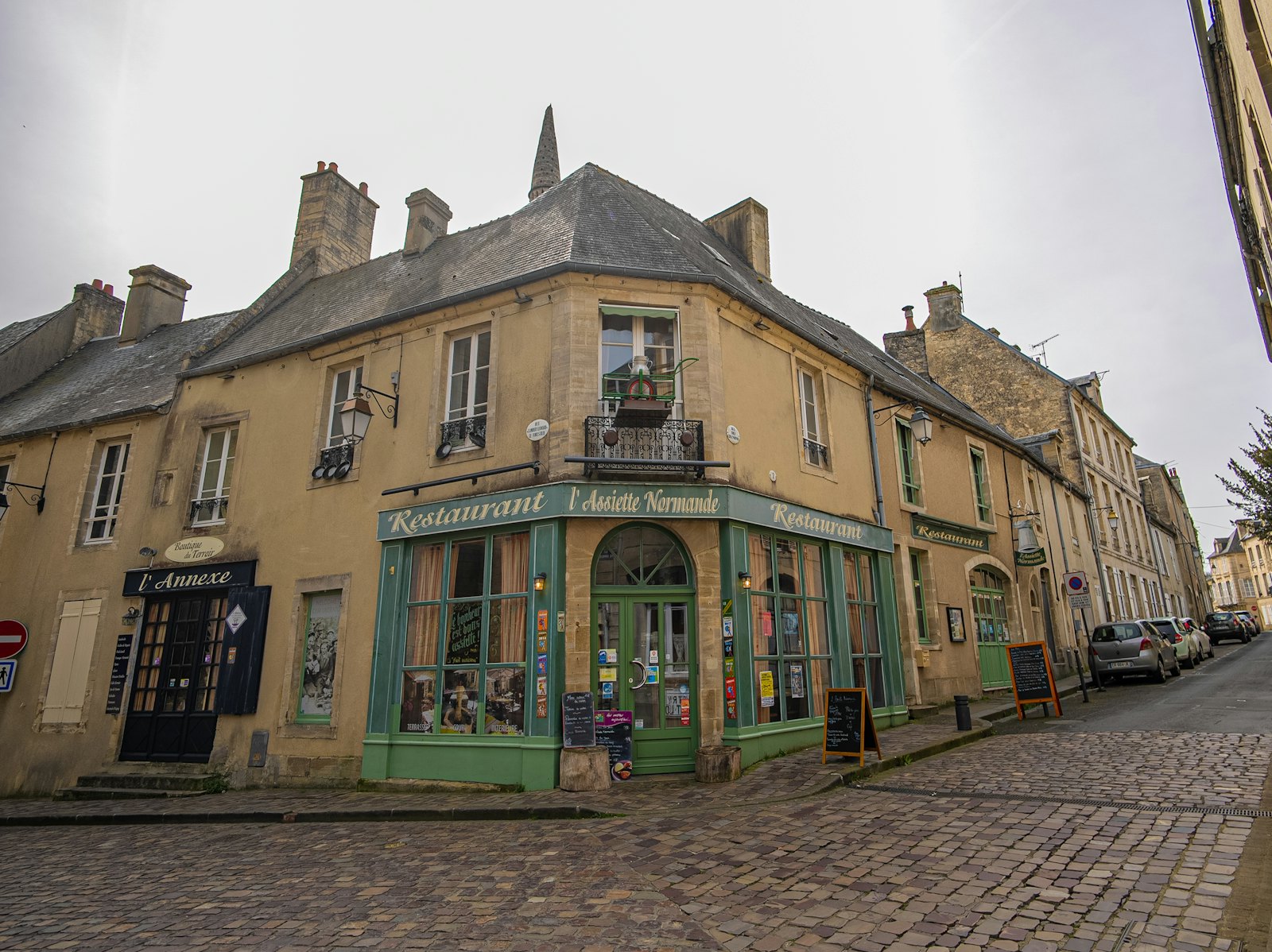
A compact medieval town with a huge Norman cathedral, a slow river through the old streets and the D-Day beaches about 10km away by bus, bike or minibus.
- Best time to visit: May to June, September to early October
- Daily budget (budget traveller): $120 to $380 USD
- Ideal trip length: 3 to 7 days
Bayeux is a small market town of roughly 13,000 people in Calvados, about 2 hours 15 minutes by direct train from Paris Saint-Lazare. It came through the Second World War almost untouched and was one of the first towns freed after D-Day, on 7 June 1944. Its old centre still has half-timbered houses, stone mansions, water mills on the little River Aure and a Norman Gothic cathedral that towers over the rooftops. For most visitors it is two trips in one. There is the town itself, and there is the coast about 10km north, with Gold and Omaha beaches, Arromanches and its Mulberry Harbour, the Longues-sur-Mer battery, Pointe du Hoc and the American Cemetery. One big change for 2026: the Bayeux Tapestry Museum closed on 1 September 2025 for a full rebuild, and the tapestry itself is on loan to the British Museum in London until July 2027. The town is still very much worth the trip. Its other museums are open, the cathedral is free and the beaches have not gone anywhere. Bayeux is safe, easy to walk and full of small hotels. The real planning job is the bus timetables, which are thin outside summer.
Bayeux was the seat of a powerful bishop in William the Conqueror's day, and the cathedral his half-brother Odo built is still the centre of town. In June 1944 the town was freed the day after D-Day with very little fighting, so the medieval streets, timber-framed houses and river mills survived when nearby Caen and Saint-Lô were flattened. Today it is a calm, compact market town. You can cross it on foot in 20 minutes, have a galette by the Aure and still be standing on Gold Beach within half an hour. The big change for 2026 is the Bayeux Tapestry. The museum closed in September 2025 for a rebuild, and the tapestry is at the British Museum in London until July 2027. Plan around that: Bayeux is now more about the cathedral, the MAHB, the Battle of Normandy museum and the coast than about one famous object.
Getting here is easy. Direct trains run from Paris Saint-Lazare in a little over two hours, and from Caen in about 20 minutes. From the UK, Brittany Ferries sails from Portsmouth to Caen (Ouistreham), about 45 minutes' drive away. Once you are here, the coast is the harder part without a car. Nomad buses 120 and 121 reach Omaha, Pointe du Hoc, the American Cemetery, Arromanches and Juno, but only a few times a day. Cycling and minibus tours fill the gaps. Stay in the old town, walk everywhere in Bayeux and give each stretch of coast its own day rather than cramming them together.
Timing matters more than you might think. Late spring and early autumn are the sweet spot: green countryside, longer bus timetables and fewer coaches. The days around 6 June are taken over by commemorations, and accommodation sells out. Early July usually brings the medieval festival, and October brings the war correspondents' prize, with talks and exhibitions. Winter is grey, mild and quiet, the town museums close for part of January and some coast sites cut their hours. Whenever you come, pack a waterproof. Normandy weather changes by the hour.
Bayeux itinerary
Arrive and walk the old town
Morning: This plan assumes a Monday arrival. Take a morning direct train from Paris Saint-Lazare (about 2 hours 15 minutes) and walk 15 minutes from the station into town to drop your bags.
Afternoon: Visit Notre-Dame Cathedral and its crypt, then walk along the Aure past the old mills on Rue des Cuisiniers. Find the Liberty Tree on Place de la Liberté.
Evening: A galette and a bowl of cider at Le Moulin de la Galette by the river. Check the Nomad bus timetables for the coming days.
1944 in Bayeux
Morning: Walk out to the Musée Mémorial de la Bataille de Normandie on Boulevard Fabian Ware. Buy the €14 two-museum pass and allow about two hours.
Afternoon: Cross to Bayeux War Cemetery and the Memorial to the Missing, then walk the Reporters Memorial garden. Head back into town for a late lunch.
Evening: The MAHB in the old bishop's palace if there is time before closing, then dinner at La Fringale or Le Pommier.
Arromanches and the Mulberry Harbour
Morning: Take Nomad bus 121 to Arromanches (around 30 minutes). Start at Arromanches 360 on the clifftop for the archive film and the view over the harbour remains.
Afternoon: Walk down to the village and the beach. If the tide is out, look at the caissons up close. If you are fit, follow the coast path west to the Longues-sur-Mer battery.
Evening: Bus back to Bayeux, checking the last departure first. A simple dinner on Rue Saint-Jean.
Omaha, the American Cemetery and Pointe du Hoc
Morning: Take Nomad bus 120, or join a minibus tour, to Pointe du Hoc. Walk among the craters and bunkers while it is quiet.
Afternoon: Continue to Omaha Beach at Saint-Laurent-sur-Mer, then on to the American Cemetery at Colleville. Check the ABMC website first, as last entry is at 4.30pm.
Evening: Back to Bayeux. It is an emotional day, so keep the evening easy with a crêpe and a walk by the cathedral.
Cycle to Port-en-Bessin
Morning: Hire a bike in town and ride the greenway north to Port-en-Bessin, a flat ride of under an hour.
Afternoon: Look around the fishing harbour, eat seafood on the quay and climb up to the Vauban tower for the view. Ride back, or pedal on towards the Omaha side if your legs allow.
Evening: Teurgoule for pudding and a pommeau aperitif in the old town.
Juno Beach and Courseulles
Morning: Take Nomad bus 121 east past Arromanches to Courseulles-sur-Mer. Visit the Juno Beach Centre, which tells the Canadian side of D-Day.
Afternoon: Walk the beach and harbour at Courseulles, and have oysters or seafood for lunch. Head back through Arromanches if you want another look at the harbour.
Evening: A farewell dinner in Bayeux. Book ahead on a weekend in summer.
Market morning and leave
Morning: If it is Saturday, browse the market at Place Saint-Patrice for cheese, cider and picnic food for the train. On a Wednesday, the market is on Rue Saint-Jean.
Afternoon: Visit the MAHB if you skipped it, or walk the cathedral quarter one last time, then take the train back to Paris or on to Caen.
Evening: Connect onwards from Paris. If you are crossing to the UK, take the evening sailing from Ouistreham.
Best neighbourhoods
- Cathedral quarter: The streets around Notre-Dame Cathedral and the MAHB museum, with cobbles, stone mansions and quiet squares. It is the most atmospheric place to stay, and everything in town is a short walk away. Evenings are very calm.
- Rue Saint-Jean and the Aure: The pedestrianised main shopping street east of the river, lined with cafés, crêperies, bakeries and the Wednesday market. The Aure runs just to the west, past old mill wheels. It is lively by day and the easiest base for walking out to eat in the evening.
- Saint-Patrice: The western end of the old town around Place Saint-Patrice, where the big Saturday market is held. It is a little more local, with bakeries and cheaper hotels, and a short walk from Boulevard Fabian Ware, the war cemetery and the Battle of Normandy museum.
- Station quarter: The area around Bayeux station, just south of the centre. It is plain but practical, and the Nomad buses to the beaches stop nearby. If you are arriving late or leaving early, it is a 10 to 15 minute walk into the old town.
- Arromanches-les-Bains: A seaside village on Gold Beach, about 10km north and reached on the 121 bus. You wake up to the remains of the Mulberry Harbour, but it is very quiet out of season. Most solo travellers are better off in Bayeux, with Arromanches as a day trip.
Must-do experiences
- Walk through Bayeux Cathedral: Notre-Dame was consecrated in 1077, with William the Conqueror present, and the tapestry was probably made to hang here. Entry is free. Go down to the Romanesque crypt with its painted angels, then walk round the outside for the flying buttresses.
- Spend a morning at the Battle of Normandy museum: The Musée Mémorial de la Bataille de Normandie on Boulevard Fabian Ware covers the 77 days from 7 June to 29 August 1944, with vehicles, uniforms and an archive film. It costs €8.50 for adults and makes a good grounding before you go to the beaches.
- Visit Bayeux War Cemetery: This is the largest British Second World War cemetery in France, across the road from the museum. It is free and always open. Opposite is the Memorial to the Missing, whose Latin inscription is about freeing the Conqueror's homeland. Further along, the Reporters Memorial lists journalists killed at work.
- See Arromanches and the Mulberry Harbour: Take the Nomad 121 bus to Arromanches, where concrete caissons from the artificial harbour still sit in the bay. Watch the 360-degree archive film at Arromanches 360 on the clifftop (about €7, open roughly 10am to 5.30pm), then walk down to the beach at low tide.
- Stand at Omaha Beach and the American Cemetery: The Normandy American Cemetery at Colleville-sur-Mer holds 9,389 graves above Omaha Beach. Entry is free, and the cemetery has listed hours of 9am to 5pm, with last entry at 4.30pm. Some areas were closed in 2026 and a booking system is planned, so check the ABMC website before you go.
- Walk the craters at Pointe du Hoc: US Rangers climbed these cliffs on D-Day, and the ground is still pitted with bomb craters and broken bunkers. It is free, windy and very moving. Combine it with Omaha on the 120 bus or a minibus tour.
- Explore the MAHB in the old bishop's palace: The Musée d'Art et d'Histoire Baron Gérard runs from prehistory to the 20th century in 14 rooms, including Bayeux lace and porcelain. It costs €8.50, or €14 with the Battle of Normandy museum on a two-museum pass that is valid for a year.
Hidden gems
- The Aure water mills along Rue des Cuisiniers and Rue de la Maîtrise, where old wheels still turn beside quiet footpaths. It is best early in the morning, before the day-trippers arrive
- The Liberty Tree on Place de la Liberté, a plane tree planted during the Revolution and still standing in a small square most visitors walk past
- The Longues-sur-Mer battery, where the German guns are still in their casemates on the cliff. It is free and open at all times, and you can walk there on the coast path from Arromanches
- Port-en-Bessin, a working fishing harbour known for its scallops, reached on a flat greenway by bike from Bayeux, with fish counters on the quay
- The Reporters Memorial on Boulevard Fabian Ware, a quiet garden of stones listing journalists killed since 1944, linked to the Bayeux war correspondents' prize held every October
Daily budget
- Accommodation: budget €70-110 / night (simple two-star hotel or chambre d'hôte), mid-range €120-200 (characterful old-town hotel), splurge €250+ (château hotel or top suite). There is no real backpacker hostel in Bayeux, so solo travellers pay for a whole room. Book months ahead for early June and July. Many small hotels charge extra for breakfast.
- Food: budget €30-45 / day (bakery breakfast, galette lunch, market picnic), mid-range €55-85 (café lunch and a set-menu dinner), splurge €100+ (tasting menu with wine). Lunchtime set menus (formules) are the best value. Crêperies are cheap and solo-friendly. Kitchens often stop serving by 9pm, and some close on Sunday evening or Monday.
- Transport: budget €0-10 / day (walking, Nomad bus fares), mid-range €20-30 (bike hire for a day), splurge €90-150 (minibus D-Day tour). Paris to Bayeux by train is roughly €20-60 one way. Nomad bus fares cost a few euros. Taxis to the coast cost around €50-70 one way, so share or use the bus.
- Activities: budget €0-15 / day (cathedral, cemeteries and beaches are free), mid-range €14-30 (two-museum pass, Arromanches 360), splurge €100-180 (private or full-day guided tour). The Battle of Normandy museum and the MAHB cost €8.50 each, or €14 for both. Arromanches 360 costs about €7. The American Cemetery, Pointe du Hoc and Longues battery are free.
- Drinks & nightlife: budget €5-15 (cider with a galette, supermarket wine), mid-range €20-40 (aperitifs and wine with dinner), splurge €60+ (calvados tasting, good bottles). Nightlife is a glass of wine on a terrace and an early night. A bottle of farm cider is cheap and good. Bars are quiet midweek out of season.
Where to stay
- Social hostel in Saint-Patrice or station quarter (€70-110 / night): Bayeux has no real backpacker hostel. The closest budget option is a simple two-star hotel or a chambre d'hôte where the hosts help with bus times and tours. Both areas are near the Nomad stops and a short walk from the old town.
- Boutique hotel in Saint-Patrice / old town (€120-200 / night): Hôtel d'Argouges on Rue Saint-Patrice is in an 18th-century town house with a garden, close to the Saturday market and an easy walk to the cathedral and Boulevard Fabian Ware.
- Apartment in Cathedral quarter (€80-140 / night): A self-catering flat in the old town lets you shop at the Wednesday and Saturday markets and cook your own Normandy cheese supper, which saves money on a longer stay.
- Splurge in Rue de Nesmond or just outside town (€250-450+ / night): Hôtel Le Tardif is in a grand old house with a garden near the river. For a château stay, Château de Sully, on the road towards Port-en-Bessin, has big grounds and a restaurant.
What to eat
- Galettes and crêpes: buckwheat pancakes with ham, egg and cheese, then a sweet one with salted butter caramel, found in crêperies all over the old town, including Le Moulin de la Galette by the river
- Normandy cheeses: Camembert, Pont-l'Évêque and Livarot, all made within a couple of hours of Bayeux and sold at the Saturday market
- Scallops (coquilles Saint-Jacques) from Port-en-Bessin, in season from roughly October to May, often cooked simply in butter or cream
- Teurgoule: a slow-baked rice pudding with cinnamon, a Normandy farmhouse dessert worth ordering whenever you see it
- Cider, pommeau and calvados: dry farm cider with a galette, pommeau as an aperitif and an apple brandy to finish
- Normandy cooking with Isigny butter and cream at local restaurants such as La Fringale on Rue Saint-Jean and Le Pommier on Rue des Cuisiniers, both of which do set menus
Day trips
- Arromanches, Longues-sur-Mer and Gold Beach (About 10km north of Bayeux, roughly 30 minutes by bus): Arromanches has the remains of the Mulberry Harbour and the Arromanches 360 cinema on the clifftop. A coast path leads west to the German battery at Longues-sur-Mer, where the guns are still in their casemates. Nomad bus 121 from Bayeux station or the town centre to Arromanches. Fares are a few euros, and there are only a few buses a day, so check the return time. Longues battery is free and a long walk or short taxi ride from Arromanches.
- Omaha Beach, the American Cemetery and Pointe du Hoc (About 15-30km northwest of Bayeux, 30-60 minutes by road): The most visited stretch of the D-Day coast: the cemetery above Omaha at Colleville, the beach memorials at Saint-Laurent and the cratered headland at Pointe du Hoc. All three are free to visit. Nomad bus 120 towards Grandcamp-Maisy, which stops at Colleville, Saint-Laurent and Pointe du Hoc but runs only a few times a day. A minibus tour from Bayeux (roughly €90-150) is easier. Check the ABMC website for the cemetery's current hours and any closures.
- Mont-Saint-Michel (About 120km southwest, roughly 1 hour 30 minutes by car): The tidal island abbey rising out of the bay. It is a long day from Bayeux, but it combines easily with the drive west. Go early or late to avoid the midday crowds on the Grande Rue. Public transport is awkward, with trains via Caen or Rennes to Pontorson followed by a bus. Most solo travellers book a full-day coach or minibus tour from Bayeux. Abbey entry is extra, roughly €13-16, so check the current price.
When to visit
- Spring (April - May): 11-18°C, mixed sun and showers, cool winds on the coast. Crowds: Low to moderate, with school groups and Easter weekends. A good-value window. Museums switch to longer summer hours from May, the beaches are quiet and hotel prices are still reasonable.
- Early summer and D-Day season (June - August): 17-23°C, longest days, occasional heat and sea fog. Crowds: Very busy around 6 June, then busy through July and August. Everything is open with the best bus service, but book well ahead. The D-Day anniversary week is moving and crowded, and prices peak.
- Autumn (September - October): 12-19°C, settled spells, more rain from mid-October. Crowds: Moderate, quieter after mid-September. The locals' pick. Mild days, calmer beaches, the start of the scallop season and the war correspondents' prize in October.
- Winter (November - March): 4-10°C, damp, windy and short days. Crowds: Quiet, apart from Christmas and the New Year. Cheap and peaceful, but buses are sparse and some coast sites shorten their hours. The town museums close for part of January, so check dates.
Entry rules for your passport
Visa rules for France depend on the passport you travel on. Check the official source before you book: European Commission: Schengen visa policy
Getting there
Most international travellers fly into Paris (CDG or Orly), take the RER or metro to Paris Saint-Lazare and catch a direct train to Bayeux. The journey takes about 2 hours 10 minutes to 2 hours 30 minutes, with several trains a day. Advance fares can be as low as about €20, but walk-up fares are often €40-60, so book on SNCF Connect. Some trains change at Caen, which is about 20 minutes from Bayeux. From the UK, Brittany Ferries sails from Portsmouth to Caen (Ouistreham). From the port, the drive to Bayeux takes about 45 minutes, or you can take a bus into Caen and then the train. There are also crossings from Portsmouth and Poole to Cherbourg, which is linked to Bayeux by train in about an hour. Caen-Carpiquet airport is small, with limited routes. If you are driving from Paris, part of the A13 motorway is due to close from 16 November 2026 to August 2027, so check diversions before you go. Bayeux station is a 15-minute walk south of the cathedral.
Border checks: non-EU visitors (other than Swiss, Norwegian, Icelandic, Liechtenstein, Andorran, Monegasque, San Marinese and Vatican citizens, and holders of an EU residence permit or long-stay visa) are registered in the EU's Entry/Exit System (EES) instead of getting a passport stamp. On your first crossing, officers take your photo and/or fingerprints, so allow extra time at passport control. ETIAS, the planned travel authorisation, is not in operation yet, so don't pay any website for one.
Getting around
Bayeux's centre is small and flat. You can walk from the station to the cathedral in about 15 minutes, and from the cathedral to the war cemetery in about 10. For the coast, the regional Nomad buses leave from the station and the town centre. Line 121 runs to Arromanches and on to Courseulles-sur-Mer (Juno Beach). Line 120 goes west through Port-en-Bessin to Colleville (American Cemetery), Saint-Laurent (Omaha), Pointe du Hoc and Grandcamp-Maisy. Line 114 links Bayeux with Caen. Fares are only a few euros, but buses run just a few times a day, some stops are served only in the main season, and Sundays are thin. Check the timetables on nomad.normandie.fr and plan your return before you set off. Cycling is a good option: a greenway runs from Bayeux towards Port-en-Bessin and the Omaha side of the coast. Many visitors join a half-day or full-day minibus tour from Bayeux, which covers more sites in a day than the buses can. If you drive, be aware that part of the A13 motorway between Paris and Normandy is due to close from 16 November 2026 to August 2027, so allow for diversions.
Safety
Bayeux is a very safe, quiet town, and crime against visitors is rare. Take normal care with bags in busy summer crowds and at the markets. The main risks are on the coast. Tides on the D-Day beaches come in quickly across flat sand, so check tide times before walking out to the Mulberry caissons at Arromanches. Stay behind fences at Pointe du Hoc and Longues, where cliff edges crumble. The coast path is exposed, the wind is cold even in summer, and there is little shade or water between villages. On country roads, cycle in single file and wear something bright, especially in autumn light. Bus gaps are the most likely way to get stranded, so save a local taxi number and keep your phone charged. The war cemeteries are places of mourning, so keep voices down and do not climb on graves or monuments. For emergencies in France, dial 112.
Solo travel tips
- Stay in the old town: Everything in Bayeux is walkable, and evenings are quiet. A room near the cathedral or Rue Saint-Jean means a two-minute walk home after dinner, without crossing empty roads near the bypass.
- Plan the return bus first: Coast buses are infrequent. Before you leave Bayeux, note the last bus back from each stop and keep a taxi number saved. If the timings do not work, a shared minibus tour is often better value.
- Join a small-group tour for the western beaches: Omaha, Pointe du Hoc and the American Cemetery are spread out. A minibus tour from Bayeux links them in one day and comes with a guide and company, which helps on an emotional day.
- Eat lunch as your main meal: Set lunch menus are cheaper and easy to order alone. Crêperies and bistro counters are relaxed about solo diners, and evening kitchens close early, so do not leave dinner too late.
- Safety for solo travellers: Bayeux itself is very safe. The real risks are tides on the beaches, crumbling cliff edges and getting stranded on the coast. Check tide tables, stay behind fences and tell your hotel where you are going.
- Pack for the weather: Wind and showers can blow in on a sunny day. A waterproof and a warm layer make the beaches far more pleasant. Download offline maps too, because signal can drop on the cliffs.
Cultural etiquette
- Say 'Bonjour' when you walk into any shop, café or bakery, and 'Merci, au revoir' when you leave. It matters more here than almost anything else.
- War cemeteries and memorials are places of mourning. Keep your voice down, do not sit or climb on graves or monuments, and be sensitive with photos.
- Dress respectfully in the cathedral, keep quiet during services and do not wander around while Mass is on.
- Lunch is usually served from about 12 to 2pm and dinner from about 7 to 9pm. Outside those times, many kitchens are closed.
- Ask for 'une carafe d'eau' to get free tap water with a meal. Bottled water is not expected.
- Many shops close on Sunday and some on Monday, and smaller places may shut for lunch. Plan errands for weekday mornings.
- Veterans and their families still visit, especially around June. If you meet one, a quiet thank you is welcome, but let them set the tone.
Frequently asked questions
Can I see the Bayeux Tapestry in 2026?
Not in Bayeux. The Bayeux Tapestry Museum closed on 1 September 2025 for a rebuild and is due to reopen around autumn 2027. The tapestry itself is on loan to the British Museum in London from 10 September 2026 to 11 July 2027. Tickets up to the end of March 2027 have sold out, and those for April to July 2027 are due to be released in early 2027. Bayeux is still worth visiting for the cathedral, the old town, the other museums and the D-Day coast.
How do I get to Bayeux from Paris?
Direct trains from Paris Saint-Lazare take about 2 hours 10 minutes to 2 hours 30 minutes, with several departures a day. Advance fares can be as low as about €20, but walk-up fares are often €40-60, so book early on the SNCF Connect app. Some services change at Caen. Bayeux station is a 15-minute walk from the cathedral.
Can I visit the D-Day beaches without a car?
Yes, with some planning. Nomad bus 121 runs to Arromanches and Courseulles, and line 120 goes to Port-en-Bessin, the American Cemetery, Omaha and Pointe du Hoc. Services are infrequent, so check nomad.normandie.fr and plan your return bus first. You can also cycle the greenway to Port-en-Bessin or book a minibus tour, which is the easiest way to see the western sites in one day.
How many days do I need in Bayeux?
Three days covers the town, the Battle of Normandy museum, Arromanches and one day on the Omaha side. Five days lets you add a bike day and a slower look at the museums. A week works if you want to add Juno Beach, Caen or Mont-Saint-Michel without rushing, and allow for bus gaps.
When is the best time to visit Bayeux?
May, June and September to early October have long days, mild weather and everything open. Around 6 June, the D-Day anniversary brings ceremonies, reenactors and very full hotels, so book months ahead or avoid that week. July and August are busiest. Winter is quiet and cheap, but buses are sparse, days are short and the town museums close for part of January.
How much are museum tickets in Bayeux?
The Musée Mémorial de la Bataille de Normandie and the MAHB each cost €8.50 for adults and €5 for students, and under-10s go free. A two-museum pass covering both costs €14 and is valid for a year. Buy tickets at the door, because they are not sold online. The cathedral, the war cemetery, the American Cemetery, Pointe du Hoc and Longues battery are all free.
Do I need to book the Normandy American Cemetery?
Entry is free. ABMC lists hours of 9am to 5pm, with last admission at 4.30pm, and the cemetery is closed on 25 December and 1 January. In summer 2026, some grave areas were temporarily closed during a drought water restriction, and ABMC has been planning a visitor pre-registration system. Check the official ABMC website shortly before your visit.
Is Bayeux good for solo female travellers?
Yes. It is small, well lit in the centre and quiet at night, with plenty of hotels within a few minutes' walk of restaurants. The main practical issues are getting back from the coast before the last bus and walking exposed coast paths alone. Tell your hotel your plans and carry water and a charged phone.
Tours and activities in Bayeux | Bayeux in 2 days | Bayeux in 3 days | Bayeux in 4 days | Bayeux in 5 days | Bayeux in 7 days
Joy Plus home | Destinations | Itineraries | Activities | Flights | Budget planner | Calendar | Map | Blog | Lifetime access