Destinations / Oceania
Blue Mountains, Australia travel guide
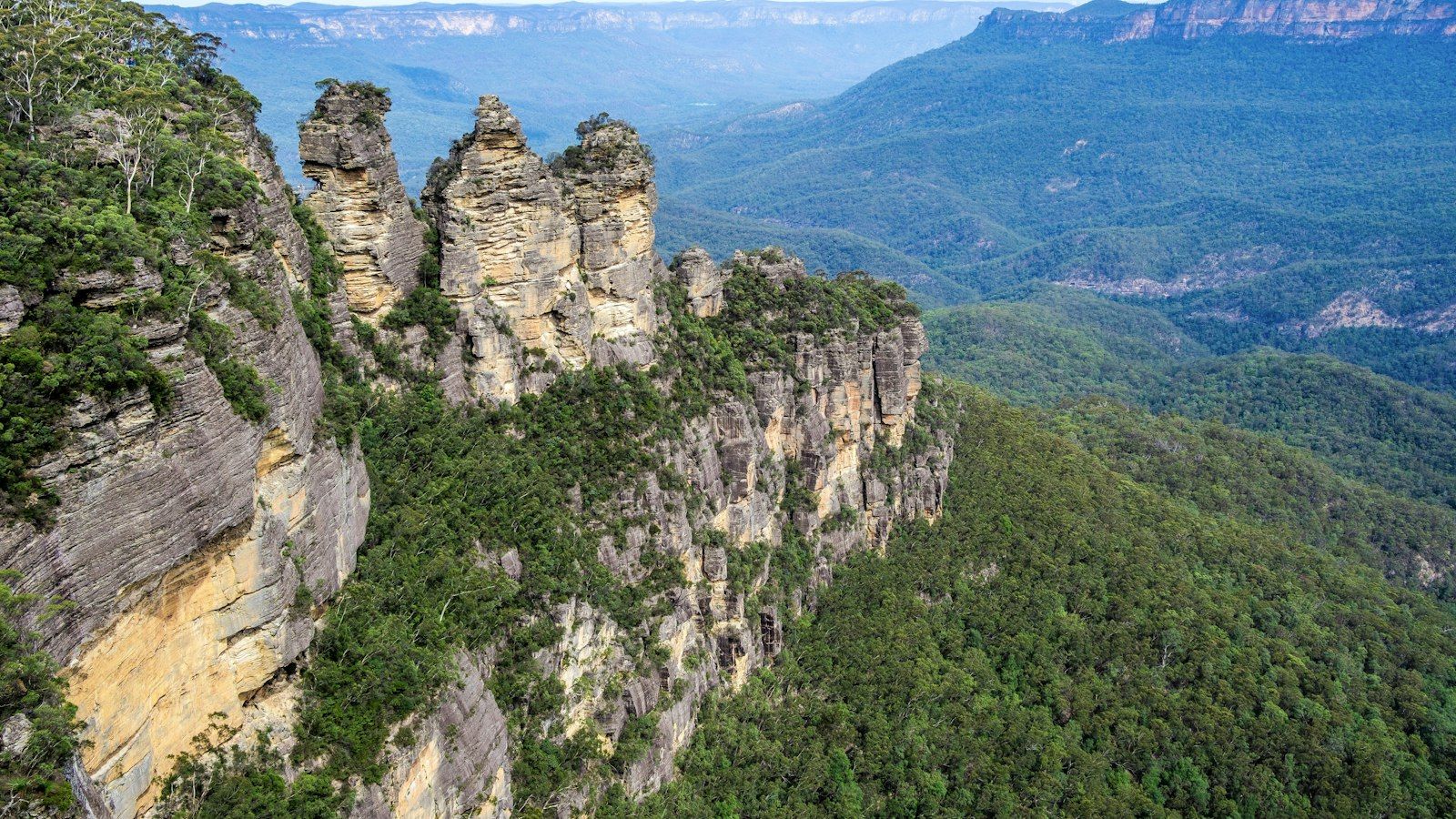
Sandstone cliffs, eucalyptus haze and deep rainforest valleys two hours west of Sydney by train, where every village station leads to a lookout, a waterfall or a serious day walk.
- Best time to visit: September to November and March to May
- Daily budget (budget traveller): $70 to $260 USD
- Ideal trip length: 3 to 7 days
The Blue Mountains are not really mountains. They are a sandstone plateau cut into deep gorges, about 1,000 metres up and covered in eucalyptus forest. On a warm day the oil from the gum trees hangs in the air and turns the valleys blue. The area is part of the Greater Blue Mountains World Heritage Area and sits on Gundungurra and Darug Country. For a solo traveller the best part is how simple it is. A suburban train runs from Sydney's Central Station to Katoomba in about two hours for around A$7 to A$11, and the line keeps going along the ridge through Leura, Wentworth Falls, Blackheath and Mount Victoria. Most stations are within walking distance of a cliff-top track. Katoomba has the Three Sisters, Scenic World and two good hostels. Leura has gardens and cafés. Blackheath has the Grand Canyon Track and the Grose Valley. Entry to the national park is free on foot. Book a bed, buy a trail snack and catch the 8am train.
The Blue Mountains start about 60km west of Sydney and climb to just over 1,000 metres at Katoomba and Blackheath. It is not a single peak but a long ridge carrying a highway, a railway and a string of villages, with huge sandstone valleys falling away on either side. The Greater Blue Mountains World Heritage Area covers more than a million hectares, and Blue Mountains National Park alone protects around 247,000 hectares of eucalyptus forest, canyons and waterfalls. The Gundungurra and Darug peoples are the Traditional Owners, and their stories are part of places like the Three Sisters. Most visitors come on a coach tour, see Echo Point and Scenic World in a few hours and go home. Stay a few nights instead. The tour crowds disappear after 4pm, the walks are free and the hostels are some of the best in New South Wales.
Katoomba is the natural solo base. It has YHA Blue Mountains Katoomba on Katoomba Street and the Flying Fox Backpackers on Bathurst Road, both a short walk from the station, plus Coles and Woolworths for cheap dinners and Mountain Culture for a beer. From there the railway works like a hiking shuttle. Leura is two or three minutes east, Wentworth Falls about ten minutes, and Blackheath around fifteen minutes west. Walk the Prince Henry Cliff Walk from Katoomba to Leura and ride back, or spend a day in the Grose Valley at Blackheath and catch an evening train home. You can manage a week without a car. Hire one for a day only if you want the Megalong Valley.
Check the walks before you plan them. Rain, rockfalls and landslides have closed a number of famous valley routes for long periods. As of late 2026, part of the National Pass west of the Wentworth Falls middle crossing, Wentworth Pass, the Slack Stairs, the lower Valley of the Waters and Govetts descent are closed, while the Grand Canyon Track is open. Jenolan Caves remain shut until at least early 2027. None of this ruins a trip, because the cliff-top tracks and lookouts remain superb, but it means old blog posts are unreliable. Check NSW National Parks alerts each morning, start early, pack a rain jacket even in summer, and you will have the best of the mountains to yourself.
Blue Mountains itinerary
Train up, Three Sisters at sunset
Morning: Take a Blue Mountains Line train from Sydney Central to Katoomba, about two hours for roughly A$7-11 by Opal or contactless. Drop bags at YHA Blue Mountains Katoomba or the Flying Fox Backpackers.
Afternoon: Walk 2km down Katoomba Street or take bus 686 to Echo Point. See the Three Sisters, then take the Three Sisters Walk to Honeymoon Bridge. Pick up maps and track updates at the Echo Point Visitor Centre.
Evening: Stay for the late light on the cliffs, then head back up Katoomba Street for a tasting paddle at Mountain Culture Beer Co.
Scenic World and the cliffs of Katoomba
Morning: Be at Scenic World for opening, roughly 10am on weekdays (check hours). The Unlimited Discovery Pass is from about A$64. Ride the Railway down, walk the rainforest Walkway, then take the Cableway up and the Skyway across.
Afternoon: Walk the Prince Henry Cliff Walk east from Katoomba Falls to Echo Point, about an hour with lookouts all the way. Finish at the Blue Mountains Cultural Centre on Parke Street before it closes in the late afternoon.
Evening: Cook in the hostel kitchen with supplies from Coles or Woolworths and swap trail tips by the fire.
Leura by the cliff path
Morning: Pick up the Prince Henry Cliff Walk at Echo Point and follow it east towards Leura, past Leura Cascades to Gordon Falls Lookout, roughly 2-3 hours. Check NPWS alerts first, as sections near the Cascades sometimes close.
Afternoon: Walk up into Leura village. Browse the Mall, buy truffles at Josophan's Fine Chocolates and visit Everglades House and Gardens (small entry fee, check opening days). Detour to Sublime Point Lookout if you have energy left.
Evening: Dinner at Leura Garage, then the two-minute train back to Katoomba.
Wentworth Falls and the Darwin Walk
Morning: Train to Wentworth Falls, about 10 minutes. Breakfast at Bakehouse on Wentworth, then follow the Charles Darwin Walk along Jamison Creek to the falls, about 2.5km.
Afternoon: From the Falls Reserve, walk to Wentworth Falls Lookout, Fletchers Lookout and the top of the falls, then down to the middle crossing if open. Add Rocket Point and Princes Rock. The National Pass west of the middle crossing and Wentworth Pass are closed, so do not follow old route descriptions.
Evening: Train back to Katoomba. Early night before the big walk.
Grand Canyon Track, Blackheath
Morning: Catch an early train to Blackheath, about 15 minutes. Walk about 4km along Evans Lookout Road or take a pre-booked taxi to Evans Lookout. Start the Grand Canyon loop by 9am: about 6km, 3-4 hours, with steep stairs and slippery rock.
Afternoon: Climb back out at Evans Lookout for the view over the Grose Valley. Late lunch at a café on Govetts Leap Road in Blackheath.
Evening: Book ahead for wood-fired dinner at Ates, then catch a late train back to Katoomba. Check the last services before you sit down.
Govetts Leap and the Hydro Majestic
Morning: Train to Blackheath and walk the Fairfax Heritage Track to the Blue Mountains Heritage Centre and Govetts Leap Lookout, about 1-1.5 hours. Then walk the Cliff Top track towards Evans Lookout for more Grose Valley views, returning the same way.
Afternoon: Train one stop to Medlow Bath for a booked high tea at the Hydro Majestic (roughly A$90-130, check current prices). Walk the hotel grounds for the Megalong Valley view.
Evening: Short train back to Katoomba. Pack and grab a final drink on Katoomba Street.
Glenbrook pools on the way down
Morning: Check out and take the train down the mountains to Glenbrook, about an hour. Walk about 1km from the station to the national park entrance. Walkers do not pay the vehicle fee.
Afternoon: Follow the short track to Jellybean Pool and swim only if conditions are safe and there are no warning signs. Ask at the Glenbrook Visitor Centre about other open tracks.
Evening: Train back to Sydney Central, about an hour. Dinner in the city.
Best neighbourhoods
- Katoomba: The main town and the obvious solo base, with the two best hostels, supermarkets, a craft brewery, the Blue Mountains Cultural Centre and a 2km walk or short bus ride down to Echo Point and the Three Sisters.
- Leura: One stop east of Katoomba, a leafy village of heritage cottages, a café-lined main street called the Mall, chocolate shops and cliff-top lookouts like Gordon Falls and Sublime Point.
- Wentworth Falls: A quieter village one stop east of Leura, built around a 187-metre waterfall with exposed sandstone walks, a good bakery and the Charles Darwin Walk that runs from the village to the falls.
- Blackheath: The highest village on the main ridge and the walkers' pick, with Govetts Leap and Evans Lookout over the Grose Valley, the Grand Canyon Track, the national park Heritage Centre and some of the best food in the mountains.
- Mount Victoria and Medlow Bath: Small, sleepy stops at the western end of the ridge, home to the clifftop Hydro Majestic Hotel at Medlow Bath and old-fashioned lookouts and heritage streets at Mount Victoria.
Must-do experiences
- See the Three Sisters from Echo Point: Walk to the main lookout in Katoomba for the classic view of the three sandstone pillars and the Jamison Valley. Go at sunrise or late afternoon, then cross Honeymoon Bridge onto the first Sister.
- Ride the Scenic Railway: Drop into the rainforest on one of the steepest passenger railways in the world, walk the Scenic Walkway boardwalk past old coal-mining relics, and ride the Cableway and Skyway on the same pass.
- Walk the Prince Henry Cliff Walk: Follow the cliff edge between Katoomba Falls and Gordon Falls in Leura, passing a string of free lookouts. Walk one section or the whole thing, and catch the train back.
- Hike the Grand Canyon Track: Drop into a deep, damp sandstone gorge near Blackheath on a roughly 6km loop of stairs, overhangs, creek crossings and tree ferns, finishing at Evans Lookout.
- Stand at Govetts Leap: Look across the huge Grose Valley and Bridal Veil Falls from one of the finest lookouts in the park, then visit the Blue Mountains Heritage Centre next door for track updates.
- Explore Wentworth Falls: Walk from the village to the falls lookout, then on to the top of the falls and the middle crossing, with Rocket Point and Princes Rock nearby for extra views.
- Take high tea at the Hydro Majestic: Treat yourself to an afternoon at the restored Edwardian hotel on the cliff at Medlow Bath, with the Megalong Valley spread out below the windows.
Hidden gems
- Sublime Point Lookout in Leura, a narrow fenced promontory at the end of a quiet road with big views over the Jamison Valley and far fewer people than Echo Point
- The Cliff Top walking track between Govetts Leap and Evans Lookout in Blackheath, a mostly level path along the rim of the Grose Valley that most day-trippers skip
- Everglades House and Gardens in Leura, a National Trust property with terraced 1930s gardens and valley views, best in spring and autumn
- Mount Victoria, the last village on the ridge, with heritage buildings, quiet lookouts and almost no crowds even on a sunny weekend
- The Glenbrook area at the bottom of the mountains, where walkers enter free and short tracks lead to swimming spots like Jellybean Pool
Daily budget
- Accommodation: budget A$35-60 / night (hostel dorm in Katoomba), mid-range A$180-350 (boutique guesthouse or heritage hotel room), splurge A$450+ (Lilianfels, Hydro Majestic). Weekend and school holiday rates jump, often with two-night minimums. Hostel private rooms run roughly A$80-150. Midweek in winter is the cheapest time to stay.
- Food: budget A$40-65 / day (hostel kitchen, Coles or Woolworths, one café coffee), mid-range A$90-150 (café brunch, bakery lunch, sit-down dinner), splurge A$200+ (Ates, Hydro Majestic high tea). A flat white costs about A$5-6, a bakery pie about A$7-9 and a café brunch about A$22-30. Book dinners at popular Blackheath and Leura restaurants for weekends.
- Transport: budget A$5-15 / day (Opal train hops and local buses), mid-range A$55-60 (Explorer Bus day pass) or about A$70-120 (hire car for one day, plus fuel), splurge A$150+ (private driver or taxis to the Megalong Valley). Sydney Central to Katoomba is about A$7-11 each way on Opal or contactless, cheaper off-peak, with a daily cap that is lower at weekends. Check current fares on the Transport for NSW site.
- Activities: budget A$0-20 / day (free walks and lookouts), mid-range A$64-100 (Scenic World Unlimited Discovery Pass from about A$64), splurge A$200-300+ (guided canyoning or abseiling day). National park entry on foot is free. The only park entry fee is about A$8 per vehicle in the Glenbrook area. Echo Point and some other lookouts have paid parking. Scenic World prices vary by date, so book online.
- Drinks & nightlife: budget A$10-20 (one pint or a can from the bottle shop), mid-range A$40-70 (brewery tasting paddle and a couple of drinks), splurge A$100+ (wine and cocktails at a hotel bar). A pint is roughly A$12-15. Nightlife is a brewery, a pub and a fireplace, not clubs. Most kitchens close by 8:30-9pm, and Katoomba is very quiet after 10pm.
Where to stay
- Social hostel in Katoomba (A$35-60 / night (dorm), A$80-150 (private)): YHA Blue Mountains Katoomba on Katoomba Street has log fires, a big kitchen and an on-site adventure company. The Flying Fox Backpackers on Bathurst Road is a short walk from the station and very social. Both suit solo walkers.
- Boutique hotel in Katoomba (Echo Point) (A$250-450 / night): Echoes Boutique Hotel sits right on the cliff edge near Echo Point, with valley views from the rooms and the Three Sisters a short stroll away for sunrise.
- Apartment in Leura (A$180-320 / night): Self-contained cottages and apartments around the Leura Mall give you a kitchen, a fireplace and train access, and they are good value on longer midweek stays. Look out for two-night weekend minimums.
- Splurge in Katoomba or Medlow Bath (A$450-900+ / night): Lilianfels Resort & Spa beside Echo Point, or the clifftop Hydro Majestic Hotel at Medlow Bath, for heritage rooms, spa time and big valley views.
What to eat
- A flat white and a pie at Bakehouse on Wentworth in Wentworth Falls, the standard walkers' breakfast before heading down to the falls
- Scones with jam and cream at the Megalong Valley Tea Room, a classic stop in the farmland valley below Blackheath
- High tea at the Hydro Majestic Hotel in Medlow Bath, the big splurge, with a long view over the Megalong Valley
- A tasting paddle at Mountain Culture Beer Co on Katoomba Street, the brewery that put Katoomba on the craft beer map
- Wood-fired dinner at Ates in Blackheath, the place locals book for a special night out after a big day in the Grose Valley
- Handmade chocolates from Josophan's Fine Chocolates on the Leura Mall, worth carrying in your daypack
Day trips
- Megalong Valley (About 20-25 minutes by road below Blackheath): A green farming valley under the western cliffs with horse trail rides, wide views back up to the escarpment and scones at the Megalong Valley Tea Room. It feels nothing like the busy lookouts above. There is no public transport. Drive down Megalong Road from Blackheath in a hire car, or book a taxi from Blackheath or Katoomba and arrange your pickup in advance, as mobile signal is patchy in the valley.
- Glenbrook area (About 1 hour by train east of Katoomba, at the bottom of the mountains): The eastern gateway to Blue Mountains National Park, with warmer weather, short bushwalks and natural swimming pools like Jellybean Pool. A good stop on the way back to Sydney. Train to Glenbrook, then walk about 1km to the park entrance on Bruce Road. Walkers enter free. Drivers pay about A$8 per vehicle per day, and the gates are locked at night. Swim only when conditions are safe.
- Mount Victoria and Lithgow (About 15-40 minutes by train west of Katoomba): Mount Victoria is a quiet heritage village with old-school lookouts and walks. Further on near Lithgow, Hassans Walls Lookout is the highest lookout in the Blue Mountains, with views over the Hartley Valley. Take a Mount Victoria or Lithgow train from Katoomba on the same Opal card. Hassans Walls is a short taxi or drive from Lithgow station. Check return times, as some western services run less often.
When to visit
- Spring (September - November): Days around 14-22°C, cool nights around 5-10°C, mixed sun and showers. Crowds: Moderate, busy on weekends and during the October gardens season. Prime walking weather. Waratahs and wildflowers on the tracks, Leura's gardens in full bloom, and long clear days. Book weekend beds ahead.
- Summer (December - February): Days around 22-28°C, humid, afternoon thunderstorms. Crowds: Heavy over Christmas, New Year and the January school holidays. Cooler than Sydney and green, but this is bushfire season. Start walks at dawn, check fire danger ratings daily and expect storms, leeches and full car parks.
- Autumn (March - May): Days around 13-22°C, crisp mornings, generally settled. Crowds: Moderate, with an Easter peak. The locals' favourite. Clear air, comfortable hiking temperatures and red and gold trees in Leura and Blackheath gardens. Very good for the Grand Canyon Track.
- Winter (June - August): Days around 6-12°C, frosty nights near 0°C, fog, occasional light snow. Crowds: Quiet midweek, busy on weekends for winter festivals. Cold, moody and cheap midweek. Fog can wipe out views for hours, but log fires, Christmas-in-July dinners and empty tracks make up for it. Pack proper warm layers.
Entry rules for your passport
Visa rules for Australia depend on the passport you travel on. Check the official source before you book: Australian Department of Home Affairs
Getting there
Sydney Airport (SYD) is the gateway, with direct flights from Asia, the Middle East, North America and across Australia and New Zealand. The Airport Link train reaches Central in about 13 minutes for roughly A$20-23 including the station access fee, and Bus 400 or 420 is cheaper but much slower. From Central, Blue Mountains Line trains run to Katoomba in about two hours, roughly hourly, with some continuing to Mount Victoria and Lithgow. Seats are unreserved and you pay by tapping an Opal card or contactless bank card or phone, about A$7-11 one way depending on peak or off-peak times. The first practical morning trains leave Central around 6:25am. By car, Katoomba is about 90 minutes from the city via the M4 Motorway and Great Western Highway, but weekend and holiday traffic can add an hour. Most nationalities need an ETA, eVisitor or visa approved before flying, so sort this out well before departure.
Getting around
The Blue Mountains Line is the backbone. Trains run from Sydney Central through Katoomba to Mount Victoria and Lithgow, roughly hourly, and you pay by tapping an Opal card or contactless bank card on and off. Hops between villages take a few minutes and cost a few dollars, so you can walk one way along the cliffs and ride back. In Katoomba, local Blue Mountains Transit buses link the station with Echo Point (route 686) and also take Opal. The Blue Mountains Explorer Bus is a hop-on hop-off service around Katoomba and Leura from about A$55 to A$58 for a day pass, departing Katoomba station roughly hourly from 9:15am. Taxis are limited, so book ahead for early starts. You need a car only for the Megalong Valley, Mount Wilson and remote trailheads. Driving from Sydney takes about 90 minutes via the M4 and Great Western Highway, and lookout car parks such as Echo Point charge for parking.
Safety
The Blue Mountains are safe for solo travellers, and crime against visitors is rare. The real risks are the terrain and the weather. Cliff edges are sheer and often unfenced away from the main lookouts, so stay behind barriers and on marked tracks. Valley tracks close after heavy rain because of landslides and rockfalls, and several routes near Wentworth Falls and Blackheath have been shut for long periods, so check NSW National Parks alerts on the morning you walk. In summer, watch bushfire danger ratings, download the NSW RFS Fires Near Me app and do not walk on Total Fire Ban or Catastrophic days. The weather changes fast: fog, cold rain and even snow can arrive within an hour, so carry layers and a rain jacket all year. For long or remote walks, fill in a trip intention form and hire a free Personal Locator Beacon from the Blue Mountains Heritage Centre in Blackheath or Katoomba Police Station. Carry plenty of water, expect leeches after rain and snakes in warm months, and call 000 in an emergency.
Solo travel tips
- Base yourself in Katoomba: It has the hostels, the supermarkets, the brewery and the most trains, and Echo Point is a 25-minute walk away. YHA Blue Mountains Katoomba is in the middle of town and the Flying Fox, near the station, is famous for its fireplace and friendly owner. Both make it easy to find walking partners.
- Use the train as a hiking shuttle: Stations along the ridge are only minutes apart, so plan one-way walks. Walk the cliffs from Katoomba to Leura and ride back, or start at Blackheath and finish at Medlow Bath. Trains run roughly hourly, so note the next two departures before you set off.
- Check alerts every morning: Open the NSW National Parks alerts page and the NSW RFS Fires Near Me app before breakfast. Valley tracks close after heavy rain, and summer brings Total Fire Ban days. A walk that was open last month may not be open today.
- Tell someone and borrow a beacon: For anything longer than a lookout stroll, send your plan to a friend or the hostel desk. For remote or overnight walks, fill in a trip intention form and borrow a free Personal Locator Beacon from the Blue Mountains Heritage Centre in Blackheath or Katoomba Police Station.
- Beat the coaches: Day tours from Sydney reach Echo Point and Scenic World late morning. Be at the Three Sisters by 8am or after 4pm and you will have the railing almost to yourself. Midweek is far quieter than weekends.
- Join a group for the big adventures: Canyoning and abseiling are best done with a guide, and booking a group trip puts you with other solos for a day. YHA Katoomba has an adventure company on site, and Katoomba Street has several licensed operators. Never enter a canyon alone or after rain.
Cultural etiquette
- The Blue Mountains are on Gundungurra and Darug Country. You will often hear an Acknowledgement of Country at tours and events, and the Three Sisters have deep cultural meaning, so learn the story from Aboriginal-led sources at Echo Point rather than the souvenir version.
- Stay on marked tracks and behind lookout barriers. Climbing on fragile sandstone formations damages them and causes rescues.
- Leave no trace. Carry out all rubbish, and do not pick wildflowers or feed lyrebirds, cockatoos or possums.
- NSW national parks are no-smoking areas, and fire bans are strictly enforced in summer. Never light a fire or a stove on Total Fire Ban days.
- Tipping is not expected in Australia. Round up or leave 10% for great table service if you like, but nobody will chase you.
- In pubs, groups buy drinks in rounds, known as shouts. If you join a group from the hostel, take your turn.
- Step aside for faster walkers on narrow stairs, say g'day as you pass, and keep music on headphones in the bush.
Frequently asked questions
How do I get from Sydney Airport to the Blue Mountains?
Take the Airport Link train to Central, which costs about A$20 to A$23 including the airport station access fee. At Central, change to a Blue Mountains Line train to Katoomba, about two hours and roughly A$7 to A$11 depending on the time of day. Tap the same Opal or contactless card throughout. Allow three hours door to door. Driving takes about 90 minutes from the city via the M4, longer in weekend traffic.
How many days do I need in the Blue Mountains?
A day trip from Sydney covers Echo Point and Scenic World, but it is a rush. Three days lets you add Leura and one proper walk. Five to seven days lets you work along the ridge to Wentworth Falls, Blackheath and the Grand Canyon Track without hurrying, and keep a spare day for bad weather.
When is the best time to visit the Blue Mountains?
Spring (September to November) and autumn (March to May) bring mild walking weather, wildflowers in spring and autumn colour in Leura's gardens. Summer is warm and busy, with storms and bushfire risk. Winter is cold, foggy and occasionally snowy, but cosy and cheaper, with log fires and winter festivals. The upper mountains are usually several degrees cooler than Sydney.
Can I visit the Blue Mountains without a car?
Yes, more easily than almost anywhere else in Australia. The train stops at around 20 stations along the ridge, and most of the big lookouts and walks, including the Three Sisters, Scenic World, Wentworth Falls, Govetts Leap and the Grand Canyon Track, are reachable on foot or by local bus from a station. You only need a car or taxi for the Megalong Valley and a few remote areas.
Do I have to pay to enter Blue Mountains National Park?
No. Entry on foot is free across the park. The only park entry charge is a vehicle fee of about A$8 per day in the Glenbrook area at the eastern end. You will pay for parking at some lookouts like Echo Point, and for attractions such as Scenic World, where the Unlimited Discovery Pass starts at about A$64 in 2026.
Are Jenolan Caves open?
Not at the time of writing. Jenolan Caves have been closed since April 2024 because of serious damage to Jenolan Caves Road. The reserve is listed as closed until the end of 2026, and the operator is aiming to reopen in early 2027, with new access arrangements likely to include a shuttle bus. Check the official Jenolan Caves website before you plan a visit.
Is it safe to hike alone in the Blue Mountains?
Yes, on popular, marked tracks, as long as you prepare. Check NSW National Parks alerts and the fire danger rating before you set off, tell someone your plan, carry water, layers and a charged phone, and start early so you finish well before dark. For long or remote walks, complete a trip intention form and borrow a free Personal Locator Beacon from the Blue Mountains Heritage Centre in Blackheath.
What entry rules apply to travellers visiting Australia in 2026?
Australia has no visa on arrival, and every visitor except New Zealand citizens needs an approved authorisation before boarding. Many nationalities, including US and several Asian passport holders, apply for an Electronic Travel Authority (subclass 601) through the official Australian ETA app for a service charge of about A$20. UK and many European passport holders can apply for the free eVisitor (subclass 651) online. Both usually allow stays of up to three months per visit. Avoid third-party sites that charge extra, and always confirm current rules on the official Australian Department of Home Affairs website before you book.
Tours and activities in Blue Mountains | Blue Mountains in 2 days | Blue Mountains in 3 days | Blue Mountains in 4 days | Blue Mountains in 5 days | Blue Mountains in 7 days
Joy Plus home | Destinations | Itineraries | Activities | Flights | Budget planner | Calendar | Map | Blog | Lifetime access