Destinations / Europe
Bohinj, Slovenia travel guide
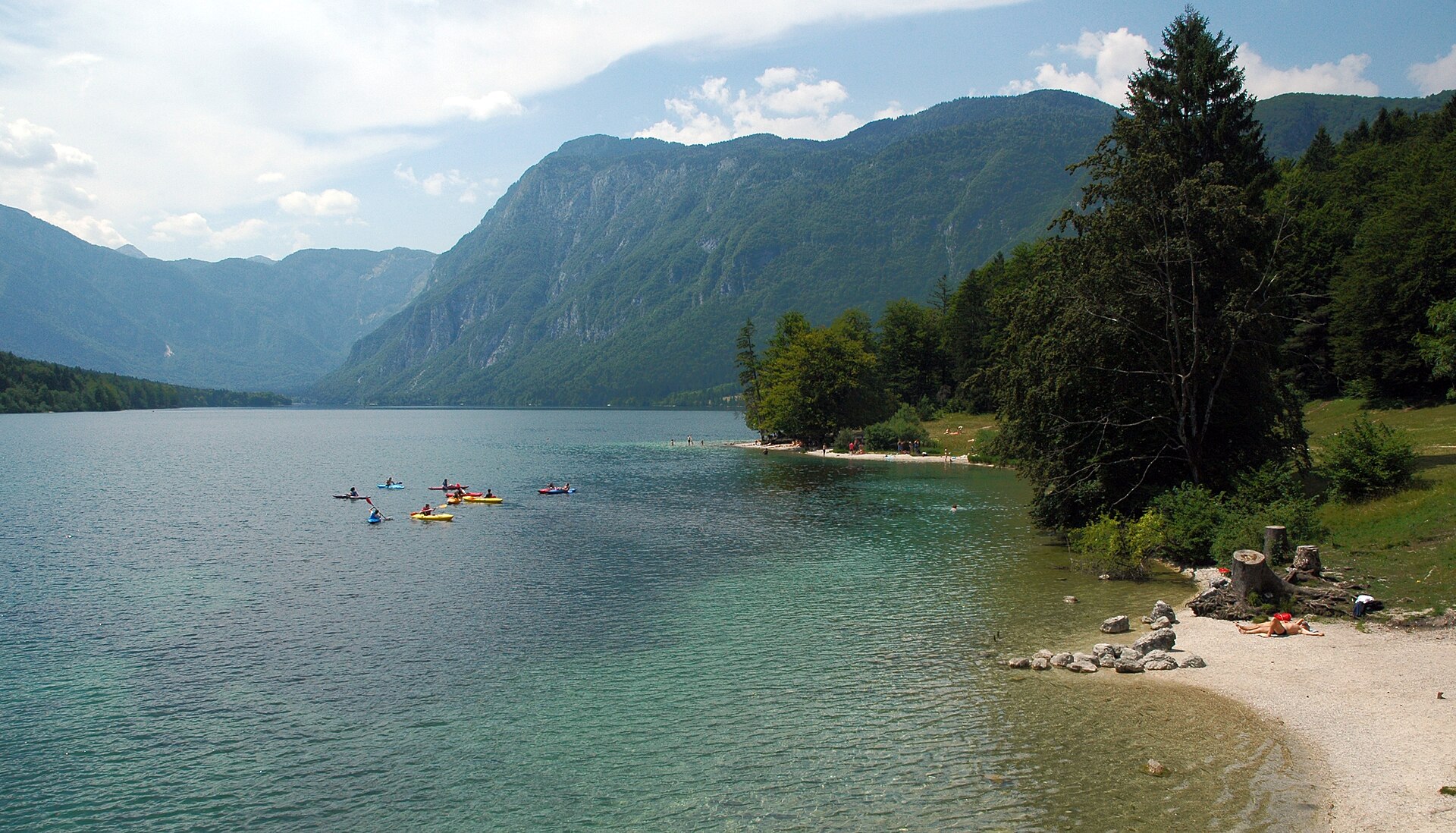
A long, clear alpine lake under the Julian Alps, with farm villages, cheese dairies and footpaths that start at your door, and none of Bled's crowds.
- Best time to visit: June to September
- Daily budget (budget traveller): $70 to $240 USD
- Ideal trip length: 4 to 7 days
Bohinj is the name of a whole valley in the Julian Alps, not just its lake. Lake Bohinj is the largest natural lake in Slovenia. It is about 4km long, and its water is cold and very clear. It sits inside Triglav National Park, about 30km south-west of Bled, and no motorboats are allowed apart from two quiet electric tourist boats. Around it are a handful of small villages: Ribčev Laz with its stone bridge and medieval church, Stara Fužina with its dairy museum and gorge, Studor with its wooden hayracks and Bohinjska Bistrica, the practical market town with the railway station. People come here to walk. Some go up to Savica waterfall and through Mostnica Gorge, others take the Vogel cable car up to the ridges, and the fittest climb to the Triglav Lakes Valley. In summer they come to swim and paddle too. Evenings are quiet and it gets dark early, which is the whole point. Bohinj is not as cheap as it was, but there is a good hostel, cheap buses, free lakeside swimming and hearty gostilna food, so a solo trip on a modest budget is easy. It is safe, friendly and simple to plan.
Bohinj is a glacial valley in the far north-west of Slovenia, deep inside Triglav National Park. The lake is about 4km long and 1km wide, and around 45m deep. It is fed by the Savica stream and drains into the Sava Bohinjka river at Ribčev Laz. Mountains rise steeply on three sides: Vogel and the Lower Bohinj range to the south, and the Triglav massif to the north. The villages are small, and many people still farm, run guesthouses or take cattle up to the high pastures in summer. That makes Bohinj feel very different from Bled, 30km away, where hotels line the shore. Here there are no big resorts on the water, motorboats are banned and in the evenings you mostly hear cowbells. Most visitors come for one day. Stay a few nights and you can hike before the crowds arrive, swim at Ukanc at the end of the day and eat trout and štruklji at a family gostilna.
Getting here is cheap and easy. Arriva buses run from Ljubljana for about €8.30, taking about 1 hour 50 minutes, and from Bled in about 50 minutes, stopping along the lake. The Bohinj railway reaches Bohinjska Bistrica from Jesenice and continues through a 6.3km tunnel to the Soča valley. Base yourself in Ribčev Laz if you rely on buses, Stara Fužina for walks from the door and a quieter feel, or Bohinjska Bistrica for the train and cheaper rooms. Once you are here, the panoramic boat, summer local buses, a hired bike and your own feet cover almost everything. The few fees are small but worth knowing: €4 for Savica, €3-4 cash for Mostnica Gorge and €32-35 for a Vogel return.
Timing shapes the trip. June to September brings warm days, swimmable water and full timetables. Afternoon thunderstorms are common, so do your big hikes in the morning. July and August are busy, and trailhead car parks fill by 10am. September is calmer and golden, and ends with the Cow's Ball festival when the herds come down. In spring the valley is green and the waterfalls are at their fullest, and the Wild Flower Festival runs in late May and June. From November to March, many places close or cut their hours, the boat stops, snow covers the trails and Vogel turns into a ski area. Bohinj is very safe, English is widely spoken and locals are welcoming. There is little nightlife, and that suits most people who come here.
Bohinj itinerary
Arrive in Ribčev Laz
Morning: Take a morning Arriva bus from Ljubljana (about 1 hour 50 minutes, around €8.30) or from Bled. Get off at Bohinjsko jezero in Ribčev Laz and drop your bags.
Afternoon: Visit the Church of St John the Baptist by the stone bridge, pick up maps and a timetable at the tourist office, then walk part of the eastern shore and swim if it is warm.
Evening: Sunset from the bridge, then dinner in Ribčev Laz or a short walk to Stara Fužina. Pack for an early start.
Mostnica Gorge and the Voje valley
Morning: Walk to Stara Fužina and into Mostnica Gorge by 8am. Pay the cash fee at the booth (about €4 in summer), cross the Devil's Bridge and follow the gorge upstream.
Afternoon: Continue up the Voje valley to the 21m waterfall, with a drink at Koča na Vojah. Back in Stara Fužina, visit the Alpine Dairy Museum.
Evening: Try mohant and Bohinj cheese at Planšar, or have a full dinner at Gostilna Mihovc.
Boat, Savica and the north shore
Morning: Take the first panoramic boat from Ribčev Laz to Ukanc (€9 single, free with the guest card). Walk or take the summer bus up to Savica, pay €4 and climb the steps to the waterfall.
Afternoon: Lunch at Koča pri Savici or a picnic, then swim at the Ukanc end of the lake.
Evening: Walk back along the quiet northern shore to Ribčev Laz (about 1.5 to 2 hours), or have trout at Gostišče Erlah in Ukanc and take the bus back.
Vogel and the ridges
Morning: Check the webcams, then take an early bus to the Vogel cable car (about €32-35 return in 2026). Ride the included chairlift to Orlove Glave and walk towards the Šija ridge for views of Triglav.
Afternoon: Stew and a beer at a mountain hut such as Orlove Glave or Viharnik, then ride down before the usual afternoon storms build.
Evening: A gentle evening paddle by kayak or SUP from Ribčev Laz if the lake is calm, then an easy dinner.
Black Lake (Črno jezero)
Morning: Start at the Savica area before 8am and climb the steep Komarča path to the Black Lake. It takes about 1.5 to 2 hours, uses cables in places and is not for wet weather.
Afternoon: Rest at the lake, then either go down the same way or, if you are fit and well equipped, continue to Koča pri Triglavskih jezerih. Check opening dates and book ahead if you plan to stay overnight.
Evening: Back in Ribčev Laz, have a big dinner and an early night. Keep this day flexible and swap it with day 6 if storms are forecast.
Villages and the Sava Bohinjka
Morning: Hire a bike and ride up to Studor to see the hayracks and Oplen House, then on to Srednja vas.
Afternoon: Roll down the valley beside the Sava Bohinjka to Bohinjska Bistrica for supermarket supplies, cash and a coffee. Have a swim stop by the river on the way back.
Evening: Farewell dinner at Gostilna Rupa in Srednja vas or Strud'l in Bohinjska Bistrica. Check bus and train times for tomorrow.
Through the tunnel and out
Morning: Take the bus to Bohinjska Bistrica and catch the Bohinj railway through the tunnel to Most na Soči (about 40-45 minutes, a few euros). Sit on the left-hand side for the valley views.
Afternoon: Walk the Tolmin Gorge, about 4km from Most na Soči, before going on to Nova Gorica and Italy. Or head back to Ljubljana by bus if you are flying home.
Evening: Connect onwards. If you have an early flight, stay a night in Ljubljana.
Best neighbourhoods
- Ribčev Laz: The small village at the eastern end of the lake, by the stone bridge and the Church of St John the Baptist. It has the main bus stop, the boat pier, the tourist office, kayak and SUP hire, a small shop and a few restaurants. It is the easiest base if you do not have a car.
- Stara Fužina: An old farming village about 1.5km north of the lake, at the mouth of the Mostnica Gorge and the Voje valley. It has the Alpine Dairy Museum, a couple of good gostilnas and lots of family-run apartments. It is quieter than Ribčev Laz and still a short walk from the water.
- Bohinjska Bistrica: The valley's main town, about 6km east of the lake. Here you will find the railway station, supermarkets, ATMs, the water park at Bohinj Eco Hotel and cheaper rooms. It is practical rather than pretty, and buses run to the lake in about 10 minutes.
- Ukanc: The western end of the lake, with Camp Zlatorog, the second boat pier, the Vogel cable car and the road up to Savica waterfall. It has the best swimming spots on the lake. It is lovely and very quiet, but there is little to eat or do after dark.
- Studor and Srednja vas: Two villages on the sunny slope above Stara Fužina, known for their double hayracks (toplarji) and farm views. Srednja vas has Gostilna Rupa. They suit slow travellers with a bike or car who want farm stays and apartments away from the lake traffic.
Must-do experiences
- Walk to Savica waterfall: The 78m waterfall drops from a karst spring above Ukanc. It is about a 20-minute climb up around 550 steps from the car park, and since August 2026 it costs €4 for anyone aged 16 or over. Entry is free on the first Sunday of every month.
- Walk through Mostnica Gorge: A narrow limestone gorge above Stara Fužina, with emerald pools, the Devil's Bridge of 1777 and a rock known as the Little Elephant. Entry is about €4 in summer and €3 in spring and autumn, paid in cash. Keep going up the Voje valley to the 21m waterfall.
- Ride the Vogel cable car: It climbs nearly 1,000m from Ukanc to about 1,535m in a few minutes and has big views over the lake to Triglav. A 2026 adult return costs about €32-35 depending on the season and includes the Orlove Glave chairlift at the top. Go early on a clear day.
- Take the panoramic boat and walk back: Two silent electric boats run between Ribčev Laz and Ukanc from April to early November. The crossing takes about 30 minutes. A single costs €9, so ride one way and walk the quiet northern shore back, which takes about 1.5 to 2 hours.
- Visit the Church of St John the Baptist: This small church by the stone bridge in Ribčev Laz is covered in medieval frescoes and is the classic Bohinj view. Come early in the morning or at dusk, when the lake is still and the coaches have gone.
- Learn how alpine cheese is made: The Alpine Dairy Museum in Stara Fužina tells the story of herders on the high pastures. Afterwards, try Bohinj cheese and pungent mohant at Planšar across the road, or buy cheese straight from a mountain hut in summer.
- Swim and paddle the lake: The lake reaches roughly 22°C in high summer and stays cold the rest of the year. Hire a kayak or SUP in Ribčev Laz or Ukanc for roughly €10-15 an hour, and go out early, before the wind picks up.
Hidden gems
- The Studor hayracks, double wooden toplarji along the lane through the village, best in the late afternoon light
- Oplen House in Studor, a small preserved farmhouse museum that shows how valley families lived
- Koča na Vojah, a simple hut in the Voje valley above Mostnica Gorge, good for a cheap drink with the cows grazing outside
- Free entry to Savica waterfall on the first Sunday of every month, worth timing your visit around
- The Bohinj railway through the 6.3km Bohinj tunnel to Most na Soči, a cheap and very scenic route into the Soča valley
Daily budget
- Accommodation: budget €30-45 / night (hostel dorm or campsite), mid-range €80-160 (guesthouse room or apartment), splurge €220+ (Hotel Bohinj or a lakeside hotel in summer). Prices jump in July and August, so book early. Tourist tax is added per night, but it usually comes with the Julian Alps: Bohinj card. Apartments with kitchens save money.
- Food: budget €20-30 / day (supermarket, bakery, hut stews), mid-range €40-60 (gostilna lunch and dinner), splurge €80+ (tasting menus, wine). Mountain hut soups and stews cost roughly €7-12. Gostilna mains are about €14-25. The supermarkets in Bohinjska Bistrica are the cheapest for self-catering.
- Transport: budget €0-5 / day (walking, local buses), mid-range €15-25 (bike hire, boat ticket), splurge €50+ (car hire, taxis). Ljubljana-Bohinj by bus is about €8.30. The boat costs €9 single or €14 return, and is free with the guest card. Savica parking is €7 for three hours or €15 for the day.
- Activities: budget €0-10 / day (free hikes, gorge or waterfall fees), mid-range €35-50 (Vogel cable car day), splurge €80-150 (guided canyoning, paragliding, mountain guide). Savica costs €4 (free on the first Sunday of the month), Mostnica Gorge €3-4 cash, and the Vogel return €32-35 in 2026. Kayak and SUP hire is roughly €10-15 an hour.
- Drinks & nightlife: budget €5-10 (shop beer by the lake), mid-range €15-30 (a few drinks at a café bar), splurge €40+ (wine with dinner). A beer in a bar costs roughly €3.50-5. Nightlife is a drink on a terrace, and most places close by 10 or 11pm. For bars and late nights, go to Bled or Ljubljana.
Where to stay
- Social hostel in South shore (between Ribčev Laz and Ukanc) (€30-45 / night (dorm)): Hostel Pod Voglom sits by the lake road with dorms and simple private rooms, a shared kitchen and a bus stop outside. It is the obvious choice for meeting other hikers.
- Boutique hotel in Ribčev Laz (€120-200 / night): Hotel Gasperin is a small family-run hotel a few minutes' walk from the bridge and boat pier, with good breakfasts and mountain views.
- Apartment in Stara Fužina or Studor (€80-130 / night): Many family-run apartments with kitchens, in quiet farm villages near Mostnica Gorge. Self-catering keeps costs down, and Ribčev Laz is a short walk away.
- Splurge in Ribčev Laz (€220-400 / night): Hotel Bohinj is a modern design hotel steps from the lake, with a restaurant and spa. It is the most polished stay in the valley.
What to eat
- Mohant: a soft, sharp, strong-smelling cheese made only in the Bohinj area and protected by the EU. Try a little on bread before you commit
- Bohinj cheese: firm alpine cheese from summer pastures, sold at mountain huts, Planšar and the local dairy shops
- Trout from the Sava Bohinjka: grilled or pan-fried with potatoes, on the menu at Gostišče Erlah in Ukanc and most gostilnas
- Štruklji: rolled dumplings filled with cottage cheese, tarragon or walnut, served boiled or baked
- Ričet and jota: thick barley or bean stews ladled out at mountain huts like Orlove Glave on Vogel, cheap and filling after a hike
- Kranjska klobasa with sauerkraut and mustard, the Slovenian sausage you will find at Gostilna Mihovc in Stara Fužina and at village festivals
Day trips
- Lake Bled (About 30km east, around 50 minutes by bus): The famous lake with its island church and clifftop castle. It is busier and more commercial than Bohinj, but worth half a day for the views and a slice of cream cake. Take an Arriva bus from Ribčev Laz or Bohinjska Bistrica to Bled bus station, for roughly €4-5. Buses run about hourly in summer, less often off-season.
- Most na Soči and the Tolmin Gorge (About 40-45 minutes by train through the Bohinj tunnel): The Bohinj railway runs through the 6.3km tunnel into the Soča valley. Most na Soči has an emerald reservoir, and the Tolmin Gorge, a few kilometres away, has narrow canyons and the Devil's Bridge. Take a regional train from Bohinjska Bistrica, for a few euros. Drivers can use the motorail car train (€16.20 for car and driver in 2026, cash only). Check return times before you go.
- Black Lake and the Triglav Lakes Valley (About 1.5-2 hours' steep climb from the Savica area): The Black Lake is a dark tarn in the forest above Savica, reached on the steep Komarča path with some cabled sections. Fit hikers can go further into the Triglav Lakes Valley and stay in a mountain hut. Take the summer bus or walk to Savica, then follow the signed path. Go in dry weather only, start early and book hut beds ahead in high season.
When to visit
- Spring (April - May): 8-20°C, changeable, showers common, snow still on high ground. Crowds: Low, with busier weekends and holidays. Waterfalls at full power, green meadows and cheap rooms. The boat starts in early April, but high trails are still snowy and the lake is far too cold for most swimmers.
- Summer (June - August): 18-28°C, warm days, frequent afternoon thunderstorms. Crowds: Busy, especially July and August weekends. Best for swimming, high hikes and full bus and boat timetables. Book beds early, start hikes at dawn and arrive at trailheads before 9am.
- Early autumn (September - October): 10-22°C, mostly settled, cool mornings. Crowds: Moderate in September, quiet in October. The locals' pick. Clear air, golden larches and the Cow's Ball in September. Some timetables shrink after mid-September, and the boat runs until early November.
- Winter (November - March): -5 to 8°C, snow likely, short days. Crowds: Quiet, except ski weekends and holidays. Peaceful and snowy, with skiing at Vogel and a frozen Savica. Many restaurants close or cut their hours, the boat does not run and mountain trails need winter experience.
Entry rules for your passport
Visa rules for Slovenia depend on the passport you travel on. Check the official source before you book: European Commission: Schengen visa policy
Getting there
The nearest airport is Ljubljana Jože Pučnik (LJU), about an hour's drive away. Venice, Trieste and Zagreb are other options for cheaper flights, with longer transfers. From the airport, take a shared shuttle such as GoOpti, or a bus into Ljubljana or Kranj and then connect. Arriva buses run from Ljubljana bus station to Bohinj via Bled. They take about 1 hour 50 minutes, cost around €8.30, run roughly hourly in summer and less often off-season. From Bled the bus takes about 50 minutes. Buses stop at Bohinjska Bistrica, Ribčev Laz (Bohinjsko jezero), Ukanc and the Vogel cable car. By train, take the line from Ljubljana to Jesenice and change for the Bohinj line to Bohinjska Bistrica. A local bus then runs to the lake in about 10 minutes. There were rail engineering closures on the Ljubljana to Jesenice line in autumn 2026, so check current timetables and replacement buses. From the Soča valley, trains run from Most na Soči to Bohinjska Bistrica in about 40-45 minutes. The motorail car train runs on the same route for drivers, at €16.20 for a car and driver since July 2026 plus €3.60 for each extra passenger, cash only, with no reservations. Slovenia is in the Schengen area, and visitors from outside the EU should check current entry rules, including the EU Entry/Exit System.
Border checks: non-EU visitors (other than Swiss, Norwegian, Icelandic, Liechtenstein, Andorran, Monegasque, San Marinese and Vatican citizens, and holders of an EU residence permit or long-stay visa) are registered in the EU's Entry/Exit System (EES) instead of getting a passport stamp. On your first crossing, officers take your photo and/or fingerprints, so allow extra time at passport control. ETIAS, the planned travel authorisation, is not in operation yet, so don't pay any website for one.
Getting around
Bohinj is easy without a car. Arriva buses from Ljubljana and Bled stop at Bohinjska Bistrica, Ribčev Laz, Ukanc (Bohinj Zlatorog) and the Vogel cable car. Short hops along the valley cost €1-2. In summer, local buses add services between Bohinjska Bistrica, the lake and Savica waterfall, and in 2026 the Savica bus ran daily until 31 August. Check promet.bohinj.si for the current timetable. The panoramic boat links Ribčev Laz and Ukanc from April to early November, for €9 single or €14 return. Holders of the Julian Alps: Bohinj card ride free, and most registered accommodation issues the card. Walking is the best way to get around, as the lake path is about 12km all the way round. Bikes are easy to hire in Ribčev Laz and Bohinjska Bistrica, and the valley floor is mostly flat. If you drive, parking near the lake and at trailheads is paid in summer. The Savica car park costs €7 for up to three hours or €15 for the day, and it fills by mid-morning. Taxis are few, so book through your accommodation.
Safety
Bohinj is very safe, and crime against visitors is rare. Most problems are to do with the mountains. Summer afternoons often bring sudden thunderstorms, so start hikes early and be off exposed ridges by early afternoon. Wear proper shoes, because limestone paths and gorge steps are slippery when wet. Take water, a layer and a rain jacket even on short walks. The lake is cold for much of the year and gets deep quickly, so swim near the shore and away from the boat piers. Ticks are common in long grass and forests, and Slovenia has tick-borne encephalitis, so check yourself after walks and think about the vaccine if you plan a lot of hiking. Mountain rescue is reached on 112. Mountain rescue is not always free for visitors, so make sure your insurance covers hiking. Wild camping and drones are banned in Triglav National Park. In winter, paths can be icy and some trails are closed because of avalanche risk.
Solo travel tips
- Base yourself in Ribčev Laz without a car: The bus stop, boat, tourist office, shop and kayak hire are all within a few minutes' walk. Stara Fužina is 20 minutes away on foot and quieter. Ukanc is beautiful but isolated in the evening.
- Hike early, rest late: Thunderstorms often build after 2pm in summer. Start big walks at 7 or 8am, aim to be off ridges by early afternoon and save the swim and the terrace for later in the day.
- Use the guest card: Register at licensed accommodation and ask for the Julian Alps: Bohinj card. It has covered the boat and other perks, which saves real money on a solo budget.
- Carry cash in small notes: Gorge booths, huts, parking machines and the car train often take cash only. Pick up euros in Bohinjska Bistrica or Ribčev Laz before heading out.
- Safety for solo travellers: The risks here come from the weather and the terrain, not from people. Tell your host your route, use marked paths and download an offline map. Save 112 in your phone, and do not attempt cabled routes like Komarča in the wet.
- Meet people in huts and the hostel: Mountain huts have shared tables, and hikers chat easily over soup. Hostel Pod Voglom has a social common area, and joining a guided canyoning or hiking trip is an easy way to find company.
Cultural etiquette
- Greet people with 'Dober dan' (good day) and say 'hvala' (thank you). On trails, everyone says 'Dober dan' or 'Zdravo' as they pass.
- Wild camping, fires and drones are banned in Triglav National Park. Stay in campsites and huts, and take your rubbish home.
- Leave gates as you find them, stay on paths through meadows and do not pick flowers or disturb cattle on the pastures.
- Swimwear is for the lake. Cover up in shops, churches and restaurants.
- Many locals take shoes off indoors. In apartments and huts, use the slippers provided.
- Shops close early on Saturdays, and most stay closed on Sundays and holidays, so stock up on Saturday morning.
- Respect quiet hours. Bohinj is a farming valley, and early nights and early mornings are normal.
Frequently asked questions
How do I get to Bohinj from Ljubljana or the airport?
Arriva runs direct buses from Ljubljana bus station to Bohinjska Bistrica, Ribčev Laz and Ukanc, via Bled. The trip takes about 1 hour 50 minutes and costs around €8.30 one way. Buses are roughly hourly in summer and less frequent off-season. By train, change at Jesenice for the Bohinj line to Bohinjska Bistrica, then take a short bus to the lake. Rail engineering works disrupted parts of this line in autumn 2026, so check Slovenske železnice before you travel. From Ljubljana airport, the easiest options are a shared shuttle such as GoOpti or a bus into Ljubljana or Kranj and then a connection.
How many days do I need in Bohinj?
Three days covers Savica, Mostnica Gorge, Vogel and the lake. Four or five lets you add a long hike, a bad-weather day and a slow afternoon in the villages. A week works well if you want to reach the Black Lake or the Triglav Lakes Valley, or add day trips to Bled and the Soča valley.
When is the best time to visit Bohinj?
June to September is best for swimming, hiking and full transport timetables. July and August are the busiest. September is the locals' favourite, with calm weather, fewer people and the Cow's Ball festival at the end of the summer grazing season. From November to March it is quiet, cold and often snowy, and Vogel becomes a ski area.
Is Bohinj better than Bled for a solo traveller?
It depends on what you want. Bled has more restaurants, bars and nightlife. Bohinj is bigger, wilder and much quieter, with better hiking straight from the village and cleaner swimming. Many solo travellers stay in Bohinj and visit Bled for half a day by bus, which takes about 50 minutes.
Is the Vogel cable car worth the price?
Yes, if the weather is clear and you plan to walk at the top. A 2026 adult return costs about €32-35 depending on the season, and it includes the Orlove Glave chairlift. On a cloudy day you will see nothing, so check the webcams on vogel.si before buying.
What is the Julian Alps: Bohinj card?
It is a guest card that most registered accommodation in Bohinj issues to overnight visitors. In 2026 it gave free rides on the panoramic boat, and the national park listed Savica entry as included too. Benefits change each season, so ask your host what it covers and carry it with you.
Do I need cash in Bohinj?
Yes. Cards work in hotels, most restaurants and the cable car. But the Mostnica Gorge booth, Savica waterfall, some parking machines, mountain huts and the car train usually take cash only. ATMs are in Bohinjska Bistrica and Ribčev Laz, so keep €40-60 in small notes on you.
Is Bohinj safe for solo female travellers?
Yes. It is one of the most relaxed places in Europe to travel alone, and hikers greet each other on the trails. The main risks are practical: storms, slippery paths and cold water. Tell your host your route before a long hike, stick to marked trails and keep your phone charged with an offline map.
Tours and activities in Bohinj | Bohinj in 2 days | Bohinj in 3 days | Bohinj in 4 days | Bohinj in 5 days | Bohinj in 7 days
Can't decide? Compare Bohinj with...
Joy Plus home | Destinations | Itineraries | Activities | Flights | Budget planner | Calendar | Map | Blog | Lifetime access