Destinations / South America
Bonito, Brazil travel guide
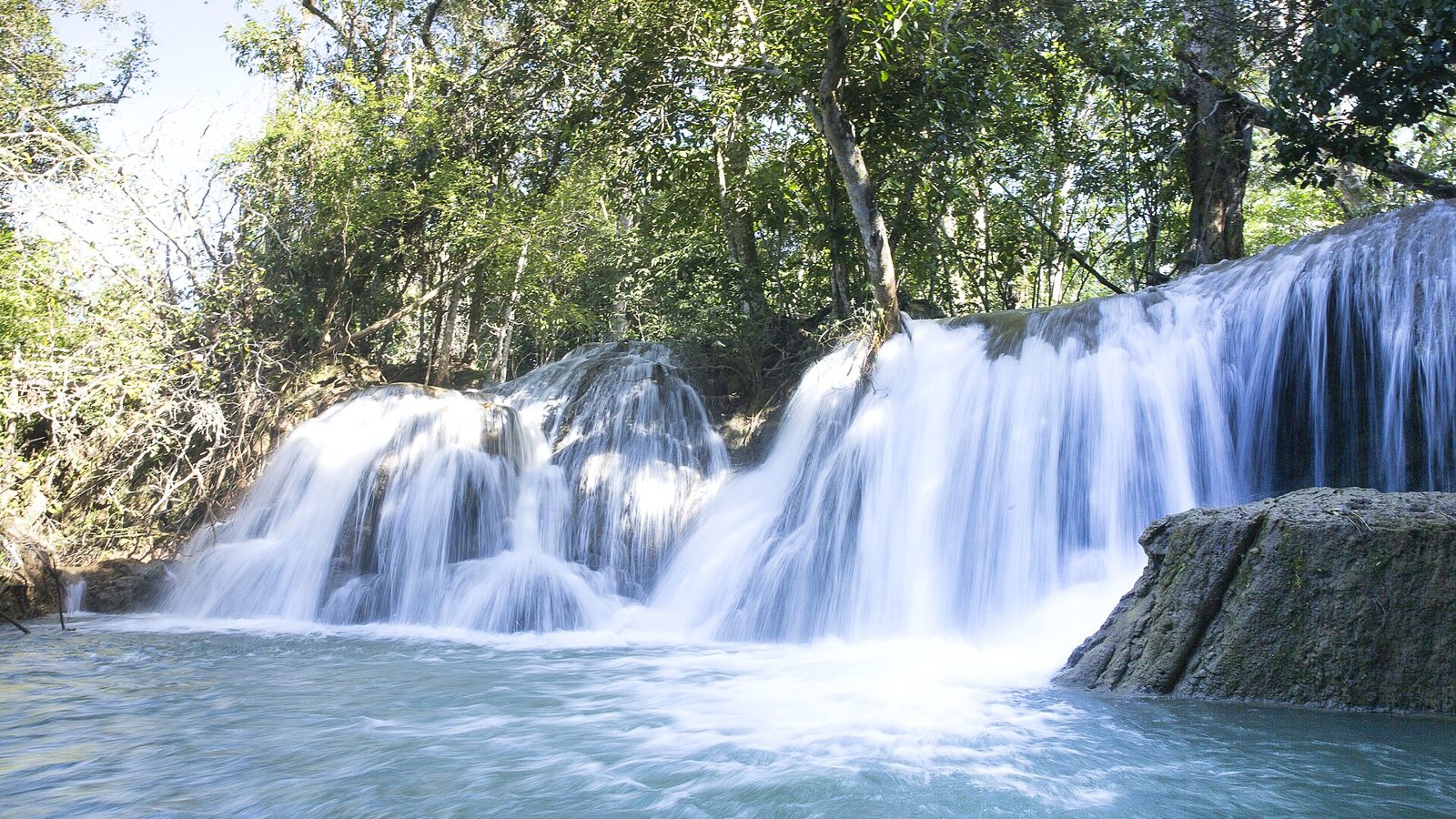
A small farming town in Mato Grosso do Sul, ringed by spring-fed rivers so clear you can float above the fish as if the water weren't there. You drift down the Rio da Prata, look down into a flooded blue cave and watch red macaws circle a huge sinkhole at dusk.
- Best time to visit: May to September
- Daily budget (budget traveller): $60 to $200 USD
- Ideal trip length: 4 to 7 days
Bonito is a town of about 25,000 people in Mato Grosso do Sul, in Brazil's south-west. It is roughly 300km from the state capital, Campo Grande, and not far from the southern Pantanal. The town itself is plain: one long main street with restaurants, agencies and ice cream shops. What draws people here is the land around it. Limestone filters the rivers until they run glass-clear, and you can float face down for an hour among shoals of piraputanga and dourado. There are flooded caves, waterfalls and a 100-metre-deep sinkhole full of nesting macaws. Nearly every attraction sits on private land or is run by the council. Each one takes a fixed number of visitors a day, needs a pre-booked voucher from an accredited agency and charges the same set price whichever agency you use. That keeps the rivers clean, but it also means Bonito costs more than most of rural Brazil and you have to plan ahead. There is no public transport to the sites either. A hostel bed, the cheaper swimming spots and shared transfers can still keep a solo trip under control, and the main street is relaxed and easy to enjoy on your own in the evenings.
Bonito sits at the southern end of the Serra da Bodoquena, a limestone plateau in Mato Grosso do Sul. The rock acts as a filter. Calcium in the water makes particles sink, so rivers such as the Prata, Sucuri and Formoso run so clear that visibility can reach tens of metres. Locals worked out early that this was worth protecting. Since the 1990s, Bonito has had one of Brazil's strictest ecotourism systems, with daily visitor caps, compulsory guides, set prices and a voucher for every visit. The result is a place that feels well looked after, with fish that ignore you and trails with no litter. It is not cheap by Brazilian standards, and the town itself is functional rather than pretty, but floating down a spring-fed river is an experience few places can match.
Getting here takes some planning. Direct flights to Bonito's small airport come from São Paulo and Campinas only a few days a week. Most people fly into Campo Grande instead and take the twice-daily bus, which takes about five hours, or a shared shuttle. Once you are here, walk the main street for food and agencies, but rely on agency transfers or a hire car to reach the attractions, which lie up to 60km away on mostly dirt roads. Base yourself on or near Rua Coronel Pilad Rebuá if you have no car. Book the Rio da Prata and Gruta do Lago Azul first, then build the rest of your days around them.
The season changes the experience. From May to September the air is dry, the rivers are at their clearest and wildlife is easy to see, although July is busy with Brazilian families. December to February brings heat, storms and big holiday crowds, and heavy rain can cloud the water for a day or two. Whatever the month, expect early starts, as most floats and caves are best in the morning. Evenings are quiet: dinner, an ice cream and maybe a beer on the main street. Few people speak English outside agencies and hotels, so a translation app helps. If you want nightlife, this is not the place. If you want to spend a week in clear water, it is hard to beat.
How many days in Bonito?
For Bonito, we recommend 4 to 7 days. With more time, add a day trip to The southern Pantanal.
| Trip length | What you'll see | Itinerary |
|---|---|---|
| 2 days | Blue Lake Cave and a river swim | Bonito in 2 days |
| 3 days | Adds: Rio da Prata and the macaws | Bonito in 3 days |
| 4 days · Recommended | Adds: Waterfalls at Estância Mimosa | Bonito in 4 days |
| 5 days · Recommended | Adds: A second float | Bonito in 5 days |
| 7 days · Recommended | Adds: Boca da Onça | Bonito in 7 days |
Bonito itinerary
Arrive and sort your vouchers
Morning: Fly into Bonito or take the 08:00 bus from Campo Grande (about 4 hours 50 minutes). Drop your bag at your hostel or pousada.
Afternoon: Walk Rua Coronel Pilad Rebuá and confirm your vouchers and transfers at an agency. If you arrive early, take a taxi to the Balneário Municipal (about R$70-98) for a first swim.
Evening: Dinner of grilled pintado on the main street, then a cerrado fruit ice cream.
Blue Lake Cave and a river swim
Morning: Early transfer to the Gruta do Lago Azul (about R$120-180) for the best light in the cave. Allow time for the 300 or so steps back up.
Afternoon: Visit the nearby Gruta de São Miguel, or head to a river spot such as Estrela do Formoso for a cheaper afternoon swim.
Evening: A per-kilo dinner or a snack and a beer. Rest up for an early float.
Rio da Prata and the macaws
Morning: Shared transfer to the Rio da Prata near Jardim (about R$470-570, lunch included). Walk to the spring and float for around two hours.
Afternoon: After lunch at the farm, carry on to Buraco das Araras (about R$185) for the late-afternoon macaw flights.
Evening: Back in town after dark. A simple dinner and an early night.
Waterfalls at Estância Mimosa
Morning: Transfer north to Estância Mimosa (about R$340-410). Walk the trail past the waterfalls, swimming and jumping into the pools.
Afternoon: Regional lunch at the farm, then back to town for a slow afternoon. Swim in your pousada pool if it has one.
Evening: Try traíra sem espinha at Casa do João, or another fish restaurant on the main street.
A second float
Morning: Float the Rio Sucuri or the Nascente Azul, both closer to town than the Prata and with smaller groups.
Afternoon: Free time in town. Browse craft shops, or join a bike tour if you still have energy.
Evening: Drinks and live music on Pilad Rebuá, especially at a weekend.
Boca da Onça
Morning: Early transfer to Bodoquena for the Boca da Onça trail (from about R$600, lunch included). Take good shoes and plenty of water.
Afternoon: Finish the waterfall circuit and climb the steps back out. It is a long, tiring day, so set a slow pace.
Evening: Back late. A quick dinner close to your bed.
Easy morning and depart
Morning: A last swim at the Balneário Municipal at opening, when the fish gather in the shallows and it is quiet.
Afternoon: Take the 14:10 bus to Campo Grande (about 4 hours 20 minutes), or a transfer to Bonito Airport for your flight. Check times the day before.
Evening: Arrive in Campo Grande, or carry on to the Pantanal or your next stop.
Best neighbourhoods
- Rua Coronel Pilad Rebuá: Bonito's main street, which runs for about 2km through the middle of town. Almost all the agencies, restaurants, banks, bars and ice cream shops are here, and transfer vans pick up along it each morning. It is lively but never wild, and the best base if you want to walk everywhere.
- Praça da Liberdade and the side streets: The small square near the top of the main street and the quiet grid of roads around it. You will find pousadas, a few hostels and family-run guesthouses here, a block or two from the restaurants. It is a good choice if you want quiet nights without being far from dinner.
- Around the bus station: The area near the rodoviária, a short walk from the lower end of the main street. Rooms are simpler and often cheaper, and it is handy if you arrive on the evening bus from Campo Grande. Walk up to Pilad Rebuá for food, as there is little here after dark.
- Rio Formoso and the rural lodges: A scattering of eco-lodges, resorts and farm stays outside town, several near the Rio Formoso and the Balneário Municipal. You get birdsong, pools and river access. Without a car you depend on taxis or hotel transfers, so it suits a splurge more than a budget trip.
- Jardim: A small working town about 60km south, closer to the Rio da Prata, Buraco das Araras and the Lagoa Misteriosa. It is cheaper and far less touristy than Bonito, but it has little nightlife and fewer agencies. It works for a night or two if you want early starts on the southern sights.
Must-do experiences
- Float the Rio da Prata: This is Bonito's best-known float, about 50km away near Jardim. You walk through forest to the spring, then drift with mask and snorkel for around 2km among big shoals of fish. Expect roughly R$470 in low season and R$570 in high season (about $87 to $105 USD), with a farm lunch included.
- See the Gruta do Lago Azul: A council-run cave about 20km from town, where around 300 steps lead down to a lake of intense blue water estimated at 90m deep. Go in the morning, when sunlight reaches into the cave. Tickets cost about R$120 in low season and R$180 in high season ($22 to $33 USD).
- Watch the macaws at Buraco das Araras: A huge sinkhole more than 100m deep near Jardim, where red-and-green macaws nest in the walls. An easy trail of under 1km leads to two viewing platforms. Entry is around R$185 ($34 USD), and late afternoon is the best time for birds.
- Swim at the Balneário Municipal: The cheapest and closest swimming spot, about 7km from the centre on the Rio Formoso. Fish gather in the clear shallows, and you can stay all day. Entry is roughly R$70 in low season and R$98 in high season ($13 to $18 USD). Pack a picnic or eat at the snack bar.
- Walk the waterfalls at Estância Mimosa: A trail through forest on a working farm north of town, past a string of turquoise falls and pools where you can swim and jump in. Plan on around R$340 to R$410 ($63 to $76 USD) depending on season, and a regional lunch is included.
- Float a second river: If the Prata is full or you want another float, the Rio Sucuri and the Nascente Azul are shorter, closer to town and usually a little cheaper. Floats in the area mostly cost between about R$295 and R$526 ($55 to $97 USD). The water is just as clear, and the groups are often smaller.
- Hike to Boca da Onça: In Bodoquena, about an hour away, a long trail with hundreds of steps passes a string of waterfalls before reaching Mato Grosso do Sul's highest fall, at more than 150m. It is a full day and fairly hard going. Trail packages start at around R$600 ($110 USD), with lunch.
Hidden gems
- The Balneário Municipal right at opening time, when the water is still and the piraputanga gather in the shallows before the coach groups arrive
- Gruta de São Miguel, a smaller cave near the Lago Azul with a suspended walkway through the forest, usually much cheaper and quieter than its famous neighbour
- Dawn birdwatching walks (passarinhada) at the Rio da Prata reserve, where toucans, parrots and rheas are common before the floaters arrive
- The Lagoa Misteriosa near Jardim, a deep flooded sinkhole of startling blue where you can snorkel at the surface or dive with a cylinder
- Estrela do Formoso and other smaller river spots on the Rio Formoso, which have far fewer visitors and some of the lowest entry prices in the area
Daily budget
- Accommodation: budget $15-25 / night (hostel dorm), mid-range $45-90 (pousada double or simple apartment), splurge $250+ (eco-resort or boutique hotel). Prices rise sharply at Christmas, New Year, Carnival, Easter and in July. Book single rooms early for holidays. Many pousadas include a big breakfast.
- Food: budget $12-20 / day (hostel breakfast, per-kilo lunch, snacks), mid-range $25-45 (restaurant fish dinner and drinks), splurge $60+ (top restaurants with wine). Several tours, such as the Rio da Prata and Estância Mimosa, include lunch, which saves a meal. A per-kilo plate is about R$50-80.
- Transport: budget $15-30 / day (shared transfer to one sight), mid-range $40-70 (hire car or two transfers), splurge $80+ (private car with driver). There is no public transport to the sights. The Campo Grande bus is about R$111-151 ($21-28 USD) each way. Taxis from the airport, 13km away, cost extra.
- Activities: budget $13-35 / day (Balneário Municipal, Lago Azul, Buraco das Araras), mid-range $55-105 (one river float), splurge $110+ (Boca da Onça, scuba diving or Abismo Anhumas). Prices are set by each attraction and vary by season. Add the R$15 ($3 USD) environmental fee for each tour day in Bonito. Rough conversions at about R$5.4 to the dollar.
- Drinks & nightlife: budget $3-6 (a beer or caipirinha on the main street), mid-range $10-20 (a few drinks at a bar), splurge $30+ (cocktails and live music). A coffee costs about R$6-10 and a beer R$12-20. Nightlife means bars and live music on Pilad Rebuá, mostly at weekends.
Where to stay
- Social hostel in Main street and nearby blocks ($15-25 / night (dorm)): Bonito has a handful of hostels within walking distance of Pilad Rebuá, such as Papaya Hostel, with dorms, kitchens and pools. They often help book vouchers and shared transfers, and they make it easy to meet other travellers.
- Boutique hotel in Rua Coronel Pilad Rebuá ($150-250 / night): Wetiga Hotel sits on the main street, with stone and wood design, a pool and a calm atmosphere. Restaurants and agencies are on the doorstep, so you do not need a car.
- Apartment in Praça da Liberdade and side streets ($45-90 / night): Small pousadas and flats with kitchens give you a quiet base, a breakfast or the chance to cook. Check air conditioning and how far you are from the main street.
- Splurge in Outside town ($250-450+ / night): Zagaia Eco Resort, on the road out of town, has big pools, gardens and plenty of birdlife. Transfers to the attractions are easy to arrange from here, and town is a short taxi ride away.
What to eat
- Pintado or pacu: grilled or fried river fish, Bonito's signature dish, found on most menus along Pilad Rebuá. Fish served this way often comes as a whole plate to share, so ask about portion size
- Traíra sem espinha: deboned fried traíra fish, a local favourite served in restaurants such as Casa do João
- Sopa paraguaia and chipa: a savoury cornbread and cheesy bread rolls, both brought by Paraguayan influence and sold in bakeries and at farm lunches
- Tereré: cold yerba mate shared from a gourd, the everyday drink of Mato Grosso do Sul. Accept it if offered and pass it back
- Comida por quilo: pay-by-weight buffet lunches in town, the cheapest way to eat well on a budget, at roughly R$50 to R$80 for a full plate
- Fruit ice cream from the cerrado: try bocaiúva, guavira or cupuaçu flavours at the ice cream shops on the main street after dinner
Day trips
- Jardim: Rio da Prata and Buraco das Araras (About 50 to 60km south of Bonito, around an hour by road): The area's best-known float on the Rio da Prata, plus the macaw sinkhole and the deep blue Lagoa Misteriosa. You can combine two of them in a long day. Book a shared transfer with your agency along with your vouchers, or drive. Some visitors stay a night in Jardim to make early starts easier.
- Bodoquena and Boca da Onça (About 60km north-west of Bonito, around an hour to 1.5 hours by road): A long waterfall trail in the Serra da Bodoquena, ending at the state's highest fall. There are also abseiling and adventure options for confident visitors. Book through an agency with a shared transfer, as part of the road is unpaved. Trail packages start at around R$600 ($110 USD) with lunch.
- The southern Pantanal (About 150km to Miranda, around 2.5 to 3 hours by road): The world's largest tropical wetland, with caimans, capybaras, giant otters and huge numbers of birds. It is best as an overnight stay at a lodge rather than a day trip. Book a lodge with a transfer from Bonito, or drive via Miranda. The dry season, roughly May to October, is the best time for wildlife.
When to visit
- Summer (December - February): 25-35°C, hot and humid, frequent heavy storms. Crowds: Very busy at Christmas, New Year and Carnival, quieter in between. Lush and green, with full waterfalls, but rain can cloud the rivers for a day or two. Book early around the holidays.
- Autumn (March - May): 20-32°C, rain easing off through April and May. Crowds: Low to moderate, busy at Easter. A good shoulder season. Water clears as the rain stops, prices drop to low-season rates and tours are easier to book.
- Winter (June - August): 12-28°C, dry and sunny, with occasional cold fronts down to about 5°C. Crowds: Moderate, very busy in July school holidays. Peak clarity in the rivers and good for wildlife. Pack a warm layer for cold mornings, and the wetsuits help in the water.
- Spring (September - November): 22-35°C, hot and dry, with rain returning from late October. Crowds: Low to moderate, busier on long weekends. September is often the locals' pick, with clear water and warm days. Smoke from regional fires can sometimes haze the sky.
Entry rules for your passport
Visa rules for Brazil depend on the passport you travel on. Check the official source before you book: Brazil Ministry of Foreign Affairs
Getting there
Bonito Airport (BYO) is about 13km from town and has only a few flights a week. Azul flies from Campinas (Viracopos) on Tuesdays, Thursdays and Sundays, and GOL flies from São Paulo Congonhas about twice a week, with extra flights in the Brazilian summer. LATAM began flying from São Paulo Guarulhos on Wednesdays, Fridays and Sundays from 25 October 2026. The flights take about two hours. Book a taxi or transfer from the airport into town. The more flexible option is to fly into Campo Grande, which has frequent connections across Brazil. From Campo Grande bus station, Cruzeiro do Sul buses leave for Bonito at 08:00 and 14:00. They take about 4 hours 50 minutes and cost roughly R$111 to R$151 ($21 to $28 USD) one way. Return buses leave Bonito at 07:00 and 14:10. Shared shuttles from Campo Grande airport are quicker and can drop you at your hotel. If you drive, the roads to Bonito are paved, but many routes to the attractions are not. Brazil is one hour behind São Paulo time here (UTC-4), so check flight and bus times carefully.
Getting around
Bonito's town centre is small and flat, so you can walk from end to end of Rua Coronel Pilad Rebuá in about 25 minutes. The attractions are another matter. They are spread across a radius of 60km or more, many are on dirt roads, and there is no public transport and no Uber service to them. Most solo travellers book a shared transfer with their agency at the same time as the voucher. Expect roughly R$80 to R$200 return per person ($15 to $37 USD) depending on distance, and more for a private car. Grouping sights by direction saves a lot, for example the Rio da Prata and Buraco das Araras on one day. Taxis work for short hops such as the Balneário Municipal, but agree the fare first. Hiring a car costs about $40 to $70 USD a day and gives you more freedom, though some dirt roads get muddy and slippery after rain. Bikes can be hired for the closer spots, but the heat and dust make long rides hard.
Safety
Bonito is one of the safest towns in Brazil to visit, and crime against visitors is rare. Keep the usual care with your phone and bag on the main street at night and in Campo Grande, where the risks are higher. The real risks here are nature, heat and roads. Floats and waterfall trails are guided and you are given a life jacket and wetsuit, so follow the guide's rules, especially on currents and where not to stand. Heat and sun are strong all year, and insects come out at dusk, so cover up and use repellent on land. Sunscreen and repellent are not allowed in the rivers before floats, so cover up with clothing instead. The dirt roads are dusty in the dry season and muddy in the wet, so do not drive them at night. Ticks can be a nuisance on trails. Tap water is treated, but most people drink filtered or bottled water. Brazil's emergency numbers are 190 for police and 192 for ambulance. Travel insurance with medical cover is essential, as the nearest big hospitals are in Campo Grande.
Solo travel tips
- Stay on the main street: Without a car, being on or near Rua Coronel Pilad Rebuá saves taxi fares. Transfers pick up here, agencies are next door and dinner is a short walk away.
- Book the big ones first: The Rio da Prata and Gruta do Lago Azul fill up fastest, as each takes a set number of visitors a day. Secure them first, then fit cheaper or quieter sights around them.
- Share transfers: Transfers are often the biggest cost for solo travellers. Ask your agency for shared vans, and pair sights in the same direction, such as the Rio da Prata with Buraco das Araras.
- Pick tours with lunch: Several farm-based attractions include a generous regional lunch. On those days, have a light breakfast and save your money for one good dinner.
- Safety for solo travellers: Bonito itself is very safe. The real risks are heat, sun, currents and dirt roads at night. Follow the guides, drink plenty of water and take care in Campo Grande, especially near the bus station.
- Meet people on tours: Floats and trails run in small groups, so it is easy to chat and swap plans. Hostel common areas and the bars on the main street are good for finding people to share transfers with.
Cultural etiquette
- Greet people with 'bom dia' or 'boa tarde' and say 'obrigado' (or 'obrigada' if you are a woman). A few words of Portuguese go a long way, as English is limited.
- Follow the guides' rules in the water. Do not touch the riverbed or stand up in the shallows, as this stirs up sediment and harms the springs.
- Skip sunscreen and repellent before floats. They are not allowed in the rivers, so cover up with a T-shirt or the wetsuit instead.
- Never feed the fish or wildlife, and keep your voice down on trails so you do not scare the birds.
- If someone offers you tereré, it is polite to accept. Drink it all, then hand the gourd back to the person serving.
- Tipping is not compulsory. Restaurants often add a 10% service charge, and a small tip for a good guide is appreciated.
- Take your rubbish back with you from the river spots and trails, and stick to the marked paths.
Frequently asked questions
How do I get to Bonito?
Fly direct or go via Campo Grande. Azul flies from Campinas (Viracopos) three times a week, GOL flies from São Paulo Congonhas about twice a week, and LATAM began flights from São Paulo Guarulhos three times a week from 25 October 2026. Bonito Airport is about 13km from town. Otherwise, fly to Campo Grande, which has connections across Brazil, and take the Cruzeiro do Sul bus, which leaves at 08:00 and 14:00. The trip takes around 4 hours 50 minutes and costs about R$111 to R$151 ($21 to $28 USD). Shared shuttles also run from Campo Grande airport.
How many days do I need in Bonito?
Four days covers the essentials: the Rio da Prata, the Gruta do Lago Azul, Buraco das Araras and a swim at the Balneário Municipal. Five to seven days lets you add Estância Mimosa, a second float, Boca da Onça and a rest day. Because each attraction is a half or full day and usually needs a transfer, it helps to plan one or two main sights per day at most.
When is the best time to visit Bonito?
May to September is the dry season, when the rivers are clearest and days are warm, though cold fronts can bring chilly mornings in June and July. July is busy with Brazilian school holidays. December to February is hot and wet, and heavy rain can cloud some rivers for a day or two. Christmas, New Year, Carnival and Easter are peak times, with higher prices and sold-out tours, so book early.
Do I have to book tours through an agency?
Yes, for almost everything. Attractions limit daily visitor numbers and only admit people with a voucher issued by an accredited agency, and most include a mandatory guide. Prices are set by each attraction, so the ticket costs the same at any agency, and the differences are in transfers and service. Book a few days ahead in low season and weeks ahead for holidays, especially for the Rio da Prata.
What is the Bonito environmental fee?
Since 20 December 2025, Bonito has charged a Taxa de Conservação Ambiental (TCA) of R$15 (about $3 USD) per person for each day you have a tour booked in the municipality. It is usually added when your agency issues the voucher, and the voucher is only released once it is paid. Children under seven and local residents are exempt. Some attractions lie in Jardim or Bodoquena, so check which days apply to your plan.
Can I visit Bonito without a car?
Yes, most solo travellers do. Agencies sell shared transfers to each attraction, picking you up from your hostel or the main street. It is more expensive than having your own car if you visit many sites, but you avoid driving dirt roads. Ask your agency to put you on shared vans and plan sights in the same direction on the same day.
Is Bonito safe for solo female travellers?
Yes. Bonito is small, calm and used to visitors, and the main street is well lit and busy in the evenings. Tours are in small guided groups, which also makes it easy to meet people. Take normal care with drinks in bars, use registered taxis or agency transfers at night, and take more care in Campo Grande, especially around the bus station after dark.
What entry rules apply to Brazil in 2026?
Since 10 April 2025, citizens of the US, Canada and Australia have needed an e-visa before travelling. For US citizens it costs $80.90 USD, is applied for online and can take up to 10 working days. UK and most EU citizens can still visit visa-free for up to 90 days. Airlines may ask for proof of onward travel. Rules change, so check the official Brazilian government and VFS e-visa sites and your own government's travel advice before booking.
Tours and activities in Bonito | Bonito in 2 days | Bonito in 3 days | Bonito in 4 days | Bonito in 5 days | Bonito in 7 days
Joy Plus home | Destinations | Itineraries | Activities | Flights | Budget planner | Calendar | Map | Blog | Lifetime access