Destinations / Europe
Bornholm, Denmark travel guide
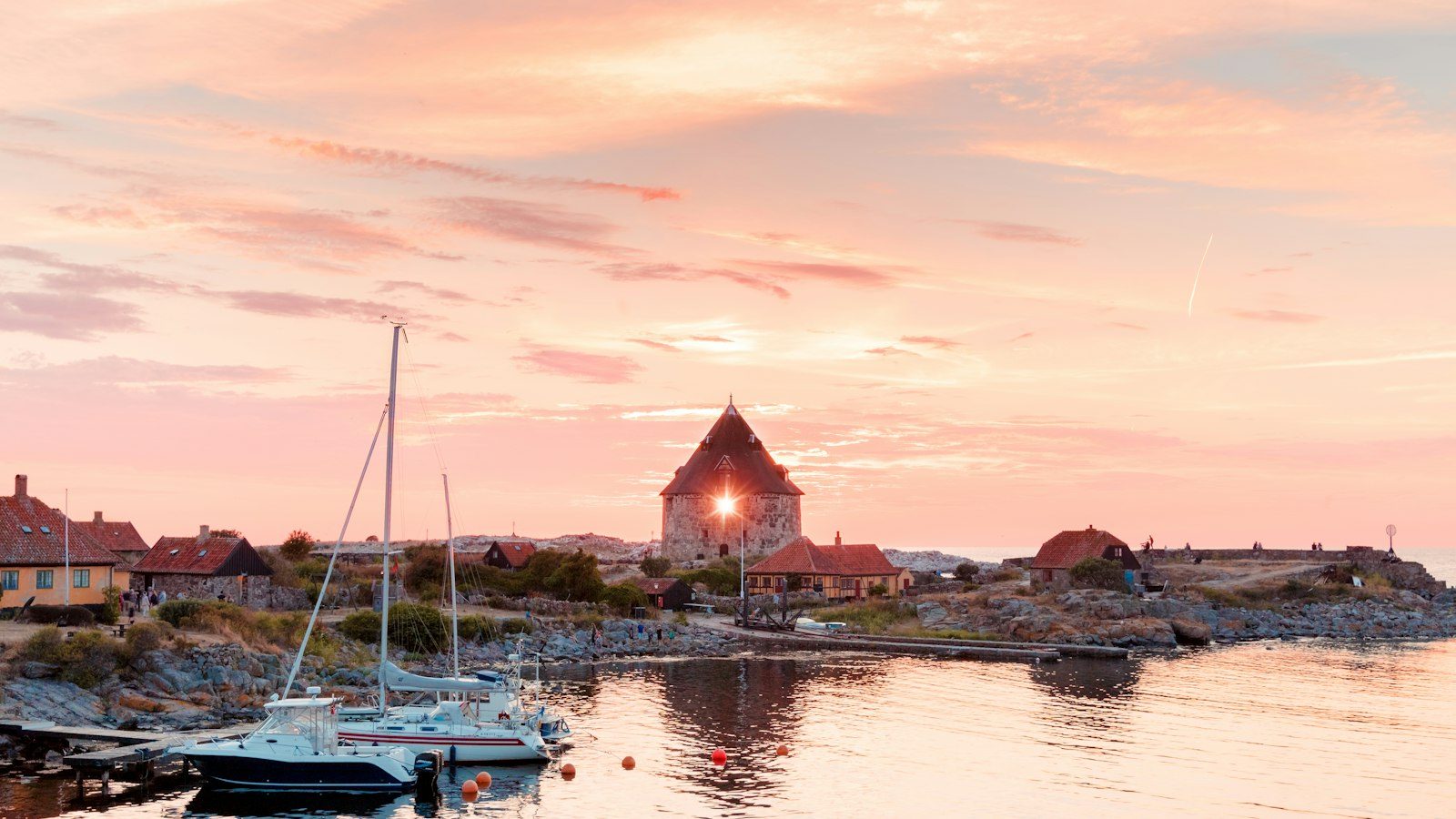
A granite island in the Baltic, closer to Sweden than to Copenhagen. You cycle between fishing villages, eat smoked herring on harbour benches, climb to a huge castle ruin above the sea and take a little boat out to Denmark's most easterly rocks.
- Best time to visit: June and late August to September
- Daily budget (budget traveller): $90 to $270 USD
- Ideal trip length: 4 to 7 days
Bornholm lies out in the Baltic Sea, east of Copenhagen and about 40km off the coast of southern Sweden. Most people get here on the fast ferry from Ystad, which takes about 80 minutes. The island feels different from the rest of Denmark. It has granite cliffs in the north, white sand dunes in the south, a forest in the middle and a ring of small harbour towns full of yellow half-timbered houses. It is one of the sunniest corners of the country, and in summer the light stays up late. Rønne is the main town and the ferry port. The prettier bases are Gudhjem, with its steep lanes, Svaneke, with its red roofs and food producers, and Allinge-Sandvig, near the castle ruin of Hammershus. Spend your days walking the cliff paths, visiting the round churches, buying smoked fish straight from the chimneys and cycling the island's long network of bike routes. Denmark is not cheap. Even so, hostel beds, free sights like Hammershus, picnic lunches and buses or a rented bike keep costs manageable, and the island is calm, safe and easy to explore alone.
Bornholm is Denmark's odd one out. It is a granite island of about 588 square kilometres, out in the Baltic between Sweden, Germany and Poland. It is closer to Ystad than to Copenhagen, and it has its own dialect, its own food traditions and its own pace. The north is rocky, with cliffs, quarries and the vast ruin of Hammershus. The middle is farmland and forest, dotted with whitewashed round churches built as part-church, part-fortress. The south has some of the finest sand beaches in northern Europe. Day visitors from cruise ships see Rønne and one or two sights. Stay several nights and you get the better version: the smokehouse chimneys at dusk, an empty cliff path in the morning and a boat to Christiansø on a calm day.
Getting here is easier than it looks. The fast ferry from Ystad takes about 80 minutes. Coaches from Copenhagen and the airport connect with it, and DSB sells combined train and ferry tickets. Flights from Copenhagen take under 40 minutes. Rønne's ferry terminal and bus station sit side by side, so you can get straight onto a BAT bus to Gudhjem, Svaneke or Allinge. Choose your base by what you want. Gudhjem is good for cliffs and Christiansø, Svaneke for food, Allinge-Sandvig for Hammershus and walking, Rønne for bus connections and Dueodde for the beach. A rented bike opens up most of the island.
Timing matters more here than in most places. From June to August everything is open, buses run more often and the light lasts until late, but July is crowded and expensive. September is calm and often still warm. From late October to Easter the island almost goes into hibernation. Many restaurants and guesthouses close, the Art Museum opens fewer days and Østerlars drops its fee but shuts its upper floors. Bornholm is very safe, nearly everyone speaks English and the evenings are quiet. If you want nightlife, stay in Copenhagen. If you want a cliff walk, a plate of smoked herring and a long northern sunset, come here.
Bornholm itinerary
Arrive in Rønne
Morning: Take the fast ferry from Ystad (about 80 minutes) or fly from Copenhagen. Drop your bag and get a feel for Rønne's cobbled lanes around Store Torv.
Afternoon: Visit Bornholms Museum (about 100 kr) for the island's history, including tiny gold foil figures and the 1945 bombing. Buy a bus ticket in the Rejsebillet app.
Evening: Walk to the harbour and the beach south of town for sunset, then eat smørrebrød or fish and chips near the port.
Hammershus and the northern tip
Morning: Take Route 1 north to Hammershus and walk around the ruins before the coach groups arrive. Entry is free.
Afternoon: Follow the coast path to Opalsøen, the Hammeren lighthouse and Salomons Kapel, then walk down to Sandvig. Bring a picnic.
Evening: Dinner in Allinge or Sandvig and a slow drink on the harbour before the bus back, or stay the night in the north.
Gudhjem and Helligdommen
Morning: Move to Gudhjem. Walk the steep lanes and climb Bokul, the rocky hill above town, for the view along the coast.
Afternoon: Walk or bus to Bornholms Kunstmuseum (100 kr) above the Helligdom cliffs, then go down the steps to the rocks below.
Evening: Smoked herring and a beer at the Gudhjem smokehouse by the harbour while the chimneys smoke.
Christiansø
Morning: Catch the 10:00 boat from Gudhjem (220-320 kr return depending on season). The crossing takes about an hour.
Afternoon: Walk around Christiansø and Frederiksø, the old naval fortress islands, with their stone towers, gardens and seabird colonies. Pack water and snacks.
Evening: Return to Gudhjem and have a simple supper. Turn in early if you plan to cycle tomorrow.
Round church and the forest
Morning: Bus or cycle to Østerlars Round Church (30 kr in season) and climb up under the roof.
Afternoon: Continue into Almindingen forest. Walk the rift valley at Ekkodalen and look for the bison in the forest enclosure.
Evening: Head to Svaneke for the night. Try a Svaneke Bryghus beer with dinner at the brewery.
Svaneke and Dueodde
Morning: Wander Svaneke's harbour and lanes, watch sweets being pulled at Svaneke Bolcher and buy smoked fish for lunch.
Afternoon: Bus via Nexø to Dueodde. Walk the dunes and the long white beach, and swim if you are brave.
Evening: Back to Svaneke or Rønne by bus. Check the last departure before you set off, as evening services are thin.
West coast and depart
Morning: Take the bus to Hasle and walk south along the cliffs to Jons Kapel and its wooden steps.
Afternoon: Lunch at a Hasle smokehouse, then bus to Rønne for the afternoon ferry to Ystad or a flight to Copenhagen.
Evening: Arrive in Copenhagen by coach or train, or carry on into Sweden.
Best neighbourhoods
- Rønne: The island's capital and ferry port on the west coast, with cobbled streets of low painted houses, the main bus terminal, supermarkets and Bornholms Museum. It is the most practical base if you arrive late or rely on buses, as almost every route starts here. It is less pretty than the villages, and evenings are quiet.
- Gudhjem: A small harbour town on the north-east coast, built on a steep slope of rock with lanes that drop down to the water. It has a hostel by the harbour, the original smokehouses, the boat to Christiansø and the cliff path to the Art Museum. It fills up with day visitors in July, so book early.
- Svaneke: Denmark's easternmost town, with red-tiled houses around a small harbour and a strong food scene: a brewery, a smokehouse, sweet makers and summer markets. It is a good base for the east coast and Paradisbakkerne, and quieter than Gudhjem once the day trippers leave.
- Allinge-Sandvig: Two joined villages on the northern tip, close to Hammershus, the Hammeren headland and the best cliff walks on the island. You will find guesthouses, a few hotels and a small beach at Sandvig. It suits walkers, and Rønne is about 30 to 40 minutes away by bus.
- Nexø and the south coast: Nexø is a working fishing town on the south-east coast, with cheaper rooms and a big supermarket. South of it lies Dueodde, with fine white sand and dunes. It is the best base for a beach holiday, but buses are less frequent and the area feels empty outside summer.
Must-do experiences
- Walk around Hammershus: Northern Europe's largest medieval castle ruin sits on a cliff above the sea near Sandvig. Entry to the ruins and the visitor centre is free, and you can visit all year. Arrive early or late to avoid the coach groups, then walk the coast path north to Hammeren.
- See the cliffs and the Art Museum at Helligdommen: Bornholms Kunstmuseum stands above the Helligdomsklipperne cliffs between Gudhjem and Tejn, with island art and big sea views. Adult entry is 100 kr (about €13.50), and under-18s go free. Go down the steps to the rocky coast afterwards, then walk or bus back to Gudhjem.
- Climb inside Østerlars Round Church: The largest and oldest of the island's four round churches dates from around 1160 and has painted medieval frescoes. In season, entry is 30 kr, and you can climb to the upper floors. From 19 October to Easter it is free but the upper levels are closed, so check opening days first.
- Take the boat to Christiansø: Boats leave Gudhjem for the tiny fortress islands of Ertholmene, about an hour away. An adult return costs 220 kr in winter, 260 kr in the summer months and 320 kr from late June to early August. In high summer there are three sailings a day, while in winter the mail boat runs on weekdays only.
- Eat lunch at a smokehouse: Bornholm's white smokehouse chimneys are part of the coastline. Order 'Sol over Gudhjem', smoked herring on rye bread with a raw egg yolk, chives and radishes, and eat it at a table by the water. Gudhjem, Hasle and Svaneke all have smokehouses.
- Lie on the sand at Dueodde: The southern tip of the island has a long beach of very fine white sand backed by dunes and pine forest. It is free, rarely crowded beyond the main entrance and good for a long walk. The water is shallow and cold, and Baltic temperatures peak in August.
- Cycle part of the island: Bornholm has a large network of signposted bike routes, including old railway lines through the forest. Rent a bike in Rønne or one of the villages for about 100 kr a day. Ride through Almindingen to Ekkodalen, or along the coast from Gudhjem to Svaneke.
Hidden gems
- Jons Kapel, a tall sea stack on the west coast south of Hasle, reached by steep wooden steps down the cliff, where legend says a monk preached to the waves
- Opalsøen on the Hammeren headland, a flooded granite quarry with clear green water and rock ledges, a short walk from Sandvig
- Salomons Kapel, the ruin of a small medieval chapel on the very northern tip of the island, with nothing but sea beyond it
- The Rokkestenen rocking stone and the heathland paths in Paradisbakkerne, a hilly nature area inland from Nexø that most beach visitors never reach
- Nylars Round Church in the south-west, smaller and quieter than Østerlars, with free entry and a lovely painted frieze
Daily budget
- Accommodation: budget €35-55 / night (hostel dorm), mid-range €100-170 (guesthouse or 3-star hotel), splurge €250+ (seaside hotel with sea views). Summer weekends and July sell out early, especially single rooms. Many guesthouses close from October to April, so check before you plan a winter trip.
- Food: budget €25-35 / day (bakery breakfast, smokehouse lunch, supermarket supper), mid-range €50-80 (café lunch and a sit-down dinner), splurge €120+ (tasting menu or seafood dinner with wine). A smokehouse plate costs roughly €12-20 and restaurant mains €25-40. Supermarkets such as Netto, Rema 1000 and Lidl make picnics easy. Prices are rough guides.
- Transport: budget €5-15 / day (buses or a rented bike), mid-range €20-40 (buses plus an e-bike or occasional taxi), splurge €70-120 (car hire in summer). Bike hire is about 100 kr (€13.50) a day. Bus fares go by zone in 2026, up to about 85 kr for long trips, with a flat fare due by January 2027. Foot passengers usually pay around 199 kr on the Ystad ferry, less in winter.
- Activities: budget €0-10 / day (Hammershus, beaches, cliff walks, Østerlars at 30 kr), mid-range €15-35 (Art Museum at 100 kr, Christiansø boat at 220-320 kr), splurge €50+ (guided tours, kayaking, multi-museum days). A museum pass covering six venues for one week costs 250 kr from the participating museums. Hammershus and its visitor centre are free. Under-18s get into most museums free.
- Drinks & nightlife: budget €6-10 (a local beer from the supermarket or a harbour kiosk), mid-range €20-40 (a few drinks at a brewery or harbour bar), splurge €60+ (wine with dinner and cocktails). A draught beer in a bar costs about €7-10 and coffee €4-6. Nightlife means harbour bars, summer concerts and the brewery in Svaneke. Most places close early outside July.
Where to stay
- Social hostel in Gudhjem harbour (€35-55 / night (dorm)): Danhostel Gudhjem sits right by the harbour, close to the smokehouse, the Christiansø boat and the cliff path to the Art Museum. It has dorms, private rooms and a shared kitchen, which is useful in an expensive country.
- Boutique hotel in Svaneke (€130-220 / night): Hotel Siemsens Gaard is a historic merchant's house on Svaneke harbour, with simple, bright rooms. The brewery, smokehouse and bus stop are all a short walk away.
- Apartment in Allinge-Sandvig or Gudhjem (€90-160 / night): Holiday flats in old fishermen's houses give you a kitchen and space to dry walking gear. Summer rentals often run Saturday to Saturday, so check the minimum stay.
- Splurge in Sandvig (€250-400+ / night): Stammershalle Badehotel is a classic seaside hotel on the rocky coast between Allinge and Hammershus, known for its views and food. It is ideal for the northern cliff walks.
What to eat
- Sol over Gudhjem: smoked herring on rye with egg yolk and radishes, at any smokehouse along the coast, ideally eaten looking at the sea
- Smoked fish platters: mackerel, salmon, herring and fish cakes sold by weight at smokehouses in Hasle, Gudhjem and Svaneke, cheaper than a restaurant meal
- Svaneke Bryghus beer: local ales brewed and served in Svaneke, also sold in supermarkets around the island
- Sweets and liquorice: watch boiled sweets being made by hand at Svaneke Bolcher, the town where Lakrids by Johan Bülow also began
- Smørrebrød: open rye sandwiches from bakeries and cafés, a filling lunch at a fraction of a dinner price
- A hot dog from a pølsevogn or harbour kiosk, then soft ice cream from a harbour kiosk on a summer evening
Day trips
- Christiansø and Frederiksø (About 18km north-east of Gudhjem, around 1 hour by boat): Two tiny rocky islands with a 17th-century naval fortress, stone houses, a small community and large seabird colonies. It feels like the edge of Denmark, because it is. Christiansøfarten sails from Gudhjem. An adult return costs 220 kr in winter, 260 kr in summer and 320 kr in high season. Check the timetable and the weather, as sailings change by season.
- Almindingen and Ekkodalen (Central Bornholm, about 20km east of Rønne): One of Denmark's largest forests, with lakes, walking trails, a rift valley at Ekkodalen and a herd of European bison in a large enclosure. It is a good escape on a windy coastal day. Take a BAT bus that crosses the island, or cycle along the signposted routes. Pack food and water, as facilities are limited.
- Ystad, Sweden (About 80 minutes by fast ferry from Rønne): A pretty Swedish market town with medieval half-timbered houses, a monastery and Ales Stenar, a stone ship monument on the coast nearby. It makes an easy break from island life. Take the Bornholmslinjen fast ferry from Rønne. The town centre is a short walk from the terminal. Book return times in advance and carry your passport.
When to visit
- Spring (April - May): 8-16°C, bright but cool, cold sea. Crowds: Low, busier at Easter and on Danish holidays. Fresh and green, with blossom and empty paths. Good for walking and cycling, but some places only open at weekends until May.
- Early summer (June): 15-20°C, long light evenings, sea still chilly. Crowds: Moderate, rising towards the end of the month. Arguably the best month. Everything opens, the days are very long and the July crowds have not arrived.
- High summer (July - August): 18-23°C, mostly sunny, sea up to about 17-19°C. Crowds: Busy, especially in July and the first week of August. Warmest weather, best bus timetables and three boats a day to Christiansø. Book beds and ferries early, as prices peak.
- Autumn and winter (September - March): September 13-18°C, then cooling to 0-5°C, windy and grey. Crowds: Moderate in September, very quiet from late October. September is the locals' pick, with mild days and quiet villages. Winter is peaceful and cheap, but much is closed and buses are infrequent.
Entry rules for your passport
Visa rules for Denmark depend on the passport you travel on. Check the official source before you book: European Commission: Schengen visa policy
Getting there
Most people come via Ystad in Sweden. Bornholmslinjen's fast ferries take about 80 minutes to Rønne, with several sailings a day and more in high season. Foot passengers usually pay around 199 kr, and fares can drop to around 49 kr in winter. From Copenhagen, Kombardo Expressen coaches run from the city and the airport, starting at about 119 kr. The bus to Ystad takes around two hours, and some departures drive onto the ferry. DSB sells combined train and ferry tickets via Malmö from about 149 kr, with a total journey of around 3 hours 45 minutes. A daily overnight ferry also runs from Køge, south of Copenhagen, taking about 5.5 hours, and a seasonal ferry sails from Sassnitz in Germany. Flights from Copenhagen take 35 to 40 minutes and start at around 549 kr one way. Bornholm Airport is about 5km from Rønne. Carry your passport on the Swedish route, as ID checks are sometimes made.
Border checks: non-EU visitors (other than Swiss, Norwegian, Icelandic, Liechtenstein, Andorran, Monegasque, San Marinese and Vatican citizens, and holders of an EU residence permit or long-stay visa) are registered in the EU's Entry/Exit System (EES) instead of getting a passport stamp. On your first crossing, officers take your photo and/or fingerprints, so allow extra time at passport control. ETIAS, the planned travel authorisation, is not in operation yet, so don't pay any website for one.
Getting around
Outside Rønne, you need a bus, a bike or a car. BAT runs buses from the terminal by Rønne harbour to every coastal town. Route 1 goes north via Hasle and Allinge towards Hammershus, and other routes cross the island to Gudhjem, Svaneke, Nexø and Dueodde. Services are reasonable in summer but sparse in the evenings and in winter. In 2026, fares go by zone. A long trip such as Rønne to Nexø costs about 85 kr, and the island is due to switch to a single flat fare by January 2027, so check bat.dk. Buy tickets in the Rejsebillet app. Drivers do not take cards or MobilePay, and Rejsekort does not work here, though you can pay cash on board for a 10-trip card. Bikes are the classic way to explore. Expect to pay about 100 kr a day to rent one, and the signposted routes include traffic-free former railway lines. Hills in the north are steep. Car hire gives you the most freedom but costs a lot in summer. Taxis are few, so book ahead.
Safety
Bornholm is very safe, and crime against visitors is rare. The real risks are outdoors. The cliff paths near Jons Kapel, Helligdommen and Hammeren are steep, with wooden steps that get slippery when wet, and some drops have no railings. The Baltic is cold for most of the year, and currents can be strong off the beaches. Swim where others are swimming and do not go out of your depth alone. Ticks are common in the forest and long grass, and tick-borne encephalitis has been found on the island, so check yourself after walks. Cyclists share some roads with fast traffic, so wear a helmet and lights. Tap water is safe to drink. The emergency number is 112. EU travellers should carry an EHIC and UK travellers a GHIC, and everyone else needs travel insurance with medical cover.
Solo travel tips
- Base yourself in two places: Split your stay between the north coast, Gudhjem or Allinge, and the east, Svaneke. You will spend much less time on buses and more time walking out of your door onto the coast.
- Sort out bus tickets early: Download the Rejsebillet app before you arrive. Drivers do not take cards, and Rejsekort does not work on the island, so have a backup plan for paying.
- Check last buses and boats: Evening buses are sparse, and Christiansø sailings change with the season and the weather. Plan your day backwards from the last ride home.
- Eat lunch big, dinner small: A smokehouse plate at lunchtime costs far less than a restaurant dinner. Fill up at midday and picnic from the supermarket in the evening.
- Safety for solo travellers: The main risks are slippery cliff steps, cold water and cycling on narrow roads. Tell someone your walking route, swim near other people and use bike lights after dark.
- Meet people at hostels and harbours: The Danhostels in Gudhjem and Rønne have kitchens and common rooms where other travellers gather. Summer harbour concerts and the brewery in Svaneke are also easy places to start a conversation.
Cultural etiquette
- Say 'hej' (hi) and 'tak' (thank you). Nearly everyone speaks good English, but a word of Danish goes down well.
- Queue patiently and wait your turn at bakery counters, which often use a ticket number system.
- Dress modestly and keep quiet in the round churches, which are working parish churches. Do not visit during services or weddings.
- Stay on marked paths across farmland and do not pick crops. Many coast paths cross private land.
- Use bike lanes properly, signal your turns and do not ride on footpaths in towns.
- Tipping is not expected, as service is included. Round up for very good service if you like.
- Take your rubbish home from beaches and cliffs, and do not light fires or barbecues outside marked areas.
Frequently asked questions
How do I get to Bornholm from Copenhagen?
The usual way is overland to Ystad in Sweden, then the fast ferry to Rønne, which takes about 80 minutes. Kombardo Expressen buses run from Copenhagen and the airport, with fares from about 119 kr (around €16), and some departures drive straight onto the ferry. DSB sells combined train and ferry tickets via Malmö from about 149 kr. Flights from Copenhagen take 35 to 40 minutes and start at around 549 kr one way. There is also a slower overnight ferry from Køge.
How many days do I need on Bornholm?
Three days covers Hammershus, Gudhjem, the Art Museum and one round church. Five days lets you add Christiansø, Svaneke, the beach at Dueodde and a forest day in Almindingen. A week suits you if you want to cycle a good part of the island at a slow pace or allow for rainy days.
When is the best time to visit Bornholm?
June and late August to September are the sweet spot, with long light evenings, open cafés and fewer families than in July. July and the first week of August are the busiest and dearest, and the Christiansø boats charge their highest fares then. From mid-October to Easter the island is very quiet, many restaurants and some museums close or cut their hours, and buses run less often.
Do I need a car on Bornholm?
No, but you need to plan. BAT buses link Rønne with all the main towns and sights, though evening and winter services are thin. Many solo travellers combine buses with a rented bike. A car helps if you want to reach remote beaches or go out in the evenings, but hire prices rise sharply in summer. Remember that cards are not accepted on the buses, so use the Rejsebillet app.
How much does Bornholm cost per day?
Expect around €85 to €120 a day on a tight budget, with a hostel bed, picnic lunches, smokehouse meals, buses and free sights such as Hammershus and the beaches. A private room, restaurant dinners and museums push that to around €170 to €250. Denmark has high prices for eating out, so supermarkets and smokehouses make the biggest difference.
Can I visit Christiansø as a day trip?
Yes. Boats leave from Gudhjem, and the crossing takes about an hour. In high season, from late June to late August, there are sailings at 10:00, 12:30 and 15:00, giving you a few hours on the islands. In the off-season the mail boat sails Monday to Friday from 10:00. Adult returns cost 220 to 320 kr depending on the season. Sailings can be cancelled in rough weather.
Is Bornholm safe for solo female travellers?
Yes. It is one of the safest and calmest places in Europe to travel alone, and locals are friendly and used to visitors. The main precautions are practical ones. Tell someone your route before a long cliff walk, carry a phone with offline maps and avoid unlit country roads by bike after dark.
What entry rules apply to Denmark in 2026?
Denmark is in the EU and the Schengen area. Many non-EU visitors, including those from the UK, US, Canada and Australia, can stay visa-free for up to 90 days in any 180-day period across Schengen. The EU's Entry/Exit System now records non-EU travellers' fingerprints and photos at the external border, and the ETIAS travel authorisation is due to follow, so check whether it has started before you travel. Carry your passport on the ferry from Ystad, as Sweden and Denmark sometimes check ID at internal borders. Confirm the rules on official EU and Danish government websites.
Tours and activities in Bornholm | Bornholm in 2 days | Bornholm in 3 days | Bornholm in 4 days | Bornholm in 5 days | Bornholm in 7 days
Joy Plus home | Destinations | Itineraries | Activities | Flights | Budget planner | Calendar | Map | Blog | Lifetime access