Destinations / Europe
Cáceres, Spain travel guide
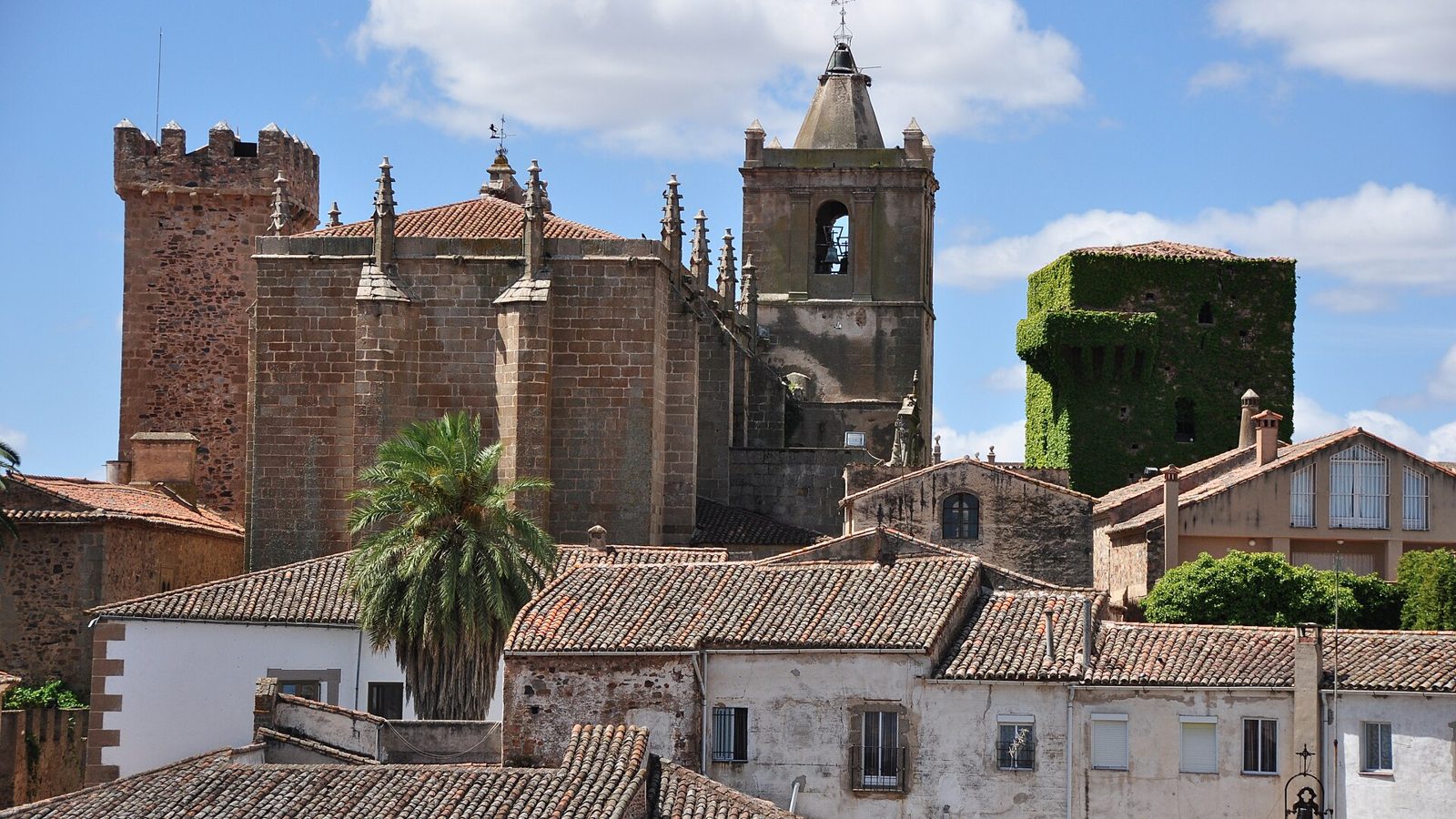
A walled medieval city in Extremadura, full of stone palaces, towers and storks' nests. You climb the old towers for views over the rooftops, wander quiet lanes that look much as they did 500 years ago and eat torta del Casar cheese and Iberian ham for a lot less than in Madrid.
- Best time to visit: March to May and late September to November
- Daily budget (budget traveller): $60 to $195 USD
- Ideal trip length: 3 to 5 days
Cáceres is the capital of one of Spain's least visited provinces, and its second-largest, about three to four hours west of Madrid by train. Its walled old town, the Ciudad Monumental, has been a UNESCO World Heritage Site since 1986. It is one of the most complete medieval and Renaissance quarters in Europe, with Moorish walls, Gothic churches and the fortified houses of noble families who competed to build the tallest tower. Many of those towers were cut down by royal order, which is why so many have flat tops today. The old town has very few shops and very little traffic, so in the evening it can feel almost empty, and it is lovely. Storks nest on the bell towers from late winter into summer. Outside the walls, the Plaza Mayor and the streets around it are where people meet, shop and go out for tapas. Cáceres is a student city with plenty of cheap bars, and a drink here often comes with a free tapa. It works well as a base for Trujillo, Roman Mérida and the vultures of Monfragüe National Park. Summers are fiercely hot, and some sights close on Mondays. Even so, low prices, a safe and walkable centre and a fine old town at night make it an easy, rewarding stop for a solo traveller.
Cáceres has around 96,000 people and one of the best-preserved old towns in Europe. The Ciudad Monumental sits on a low hill inside Moorish walls, packed with Gothic and Renaissance palaces built by families made rich by war, land and, later, the conquest of the Americas. It was made a UNESCO World Heritage Site in 1986, and in 2026 it is one of four Spanish finalists for European Capital of Culture 2031, alongside Granada, Las Palmas de Gran Canaria and Oviedo. The winner is due to be announced on 3 December. Most foreign visitors still pass through quickly between Madrid, Seville and Lisbon. Stay a few nights and you get the better version: the old town empty at dawn, storks on the towers, a free tapa with every drink and a slow walk up to the sanctuary on the hill at sunset.
Getting here takes some planning. There is no airport, and the nearest big one is Madrid. A handful of direct Renfe trains run from Madrid each day, taking roughly 3 to 4 hours, and Avanza buses take about 4 hours. The train and bus stations are next to each other about 2.5km from the old town, linked by city buses and cheap taxis. Once you are here, walk. Base yourself inside the walls for silence and atmosphere, or around the Plaza Mayor for bars, restaurants and easy access. Use regional buses for Trujillo and trains for Mérida, and hire a car or join a tour for Monfragüe.
Timing shapes the trip. Spring brings green fields, wildflowers, nesting storks and comfortable sightseeing weather, plus Holy Week processions and the free WOMAD festival. Summer is very hot, and the city slows down in the afternoon heat. Autumn is warm and calm again. Winter is cold at night but bright, quiet and cheap. Check opening days carefully. Several sights close on Mondays, many places shut for a long lunch, and the tower climbs run on timed slots. Cáceres is safe and relaxed, and while English is less widely spoken than on the coast, a few words of Spanish go a long way.
Cáceres itinerary
Arrive and find your feet
Morning: Take a morning train from Madrid (about 3 to 4 hours). Drop your bag and take a bus or taxi up to the Plaza Mayor.
Afternoon: Have a late menú del día near the square, then rest through the hottest part of the day. Stroll along Calle Pintores when shops reopen.
Evening: Walk into the old town through the Arco de la Estrella as the lights come on. Finish with tapas around the Plaza Mayor.
Towers, cathedral and the cistern
Morning: Climb the Torre de Bujaco (€2.50) and walk the stretch of wall it includes. Then visit the co-cathedral of Santa María (€7) and go up its bell tower.
Afternoon: See the Almohad cistern in the Museo de Cáceres at the Palacio de las Veletas. Look into the free Palacio de Carvajal and its garden.
Evening: Dinner around Plaza de San Juan, then a slow walk back through the empty old town.
Modern art, old lanes and the hill
Morning: Book a free slot at the Helga de Alvear museum and spend a couple of hours with the collection.
Afternoon: Wander the steep lanes of the Barrio de San Antonio and find the Baluarte de los Pozos. Climb the tower of San Francisco Javier on Plaza de San Jorge.
Evening: Walk up to the Virgen de la Montaña sanctuary (about an hour) for sunset over the city, then head down for a late dinner.
Trujillo
Morning: Take a bus to Trujillo (about 45 minutes). Start on its huge Plaza Mayor with the statue of Pizarro.
Afternoon: Climb up to the Moorish castle for wide views, then wander the palace-lined lanes. Lunch on the square.
Evening: Take a late afternoon bus back to Cáceres and have a quiet evening of tapas.
Roman Mérida
Morning: Take the train to Mérida (about an hour) and go straight to the Roman theatre and amphitheatre before the heat builds.
Afternoon: See the National Museum of Roman Art, the Temple of Diana and the long Roman bridge over the Guadiana.
Evening: Train back to Cáceres. Try a slice of torta del Casar and a glass of local wine.
Monfragüe or Los Barruecos
Morning: If you can drive or have booked a tour, head to Monfragüe National Park (about an hour) for griffon vultures at the Salto del Gitano.
Afternoon: Climb to Monfragüe castle for the view. Without a car, spend the day at Los Barruecos and the Vostell Museum near Malpartida instead.
Evening: Back in Cáceres, have a farewell drink on the Plaza Mayor or a night out in La Madrila.
Slow morning and depart
Morning: Walk Calle Adarve along the walls early, when the storks are busy and the lanes are empty. Breakfast on churros or toast with tomato.
Afternoon: Buy torta del Casar, ham or pimentón for home, then take a bus or taxi to the station for your train.
Evening: Arrive in Madrid, or carry on towards Seville or Lisbon.
Best neighbourhoods
- Ciudad Monumental: The walled old town, with the co-cathedral, the palaces, the towers and the museums. It is very quiet after dark, with few shops and almost no cars. Staying here means waking up among the stone houses and having the lanes to yourself early and late. Expect cobbles, slopes and steps everywhere, and few supermarkets.
- Plaza Mayor and Calle Pintores: The big arcaded square just below the walls, with the Torre de Bujaco and the Arco de la Estrella leading up into the old town. Calle Pintores and the streets around it are the main shopping area. It is the most convenient base, with bars, cafés and restaurants on every side, but terraces on the square can be noisy late at night.
- Barrio de San Antonio: The old Jewish quarter in the south-east corner of the old town, with whitewashed houses, steep alleys and flowerpots. It feels more like a village than the grand palace streets above it. There are a few holiday flats and guesthouses here. It is quiet and photogenic, but steep with luggage.
- Paseo de Cánovas: The modern centre, built around a long tree-lined promenade a 10 to 15-minute walk from the Plaza Mayor. Most city buses pass through here, and you will find chain hotels, supermarkets and ordinary local cafés. It is practical and usually cheaper, but has less character.
- La Madrila: The nightlife area just north-west of the centre, packed with bars and pubs that fill with students from Thursday to Saturday. It is fun for a night out and only 10 minutes from the Plaza Mayor on foot. Do not sleep here unless you plan to stay out late too.
Must-do experiences
- Walk the old town after dark: Go in through the Arco de la Estrella from the Plaza Mayor and simply wander. The lit stone, the empty lanes and the silence are the best things in Cáceres, and it costs nothing. Fans may recognise some corners from Game of Thrones.
- Climb the Torre de Bujaco: The Almohad tower on the Plaza Mayor is the city's symbol. A €2.50 ticket also covers the Torre de los Púlpitos, a stretch of the wall walk and Roman remains. It opens Tuesday to Sunday with entry slots every 30 minutes, so book ahead at busy times.
- Visit the co-cathedral of Santa María: The main church of the old town has a carved cedar altarpiece, the tombs of noble families and a bell tower you can climb. Entry is €7, with an audio guide and the tower included. It closes for a few hours on Sunday afternoons.
- See the Moorish cistern at the Museo de Cáceres: The Palacio de las Veletas holds the provincial museum, with archaeology and folk collections. The highlight is the vaulted Almohad aljibe (cistern) underneath, one of the best preserved in Spain. Entry is free for EU citizens and only a euro or so for everyone else.
- Explore the Helga de Alvear museum: One of Spain's best contemporary art collections, in a striking modern building just below the walls. Entry is free, but book a slot online. It is closed on Mondays and opens for a morning and an evening session on other days.
- Hike up to the Virgen de la Montaña: The sanctuary on the hill east of town is about an hour's walk uphill from the Plaza Mayor. The view back over the old town and the plains is the best in Cáceres. Go late in the afternoon and walk back down before it gets dark.
- Eat tapas around the Plaza Mayor: Order a caña or a glass of Ribera del Guadiana wine and many bars bring a free tapa. Move from bar to bar around the square, Calle Pizarro and Plaza de San Juan, then try a slice of torta del Casar.
Hidden gems
- The Palacio de Carvajal, a free-to-enter palace in the old town with a small tourist office, a round tower and a garden with a fig tree said to be centuries old
- The Baluarte de los Pozos, a Moorish tower and stretch of the wall in the old Jewish quarter that few visitors find
- Calle Adarve, the lane that runs just inside the walls, which is almost empty early in the morning when the storks are clattering on the towers
- The tower of San Francisco Javier on Plaza de San Jorge, a cheap climb with a close view of the co-cathedral and the old town roofs
- Los Barruecos, a landscape of huge granite boulders and ponds near Malpartida de Cáceres, home to the Vostell Museum and plenty of storks
Daily budget
- Accommodation: budget €20-35 / night (hostel dorm or simple pensión), mid-range €60-110 (boutique hotel or old town apartment), splurge €200+ (Parador or Atrio in the old town). Prices rise sharply during Holy Week, WOMAD and other festival weekends. Extremadura has no tourist tax at the moment. Single rooms in pensiones are good value.
- Food: budget €18-28 / day (café breakfast, menú del día, free tapas), mid-range €35-55 (tapas lunch and a sit-down dinner), splurge €100+ (tasting menu with wine). A weekday menú del día costs roughly €13-18. Many bars serve a free tapa with each drink. Atrio's tasting menu costs several hundred euros.
- Transport: budget €0-3 / day (walking, city buses at €1.10), mid-range €8-20 (regional bus or train day trip), splurge €50-80 (car hire for Monfragüe). A taxi from the station to the Plaza Mayor costs roughly €7-10. Trains to Madrid start at around €20-30 if booked early.
- Activities: budget €0-5 / day (old town walks, Helga de Alvear, Bujaco at €2.50), mid-range €7-15 (co-cathedral at €7, museums, small towers), splurge €40+ (guided tours, birdwatching trips). The Helga de Alvear museum is free but should be booked. The Museo de Cáceres is free for EU citizens. Many sights close on Mondays.
- Drinks & nightlife: budget €5-10 (a few cañas with free tapas), mid-range €15-25 (wine and drinks on a terrace), splurge €40+ (cocktails and a late night in La Madrila). A coffee costs about €1.40-2 and a caña or glass of wine €1.80-3. Nightlife centres on La Madrila from Thursday to Saturday.
Where to stay
- Social hostel in Paseo de Cánovas and the modern centre (€20-35 / night (dorm)): Small hostels and albergues such as Las Veletas sit a 10 to 15-minute walk from the Plaza Mayor. They are simple and cheap, and the common rooms are an easy place to meet other travellers.
- Boutique hotel in Plaza de San Juan (€80-150 / night): NH Collection Cáceres Palacio de Oquendo is in a restored palace on a lively square just outside the walls. You are a few minutes from the Plaza Mayor, the old town and good tapas bars.
- Apartment in Barrio de San Antonio and the old town edge (€60-110 / night): Holiday flats in old stone houses give you a kitchen and a quiet street. Expect steep lanes and stairs, and check how close a taxi can get if you have heavy luggage.
- Splurge in Ciudad Monumental (€200-500+ / night): The Parador de Cáceres is in a historic palace inside the walls, and Atrio pairs its famous restaurant with a small luxury hotel. Either way, you wake up in the heart of the old town.
What to eat
- Torta del Casar: a soft, strong sheep's milk cheese from the village of Casar de Cáceres. Cut off the top and scoop it out with bread
- Jamón ibérico: acorn-fed ham from the dehesa (oak pasture) around the city, cheaper here than almost anywhere in Spain
- Migas extremeñas: fried breadcrumbs with garlic, pork and peppers, a cheap and filling shepherd's dish
- Caldereta de cordero: slow-cooked lamb stew, often seasoned with pimentón de la Vera, the smoked paprika from the north of the province
- Menú del día: a three-course weekday lunch with bread and a drink for roughly €13-18, served in bars and restaurants around the centre
- Ribera del Guadiana wines and a free tapa: local reds and whites at a few euros a glass, often with a small plate on the side
Day trips
- Trujillo (About 47km east, 45 minutes by bus or car): A hilltop town of palaces and a Moorish castle, with one of Spain's grandest plazas. It was the home town of Francisco Pizarro and many other conquistadors, and it is easy to see in a day. Take one of the regular buses from Cáceres bus station, which take about 45 minutes. Check the return times before you set off, as the last buses leave fairly early.
- Mérida (About 70km south, around 1 hour by train): The capital of Extremadura and one of the best Roman sites in Spain, with a theatre, an amphitheatre, a long Roman bridge and a superb museum of Roman art. The theatre hosts a classical drama festival in summer. Take a Renfe train from Cáceres, which takes about an hour, or a bus. A combined ticket covers the main Roman sites for under €20. Start early in summer, as there is little shade.
- Monfragüe National Park (About 80km north-east, roughly 1 hour by car): Rocky river gorges and oak woods with one of Europe's best places to see griffon vultures, black vultures and, in season, black storks. The Salto del Gitano viewpoint and the castle above it are the highlights. Buses are very limited, so hire a car for the day or join a guided birdwatching tour from Cáceres. Entry to the park is free. Bring water and food, as services are few.
When to visit
- Spring (March - May): 16-27°C, sunny, with some rain early in the season. Crowds: Moderate, very busy during Holy Week and festival weekends. The best time to come. Storks are nesting, the countryside is green and walking is comfortable. Book well ahead for Easter and WOMAD.
- Summer (June - August): 32-40°C by day, warm nights, almost no rain. Crowds: Moderate, with fewer foreign visitors in the heat. Fine if you sightsee early and late and rest in the afternoon. Evenings on the terraces are lovely, but midday walking is hard work.
- Autumn (September - November): September 28-32°C, then cooling to 15-22°C by November. Crowds: Moderate in September and October, quiet by November. A very good second choice. Warm, settled days, fewer crowds and the medieval market in autumn. Late September onwards is the sweet spot.
- Winter (December - February): 10-14°C by day, often near freezing at night. Crowds: Quiet, apart from Christmas and weekends. Cheap and peaceful, with sunny days and empty lanes. Pack warm layers, as old buildings can be chilly inside.
Entry rules for your passport
Visa rules for Spain depend on the passport you travel on. Check the official source before you book: European Commission: Schengen visa policy
Getting there
There is no airport in Cáceres. The nearest big airport is Madrid Barajas, about 3.5 to 4.5 hours away by train or bus. Badajoz has a small airport with a few domestic flights, and Lisbon is about 4 to 5 hours away by road. From Madrid, a handful of direct Renfe trains run each day, mostly from Atocha, taking roughly 3 to 4 hours. Fares start at around €20-30 if you book early and are often around €35-40 on the day. Avanza buses from Madrid's Estación Sur take about 4 hours and run several times a day. Book ahead for Fridays, Sundays and holidays. Mérida is about an hour away by train, and there are buses to Seville, Salamanca and Badajoz. The train and bus stations are next to each other about 2.5km from the old town. Take a city bus for €1.10 or a taxi for roughly €7-10. If you drive, cars are mostly kept out of the old town, so use the public car parks around the walls.
Border checks: non-EU visitors (other than Swiss, Norwegian, Icelandic, Liechtenstein, Andorran, Monegasque, San Marinese and Vatican citizens, and holders of an EU residence permit or long-stay visa) are registered in the EU's Entry/Exit System (EES) instead of getting a passport stamp. On your first crossing, officers take your photo and/or fingerprints, so allow extra time at passport control. ETIAS, the planned travel authorisation, is not in operation yet, so don't pay any website for one.
Getting around
The old town and the Plaza Mayor are small, so you will walk almost everywhere. It takes about 10 minutes to cross the Ciudad Monumental. The streets are cobbled, sloping and slippery after rain, so wear shoes with grip. Cars are mostly kept out of the old town, and drivers should use the public car parks around the walls. The train station and bus station sit next to each other about 2.5km south-west of the centre, around 30 minutes' walk. City buses run from there towards the Paseo de Cánovas, and a single ticket costs €1.10. Pay on board and keep some coins. A taxi from the station to the Plaza Mayor costs roughly €7-10. Regional buses run to Trujillo, Malpartida and other towns. Extremadura makes regional bus travel free with its SATE card, but that is mainly aimed at residents, so most visitors simply pay the low fare. You will need a car or a tour for Monfragüe National Park.
Safety
Cáceres is one of the safest cities in Spain, and violent crime against visitors is rare. Watch your bag on busy terraces and at night in La Madrila, and take normal care with drinks in bars. The real risks are the heat and the cobbles. From June to early September, afternoon temperatures often pass 35°C and can reach 40°C, so sightsee early, rest in the afternoon and carry water. The polished granite paving and the steep lanes in San Antonio are slippery, especially when wet. The old town is very quiet at night. It is safe, but some lanes are dark and empty, so stick to the main lit streets if that bothers you. Tap water is safe to drink. The EU emergency number is 112. EU travellers should carry an EHIC and UK travellers a GHIC, and everyone else needs travel insurance with medical cover.
Solo travel tips
- Stay inside or just below the walls: The old town at night is the highlight, so sleep within a short walk of it. The Plaza Mayor area gives you bars and restaurants on the doorstep without losing the atmosphere.
- Plan around Mondays and siesta: Several sights close on Mondays, and many places shut from about 2pm to 5pm. Do towers and museums in the morning and leave the afternoon for rest or a long lunch.
- Book the timed slots: The Torre de Bujaco runs on 30-minute slots and the Helga de Alvear museum asks you to reserve. Book a day ahead at weekends and during festivals.
- Eat well for little: Have your main meal at lunch with a menú del día, then graze on free tapas in the evening. It is the local way, and the cheapest.
- Safety for solo travellers: The main risks are heatstroke in summer and slipping on smooth granite. Carry water, wear grippy shoes and keep to the lit main lanes in the old town late at night.
- Meet people at the bar or on a tour: Join a free or paid walking tour of the old town on your first day. Standing at the bar for tapas makes it easy to chat, and hostels and student bars in La Madrila are sociable.
Cultural etiquette
- Greet people with 'buenos días' or 'buenas tardes' when you walk into a shop or bar, and say 'gracias'. A little Spanish is appreciated, as English is less widely spoken here than on the coast.
- Eat on Spanish time. Lunch runs from about 2pm to 4pm and dinner rarely starts before 9pm, so many kitchens are closed in between.
- Dress modestly in the co-cathedral and other churches, with covered shoulders, and stay quiet if a service is on.
- Keep your voice down in the old town at night. People live in the palaces and houses, and sound carries in the narrow stone lanes.
- Respect the processions during Holy Week. Do not cut through them, and keep flash photography to a minimum.
- Do not expect a free tapa everywhere. It is common in Cáceres but not guaranteed, so enjoy it when it comes.
- Tipping is modest. Rounding up or leaving a few coins is normal, and around 5-10% for very good restaurant service is generous.
Frequently asked questions
How do I get to Cáceres and from the station to my room?
Most people come from Madrid by train or bus. Renfe runs a handful of direct trains a day, taking about 3 to 4 hours, and fares start at around €20-30 if you book early. Avanza buses take about 4 hours. There is no airport in Cáceres. The train and bus stations are next to each other about 2.5km from the old town. Take a city bus for €1.10 or a taxi for roughly €7-10. The old town lanes are cobbled and steep, so ask your host where to be dropped off.
How many days do I need in Cáceres?
Two nights covers the old town, the Torre de Bujaco, the co-cathedral and the museums, plus an evening of tapas. Three to five nights lets you add a day in Trujillo, a day in Roman Mérida and the walk up to the Virgen de la Montaña. A week works if you want to add Monfragüe National Park and Los Barruecos at a slow pace.
When is the best time to visit Cáceres?
Spring, from March to May, is ideal, with mild days, green countryside and storks on every tower. Late September to November is also pleasant. Summer is very hot, often above 35°C, so plan for early mornings and late evenings. Winter is cold at night but sunny, cheap and quiet. Big events include Holy Week, the free WOMAD music festival in spring and the medieval market in autumn.
Do I need a car for day trips from Cáceres?
Not for the main towns. Regular buses go to Trujillo in about 45 minutes, and trains reach Mérida in around an hour. Los Barruecos is close enough for a bus or a short taxi ride. Monfragüe National Park is the exception. Buses there are very limited, so hire a car for the day or join a guided birdwatching tour.
Which sights in Cáceres are free?
Walking the old town costs nothing, and it is the main reason to come. The Helga de Alvear contemporary art museum is free, though you should book a slot online. The Museo de Cáceres is free for EU citizens and cheap for everyone else, and you can look round the Palacio de Carvajal for free. Paid highlights are inexpensive: the Torre de Bujaco is €2.50 and the co-cathedral is €7, tower included.
Is Cáceres expensive?
No. It is one of the cheapest cities in Spain to visit. Hostel beds and simple rooms are cheap, a weekday menú del día costs roughly €13-18, and a drink in many bars still comes with a free tapa. You will spend more in the old town's boutique hotels and at Atrio, the city's famous fine-dining restaurant, but a comfortable trip on a modest budget is easy.
Is Cáceres safe for solo female travellers?
Yes. Cáceres is calm, friendly and very safe, and locals are used to visitors and students. The Plaza Mayor area stays busy into the evening. The old town is very quiet at night, so keep to the lit main lanes if empty streets make you uneasy. Take normal care with drinks in La Madrila and use a taxi back from the station late at night.
What entry rules apply to Spain in 2026?
Spain is in the EU and the Schengen area. Many non-EU visitors, including those from the UK, US, Canada and Australia, can stay visa-free for up to 90 days in any 180-day period across Schengen. The EU's Entry/Exit System has been fully running since 10 April 2026 and records non-EU travellers' fingerprints and photos at the external border. The ETIAS travel authorisation has not started yet, and no official launch date has been set. Check official EU and Spanish government websites and your own government's travel advice before you go.
More about Cáceres
Tours and activities in Cáceres | Cáceres in 2 days | Cáceres in 3 days | Cáceres in 4 days | Cáceres in 5 days | Cáceres in 7 days
Joy Plus home | Destinations | Itineraries | Activities | Flights | Budget planner | Calendar | Map | Blog | Lifetime access