Destinations / Europe
Cefalù, Italy travel guide
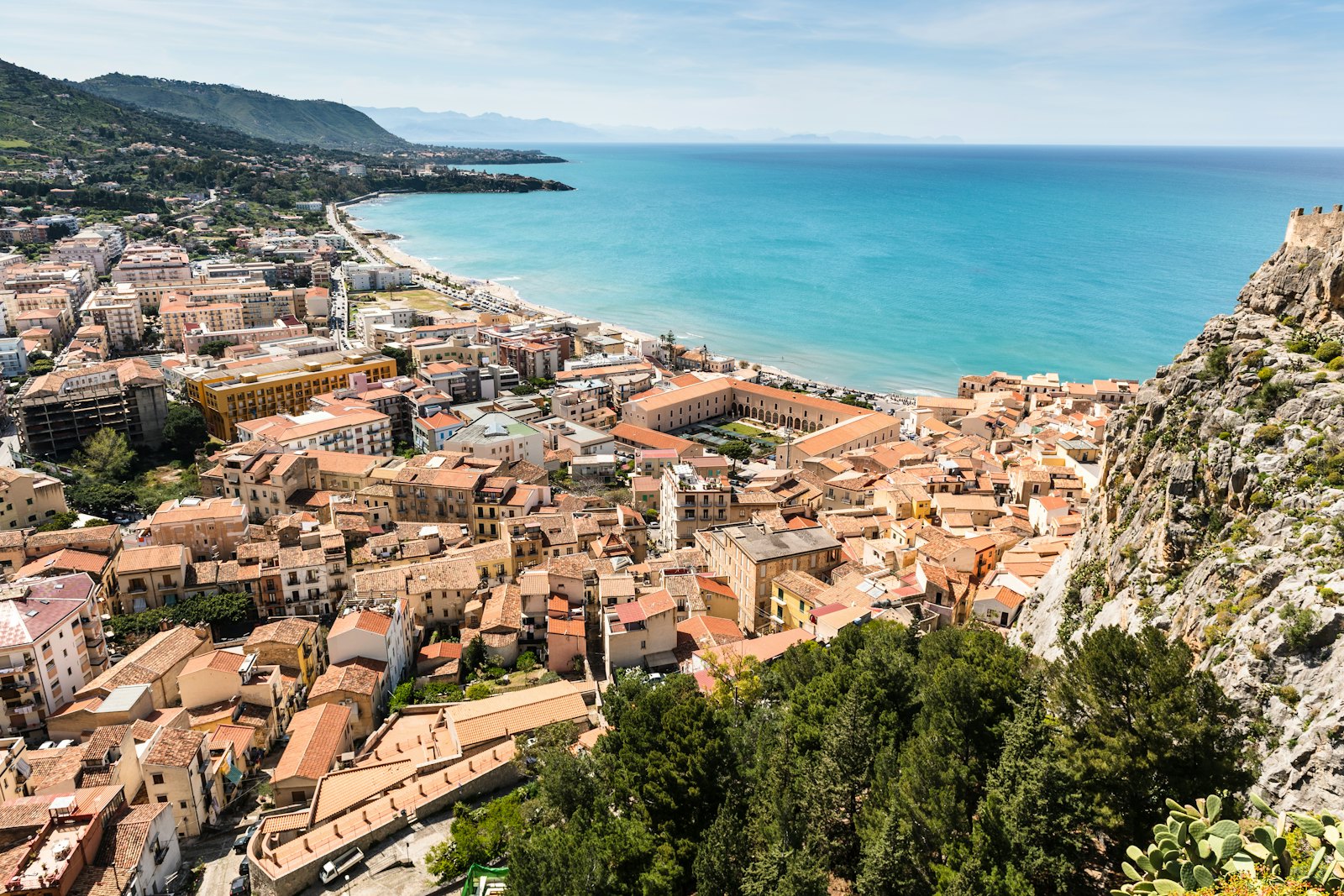
A small Norman seaside town under a huge limestone rock. You can climb to the top, swim from a long sandy beach and see some of Sicily's oldest gold mosaics, all within a short walk.
- Best time to visit: May to June and September to October
- Daily budget (budget traveller): $85 to $270 USD
- Ideal trip length: 3 to 6 days
Cefalù is on Sicily's north coast, about an hour east of Palermo by train. The old town is a tight grid of lanes squeezed between the sea and La Rocca, a 268m limestone crag that gives the town its shape and its name. Above the rooftops stand the twin towers of the cathedral, which King Roger II began in the 12th century. Inside is a mosaic of Christ Pantocrator that is older than the famous ones at Monreale. Walk two minutes from the cathedral and you reach a long sandy beach with shallow, clear water. In summer that mix makes Cefalù very busy. In late spring and early autumn it is easier to enjoy. You can climb the Rocca in the cool of the morning, spend the afternoon at the beach and have an aperitivo in Piazza del Duomo as the light turns gold. It is easy without a car. The station is a short walk from the old town, trains run to Palermo and along the coast, and buses go up into the Madonie mountains. Cefalù is not the cheapest base in Sicily, especially in August. Still, the town is small, safe and easy to walk, and a solo traveller can settle in within a day.
Cefalù is a town of about 14,000 people on Sicily's Tyrrhenian coast, pinned between La Rocca and the sea. Its history is easy to read on foot. There are traces of ancient walls along the waterfront and the Tempio di Diana on the rock. Roger II's 12th-century cathedral fills the main square, and medieval houses back straight onto the old harbour. The town's fame brings crowds, especially from Palermo on summer weekends. The cathedral is free to enter, and the paid routes cost €10 to €13. The Rocca is about €5 and the Museo Mandralisca about €8, so the main sights cost little. Accommodation is the big expense, and prices rise sharply in July and August. Base yourself in or near the old town and you can do almost everything on foot.
Getting here is simple. Regional trains run roughly hourly from Palermo Centrale, take about 45 minutes to an hour and cost around €7. From Palermo airport you usually change at Centrale, on a through ticket of about €13. Cefalù station is a short walk from the beach and the old town. From there SAIS buses go up to Castelbuono and other Madonie villages, and trains continue east along the coast towards Santo Stefano di Camastra and Messina. You do not need a car unless you want to explore deep into the mountains. If you do drive, avoid the old town's limited traffic zone and park on the edge.
Timing matters more than you might think. Late spring and early autumn give you warm sea, open beach clubs and cooler mornings for the Rocca. In July and August the town is hot and full, and the feast of the Santissimo Salvatore in early August brings processions, fireworks and huge crowds. Winter is mild and peaceful, but the beach is empty and some businesses close. Whenever you come, the daily rhythm is the same. Climb or sightsee early, swim or rest through the hottest hours, then come out again for the evening passeggiata and an aperitivo in Piazza del Duomo.
Cefalù itinerary
Arrive and find your feet
Morning: Take a regional train from Palermo Centrale (about €7, roughly an hour). Sit on the left-hand side for sea views. Walk from the station to your room and drop your bags.
Afternoon: Wander Corso Ruggero to Piazza del Duomo and get your bearings. Grab an arancina for lunch, then take a first swim from the main beach.
Evening: Walk the lungomare at sunset with the old town lit up behind you. Book tomorrow's cathedral Red route online, then have a simple dinner in the old town.
Cathedral, museum and wash house
Morning: Enter the cathedral when it opens and see the mosaic, then take your booked Red route (about €13) up the towers and roofs, through the cloister and on to Osterio Magno.
Afternoon: Visit the Museo Mandralisca (about €8) for Antonello's Portrait of a Man. Then walk down to the Lavatoio Medievale and rest through the heat.
Evening: Sunset at the Bastione di Capo Marchiafava, then through Porta Pescara to the old harbour. Dinner at Lo Scoglio Ubriaco or Al Porticciolo. Book ahead for a sea-facing table.
Up La Rocca
Morning: Be at Salita Saraceni when the gate opens (8am in the warmer months). Climb past the walls to the Tempio di Diana and on to the castle ruins at the top. Bring at least a litre of water.
Afternoon: Back down for a late lunch and a long beach afternoon. Rent a sunbed at a lido if you want shade, or find a free patch towards the western end.
Evening: Aperitivo in Piazza del Duomo while the towers turn gold, then a slow passeggiata on Corso Ruggero.
Castelbuono in the Madonie
Morning: Take a SAIS bus from near Cefalù station up to Castelbuono (a few euros, roughly half an hour). Buy your return ticket and note the last bus back.
Afternoon: Visit the Castello dei Ventimiglia, walk the old lanes, eat lunch in town and pick up panettone or manna sweets at Fiasconaro.
Evening: Bus back to Cefalù. Keep it simple tonight with pizza and a granita.
Kalura and the coast
Morning: Walk east along the coast road to the coves at Kalura and Caldura, about 30 to 40 minutes. Swim in the clear water off the rocks and bring water shoes.
Afternoon: Lunch nearby, then either rest or join a small-group boat trip along the coast from the harbour. Compare a few operators and agree what is included.
Evening: Taxi or walk back to town. Have dinner somewhere you passed earlier in the week, such as Ti Vitti in the old town.
Day trip to Palermo
Morning: An early train to Palermo Centrale (about €7, roughly an hour). Walk to Ballarò market for street food and noise.
Afternoon: See the Cappella Palatina in the Palazzo dei Normanni and the cathedral, then walk the Quattro Canti and Via Maqueda. Check opening times and ticket prices before you go.
Evening: Catch an evening train back. Late trains are fewer, so check times. Have a last aperitivo in Cefalù if you have the energy.
Santo Stefano ceramics and departure
Morning: Take a short train east to Santo Stefano di Camastra, a town known for its painted ceramics. Browse the workshops and buy a small piece to take home.
Afternoon: Train back to Cefalù for a final swim and lunch, then collect your bags.
Evening: Train to Palermo or the airport. Leave plenty of time if you need to change at Palermo Centrale.
Best neighbourhoods
- Centro Storico: The old town between the Rocca and the sea, centred on Corso Ruggero and Piazza del Duomo. Everything is walkable: the cathedral, the Lavatoio, the old harbour and dozens of places to eat. Rooms are small and some streets are noisy late on summer nights, but you will hardly need any transport.
- Lungomare: The seafront road running west from the old town along the main beach. Hotels and apartments here have sea views and are a few minutes' walk from the sand. It is close to the station too, which helps if you plan several day trips by train.
- Around the station: The newer part of town, inland from the beach and about 10 to 15 minutes on foot from the cathedral. It is plainer, with supermarkets, everyday cafés and cheaper B&Bs and apartments. It is practical for a budget stay and for early trains.
- Caldura and Kalura: A rocky headland about 2 to 3km east of the centre, with small coves, clear water and a few hotels such as Hotel Kalura and Le Calette. It is quiet and good for swimming, but you will walk about half an hour or take a taxi to reach the old town.
- Mazzaforno: A stretch of coast west of town with resort hotels, holiday villages and a few beach clubs. It suits a calm beach stay, but you will rely on a car, taxi or local bus to reach the centre.
Must-do experiences
- See the Cristo Pantocratore in the Duomo: Entry to the cathedral is free, and the apse mosaic is the reason to go. Paid routes take you up close to the mosaic, and the Blue and Red routes add the towers and roofs. The full Red route costs €13. Book a time slot online in summer, cover your shoulders and knees, and note that the mosaic area closes during Mass.
- Climb La Rocca: The path starts at Salita Saraceni in the old town. It climbs past medieval walls to the Tempio di Diana, a megalithic building, and on to castle ruins at the top. The ticket is about €5. Allow two to three hours return, start when the gate opens and take plenty of water, because there is almost no shade.
- Swim from the town beach: The main beach curves west from the old town, with soft sand and shallow water. Part of it is free and part is run by lidi that rent out sunbeds. Go early in July and August, or find a free patch towards the western end.
- Visit the Lavatoio Medievale: Steps lead down to the old public wash house on Via Vittorio Emanuele, where spring water still runs through stone basins. It is free, cool and quiet, and takes about ten minutes. It is a good stop between the cathedral and the sea.
- Watch sunset from the Bastione di Capo Marchiafava: This old bastion on the northern edge of the old town looks back along the coast. Locals gather here in the evening. Bring a drink, then walk past the old harbour and through Porta Pescara to the waterfront.
- See Antonello's Portrait of a Man at Museo Mandralisca: This small museum fills the house of a 19th-century baron. Its star is Antonello da Messina's 15th-century portrait of an unknown man with a sly smile. There is also a Greek vase showing a tuna seller and a huge shell collection. A full ticket is about €8.
- Take the bus up to Castelbuono: A medieval hill town in the Madonie, with a castle, a lively main square and famous panettone from Fiasconaro. SAIS buses leave from near Cefalù station. Check the last return bus before you go.
Hidden gems
- Osterio Magno on Corso Ruggero, a fortified medieval palace linked to the Norman kings, included in the cathedral's paid routes and often almost empty
- The old harbour beach below the backs of the old town houses, a small strip of sand where fishing boats are pulled up and the view of the waterfront is the classic one
- The stretch of the Rocca path along the crenellated walls just above the Tempio di Diana, where the view drops straight down onto the cathedral roofs
- Kalura's rocky coves east of town, reached on foot along the coast road, where the water is clearer and calmer than on the main beach
- An early-morning granita in Piazza del Duomo before the tour groups arrive, when the cathedral front is in soft light and the square is almost empty
Daily budget
- Accommodation: budget €55-90 / night (simple B&B or room near the station), mid-range €110-200 (boutique B&B or sea-view hotel), splurge €250+ (four-star seafront or Caldura hotel in summer). There are few true hostels, so budget means a small B&B or private room. August prices can double. Expect a small nightly tourist tax on top.
- Food: budget €25-40 / day (bar breakfast, arancine, pizza, supermarket), mid-range €50-80 (trattoria lunch, seafood dinner), splurge €100+ (sunset tables at the old harbour, wine). An arancina costs a few euros and a pizza roughly €8-12. Restaurants usually add a coperto of a few euros a person. Prices are rough guides.
- Transport: budget €0-10 / day (walking, the odd bus), mid-range €15-30 (train day trips to Palermo or along the coast), splurge €60+ (taxis, car hire, private transfers). Palermo by regional train is about €7 each way, and Palermo airport about €13 on a through ticket. The SAIS bus up to Castelbuono is a few euros.
- Activities: budget €5-15 / day (Rocca €5, free cathedral, free beach), mid-range €20-45 (cathedral Red route €13, Mandralisca about €8, sunbed), splurge €80+ (private boat trip, guided food tour). A sunbed and umbrella at a lido often costs roughly €15-30 a day in summer. Boat trips along the coast vary widely, so compare before booking.
- Drinks & nightlife: budget €5-12 (granita, a glass of wine at a bar), mid-range €20-40 (aperitivo in Piazza del Duomo, drinks by the sea), splurge €60+ (cocktails at a terrace bar, a bottle with dinner). Nightlife is mostly aperitivo, wine bars and late passeggiata. Summer weekends are lively and winter is quiet.
Where to stay
- Social hostel in Around the station (€55-90 / night): Cefalù has few or no true dorm hostels, so the budget option is a simple B&B or guest room in the newer town near the station. Hosts are often chatty and full of local tips. You are a short walk from the beach and the trains.
- Boutique hotel in Lungomare (€120-220 / night): Seafront hotels such as Hotel Riva del Sole put you across the road from the beach and a few minutes from the old town. Ask for a sea-view room for the morning light on the water.
- Apartment in Centro Storico (€80-160 / night): Small flats in the old lanes give you a kitchen, a local feel and the cathedral on your doorstep. Check for stairs, air conditioning and street noise before you book.
- Splurge in Caldura and Kalura (€250-450+ / night in summer): Hotel Kalura and Le Calette sit on the rocky coast east of town, with sea access, pools and quiet nights. You will need a taxi or a half-hour walk to reach the centre.
What to eat
- Pasta a taianu: Cefalù's own dish of pasta baked with fried aubergine and a rich meat sauce, traditionally made for the August feast of the Santissimo Salvatore
- Arancine: fried rice balls filled with ragù or ham and cheese, the classic cheap lunch from any rosticceria
- Granita with brioche: almond, lemon or coffee granita eaten with a soft bun, the Sicilian summer breakfast
- Sarde a beccafico: sardines rolled around breadcrumbs, pine nuts and raisins, a Palermo-area staple on most local menus
- Fresh fish and seafood pasta at the old harbour, at restaurants such as Lo Scoglio Ubriaco or Al Porticciolo, best booked for a sunset table
- Cannoli and panettone: ricotta cannoli in town, and Fiasconaro's panettone and manna sweets if you go up to Castelbuono
Day trips
- Castelbuono (About 20km inland, roughly half an hour by bus): A medieval Madonie town built around the Castello dei Ventimiglia, with a lively main square and a strong food culture. It is the home of Fiasconaro's panettone and manna sweets. SAIS buses from near Cefalù station, a few euros each way. Trenitalia also sells combined train and bus tickets to 'Castelbuono Borgo'. Services are limited, so check the last return bus.
- Palermo (About 70km west, roughly 45 minutes to an hour by train): Sicily's chaotic capital. It has Ballarò street market, the Cappella Palatina, the cathedral and the Quattro Canti, all within walking distance of the main station. Regional trains from Cefalù to Palermo Centrale run roughly hourly and cost about €7. Start early and check the time of the last train back.
- Santo Stefano di Camastra (About 35km east along the coast, a short train ride): A small seaside town known for its hand-painted ceramics, with workshops and shops lining the main streets. It is a relaxed half day and a good place to buy something to take home. Regional trains on the line towards Messina stop at Santo Stefano di Camastra. Check the timetable, because not every train stops there.
When to visit
- Spring (April - May): 18-25°C, mostly sunny, sea still cool in April. Crowds: Moderate, with Easter and Italian holiday weekends busier. Very good for walking and the Rocca. Swimming gets comfortable by late May, and prices are well below summer levels.
- Early summer (June): 25-29°C, dry and sunny, warm sea. Crowds: Busy but manageable on weekdays. Probably the best all-round month. Beach clubs are open and the evenings are long. Book the cathedral towers ahead.
- High summer (July - August): 29-34°C, hot and humid, very little rain. Crowds: Very busy, peaking in mid-August. Lively, with the August feast and warm nights, but crowded and expensive. Climb the Rocca at opening time and book everything early.
- Autumn and winter (September - March): Warm into October at 22-28°C, then 12-18°C with winter rain. Crowds: Moderate in September, quiet from November. September and early October are a local favourite for warm sea without the crush. Winter is cheap and calm, but some places close and the Rocca shuts earlier.
Entry rules for your passport
Visa rules for Italy depend on the passport you travel on. Check the official source before you book: European Commission: Schengen visa policy
Getting there
Most travellers fly into Palermo Falcone Borsellino Airport (PMO), about 80km west. Trains leave from the station under the terminal. On most days you change at Palermo Centrale, and on Sundays and public holidays a few direct trains run. A through ticket has been about €13, and the trip takes roughly 1.5 to 2 hours. There is no direct public bus. From Palermo Centrale, regional trains run roughly hourly to Cefalù, take about 45 minutes to an hour and cost around €7. Buy tickets from Trenitalia's app or machines and validate paper tickets before boarding. If you fly into Catania instead, expect a longer trip with at least one change by bus or train, so check current options. Drivers take the A20 motorway along the coast, but should park outside the old town's limited traffic zone. Cefalù station is roughly 10 to 15 minutes on foot from the cathedral.
Border checks: non-EU visitors (other than Swiss, Norwegian, Icelandic, Liechtenstein, Andorran, Monegasque, San Marinese and Vatican citizens, and holders of an EU residence permit or long-stay visa) are registered in the EU's Entry/Exit System (EES) instead of getting a passport stamp. On your first crossing, officers take your photo and/or fingerprints, so allow extra time at passport control. ETIAS, the planned travel authorisation, is not in operation yet, so don't pay any website for one.
Getting around
Cefalù is a walking town. The old town is compact and partly pedestrian, and the station is roughly 10 to 15 minutes on foot from the cathedral. Most of the old town is a limited traffic zone (ZTL) where cars without permits are fined, and parking in summer is scarce and expensive. If you arrive by car, leave it in a paid car park on the edge of town and walk in. Trains on the Palermo to Messina line stop at Cefalù and are the easiest way to reach Palermo and other coast towns. Regional fares to Palermo are around €7. SAIS buses run inland to Castelbuono and other Madonie villages from near the station, but services are thin, especially on Sundays. Taxis wait near the station and are useful for Kalura or late returns. Agree the fare first. A hire car only makes sense for deeper trips into the Madonie or along the coast.
Safety
Cefalù is a safe town with little serious crime. The main risks are everyday ones. Pickpockets work the busiest summer streets, the station and the beach, so keep your phone and wallet in a front pocket and do not leave bags alone on the sand. Heat is the bigger issue for most visitors. Summer afternoons often pass 30°C, and the Rocca path is exposed, so climb early, carry water and wear proper shoes on the slippery limestone. Watch for red flags on the beach on windy days. Some rocky spots near the old town look tempting for jumping but are shallow. Scooters and cars squeeze through narrow lanes, so keep to the side. In winter, check that the places you want to visit are open, because some restaurants and hotels close. EU and UK travellers should carry an EHIC or GHIC, and everyone needs travel insurance with medical cover.
Solo travel tips
- Stay in or next to the old town: You will walk everywhere, eat alone at a bar counter without fuss and never worry about getting back late. Ask for a room away from the busiest lanes if you sleep lightly in summer.
- Do the Rocca at opening time: Mornings are cooler and quieter, and the light is better. The path is easy to follow alone, but tell your host you are going and carry water, a charged phone and a hat.
- Use aperitivo to meet people: Cefalù has few social hostels, so evenings are your best chance to meet people. Piazza del Duomo bars, food tours and small boat trips are where solo travellers tend to fall into conversation.
- Book the cathedral and dinner tables ahead: Tower slots and sunset tables at the old harbour fill quickly from June to September. A single diner can often squeeze in, but booking saves a wasted evening.
- Safety for solo travellers: Pickpockets on crowded summer streets and heat on the Rocca are the main risks. Keep valuables in a front pocket, never leave a bag alone on the beach and take a taxi if you are heading back to Kalura late.
- Check the last bus and train: Madonie buses are few, and the last return can be in the late afternoon. Evening trains from Palermo are less frequent. Screenshot timetables and download offline maps before you go.
Cultural etiquette
- Cover your shoulders and knees in the cathedral and other churches, and keep quiet during Mass. A light scarf in your bag solves this.
- Do not walk around the old town in swimwear. Put a shirt on when you leave the beach.
- Say 'buongiorno' or 'buonasera' when you enter a shop or bar. It is expected and makes a difference.
- Lunch runs roughly 1pm to 3pm and dinner rarely starts before 8pm. Many shops close in the early afternoon.
- A cover charge (coperto) on the bill is normal and not a scam. Tipping is not expected, but rounding up for good service is appreciated.
- At the bar, coffee is drunk standing and costs less than at a table. Cappuccino is a morning drink, though nobody will refuse you.
- Ask before photographing people, especially during religious processions such as the August feast of the Santissimo Salvatore.
Frequently asked questions
How do I get to Cefalù from Palermo airport?
Take the train from the station under the airport terminal. On most days you change at Palermo Centrale for a regional train east to Cefalù. On Sundays and public holidays a few direct trains run from the airport. A through ticket has been about €13 and the trip takes roughly 1.5 to 2 hours. There is no direct public bus. A private transfer is quicker but costs far more.
How many days do I need in Cefalù?
Three days covers the cathedral, the Rocca, the museum and some beach time. Five or six days lets you add Castelbuono, a day in Palermo and slow swimming days at Kalura. Many people visit Cefalù as a day trip from Palermo, but then you miss the early Rocca climb and the evenings, which are the best part.
When is the best time to visit Cefalù?
May, June, September and early October are best. The sea is warm enough to swim, beach clubs are open and the heat is manageable on the Rocca. July and August are hot, crowded and expensive, with the town's big feast in early August. Winter is mild and quiet, but some hotels and restaurants close and the sea is cold.
Do I need to book the cathedral towers?
The cathedral itself is free. The paid routes to the towers, roofs and the area under the mosaic run in timed slots: the Blue and Green routes are about €10 each, and the Red route, which covers both, is about €13. In summer, book online a day or two ahead, because morning slots sell out. Cover your shoulders and knees, and remember the mosaic area closes during Mass.
How hard is the climb up La Rocca?
It is a steady climb of about 268m on stone steps and rough paths, with a round trip of roughly 3km. Most people reach the Tempio di Diana in about 15 to 20 minutes and the top in under an hour. From April to October the gate has opened at 8am, with the last entry at 7pm. In winter it closes much earlier. The ticket is about €5. Wear proper shoes and go early, because there is almost no shade.
Is Cefalù good for solo travellers?
Yes. It is small, safe and walkable, and you can eat alone at a bar counter or in a piazza without feeling awkward. It is not a backpacker party town, and there are few real hostels, so meeting people tends to happen on walking tours, food tours, boat trips and at aperitivo time. It works well as a calm base, with Palermo an hour away when you want a big city.
Is Cefalù safe for solo female travellers?
Generally, yes. The old town stays busy into the evening for much of the year, and families are out late in summer. Take normal care: watch for pickpockets in crowds, keep to lit streets late at night, and use a taxi if you are staying out at Kalura or Mazzaforno and returning late. Be firm and polite if someone is overly persistent. A short 'no, grazie' usually works.
Do I need cash in Cefalù?
Cards are widely accepted in hotels, restaurants and most shops, and contactless is common. Carry some euros for small bars, granita stands, market stalls, bus tickets bought on board and the odd place whose card machine is down. Restaurants often add a small cover charge (coperto) per person, and your accommodation will usually collect a small nightly tourist tax.
More about Cefalù
Tours and activities in Cefalù | Cefalù in 2 days | Cefalù in 3 days | Cefalù in 4 days | Cefalù in 5 days | Cefalù in 7 days
Can't decide? Compare Cefalù with...
Joy Plus home | Destinations | Itineraries | Activities | Flights | Budget planner | Calendar | Map | Blog | Lifetime access