Destinations / Central America
Copán Ruinas, Honduras travel guide
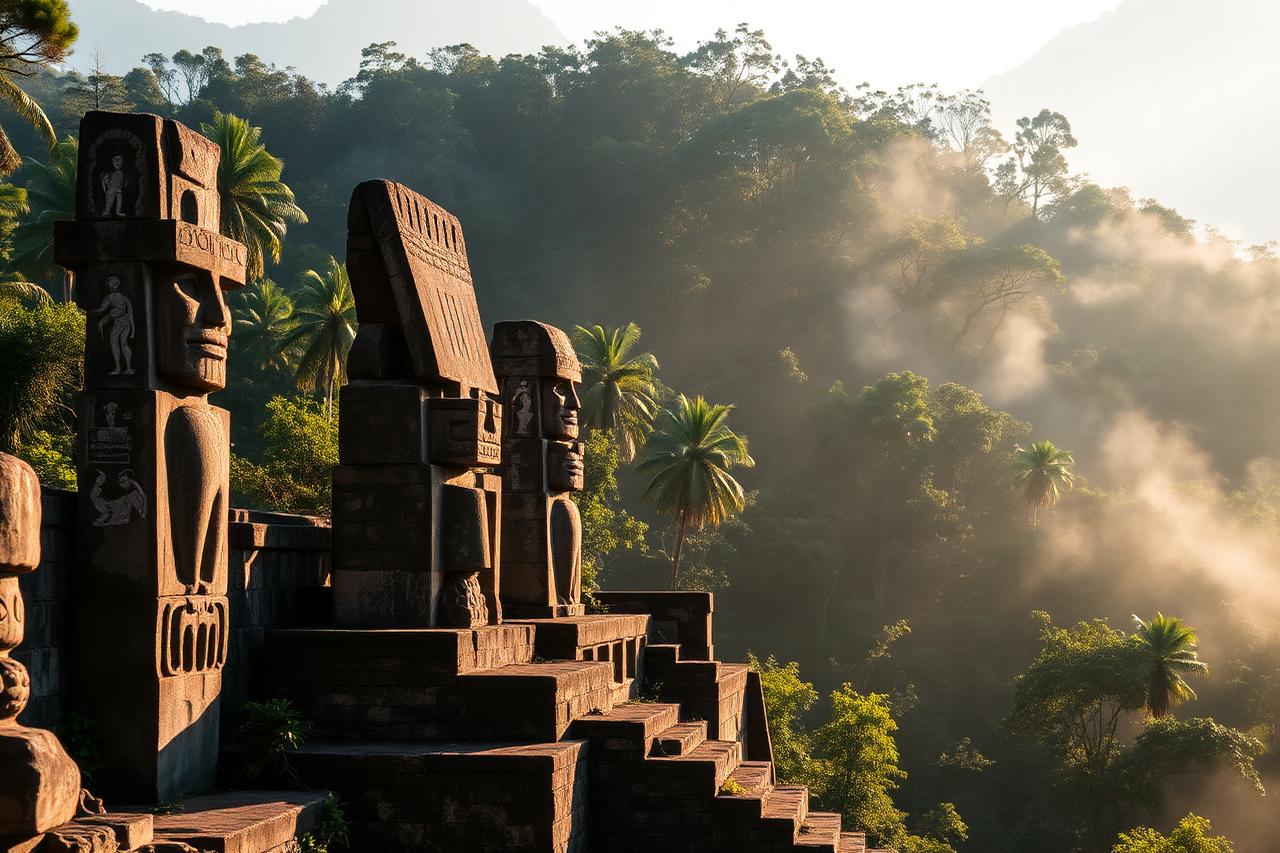
Honduras' ancient Mayan jewel: stelae, hieroglyphs and a jungle-shrouded archaeological masterpiece.
- Best time to visit: November to April
- Daily budget (budget traveller): $40 to $70 USD
- Ideal trip length: 2 to 3 days
Copán Ruinas is the gateway to one of the most important Mayan cities in the Americas, a UNESCO-listed site famous for its remarkably preserved stelae, hieroglyphic stairway and sculpture museum set deep in the Honduran jungle. The nearby town of the same name is a charming, cobblestoned colonial outpost with red-tiled roofs, excellent coffee and a surprisingly sophisticated food scene. As Honduras' tourism slowly rebuilds and diversifies beyond the Bay Islands, Copán offers a world-class cultural destination that still feels off the beaten path. Joy Plus pairs the archaeological wonder with the town's cafes, macaw mountain reserve and nearby hot springs.
Copan Ruinas is a town of about 10,000 people sitting at 600 metres in a green bowl of hills, a few kilometres from the Guatemalan border and one of the most beautiful Maya cities ever built. Between roughly 426 and 822 AD, sixteen kings ruled Copan from the Acropolis, and they left behind the best-carved stone in the Maya world. The site sits inside a real forest, so scarlet macaws squawk overhead while you read a 1,300-year-old dynastic history on the Hieroglyphic Stairway (over 2,200 glyphs, the longest Maya text anywhere). The ticket is US$15, about L390. For that price this is one of the best-value archaeological days in the Americas.
The town is the second reason to come. Cobbled streets rise and fall off the Parque Central, tuk-tuks buzz around for L30 to L50, and the cafes serve coffee grown on the hills you can see from your table. It is compact enough that you will run into the same faces at breakfast, at the ruins and at dinner. That makes it one of the easiest places in Central America to travel solo. Honduras has a reputation problem, and Copan is where it is least deserved: a tourism-funded town with a visible local police presence, small family-run hotels and almost no hassle.
Two to three days covers the essentials, and four or five lets you slow down. The core is the ruins, the Sculpture Museum and the tunnels, plus Macaw Mountain's free-flying birds. Round that off with a hot spring soak, a coffee finca or a cacao workshop, and a candlelit dinner above the valley. The best months are November to February, when mornings are cool and the light is clean. Go earlier in the day than seems reasonable. The park opens at 8am and you want the Great Plaza before the heat and the tour groups arrive from Guatemala.
How many days in Copán Ruinas?
For Copán Ruinas, we recommend 2 to 3 days. With more time, add a day trip to Luna Jaguar hot springs.
| Trip length | What you'll see | Itinerary |
|---|---|---|
| 2 days · Recommended | Walk the colonial core; The Copan archaeological park | Copán Ruinas in 2 days |
| 3 days · Recommended | Adds: Tunnels and Las Sepulturas | Copán Ruinas in 3 days |
| 4 days | Adds: Macaw Mountain and a coffee finca | Copán Ruinas in 4 days |
| 5 days | Adds: Hot springs soak | Copán Ruinas in 5 days |
| 7 days | Adds: Cacao, horses or a Guatemala hop | Copán Ruinas in 7 days |
Copán Ruinas itinerary
Arrive and walk the colonial core
Morning: Take the early Hedman Alas coach from San Pedro Sula (3.5 to 4 hours, about L700 to L800). Drop bags at your hotel and eat a first baleada at a plaza stall.
Afternoon: Walk the Parque Central and the Iglesia de la Inmaculada Concepcion. Step into the Museo Regional de Arqueologia Maya on the plaza for the Rosalila-style context before the ruins.
Evening: Early dinner at Llama del Bosque (Honduran plates) or Twisted Tanya's. Sunset beer on the plaza, then bed early because the ruins open at 8am.
The Copan archaeological park
Morning: Tuk-tuk to the gate (L40, or walk the 1.2km path). Be there when the park opens at 8am. Hire an official guide (about US$30 for 2 hours, split it) and see the Great Plaza, the ball court and the Hieroglyphic Stairway.
Afternoon: Sculpture Museum (about L180), which holds the original stelae and a full-colour reconstruction of the Rosalila temple. Lunch back in town.
Evening: Dinner at Hacienda San Lucas. Book ahead for the candlelit Maya-inspired set menu over the valley.
Tunnels and Las Sepulturas
Morning: Back at 8am for the Rosalila and Los Jaguares tunnels (separate ticket, about L390). Then walk the shady forest path to Las Sepulturas, the elite residential quarter, included in your ticket.
Afternoon: Siesta, then coffee tasting and a stroll through the craft shops on Calle Independencia.
Evening: Dinner at Carnitas Nia Lola, then a drink at a bar off the central park, ideally one with live music.
Macaw Mountain and a coffee finca
Morning: Macaw Mountain Bird Park opens at 9am (about L390). Go early, when the scarlet macaws are most active, and walk the forest trails among toucans and parrots.
Afternoon: Coffee finca tour, about L500 to L700 through your hotel or Via Via Cafe. Walk the plantation, then taste the cup.
Evening: Tuk-tuk back to town. Easy dinner of pupusas and fruit juice from the market area.
Hot springs soak
Morning: Slow start. Coffee and baleadas, then Spanish-language people-watching on the plaza.
Afternoon: Transfer to Luna Jaguar hot springs, about 25 minutes out (around L450 to L600 for entry, check at the gate). Soak among cascading pools in the cloud forest.
Evening: Stay for the evening session if it is open, or head back for pizza and a cold beer in town.
Cacao, horses or a Guatemala hop
Morning: Cacao workshop at a local farm (book through your hotel), where you grind and mould your own chocolate. Or horseback ride at Hacienda San Isidro.
Afternoon: Option: Santa Rita de Copan and the small Rio Amarillo site, or a leisurely lunch and a last look at the stelae in the museum.
Evening: Farewell dinner at Twisted Tanya's, then a plaza stroll.
Last coffee, depart
Morning: Coffee beans to take home from a local roaster. Pack souvenirs: woven bags, carved jade-look pieces, chocolate.
Afternoon: Hedman Alas coach to San Pedro Sula, or a shuttle to Antigua (6 to 7 hours) or the El Florido border.
Evening: Arrive for a night near the airport or continue onwards. If you have a late flight, do not leave Copan after 1pm.
Best neighbourhoods
- Centro Histórico: The compact colonial core with cobbled streets, the main plaza, cafes and craft shops.
- Ruins area: The archaeological park itself, surrounded by thick jungle and accessed by a short walk or tuk-tuk from town.
- Macaw Mountain vicinity: The forested hills outside town where rescued scarlet macaws fly free above the canopy.
- Los Sapos: The outskirts leading to rural lodges, hot springs and cacao farms in the verdant Copán valley.
Must-do experiences
- Explore the Copán archaeological park: Wander the Great Plaza, ball court, hieroglyphic stairway and stelae carved in extraordinary detail.
- Visit the Sculpture Museum: See full-colour replicas of the original facades and a breathtaking reconstructed temple entrance.
- Macaw Mountain bird reserve: Walk forest trails among free-flying scarlet macaws, toucans and rescued birds.
- Tunnel into the underworld: Descend into excavated tunnels beneath the acropolis to see earlier construction layers.
- Explore the Mayan ruins: Copán's archaeological site is famous for the most intricate stone carvings in the Maya world, the Hieroglyphic Stairway, stelae and ball court, set among howler monkeys and macaws.
- Macaw sanctuary and hot springs: Visit the scarlet macaw conservation centre, then relax in the natural hot springs in the hills outside the small, charming town of Copán Ruinas.
Hidden gems
- The coffee from local fincas, some of the best in Central America.
- Luna Jaguar hot springs and spa in the rainforest outside town.
- The small but excellent town museum of Mayan archaeology.
- Cacao and chocolate-making workshops at a local farm.
Daily budget
- Accommodation: budget L260-400 / night (dorm or basic private), mid-range L1,300-2,300 (boutique double), splurge L3,500+ (Hacienda San Lucas). Prices are roughly L26 to US$1. Rooms within four blocks of the Parque Central are best value.
- Food: budget L260-400 / day (baleadas, comedor lunches), mid-range L650-1,000 (cafes plus one nice dinner), splurge L1,100+ (candlelit set dinner at Hacienda San Lucas). A plato del dia at a comedor is L100-150. Baleadas are L25-50. Add 15% tax at sit-down places.
- Transport: budget L50-100 / day (walking plus a couple of tuk-tuks), mid-range L250-500 (private tuk-tuk or taxi to Macaw Mountain), splurge L1,300+ (private shuttle or driver to Antigua or San Pedro Sula). In-town tuk-tuks are L30-50. Agree the price before you get in.
- Activities: budget L400-600 / day (ruins ticket, free walks), mid-range L900-1,400 (ruins plus guide, museum, Macaw Mountain), splurge L2,000+ (private guide, tunnels, hot springs, coffee tour). Ruins about L390, tunnels about L390, Sculpture Museum about L180, Macaw Mountain about L390. Check current prices at the gate.
- Drinks & nightlife: budget L80-150 (local beer, cheap rum), mid-range L250-400 (cocktails, craft coffee), splurge L600+ (wine at a hacienda dinner). Nightlife is low-key. Most places wind down by 10pm, so go for a beer on the plaza.
Where to stay
- Social hostel in Centro Historico (L260-450 / night): Via Via Copan and other plaza-area hostels give you dorms, shared tables and tour boards. Walk everywhere and meet other travellers over a coffee.
- Boutique hotel in Centro Historico (L1,300-2,300 / night): Hotel Yat B'alam and similar colonial-style hotels near the Parque Central. Courtyards, good breakfasts and a two-minute walk to anywhere that matters.
- Apartment in Streets near Calle Independencia (L800-1,500 / night): A small casita or Airbnb a few blocks from the plaza. Quieter nights, local shops at your door, best value for a week-long stay.
- Splurge in Hacienda San Lucas ridge (L3,500-6,000 / night): Hacienda San Lucas sits above the valley with ruins views, a candlelit restaurant and gardens. You drive in, sleep deeply and wake to birdsong.
What to eat
- Baleadas, Honduras' signature folded flour tortillas with beans and cream
- Pupusas, stuffed corn cakes popular across the region
- Local Copán coffee from hillside fincas
- Fresh tropical fruit and juices from the market
Day trips
- Luna Jaguar hot springs (25 min by car): Natural hot spring pools cascading through cloud forest, with spa treatments and a lodge. Best late afternoon, then stay for the evening session. Private taxi or tuk-tuk arranged through your hotel (about L400 to L600 round trip). Entry around L450 to L600, check at the gate.
- Santa Rita de Copan and Rio Amarillo (About 30 min by minibus or car): A quieter town with local markets and cattle-country feel, near the small Rio Amarillo Maya site, which gets a fraction of Copan's crowds. Minibus from the Copan Ruinas terminal (L30 to L50 each way) or hire a driver for half a day.
- Quirigua, Guatemala (About 3.5 hours via El Florido): UNESCO-listed site with the tallest stelae in the New World (up to 10.6 metres). Long as a day trip, ideal as a stopover heading to Guatemala. Shuttle or colectivo to El Florido, then onward to Chiquimula and the Quirigua junction. Or book a private driver (about L2,000 to L2,600).
When to visit
- Cool dry season (November - February): 16-28°C, dry, cool mornings and clear skies. Crowds: Moderate, peaks at Christmas and New Year. The best window. Comfortable ruins mornings, green hills, cheap and easy trails. Book Christmas week ahead.
- Hot dry season (March - April): 20-34°C, hot afternoons, haze from field burning. Crowds: Busy around Semana Santa, otherwise light. Do the ruins at 8am and be done by 11. Semana Santa fills every bed with Honduran holidaymakers, so book weeks ahead.
- Green season (May - August): 20-30°C, short afternoon downpours, a drier spell (canicula) in July and August. Crowds: Low. Lush, quiet and cheaper. Go to the ruins in the morning and keep the afternoon for cafes and hot springs.
- Peak rains (September - October): 20-28°C, heavy and frequent rain, muddy rural roads. Crowds: Very low. Cheapest rooms, empty ruins, but trails and unpaved roads to the hot springs can turn soupy. Bring a proper shell.
Entry rules for your passport
Visa rules for Honduras depend on the passport you travel on. Check the official source before you book: Honduras National Migration Institute
Getting there
The nearest major airport is San Pedro Sula (SAP), about 170km and 3.5 to 4 hours away. From the airport, take a taxi (L300 to L400) to the Hedman Alas terminal, then a coach to Copan Ruinas (about L700 to L800, a few daily departures, check hedmanalas.com). A private transfer from SAP runs about L2,300 to L3,300 per car. From Guatemala, shuttles run from Antigua (6 to 7 hours, about L1,200 to L1,600) and Guatemala City. If you cross at El Florido, take a colectivo or tuk-tuk from town (about 20 minutes), have small US dollars on hand for border fees, and ask for receipts. Avoid night travel by road.
Getting around
Copán Ruinas town is tiny and entirely walkable, though the cobbled streets are uneven. Tuk-tuks are everywhere for a dollar or two and will take you to the ruins, about 1km from the centre. The archaeological park is best reached on foot or by tuk-tuk; it's an easy walk in the cool morning. For day trips to hot springs, cacao farms or bird reserves, local guides and small operators offer transport. Buses connect to San Pedro Sula and the Guatemalan border; the nearest major airport is in San Pedro Sula.
Safety
Copán Ruinas is one of the safest, most tourist-friendly towns in Honduras, with a relaxed atmosphere and visible local police. Use standard precautions: keep valuables discreet, avoid unlit areas late at night and stick to bottled water. The ruins park is well maintained and safe during opening hours. Check current travel advice before visiting Honduras, as conditions can vary regionally, and travel insurance is recommended.
Solo travel tips
- Split your ruins guide: Official guides wait at the gate and charge by the group, around US$30 for two hours. Ask other solos at the ticket line if they want to share. It halves your cost and you get a lot more out of the carvings.
- Hostel pick: Via Via Copan: A traveller-focused spot with a cafe, shared tables and tour bookings. Easy to meet people and pick up a coffee finca or hot springs group.
- Eat where the comedores are: A plato del dia for L100 to L150 at a family comedor is the cheapest, most social meal in town. Sit at the shared table and ask what is cooking.
- Tuk-tuk after dark: Streets are quiet and badly lit after 9pm. A tuk-tuk home is L30 to L50 and removes any risk. Save your hotel's number in your phone.
- Solo women: Copan is one of the easiest places in Honduras for women travelling alone. Standard rules apply: no isolated trails late, watch your drink, take a tuk-tuk back after dark, and trust your hostel staff for local advice.
- Learn some Spanish here: Several schools run one-to-one classes for about US$10 to US$15 an hour. It is a great way to meet people, and a few days of lessons transforms conversations at the market.
Cultural etiquette
- Greet people with 'buenos dias' or 'buenas tardes' when you enter a shop or comedor. Skipping it reads as cold.
- Use 'usted' with older people and officials. Hondurans also use 'vos' with friends, but follow their lead.
- Do not climb on or lean against the structures. Some stelae and stairways are roped off for good reason.
- Ask before photographing local people, especially Chorti Maya families. Offer to show them the photo.
- Tipping is 10% in sit-down restaurants (check the bill, it may be included). Round up for tuk-tuks and give guides L100 to L200.
- No drones at the ruins without a permit, and no tripods or large equipment without asking at the gate.
- Dress modestly in churches. Shorts are fine in the plaza, but cover shoulders and knees inside.
Frequently asked questions
How many days do you need in Copán Ruinas?
Two to three days is ideal: one full day for the archaeological park and sculpture museum, a half-day for Macaw Mountain, and time to enjoy the colonial town, cafes and a hot spring or cacao farm.
Is Copán Ruinas safe for tourists?
Yes, it is one of the safest destinations in Honduras, with a relaxed colonial atmosphere and local tourism infrastructure. Use normal precautions, avoid isolated areas at night and check current travel advice before visiting.
When is the best time to visit Copán Ruinas?
The dry season from November to April offers the most comfortable weather for exploring the ruins and walking the town. The rainy season (May to October) is greener but afternoon showers are common and some rural roads can get muddy.
Do I need a visa to visit Honduras?
Citizens of the EU, US, Canada, Australia and the UK can enter Honduras visa-free as tourists for up to 90 days. British citizens needed a visa from August 2024, but Honduras lifted that rule on 31 October 2026. Confirm the latest entry rules before travelling, especially if arriving overland from Guatemala.
What is Copán famous for?
Copán is famous for its UNESCO-listed Mayan archaeological site, particularly the finely carved stelae, the hieroglyphic stairway with over 2,000 glyphs, and the sculpture museum. It was a major classical-period city and is considered the Athens of the Mayan world for its art.
How do I get to Copán Ruinas from Guatemala?
Many travellers come overland from Antigua or Guatemala City via the border at El Florido. Shuttle buses and private transfers are the easiest options, taking about 5 to 6 hours from Antigua. You can also fly to San Pedro Sula and take a bus or shuttle from there.
Is Copán Ruinas expensive to visit?
It is mid-range and good value at around $40 to $70 a day. Local food and guesthouses are affordable, while the main costs are the archaeological park entrance fee, guided tours and transport to day-trip sites.
Is Copán worth visiting?
Yes, the ruins are among the most artistically refined of all Maya sites, and the relaxed town of Copán Ruinas is charming. A highlight of Honduras and an easy add-on from Guatemala.
How do I get to Copán?
It's near the Guatemala border, often visited as a side trip from Antigua or Guatemala City via shuttle, or from within Honduras. The town is small and walkable once you arrive.
How does Copán compare to Tikal?
Tikal is bigger and more dramatic in scale and jungle setting; Copán is smaller but unmatched for its detailed carvings and sculpture. Many travellers visit both for the contrast.
Tours and activities in Copán Ruinas | Copán Ruinas in 2 days | Copán Ruinas in 3 days | Copán Ruinas in 4 days | Copán Ruinas in 5 days | Copán Ruinas in 7 days
Joy Plus home | Destinations | Itineraries | Activities | Flights | Budget planner | Calendar | Map | Blog | Lifetime access