Destinations / Europe
Cotswolds, England travel guide
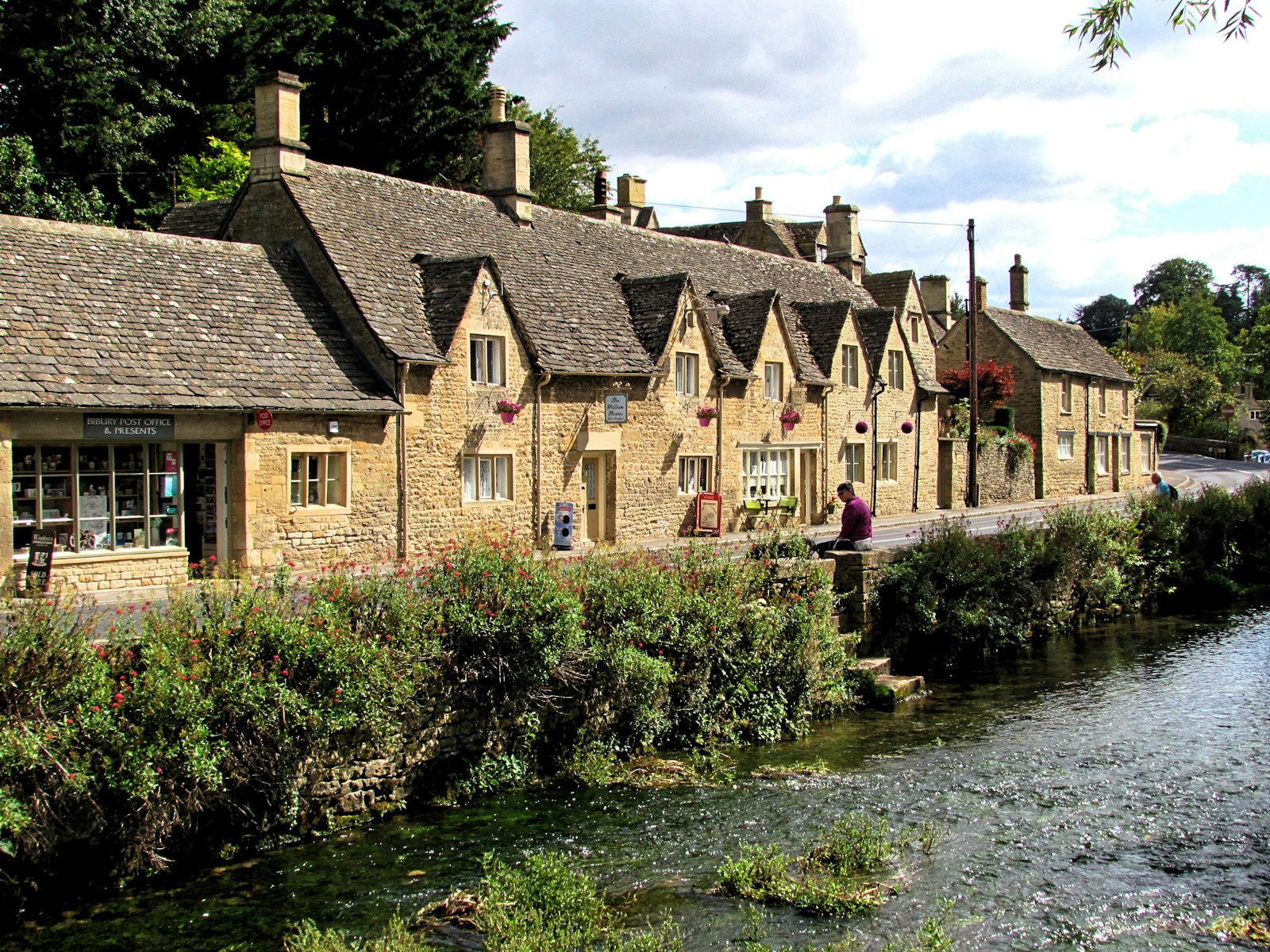
Rolling hills, honey-coloured stone villages and footpaths between pubs, with a direct train from London and one good bus route that makes it workable without a car.
- Best time to visit: May to September
- Daily budget (budget traveller): $110 to $355 USD
- Ideal trip length: 4 to 7 days
The Cotswolds is an Area of Outstanding Natural Beauty, now officially called a National Landscape. It covers about 800 square miles of low limestone hills across Gloucestershire, Oxfordshire and a few neighbouring counties. The villages are built from the local yellow stone, and many grew rich on the medieval wool trade, which paid for big churches and wide market squares. There is no single centre. You pick a base town and move between villages by bus, on foot or by car. Moreton-in-Marsh has a direct train from London Paddington in about an hour and a half. The Pulhams 801 bus runs from there to Stow-on-the-Wold, Bourton-on-the-Water and Cheltenham. The Cotswold Way and hundreds of other footpaths link the villages, so you can walk from one tea room to the next pub. The famous spots, like Bourton and Bibury, get very busy on summer weekends. Come early or stay overnight, and you get them quiet. The Cotswolds is not cheap, and there are very few hostels. Still, a solo traveller can keep costs down with the one YHA, pub lunches, capped bus fares and free walks. It is safe, easy to follow and very good for walking alone.
The Cotswolds is a range of gentle limestone hills running roughly from Chipping Campden in the north to near Bath in the south. The villages are built of the same honey-coloured stone, with steep roofs, wool churches and old market halls. Medieval sheep farming made the area rich, and then the money moved elsewhere, which is why so much of it was left unchanged. Today it is a protected landscape, and parts of it are some of the most visited countryside in England. Bourton-on-the-Water and Bibury fill with day coaches on summer weekends. Walk two fields away and you are often alone. The best way to see it is slowly, on foot between villages, with a bus or train to stitch the days together and a pub at the end of each walk.
Logistics are the key to the trip. Moreton-in-Marsh is on the Cotswold Line from London Paddington, about 1 hour 30 minutes away, and it is where the Pulhams 801 bus starts its route through Stow, Bourton and Cheltenham. Stagecoach buses run from the station to Broadway and Chipping Campden, though not often. Cirencester in the south has the region's only YHA hostel and is the base for Bibury and Chedworth. Hire a car if you want to see a lot of small villages in a few days. Otherwise, plan around the bus timetable and book taxis for the places buses miss. Advance train fares from London can be very cheap if you book a few weeks out.
The seasons shape what is open. Sudeley Castle opens from mid-March to the start of November. Snowshill Manor opens daily from mid-March to the end of October and on weekends in November. Chedworth Roman Villa closes in December and January. Summer brings long evenings, the lavender fields near Snowshill and the busiest weekends. Spring and early autumn are quieter, and the walking is just as good. Winter is muddy and short on daylight, but there are Christmas lights and markets in the towns, and pubs have open fires. English is the language, contactless payment works almost everywhere and the area feels very safe. If you want nightlife, go to Cheltenham or Oxford. If you want a long walk, a pub lunch and a quiet village at dusk, stay here.
Cotswolds itinerary
Train to Moreton-in-Marsh
Morning: This plan assumes you arrive on a Monday. Take a mid-morning train from London Paddington to Moreton-in-Marsh, about 1 hour 30 minutes. Drop your bags at your pub room or B&B.
Afternoon: Walk the High Street and the side lanes, then follow a field path out to Bourton-on-the-Hill and back, about 4 miles round trip, for your first view over the hills.
Evening: Dinner in one of the pubs on the High Street. Check tomorrow's 801 times on Traveline before bed.
Market, Stow, Bourton and the Slaughters
Morning: Browse Moreton's Tuesday market, then take the 801 to Stow-on-the-Wold. Walk round the market square and look for the yew trees framing the north door of St Edward's Church.
Afternoon: Take the 801 on to Bourton-on-the-Water. Walk the field path to Lower Slaughter and Upper Slaughter and back, about 4 miles, with tea at Lower Slaughter.
Evening: Spend early evening in Bourton when the crowds have gone, then catch the 801 back to Moreton. It runs into the evening on weekdays, but check the last bus.
Cotswold Way to Broadway
Morning: Take an early Stagecoach bus from Moreton to Chipping Campden. Look at the Market Hall, then join the Cotswold Way up to Dover's Hill.
Afternoon: Walk on to Broadway Tower, about 6 miles in total, and climb it (about £14) or enjoy the free view from the path. Drop down into Broadway village.
Evening: Catch the Stagecoach bus back to Moreton. The last one has left Broadway around 6pm, so do not linger. Order an easy pub dinner in Moreton.
Blenheim Palace day trip
Morning: Take the train from Moreton along the Cotswold Line to Hanborough, then the S7 bus to Woodstock and Blenheim Palace. Book your ticket online beforehand.
Afternoon: Tour the state rooms, then walk the huge park to the lake and the Grand Bridge. Have lunch in Woodstock rather than at the palace cafés to save money.
Evening: Head back to Moreton by bus and train. Have a self-catered supper to give your budget a rest.
Sudeley Castle and Winchcombe
Morning: Take the 801 to Cheltenham, then a local bus to Winchcombe. Check the times on Traveline first. Walk about 15 minutes to Sudeley Castle, which opens at 10am.
Afternoon: Visit the castle rooms, Katherine Parr's chapel and the gardens. Last admission has been 3pm. Walk back into Winchcombe for tea.
Evening: Spend the evening in Cheltenham if you want a livelier town, then take the 801 back to Moreton, or stay over in Cheltenham to make tomorrow easier.
Move to Cirencester
Morning: Check out and travel to Cirencester by bus via Cheltenham. Leave your bags at YHA Cotswolds (The Barrel Store) or your B&B.
Afternoon: Visit the Corinium Museum for the Roman finds, then walk through the Abbey Grounds and the big parish church of St John the Baptist.
Evening: Dinner in one of the pubs or cafés near the Market Place. Book a morning taxi to Chedworth if you plan to go.
Bibury and home
Morning: Take an early bus or taxi to Bibury. Walk Arlington Row and the river path before 9am, then visit the trout farm or have breakfast in the village.
Afternoon: Visit Chedworth Roman Villa by taxi (about £15 entry, closed December and January), or go back to Cirencester for a last wander.
Evening: Take a taxi or bus to Kemble station and the train to London via Swindon, about 1 hour 15 minutes.
Best neighbourhoods
- Moreton-in-Marsh: A working market town with a mainline railway station on the Cotswold Line, with direct trains to London Paddington, and the starting point for the 801 bus and the Stagecoach buses to Broadway and Chipping Campden. The wide High Street has pubs, cafés, a supermarket and a big Tuesday market. It is the most practical base if you do not drive.
- Stow-on-the-Wold: A hilltop town around a large market square, about 20 minutes from Moreton on the 801. It has antique shops, old coaching inns such as The Porch House and plenty of places to eat within a few minutes' walk. It is good for evenings, but it is windy and cold in winter.
- Bourton-on-the-Water: Low stone bridges cross the River Windrush through the middle of the village. By day it is the busiest place in the Cotswolds. Early mornings and evenings are calm, and it is the start of the walk to Lower and Upper Slaughter. The 801 stops here.
- Chipping Campden: A quieter wool town with a long, curved High Street, an old Market Hall and a tall church. The Cotswold Way starts here. Stagecoach buses run from Moreton, but the last one back can leave early, so check before you go.
- Cirencester: The biggest town in the area, once Roman Corinium, with the Corinium Museum, a large parish church and good shops. It is home to YHA Cotswolds, the region's only proper hostel, and is the base for Bibury and Chedworth. The nearest station is Kemble, a few miles away.
Must-do experiences
- Walk from Bourton to the Slaughters: A short, flat loop of about 4 miles on field paths takes you from Bourton-on-the-Water to Lower Slaughter, with its stream and old mill, and on to Upper Slaughter. Start early, before the day coaches arrive, and stop for tea in Lower Slaughter.
- Walk the Cotswold Way from Chipping Campden to Broadway: The first stretch of the 102-mile trail is about 6 miles. It goes over Dover's Hill, past fields and dry-stone walls, then up to Broadway Tower before dropping into Broadway. Allow most of a day and wear proper shoes.
- Climb Broadway Tower: An 18th-century folly on one of the highest points in the Cotswolds, with views across several counties on a clear day. Tower and grounds tickets have been about £14 for adults. You can see it for free from the Cotswold Way path along the edge of the grounds.
- Spend a day at Sudeley Castle: Part ruin, part family home, on the edge of Winchcombe. Katherine Parr, Henry VIII's last wife, is buried in the chapel, and the gardens are among the best in the region. For 2026 it opens daily from 14 March to 1 November, and adult tickets are about £24.
- Look round Snowshill Manor: A National Trust manor near Broadway, packed with the strange collections of Charles Wade, from Samurai armour to toys. House entry is by timed slots given out on the day, so arrive early. Adult tickets have been about £18, and National Trust members go free.
- See the mosaics at Chedworth Roman Villa: One of the grandest Roman villas in Britain, in a wooded valley, with mosaic floors, bath houses and a small museum. Adult entry is about £15. It closes in December and January, and you need a car or taxi to get there.
- Walk Arlington Row in Bibury early: This row of 17th-century weavers' cottages appears on more postcards than almost anywhere else in England. Arrive before 9am to have it nearly to yourself, then walk along the River Coln. People live in the cottages, so stay on the path.
Hidden gems
- Chastleton House near Moreton, a National Trust Jacobean house that has been kept as found rather than restored, with a quiet garden and the place where the rules of croquet were written down
- The Rollright Stones near Chipping Norton, a Neolithic and Bronze Age stone circle and standing stones on a ridge, far less busy than better-known sites
- Dover's Hill above Chipping Campden, a natural amphitheatre with wide views over the Vale of Evesham, and the home of the Cotswold Olimpick Games each spring
- Upper Slaughter, one field beyond its famous twin, which gets a fraction of the visitors and has a lovely footpath along the river
- Belas Knap, a Neolithic long barrow on the hills above Winchcombe, reached by a steep walk with big views and very few people
Daily budget
- Accommodation: budget £25-45 / night (YHA dorm bed), mid-range £100-180 (pub room or B&B, single occupancy), splurge £350+ (country house hotel such as The Lygon Arms). There is only one real hostel, in Cirencester. Weeknights are much cheaper than Fridays and Saturdays. Ask pubs and B&Bs for a single-occupancy rate.
- Food: budget £25-40 / day (supermarket breakfast, pub lunch, simple dinner), mid-range £50-80 (café lunch, cream tea, pub dinner with a drink), splurge £120+ (tasting menu or hotel restaurant). Pub mains are roughly £16-25, and a cream tea about £8-12. Lunch menus are often cheaper than dinner. Supermarkets in Moreton, Stow and Cirencester help with picnics.
- Transport: budget £6-15 / day (capped bus fares and walking), mid-range £30-60 (buses plus a taxi for Snowshill or Hidcote), splurge £80+ per day car hire, or a private driver-guide for much more. Advance trains from London can be under £20 one way if booked early, and walk-up fares are much higher. Rural taxis are limited and should be booked ahead.
- Activities: budget £0-5 / day (footpaths, villages, churches, Broadway Tower grounds), mid-range £15-25 (Chedworth about £15, Snowshill about £18, Sudeley about £24), splurge £40+ (Blenheim Palace, guided tours, several houses in one day). National Trust membership covers Snowshill, Hidcote, Chedworth and Chastleton, but not Sudeley, Broadway Tower or Blenheim. Prices change, so check the official sites.
- Drinks & nightlife: budget £5-12 (a pint of local ale in the pub), mid-range £20-40 (a few drinks with dinner), splurge £60+ (cocktails and wine at a hotel bar). Nightlife here means pubs, and many kitchens stop serving by about 9pm. A pint costs roughly £5-7. For late bars and live music, go to Cheltenham or Oxford.
Where to stay
- Social hostel in Cirencester (£25-45 / night (dorm), more for a private room): YHA Cotswolds, also called The Barrel Store, is the only real hostel in the region. It is in a converted brewery warehouse in the town centre, with dorms, private rooms and a self-catering kitchen. It is quiet rather than a party hostel.
- Boutique hotel in Stow-on-the-Wold (£120-220 / night): Stow's old coaching inns and small hotels, such as The Porch House, put you on the 801 route and within a short walk of several pubs for dinner, so you can enjoy your evenings without needing transport.
- Apartment in Moreton-in-Marsh (£90-160 / night): A self-catering cottage or flat near the station is good for a longer stay. You can shop at the Tuesday market and the supermarket, cook for yourself and walk to the trains and buses.
- Splurge in Broadway (£350-600+ / night): The Lygon Arms in Broadway is a historic coaching inn turned country hotel, a short walk from the village and the Cotswold Way. It is ideal for the night after the Chipping Campden walk.
What to eat
- Cotswold lamb: the region's sheep built its wealth, and lamb shows up in pub roasts and on restaurant menus across the area
- Double and Single Gloucester cheese: hard cheeses from Gloucester cattle, best tried with a ploughman's lunch in a pub
- Stinking Bishop: a soft, very pungent washed-rind cheese made in Gloucestershire, sold in farm shops and cheese counters
- Bibury trout: fresh or smoked trout from the trout farm on the River Coln in Bibury, where you can also buy some to take away
- A cream tea: scones, jam and clotted cream with a pot of tea, on offer in tea rooms in almost every village
- Local ale: Hook Norton and Donnington are long-established local breweries, and you will find their beer in pubs across the north Cotswolds
Day trips
- Blenheim Palace and Woodstock (About 25 minutes by train from Moreton to Hanborough, then a short bus ride): Winston Churchill's birthplace is a huge baroque palace and a World Heritage Site, with a vast park and lake laid out by Capability Brown. Woodstock next door is a handsome small town with places to eat lunch. Take the Cotswold Line train to Hanborough, then the S7 bus to Woodstock and the palace gates. Book palace tickets online in advance. They are one of the pricier tickets in the area, so check current prices.
- Stratford-upon-Avon (About 45 minutes to an hour by bus from Moreton-in-Marsh): Shakespeare's home town, with his birthplace, timber-framed streets, the River Avon and the Royal Shakespeare Theatre. Stay for an evening play if you can sort out the ride back. Stagecoach buses run from Moreton station to Stratford. Check the last return time, or stay overnight if you are seeing an evening performance.
- Oxford (About 35-45 minutes by train from Moreton-in-Marsh): Colleges, the Bodleian Library, the Ashmolean Museum (free entry) and the covered market. It makes a good change of pace after a few days of villages, with more nightlife. Take a direct Great Western Railway train on the Cotswold Line. Oxford station is about a 10-15 minute walk from the centre.
When to visit
- Spring (March - May): 8-17°C, mixed sunshine and showers, muddy paths early on. Crowds: Low to moderate, busier at Easter and on bank holiday weekends. Lambs in the fields, bluebells in the woods and gardens coming into flower. Most houses reopen in March, and May is one of the best months to walk.
- Summer (June - August): 17-23°C, long days, occasional heat and thunderstorms. Crowds: High, especially on weekends and in the school holidays. Everything is open, and the lavender near Snowshill is in flower. Book rooms early, visit Bourton and Bibury early in the morning and walk in the afternoon.
- Autumn (September - October): 11-18°C, often settled in September, wetter later. Crowds: Moderate, falling after September. The locals' pick. Quieter paths, autumn colour and most attractions still open until late October or early November.
- Winter (November - February): 2-8°C, damp and grey, short days, occasional frost or snow. Crowds: Low, apart from Christmas events and weekends. Cheaper rooms and cosy pubs, but many houses and gardens close and buses are thinner. Christmas light trails and markets liven up December.
Entry rules for your passport
Visa rules for the United Kingdom depend on the passport you travel on. Check the official source before you book: UK Visas and Immigration (GOV.UK)
Getting there
Most international visitors fly into London Heathrow. From there, take the Elizabeth line or Heathrow Express into London Paddington, then a Great Western Railway train on the Cotswold Line to Moreton-in-Marsh. Direct trains run roughly hourly and take about 1 hour 25 minutes to 1 hour 35 minutes. The same line stops at Hanborough, Charlbury and Kingham, which also suit some Cotswold bases. Advance tickets go on sale about 12 weeks ahead and can cost under £20 one way. Walk-up off-peak fares are much higher, often over £40. A Railcard saves a third if you qualify. For the south Cotswolds, take a train from Paddington to Kemble via Swindon, about 1 hour 15 minutes, then a taxi or bus to Cirencester. Cheltenham Spa has trains from London, Birmingham and Bristol, and the 801 bus runs from Cheltenham into the hills. National Express coaches serve Cheltenham and Cirencester. Birmingham and Bristol airports are closer than Heathrow if you are flying from Europe. If you hire a car, the M40, M5 and A40 all reach the region in about two hours from London.
Getting around
Without a car, base yourself in Moreton-in-Marsh. The Pulhams 801 runs roughly hourly from Monday to Saturday from outside the station to Stow-on-the-Wold (about 20 minutes), Bourton-on-the-Water (about 35 minutes) and on to Cheltenham. On Sundays it runs less often. Stagecoach 1 and 2 buses run from Moreton to Broadway and Chipping Campden. They run only a few times a day, and the last bus back from Broadway has left around 6pm, so check before you set off. Single bus fares in England are capped at £3 under a national scheme, but confirm this before you travel. The Robin is a bookable minibus that covers villages the main buses miss. From May to September, the Number 11 heritage bus links Moreton, Chipping Campden, Stow and Bourton on weekends and bank holidays. Use the Traveline app for timetables. Taxis are useful for Snowshill, Hidcote and Chedworth, which have no practical bus, but book ahead because there are not many. Walking between villages is often the best option. Driving gives you the most freedom, but lanes are narrow, parking in popular villages fills up and car parks charge. Traffic drives on the left.
Safety
The Cotswolds is one of the safest parts of England, and crime against visitors is rare. The main risks are on the roads. Country lanes often have no pavement, so walk facing oncoming traffic, wear something bright and avoid lanes after dark. Footpaths cross fields with cows and sheep. Keep your distance from cows with calves, and walk calmly round a herd rather than through it. Check yourself for ticks after walks through long grass. Paths get very muddy from autumn to spring, and the hills can be windy and cold even when the valleys are mild. Phone signal drops in some valleys, so download offline maps and tell your host your route if you walk alone. Plan around the last bus, because getting stuck in a village means an expensive taxi if you can find one. In an emergency call 999. For urgent but non-emergency health advice call NHS 111.
Solo travel tips
- Base yourself near the station: Moreton-in-Marsh lets you arrive by train and reach Stow, Bourton and the Slaughters by bus every day. You will never need a taxi just to get home for dinner.
- Plan walks around the last bus: Look up the return times before you set out, not when you finish. Broadway and Chipping Campden have early last buses, and rural taxis are hard to find at short notice.
- Stay on weeknights: Pub rooms and B&Bs often cost far less from Sunday to Thursday. Bourton and Bibury are also much calmer in the middle of the week.
- Eat at the bar: Pubs are the easiest place to eat alone. Sit at the bar, order the local ale and you will usually end up chatting to someone about walking routes.
- Safety for solo walkers: The real risks are traffic on narrow lanes, a sprained ankle on a muddy path and getting lost in fog. Use the OS Maps app or offline maps, tell your host your route and finish before dusk.
- Join a small-group day tour for awkward spots: Snowshill, Hidcote, Castle Combe and the smaller villages are hard to reach by bus. A small-group minibus tour from Moreton is a sociable way to fill those gaps in one day.
Cultural etiquette
- Follow the Countryside Code. Leave gates as you find them, keep to paths across farmland and take your litter home.
- Say hello or nod to other walkers on footpaths. It is normal in the countryside, even if it would be odd in London.
- In pubs, order and pay at the bar unless you are told otherwise. Many pubs want you to find a table first and give the table number when you order food.
- Many of the famous cottages, including Arlington Row, are private homes. Do not peer through windows, sit on doorsteps or block lanes for photos.
- Queue patiently at bus stops, tea rooms and bars. Pushing in is one of the quickest ways to annoy people.
- Churches are usually open in the daytime. Keep quiet inside, avoid visiting during services and leave a coin in the donation box if you can.
- Tipping 10-12.5% is normal at sit-down restaurants if service is not already on the bill. You do not need to tip for drinks at the bar.
Frequently asked questions
How do I get to the Cotswolds from London?
Take a Great Western Railway train from London Paddington to Moreton-in-Marsh. Direct trains run roughly hourly and take about 1 hour 30 minutes. Advance singles booked weeks ahead can cost under £20, and walk-up fares are much higher, so book early. For Cirencester, take a train to Kemble via Swindon, then a short taxi or bus ride.
Can I visit the Cotswolds without a car?
Yes, if you choose your base well. Stay in Moreton-in-Marsh and the 801 bus takes you to Stow, Bourton and the Slaughters every day. Broadway and Chipping Campden work by Stagecoach bus if you watch the return times. Snowshill, Hidcote, Chedworth and Bibury are harder, so plan a taxi or walk, or book a small-group tour for those days.
How many days do I need in the Cotswolds?
Three days covers the main north Cotswolds villages and one good walk. Five days adds Sudeley Castle and a day trip to Blenheim Palace or Stratford-upon-Avon. With a week, you can split your stay between Moreton and Cirencester to reach Bibury and the southern villages without rushing.
When is the best time to visit the Cotswolds?
May to September has the longest days, the best walking conditions and the most attractions open. The lavender fields near Snowshill flower from about mid-June to early August. September and early October are quieter and often dry. In winter, many houses and gardens close, paths are muddy and buses are thinner, but pubs are cosy and the villages are calm.
Where should a solo traveller stay?
Moreton-in-Marsh is best for transport, and Stow is better for evenings with several pubs around the square. The cheapest bed is at YHA Cotswolds (The Barrel Store) in Cirencester, which has dorms, private rooms and a kitchen. The old YHA in Stow has closed, so ignore older guides that mention it. Pub rooms and B&Bs are the usual alternative, and some charge less for single occupancy.
Is the Cotswolds expensive?
It is one of England's pricier rural areas, especially for rooms on summer weekends. You can keep costs down by staying at the hostel or a pub with rooms on weeknights, eating your main meal at lunchtime, using buses and walking. If you plan to visit several National Trust properties, check whether membership works out cheaper than paying for each entry.
Is the Cotswolds safe for solo female travellers?
Yes, it is very safe and walking alone is common. The practical precautions are the ones for any countryside trip. Avoid unlit lanes at night, carry a charged phone and offline maps, tell someone your walking route and do not miss the last bus. Pubs are friendly places to eat alone, and sitting at the bar is perfectly normal.
Do I need to book attractions in advance?
Booking online is wise for Sudeley Castle, Broadway Tower and Blenheim Palace in summer and school holidays. Snowshill Manor gives out timed house tickets on arrival, so come at opening on busy days. Opening seasons change every year, and several places close in winter, so check official websites before you plan a day around them.
Tours and activities in Cotswolds | Cotswolds in 2 days | Cotswolds in 3 days | Cotswolds in 4 days | Cotswolds in 5 days | Cotswolds in 7 days
Can't decide? Compare Cotswolds with...
Joy Plus home | Destinations | Itineraries | Activities | Flights | Budget planner | Calendar | Map | Blog | Lifetime access