Destinations / South America
Cusco, Peru travel guide
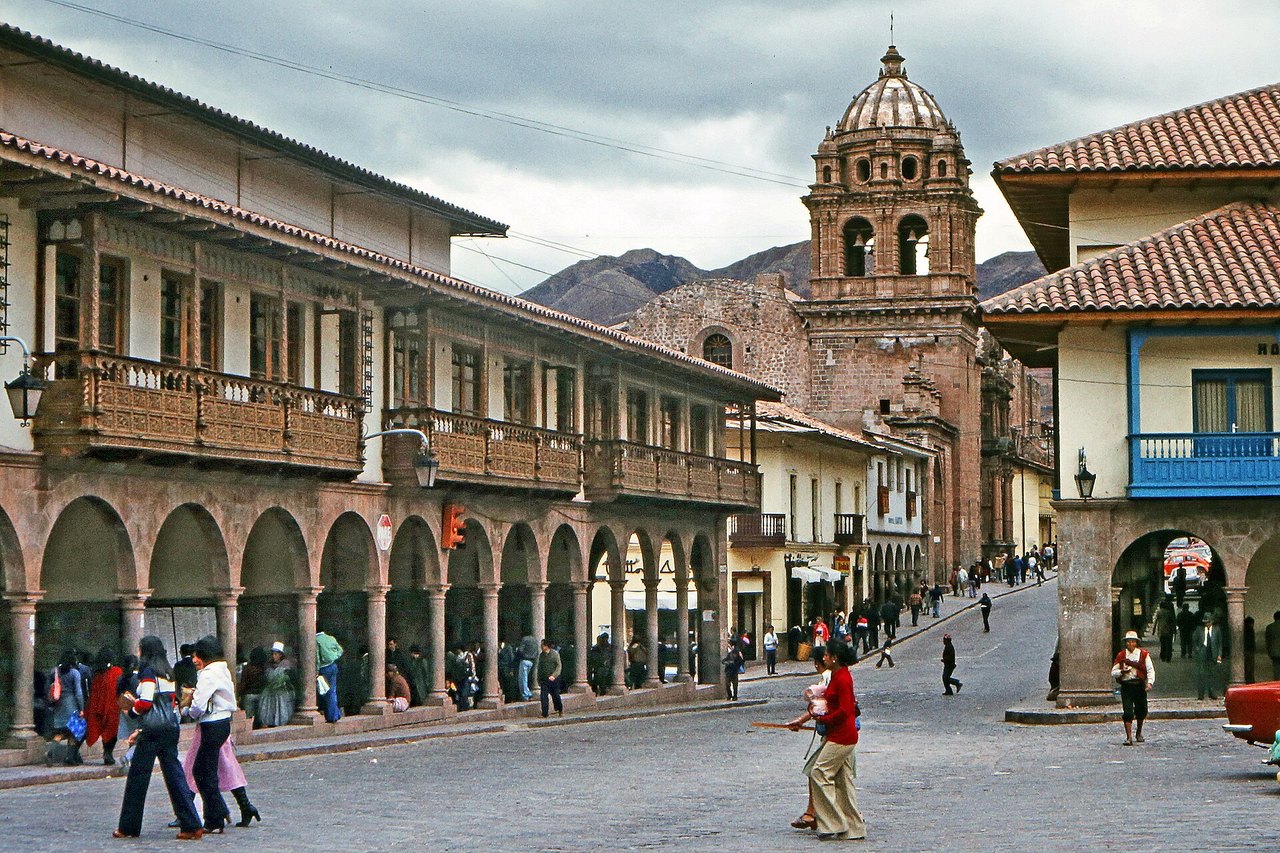
The Inca capital in the Andes - the gateway to Machu Picchu and the Sacred Valley.
- Best time to visit: May-September (dry season, clear skies)
- Daily budget (budget traveller): $45 to $80 USD
- Ideal trip length: 4 to 6 days (including the Sacred Valley)
Cusco sits at 3,400m, where Inca stonework holds up Spanish colonial churches and the whole city funnels travellers toward Machu Picchu. But rush it and the altitude will flatten you. Joy Plus builds in acclimatisation, sequences the Sacred Valley before the citadel so you arrive higher-fit and lower-down, and tells you the order to book the Machu Picchu permit, train and bus - the logistics that trip up most first-timers.
Cusco sits at about 3,400m, and the first thing it does is make you slow down. Walk uphill from the Plaza de Armas to San Blas on day one and you will stop twice for breath, buy a coca tea you did not plan to buy, and wonder why anyone calls this a city break. Then you turn a corner on Calle Hatun Rumiyoc, put your hand on a 12-angled Inca stone that fits its neighbours without mortar, and the whole place starts to make sense. Spanish churches sit on Inca foundations, quechua is still spoken in the markets, and women in woollen skirts lead llamas past the cathedral for tips.
The trick to Cusco is sequencing. Most people fly in from Lima at sea level, drop their bags in the centre and try to climb Sacsayhuamán by lunchtime. Do it the other way round. Drop straight into the Sacred Valley (Pisac 2,970m, Urubamba 2,870m, Ollantaytambo 2,792m), spend two or three nights there, take the train down to Aguas Calientes (2,040m) and see Machu Picchu (2,430m) with a body that has already adapted. Come back up to Cusco on day four or five and the city feels like a gentle step instead of a punch.
The logistics are the other half of the puzzle. Machu Picchu tickets are timed, capped daily and sold on the official Ministry of Culture platform, usually 4 to 8 weeks ahead from June to August. The train from Ollantaytambo, the Consettur bus up the hill and a mandatory guide all have to line up with your slot. Get the permit and train first, then book hotels around them. Budget roughly S/ 170-260 a day on the cheap (about US$ 45-70), S/ 520-850 mid-range, and add a one-off S/ 700-1,000 for the Machu Picchu day itself.
How many days in Cusco?
For Cusco, we recommend 4 to 6 days (including the Sacred Valley).
| Trip length | What you'll see | Itinerary |
|---|---|---|
| 2 days | Drop straight into the Sacred Valley; Chinchero, Moray and the Maras salt pans | Cusco in 2 days |
| 3 days | Drop straight into the Sacred Valley; Ollantaytambo fortress and the train to Aguas Calientes; Machu Picchu at first light | Cusco in 3 days |
| 4 days · Recommended | Adds: Chinchero, Moray and the Maras salt pans | Cusco in 4 days |
| 5 days · Recommended | Adds: Cusco centre and the Inca stone | Cusco in 5 days |
| 7 days | Adds: Humantay Lake (or Palccoyo); San Pedro, chocolate | Cusco in 7 days |
Cusco itinerary
Land and drop straight into the Sacred Valley
Morning: Land at CUZ, skip Cusco entirely. Pre-booked taxi (S/ 70-90) to Pisac, about 1 hour. Coca tea, no heavy breakfast.
Afternoon: Wander Pisac's market on Calle Mariscal Castilla, empanadas from a clay-oven bakery. Taxi up to the ruins (about S/ 15-20) and walk the terraces down slowly.
Evening: Continue to Urubamba or Ollantaytambo. Dinner of quinoa soup and trout, water only, in bed by 9pm.
Chinchero, Moray and the Maras salt pans
Morning: Chinchero weaving cooperative to watch wool dyed with cochineal and plants. Then Moray's circular terraces, included on the Boleto.
Afternoon: Walk the 6 km footpath from Moray to the Salineras de Maras (entry S/ 20, cash). Taxi back to Ollantaytambo.
Evening: Dinner at Chuncho in Ollantaytambo, early night. Tomorrow is Machu Picchu eve.
Ollantaytambo fortress and the train to Aguas Calientes
Morning: Climb the Ollantaytambo terraces at opening, before the tour buses. Check out and drop big bags at your hotel.
Afternoon: PeruRail or Inca Rail from Ollantaytambo to Aguas Calientes, about 1h30 to 2h. Buy your Consettur bus ticket (US$ 12 up) for the first bus of the morning.
Evening: Soak at the Termas Calientes (about S/ 20-25), dinner and a craft beer at Mapacho. In bed by 9pm.
Machu Picchu at first light
Morning: First Consettur bus around 5:30am, citadel gate at 6am. Walk your booked circuit with your guide - routes are fixed and you can't leave yours, and only some include the classic postcard viewpoint, so pick one that does when you buy the permit.
Afternoon: Bus down by noon, late lunch in Aguas Calientes, afternoon train to Ollantaytambo or Poroy.
Evening: Taxi or colectivo from Poroy to Cusco (S/ 20-30). Check in to San Blas. Light dinner at Quinta Eulalia or in your room.
Cusco centre and the Inca stone
Morning: Coffee and bread at Café Ayllu, then Cusco Cathedral at opening. Qorikancha next, about S/ 20.
Afternoon: Walk Calle Hatun Rumiyoc to the 12-angled stone, then up to Sacsayhuamán (free with the Boleto). Take it slowly, you are at 3,400m.
Evening: Sunset drinks at Limbus in San Blas, dinner at Pachapapa in the Plazoleta San Blas courtyard.
Humantay Lake (or Palccoyo)
Morning: 3:30am pickup, breakfast on the road, hike from Soraypampa to the turquoise lake at 4,200m. Entry is paid on the spot, about S/ 20.
Afternoon: Back in Cusco by 3pm. Shower, nap, and drink water for an hour.
Evening: Dinner at Cicciolina on Calle Triunfo, a proper reward. Skip the nightclubs.
San Pedro, chocolate and depart
Morning: Mercado San Pedro for fresh juice (S/ 5-8) and a S/ 12 menú, then a bean-to-bar workshop at ChocoMuseo (around S/ 100).
Afternoon: Last alpaca shopping around Calle Plateros. Souvenirs at Centro Artesanal Cusco on Av. El Sol are fixed price.
Evening: Taxi to CUZ, about S/ 15-25, 15 minutes. Allow 2 hours, the airport queue is slow.
Best neighbourhoods
- Plaza de Armas (Centro): The colonial heart - cathedral, arcades, restaurants. Central but the busiest.
- San Blas: The artists' quarter up steep cobbled lanes, with viewpoints, cafés and craft shops.
- San Pedro: Around the bustling central market - cheap eats and local life.
- Sacred Valley (Ollantaytambo / Urubamba): Lower altitude valley towns, ideal first nights to acclimatise before Cusco's heights.
Must-do experiences
- Machu Picchu: The icon - book the timed permit, train to Aguas Calientes and bus up. Go for the first or last entry slot.
- Sacred Valley loop: Pisac ruins and market, Ollantaytambo fortress, and Maras salt pans - and it sits lower for easier acclimatising.
- Qorikancha & the cathedral: The Inca Sun Temple fused with a colonial convent, plus the gold-laden Plaza de Armas cathedral.
- San Blas viewpoints: Climb the cobbled lanes for rooftop panoramas and the best coffee in the city.
Hidden gems
- The Maras salt pans and Moray agricultural terraces, an easy half-day from the valley.
- San Pedro Market for a cheap menú del día and fresh juice stalls.
- Rainbow Mountain or Humantay Lake as a hard but spectacular day hike (only once acclimatised).
- Choco Museo or a chocolate-making workshop for a relaxed afternoon at altitude.
Daily budget
- Accommodation: budget S/ 35-70 / night (hostel dorm), mid-range S/ 250-450 (boutique double in San Blas), splurge S/ 1,500+ (Belmond Palacio Nazarenas, JW Marriott El Convento). Aguas Calientes costs 30 to 50% more than Cusco for the same room. Book your Machu Picchu night early.
- Food: budget S/ 40-65 / day (San Pedro market menú, juice stalls), mid-range S/ 110-180 (one dinner at Cicciolina or Chicha), splurge S/ 350+ (Mil Centro tasting menu in Moray, roughly S/ 700). Set lunch (menú del día) is S/ 10-18 for soup, main and drink away from the Plaza. Many restaurants add 10% service, but the 18% tax is already included in menu prices by law.
- Transport: budget S/ 10-25 / day (colectivos S/ 4-12, taxis S/ 6-10), mid-range S/ 50-120 (taxis plus Sacred Valley colectivos), splurge S/ 400+ (private driver all day, or Hiram Bingham train from about US$ 500). Machu Picchu chain is separate: train from about US$ 60-90 each way, Consettur bus US$ 12 each way. Walking up from Aguas Calientes is free and takes 1h30.
- Activities: budget S/ 25-60 / day (free walking tour; the Boleto Turístico for Sacsayhuamán, from S/ 70, is extra), mid-range S/ 130-300 (Boleto Turístico S/ 130, Qorikancha about S/ 20, cathedral about S/ 40), splurge S/ 600+ (private Machu Picchu guide, Humantay Lake with a private driver). Machu Picchu entry is about S/ 152 for the standard ticket and about S/ 200 with Huayna Picchu or Machu Picchu Mountain. Verify before booking.
- Drinks & nightlife: budget S/ 15-25 (Cusqueña from a tienda, chicha morada), mid-range S/ 50-90 (2x1 pisco sours, a craft beer or two), splurge S/ 150+ (cocktails and a pisco flight at Museo del Pisco). Skip alcohol the first 48 hours. One pisco sour at 3,400m hits like three at sea level.
Where to stay
- Social hostel in Plaza de Armas / San Blas edge (S/ 35-70 / night): Pariwana Cusco has a courtyard bar, mixed and female dorms, and tour desks. Ecopackers is the calmer, cheaper alternative a few streets away.
- Boutique hotel in San Blas (S/ 300-550 / night): Rumi Punku or Antigua Casona San Blas: stone courtyards, heated rooms, quiet lanes, and the best coffee on your doorstep. Ask for a room with a heater, mornings are cold.
- Apartment in San Cristóbal / Santa Ana (S/ 150-280 / night): Quieter hillside streets above the Plaza, fewer touts, great evening light. A flat with a kitchen helps in the cold, and it works for stays of five nights or more.
- Splurge in Plaza Nazarenas / Sacred Valley (S/ 1,500-3,500+ / night): Belmond Palacio Nazarenas or JW Marriott El Convento in Cusco, or Belmond Río Sagrado in the valley. Oxygen-enriched rooms, courtyard pools and a private Machu Picchu guide.
What to eat
- Lomo saltado (stir-fried beef, chips and rice)
- Cuy (guinea pig) for the adventurous, or alpaca steak
- Quinoa soup and stuffed rocoto peppers
- Coca tea (mate de coca) to ease the altitude
Day trips
- Pisac and Ollantaytambo (33 km to Pisac, 45 min; 80 km to Ollantaytambo, 1h45): Terraced Inca ruins, a bright market on Tuesday, Thursday and Sunday, and a living Inca town with a steep fortress. Go early, the tour buses arrive by 10am. Colectivo from Calle Puputi to Pisac (S/ 4-6), then a colectivo from Urubamba to Ollantaytambo (S/ 4). From Calle Pavitos you can take a minibus to Urubamba for about S/ 10-12.
- Maras, Moray and Chinchero (50 km, 1h30 by road): Circular Inca terraces at Moray, thousands of salt pools at the Salineras de Maras, and a weaving cooperative at Chinchero. A perfect half-day loop at 3,500m. Taxi for the loop S/ 120-160, or a shared tour about S/ 60-90 without entry fees. Moray is on the Boleto Turístico, the salt pans cost S/ 20 extra.
- Humantay Lake (Soraypampa) (100 km, 3 hours each way): A turquoise glacial lake at 4,200m under Salkantay peak. Hard on lungs, so only after 3+ days acclimatised. Palccoyo is the easier, emptier alternative to Rainbow Mountain. Organised tour from Cusco, S/ 80-120 including breakfast and lunch, 3:30am pickup. Pay the entrance (about S/ 20) in cash on arrival.
When to visit
- Early dry season (April - May): Days 17-21°C, nights 2-5°C, last showers fading, hills still green. Crowds: Light to moderate, builds through May. The locals' pick. Green terraces, cheaper rooms, easier Machu Picchu permits, and Qoyllur Rit'i pilgrimage energy in late May or June.
- Peak dry season (June - August): Days 18-21°C and cloudless, nights from -3 to 2°C, intense UV. Crowds: Heavy, Inti Raymi on 24 June fills every bed. Best skies, worst prices. Book Machu Picchu and rooms 2 months ahead and pack a proper down jacket for dawn starts.
- Shoulder (September - November): Days 19-22°C, warmer nights, rains return late October. Crowds: Moderate, drops sharply after mid-October. Quietly excellent. September is still dry, and October brings jacaranda-pink valley towns and easier trains.
- Wet season (December - March): Days 15-19°C, afternoon downpours, February is the wettest, mud on trails. Crowds: Low, but rain cancels some treks. Cheapest, greenest, moodiest. The Inca Trail closes every February and landslides can stall the train, so keep a spare day.
Entry rules for your passport
Visa rules for Peru depend on the passport you travel on. Check the official source before you book: Peru Ministry of Foreign Affairs
Getting there
Alejandro Velasco Astete International Airport (CUZ) is 5 km southeast of the Plaza de Armas, about 15 minutes by taxi. Flights from Lima take 1h25 on LATAM, Sky and JetSMART, usually S/ 200-450 one way, cheaper booked 6 weeks ahead. There are almost no direct international flights, so you connect through Lima. Official airport taxis cost S/ 15-25 to the centre, S/ 70-90 to Pisac and S/ 120-150 to Ollantaytambo. Agree the fare first, or pre-book through your hotel. Overland, buses from Arequipa take about 10 hours (S/ 80-180 on Cruz del Sur or Oltursa), from Lima 20 to 22 hours. A new Chinchero airport is planned but not yet your airport, so assume CUZ. Fly in, then go straight down to the Sacred Valley.
Getting around
The centre is walkable but steep and tiring at altitude - take it slow the first two days. Cheap taxis cover the rest (agree the fare first). The Sacred Valley and Machu Picchu need pre-booked colectivos, trains and buses; plan the chain in advance rather than at the station.
Safety
Cusco is generally safe, but altitude sickness is the real risk - arrive slowly, hydrate, skip alcohol for the first 48 hours, and consider acclimatising in the lower Sacred Valley first. Watch for opportunistic theft in crowded markets and taxis; use registered cabs at night. Solo travellers find it easy and very social.
Solo travel tips
- Take the first two days easy, no heroics: Sleep low in the Sacred Valley, drink 3 litres of water, and eat light. Skip alcohol for the first 48 hours, and Humantay or Rainbow Mountain until day 5 or later. Altitude sickness hits solos hardest because nobody tells them to stop.
- Hostel pick: Pariwana or Ecopackers: Pariwana Cusco has a big bar, a courtyard and organised events, ideal for meeting people. Ecopackers is quieter and cheaper, with a kitchen and mixed dorms. Both book Machu Picchu trips.
- Use registered taxis at night: Ask your hotel to call a taxi, or use one with a company sticker and a radio number. Agree the fare before getting in (S/ 6-10 across the centre, S/ 15-25 from the airport after dark). Never hop into a car with a stranger already in the front seat.
- Machu Picchu as a solo: A guide is mandatory, so hire one at the gate or book a small group from Aguas Calientes (S/ 60-100). It splits the cost and you walk with people. Carry your passport, entry is checked against it.
- Solo female travellers: Cusco is comfortable for women alone in daylight and in busy bars. Watch for touts on Calle Procuradores, guard your drink in clubs, and avoid unlicensed ayahuasca ceremonies. Don't walk dark lanes in San Blas after midnight.
- Find your tribe on a free walking tour or at the market: The tip-based Free Walking Tour from Plaza Regocijo is full of solos. Spanish classes at schools like Amigos, Sunday at the Pisac market, and the ChocoMuseo workshop are also easy ways to meet people.
Cultural etiquette
- Learn a little Quechua: allillanchu (hello) and sulpayki (thank you) get a smile. Greet shopkeepers with buenos días when you walk in.
- Ask before photographing women in traditional dress or their llamas. Expect to tip S/ 1-5, it is their living.
- Haggle at markets and with street vendors, not in fixed-price shops, restaurants or agencies. Start at 60% and stay friendly.
- Put toilet paper in the bin, not the bowl. Peruvian plumbing can't take it. Carry coins for public toilets (S/ 1).
- Coca leaves are normal, sacred and legal here. Tea is fine, but don't take leaves or powder across a border.
- No photos inside the cathedral, no drones at any archaeological site, and no walking sticks or poles at all at Machu Picchu. Guards will stop you.
- A splash of your drink on the ground for Pachamama (Mother Earth) before drinking is polite at a local gathering. Watch what your host does.
Frequently asked questions
How many days do you need in Cusco?
Plan at least four to six: two to acclimatise and see Cusco, one or two for the Sacred Valley, and one for Machu Picchu. Rushing straight to the citadel invites altitude sickness.
How do you deal with the altitude in Cusco?
Arrive slowly (ideally via the lower Sacred Valley), rest the first day, drink lots of water and coca tea, avoid alcohol and heavy meals at first, and don't attempt high hikes until you've adjusted.
Do you need to book Machu Picchu in advance?
Yes - entry is by timed permit with daily caps that sell out in peak season, and you must arrange the train and bus too. Book the permit and transport weeks ahead, especially May to September. Tickets are sold by circuit, so you choose your route through the site when you buy, on the official platform tuboleto.cultura.pe.
When is the best time to visit Cusco?
May-September (dry season, clear skies) is the sweet spot for weather and crowds. Shoulder season brings lower prices and easier bookings, while peak months mean higher accommodation costs and longer queues at the best known sights, so book early if you travel then.
How much does a trip to Cusco cost?
Budget around $45 to $80 USD per person per day, covering a hostel bed or simple room, local transport, two or three meals out and an activity or entry ticket. You can go lower with markets and free walking tours, or far higher with boutique hotels and private guides.
How much does a solo trip to Cusco cost?
Budget on roughly $45-$80 USD per day in Cusco as a solo traveller. That covers a hostel bed or simple room, local food, getting around and a couple of paid sights. Mid-range comfort with private rooms, sit-down dinners and the odd tour runs closer to double, while shoestring travellers who cook and stick to street food can come in under it.
Is Cusco safe for solo female travellers?
Cusco is generally a comfortable place to travel solo, including for women, as long as you use normal city sense. Cusco is generally safe, but altitude sickness is the real risk - arrive slowly, hydrate, skip alcohol for the first 48 hours, and consider acclimatising in the lower Sacred Valley first. Watch for opportunistic theft in crowded markets and taxis; use registered cabs at night. Solo travellers find it easy and very social.
How do you get around Cusco?
The centre is walkable but steep and tiring at altitude - take it slow the first two days. Cheap taxis cover the rest (agree the fare first). The Sacred Valley and Machu Picchu need pre-booked colectivos, trains and buses; plan the chain in advance rather than at the station.
Tours and activities in Cusco | Cusco in 2 days | Cusco in 3 days | Cusco in 4 days | Cusco in 5 days | Cusco in 7 days
Can't decide? Compare Cusco with...
Joy Plus home | Destinations | Itineraries | Activities | Flights | Budget planner | Calendar | Map | Blog | Lifetime access