Destinations / Asia
Dali, China travel guide
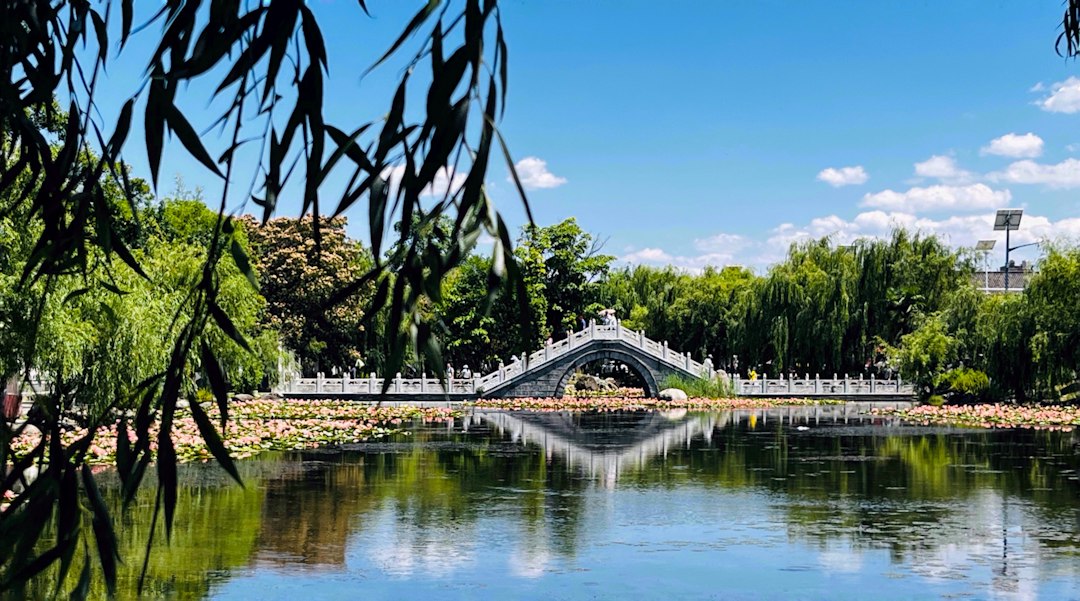
Erhai Lake, Bai culture and Cangshan mountain, China's laid back old town.
- Best time to visit: March to May and September to November
- Daily budget (budget traveller): $40 to $80 USD
- Ideal trip length: 3 to 4 days
Dali in Yunnan is China at a slower pace: a whitewashed Bai minority old town backed by the 4,000 metre Cangshan range and fronted by Erhai Lake, a 250 square kilometre highland sea. Travellers come for the ancient city gates, the three pagodas, cycling the lake shore through villages, and a cafe and guesthouse scene that has made Dali a long stay favorite for digital nomads and artists.
Dali sits at 1,970 metres on the western shore of Erhai Lake, with the Cangshan range going straight up behind it to 4,122 metres. This was the capital of the Nanzhao and Dali kingdoms for roughly five centuries, until Kublai Khan's army rolled through in 1253. The Bai people who live here still whitewash their courtyard houses, paint the eaves with flowers and ink, and put the markets on a fixed rotation that predates the road signs. The old town has marble-flagged streets, four gate towers and more cafes than a city this size should support. It is a good place to arrive tired and leave oddly rested.
The trick is that Dali is not one place. The walled old town is the social hub, with Renmin Road for noise and Boai Road (Foreigner Street) for flat whites and hostel crowds. Caicun and Longkan, a short e-bike ride east, have lake-view terraces and sunrise piers. Xizhou and Zhoucheng, north on the lake road, are where the Bai houses and tie-dye studios survive. Shuanglang on the east shore is a resort strip with the best sunsets and the worst weekend traffic. Pick two bases if you stay a week, and expect the lake loop to take a full day by car, not a full afternoon by bike.
Practical reality first. Sort a VPN or a roaming eSIM before you land, link a foreign card to Alipay or WeChat Pay, and book guesthouses that can register foreign passports. After that Dali is easy: ¥15 bowls of rice noodles, ¥50 e-bike days, cable cars to a 2,600 metre mountain path, and a pace that makes seven days feel too short. Pack a jacket even in May. At this altitude the sun burns by day and the evenings bite.
How many days in Dali?
For Dali, we recommend 3 to 4 days. With more time, add a day trip to Shaxi or Weishan and Weibaoshan.
| Trip length | What you'll see | Itinerary |
|---|---|---|
| 2 days | Walk the old town; Three Pagodas and the north side | Dali in 2 days |
| 3 days · Recommended | Adds: Cangshan and the Cloud Traveller's Path | Dali in 3 days |
| 4 days · Recommended | Adds: E-bike the west shore | Dali in 4 days |
| 5 days | Adds: Xizhou and Zhoucheng | Dali in 5 days |
| 7 days | Adds: Full Erhai loop by car | Dali in 7 days |
Dali itinerary
Arrive and walk the old town
Morning: High speed train to Dali station, then Didi (about ¥60) or the city bus to the old town. Drop bags, show your passport for registration.
Afternoon: Walk in through the South Gate, along Boai Road and up Renmin Road. Coffee and a slow hour at Jim's Peace Cafe.
Evening: Rice noodles or er kuai on Renmin Road. A beer on a rooftop, then bed by 10pm, the altitude is real.
Three Pagodas and the north side
Morning: Chongsheng Temple at opening (around 8am) to beat tour groups. Photograph the three pagodas from the reflecting pond with Cangshan behind.
Afternoon: Walk back along the lake of the old town wall. Lunch of rushan skewers and a baba. Quiet afternoon in a courtyard cafe.
Evening: Night street food around the West Gate. Early bed before the mountain day.
Cangshan and the Cloud Traveller's Path
Morning: Check the weather and wind, cable cars stop in storms. Ride the Zhonghe Temple cable car up and join the stone path at about 2,600 metres.
Afternoon: Walk the level path south toward Gantong Temple, with the old town and lake below you. Pack lunch or buy noodles at the temple stall.
Evening: Cable car down, long shower, hot pot or a Bai dinner near the South Gate.
E-bike the west shore
Morning: Rent an e-bike (¥40-60) and ride east to Caicun for sunrise on the pier, then breakfast in the village.
Afternoon: Follow the lake road through Longkan and the wetlands. Stop for tea in a terraced guesthouse.
Evening: Sunset at Caicun pier, egrets and a purple Cangshan. Ride back before dark, the road has no lighting in places.
Xizhou and Zhoucheng
Morning: Minibus or Didi to Xizhou. Morning market, baba off the griddle and a walk through the Yang family courtyards.
Afternoon: Short hop to Zhoucheng for a tie-dye workshop (about ¥100-200). Indigo hands, a scarf to take home.
Evening: Return to the old town. Live music on Boai Road or a quiet tea ceremony of three courses, bitter, sweet, aftertaste.
Full Erhai loop by car
Morning: Hire a car and driver (¥400-600). Start early around the south shore through Wase, ideally on a Sunday for the market.
Afternoon: Lunch in Shuanglang, then the Nanzhao Folk Island and east shore terraces. Ask the driver to stop at the wetlands.
Evening: Sunset over the water from Shuanglang, dinner at a marina terrace, drive back.
Slow morning and depart
Morning: Last baba and coffee. Walk the old town wall at the quiet hour before tour groups arrive.
Afternoon: Buy tea or tie-dye gifts on Boai Road. Pack, check out and head to Dali station (30 to 45 minutes by taxi) or the airport (45 to 60 minutes).
Evening: Train to Kunming or Lijiang, or a late flight. Keep two hours spare for the station and security.
Best neighbourhoods
- Dali Old Town: The walled heart with marble streets, cafes, bars and hostels, liveliest around Renmin Road and the Foreigner Street stretch.
- Caicun and Longkan: Lakeside villages just east of the old town with rice field walks, sunrise piers and quiet boutique guesthouses.
- Shuanglang: The yacht marina town on Erhai's east shore, famous for lake view terraces and the Nanzhao folk island.
Must-do experiences
- Cycle or ride the Erhai lake loop: Rent an e-bike or car for the 120 kilometre shoreline, stopping at Xizhou's market, wetlands and the S bend photo bridges.
- See the Three Pagodas of Chongsheng Temple: Dali's 1,200 year old landmark trio, best photographed from the reflecting pond with Cangshan behind.
- Ride a Cangshan cable car and walk the Cloud Traveller's Path: The 18 kilometre stone path traverses the mountain's face at 2,600 metres above the old town, with valley views the whole way.
- Wander Xizhou village and its morning market: The best preserved Bai village, with ornate courtyards, tie dye workshops and baba flatbread fresh off the griddle.
- Take a Bai tie dye workshop in Zhoucheng: Learn indigo resist dyeing from local artisans and take home your own scarf or cloth.
- Sunset at Caicun pier or the lakeside wetlands: Walk the boardwalks east of town as egrets fly in and Cangshan turns purple over the water.
Hidden gems
- Wase village's market, held every five days, on Erhai's east shore, almost tourist free
- The Xizhou Bai architecture museum's hidden courtyards
- Nanzhao Orphanage cafe in the hills above the old town, reached by e-bike
- Haishe park's wetland boardwalk and lone tree, sunrise gold
Daily budget
- Accommodation: budget ¥50-100 / night (hostel dorm), mid-range ¥350-700 (courtyard boutique double), splurge ¥1,800+ (Linden Centre in Xizhou). Confirm foreign passport registration before paying. Caicun gives you lake views for less than old town prices.
- Food: budget ¥70-110 / day (noodles, baba, er kuai), mid-range ¥150-250 (cafe brunch + Bai dinner), splurge ¥500+ (private chef or lake villa dinner). Rice noodle bowls are ¥15-25, a Xizhou baba is ¥5-10. Eat the street snacks, skip the 'foreigner' menus.
- Transport: budget ¥40-60 / day (e-bike + city bus), mid-range ¥150-250 (e-bike + Didi hops), splurge ¥400-600 (car and driver for the lake loop). Wear the helmet the rental shop gives you. Didi works with a foreign Alipay or WeChat account.
- Activities: budget ¥60-120 / day (one paid sight, lots of free wandering), mid-range ¥250-400 (Three Pagodas, cable cars, tie-dye class), splurge ¥800+ (paragliding off Cangshan, private craft tutor). Three Pagodas ticket is about ¥75. Cangshan cable car plus scenic fee is roughly ¥120-160 for a round trip. Check current prices on the day.
- Drinks & nightlife: budget ¥30-50 (shop beer and a street BBQ), mid-range ¥100-200 (craft beer and live music on Boai Road), splurge ¥300+ (cocktails at a lakeside rooftop). Dali Beer from a shop is ¥6-10. Bars are low-key and wind down around midnight.
Where to stay
- Social hostel in Dali Old Town, Boai Road (¥50-100 / night): Courtyard hostels like Jim's Tibetan Guesthouse put you steps from cafes and bars, with mixed dorms and easy company. Confirm passport registration.
- Boutique hotel in Caicun and Longkan (¥350-700 / night): Family-run Bai courtyard guesthouses with lake terraces, sunrise from the roof, and a 15 minute e-bike to the old town.
- Apartment in Old Town north and Caicun (¥150-300 / night): Furnished flats with a kitchen and fast Wi-Fi, ideal for the nomad crowd. Monthly rates run ¥1,500-3,000.
- Splurge in Xizhou (¥1,800-3,000 / night): Linden Centre, a restored Yang family compound with tours, a library, a courtyard cafe and quiet at dusk.
What to eat
- Er kuai, pressed rice cakes stir fried or grilled with sweet and spicy sauces
- Baba flatbread from Xizhou, plain or with sweet rose sugar filling
- Rushan, fried dairy fan skewers drizzled with rose syrup, a Bai specialty
- Yunnan crossing the bridge rice noodles, best in old town family kitchens
Day trips
- Xizhou and Zhoucheng (20-25 km north, 40 min): Xizhou is the best preserved Bai village, with a morning market and courtyards. Zhoucheng, a short hop on, is the place for indigo tie-dye. Go early for baba straight off the griddle. Minibus from the old town (around ¥10-15), or Didi at ¥60-90. E-bike works but is long, allow 1.5 hours each way.
- Shaxi (130 km north, 2.5 hours): A quiet Tea Horse Road town with Sideng Square, Xingjiao Temple and the Shibaoshan grottoes nearby. Its Friday market is the one to catch. Bus from Dali's bus station to Jianchuan and onward to Shaxi (about ¥40-60), or a chartered car for ¥600-900 round trip.
- Weishan and Weibaoshan (60 km south, 1 hour): A walled Ming town with the Gongchen Tower, plus a Taoist temple complex on Weibao mountain. Few foreigners, lots of tea. Bus from Xiaguan to Weishan (about ¥30), then a local minibus up to Weibaoshan.
When to visit
- Spring (March - May): 12-25°C, dry and bright, short showers in late May. Crowds: Moderate, spikes at Qingming and May Day. The best window. Blossom, long clear days and the Third Month Fair (Sanyuejie) in the old town around late March or April. Avoid May 1 to 5.
- Summer (June - August): 17-26°C, afternoon downpours, Cangshan often in cloud. Crowds: Heavy with domestic families. Green, cool and cheap midweek, but views get hidden. Torch Festival (late July) is fun and loud. Plan cable car days for the morning.
- Autumn (September - November): 10-23°C, clear skies once the rains end. Crowds: Light, except Golden Week (Oct 1 to 7). The locals' and nomads' pick. Crisp light, empty lake paths, good cable car visibility. Go mid October to November.
- Winter (December - February): 2-16°C, sunny days, nights near freezing, snow on Cangshan. Crowds: Low, except Chinese New Year (February 6 in 2027). Sunny and cheap, with the best mountain views. Many guesthouses have no heating, so ask for an electric blanket before booking.
Entry rules for your passport
Visa rules for China depend on the passport you travel on. Check the official source before you book: China National Immigration Administration
Getting there
Dali has two arrival points. High speed trains reach Dali station, in the new city and 30 to 45 minutes by taxi from the old town, in around 2 hours from Kunming (¥145 second class) and about 2 hours from Lijiang. Didi to the old town is roughly ¥50-70, and local buses 4 and 8 are cheaper but slower. Dali Airport (DLU) is about 30 km from the old town, 45 to 60 minutes away, with flights from most big Chinese cities, and taxis run ¥80-120. Book train tickets on Trip.com or the 12306 app, passport required, and arrive 40 minutes before departure for security.
Getting around
Dali Airport is 45 to 60 minutes from the old town; high speed trains from Kunming take 2 hours and from Lijiang 2 hours. E-bikes (40 to 60 yuan a day) cover the old town and west shore; for the full lake loop hire a car or driver (400 to 600 yuan a day). Local buses are cheap but slow, and taxis are easy to flag in town.
Safety
Dali is relaxed and safe, with a mellow nomad scene. Main notes: strong highland sun at 2,000 metres (wear sunscreen), chilly nights outside summer, and e-bike traffic on the lake road. Guesthouses often can't register foreign passports, so book places that can. Altitude is mild but Cangshan hikes add another 1,000 metres of climb.
Solo travel tips
- Pick a hostel that registers foreigners: Many guesthouses can't log foreign passports. Book a hostel on Boai Road or in Caicun that says it can, then message to confirm before you pay. It also puts you around other solo travellers by default.
- Eat at street stalls with a counter: Sit at the rice noodle shop's counter, point, and nod when asked about chilli. You'll pay ¥15-25 and probably get a chat out of the owner.
- Download Alipay and a translator before you land: Link a foreign Visa or Mastercard, set up the Didi mini program and download an offline translator. These three things cover transport, payments and menus.
- Solo female travellers: Dali is one of China's most relaxed towns for women alone. Standard rules apply, watch drinks late on Boai Road, share Didi trips with the plate number sent to a friend, and avoid unlit lake roads at night.
- Treat the lake loop as a day, not a ride: It is 120 kilometres with limited services on the east side. Solo, hire a driver for the long stretch and e-bike the west shore only. Many solos split a car on Boai Road noticeboards.
- Find your tribe at yoga, coffee and craft classes: The nomad scene meets at cafes, yoga studios and tie-dye workshops. Join one weekly class, you'll have a dinner group by day three.
Cultural etiquette
- Carry your passport. Hotels register it with local police, and you'll need it for trains, some temples and cable cars.
- Ask before photographing people, especially women in Bai headdress. Many will pose for a small tip, but don't assume.
- Tipping isn't expected. Round up at tourist cafes if you like, but at noodle shops it confuses people.
- Bargain politely at markets like Xizhou and Wase, smiling. If it hasn't moved after two offers, thank them and walk.
- Accept tea with both hands. The Bai three course tea (bitter, sweet, aftertaste) is a ritual, take your time.
- Dress covered at temples like Chongsheng and Zhonghe. Don't point your feet at statues or step on thresholds.
- Don't drink tap water. Boil it or buy bottled, and eat hot noodle dishes if your stomach is tender.
Frequently asked questions
How many days do I need in Dali?
Three to four days: one for the old town and Three Pagodas, one for the Cangshan mountain path, and one or two for the Erhai lake loop and villages like Xizhou. Many travellers extend to a week because the cafe scene and lake villages invite slow mornings. Visa note: citizens of about 50 countries, including most EU states, the UK, Canada, Australia and Japan, can enter mainland China visa-free for up to 30 days until 31 December 2026. US citizens need a visa, or can use the 240-hour visa-free transit on the way to a third country. Check the rules for your passport before booking.
How do I get to Dali from Kunming or Lijiang?
High speed trains from Kunming take about 2 hours (145 yuan second class) and from Lijiang about 2 hours as well. Dali Airport has flights from most major Chinese cities and sits 45 to 60 minutes from the old town. The railway station is in the new city, a 30 to 45 minute taxi ride from the old town.
Is Dali better than Lijiang?
They suit different moods. Dali is more laid back and open, with the lake, cycling and a nomad cafe culture; Lijiang's old town is more dramatic Naxi architecture but far more crowded and commercial. Many travellers do both by train and usually prefer Dali for a longer stay.
What is the best way to see Erhai Lake?
Rent an e-bike for the west shore villages and markets, then hire a car or driver for the full 120 kilometre loop, since east shore distances are long. Sunrise at Caicun pier and sunset near Shuanglang or Haishe wetlands give the best light, and boat tours are optional rather than essential.
When is the best time to visit Dali?
March to May brings mild weather, blossoms and the third month fair festival; September to November has clear skies after the rains. Summer (June to August) is the rainy season but also peak domestic season. Winter is sunny and quiet, though nights drop near freezing.
Is Dali good for digital nomads and long stays?
Yes, Dali has one of China's most established nomad scenes: cheap furnished apartments (1,500 to 3,000 yuan a month), fast cafes, yoga studios and a friendly expat community around the old town and Caicun. Wi-Fi and 4G are strong, though many guesthouses cannot register foreign passports for long stays.
What does Dali cost per day?
Budget travellers manage $35 to $50: hostels from $12, rice noodle meals for $2 to $4 and e-bike rentals at $6. Mid range boutique guesthouses with lake or mountain views run $60 to $120 a night, and a full day private car with driver costs $55 to $85.
Tours and activities in Dali | Dali in 2 days | Dali in 3 days | Dali in 4 days | Dali in 5 days | Dali in 7 days
Can't decide? Compare Dali with...
Joy Plus home | Destinations | Itineraries | Activities | Flights | Budget planner | Calendar | Map | Blog | Lifetime access