Destinations / Europe
Dinant, Belgium travel guide
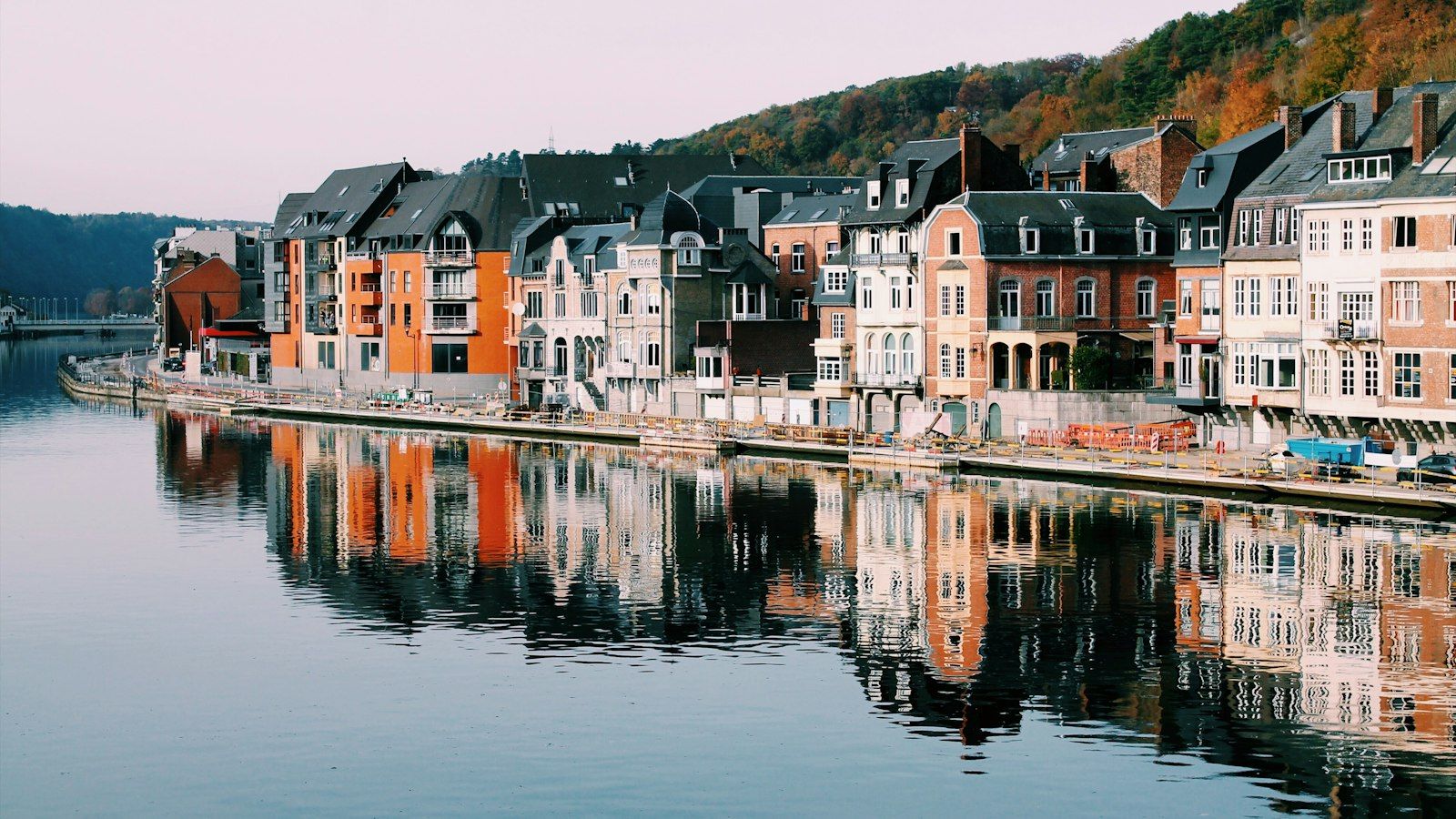
A narrow strip of riverside houses squeezed between the Meuse and a 100-metre limestone cliff, with a clifftop citadel, the saxophone's birthplace, Leffe beer and kayaking on the Lesse right on the doorstep.
- Best time to visit: May to June and September
- Daily budget (budget traveller): $90 to $240 USD
- Ideal trip length: 3 to 5 days
Dinant is barely a few streets wide. Its houses run along the right bank of the Meuse, the Gothic Collégiale Notre-Dame and its onion-shaped spire sit right below a sheer rock face, and the Citadel looks down on the whole thing from about 100 metres up. Most visitors come on a day trip from Brussels, take a photo of the saxophones on the Pont Charles de Gaulle and leave. If you stay a few nights, you get much more. The town is a cheap rail base for the Haute-Meuse valley. Adolphe Sax was born here and the small museum about him is free. Leffe beer started in the abbey at the north end of town. The Lesse, one of Belgium's classic kayak rivers, meets the Meuse 2 km south at Anseremme. Add the Renaissance château at Freÿr, the medieval village of Bouvignes and Namur 30 minutes up the line, and a week passes easily. Wallonia is French-speaking, very safe and easy to manage alone. It is also seasonal: the boats, kayaks and some châteaux close from November to March.
Dinant has around 13,000 residents and fits into a gap in the rock that barely seems wide enough. One side is the Meuse. The other is a limestone cliff topped by a citadel. The first fortress here dates from 1051, but most of what stands today was rebuilt in the 19th century. The town has been burned and shelled more than once, and the worst was in August 1914, when German troops killed hundreds of civilians. Today it's a pleasant brick-and-slate river town that gets very busy on summer Sundays and stays quiet the rest of the week. Most tour groups give it four hours. Stay three nights and you'll find that the valley around it is the real draw.
For a solo trip, Dinant works as a base with trains in two directions. Line 154 runs north to Namur in about 30 minutes. Line 166 runs south up the Lesse gorge to Anseremme, Gendron-Celles and Houyet, which is how you get to the classic kayak trips without a car. Sleep on Rue Grande or near the station. If you want a dorm bed, stay at the youth hostel in Namur and come down by train. Budget for one combo ticket (€25 gets you the Citadel, the HistoPad tour and the 45-minute cruise), one kayak trip and one good dinner. Almost everything else is free: the Collégiale, Maison de Monsieur Sax, the Rocher Bayard, the Crèvecoeur ruins and the riverside walks.
Timing matters more than you'd think. The Citadel cable car has been closed since October 2025, and its replacement isn't expected before 2028. That means 408 steps or a walk up by road, so wear good shoes. The 45-minute cruises run daily from April to early November, the kayaks from April to October, and Freÿr only from Thursday to Sunday outside July and August. Winter visits are fine for a quiet weekend of museums, brasseries and the Citadel, but don't plan a river trip. The 15 August bathtub regatta and the Adolphe Sax International Competition (next held from 25 October to 6 November 2027) are when the town is liveliest.
Dinant itinerary
Arrive, the Collégiale and Monsieur Sax
Morning: Train from Brussels with a change at Namur. Drop your bags, then cross the Pont Charles de Gaulle to the saxophone sculptures.
Afternoon: Go into the Collégiale Notre-Dame (free) for the huge stained-glass window, then visit Maison de Monsieur Sax at Rue Adolphe Sax 37 (free, daily 9am to 7pm).
Evening: Walk to the left-bank quay by the station for the sunset view of the cliff. Dinner of moules-frites at Chez Bouboule on Rue Grande.
Citadel, Meuse cruise and Rocher Bayard
Morning: Buy the 3-in-1 ticket (€25: Citadel, HistoPad and 45-minute cruise). Climb the 408 steps to the Citadel at opening (10am). Allow about 1.5 hours inside.
Afternoon: Take the 45-minute cruise to Anseremme from the quay on Avenue Winston Churchill. Boats run hourly from about noon in season, roughly April to early November. Then walk 1 km south to the Rocher Bayard.
Evening: Maison Leffe, Charreau des Capucins 23 (€15 including a beer and a glass). Opening hours change with the season, so check first. Flamiche and a brune afterwards.
Kayak the Lesse
Morning: Book online, then take line 166 from Dinant to Gendron-Celles (check the train times the night before). Kayak 12 km to Anseremme, about 2.5 hours, from roughly €27-31 each. Season runs April to October.
Afternoon: Late lunch on a terrace in Anseremme, then walk or take the train back to Dinant (2 km). Dry off and rest.
Evening: Carbonnade and a Leffe in a brasserie on Rue Grande. Early night after the paddle.
Freÿr château and gardens
Morning: TEC bus or taxi to the Château de Freÿr, a few kilometres upriver (Freÿr 12, Hastière). It's open Thursday to Sunday from April to mid-November, plus Tuesday and Wednesday in July and August. Entry €12, last admission 4:15pm.
Afternoon: Walk through the terraced gardens and the orange trees, then look across the river at the Rochers de Freÿr, where you'll often see climbers. On days with sailings, the 2-hour Freÿr cruise is a scenic way back.
Evening: Back in Dinant, buy couques from Maison Jacobs for the road and have a relaxed brasserie dinner.
Bouvignes and Crèvecoeur
Morning: Walk 2 km north along the left bank to Bouvignes-sur-Meuse. Look round the medieval square and the Maison du Patrimoine Médiéval Mosan (check hours and entry).
Afternoon: Climb to the ruins of Crèvecoeur for the view up the valley, then cross the river and walk back via the Leffe district and the abbey.
Evening: Splurge on a tasting menu at Le Jardin de Fiorine (book ahead), or keep it cheap with frites by the river.
Day trip to Namur
Morning: Train to Namur (about 30 minutes, roughly €5-7). Walk up to the Citadel of Namur, where the grounds and the views over the Sambre and Meuse confluence are free.
Afternoon: Wander the old town lanes around Place d'Armes and the Félicien Rops museum, then have a coffee by the Sambre.
Evening: Early dinner in Namur, then catch the train back. Check the last departure to Dinant before you order dessert.
Walzin walk and departure
Morning: Train or walk to Anseremme, then follow the marked trails up the Lesse towards Château de Walzin (allow 2-3 hours return). The castle is private, so admire it from outside.
Afternoon: Back to Dinant for a last couque and a coffee on Rue Grande, then the train to Brussels via Namur.
Evening: Arrive in Brussels or connect to your flight or the Eurostar.
Best neighbourhoods
- Centre and Rue Grande: The main strip on the right bank, where you'll find the Collégiale, the bridge, Maison de Monsieur Sax, the bakeries selling couques and most of the brasseries. Everything here is within a 10-minute walk. It's the most convenient base, especially if you're arriving by train.
- Left bank and station (Saint-Médard): The other side of the Pont Charles de Gaulle, with the railway station, the riverside quays and the best view of the Collégiale and the cliff. Rooms are a bit cheaper here, and Maison Leffe and La Merveilleuse are up the hill.
- Leffe: The quieter northern district around Notre-Dame de Leffe Abbey, where the beer was first brewed. Expect residential streets, a slower pace and a short riverside walk into the centre.
- Anseremme: A village 2 km south where the Lesse meets the Meuse. This is where the kayaks finish, and it has a station on line 166, an old bridge and terrace cafés. It's a good base if you're more interested in paddling and hiking than sightseeing.
- Bouvignes-sur-Meuse: A medieval village on the left bank, about 2 km north, with a cobbled square, a heritage centre and the ruined Crèvecoeur castle on the ridge above. It's quiet in the evenings and has a few self-catering stays.
Must-do experiences
- Climb to the Citadel: The cable car stopped running in October 2025 and a replacement isn't expected before 2028, so you'll be walking up the 408 steps. Inside you'll find the barracks, a First World War section and an HistoPad tablet tour. Adult tickets are €15.
- Cruise the Meuse to Anseremme: The 45-minute round trip from the quay on Avenue Winston Churchill takes you past the Rocher Bayard and the Charlemagne viaduct to the mouth of the Lesse. It costs €13, or €25 combined with the Citadel.
- Kayak the Lesse: Paddle 12 km from Gendron-Celles to Anseremme, with cliffs, small weirs and the turrets of Château de Walzin above you. The full 21 km from Houyet takes about five hours. The season runs from April to the end of October.
- Visit Maison de Monsieur Sax: This free interpretation centre stands on the spot where Adolphe Sax was born in 1814. Push the buttons to hear different saxophones, then find the bronze Sax sitting on the bench outside.
- Tour the Château and Gardens of Freÿr: A Renaissance château on the Meuse, a few kilometres upstream, with terraced French-style gardens and orange trees around 300 years old. It's open from April to mid-November, Thursday to Sunday, and costs €12.
- Taste Leffe where it started: Maison Leffe is in the former Bethlehem convent chapel, now part of La Merveilleuse hotel. The €15 ticket includes a short interactive tour, one Leffe and a chalice glass to take home.
- Walk to the Rocher Bayard: A 40-metre needle of rock beside the road about 1 km south of the centre. Legend says the horse Bayard split it with a hoof. It's free and a good warm-up before you carry on to Anseremme.
Hidden gems
- The ruins of Crèvecoeur above Bouvignes, a short, steep climb to a free viewpoint looking up the valley towards Dinant
- The Collégiale at golden hour seen from the left-bank quay by the station, when the cliff and the onion spire catch the last light
- Anseremme's riverside terraces in the late afternoon, when the kayaks come in and the day-trippers have gone
- Notre-Dame de Leffe Abbey, where the community offered free guided tours at 3pm on summer weekends in 2026, so check the dates for your trip
- The hourly local trains on line 166 up the Lesse valley, a cheap way to see the gorge and get to the launch points at Gendron-Celles and Houyet
Daily budget
- Accommodation: budget €35-45 / night (dorm in Namur hostel) or €70-95 (simple double or B&B in Dinant), mid-range €110-170 (central hotel or boutique guesthouse), splurge €200+ (La Merveilleuse suite, castle hotel in the Lesse valley). Dinant has no true backpacker hostel. Summer weekends and 15 August sell out early. Weekday rooms are noticeably cheaper. A small local tourist tax may be added, so check whether your quote includes it.
- Food: budget €25-35 / day (bakery breakfast, frites or a sandwich, a brasserie plat du jour), mid-range €45-70 (sit-down lunch and dinner with a beer), splurge €100+ (tasting menu at Le Jardin de Fiorine, with wine). A brasserie main is roughly €16-25, and moules-frites usually costs more. Lunch menus are the best value. Kitchens often close around 9pm, and some places close on Monday or Tuesday.
- Transport: budget €0-15 / day (walking, local SNCB trains), mid-range €15-40 (day trips by train and bus, the odd taxi), splurge €60+ (hire car for Han or the abbeys). Namur to Dinant costs roughly €5-7 one way, but check SNCB for the exact fare. Line 166 trains to Gendron-Celles and Houyet are short and cheap. Kayak prices usually include the shuttle back up the river.
- Activities: budget €0-15 / day (Sax museum, Collégiale, Rocher Bayard, hikes, all free), mid-range €25-45 (3-in-1 Citadel and cruise €25, Lesse kayak €27-44), splurge €60+ (Freÿr cruise plus Citadel €33, Maison Leffe €15, Han caves). Citadel €15, 45-minute cruise €13, 2-hour Freÿr cruise €22-24 depending on operator, Château de Freÿr €12, Maison Leffe €15 including a beer. Prices are 2026 rates, so confirm before you go.
- Drinks & nightlife: budget €5-12 (one Leffe on a terrace), mid-range €15-30 (a few Belgian beers over the evening), splurge €40+ (brewery visit and dinner with beer pairings). A draught beer in a café is roughly €4-6, and strong abbey beers cost more. Nightlife means terrace bars on Rue Grande and the quays, which close early outside summer.
Where to stay
- Social hostel in Namur (30 minutes by train) (€35-45 / night (dorm)): Dinant has no backpacker hostel. The nearest dorm beds are at the Namur youth hostel run by Les Auberges de Jeunesse. It has a shared kitchen and common room, and Dinant is a cheap 30-minute train ride away. Check it's open for your dates.
- Boutique hotel in Left bank, Charreau des Capucins (€130-200 / night): La Merveilleuse is a converted convent above the station with views over the Meuse. Maison Leffe is on site, and the bridge and centre are a short walk downhill.
- Apartment in Rue Grande or Bouvignes-sur-Meuse (€80-130 / night): Self-catering apartments and gîtes in the centre or in quiet Bouvignes give you a kitchen and save on dinners. Some have river views, and the station is within walking distance.
- Splurge in Lesse valley or a La Merveilleuse suite (€200-400+ / night): Book a top-floor suite at La Merveilleuse, or drive into the Lesse valley for a castle hotel such as Château de Vignée at Villers-sur-Lesse for total quiet and countryside. Check availability and whether you'll need a car.
What to eat
- Couque de Dinant: a very hard biscuit made with honey and flour, pressed into carved wooden moulds. Break off small pieces and let them soften. Maison Jacobs on Rue Grande is the classic place to buy them
- Flamiche dinantaise: a rich local tart of cheese, butter and eggs, eaten hot from the oven, ideally with a beer
- Moules-frites at Chez Bouboule on Rue Grande, a big pot of mussels and a cone of fries, at its best from late summer through autumn
- Leffe on draught in the town where it was born, either the blonde or the darker brune, served in the proper chalice glass
- Carbonnade flamande: beef braised slowly in brown beer with mustard and bread, served with fries, and a staple on every brasserie menu
- A tasting menu at Le Jardin de Fiorine, the town's best-known gastronomic restaurant, built around regional produce. Book ahead and check prices first
Day trips
- Namur (About 30 minutes by train north): Wallonia's capital, at the confluence of the Sambre and Meuse, has a huge hilltop citadel with free grounds and views, a lively old town around Place d'Armes and the Félicien Rops museum. It also has more bars and restaurants than Dinant if you want a livelier evening. SNCB line 154 trains, roughly hourly, about €5-7 one way. Check the last train back before evening plans.
- Château and Gardens of Freÿr (A few kilometres south on the Meuse): The former summer residence of the Dukes of Beaufort-Spontin, with original interiors furnished over many generations, terraced gardens in the Le Nôtre style and some of Europe's oldest orange trees kept in tubs. The Rochers de Freÿr climbing cliffs are across the river. TEC bus or taxi from Dinant, or the 2-hour Freÿr cruise (€22-24) for the view, though it doesn't always stop to let you off. Open April to mid-November, Thursday to Sunday, plus Tuesday and Wednesday in July and August. Entry €12.
- Grottes de Han (Han-sur-Lesse) (About 35 km southeast, 1.5-2 hours by public transport): One of Belgium's best-known cave systems, carved by the Lesse, with a guided walk through big chambers and a wildlife park in the same complex. It's a full day out without a car. Train to Namur and on to Jemelle, then a TEC bus to Han, or drive in about 40 minutes. Tickets are roughly €30-35 and the caves close on some winter days, so check prices and opening on the official site before you go.
When to visit
- Spring (April - May): 10-20°C, changeable, some rain. Crowds: Low on weekdays, busier on Easter and May bank holidays. The valley turns green, and the kayaks and cruises start up again. Weekdays are quiet. Pack a rain layer and check the Lesse water levels, which can be high after wet spells.
- Summer (June - August): 18-26°C, long evenings, occasional storms. Crowds: Heavy on weekends and throughout July and August, particularly on Belgian and Dutch holidays. Everything is open, Freÿr adds Tuesdays and Wednesdays in July and August, and the 15 August bathtub regatta fills the river. Book rooms and kayaks well ahead and paddle on a weekday.
- Early autumn (September - October): 10-20°C, crisp mornings, golden woods. Crowds: Moderate, quiet on weekdays. The locals' pick. The woods change colour and the light is soft. Kayaks run until the end of October, but the 21 km route stops in early October. Cruises drop to fewer days, so check the schedule.
- Winter (November - March): 0-8°C, damp, grey, occasional frost or snow. Crowds: Very low, except at Christmas. Cheap rooms and an empty Citadel, which is closed on Fridays from mid-November to March except in school holidays. No kayaks, the regular cruises stop in early November and Freÿr closes after mid-November. Good for a slow weekend of brasseries.
Entry rules for your passport
Visa rules for Belgium depend on the passport you travel on. Check the official source before you book: European Commission: Schengen visa policy
Getting there
The closest airports are Brussels (BRU) and Brussels South Charleroi (CRL), each roughly 1.5 to 2.5 hours from Dinant by public transport. From Brussels Airport, take the train towards Namur, changing in Brussels if needed, then the line 154 train to Dinant. From Charleroi, take the airport shuttle bus to Charleroi-Sud and the train via Namur. From London, the Eurostar to Brussels-Midi connects to Namur and Dinant in about 1 hour 40 minutes to 2 hours. Non-EU travellers now go through the EU Entry/Exit System biometric check at the external Schengen border, which is at St Pancras for the Eurostar. Trains from Namur to Dinant take about 30 minutes. Dinant station is on the left bank, a 5-minute walk over the bridge to the Collégiale. Drivers come via the E411 motorway and the N936/N95. Parking near the river fills up on summer weekends.
Border checks: non-EU visitors (other than Swiss, Norwegian, Icelandic, Liechtenstein, Andorran, Monegasque, San Marinese and Vatican citizens, and holders of an EU residence permit or long-stay visa) are registered in the EU's Entry/Exit System (EES) instead of getting a passport stamp. On your first crossing, officers take your photo and/or fingerprints, so allow extra time at passport control. ETIAS, the planned travel authorisation, is not in operation yet, so don't pay any website for one.
Getting around
Central Dinant is easy to walk. The station is on the left bank, about 5 minutes over the bridge from the Collégiale. SNCB trains on line 154 run up the valley to Namur in about 30 minutes, usually hourly. Line 166 goes the other way, south to Anseremme, Gendron-Celles and Houyet, which are the kayak launch and finish points. Services are less frequent, so check the SNCB timetable before you leave. TEC buses serve villages away from the railway, including Freÿr, but run infrequently, especially on Sundays. Taxis need to be booked by phone. Driving helps for Han-sur-Lesse or abbey visits, but parking in the centre is tight in summer. The 45-minute boats are a scenic way to get to Anseremme, and from April to October cycling the riverside roads works well if you're comfortable with some traffic.
Safety
Dinant is very safe for solo travellers, and violent crime against visitors is rare. Watch out for pickpockets on crowded summer weekends on Rue Grande and the bridge. The real risks are outdoors. The 408 Citadel steps and the woodland paths get slippery in the rain. Don't swim in the Meuse, which is a working river with barges and locks. On the Lesse, wear the life jacket, follow the operator's flag system for water levels, and get out at the marked portages around the weirs. Ticks are common in the Ardennes woods, so wear long trousers and check yourself after hikes. In autumn, Wallonia's forests can close temporarily for hunts, so obey any 'chasse' signs. The last trains back from Namur are earlier than you might expect, so check before a night out.
Solo travel tips
- Sleep in Dinant, not just pass through:
- Use the trains as your car:
- Pair up for the kayak:
- Bring proper shoes for the Citadel:
- Safety for solo travellers:
- Eat lunch as the main meal:
Cultural etiquette
- Say 'Bonjour' when you walk into any shop, café or bus, and 'Merci, au revoir' when you leave. Skipping the greeting comes across as rude in Wallonia.
- Dinant is French-speaking. Start in French or English, not Dutch.
- Don't bite straight into a couque de Dinant. It's rock hard by design, so break off small pieces and let them soften in your mouth or in coffee.
- Every Belgian beer has its own glass, and bars take that seriously. Drink slowly, because abbey beers are often 6-9% ABV.
- Leffe Abbey is still a working religious community, so keep your voice down and dress respectfully if you visit. The same goes for Mass in the Collégiale.
- Lunch is roughly noon to 2pm and dinner from about 6:30pm, and many kitchens close around 9pm. Some shops and restaurants close on Sunday afternoons or Mondays.
- Service is included in Belgian prices. Rounding up or leaving a euro or two for good service is appreciated but not expected.
Frequently asked questions
How do I get to Dinant from Brussels?
Take an SNCB train from Brussels-Midi, Central or Nord. Most trips change at Namur, and the whole journey usually takes about 1 hour 40 minutes to 2 hours. From Namur, trains to Dinant take about 30 minutes and run roughly hourly. Standard one-way fares from Brussels are usually somewhere around €15 to €20, so check the SNCB website or app for the current price. From Brussels Airport, take the train into Brussels and change, or go via Namur.
How many days do I need in Dinant?
One day covers the Citadel, the Collégiale and Maison Sax. Three days gives you time for a Meuse cruise and a Lesse kayak trip too. With five days you can add Freÿr and Bouvignes, and a week leaves time for day trips to Namur and the caves at Han-sur-Lesse.
When is the best time to visit Dinant?
May to June and September have mild weather, the boats and kayaks running and fewer crowds than July and August. The kayak season runs from early April to the end of October, but the 21 km route stops in early October. From November to March the town is very quiet and many outdoor activities close.
Is the Dinant Citadel cable car running?
No. It has been out of service since late October 2025 and is being replaced. A new cable car has been ordered, but it isn't expected to open before 2028. The Citadel is still open, and you can reach it by the 408 steps or by road. Check the Citadel's website for access updates before you go.
Can I use my card everywhere?
Mostly. Contactless cards work in hotels, restaurants, the Citadel and most shops, and on SNCB ticket machines. Carry some euros in cash for small bakeries, market stalls and the occasional café that only takes cash. There are ATMs on Rue Grande and near the station.
What language is spoken in Dinant?
French. Dinant is in Wallonia, Belgium's French-speaking region. English is common at the main sights and in hotels, but less so in small cafés and on buses. A 'Bonjour' when you walk in and a 'merci' when you leave go a long way.
Is Dinant safe for solo female travellers?
Yes. Dinant is a small, friendly town with very low crime, and it's quiet at night. The usual precautions apply. Avoid walking alone on unlit riverside roads after dark, keep an eye on your drink, and tell someone your plans before solo hikes in the woods, where phone signal can drop.
What entry rules apply to travellers visiting Belgium in 2026?
Belgium is in the Schengen Area. The EU's Entry/Exit System (EES) became fully operational on 10 April 2026, so non-EU visitors have their fingerprints and a facial image recorded at the external Schengen border. If you're coming from London by Eurostar, that happens at St Pancras. ETIAS, the planned online travel authorisation with a €20 fee, was not yet running in late October 2026 and had no confirmed start date. Rules can change quickly, so confirm on the official Belgian Foreign Affairs website and the EU's travel-europe.europa.eu portal before you book.
Tours and activities in Dinant | Dinant in 2 days | Dinant in 3 days | Dinant in 4 days | Dinant in 5 days | Dinant in 7 days
Joy Plus home | Destinations | Itineraries | Activities | Flights | Budget planner | Calendar | Map | Blog | Lifetime access