Destinations / Europe
Dingle, Ireland travel guide
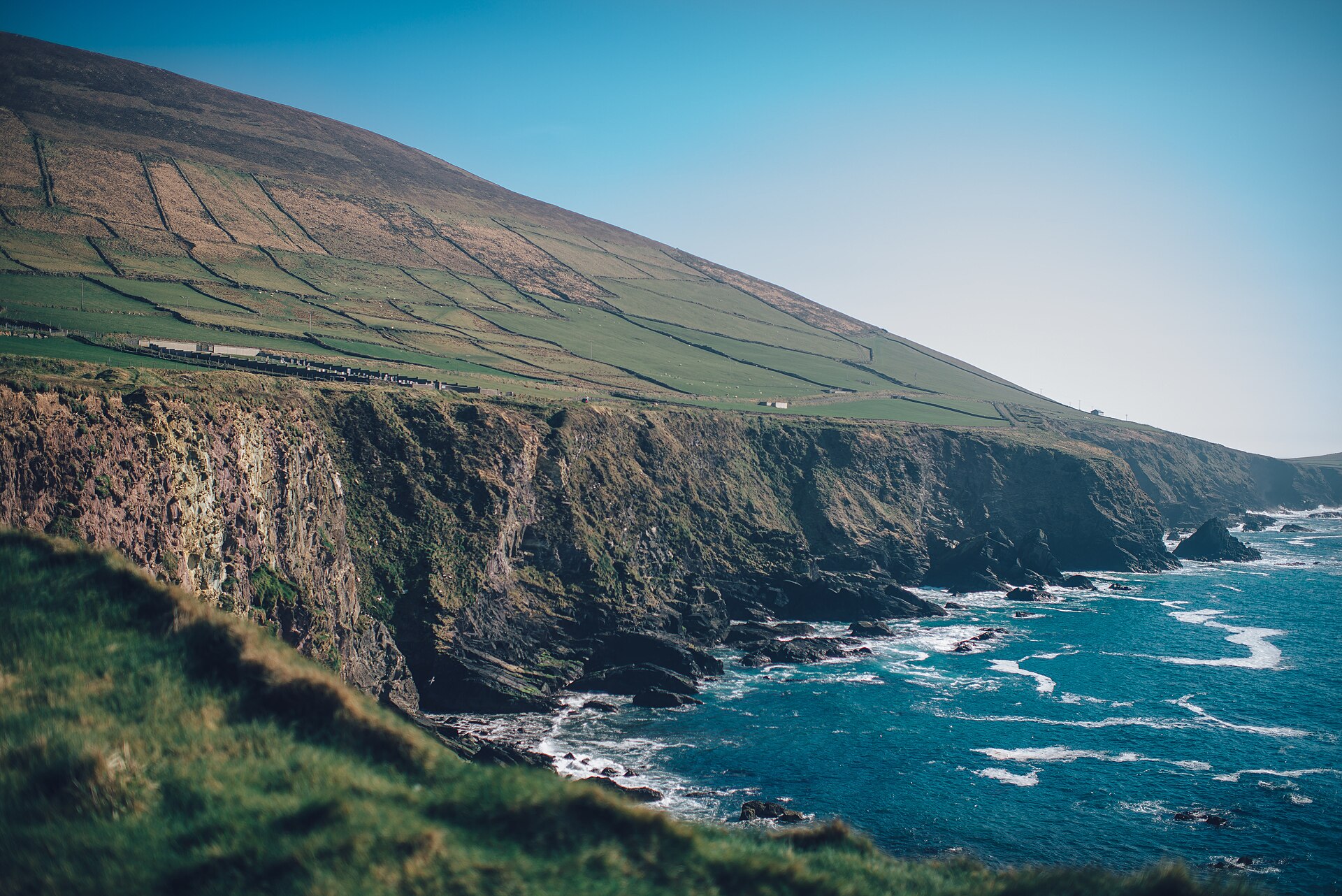
A colourful harbour town at the far end of west Kerry, with trad music most nights, a cliff-top loop around Slea Head and boats out to the empty Blasket Islands.
- Best time to visit: May to September
- Daily budget (budget traveller): $95 to $325 USD
- Ideal trip length: 3 to 5 days
Dingle (An Daingean) is a small fishing town on the Dingle Peninsula in County Kerry, about 50 minutes west of Tralee by bus. It has around 2,000 residents, a working harbour and a few streets of painted shopfronts, pubs and cafés. Most people come for what lies west of town. The Slea Head loop runs past beehive huts, beaches and cliffs to Dunquin, where boats cross to the Great Blasket Island, which was abandoned in 1953. The far west is a Gaeltacht, so Irish is spoken in shops and pubs, and many road signs are only in Irish. Back in town, nearly every pub has music on summer nights, and the seafood is landed a few metres away. Dingle is not cheap in July and August, and beds sell out early. Still, two well-rated hostels, a regular bus from Tralee, bike hire and free beaches and walks make it easy to visit alone on a budget. It is compact, friendly and easy to stay longer than you meant to.
Dingle sits on the south side of the Dingle Peninsula, the most northerly of Kerry's big peninsulas. It is a working fishing port with a population of around 2,000, and that number swells many times over in summer. The town has long been known for food and music, and it has more pubs than seems possible for its size. Some still double as hardware shops or drapers. West of town, the Gaeltacht begins. Irish is the everyday language for many people, and place names on signs appear only in Irish. You will see stone beehive huts, early Christian sites such as Gallarus Oratory, sandy bays at Ventry and Coumeenoole, and the Blasket Islands lying off Dunquin. Their last residents left in 1953, but their books and stories are still read across Ireland. Dingle is not a budget destination, especially in high summer. But a hostel bed, chowder in a pub, a hired bike and free beaches and walks keep costs reasonable for a solo traveller.
Getting there is straightforward. Take the train to Tralee, then Bus Éireann route 275 to Dingle, which takes about an hour along the coast. Stay in the town centre for walkable pubs and the bus stop, or out west in Ventry or Ballyferriter for quiet and an early Blasket boat. Without a car, hire a bike or e-bike for the Slea Head loop, or join a minibus tour. Book your Blasket crossing early in your stay so you can move it if the wind picks up. The Blasket ferries mostly run from May to early September. The Blasket Centre opened from 6 March to 8 November in 2026, with adult entry at €5.
Weather decides everything here. Kerry is mild all year, rarely freezing in winter and rarely hot in summer, but it rains often and the wind can stop boats and make the Conor Pass unpleasant. Summer brings long light evenings until after 10pm, the Dingle Regatta and the races in August, and full beds. September is quieter and often settled. The Dingle Food Festival has usually been held in early October. Winter is wild and quiet, many seasonal businesses close, and St Stephen's Day brings the Wren, when costumed groups parade through town with music. English is spoken everywhere, though a few words of Irish go down well. If you want a lively pub, a long walk and a boat to an empty island all in one trip, this is the place.
Dingle itinerary
Bus in and settle into town
Morning: Take a train to Tralee and the Bus Éireann 275 to Dingle, about 50-60 minutes. Sit on the left heading west for views of Tralee Bay and the hills.
Afternoon: Drop your bag at the hostel on Dykegate Street, then walk Main Street, Green Street and the harbour. Have sea salt ice cream at Murphy's on Strand Street.
Evening: Eat chowder in a pub, then find a trad session on Main Street or Strand Street after 9.30pm. Early night if you are cycling tomorrow.
Harbour walk and the distillery
Morning: Walk the shore path east from town past Hussey's Folly to the lighthouse at the harbour mouth. Allow about two hours return. Watch for seals and boats coming in.
Afternoon: Fish and chips from Reel Dingle Fish on the harbour wall, then walk west through The Wood to the Dingle Distillery for a booked tour (roughly €20-30). Add Oceanworld if it is raining.
Evening: Dinner at Out of the Blue on the waterfront if you want a treat, or a pie from Dingle Pies. Book a bike for tomorrow.
Slea Head loop by bike
Morning: Pick up an e-bike and ride clockwise to Ventry, then on past beehive huts to the Slea Head crucifix. Stop at Coumeenoole Beach to look, but do not swim.
Afternoon: Visit the Blasket Centre in Dún Chaoin (€5, open March to early November) and have lunch in its café overlooking the islands. Return via Ballyferriter.
Evening: Back in town tired and windblown. Drop the bike, have a pint and a quiet dinner, and check the weather for tomorrow's boat.
The Great Blasket Island
Morning: May to early September only. Take a booked taxi or tour to Dunquin Pier for a morning ferry (about 20 minutes, roughly €50-60 return), or the fast boat from Dingle Marina (about €80). Bring a packed lunch and waterproofs.
Afternoon: Walk through the ruined village, along the island paths and down to the white strand to watch seals. Keep away from cliff edges. Catch your set return boat.
Evening: A pint at Kruger's in Dunquin if your transport allows, or back to Dingle for music. Outside the ferry season, swap this day for Inch Beach and Annascaul.
Gallarus, Kilmalkedar and Ballyferriter
Morning: Cycle or drive north-west to Gallarus Oratory. Walk in free from the small lay-by, or pay about €5 at the visitor centre for the film and toilets.
Afternoon: Visit Kilmalkedar Church nearby, then head to Ballyferriter and Louis Mulcahy Pottery. Look at the sea from Clogher Strand on the way back.
Evening: Dinner in town and a session in a different pub. Ask about tomorrow's mountain weather at your hostel.
Mount Brandon or the Conor Pass
Morning: In clear weather, take a taxi to the Ballybrack car park and walk the Saints' Road up Mount Brandon (952m). Allow five to seven hours, and take a map and food.
Afternoon: Come back down the same way and get your taxi back. If the mountain is in cloud, take a lift or tour over the Conor Pass instead, and walk to the lakes and on to Brandon Point.
Evening: A slow, well-earned dinner and an early finish at the pub. Pack and check tomorrow's bus times.
Annascaul and out
Morning: A last bakery breakfast, then take a mid-morning 275 bus east. Get off at Annascaul for the South Pole Inn, the pub once run by the Antarctic explorer Tom Crean.
Afternoon: Have lunch in Annascaul, then catch the next bus to Tralee. If you have a car, detour to Inch Beach and Minard Castle.
Evening: Take the train onwards from Tralee, or stay a night there if you have an early start.
Best neighbourhoods
- Dingle Town Centre: Main Street, Green Street and Dykegate Street, where you will find the hostels, most of the pubs, bakeries and the bus stop. Everything is within a ten-minute walk, which suits a solo traveller who wants music at night and no taxi home.
- The Harbour and The Wood: Strand Street and the marina, where the fishing boats, boat tours and Oceanworld aquarium are, plus seafood restaurants along the waterfront. The Wood carries on west towards Milltown and the Dingle Distillery, with guesthouses and self-catering flats.
- Ventry (Ceann Trá): A small village on a wide sandy bay about 7km west of town, on the Slea Head loop. It has a lifeguarded beach in summer and a few B&Bs. A good quiet base if you have a bike or car.
- Ballyferriter and Dunquin: The Irish-speaking far west, with Ballyferriter village, Louis Mulcahy Pottery nearby, the Blasket Centre and Dunquin Pier. It has pubs, B&Bs and big Atlantic views. Stay here if you want quiet evenings and an early Blasket boat.
- Cloghane and Brandon: The quiet north side of the peninsula, over the Conor Pass from Dingle. Small villages, long beaches and the eastern routes up Mount Brandon. You will need your own transport.
Must-do experiences
- Loop around Slea Head: The road west of Dingle passes Ventry, the cliff-top crucifix at Slea Head, Coumeenoole Beach and Dunquin before cutting back through Ballyferriter. It is about 45-50km from town and back. Go clockwise, the way coaches go, and stop often.
- Cross to the Great Blasket Island: Boats run from Dunquin Pier in about 20 minutes during the summer season, weather permitting, and you get several hours to walk among the ruined village and spot seals. A faster boat also runs from Dingle Marina.
- Find a trad session: Pubs on Main Street, Green Street and Strand Street have music on most summer nights and plenty of winter ones. Sessions usually start late, after 9.30pm. Buy a drink, find a corner and do not talk over a slow air.
- Visit the Blasket Centre: This museum in Dún Chaoin tells the story of the Irish-speaking island community and its writers, and its viewing platform faces the islands. In 2026 it was open from 6 March to 8 November, and adult entry was €5.
- See Gallarus Oratory and Kilmalkedar: Gallarus is a dry-stone church shaped like an upturned boat, still watertight after more than a thousand years. You can walk in free from the small lay-by, or pay about €5 at the private visitor centre for the film, toilets and café. Kilmalkedar's ruined church is a short drive away.
- Drive or cycle the Conor Pass: One of Ireland's highest mountain roads climbs north from Dingle with views over lakes, Brandon Bay and both coasts. The road is single-track in places and unsuitable for large vehicles, so pull in and let others pass.
- Climb Mount Brandon: At 952m it is one of Ireland's highest peaks. The Saints' Road from Ballybrack is the classic route. Allow five to seven hours, go only in clear weather and take a map, because cloud can come down fast.
Hidden gems
- The harbour-mouth walk from Dingle town past Hussey's Folly to the small lighthouse at Beenbane, a free and easy hour or two on the shore path
- Kilmalkedar Church near Gallarus, a ruined Romanesque church with an ogham stone and old gravestones, usually far quieter than the oratory
- Clogher Strand near Ballyferriter, a rough little beach with big waves and views of the Blaskets. It is not safe for swimming, but it is a fine sunset stop
- Minard Castle, a ruined Fitzgerald tower above a storm beach of huge round boulders, between Lispole and Annascaul
- Brandon Point at the end of the road on the north side, with cliff views across Brandon Bay and seabirds below
Daily budget
- Accommodation: budget €30-50 / night (hostel dorm), mid-range €100-180 (B&B or guesthouse single), splurge €250-450+ (Dingle Skellig Hotel or a top guesthouse). There are two well-rated hostels on Dykegate Street. Many B&Bs charge close to the double rate for one person. Book July and August months ahead, and check minimum stays at weekends.
- Food: budget €30-45 / day (bakery breakfast, pub chowder, takeaway), mid-range €60-90 (café lunch and a sit-down dinner), splurge €120+ (seafood tasting menus and wine). Pub chowder with brown bread costs roughly €9-14, fish and chips about €14-18 and restaurant mains about €22-35. A hostel kitchen and a supermarket shop save a lot. Prices are rough, so check.
- Transport: budget €0-35 / day (walking, bike hire), mid-range €40-80 (e-bike or a minibus tour), splurge €70-120+ (hire car plus fuel, or private tour). The bus from Tralee costs roughly €10-17 each way. Taxis are scarce and should be booked ahead. A taxi from Dingle to Dunquin costs far more than a bus fare, so share one if you can.
- Activities: budget €0-15 / day (beaches, walks, Gallarus via the free path, the €5 Blasket Centre), mid-range €20-60 (distillery tour, aquarium, Blasket ferry), splurge €80+ (fast boat from Dingle to the Blaskets, guided hikes). Blasket ferries from Dunquin cost roughly €50-60 return. The fast boat from Dingle Marina costs about €80. Oceanworld adult tickets are roughly €17-21, and distillery tours about €20-30. Check current prices.
- Drinks & nightlife: budget €10-20 (one or two pints at a session), mid-range €30-50 (a night of pints and music), splurge €70+ (whiskey tastings, cocktails, late nights). Music in pubs is free. A pint costs roughly €6-7.50. Sessions start late, so pace yourself. Many pubs serve food only until early evening.
Where to stay
- Social hostel in Dingle Town Centre (€30-50 / night (dorm)): The Grapevine Hostel on Dykegate Street is small and highly rated, sleeps around 26 people, includes a light breakfast and is just around the corner from Main Street. The Hideout Hostel on the same street is another option, and every room there has an en suite.
- Boutique hotel in Dingle Town Centre (€160-280 / night): Dingle Benners Hotel is a long-established hotel right on Main Street. You can walk to every pub and restaurant in town and get back easily after a late session.
- Apartment in The Wood and Milltown (€120-220 / night): Self-catering flats and cottages along the western harbour are a short walk from town and handy for the distillery and Slea Head road. A kitchen saves a lot, given restaurant prices. Book well ahead for summer.
- Splurge in Harbour edge, east of town (€250-450+ / night): Dingle Skellig Hotel & Peninsula Spa sits on the water at the eastern edge of town, with harbour views, a pool and spa, and a ten-minute walk into the centre.
What to eat
- Sea salt or brown bread ice cream from Murphy's Ice Cream on Strand Street, made in Dingle and worth eating in the rain
- Fish and chips from Reel Dingle Fish, eaten on the harbour wall
- Seafood chowder with brown bread, served in most pubs and the cheapest filling lunch in town
- A mutton pie from Dingle Pies, a West Kerry tradition sold warm to take away
- The fresh catch at Out of the Blue on the waterfront, a seafood-only restaurant with a menu that changes with what was landed
- A whiskey, gin or vodka tasting on a Dingle Distillery tour just west of town
Day trips
- The Great Blasket Island (About 20km west of Dingle to Dunquin Pier, then a 20-minute crossing): An island abandoned in 1953, with a ruined village, green paths along the ridge, a white beach full of seals and views back to the mainland. Its residents produced famous books in Irish, which the Blasket Centre on the mainland explains. Take a taxi, tour or bike to Dunquin Pier, then a ferry from about May to early September (roughly €50-60 return, weather permitting). There is also a fast boat from Dingle Marina for about €80. Book ahead in summer.
- Mount Brandon and the Conor Pass (About 8-15km north of Dingle by road): Ireland's holy mountain, at 952m, rises above the north of the peninsula, with the old Saints' Road pilgrim path up its western side. The Conor Pass crosses its shoulder, with lake and sea views on both sides. There is no bus. Take a taxi to the Ballybrack trailhead for the Saints' Road, or join a guided hike. For the Conor Pass, drive or cycle, but the climb out of Dingle is long and steep, so e-bikes help.
- Inch Beach and Annascaul (About 20-30km east of Dingle): Inch is a sand spit about 5km long that sticks out into Dingle Bay, with lifeguards in summer and surf schools. Annascaul has the South Pole Inn, linked to the explorer Tom Crean, and Minard Castle is nearby. Bus 275 stops at Annascaul on the way to Tralee. Inch Beach is on the coast road, not on the bus route, so you need a car, a bike or a taxi.
When to visit
- Spring (March - May): 9-15°C, showers and sunny spells, lengthening evenings. Crowds: Low to moderate, busy at Easter and on bank holiday weekends. Good value and green. The Blasket Centre opens in March and the ferries start in May. Bring layers, because April can feel wintry on the cliffs.
- Summer (June - August): 14-20°C, mildest weather but still showery, light until late. Crowds: Very busy, especially July, August and the August regatta and races. The best time for boats, beaches and music every night. Book beds and Blasket crossings well ahead, and expect higher prices and coaches at Slea Head.
- Autumn (September - October): 11-17°C, often settled in September, wetter and windier in October. Crowds: Moderate, easing after early September. The locals' pick. The sea is warmest, roads are quieter and the Dingle Food Festival has usually run in early October. Blasket ferries mostly stop in September.
- Winter (November - February): 6-10°C, frequent rain and Atlantic gales, short days. Crowds: Quiet, apart from Christmas and the Wren on 26 December. Cheap beds and cosy pubs with music, but no Blasket ferries, and the Blasket Centre and some cafés close. Leave flexible days for storms.
Entry rules for your passport
Visa rules for Ireland depend on the passport you travel on. Check the official source before you book: Irish Immigration Service
Getting there
Most international visitors fly into Dublin, Shannon or Cork. Kerry Airport (KIR) at Farranfore is closer, but it is small and has only a handful of routes, so check current schedules. Farranfore has a station on the Tralee rail line. From Dublin Heuston, trains reach Tralee in about four hours, with some services changing at Mallow. Fares are roughly €25-60 one way, and booking online is cheaper. From Cork, change at Mallow. From Tralee, Bus Éireann route 275 runs to Dingle in about 50-60 minutes via Blennerville, Camp, Annascaul and Lispole. The current timetable has about nine or ten departures each way from Monday to Saturday and fewer on Sundays. The bus stop is near the harbour, a short walk from the hostels. If you drive, Dingle is about an hour from Tralee, roughly 1 hour 15 minutes from Killarney, about 2.5-3 hours from Shannon or Cork and around 5 hours from Dublin. In good weather, the Conor Pass is the scenic way in from the north side. Ireland is not in the Schengen area, so check entry rules for your nationality.
Getting around
Dingle town is small, and you can walk from one end to the other in about 15 minutes. The peninsula is harder. There is no regular bus west of town, so most solo travellers hire a bike, join a minibus tour or rent a car. Bike hire in town costs roughly €20-35 a day, with e-bikes at roughly €40-60. Foxy John's on Main Street is a pub that also hires bikes. The Slea Head loop is about 45-50km and hilly, so an e-bike makes it a comfortable day. Local minibus tours of Slea Head run from town in season for roughly €30-50, so check what is running. TFI Local Link Kerry runs some limited rural routes on certain days, so check current timetables before relying on them. Taxis are few, so book them ahead, especially late at night or for an early Dunquin ferry. If you drive, remember Ireland drives on the left, the roads are narrow and full of cyclists and walkers, and the Slea Head loop is best done clockwise. The Conor Pass has a single-track section and is not suitable for large vehicles.
Safety
Dingle is very safe, and crime against visitors is rare. The real risks are the landscape and the sea. Cliff edges at Slea Head, Dunquin and on the Great Blasket have no fences, and the ground can be slippery, so keep well back, especially in wind. Coumeenoole and Clogher are dangerous for swimming because of strong currents. Swim at Ventry or Inch when lifeguards are on duty in summer. On Mount Brandon, cloud and fog can roll in within minutes, so go in clear weather, carry a map, compass or offline GPS and tell someone your route. Cyclists share narrow roads with coaches and cars, so wear bright clothing and use lights. The weather changes fast all year, so carry waterproofs. For emergencies, call 112 or 999, which also reaches the Coast Guard. Pub nights are friendly, but walk back in a group or book a taxi if you are staying outside town.
Solo travel tips
- Stay in the town centre: The hostels, pubs and bus stop are all within a few minutes' walk, so you will not need a taxi after a late session. Out-of-town B&Bs are lovely but get lonely at night without a car.
- Use hostel and pub life to meet people: The hostels on Dykegate Street are small, and breakfast is a good time to find someone to share a taxi to Dunquin or a minibus tour. In pubs, sitting near the musicians is the easiest way to get talking.
- Book the Blasket boat early in your stay: Wind and swell cancel sailings at short notice. Plan the crossing for your second or third day, so you have spare days if it is called off.
- Get an e-bike for Slea Head: The loop is hilly and exposed, and headwinds are common. An e-bike turns a hard ride into an easy day with time for every stop, and it costs less than a tour for two.
- Safety for solo travellers: Town is very safe. The risks are cliffs, strong currents and mountain fog. Stay back from edges, swim only on lifeguarded beaches and leave your route with your hostel before you climb Brandon.
- Download offline maps: Mobile signal drops out in the far west, on the Conor Pass and on the Great Blasket. Save your maps and bookings before you leave town, and note that many signs show only the Irish place name.
Cultural etiquette
- West of Dingle is a Gaeltacht, an Irish-speaking area. Try 'Dia duit' (hello) and 'go raibh maith agat' (thank you). People appreciate the effort.
- Road signs in the Gaeltacht are only in Irish, for example Ceann Trá for Ventry, Dún Chaoin for Dunquin and Baile an Fheirtéaraigh for Ballyferriter. Learn the names you need.
- At a trad session, keep your voice down during songs and slow airs. Do not take a seat in the musicians' circle, and ask before filming.
- Rounds are common in pubs. If someone buys you a drink, buy the next one, or politely say you are drinking at your own pace.
- Close farm gates behind you, keep to paths and do not climb on stone walls, beehive huts or ancient monuments.
- On narrow roads, pull in to let others pass and lift a finger from the steering wheel to thank them. Never stop on a bend to take photos.
- Tip around 10% in sit-down restaurants for good service. Nobody expects a tip at the bar.
Frequently asked questions
How do I get to Dingle without a car?
Take the train to Tralee from Dublin Heuston or Cork. From Dublin it takes about four hours, and some services change at Mallow. Then take Bus Éireann route 275 from Tralee bus station to Dingle, which takes around 50-60 minutes. In the current timetable there are about nine or ten buses each way from Monday to Saturday and fewer on Sundays. Single fares are roughly €10-17. Check times before you travel, because schedules change by season.
How many days do I need in Dingle?
Three days covers the town, the Slea Head loop and Gallarus Oratory. Five days lets you add the Great Blasket Island, with a spare day for bad weather, and the Conor Pass or a walk on Mount Brandon. A week suits walkers and anyone who wants to slow down and catch more music sessions.
When is the best time to visit Dingle?
May to September has the longest days, the Blasket ferries and the most music. July and August are the busiest and dearest months. September is often the best balance, with quieter roads and the sea at its warmest. Winter is wet and windy, and some attractions close, but the pubs stay lively and prices drop.
Do I need a car on the Dingle Peninsula?
Not in town, but the peninsula has very little public transport west of Dingle. Most solo travellers manage with a hired bike or e-bike, a minibus tour around Slea Head and a booked taxi for the Dunquin ferry. A car only makes sense if you want the north side and Mount Brandon on your own schedule.
How do I visit the Great Blasket Island?
Ferries leave Dunquin Pier, about 20km west of Dingle, and the crossing takes about 20 minutes. In 2026, Blasket Island Ferries ran from 7 May to 9 September, and operators charged roughly €50-60 return for adults. There is also a faster boat from Dingle Marina for about €80. All sailings depend on the weather, and there are no shops or services on the island, so bring food, water and waterproofs.
Is Fungie the dolphin still in Dingle?
No. Fungie, the wild dolphin who lived in Dingle Harbour for decades, has not been seen since October 2020. Boat trips still run in the harbour and bay, and you may see other dolphins, seals and seabirds, but nobody can promise a sighting.
Is Dingle safe for solo female travellers?
Yes, it is one of the easiest places in Ireland to travel alone. The town is small, pubs are sociable and locals are used to visitors. The main precautions are practical ones: book a taxi or walk back with others if you are staying out of town, keep clear of cliff edges and tell someone your plans before hiking Mount Brandon alone.
What are the entry rules for Ireland in 2026?
Ireland is in the EU but not in the Schengen area, so it runs its own border checks. EU and EEA citizens can enter with a passport or national ID card, and British citizens travel under the Common Travel Area. Many other nationalities, including US, Canadian and Australian citizens, can visit without a visa for up to 90 days. Rules vary by nationality and can change, so check the official Irish Immigration Service website and your own government's travel advice before you book.
Tours and activities in Dingle | Dingle in 2 days | Dingle in 3 days | Dingle in 4 days | Dingle in 5 days | Dingle in 7 days
Can't decide? Compare Dingle with...
Joy Plus home | Destinations | Itineraries | Activities | Flights | Budget planner | Calendar | Map | Blog | Lifetime access