Destinations / South America
Easter Island, Chile travel guide
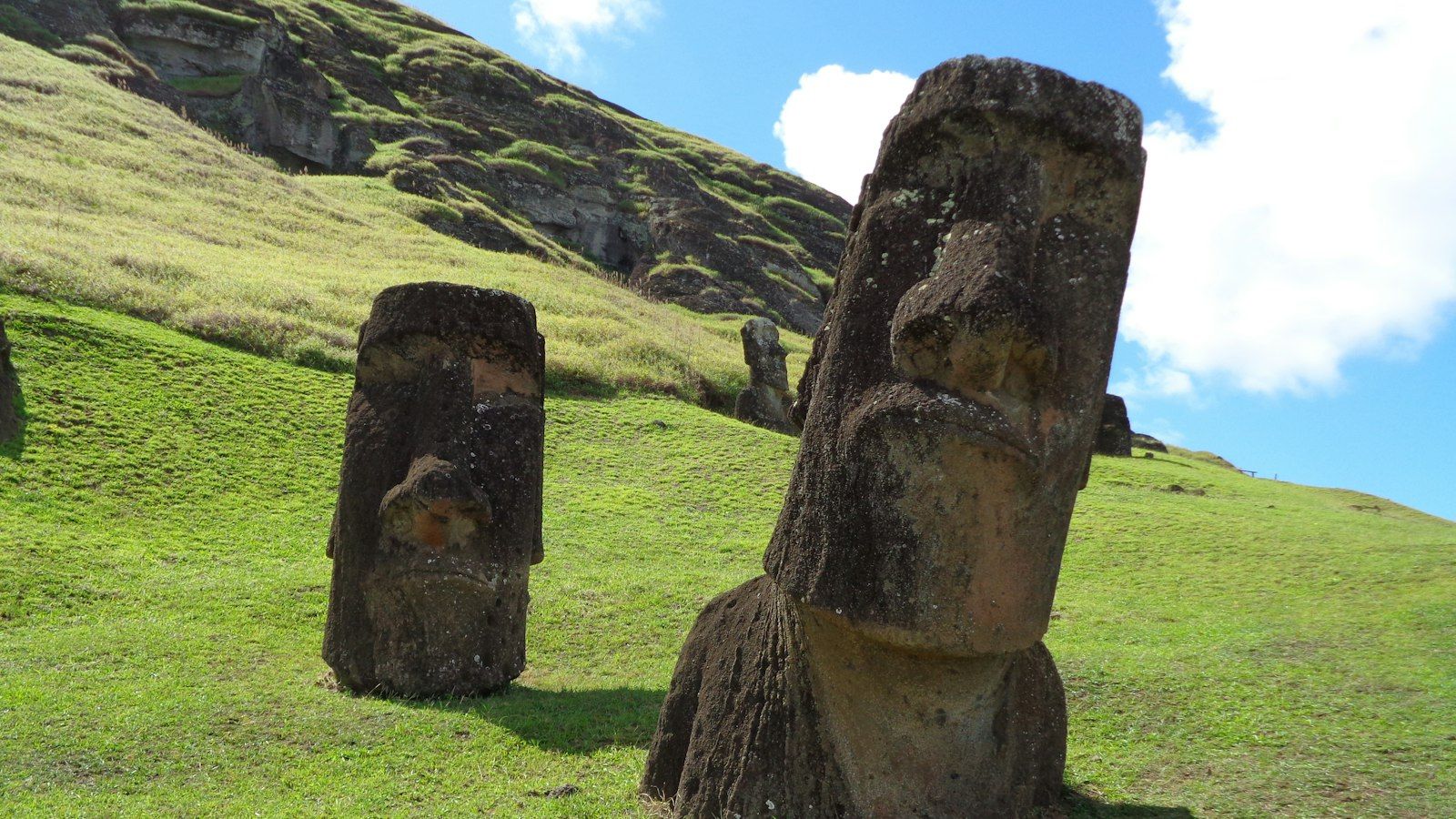
One of the world's most remote inhabited islands, where nearly a thousand moai stand on volcanic grassland, Polynesian culture is very much alive, and one small town is your base for everything.
- Best time to visit: March to April and October to November
- Daily budget (budget traveller): $95 to $295 USD
- Ideal trip length: 5 to 7 days
Easter Island, or Rapa Nui to the people who live here, sits about 3,700 kilometres off the coast of Chile in the South Pacific. Only LATAM flies here, and the island is small: about 22 kilometres long and 11 wide. Hanga Roa is the only town, and nearly every guesthouse, restaurant and tour office is within walking distance of its main street, Atamu Tekena. The island is famous for its moai, the huge stone figures carved from the Rano Raraku crater and set up on ceremonial platforms called ahu. Beyond the statues you get volcanic craters, sea caves, the Orongo Birdman village above the cliffs, and a single white coral beach at Anakena. Most of the island is Rapa Nui National Park, run by the Indigenous Ma'u Henua community. You need a paid ticket and an accredited local guide for the main sites, so you plan this trip more than you would most beach trips. Prices are high because nearly everything is shipped in. Still, solo travellers do well here. Campsite hostels, empanada counters and shared group tours keep costs down, and the island is calm, friendly and very safe.
Rapa Nui has under 8,000 residents, one town, one airline and around 900 moai. The island is a Chilean territory, but it feels Polynesian: people greet you with 'Iorana', families still cook in earth ovens, and the Indigenous Ma'u Henua community runs the national park that covers much of the island. Everything costs more than on the mainland because almost everything arrives by plane or ship. A modest double room can run 120,000 CLP, and a sit-down dinner with a drink easily passes 30,000 CLP. A cheaper version of the island exists alongside the expensive one, though. It has campsite hostels with shared kitchens, tuna empanadas for a few thousand pesos, shared minibus tours, and free sunsets at Tahai. This guide is built around the cheaper version.
Some planning has to happen before you fly. You need a booking at SERNATUR-registered accommodation, a return ticket within 30 days and the online FUI entry form, all checked at Santiago airport. Once you land, you need a national park ticket, recently raised to US$100 for foreign adults, plus an accredited guide for the controlled sites. You get only one entry each to Rano Raraku and Orongo, so don't waste them. The smart solo approach is two guided days: a full day on the east side covering Rano Raraku, Tongariki and Anakena, and a half-day in the south-west for Orongo and Rano Kau. Spend your free days on the places you can visit alone: Tahai, Anakena, the harbour, the caves and the sea.
Hanga Roa is your only base, and it works well for one person. You can walk from the Tahai headland to the harbour in about 20 minutes, past dive shops, empanada counters, a craft market and the island's museum. The pace is slow, wifi is patchy and nightlife is a few bars and a dance show. The weather is mild all year, with warm summers, cooler and windier winters, and showers that pass fast. Book flights and beds early for December to February and the Tapati festival in early February. If you can travel in March to April or October to November, you'll get softer prices and space at the quarry.
How many days in Easter Island?
For Easter Island, we recommend 5 to 7 days. With more time, add a day trip to Terevaka and Ahu Akivi or Motu Nui and the south-west coast by sea.
| Trip length | What you'll see | Itinerary |
|---|---|---|
| 2 days | Rapa Nui, sunset at Tahai; Hanga Roa, the museum and the harbour | Easter Island in 2 days |
| 3 days | Adds: Rano Raraku, Tongariki and Anakena | Easter Island in 3 days |
| 4 days | Adds: Orongo, Rano Kau and the south-west | Easter Island in 4 days |
| 5 days · Recommended | Adds: Tongariki sunrise and a beach day | Easter Island in 5 days |
| 7 days · Recommended | Adds: Dive or snorkel, then the Ana Kakenga caves | Easter Island in 7 days |
Easter Island itinerary
Land on Rapa Nui, sunset at Tahai
Morning: Fly from Santiago on the morning LATAM flight (about 5 to 5.5 hours). Set your watch back, as the island is usually two hours behind the mainland. Keep your FUI confirmation and accommodation booking handy for the checks at Santiago.
Afternoon: Arrive at Mataveri around midday or early afternoon. Take your guesthouse pick-up into Hanga Roa, check in, and buy or confirm your park ticket at the airport counter or online. Stroll down Atamu Tekena to get your bearings.
Evening: Walk north along the coast to the Tahai complex for sunset, free and with no guide needed. Grab tuna and cheese empanadas at Tía Berta on Atamu Tekena on the way back.
Hanga Roa, the museum and the harbour
Morning: Visit the anthropological museum near Tahai for the background on moai, the rongorongo script and the Birdman cult (check opening days, as it usually closes on Mondays). Then look inside the Holy Cross church for its Rapa Nui carvings.
Afternoon: Browse the craft market near the church, then walk to the Caleta Hanga Roa Otai harbour to watch turtles from the harbour wall. Dip in the tide pool at Pea and get an ice cream at Mikafé.
Evening: Ceviche and a pisco sour at Te Moana on the seafront. Book your guided tours for the next three days if you haven't already.
Rano Raraku, Tongariki and Anakena
Morning: Shared full-day guided tour along the south coast (roughly 90,000 to 160,000 CLP with lunch). Pass the toppled moai at Akahanga, then reach Rano Raraku, the moai quarry. Your ticket allows one entry, so take your time.
Afternoon: Stand before the 15 moai of Ahu Tongariki, then continue along the north coast to Te Pito Kura and its large round stone. Finish at Anakena for a swim below Ahu Nau Nau.
Evening: Back in town by late afternoon. An easy dinner of empanadas or a takeaway from the supermarket, then an early night before tomorrow's tour.
Orongo, Rano Kau and the south-west
Morning: Half-day guided tour to the rim of Rano Kau and the Birdman village of Orongo (one entry on your ticket), looking out to Motu Nui. Stop at Vinapu to see its finely fitted stonework.
Afternoon: Free afternoon. Rest, do laundry, or rent a bike for a gentle spin along the coast road. Many tours add Puna Pau, the red topknot quarry, and the seven inland-facing moai of Ahu Akivi, so ask when booking.
Evening: Book a Rapa Nui dance show, such as Kari Kari in Hanga Roa, for drums, chants and Polynesian dance. Dinner afterwards on Atamu Tekena.
Tongariki sunrise and a beach day
Morning: Guided sunrise tour to Ahu Tongariki, with pick-up before dawn and the 15 moai in silhouette. Back in town for a late breakfast.
Afternoon: Rent a scooter (roughly 20,000 to 40,000 CLP) or join a shuttle and head to Anakena for an afternoon of swimming and reading under the palms. Walk over to look at Ovahe, but keep away from the cliff face.
Evening: Ride back before dark, because loose horses on unlit roads are the real hazard. Sunset drink and dinner at Te Moai Sunset.
Dive or snorkel, then the Ana Kakenga caves
Morning: Dive or snorkel with one of the dive shops at the Hanga Roa harbour. Visibility is often superb, and it's a quick way to meet other travellers. Wear a wetsuit outside summer.
Afternoon: Join a walk to Ana Kakenga, the lava-tube cave on the north-west coast with two 'windows' in the cliff above the ocean. Bring a torch and sturdy shoes, and go with someone who knows the entrance.
Evening: Last Tahai sunset, then stay for the stars if the sky is clear. Late empanadas or ceviche in town.
Slow morning and fly out
Morning: Early stroll through town and a final look at the turtles in the harbour. Pick up po'e or a carved souvenir from the craft market. Never buy or take stones or anything from the sites.
Afternoon: Take your guesthouse transfer to Mataveri for the afternoon LATAM flight to Santiago. Check in early, as check-in can close well before departure.
Evening: Land in Santiago late evening, roughly 4.5 hours of flying plus the time change. Book a night near the airport if you have an early onward flight.
Best neighbourhoods
- Atamu Tekena (Hanga Roa centre): The main street and the island's practical heart, lined with car and scooter hire offices, tour agencies, supermarkets, cafés and Tía Berta's empanada counter. Stay here and you can walk everywhere in town.
- Caleta Hanga Roa Otai and Pea: The little fishing harbour and the seafront just south of it, with dive shops, sea turtles in the harbour, the small Pea beach and tide pool, and seafront restaurants for sunset dinners.
- Tahai: The grassy headland on the north edge of town, home to the Tahai ceremonial complex, Ahu Ko Te Riku with its restored eyes, and the island's anthropological museum. It's the free sunset spot everyone ends up at, so book here for quiet nights within a short walk of town.
- Hanga Piko and Avenida Pont: A quieter coastal strip a 15 to 20 minute walk south of the centre, near the small Hanga Piko harbour. You'll find the Mihinoa campsite hostel, family cabañas and the Nayara Hangaroa resort, with ocean views and open space.
- Mataveri: The area by the airport on the southern edge of town. It's handy for arrival and departure days, has several family-run guesthouses, and is the start of the road up to Rano Kau and Orongo.
Must-do experiences
- Walk among the moai at Rano Raraku: Visit the volcanic quarry where almost every moai was carved, with hundreds of statues still half-buried on its slopes. Your park ticket allows one entry only, so go with a good guide.
- Watch sunrise at Ahu Tongariki: See the sun come up behind the 15 restored moai on the island's largest platform, on the south-east coast about 20 kilometres from Hanga Roa. Join an early guided sunrise tour.
- Explore Orongo and the Rano Kau crater: Walk past the stone houses of the Birdman village on the rim of Rano Kau. From the top you look down into a reed-covered crater lake on one side and across to the islets of Motu Nui on the other.
- Catch sunset at Tahai: Join locals and travellers on the grass at the Tahai complex on the edge of town. You can visit without a ticket or guide, and the moai are silhouetted as the sun drops into the Pacific.
- Swim at Anakena: Spend an afternoon on the island's white coral sand beach, backed by palms and the restored moai of Ahu Nau Nau. You can visit without a guide.
- Dive or snorkel in the clearest water you've seen: Join a dive shop at the Hanga Roa harbour for visibility that often goes past 30 metres, underwater lava formations and, if you're lucky, sea turtles close to shore.
- See a traditional dance show: Book an evening performance by a Rapa Nui cultural group such as Kari Kari in Hanga Roa, with drumming, chanting and Polynesian dance in traditional dress.
Hidden gems
- Ana Kakenga, the 'two windows' sea cave on the north-west coast, where a crawl through lava tubes ends at openings in the cliff above the ocean. Bring a torch and only go with someone who knows the way
- The Rapa Nui carvings inside Hanga Roa's Holy Cross church, where Christian saints are shown with Polynesian features. Sunday morning mass, sung partly in Rapa Nui, is worth an early start
- Ovahe, a small pink-tinged beach just east of Anakena below dark cliffs. Admire it rather than lingering under the rock face, because rockfall is a real risk
- The sea turtles that drift around the Caleta Hanga Roa Otai harbour in the late afternoon, best watched from the harbour wall without touching or feeding them
- The night sky over the island. With almost no light pollution, a clear night at Tahai or on a guided stargazing tour shows the Milky Way in remarkable detail
Daily budget
- Accommodation: budget 15,000-55,000 CLP / night (camping pitch or hostel bed), mid-range 110,000-200,000 CLP (small hotel or cabaña), splurge 500,000+ CLP (Nayara Hangaroa, Explora Rapa Nui). Your stay must be registered with SERNATUR for the FUI entry form, so book through recognised platforms or direct. Many places include an airport pick-up. Book December to February months ahead, because budget beds go first.
- Food: budget 25,000-40,000 CLP / day (empanadas + supermarket), mid-range 50,000-80,000 CLP (café lunch, seafront dinner), splurge 120,000+ CLP (tasting dinners, wine, resort dining). An empanada costs roughly 4,000 to 8,000 CLP and fills you up. Supermarket prices are well above the mainland, so bring snacks, coffee and anything specialist from Santiago. A ceviche main at a seafront restaurant runs roughly 15,000 to 25,000 CLP.
- Transport: budget 0-20,000 CLP / day (walking, bike hire 10,000-20,000 CLP), mid-range 40,000-65,000 CLP (Suzuki Jimny for a day, plus fuel), splurge 200,000+ CLP (private driver-guide for the day). There are no buses. Scooters are roughly 20,000 to 40,000 CLP a day. The island has no insurance companies, so rental vehicles are generally uninsured and you cover any damage. Avoid driving after dark because of loose horses.
- Activities: budget 45,000-80,000 CLP per tour day (shared half-day tour), plus the park ticket, mid-range 90,000-160,000 CLP (shared full-day tour with lunch, or a dive), splurge 190,000-330,000+ CLP (private guide for the day). The park ticket is a one-off US$100 (about 95,000 CLP) for foreign adults since October 2025, valid for ten days. Guides are compulsory at controlled sites. Tahai, Anakena and the harbour are free. Check current tour prices when you book.
- Drinks & nightlife: budget 4,000-10,000 CLP (supermarket beer + one bar drink), mid-range 20,000-40,000 CLP (pisco sours, a dance show drink), splurge 80,000+ CLP (resort bar, wine with dinner). Nightlife means a sunset drink on the seafront, a few bars along Atamu Tekena and a cultural dance show at around 20,000 to 30,000 CLP (check when booking). Try a pisco sour and a locally brewed beer.
Where to stay
- Social hostel in Hanga Piko, Avenida Pont (15,000-90,000 CLP / night (tent pitch to private room)): Hostel Camping Mihinoa is the island's best-known budget base, an ocean-view campsite with simple rooms, a shared kitchen and barbecues about a 15-minute walk from the centre. You'll meet backpackers at the communal tables every evening. Kona Tau Hostelling on Avareipu is another option close to town.
- Boutique hotel in South Hanga Roa, near Pea (110,000-200,000 CLP / night): Small, family-run hotels like Hotel Tea Nui, just under 10 minutes' walk from the centre, give you a private room, breakfast and local hosts who help book guides. It's a calm middle ground between camping and resort prices.
- Apartment in Avenida Pont, Hanga Roa (80,000-150,000 CLP / night): Cabañas, small cottages run by island families, are the local version of an apartment. Places like Cabañas Maria Hau on Avenida Pont give you your own space and a garden, and many come with kitchenettes for cooking. Check the kitchen setup when you book.
- Splurge in Hanga Roa seafront or the countryside (450,000-1,500,000+ CLP / night): Nayara Hangaroa sits on the coast on Avenida Pont with a spa and Pacific views. Explora Rapa Nui is an all-inclusive lodge outside town with guided excursions built in.
What to eat
- Tuna empanadas: the island's signature snack, big fried or baked pastries filled with local tuna and cheese, sold at counters like Tía Berta on Atamu Tekena
- Tuna ceviche: raw local fish cured in lime with onion and coriander, on almost every seafront menu and best at lunch when the morning's catch is fresh
- Po'e: a dense, sweet Rapa Nui cake of banana or pumpkin with flour and sugar, traditionally baked in banana leaves, sold at markets and some cafés
- Umu: the traditional earth-oven feast of meat, fish, sweet potato and banana cooked on hot stones under the ground, made for festivals, family gatherings and some cultural dinners
- Tunu ahi: fresh fish cooked straight on hot volcanic stones, a traditional method a few Hanga Roa restaurants serve
- Ice cream at Mikafé: a harbourside café that locals often name as the island's best ice cream stop, with tropical fruit flavours that hit the spot after a hot tour
Day trips
- Anakena and the north coast (About 18 km from Hanga Roa across the island): Anakena is the island's main white sand beach, with palm trees and the restored moai of Ahu Nau Nau behind it. Look over at nearby Ovahe and stop at Te Pito Kura on the way. It's the best swimming on the island. Scooter, Jimny or bike (a long, hilly ride), or include it on a shared full-day east-side tour. Anakena doesn't need a guide. Te Pito Kura's access rules have changed over time, so check with your guide or host.
- Terevaka and Ahu Akivi (About 7 to 10 km inland from Hanga Roa): Ahu Akivi is the only platform with moai facing the sea. Above it, Terevaka is the island's highest point at about 500 metres, with a view of the whole island and the curve of the ocean. Book a guided hike or horseback ride through a Hanga Roa agency. Ahu Akivi is a controlled site that needs your park ticket and a guide, and rules for Terevaka can change, so check current access when you book.
- Motu Nui and the south-west coast by sea (About 1.5 km off the cliffs below Orongo): The islets where Birdman contestants once swam to collect the first sooty tern egg of the season. Dive and boat trips from Hanga Roa explore the reefs and walls around them, with superb visibility. Book with a dive shop at the Caleta Hanga Roa Otai harbour, and expect roughly 60,000 to 100,000 CLP per dive or boat trip. Trips depend on swell, so keep a backup day free.
When to visit
- Summer (December - March): 24-28°C, warm sea, humid, occasional heavy showers. Crowds: Peak, especially Christmas, January and the Tapati festival in early February. Best for swimming at Anakena and for Tapati's races, dances and contests. Flights and registered beds sell out months ahead, and guides are fully booked.
- Autumn (April - June): 20-25°C, mild days, more frequent rain from May. Crowds: Moderate in April, quiet by June. April is one of the sweet spots, with warm water still, fewer tour groups and better flight prices. Pack a rain jacket for May and June.
- Winter (July - September): 15-22°C, breezy, passing showers, cooler sea. Crowds: Low, apart from Chilean school holidays in July. Quietest and often cheapest. Good for walking and photography, and the empty sites feel special. Not one for beach days, and a windproof layer is essential.
- Spring (October - November): 18-24°C, drying out, clear skies. Crowds: Low to moderate. The locals' pick. Settled weather, green hills, easy bookings and guides with time to talk. The sea is still cool, so bring a wetsuit for diving.
Entry rules for your passport
Visa rules for Chile depend on the passport you travel on. Check the official source before you book: Chile Ministry of Foreign Affairs
Getting there
Mataveri International Airport (IPC) is on the southern edge of Hanga Roa, a few minutes from the centre. LATAM is the only airline that flies here, and Santiago (SCL) is the only reliable connection. There are roughly daily flights of about 5 to 5.5 hours, with extra departures in the December to March high season. The return takes about 4.5 hours. Round-trip fares vary hugely by season, from roughly 400,000 CLP to well over 800,000 CLP, so search one-way fares in each direction if a return search shows nothing. LATAM's old link to Papeete in Tahiti has been suspended for years, so check LATAM's site if you hope to route through the Pacific. Before you fly, you must complete the online FUI entry form, hold a return ticket within 30 days and have a booking at SERNATUR-registered accommodation. These are checked at a separate control in Santiago airport before boarding. Most guesthouses include an airport pick-up, and otherwise taxis wait outside arrivals.
Getting around
Rapa Nui has no public buses. In Hanga Roa you can walk almost everywhere, and short taxi rides around town are cheap by island standards, roughly 3,000 to 6,000 CLP. To see the island, you have three choices. Guided tours are compulsory for the controlled sites anyway, and a shared minibus tour is the easiest solo option. Hire offices on Atamu Tekena, including Oceanic, Insular and Mahinatur, rent Suzuki Jimnys and other small 4x4s for roughly 40,000 to 65,000 CLP a day, plus scooters, quads and bikes. The island has no insurance companies, so rental vehicles are generally uninsured and you pay for any damage. Take photos at pick-up and drive slowly. Horses and cattle wander the roads, especially after dark. Bikes cost roughly 10,000 to 20,000 CLP a day and work well for Tahai, Ahu Akivi and the south coast. The road out to Anakena and Tongariki is about 18 to 20 kilometres each way and hilly, so it's a full day in the saddle.
Safety
Rapa Nui is very safe for solo travellers, and violent crime is rare. Petty theft from parked rental cars and unattended beach bags does happen, so keep valuables with you. The biggest risks are on the road and in the sea. Roads are unlit and full of loose horses at night, and rental vehicles are generally uninsured. Many coastal spots have strong surges and no lifeguards. Anakena is the main safe swimming beach, while the rocky shoreline elsewhere is for looking, not swimming. Stay back from the cliff faces at Ovahe and from the cliff edges at Rano Kau and the caves. UV is strong even when it's windy and cool, so wear sunscreen and a hat. Medical facilities are limited to the hospital in Hanga Roa, so bring any medicines you need and take out travel insurance that covers evacuation. Respect the park rules: never touch or climb a moai, never step on an ahu, and never take stones. Rangers enforce this and fines are heavy. Emergency numbers are 133 for police and 131 for an ambulance.
Solo travel tips
- Sort the paperwork first: Book SERNATUR-registered accommodation, then a return flight within 30 days, then fill in the FUI online in the 21 days before you fly. Staff check it all at Santiago airport, and without it you don't board. Keep PDFs offline on your phone.
- Use shared tours to meet people: Guides are compulsory for the main sites, so a shared minibus tour becomes your social life. It's cheaper than a private guide and puts you with other travellers for the day. Swap numbers and split a Jimny for your free days.
- Plan your two one-shot sites: Rano Raraku and Orongo allow one entry each per ticket. Put them on days with good weather and a guide you trust, and don't rush them for a cheaper half-day that just ticks them off.
- Eat like a local, not a resort guest: Empanadas for lunch, ceviche at lunchtime when it's fresh, and supermarket breakfasts in a shared kitchen keep you near budget. Bring coffee, snacks and specialist foods from Santiago, where they cost half as much.
- Safety for solo travellers: Crime is rare, including for women alone. The real risks are unlit roads with horses, uninsured rental vehicles, rough sea away from Anakena and unstable cliffs. Be back in town before dark if you're riding or driving, and tell your host where you're going.
- Respect the sites and the rangers: Never touch a moai, stand on an ahu or pocket a stone. Follow the paths, show your ticket when asked and listen to the Ma'u Henua rangers. Locals notice and appreciate visitors who get this right.
Cultural etiquette
- Learn two words: 'Iorana' (hello) and 'Maururu' (thank you). Spanish is the main shared language, and English is common in tourism but patchy elsewhere.
- Never touch, lean on or climb a moai, and never step onto an ahu. The platforms are sacred and often burial sites, and fines are steep.
- Don't take stones, sand, shells or anything else from the sites or beaches, and only buy carvings from artisans, not 'found' objects.
- Follow your guide and the Ma'u Henua rangers. The park is managed by the Rapa Nui community, and the guide rule protects their heritage, so it isn't a tourist trap.
- Dress modestly for Sunday mass at the Holy Cross church, and stay respectful during the singing.
- Ask before photographing people, especially performers off stage or families at gatherings.
- Island time is real. Shops close for a long lunch on some days, Sundays are quiet, and service is relaxed, so slow down rather than push.
Frequently asked questions
How do I get from Mataveri Airport to my accommodation?
Mataveri Airport sits right on the southern edge of Hanga Roa, only a few minutes' drive from the centre. Most guesthouses, hostels and hotels include a free pick-up, often greeting you with a flower garland, so confirm this when you book. Otherwise taxis wait outside arrivals and the ride into town is short and cheap by island standards.
How many days do I need on Easter Island?
Plan five to seven days. Three or four days covers the essentials: a full-day guided tour of Rano Raraku, Tongariki and Anakena, a half-day at Orongo and Rano Kau, and a Tahai sunset. With a week you can add a Tongariki sunrise, diving, cave walks and slow days in Hanga Roa without rushing. Your park ticket lasts ten consecutive days.
When is the best time to visit Easter Island?
March to April and October to November give you mild temperatures, fewer crowds and easier bookings. December to February is warmest and best for swimming at Anakena, but it's peak season. Flights and beds sell out around the Tapati Rapa Nui festival in early February. June to September is cooler, windier and showery, but quiet and often cheaper.
Do I need a guide to visit the moai?
For most major sites, yes. Since the island reopened in 2022, the controlled sites of Rapa Nui National Park, including Rano Raraku, Ahu Tongariki and Orongo, can only be visited with a guide accredited by the Ma'u Henua community, and rangers check at the entrances. The Tahai complex and Anakena beach are open to independent visitors. Book tours ahead in December to March, when guides are busiest.
How much is the Rapa Nui National Park ticket?
The ticket rose from US$80 to US$100 for foreign adults on 1 October 2025, according to several recent sources. Some websites still show the old price, so check the official Rapa Nui National Park site before you buy. It's valid for ten consecutive days from your first site visit, and Rano Raraku and Orongo allow one entry each. You can buy it online or at the counter at the airport. It doesn't include a guide.
Can I use my card everywhere?
Cards work at most hotels, tour agencies, supermarkets and sit-down restaurants, but carry Chilean pesos for empanada counters, market stalls, small guesthouses and taxis. Hanga Roa has only a few ATMs and they can run low at weekends, so bring some cash from the mainland. Many tour operators and hotels also accept US dollars.
Is Easter Island safe for solo female travellers?
Yes. Rapa Nui is one of the safest places in South America for women travelling alone, with a small, close-knit community and very little crime. Usual precautions still apply. Avoid isolated spots after dark, don't drive or cycle on unlit roads at night, keep an eye on your drink in bars, and let your accommodation know your plans if you head off to a remote site.
What entry rules apply to travellers visiting Easter Island in 2026?
You first need to meet Chile's normal entry rules, and many nationalities can visit visa-free for tourism. For Rapa Nui itself, you must complete the online Formulario Único de Ingreso (FUI), usually within the 21 days before your flight. You also need a return ticket for a stay of no more than 30 days and a booking at accommodation registered with SERNATUR, or an official invitation from a resident. LATAM and the police check these at Santiago airport before boarding. Rules change, so confirm the details on the official Chilean government FUI portal (ingresorapanui.interior.gob.cl) and your own government's travel advice before you book.
Tours and activities in Easter Island | Easter Island in 2 days | Easter Island in 3 days | Easter Island in 4 days | Easter Island in 5 days | Easter Island in 7 days
Joy Plus home | Destinations | Itineraries | Activities | Flights | Budget planner | Calendar | Map | Blog | Lifetime access