Destinations / North America
Flagstaff, United States travel guide
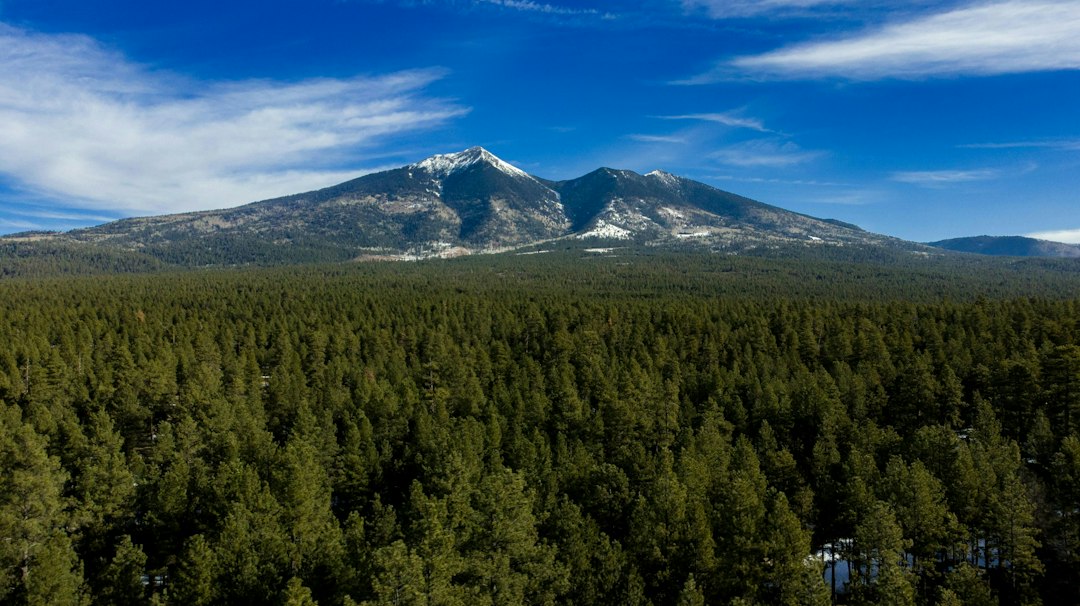
Pine-forest mountain town at 7,000ft, gateway to the Grand Canyon and dark skies.
- Best time to visit: May-June, September-October
- Daily budget (budget traveller): $120 to $300 USD
- Ideal trip length: 3 to 4 days
Flagstaff sits in the world's largest ponderosa pine forest, an hour and a half from the Grand Canyon's South Rim and snow-capped for half the year. Route 66 runs through a brick downtown full of breweries and climbing shops, Lowell Observatory sits on a hill above it, and the San Francisco Peaks rise to nearly 12,700ft on the edge of town. It is the rare desert-state base where you hike in the morning and need a jacket by evening.
Flagstaff sits at about 6,900ft inside the largest contiguous ponderosa pine forest on earth, and it behaves like no other town in Arizona. It gets around 100 inches of snow a season, so you can ski in March and be in a desert canyon by lunch. Downtown is a few blocks of Route 66 brick with breweries, roasters, outfitters and a Santa Fe depot where BNSF freight trains rumble through dozens of times a day. You will hear the horns from your bed, and after a night or two you will like them. Northern Arizona University keeps the town young, and the San Francisco Peaks, Arizona's highest ground at 12,633ft, fill the north horizon.
What makes Flagstaff work is geography. It is the most practical base for the Grand Canyon South Rim (about 90 minutes), Sedona (45 minutes), Walnut Canyon (15 minutes), Sunset Crater and Wupatki (35 minutes), and Antelope Canyon and Horseshoe Bend at Page (about 2.5 hours). It also became the world's first International Dark Sky City in 2001, and the rules still hold: warm, shielded streetlights and a Milky Way you can see from the edge of town. Lowell Observatory, where Clyde Tombaugh found Pluto in 1930, runs evening telescope programs on the hill above downtown.
Plan around three things: altitude, driving and weather. Take day one easy, drink more water than feels sensible, and save big hikes for day two or later. Every major sight needs a car, so build days around one anchor trip instead of cramming the canyon, Sedona and Page into a single marathon. In summer be off exposed ridges by early afternoon, because monsoon lightning is real. In winter, check road conditions before leaving town. Do it right and you hike in the morning, drink a pint of local beer at dusk, and still need a jacket at night.
How many days in Flagstaff?
For Flagstaff, we recommend 3 to 4 days.
| Trip length | What you'll see | Itinerary |
|---|---|---|
| 2 days | Acclimate, downtown and Buffalo Park; Grand Canyon South Rim at sunrise | Flagstaff in 2 days |
| 3 days · Recommended | Adds: Oak Creek Canyon and Sedona | Flagstaff in 3 days |
| 4 days · Recommended | Adds: Walnut Canyon, Sunset Crater, Wupatki and Lowell | Flagstaff in 4 days |
| 5 days | Adds: Page: Antelope Canyon and Horseshoe Bend | Flagstaff in 5 days |
| 7 days | Adds: San Francisco Peaks and the brewery trail; Lava River Cave | Flagstaff in 7 days |
Flagstaff itinerary
Arrive, acclimate, downtown and Buffalo Park
Morning: Land at Phoenix Sky Harbor, pick up the car and drive I-17 north (about 2h15). Stop at Rock Springs Cafe (exit 242) for pie and a leg stretch.
Afternoon: Check in, drink water, walk Heritage Square and the Route 66 blocks. At 4pm do the easy two-mile Buffalo Park loop with Peaks views at 7,300ft.
Evening: Dinner at Pizzicletta (wood-fired pizza on Phoenix Ave). One pint at Mother Road Brewing, then bed early. Altitude tires you out.
Grand Canyon South Rim at sunrise
Morning: Fill the tank in Flagstaff and leave about two hours before sunrise via Highway 180. Catch first light at Mather Point, then coffee at the Canyon Coffee House in Bright Angel Lodge (mornings only).
Afternoon: Walk the Rim Trail to Yavapai Geology Museum. In peak season ride the free Hermit Road shuttle (Red Route, cars banned March to November) and stop at Hopi Point.
Evening: Sunset at Hopi Point, then drive back by 9pm. Late pint and fries at Collins Irish Pub downtown.
Oak Creek Canyon and Sedona
Morning: Coffee at Late for the Train, then Highway 89A south through Oak Creek Canyon. Stop at Oak Creek Vista for the view and craft stalls. Slide Rock State Park at 8am opening (about $30 per vehicle in high season).
Afternoon: Sedona proper: hike Cathedral Rock (Red Rock Pass $5/day) and wander Tlaquepaque. Lunch at Elote Cafe if you can get a table, otherwise tacos in the village.
Evening: Back to Flagstaff via 89A or I-17. Diablo Burger at Heritage Square for the local beef, then a flight at Historic Brewing Barrel + Bottle House.
Walnut Canyon, Sunset Crater, Wupatki and Lowell
Morning: Walnut Canyon Island Trail at 9am opening (one mile, 240 steps down to cliff dwellings). Then US 89 north to Sunset Crater and the Lava Flow Trail.
Afternoon: Continue the 34-mile loop to Wupatki Pueblo and Wukoki. Pack a picnic and water, since there is little shade or food out here.
Evening: Dinner at Tinderbox Kitchen, then a timed evening program at Lowell Observatory (about $30). Bring a warm layer for the telescope domes.
Page: Antelope Canyon and Horseshoe Bend
Morning: Leave by 6:30am up US 89 (about 2h30), with a coffee stop at Cameron Trading Post. Book an Upper Antelope Canyon tour for 10am-1pm for the light beams. Tours run $90-140, so book weeks ahead.
Afternoon: Horseshoe Bend (parking $10, 1.5 miles round trip), then lunch at Big John's Texas BBQ in Page. Start back by 3pm.
Evening: Navajo taco and frybread at Cameron Trading Post on the way home, then an early night. Check clocks: the Navajo Nation observes daylight saving time and the rest of Arizona does not.
San Francisco Peaks and the brewery trail
Morning: Ride the Arizona Snowbowl Skyride to 11,500ft at opening (summer and early fall, about $30-40). In early October swap it for the Inner Basin Trail at Lockett Meadow to see the aspens.
Afternoon: Museum of Northern Arizona on Fort Valley Road (about $20) for Colorado Plateau geology and Native art. Then a lazy hour at Buffalo Park.
Evening: Dinner at Josephine's, then the Flagstaff Brewery Trail: Historic Brewing, Wanderlust, Dark Sky Brewing. Finish at the Museum Club for live country if you want a night out.
Slow morning, Lava River Cave, depart
Morning: Macy's European Coffee House, then Lava River Cave (May to October, mile-long lava tube at about 42°F, bring headlamps and a jacket; dirt Forest Road 171, check Coconino National Forest for any rules).
Afternoon: Last Route 66 wander past the Hotel Weatherford, a few vintage shops on Aspen Ave and lunch at Brandy's.
Evening: Drive I-17 south, leave by 2pm to reach Phoenix for an evening flight. Fill up before the long descent.
Best neighbourhoods
- Historic Downtown: Route 66 brick blocks with breweries, coffee roasters and the train depot.
- Southside: Walkable arts and food district just across the tracks from downtown.
- NAU / University Heights: Student energy, cheap eats and easy access to the Lake Mary corridor.
- East Flagstaff: Chain hotels and the best value lodging near the I-40 interchange.
- Fort Valley: Pine cabins on the road to Snowbowl and the Arizona Trail.
Must-do experiences
- Grand Canyon South Rim day trip: About 90 minutes each way; go at sunrise or sunset for the best light. As of October 2026 the rim is open for day visits under water restrictions, so bring drinking water.
- Lowell Observatory: Where Pluto was discovered, with nightly telescope viewing in dark skies.
- Snowbowl scenic gondola: Ride to 11,500ft for views across the Painted Desert and Grand Canyon.
- Walnut Canyon National Monument: Cliff dwellings tucked into a ring-shaped canyon 15 minutes from town.
Hidden gems
- Sunset Crater and Wupatki loop drive, lava fields beside red pueblo ruins
- Lava River Cave, a three-quarter-mile lava tube that stays near freezing
- Buffalo Park's easy two-mile loop with full San Francisco Peaks views
- Aspen groves on the Inner Basin Trail, gold in the first week of October
Daily budget
- Accommodation: budget $90-130 / night (East Flagstaff motel), mid-range $170-260 (Hotel Weatherford, Hotel Monte Vista, Residence Inn), splurge $300+ (Little America, a Fort Valley cabin). Rates spike July-August, ski weekends and NAU graduation in May. Taxes add roughly 13-14%. Midweek is far cheaper.
- Food: budget $30-45 / day (bagels at Biff's, burritos, grocery picnics from Fry's or Safeway), mid-range $65-100 (Diablo Burger lunch, Pizzicletta dinner), splurge $150+ (Brix or Tinderbox Kitchen with wine). Brandy's and Macy's are the local breakfast picks. Pack a cooler, since food at the Grand Canyon costs far more than in town.
- Transport: budget $5-10 / day (walk downtown, Mountain Line bus at about $1.25) plus a shared car on canyon days, mid-range $60-90 (rental car plus gas), splurge $300+ (private driver or guide to the canyon). You need a car for every major sight. Rent at Phoenix Sky Harbor for $45-80/day, usually cheaper than Flagstaff.
- Activities: budget $0-25 / day (Buffalo Park, FUTS trails, national forest hikes, Walnut Canyon), mid-range $60-110 (Grand Canyon $35/vehicle, Lowell about $30, Skyride about $30-40), splurge $250+ (Antelope Canyon tour $90-140, canyon helicopter $300+). From 2026 non-US residents pay an extra $100 per person at Grand Canyon. Check nps.gov. The $80 America the Beautiful pass pays off for US residents.
- Drinks & nightlife: budget $8-15 (a pint at Mother Road or Beaver Street, happy hour), mid-range $25-40 (brewery trail flights, a cocktail at Hotel Monte Vista), splurge $60-100 (Brix wine flight, whiskey bar nights). Flagstaff goes to bed early by city standards. Taproom pints run $6-8 and flights $12-15. Tip $1-2 a beer.
Where to stay
- Budget stay in Southside / Downtown (Rates vary by season): True dorms are rare in Flagstaff, so look for a budget motel near the Amtrak depot and Mother Road Brewing.
- Boutique hotel in Historic Downtown ($150-260 / night): Hotel Weatherford (1900) or Hotel Monte Vista (1927), vintage rooms with bars downstairs, walking distance to everything. Ask for a room away from the tracks.
- Apartment in Southside or Fort Valley ($110-190 / night): A casita or pine cabin on Airbnb or VRBO with a kitchen, handy for early canyon starts and cooking. Best value for 4+ nights or groups.
- Splurge in East Flagstaff ($260-420 / night): Little America Flagstaff, big rooms in a pine-shaded setting a short drive from downtown, with an easy run to the I-40 junction.
What to eat
- Green chile and Sonoran-style breakfast burritos downtown
- Craft beer flights on the Flagstaff Brewery Trail
- Navajo frybread tacos from roadside stands north of town
- High-altitude bakery pastries before an early Grand Canyon start
Day trips
- Grand Canyon South Rim (80 miles, 90 min by car): Mather Point, the Rim Trail and Hermit Road sunsets. Go before dawn, because parking fills by 9am in peak season. Entry is $35 per vehicle for seven days, and from 2026 non-US residents pay an additional $100 per person (check nps.gov). Highway 180 north-west from Flagstaff, or US 89 and Highway 64 through Cameron to Desert View for a scenic loop. Fill up in Flagstaff first.
- Sedona (28 miles, 45 min by car): Red rock trails like Cathedral Rock and Devil's Bridge, plus Slide Rock State Park along Oak Creek Canyon. Go early, since parking and trailheads fill fast. Highway 89A south through Oak Creek Canyon (switchbacks). Red Rock Pass is $5/day, and the Sedona Shuttle serves some trailheads.
- Page: Antelope Canyon and Horseshoe Bend (135 miles, about 2h30 by car): Navajo-guided slot canyon tours ($90-140, book weeks ahead) and the Colorado River overlook at Horseshoe Bend (parking $10). A long day, best with an early start. US 89 north via Cameron and Bitter Springs. Book Upper or Lower Antelope Canyon through Navajo-run operators before you go.
When to visit
- Spring (April - June): April 5-15°C (41-59°F) with late snow possible, May-June 12-25°C (54-77°F), dry and windy, cold nights. Crowds: Building, Grand Canyon busy by May. Late May to mid June is the sweet spot: clear skies, open forest trails, Snowbowl Skyride usually opens around Memorial Day. June is driest, so watch for fire restrictions.
- Summer (July - August): 22-28°C (72-82°F) days, 8-12°C nights, afternoon monsoon storms. Crowds: Heavy, Grand Canyon parking full by 9am. The greenest forest and cheap relief from Phoenix heat, but plan hikes for mornings and be off ridges by noon. Sedona runs 8-10°C hotter, so go early.
- Autumn (September - October): September 20-25°C, October 10-18°C (50-64°F), nights near freezing, crisp and clear. Crowds: Moderate, peaks the first two weeks of October. The best season. Aspens on the Peaks turn gold in early October (Inner Basin, Lockett Meadow, Kachina Trail), skies are sharp and trails are quiet.
- Winter (November - March): -8 to 6°C (18-43°F), heavy snow, about 100 inches a season. Crowds: Low, except ski weekends and holidays. Cheap midweek rooms, a snow-dusted Grand Canyon and powder at Snowbowl. Carry chains, and check AZ511 before any drive on I-17 or Highway 180.
Entry rules for your passport
Visa rules for the United States depend on the passport you travel on. Check the official source before you book: U.S. Department of Homeland Security
Getting there
Flagstaff Pulliam Airport (FLG) is about 4 miles south of downtown, but flights are limited, mostly American to Phoenix. Most visitors fly into Phoenix Sky Harbor (PHX) and drive 144 miles north on I-17, about 2h15 without traffic. Groome Transportation runs shuttles from PHX to Flagstaff for roughly $55-75 one way. Amtrak's Southwest Chief stops at the Santa Fe depot downtown (1 E Route 66) once a day each way, often at awkward hours, so check times; it takes about 10 to 11 hours from Los Angeles. From Las Vegas it is about 4 hours by car via US-93 and I-40. Rent a car at PHX for $45-80/day, since you need one for every major sight. In winter, check AZ511 for chain requirements and closures on I-17 and Highway 180.
Getting around
Flagstaff Pulliam Airport has limited flights; most visitors fly into Phoenix and drive two and a quarter hours north on I-17, or arrive on Amtrak's Southwest Chief, which stops downtown. A car is essential for canyons and monuments. Downtown itself is walkable, and Mountain Line buses cover town and the university.
Safety
Flagstaff is a safe small city. Altitude is the real issue: at 7,000ft, hikers arriving from sea level should hydrate and take the first day easy. Winter brings serious snow, so check I-17 and Highway 180 conditions and carry chains. Summer monsoons from July to September bring afternoon lightning, so be off exposed ridges by early afternoon.
Solo travel tips
- Taprooms are the social scene: Mother Road, Historic Brewing and Beaver Street all have communal tables and regulars who talk. Sit at the bar, ask what is new on tap, and trail tips follow within one pint.
- Split a car, skip the tour: Solo rental costs sting. Ask a Flagstaff Facebook travel group to split gas and the $35 park fee, or take a small-group tour for $140-190 on the days you do not want to drive.
- Hike smart, solo: Download offline maps, tell someone your route, carry two litres of water and be off ridges before afternoon lightning in July to September. Cell coverage vanishes on Highway 180 and on the Peaks.
- Solo female travellers: Flagstaff is a safe college town. The main crime is car break-ins at trailheads, so clear your car, lock it and leave nothing visible. Stick to marked trails in the evenings, and book dark-sky programs at Lowell instead of wandering.
- Find your tribe at the climbing gym or Lowell: Flagstaff Climbing Center day passes are about $20 and full of friendly regulars. Lowell's evening programs and summer events at Heritage Square are easy places to chat with other travellers.
Cultural etiquette
- The San Francisco Peaks are sacred to the Hopi, Navajo, Zuni and other nations. Stay on marked trails, especially above treeline where alpine tundra is fragile.
- Ask before photographing people at roadside stands or on the Navajo Nation, and buy crafts and frybread directly from the vendors.
- The Navajo Nation observes daylight saving time while the rest of Arizona does not, and alcohol is prohibited there. Check clocks and leave the beer in town.
- Flagstaff is a dark sky city: use warm or red lights at night, skip high beams, and never shine white light at stargazers at Lowell or on trails.
- Tip 18-20% at sit-down restaurants, $1-2 per beer at taprooms, and a few dollars to guides at the end of a tour.
- Respect fire restrictions. In dry months campfires are often banned, and fines are heavy. Check Coconino National Forest before camping.
- Yield to uphill hikers and bikers on trails, give elk and deer plenty of room, and watch for wildlife on roads at dusk.
Frequently asked questions
What is the best time to visit Flagstaff?
May-June and September-October are ideal, with daytime highs around 20-26C, cool nights and clear skies. July and August bring afternoon monsoon storms but the greenest forest. Winter is a genuine ski season with heavy snow, and spring can be windy. Autumn aspen colour peaks in the first half of October.
How far is Flagstaff from the Grand Canyon?
About 80 miles to the South Rim's Grand Canyon Village, roughly 90 minutes by car via Highway 180 or the slightly longer Highway 64 route through Tusayan. It is the most popular and affordable base for the canyon, with far cheaper lodging than inside the park. As of October 2026 the park's own hotels are closed after a flash flood cut the South Rim's water supply, which makes Flagstaff the obvious base: check the park's alerts page before you go.
How many days do you need in Flagstaff?
Three days covers a Grand Canyon day trip, a Sedona or monuments day and a night at Lowell Observatory with time downtown. Four days lets you add Antelope Canyon and Horseshoe Bend, or a proper hike on the San Francisco Peaks.
Is Flagstaff worth visiting on its own?
Yes. Beyond being a canyon base, it has an excellent brewery and coffee scene, the world's first International Dark Sky City designation, ancient cliff dwellings, volcanic landscapes and Arizona's highest peaks. Many visitors who plan one night end up staying three.
Does it snow in Flagstaff?
Heavily. Flagstaff averages around 100 inches a season, making it one of the snowiest cities in the US. Arizona Snowbowl runs lifts typically from December into April. Winter road closures on Highways 180 and 89A do happen, so check conditions before driving.
Do you need a car in Flagstaff?
Downtown is walkable and buses cover the city, but every major attraction, from the Grand Canyon to Sunset Crater, needs a vehicle. Tour shuttles run to the canyon daily if you prefer not to drive, but a rental gives far more flexibility.
Is Flagstaff expensive?
It is mid-range. Lodging is much cheaper than inside Grand Canyon National Park or in Sedona, with plenty of motels near I-40, though prices spike in July, August and on ski weekends. Food, breweries and most attractions are affordable; the park entry fee is $35 per vehicle for seven days, plus $100 per person for visitors aged 16 and over who are not US residents.
Do foreign visitors pay more at US national parks?
At 11 of the busiest, yes. Since 1 January 2026, visitors who are not US residents and are aged 16 or over pay US$100 per person on top of the normal entrance fee at Acadia, Bryce Canyon, Everglades, Glacier, Grand Canyon, Grand Teton, Rocky Mountain, Sequoia and Kings Canyon, Yellowstone, Yosemite and Zion. A US$250 annual pass for non-residents covers that fee for everyone in one vehicle, and is usually cheaper for a group or for more than one park.
Do I need a visa or an ESTA to visit the United States?
Travellers from the 42 Visa Waiver countries, including most of the EU, the UK, Japan and Australia, do not need a visa for stays of up to 90 days but must get an ESTA online before travelling. It costs about $40 since 30 September 2025 and is valid for two years or until your passport expires. Apply at least 72 hours ahead on the official site, esta.cbp.dhs.gov, and avoid lookalike sites that charge more.
Tours and activities in Flagstaff | Flagstaff in 2 days | Flagstaff in 3 days | Flagstaff in 4 days | Flagstaff in 5 days | Flagstaff in 7 days
Can't decide? Compare Flagstaff with...
Joy Plus home | Destinations | Itineraries | Activities | Flights | Budget planner | Calendar | Map | Blog | Lifetime access