Destinations / South America
Florianópolis, Brazil travel guide
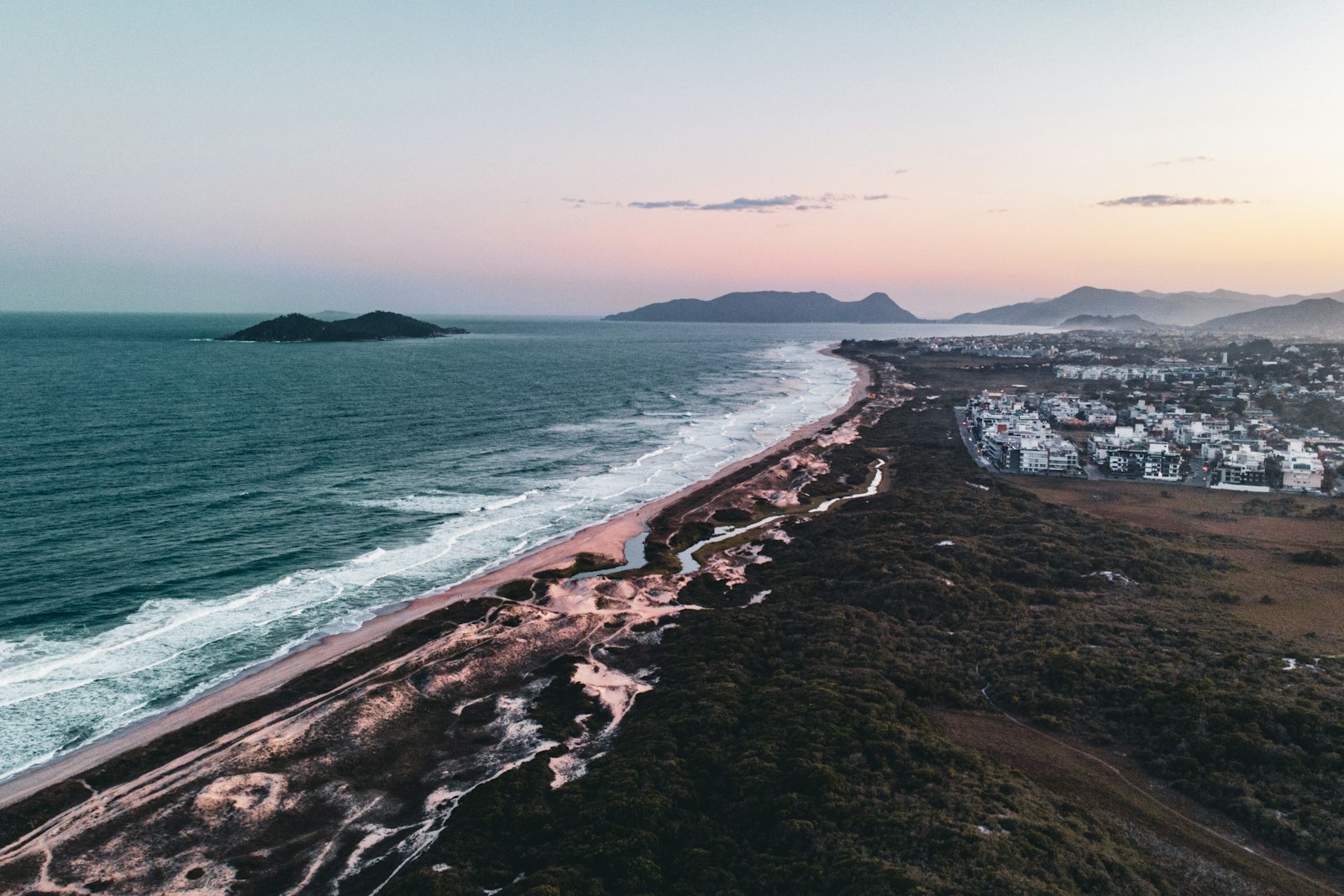
Brazil's island of 42 beaches, where surf, lagoons and dunes meet a buzzing summer scene.
- Best time to visit: December-March (summer) for beaches; March-May for fewer crowds
- Daily budget (budget traveller): $50 to $120 USD
- Ideal trip length: 4 to 5 days
Florianópolis, fondly called Floripa, is a sun-soaked island city in southern Brazil ringed by some 42 beaches, from wild surf strands and tranquil bays to a vast lagoon and towering sand dunes. The south is rustic and laid-back, the north buzzes with beach clubs and nightlife, and the centre keeps a colonial Azorean charm. It's one of Brazil's safest and highest-quality-of-life cities, beloved by surfers, families and partygoers alike. Joy Plus matches beaches to your mood and the wind, sequences the island's far-flung corners, and times the nightlife so you never zigzag across the island.
Florianópolis is not one beach town, it is a 54km-long island with 42 beaches and at least five different personalities. Lagoa da Conceição is the lively middle, with a lagoon, restaurants, watersports and a bar scene on Rua Laurindo Januário da Silveira. East of it, Praia Mole, Joaquina and the giant Joaquina dunes belong to surfers and sandboarders. The south (Campeche, Armação, Pântano do Sul, Naufragados) is rustic, with fishing villages and trails. The north (Jurerê, Canasvieiras, Ingleses) is flat, calm and built for families and beach clubs. Centro, on the western side facing the mainland, is where you find the Ponte Hercílio Luz and the Mercado Público.
The island's real logic is wind and distance. A cold front with a southerly wind flattens the north-facing bays of Jurerê and Canasvieiras, while the east coast gets swell. When the north wind blows, you swap. Check Windguru or Surfguru the night before, pick the beach that matches, and the day works. Distance is the other trap. Lagoa to Jurerê can take 25 minutes at 7am and 1h15 on a January Saturday. The best trick is to cluster: one day east (Lagoa, Joaquina, Mole), one day south (Campeche, Ribeirão da Ilha, Pântano do Sul), one day north, and never cross the island twice.
Prices swing hard by season. Between Christmas and Carnival (mid-December to early March), everything is two to three times the low-season rate, and Argentine and Uruguayan visitors fill the north. Come in March to May, or October to November, and you get warm days, swimmable water, uncrowded trails and fair prices. The food is rooted in the Azorean settlers who arrived in the 1740s, so think oysters from Ribeirão da Ilha, shrimp feasts (sequência de camarão), fish stews and manioc pirão. Eat like a local and you pay roughly half what the beach kiosks charge.
How many days in Florianópolis?
For Florianópolis, we recommend 4 to 5 days. With more time, add a day trip to Praia do Rosa and Garopaba or Bombinhas.
| Trip length | What you'll see | Itinerary |
|---|---|---|
| 2 days | Lagoa, sunset at the lookout; East coast: Joaquina dunes, Mole and Barra da Lagoa | Florianópolis in 2 days |
| 3 days | Adds: Campeche and the surf | Florianópolis in 3 days |
| 4 days · Recommended | Adds: South island: Ribeirão da Ilha and Pântano do Sul | Florianópolis in 4 days |
| 5 days · Recommended | Adds: Lagoinha do Leste hike | Florianópolis in 5 days |
| 7 days | Adds: Santo Antônio de Lisboa and Centro; North beaches | Florianópolis in 7 days |
Florianópolis itinerary
Arrive, settle in Lagoa, sunset at the lookout
Morning: Land at FLN (12km south of Centro). Uber or 99 to Lagoa, R$ 70-100. Drop bags and have a tapioca and coffee on Avenida das Rendeiras.
Afternoon: Rent a SUP or kayak on the lagoon (R$ 100-130 for an hour or two). Walk the waterfront and the lagoon-side streets.
Evening: Drive or ride up to the Mirante da Lagoa for sunset, then dinner and caipirinhas on Rua Laurindo Januário da Silveira. Early night.
East coast: Joaquina dunes, Mole and Barra da Lagoa
Morning: Be at Dunas da Joaquina by 9am, before the heat. Rent a board at the base stands (R$ 30-40 for an hour) and slide.
Afternoon: Walk or ride to Praia Mole for beers on the sand and surfers to watch. Late lunch in Barra da Lagoa, where fishing boats still land fish.
Evening: Return to Lagoa. Dinner at a seafood place by the water and a quiet drink at one of the lagoon-side bars.
Campeche and the surf
Morning: Surf lesson at Campeche or Matadeiro (R$ 150-200 for a 2-hour group session, board and lycra included).
Afternoon: Eat a por quilo lunch near the beach. Walk Campeche to the quieter Morro das Pedras end of the sand.
Evening: Dinner in Campeche or Rio Tavares, then home. Check next day's wind and swell on Windguru.
South island: Ribeirão da Ilha and Pântano do Sul
Morning: Drive south along the coast. Stop in Ribeirão da Ilha for oysters at Ostradamus and a walk past the Azorean houses and oyster farms.
Afternoon: Continue to Armação and Pântano do Sul for lunch (Bar do Arante is the classic fish stop). Swim at the nearby beach.
Evening: Return before dusk, because south roads are dark and winding. Easy dinner at the hostel or pousada.
Lagoinha do Leste hike
Morning: Start at 8am from the Pântano do Sul trailhead (about 3km, roughly 1h45 each way, steep in places). Bring 2L of water, repellent and trail shoes.
Afternoon: Swim and nap on Lagoinha do Leste, one of the island's wildest beaches. Be back on the trail by 3pm so you finish before dark.
Evening: Hot shower, dinner and a very early night. Quads will hurt tomorrow.
Santo Antônio de Lisboa and Centro
Morning: Drive north to Santo Antônio de Lisboa, an Azorean village on the water. Coffee and a wander through the cobbled streets.
Afternoon: Head to Centro. Walk the Mercado Público, have a drink at Box 32, then walk onto the Ponte Hercílio Luz at golden hour.
Evening: Dinner in Centro, then back to Lagoa. Or stay downtown for a quiet night and an early ride to Jurerê tomorrow.
North beaches and departure
Morning: Early swim at Jurerê or Canasvieiras, where the water is calm and shallow. Beat the beach-club traffic by arriving before 10am.
Afternoon: Lunch on the sand. In summer, stay for a sunset beach club session. In other months, head to the airport early.
Evening: Uber to FLN. In peak season allow 90 minutes for traffic from the north.
Best neighbourhoods
- Lagoa da Conceição: The lively lagoon hub with restaurants, bars, watersports and a central party scene.
- Jurerê Internacional: The upscale north-island beach with chic beach clubs and summer nightlife.
- Campeche & Armação (south): Laid-back surf beaches with a rustic, bohemian feel and natural beauty.
- Centro: The historic downtown with the market, colonial architecture and the bridge landmark.
- Praia Mole & Joaquina: Surf-favourite beaches near the dunes, popular with a young, active crowd.
Must-do experiences
- Beach-hop the island: Sample contrasting beaches from wild surf strands to calm family bays.
- Sandboard the Joaquina dunes: Slide down the huge sand dunes near Joaquina beach.
- Explore Lagoa da Conceição: Kayak, paddleboard or dine around the island's scenic central lagoon.
- Surf at Praia Mole or Campeche: Catch waves at some of southern Brazil's best surf breaks.
- Visit the south island: Discover rustic fishing villages and trails to secluded beaches like Lagoinha do Leste.
- Party in Jurerê: Experience the famous beach-club nightlife of Jurerê Internacional in summer.
Hidden gems
- The hike to Lagoinha do Leste, a pristine beach reachable only on foot or by boat.
- Fresh oysters at Ribeirão da Ilha, the island's Azorean oyster-farming village.
- Sunset over the lagoon from the Lagoa lookout (Mirante da Lagoa).
- Quiet Praia dos Naufragados at the island's wild southern tip.
Daily budget
- Accommodation: budget R$ 90-160 / night (hostel dorm, up to R$ 250 in January), mid-range R$ 450-800 (pousada double, R$ 900+ in peak), splurge R$ 1,500+ (Jurerê Beach Village, Costão do Santinho, Awasi Santa Catarina). Lagoa and Campeche have the best value. Jurerê is the priciest per square metre. Many places enforce 5-night minimums over New Year.
- Food: budget R$ 90-130 / day (por quilo lunch, pastel, tapioca), mid-range R$ 200-320 (seafood lunch + one nice dinner), splurge R$ 450+ (sequência de camarão for two, oyster tasting, wine). Por quilo buffets run R$ 90-130/kg, so a plate costs R$ 35-55. Oysters at Ribeirão da Ilha are R$ 40-70 a dozen, half the Lagoa price.
- Transport: budget R$ 15-30 / day (city bus, about R$ 7 a ride, via terminals), mid-range R$ 120-200 (Uber and 99 mix or a scooter at R$ 120-160/day), splurge R$ 350+ (rental car R$ 250-450/day in summer plus fuel). Buses are slow and need transfers at TICEN, TILAG or TIRIO. A car is easiest for the south, but traffic around Beira-Mar and the SC-401 is brutal in January.
- Activities: budget R$ 0-60 / day (beaches free, sandboard rental R$ 30-40), mid-range R$ 200-350 (surf lesson R$ 150-200, SUP on the lagoon R$ 100-130), splurge R$ 600+ (Ilha do Campeche boat trip, paragliding R$ 450-600, private boat). Dunas da Joaquina sandboarding is cheap and silly. Ilha do Campeche has capped visitor numbers, so book ahead.
- Drinks & nightlife: budget R$ 40-70 (chopp R$ 10-15, 600ml beer R$ 14-20), mid-range R$ 120-220 (caipirinhas R$ 22-35, bar in Lagoa), splurge R$ 400+ (Jurerê beach club entry and table, P12-style night). Beachfront kiosks charge R$ 25-35 for a caipirinha. Buy water and beer at the mercadinho and sit under your own umbrella.
Where to stay
- Social hostel in Lagoa da Conceição (R$ 90-160 / night (R$ 160-250 in January)): The best base for solo travellers, with hostels a short walk from bars, restaurants, SUP rentals and the bus terminal TILAG. Look for a pool, shared kitchen and a free caipirinha night.
- Boutique hotel in Campeche or Armação (R$ 450-800 / night (R$ 900+ in peak season)): Small pousadas with gardens and breakfast, a short walk to surf beaches and far from the party noise. Good base for the south and Ilha do Campeche boats.
- Apartment in Campeche, Lagoa or Barra da Lagoa (R$ 300-600 / night (R$ 600-1,100 in peak)): Self-catering flats let you shop at the local mercadinho and cook, cutting food costs. Best value for 5+ nights, but check for a 5-night minimum in January.
- Splurge in Jurerê Internacional or Ingleses (R$ 1,500-3,500 / night): Beachfront resorts such as Jurerê Beach Village and Costão do Santinho, with pools, kids' clubs and beach clubs on the doorstep. For a secluded option, Awasi Santa Catarina (the former Ponta dos Ganchos) sits across the bay on the mainland.
What to eat
- Fresh oysters from Ribeirão da Ilha
- Sequência de camarão, the local shrimp feast
- Pastel and tapioca from beachside kiosks
- Azorean-influenced seafood stews
Day trips
- Ilha do Campeche (20 min by boat from Armação): A small protected island with clear water, snorkelling and ancient rock engravings. Visitor numbers are capped each day, and trips are cancelled in rough seas, so book flexible dates. Boats leave from Armação beach, roughly R$ 200-280 including the island entry fee and a guide. Book online or through your pousada a few days ahead.
- Praia do Rosa and Garopaba (90km south, about 1h30 by car): A beautiful surf beach and hillside village. From July to November, right whales gather offshore, and you can take whale-watching boat trips or watch from the viewpoints. Drive south on the BR-101. Buses run from Rodoviária Rita Maria to Garopaba, then a short local transfer, but a rental car is far easier.
- Bombinhas (70km north, about 1h15 by car): Clear bays, snorkelling and small coves along a rocky peninsula. Quieter and clearer than most of the island's beaches, and a good change of scene. Drive north on the BR-101. Buses from Rodoviária Rita Maria go to Porto Belo and Bombinhas, about R$ 30-50 each way.
When to visit
- Summer (December - February): 26-33°C, humid, sea 24-26°C, afternoon thunderstorms. Crowds: Very heavy, peak around New Year and Carnival. Best for beach clubs and nightlife, worst for traffic and prices. Book 3 months ahead and expect to pay double.
- Autumn (March - May): 20-27°C, sunny, sea still 22-24°C, clear skies. Crowds: Moderate in March, low by May. The single best window. Warm water, empty trails, Lagoinha do Leste at its best, and prices fall 30 to 40%.
- Winter (June - August): 12-20°C, cool nights, sea 17-19°C, fronts bring rain and wind. Crowds: Low, local-only on beaches. Best surf of the year and cheapest rooms. Pack a wetsuit and a jacket. Whale season begins in July.
- Spring (September - November): 17-25°C, changeable, windy, sea warms from 19°C to 22°C. Crowds: Low to moderate, rises in late November. Good value and green hills, with whales still off the coast in September and October. Water is brisk until November.
Entry rules for your passport
Visa rules for Brazil depend on the passport you travel on. Check the official source before you book: Brazil Ministry of Foreign Affairs
Getting there
Florianópolis-Hercílio Luz International Airport (FLN) is in Carianos, about 12km south of Centro, with direct flights from São Paulo, Rio, Brasília, Buenos Aires, Santiago and Montevideo. Uber and 99 are the easiest ways in: roughly R$ 50-90 to Centro, Campeche or Lagoa, and R$ 160-220 to Jurerê or Canasvieiras, with summer surge. City buses connect the airport to TICEN downtown and TIRIO at Rio Tavares for about R$ 7, but you transfer to reach most beaches. Official airport taxis cost more than ride apps. Long-distance buses arrive at the Rodoviária Rita Maria in Centro: about 4.5 hours from Curitiba, 7 from Porto Alegre and 12 from São Paulo. Navegantes airport (NVT) is 100km north and sometimes has cheaper flights, but the transfer is long.
Getting around
Florianópolis spreads across a large island, and its best beaches are far apart, so transport matters. Renting a car or scooter gives the most freedom to explore the north, south and lagoon areas, though summer traffic and parking can be tough. Ride apps like Uber and 99 work well in the busier zones and are convenient for nights out, but can be scarce in remote southern beaches. Public buses connect main areas cheaply but are slow and require transfers via the central terminals. For a beach-hopping trip, a rental vehicle is usually the most practical, supplemented by ride apps in the lively northern and lagoon districts.
Safety
Florianópolis is one of Brazil's safest cities and very comfortable for travellers, but standard precautions apply, especially in peak summer when crowds swell. Keep valuables secure on the beach and don't leave belongings unattended while swimming. Use ride apps at night and stay aware in busy nightlife areas. The bigger risks are natural: some beaches have strong currents and rip tides, so swim where it's safe, heed flags and lifeguards, and take care surfing if inexperienced. Protect against the strong sun, and drive carefully on winding island roads. Solo travellers, including women, generally feel safe with normal awareness.
Solo travel tips
- Base yourself in Lagoa: Lagoa da Conceição has the most hostels, restaurants and bars within walking distance, so you can socialise without a car. From there, every part of the island is 20 to 40 minutes away by ride app.
- Do the dunes and surf lesson early: Group surf lessons at Campeche and Joaquina and the sandboard stands at the Dunas da Joaquina are the easiest way to meet other travellers. Go at 9am, before the wind picks up and the crowds arrive.
- Hike Lagoinha do Leste with a group: The trail from Pântano do Sul is well marked but steep, and mobile signal is patchy. Ask your hostel for walking partners, start by 8am, carry water and repellent, and tell someone when you expect to be back.
- Use rides and rentals wisely: Uber and 99 work in Lagoa, Centro, Campeche and the north, but can be scarce in the far south after dark. If you rent a scooter, you need a valid category A licence, and a car requires your licence plus ideally an International Driving Permit. Leave daylight margin on winding roads.
- Solo female travellers: Floripa is one of Brazil's safest big cities for women alone. Keep standard rules: watch your drink, use Uber or 99 at night instead of walking empty beach roads, and don't leave bags on the sand when you swim. Hostels with female dorms are common.
- Check wind before choosing a beach: Use Windguru or Surfguru the night before. South wind means calm, flat water in the north (Jurerê, Canasvieiras). North wind makes those beaches choppy, so head to the east or south instead. This one habit saves wasted days.
Cultural etiquette
- Speak Portuguese, not Spanish. Many Argentine visitors speak Spanish and locals understand it, but a simple bom dia, obrigado or obrigada goes a long way.
- Restaurants add a 10% service charge (serviço) to the bill. Check before adding more. Beach kiosks usually include it too.
- Locals proudly call themselves manezinhos, descendants of Azorean settlers. Ask about the food and history, and you'll get stories.
- Beachwear stays on the beach. Walking into a restaurant or shop shirtless or in a wet swimsuit is frowned upon away from the sand.
- Do not walk on or trample the dune vegetation (restinga), and stay on marked trails. The dunes and coastal forest are protected.
- Galheta beach is a legal naturist beach. Respect the rules, and no photos of people.
- Lunch runs 12-3pm and dinner starts around 7:30-8pm. Por quilo buffets get busy at 1pm, so go at 11:45am or after 2pm.
Frequently asked questions
How many days do you need in Florianópolis?
Four to five days is ideal to do the island justice. With 42 beaches spread across a large island, you'll want time to explore different areas, the lively north (Jurerê, Canasvieiras), the central lagoon (Lagoa da Conceição), the surf beaches (Mole, Joaquina, Campeche), and the rustic, scenic south. Four days lets you sample a good mix of beaches, try watersports or sandboarding, and enjoy the nightlife. Five or more days allow for slower days, hikes to remote beaches like Lagoinha do Leste, and day trips. If you only have a couple of days, focus on one or two areas rather than rushing the whole island.
When is the best time to visit Florianópolis?
Summer (December-March) is peak season, with hot weather, warm water and the full beach-and-party scene in swing, but also the biggest crowds, highest prices and heavy traffic, especially around New Year and Carnival. For a great balance, visit in the shoulder months of March-May (autumn), when the weather is still pleasant, the sea remains swimmable, and crowds thin out. Winter (June-August) is cooler and quieter, better for hiking and surfing than swimming. Spring (September-November) gradually warms up. If beaches and nightlife are your priority, come in summer; for a calmer, cheaper trip, choose autumn.
Which beaches are best in Florianópolis?
It depends on what you want. For surf, head to Praia Mole, Joaquina and Campeche. For calm, family-friendly swimming, the north-island beaches like Jurerê, Canasvieiras and Daniela are sheltered. For nightlife and beach clubs, Jurerê Internacional is the hotspot. For rustic beauty and a laid-back vibe, explore the south, with gems like Armação, Pântano do Sul and the hike-in Lagoinha do Leste. The Lagoa da Conceição offers watersports and dining around a scenic lagoon. With 42 beaches in total, part of the fun is hopping between them to find the scene and conditions that suit you.
Is Florianópolis safe for tourists?
Yes, Florianópolis is consistently ranked among Brazil's safest cities and has a high quality of life, making it comfortable for travellers. Standard precautions still apply: keep valuables secure on the beach, don't leave belongings unattended while swimming, use ride apps at night, and stay aware in crowded summer nightlife areas. The more significant risks are natural, strong rip currents on some open-ocean beaches, so swim where it's safe and heed lifeguard flags, plus intense sun and winding roads. Solo travellers, including women, generally feel safe with normal awareness. Overall, it's a relaxed, welcoming destination by Brazilian standards.
Do you need a car in Florianópolis?
A car (or scooter) is highly recommended if you want to explore the whole island, because the 42 beaches are spread far apart and public transport is slow, requiring transfers through central terminals. Renting a vehicle gives you the freedom to beach-hop between the north, the lagoon and the rustic south at your own pace, though be prepared for heavy traffic and tight parking in peak summer. If you plan to base yourself in one area, like Lagoa da Conceição or a single beach, you can manage with ride apps (Uber, 99) and the occasional bus, but a car makes a beach-hopping trip far easier.
Is Florianópolis good for surfing?
Yes, Floripa is one of Brazil's premier surf destinations, with consistent waves and a strong surf culture. The standout breaks include Praia Mole, Joaquina (which has hosted international competitions), Campeche and Praia da Galheta, offering waves for various levels depending on conditions. The east-facing beaches catch the best Atlantic swells. There are surf schools for beginners and challenging breaks for the experienced. Conditions vary with wind and season, so checking the forecast and choosing the right beach matters. Beyond surfing, the island offers sandboarding on the Joaquina dunes and watersports on the lagoon, making it an all-round beach-and-adventure hub.
Is Florianópolis good for solo travellers?
Yes, Florianópolis is well suited to solo travel. As one of Brazil's safest cities, it's reassuring for independent travellers, and it has a strong backpacker and surf scene with sociable hostels, especially around Lagoa da Conceição, where it's easy to meet others. Group surf lessons, watersports and the lively nightlife provide natural ways to connect. Solo female travellers generally feel comfortable with standard precautions. The main practical point is transport, since beaches are spread out, so consider renting a scooter or basing yourself in a central, walkable hub. Overall, it's a relaxed, friendly and safe place to explore on your own.
Do I need a visa for Brazil?
Citizens of the EU and the UK can enter Brazil visa-free for up to 90 days in any 180-day period. Citizens of the US, Canada and Australia have needed an e-visa since 10 April 2025, applied for online before travel for US$80.90. Check current requirements before you book, as rules can change.
More about Florianópolis
Tours and activities in Florianópolis | Florianópolis in 2 days | Florianópolis in 3 days | Florianópolis in 4 days | Florianópolis in 5 days | Florianópolis in 7 days
Can't decide? Compare Florianópolis with...
Joy Plus home | Destinations | Itineraries | Activities | Flights | Budget planner | Calendar | Map | Blog | Lifetime access