Destinations / Africa
Franschhoek, South Africa travel guide
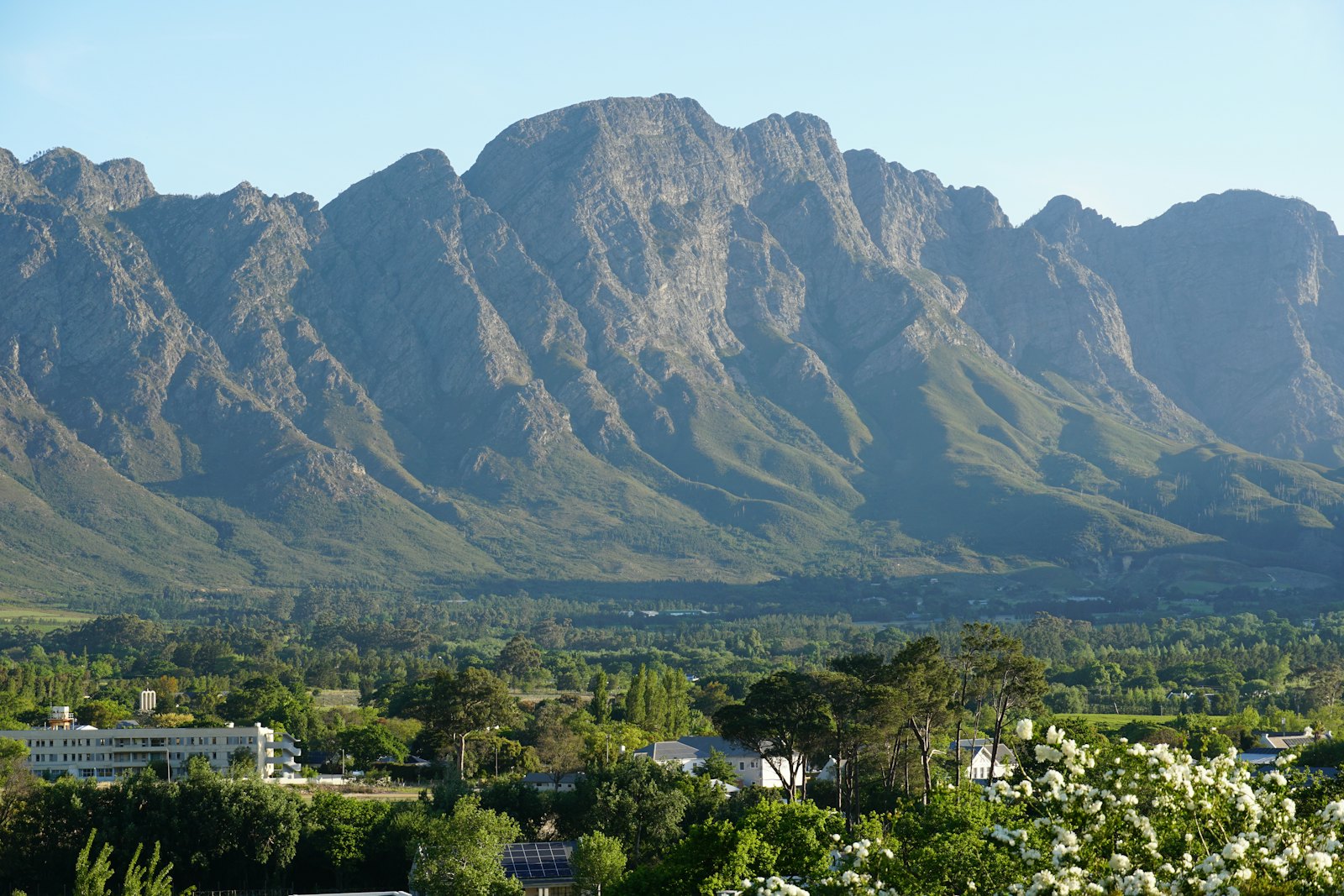
A small French-founded village at the end of a mountain valley, where you ride a hop-on wine tram between old estates, hike above the vines and eat some of the best food in the Cape.
- Best time to visit: October to April
- Daily budget (budget traveller): $65 to $250 USD
- Ideal trip length: 3 to 6 days
Franschhoek is about 75km east of Cape Town. The drive from the airport takes about an hour, through farmland and over low passes. The village is one long main road of Cape Dutch and Victorian buildings, with mountains on three sides and vineyards running right up to the last houses. French Huguenot refugees settled the valley in the late 1600s. That is why the estates have names like La Motte and Grande Provence, and why there is a large monument at the top of the road. Most people come to eat and drink. The valley has dozens of wine farms, a hop-on hop-off wine tram and a long reputation as the Cape's food capital. Franschhoek can be expensive, but solo travellers on a budget can manage it. A backpacker lodge, a tram ticket, careful choices at tastings, picnic lunches and free mountain views keep costs down. The village itself is safe, walkable and easy to settle into alone.
Franschhoek means 'French corner'. The name comes from the Huguenot refugees who were given farms in this valley from 1688. Today it is a village of a few thousand people, with one long main road, mountains on three sides and wine estates filling the valley floor. Most visitors come for a long lunch and a tram ride and leave the same day. Stay a few nights and you get the better version: an early hike in Mont Rochelle before the heat, a museum that explains why the farms have French names, and quiet evenings after the day-trippers' coaches have gone. It is not a cheap place. Lunches at the famous estates cost as much as they would in Europe. But there is a budget version too, with a backpacker lodge on the river, a single tram ticket, a few chosen tastings, picnics and plenty of free mountain views.
Logistics are easy once you accept there is no public transport from Cape Town. The village is about 75km from Cape Town International Airport, roughly an hour by car. Book a transfer or hire a car, and arrange the return before you arrive, because Ubers are scarce in the afternoons. Once you are here, stay in the village centre or along Dassenberg Road so that you can walk to dinner. Use the Wine Tram for estate days. The tram ticket was R350 for most of 2026, with new rates from 1 November 2026, and tastings are paid separately. Mix tram days with free or cheap days: the monument, a hike, a picnic, the Saturday market.
Timing matters more than people expect. Summer, from December to February, is hot and busy, with valley temperatures often in the 30s°C and full tram seats over the holidays. Harvest runs through February and March. April and May bring golden and red vines, mild days and cheaper rooms, and they are the best months for hiking. Winter, from June to August, is wet and cold. Some places cut their hours, but log fires and quiet tasting rooms have their own charm, and the Bastille celebrations usually fill the village around mid-July. Spring, from September to November, brings flowers in the fynbos and green vines. English and Afrikaans are spoken everywhere, cards work almost everywhere, and the village is relaxed and easy for a solo traveller.
Franschhoek itinerary
Arrive and walk the village
Morning: This plan assumes you arrive on a Monday. Take a pre-booked transfer or drive from Cape Town Airport, about an hour. Drop your bags in the village or on Dassenberg Road.
Afternoon: Walk up Huguenot Road to the Huguenot Memorial Museum. Buy tickets in the Annex, then cross Lambrechts Street to the monument, the perfume museum and the wild flower garden. The last ticket is at 16:15.
Evening: Slow walk back down the main road, then an early, simple dinner in the village. Book your tram ticket online for tomorrow if you have not already.
Wine Tram day
Morning: Meet at the village terminal for a Red, Blue or Pink line departure. Pick three or four estates, not all of them, and start with something small like a Cap Classique tasting.
Afternoon: Lunch at one estate on your line, or picnic where allowed. Holden Manz and Grande Provence sit on the village-side routes. Drink water between stops.
Evening: Tram back to the terminal. A light dinner and an early night.
Mont Rochelle and Haute Cabrière
Morning: Start early in Mont Rochelle Nature Reserve. Take a short loop, or the 13km Perdekop route if you are fit, which takes 5-6 hours. The day permit is R70 and the gate only takes cards.
Afternoon: Back down to Haute Cabrière on the lower pass slopes for a sparkling wine tasting with valley views.
Evening: Drive or take a driver up the Franschhoek Pass for the late light over the valley, then dinner in town.
Babylonstoren and Boschendal
Morning: Head north to Babylonstoren in Simondium by car or driver, or on a Groot Drakenstein tram line. Join the 10am garden tour. Entry is R150 and covers a year of visits.
Afternoon: Move on to Boschendal for a tasting or a picnic on the lawns under the oaks.
Evening: Return to Franschhoek. Self-cater or grab a pizza to give your budget a break.
Stellenbosch day
Morning: Drive or Uber about 30 minutes over the Helshoogte Pass to Stellenbosch. Walk the oak-lined streets of the old town, and visit the Botanical Garden and Dorp Street.
Afternoon: Café lunch, then a tasting at an estate on the edge of town, or a bookshop and gallery afternoon.
Evening: Head back before dark, or book a driver if you are staying for dinner.
Saturday market and La Motte
Morning: Browse the Saturday morning market in the village, if it is running, for coffee, cheese, breads and crafts. Pick up picnic food.
Afternoon: Visit La Motte on the R45 for a tasting and the estate grounds, or book a long farewell lunch at Pierneef à La Motte.
Evening: A glass of wine or a craft beer on Huguenot Road, then pack and confirm your airport transfer.
Slow morning and leave
Morning: A last bakery breakfast and a walk to the riverside path off Dassenberg Road, or the Franschhoek Perfumery and Sculpture Garden.
Afternoon: Stop at Grande Provence on the way out for its gallery and sculpture garden, then transfer to Cape Town Airport. Allow at least 90 minutes for the drive in Sunday traffic.
Evening: Fly out, or spend a night in Cape Town before an international flight.
Best neighbourhoods
- Village centre (Huguenot Road): The main street and the blocks either side. Restaurants, galleries, chocolate shops, the wine tram terminal and the Huguenot Monument are all within a 15-minute walk. It is the best base if you have no car, as you can walk home after dinner.
- Dassenberg Road: A quieter strip just west of the centre, running along the Franschhoek River past orchards and paddocks. Otter's Bend Lodge, the valley's budget option, is here, about a 10 to 15 minute walk from the main road.
- Uitkyk Street and the mountain side: The streets climbing towards the mountains on the north side of the village. Here you get guesthouses with views, Chamonix estate and quick access to walking trails. The walk back from town is uphill, so bring a torch at night.
- La Motte and the R45: The valley floor west of the village along the R45, lined with large estates such as La Motte and Leopard's Leap. You can stay on farms here, but you will rely on the tram by day and a car or Uber at night.
- Groot Drakenstein and Simondium: The northern end of the valley, near Boschendal and Babylonstoren. Two of the tram lines start here. It is more rural and spread out, so it is a good base for a car-based trip or a splurge on a farm stay.
Must-do experiences
- Ride the Franschhoek Wine Tram: Choose one colour-coded line, hop off at three or four estates and let someone else drive. The ticket covers transport only. Tastings are extra and cost roughly R60-260 each. Book online in advance, because seats are limited each day.
- Walk up to the Huguenot Monument: The arches and figure at the top of Huguenot Road mark the Huguenot settlement. Combine it with the Huguenot Memorial Museum next door, where you buy tickets in the Annex across Lambrechts Street.
- Hike in Mont Rochelle Nature Reserve: Over 30km of trails through fynbos above the valley, from short loops to the 13km Perdekop route. On a clear day you can see as far as Table Mountain. Day permits cost R70, and the gate is card-only.
- Taste Cap Classique at Haute Cabrière: The estate sits on the lower slopes of the Franschhoek Pass, just above the village. It is known for its bottle-fermented sparkling wine, and it is an easy walk or short ride from the centre.
- Spend a morning at Babylonstoren: A historic farm with a huge formal fruit and vegetable garden. Entry is R150 and covers 12 months of visits, and there is a guided garden tour at 10am. Arrive early, before the coach groups.
- Lunch at a wine estate: Franschhoek's estate restaurants are the reason many people come. Book one long lunch, such as Pierneef à La Motte, and keep the rest of your meals simple.
- Drive or ride up the Franschhoek Pass: The road climbs east out of the village in hairpins, with views back over the whole valley. Late afternoon light is best. Watch for baboons and do not feed them.
Hidden gems
- The wild flower garden behind the Huguenot Monument, included in the museum ticket and much quieter than the monument steps
- The Saasveld building across from the museum Annex, home to the first South African perfume museum
- The Franschhoek Perfumery and Sculpture Garden at 2 Huguenot Road, a short, free-feeling stop at the end of a museum visit
- The footpath from Dassenberg Road through a pear orchard down to the Franschhoek River, near Otter's Bend Lodge
- Holden Manz on the village tram loop, where tram guests have been given a small discount on tastings
Daily budget
- Accommodation: budget R500-850 / night (private room at a backpacker lodge), mid-range R1,500-3,000 (guesthouse or B&B in the village), splurge R8,000+ (luxury hotel or estate suite). Otter's Bend Lodge is the main budget option and has private rooms rather than big dorms. Prices rise sharply in December and January and on festival weekends. Book early.
- Food: budget R250-450 / day (self-catering, bakery lunches, picnics), mid-range R600-1,000 (café lunch and a bistro dinner), splurge R1,500+ (tasting menu at a top estate). Lunch at an estate restaurant can easily cost R350-600 before wine. Village supermarkets and delis make picnics easy. These are rough guides, so check current menus.
- Transport: budget R0-150 / day (walking, short Uber hops), mid-range R400-700 (hire car plus fuel), splurge R1,500+ (private driver for the day). The biggest single cost is getting to and from Cape Town, at roughly R600-850 each way by Uber or more for a private transfer. Uber is unreliable in the late afternoon and evening.
- Activities: budget R70-250 / day (Mont Rochelle permit, museum, monument views), mid-range R700-1,000 (tram ticket plus three or four tastings), splurge R1,500+ (pairings, guided private tours). Tram R350 for most of 2026, with new rates from 1 November 2026. Tastings are roughly R60-260 each. Museum R100, Mont Rochelle R70, Babylonstoren R150 for a year's entry.
- Drinks & nightlife: budget R50-150 (a craft beer or a bottle from the shop), mid-range R250-500 (wine by the glass with dinner), splurge R800+ (cocktails and good bottles). Nightlife is quiet. Think wine bars, a microbrewery and long dinners. Wine bought at estates is often good value, so pack a bottle for picnics.
Where to stay
- Social hostel in Dassenberg Road (R500-850 / night): Otter's Bend Lodge is a family-run backpacker lodge on a smallholding by the Franschhoek River. It has a communal lounge with a fireplace, a shared kitchen, braai facilities and a small pool, and the village is about a 10 to 15 minute walk away.
- Boutique hotel in Village centre (R2,500-4,500 / night): Small guesthouses and boutique hotels such as Franschhoek Country House & Villas put you within reach of the main road, the tram terminal and dinner, with pools and garden views.
- Apartment in Village centre or Uitkyk Street side (R1,000-2,000 / night): Self-catering cottages and apartments on the village grid let you cook with deli and market produce and save on restaurant bills. The mountain-side streets have the best views.
- Splurge in Village centre or valley estates (R8,000-20,000+ / night): Le Quartier Français in the heart of the village, or a luxury suite at La Residence on the valley floor, for full service, gardens and vineyard views.
What to eat
- Méthode Cap Classique: South Africa's bottle-fermented sparkling wine, a speciality of several Franschhoek estates
- Franschhoek trout: smoked or pan-fried, from the cold mountain streams, and found on many local menus
- Bobotie: spiced minced meat baked under an egg custard, served with yellow rice and chutney, a Cape Malay classic
- Biltong and droëwors: air-dried meat snacks, good for picnics on hikes and tram days
- Melktert and koeksisters: milk tart and syrupy plaited doughnuts, sold at bakeries and markets
- Handmade chocolates from Huguenot Fine Chocolates on Huguenot Road, an affordable treat in an expensive village
Day trips
- Babylonstoren and Boschendal (About 20-25 minutes by road north along the R45 and R310): Babylonstoren's 3.5-hectare formal garden of fruit, vegetables and herbs is the main draw, and the farm dates back to 1692. Boschendal next door has oak-shaded lawns, picnics and tastings. Do both in a day. Drive, book a driver, or use a Wine Tram line starting at Groot Drakenstein. Babylonstoren entry is R150 per adult and covers 12 months. Book the 10am garden tour in advance.
- Stellenbosch (About 30 km, roughly 30-40 minutes over the Helshoogte Pass): A university town with oak-lined streets, Cape Dutch buildings, galleries, cafés and the Botanical Garden, surrounded by more wine estates. It is livelier than Franschhoek and better for evening bars. Drive, Uber by day, or book a driver. Leave before dark if you need an Uber back, as cars are hard to find heading into Franschhoek.
- Paarl (About 30 km, roughly 30-40 minutes north via the R45): A larger working town under the granite domes of Paarl Rock, with a long main street of historic buildings, the Afrikaans Language Monument on the hillside and estates on its edge. Drive or book a driver. Combine it with Babylonstoren in Simondium, which lies on the way.
When to visit
- Summer (December - February): 16-32°C, hot and dry, valley days often above 30°C. Crowds: Busy, with peaks at Christmas, New Year and on weekends. Long days, outdoor lunches and full trams. Book the tram and dinners well ahead, and hike at dawn to avoid the heat.
- Harvest and autumn (March - May): 10-27°C, warm days and cool nights, mostly dry until May. Crowds: Moderate, with Easter busier. The local favourite. Harvest in March, autumn colours in the vines by late April and the best hiking weather of the year.
- Winter (June - August): 5-18°C, cold fronts with heavy rain, snow possible on the peaks. Crowds: Quiet, except around the mid-July Bastille celebrations. Cheaper rooms, log fires and empty tasting rooms. Pack warm layers, expect some shorter opening hours and check the tram timetable.
- Spring (September - November): 9-26°C, mixed sunshine and showers, warming up. Crowds: Moderate, rising in November. Green vines, fynbos in flower and comfortable walking weather. A good-value time before summer prices start.
Entry rules for your passport
Visa rules for South Africa depend on the passport you travel on. Check the official source before you book: South Africa Department of Home Affairs
Getting there
Fly into Cape Town International Airport (CPT), which has direct flights from Europe, the Middle East and Johannesburg, among others. Franschhoek is about 75km away, a drive of roughly 60 to 75 minutes on the N2, then through Stellenbosch and over the Helshoogte Pass, or on the R45 via Paarl and Simondium. There is no direct bus or train to the village. An Uber or Bolt from the airport has tended to cost roughly R600-850. A private transfer costs more but is the safer bet for the return trip, because Ubers are scarce in Franschhoek in the afternoon. Car hire at the airport gives you the most freedom. Driving is on the left, and the roads are well surfaced. Several Cape Town operators sell day trips that bundle a return transfer with a Wine Tram ticket, which suits a short visit. Many nationalities can visit South Africa visa-free for up to 90 days. Check your passport has at least two blank pages and at least 30 days of validity beyond your departure date.
Getting around
The village centre is small and flat enough to walk, and most solo travellers base themselves there. To reach the estates, use the Franschhoek Wine Tram. It runs several colour-coded hop-on hop-off lines on a mix of tram and open-sided buses. The Red, Blue and Pink lines start in the village, while the Orange and Green lines start at Groot Drakenstein. Tickets were R350 per adult for most of 2026, with new rates from 1 November 2026, so check before you book. Uber and Bolt work in Franschhoek, but cars are thin on the ground, especially in the afternoon and evening, so do not rely on them for a return to Cape Town or a late dinner out of town. Ask your accommodation for a local driver's number. A hire car from Cape Town gives you the most freedom. Traffic drives on the left, and roads are good, but the drink-drive limit is low and police roadblocks are common, so do not drive after tastings. Cycling the valley floor is pleasant in cooler months, but the R45 has fast traffic and narrow verges.
Safety
Franschhoek village is one of the safer places in the Western Cape, and walking around the centre by day and into the early evening is fine. Use normal South African precautions: keep phones and bags out of sight, do not leave anything visible in a parked car, and use a driver or Uber rather than walking along unlit roads such as the R45 at night. Car guards in the village will watch your car for a small tip. Tasting adds up quickly, so pace yourself and drink water. Summer heat in the valley can reach the mid-30s°C, so hike early, carry plenty of water and wear a hat. Mountain weather changes fast, and winter brings cold rain and sometimes snow on the peaks. Tell someone your route before you hike alone. Snakes live in the fynbos, so stay on paths and watch where you step. Baboons on the Franschhoek Pass can grab food and bags. Power cuts and water problems still happen in South Africa, so carry a torch and a power bank. Get travel insurance that includes medical cover, because the best hospitals are private and expensive.
Solo travel tips
- Stay where you can walk to dinner: Base yourself on or near Huguenot Road, or at Otter's Bend on Dassenberg Road. Taxis are scarce at night, and walking home after dinner is the simplest and safest plan.
- Use the tram to meet people: Tram seats are shared and the stops are sociable, so it is easy to fall into conversation with other travellers at tastings. Choose a weekday if you want quieter tasting rooms.
- Pace the tastings: A full tasting at every stop adds up quickly, both in rand and in wine. Share a tasting, choose a smaller flight or pick a single glass. Estate staff are used to solo guests doing this.
- Book one big meal, not five: Pick one famous estate lunch and keep the other meals simple, with deli picnics, bakeries and village bistros. Lunch is often better value than dinner at the top places.
- Safety for solo travellers: Hide valuables in cars, avoid unlit roads at night and arrange transport before you start drinking. On hikes, start early, carry water and tell your host which trail you are on.
- Sort the return to Cape Town early: Uber drivers rarely wait in Franschhoek in the afternoon. Book a transfer or driver for your departure as soon as you know your flight time, and get a local driver's number from your host.
Cultural etiquette
- A friendly 'hello' or 'good morning' before you ask a question is expected. Afrikaans speakers will appreciate a 'dankie' (thank you), though everyone in the trade speaks English.
- Tipping is part of the culture. Leave 10-15% in restaurants, a few rand for car guards and petrol attendants, and something for tasting-room staff if they have looked after you well.
- Book ahead for estate restaurants and tastings at the popular farms, especially on weekends. Turning up and expecting a table at lunch rarely works in summer.
- Spitting during tastings is perfectly normal. Ask for a spittoon, and nobody will think less of you.
- The valley's history includes the Huguenot settlers, enslaved people and the farmworker communities who still work the land. Some museums and estates cover this, so be open to the full story.
- Dress is smart-casual at estate restaurants. Beachwear is out of place, but nobody expects a jacket.
- Respect farm boundaries. Stay on marked paths in vineyards and do not pick grapes or fruit.
Frequently asked questions
How do I get from Cape Town Airport to Franschhoek?
It is about 75km and takes 60 to 75 minutes by road. There is no direct bus or train. Most solo travellers book a private transfer through their accommodation, hire a car or take an Uber or Bolt, which has tended to cost roughly R600-850 from the airport. Getting an Uber back from Franschhoek is harder, especially later in the day, so book your return transfer in advance.
How many days do I need in Franschhoek?
Two nights is enough for a tram day and a walk around the village. Three to four nights lets you add a hike in Mont Rochelle and a slow estate lunch. With five or six nights you can fit in Babylonstoren, Boschendal and Stellenbosch without rushing. A day trip from Cape Town is possible, but you miss the quiet evenings.
When is the best time to visit Franschhoek?
October to April is warm and dry, with long days for tram rides and outdoor lunches. February and March is harvest time. April and May bring autumn colour in the vineyards and cooler hiking weather. June to August is cold and rainy, but cheaper and quieter, with log fires and sometimes snow on the peaks.
How does the Franschhoek Wine Tram work?
You buy a hop-on hop-off ticket for one colour-coded line and follow a set timetable between its estates. It was R350 per adult for most of 2026, with new rates from 1 November 2026. Tastings are paid separately at each stop, roughly R60-260. Plan for three or four estates, not all of them, and book online ahead of time because each day's tickets are limited.
Is Franschhoek safe for solo female travellers?
Yes, it is one of the easiest places in South Africa to travel alone. The village is small, busy by day and used to visitors. Take ordinary precautions: do not walk unlit country roads at night, keep valuables hidden, arrange transport home before you start tasting and let someone know your route if you hike alone.
Can I do Franschhoek without a car?
Yes, if you stay in or near the village centre. You can walk to restaurants, the museum and the monument, the tram covers the main estates, and Uber can work for short hops by day. A car or driver helps for Babylonstoren, Stellenbosch and the Franschhoek Pass, and for getting back to Cape Town.
How much does it cost to visit the Huguenot Memorial Museum and Mont Rochelle?
The museum's published prices have been R100 for adults and R50 for students and children. You buy tickets in the Annex, and the last tickets are sold at 16:15. Mont Rochelle Nature Reserve charges R70 for a day permit. It is open from sunrise to sunset, and the gate only takes cards or app payments, not cash.
What are the entry rules for South Africa in 2026?
Many nationalities, including UK, EU, US, Canadian, Australian and New Zealand passport holders, can usually visit visa-free for up to 90 days. Your passport normally needs at least two blank pages and validity of at least 30 days beyond your departure date. Rules vary by nationality and can change, so check the South African Department of Home Affairs and your own government's travel advice before you book.
Tours and activities in Franschhoek | Franschhoek in 2 days | Franschhoek in 3 days | Franschhoek in 4 days | Franschhoek in 5 days | Franschhoek in 7 days
Can't decide? Compare Franschhoek with...
Joy Plus home | Destinations | Itineraries | Activities | Flights | Budget planner | Calendar | Map | Blog | Lifetime access