Destinations / Europe
Frigiliana, Spain travel guide
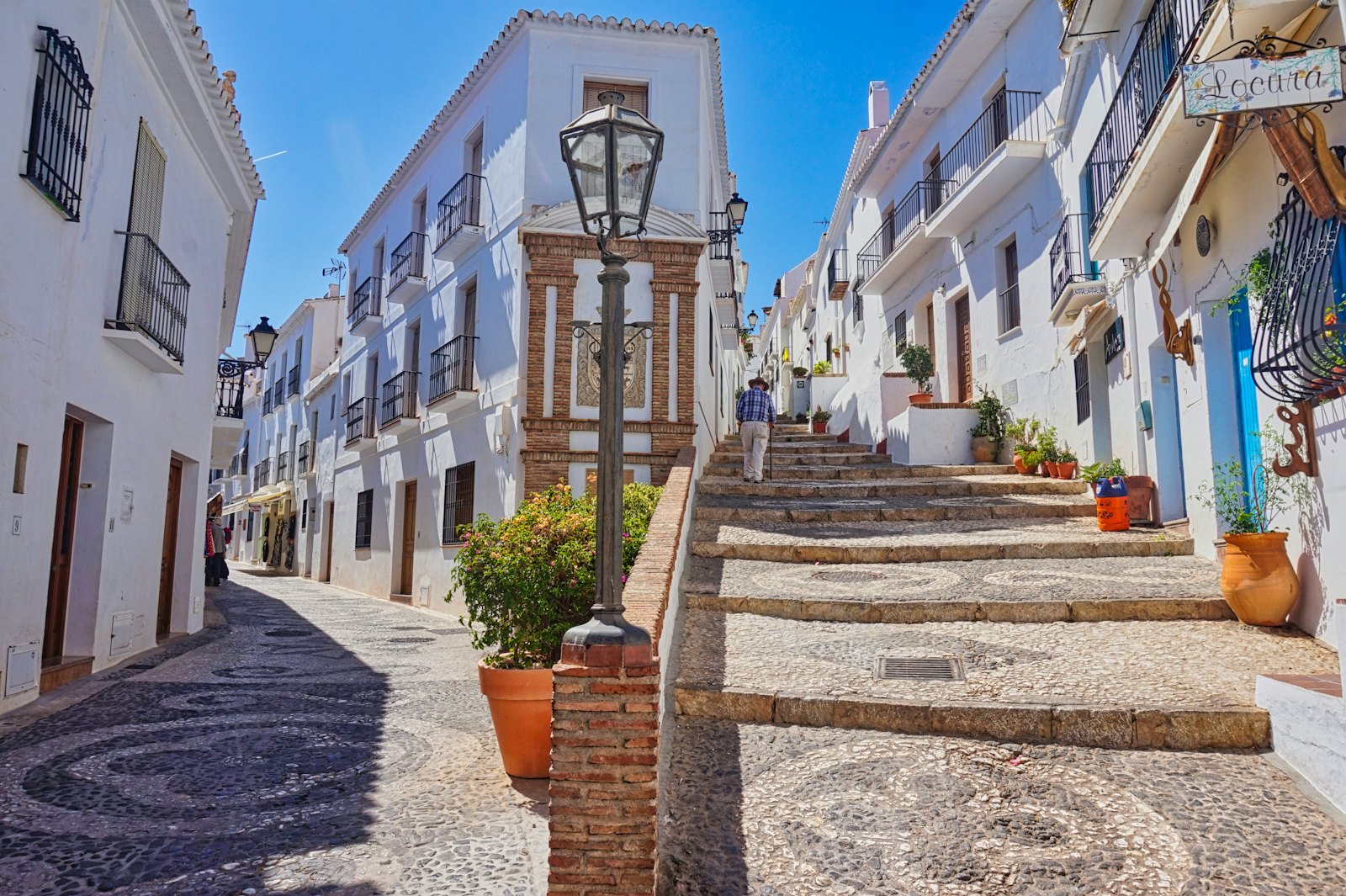
A steep white village above Nerja, where you climb cobbled Moorish lanes, walk a river bed into the sierra and buy local cane honey with the sea in view.
- Best time to visit: March to June and September to November
- Daily budget (budget traveller): $75 to $240 USD
- Ideal trip length: 3 to 7 days
Frigiliana sits about 300m up in the hills of the Axarquía, roughly 6km inland from Nerja on Málaga's eastern coast. About 3,000 people live here. The old quarter, the Barribarto, is a maze of whitewashed houses, steep steps and potted geraniums, laid out on the street plan left by the Moors. Ceramic tiles on the walls tell the story of the 1569 Morisco revolt, which ended in a battle on the rocky hill above the village. Most visitors come up from the coast for a couple of hours at midday. Stay a few nights instead and you get the quieter version: empty lanes at breakfast, a walk up the Río Higuerón before the heat, the Thursday market, and long evenings with the lights of Nerja below. Frigiliana is small and has no real hostel. Still, simple hostales, a €1.20 bus to the beach, free walks and a free museum make it workable on a solo budget. It is safe, easy to walk around if you don't mind hills, and very close to the sea.
Frigiliana is a white village of about 3,000 people, built on a slope roughly 300m above sea level in the Axarquía, the eastern corner of Málaga province. The old quarter, the Barribarto, keeps its Moorish layout of steep lanes and steps, and the whole historic centre is a protected heritage site. It is a member of the association of the most beautiful villages in Spain. That fame brings coach tours from the Costa del Sol, mostly between late morning and mid-afternoon. Stay overnight and the place changes. You get the lanes to yourself at 8am, the sierra glowing pink at sunset and quiet evenings on a terrace. Frigiliana is not a backpacker village. There are no dorm hostels and few cheap rooms. But a simple hostal, menús del día, free walks, a free museum and a €1.20 bus to Nerja make a solo trip affordable.
Getting here is easy. Fly into Málaga, take a coach along the coast to Nerja, then hop on the small local bus up the hill. Base yourself in the lower village if you plan to use the bus a lot, or up in the Barribarto if you want the views and don't mind carrying your bag up the steps. Plan your days around the bus timetable, which has a gap in the afternoon and a last departure at about 9pm. Keep Thursday for the market, and avoid driving that day, because parking fills up early.
Timing shapes the trip. Spring brings flowers in every pot and good hiking weather. Summer is hot, busy and best for the beaches below, with long evenings and the Festival Frigiliana 3 Culturas at the end of August. Autumn is warm, calmer and good for river walks once the heat breaks. Winter is mild but quieter, and some days are wet. Spanish is the language, though English is widely understood because many foreign residents live in the area. If you want nightlife, go to Nerja. If you want a morning hike, a long lunch and a sunset over the sea from a whitewashed lane, this is a good place for it.
Frigiliana itinerary
Arrive and settle in
Morning: This plan assumes you arrive on a Monday. Fly into Málaga and head to the main bus station for a coach to Nerja, about 1 hour 15 minutes to 1 hour 30 minutes.
Afternoon: Change at Nerja bus station for the local bus up to Frigiliana, about €1.20, paid to the driver. Check in and pick up a map at the Casa del Apero tourist office if it is open.
Evening: A gentle first wander through the lower village. Fried aubergines with cane honey and a glass of wine on a terrace, then an early night.
The old quarter and the castle hill
Morning: Into the Barribarto by 8.30am while it is empty. Follow the Morisco revolt tile plaques through the lanes and look into the Church of San Antonio de Padua.
Afternoon: Visit the free archaeological museum in the Casa del Apero, then look at the outside of El Ingenio, the old palace that housed the cane honey works. Menú del día for lunch, then a siesta.
Evening: Climb to the Castillo de Lízar ruins for sunset over the sea. Dinner at El Jardín, a restaurant in the old village with views.
Río Higuerón walk
Morning: Start early down the Cuesta del Apero to Pozo Batán, then walk upstream along the Río Higuerón through pools and marble gorges. Allow 2-4 hours depending on how far you go.
Afternoon: Back for a late lunch and a rest. Stop by the Fuente Vieja and buy a bottle of miel de caña in a village shop.
Evening: A slow evening on a terrace in the lower village. Self-cater tonight to give your budget a rest.
Thursday market and Nerja
Morning: Browse the Thursday market early before it gets packed. Pick up fruit and snacks for later.
Afternoon: Take the bus to Nerja. Walk out to the Balcón de Europa, then go down to Burriana beach for a swim and espetos de sardinas at a beach bar.
Evening: Sunset on the Balcón de Europa, then catch the last bus back up at about 9pm, or slightly later in July and August.
Hike to El Acebuchal
Morning: Set off by 8am on the track west to El Acebuchal, roughly 7km each way. Carry at least two litres of water, sun cream and a hat.
Afternoon: Lunch at Bar El Acebuchal, then wander the restored hamlet. Walk back in the shade of late afternoon, or arrange a taxi pickup in advance.
Evening: Tired legs, a simple tapas dinner and an early night.
Nerja Caves and Maro
Morning: Bus to Nerja, then a coastal coach towards Maro for the Nerja Caves. Book online for about €15-16, and visit early to avoid tour groups.
Afternoon: Walk or take a short ride down to Maro beach for a swim in clear water. In summer, check whether access or parking needs booking.
Evening: Back up to Frigiliana. Farewell dinner with a plato de los montes or grilled fish, and a last look at the lights of the coast.
Slow morning and depart
Morning: Coffee in the Barribarto, last photos and some cane honey or local wine to take home.
Afternoon: Bus to Nerja and a coach to Málaga. Sunday buses are fewer, so check times the day before and allow plenty of time for your flight.
Evening: Fly out from Málaga, or spend a night in Málaga city if your flight leaves early the next day.
Best neighbourhoods
- Barribarto (old quarter): The upper, oldest part of the village, all steep steps, narrow lanes and Morisco-era houses. It is the prettiest place to stay and to walk early or late. Expect stairs everywhere and no car access, so pack light.
- Lower village and Plaza de las Tres Culturas: The newer part where the Nerja bus stops, close to El Ingenio, the Casa del Apero tourist office and the Thursday market. It is flatter, with shops, bars and a cash machine. The most practical base if you plan to use the bus a lot.
- Countryside around Frigiliana: Fincas and rural hotels spread along the roads towards Torrox and into the hills, such as Hotel Rural Los Caracoles. You get quiet, stars and sea views, but you will need a car or taxis.
- El Acebuchal: A tiny restored hamlet in the sierra, abandoned in the late 1940s and brought back to life from the late 1990s. Some of its houses are holiday cottages. It suits hikers who want total quiet, with one bar-restaurant and no shops.
- Nerja: The beach town below, about 15-20 minutes by bus. It has far more places to sleep and eat, the Balcón de Europa and several beaches. A good base if you want the sea every day and Frigiliana as a half-day trip.
Must-do experiences
- Wander the Barribarto early: Get into the old quarter before about 10am, when the lanes are empty and the light is soft. Head uphill along the steps and side alleys, and take a break at any viewpoint looking down to the coast.
- Follow the Morisco revolt tile trail: A series of ceramic plaques fixed to walls around the old village tells the story of the 1569 uprising and the battle of the Peñón de Frigiliana. Following them gives you a free history lesson and a route through the best streets.
- Climb to the Castillo de Lízar: Little is left of the old Moorish castle on the hill above the village, but the climb is short and the views over the rooftops, the sierra and the sea are worth it. Go near sunset.
- Walk the Río Higuerón: From the village, the Cuesta del Apero leads down to the river bed. You walk upstream through pools, fords and narrow marble gorges. No permit is needed. Wear shoes you can get wet and avoid it after heavy rain.
- Hike to El Acebuchal for lunch: A track through the hills takes you to this restored hamlet, roughly 7km each way. Lunch at Bar El Acebuchal is the reward. Start early in warm months and carry plenty of water.
- Browse the Thursday market: Thursday is market day, with stalls of food, clothes and local produce. It is the busiest day in the village, so come by bus rather than car and get there early.
- See the Nerja Caves: A huge cave system near Maro, just east of Nerja, with enormous halls and stalactites. Adult tickets cost about €15-16 and are cheapest online. The visit takes around an hour.
Hidden gems
- The Fuente Vieja, an old stone public fountain dating from the 1640s, on the edge of the old village
- The Casa del Apero, a 17th-century building that holds the free archaeological museum and the tourist office, a good first stop for a village map
- Pozo Batán and the start of the Acequia de Lízar on the Río Higuerón, an old irrigation system from Moorish times that you can follow on foot
- The view from the road down towards Nerja at dusk, when the whole village lights up behind you
- Cómpeta's sweet wine bars, a short drive west, where you can try local moscatel made from Axarquía grapes
Daily budget
- Accommodation: budget €45-70 / night (simple hostal room), mid-range €90-150 (small hotel or rural hotel), splurge €200+ (Parador de Nerja, boutique village house). There are no dorm hostels in Frigiliana. Prices rise sharply in July, August and during the festival. Check whether rooms in the old quarter involve lots of steps.
- Food: budget €20-35 / day (market food, a menú del día, tapas), mid-range €40-65 (café breakfast, lunch and a sit-down dinner), splurge €80+ (long lunches with wine, dinner with a view). A menú del día is usually around €12-18. Tapas are a few euros each. Supermarkets are small in Frigiliana and bigger in Nerja. Prices are rough guides, so check.
- Transport: budget €2-6 / day (Frigiliana to Nerja bus), mid-range €15-30 (buses plus the odd taxi), splurge €50+ (hire car, taxis to Cómpeta or the airport). The local bus costs about €1.20 a ride. Málaga to Nerja is roughly €4-6. A taxi between Nerja and Frigiliana is about €12-15.
- Activities: budget €0-5 / day (village walks, Río Higuerón, free museum), mid-range €15-30 (Nerja Caves, kayak rental), splurge €60+ (guided hikes, boat trips from Nerja). Nerja Caves adult tickets are about €15-16, cheaper online. The Frigiliana archaeological museum is free, but it has had closures, so check before you go.
- Drinks & nightlife: budget €5-15 (a caña or two with tapas), mid-range €20-40 (wine and evening drinks), splurge €60+ (cocktails in Nerja, bottles of local wine). Evenings in Frigiliana are relaxed, with terraces and quiet bars. Nerja has more late-night choice, but remember the last bus back up.
Where to stay
- Social hostel in Lower village (€45-70 / night): Frigiliana has no dorm hostels. The closest option is a simple hostal such as Hostal Las Chinas, with basic rooms, a friendly local feel and an easy walk to the bus stop and the old quarter.
- Boutique hotel in Countryside towards Torrox (€100-170 / night): Hotel Rural Los Caracoles is a small rural hotel with unusual round cottages, a restaurant and wide views of the sierra and the sea. It is quiet and memorable, but you will need taxis or a car.
- Apartment in Barribarto or El Acebuchal (€70-130 / night): Holiday flats and village houses in the old quarter, or restored cottages in El Acebuchal, give you a kitchen and a terrace. They are a good fit for longer stays and for saving money on food.
- Splurge in Nerja (€180-300+ / night): The Parador de Nerja sits on the cliffs above Burriana beach, with gardens, a pool and a lift down to the sand. Frigiliana is a short taxi or bus ride away.
What to eat
- Berenjenas con miel de caña: thin slices of fried aubergine drizzled with local cane honey, the classic Frigiliana tapa
- Miel de caña: dark, treacly cane honey, made in the village for centuries, sold in shops in the old quarter and a good light gift to take home
- Plato de los montes: Málaga's hearty mountain plate of pork loin, chorizo, fried egg, peppers and chips, good after a long hike
- Ajoblanco: a cold soup of almonds, garlic, bread and olive oil, often served with grapes, perfect on hot days
- Espetos de sardinas: sardines grilled on skewers over a fire on the beach, best on Burriana beach in Nerja
- A menú del día lunch, usually two courses with bread and a drink, the cheapest way to eat well sitting down
Day trips
- Nerja and the Nerja Caves (About 6km to Nerja, 15-20 minutes by bus, with the caves a few kilometres further east near Maro): Walk the Balcón de Europa, swim at Burriana or Maro beach and visit the huge cave system, with its vast halls and giant stalactites. Take the local bus to Nerja for about €1.20, then a coastal coach towards Maro for the caves. Adult cave tickets cost about €15-16 and are cheapest online. The caves close on 1 and 6 January, 15 May and 25 December.
- El Acebuchal (About 7km each way on foot along hill tracks, or a winding drive): A small hamlet abandoned in the late 1940s and restored house by house from the late 1990s. It has one bar-restaurant, cobbled lanes and total quiet. Walk from Frigiliana on the marked tracks, allowing 2-3 hours each way, or go by car or taxi on the unpaved road. Start early in summer and carry plenty of water.
- Cómpeta (About 30-40 minutes by car to the west): A larger white village higher in the hills, known for its sweet moscatel wine, a lively square and walks into the Sierra de Almijara. There is no direct bus from Frigiliana, so a taxi or hire car is easiest. Agree a taxi price both ways, or combine it with a visit to El Acebuchal by car.
When to visit
- Spring (March - May): 17-25°C, mostly sunny, some showers in March. Crowds: Moderate, busy around Easter week. The best all-round season. Flowers on every balcony, rivers flowing and comfortable hiking. Book ahead for Easter.
- Summer (June - August): 27-33°C, dry and hot, warm nights. Crowds: High, with coach tours daily and the festival in late August. Great for Nerja's beaches, tough for hiking. Walk at dawn, rest at midday and book early if you want to be here for the August festival.
- Autumn (September - November): 20-29°C in September, cooling to 17-22°C by November. Crowds: Moderate, easing through October. The locals' pick. The sea is still warm, the hills are pleasant to walk and rooms get cheaper. Heavy rain can hit in late autumn.
- Winter (December - February): 15-18°C by day, cool nights, occasional heavy rain. Crowds: Low, busier around Christmas. Quiet and cheap, with clear days ideal for walking. Some places shorten their hours, and river walks may be too high after rain.
Entry rules for your passport
Visa rules for Spain depend on the passport you travel on. Check the official source before you book: European Commission: Schengen visa policy
Getting there
The nearest airport is Málaga (AGP), about 70km west, with flights from across Europe and the UK. From the airport, get to Málaga's main bus station, then take a coach east along the coast to Nerja. The ride takes about 1 hour 15 minutes to 1 hour 30 minutes and costs roughly €4-6. Departures are roughly every 30-60 minutes during the day. The route has been run by Avanza and long appeared under Alsa, so check both apps for times. From Granada, coaches to Nerja take around two hours and cost roughly €10-14. At Nerja bus station, change to the local Grupo Fajardo bus to Frigiliana. It costs about €1.20 and takes 15-20 minutes, and you pay the driver, not the coach ticket office. There are roughly nine to eleven buses a day from Monday to Saturday and fewer on Sundays and holidays. In Frigiliana it stops in the lower village, a few minutes' walk from the old quarter. A taxi from Nerja costs about €12-15. If you drive, take the A-7 to Nerja, then the short MA-5105 up the hill, and park in the lower village. Parking is hard on Thursdays and in summer.
Border checks: non-EU visitors (other than Swiss, Norwegian, Icelandic, Liechtenstein, Andorran, Monegasque, San Marinese and Vatican citizens, and holders of an EU residence permit or long-stay visa) are registered in the EU's Entry/Exit System (EES) instead of getting a passport stamp. On your first crossing, officers take your photo and/or fingerprints, so allow extra time at passport control. ETIAS, the planned travel authorisation, is not in operation yet, so don't pay any website for one.
Getting around
Frigiliana itself is very walkable but very steep. The old quarter is a network of steps where cars cannot go, so good shoes matter more than transport. The main link to the outside world is the local bus to Nerja, run by Grupo Fajardo. A single ticket costs about €1.20, and a 10-trip pass about €9.60. The ride takes 15-20 minutes. There are roughly nine to eleven departures a day from Monday to Saturday, with a gap in the afternoon and a last bus at about 9pm, a little later in July and August. Sunday and holiday services are fewer, and some timetables show none, so check the current timetable at the tourist office or Nerja bus station. In Frigiliana the bus stops in the lower village near Plaza de las Tres Culturas. A taxi between Nerja and Frigiliana costs roughly €12-15. From Nerja, coaches run along the coast to Málaga, Maro and the caves. You only really need a car for Cómpeta, rural hotels or early hikes, and parking in Frigiliana is very hard on Thursdays and in summer.
Safety
Frigiliana is very safe, and crime against visitors is rare. The real risks are heat, hills and water. In July and August temperatures can pass 30°C, so walk early, carry at least two litres of water and wear a hat. The steps in the old quarter can be slippery when wet. River walks such as the Río Higuerón can become dangerous after heavy rain, when water rises quickly in the narrow gorges, so check the forecast and turn back if the water is high. Stay on marked paths, because parts of the river run past private farms, and watch for hunting signs in the hunting season. Fires are banned in the natural park in summer. The Río Chíllar walk from Nerja has been closed since August 2023, so do not try to sneak in. In Nerja, keep an eye on bags at busy beaches and on the Balcón de Europa. For emergencies, call 112.
Solo travel tips
- Stay below if you hate stairs: The Barribarto is beautiful but every errand involves steps. The lower village near Plaza de las Tres Culturas is flatter and next to the bus stop, which makes day trips much easier.
- Learn the bus timetable: The Nerja bus is cheap and reliable, but there is a gap in the afternoon and the last bus up leaves at about 9pm. Take a photo of the current timetable on day one.
- Hike at dawn: From May to September, start walks by 8am. The trails to El Acebuchal and up the Río Higuerón have little shade in places, and the heat builds quickly by late morning.
- Eat your main meal at lunch: The menú del día is the best value for solo diners, and you won't feel out of place eating alone at a counter or small table. Dinner can be a few tapas.
- Safety for solo travellers: The village is very safe. The real risks are heat, slippery steps and river gorges after rain. Tell your host where you are hiking, carry water and keep your phone in a waterproof bag.
- Avoid the midday rush: Coach tours arrive from about 11am to mid-afternoon. Use that time for a long lunch, the museum or the beach, and explore the old quarter in the early morning and evening.
Cultural etiquette
- Greet people with 'hola' or 'buenos días' when you walk into a shop or bar, and say 'gracias' when you leave. It is noticed if you don't.
- Meal times are late. Lunch runs from about 2pm to 4pm and dinner rarely starts before 8.30pm. Some places close between those times.
- People live in the old quarter. Keep your voice down in the lanes, don't sit on doorsteps or touch plants, and don't photograph into open doorways.
- Cover your shoulders and wear more than swimwear in the church and around the village. Beachwear belongs on the beach in Nerja.
- Afternoon quiet is real in small villages. Many shops close for a few hours after lunch, especially in summer.
- Take your rubbish home from hikes and river walks, never light fires in the natural park and respect private land along the trails.
- A few words of Spanish go a long way, even though English is widely understood in Frigiliana and Nerja.
Frequently asked questions
How do I get to Frigiliana from Málaga Airport?
Get to Málaga's main bus station, then take a coach to Nerja, which takes about 1 hour 15 minutes to 1 hour 30 minutes and costs roughly €4-6. The Málaga to Nerja route has been run by Avanza and was long known as an Alsa route, so check both. From Nerja bus station, the local Grupo Fajardo bus goes up to Frigiliana for about €1.20, and you pay the driver. A taxi from Nerja is about €12-15. A taxi from the airport all the way is a lot more, so ask for a quote.
How many days do I need in Frigiliana?
The village itself can be seen in a morning, but three days lets you do it properly: one day in the old quarter, one on the Río Higuerón and one in Nerja. Five to seven days adds the El Acebuchal hike, the Nerja Caves, beach days and a trip to Cómpeta, at a slow pace.
When is the best time to visit Frigiliana?
March to June and September to November give warm days, comfortable hiking and fewer crowds. July and August are hot and busy, and the Festival Frigiliana 3 Culturas fills the village at the end of August. In 2026 it ran from 27 to 30 August. Winter is mild and quiet, but some days are wet and rivers can be high.
Should I stay in Frigiliana or Nerja?
Stay in Frigiliana if you want quiet evenings, early empty lanes and hiking from your door. Stay in Nerja if you want the beach every day, more choice of food and rooms, and easier connections. The bus between them is cheap and short, so either works. Just remember the last bus back up leaves at about 9pm.
Do buses run on Sundays?
Usually yes, but with fewer departures than on weekdays, and some older timetables show no Sunday service at all. Check the current timetable at the Casa del Apero tourist office or at Nerja bus station before you plan a Sunday trip, and keep a taxi number as a backup.
Is the Río Chíllar walk open?
No. The Río Chíllar walk from Nerja has been closed to the public since August 2023 because of fire risk and overcrowding. Plans to reopen it with limited numbers and a paid ticket have been discussed, but check with Nerja town hall before you go. The Río Higuerón walk from Frigiliana is open, free and needs no permit.
Is Frigiliana safe for solo female travellers?
Yes. It is a small, friendly village where people notice each other, and serious crime is rare. The main precautions are practical: hike early, tell your host where you are walking, avoid river gorges after rain and carry your phone in a waterproof bag. Evenings are quiet and the village feels relaxed after dark.
Can I use cards, or do I need cash?
Cards and contactless payments work in most hotels, restaurants and shops. Carry some cash for the local bus, market stalls and small bars. There are cash machines in the lower village, and many more in Nerja.
More about Frigiliana
Tours and activities in Frigiliana | Frigiliana in 2 days | Frigiliana in 3 days | Frigiliana in 4 days | Frigiliana in 5 days | Frigiliana in 7 days
Joy Plus home | Destinations | Itineraries | Activities | Flights | Budget planner | Calendar | Map | Blog | Lifetime access