Destinations / Europe
Giverny, France travel guide
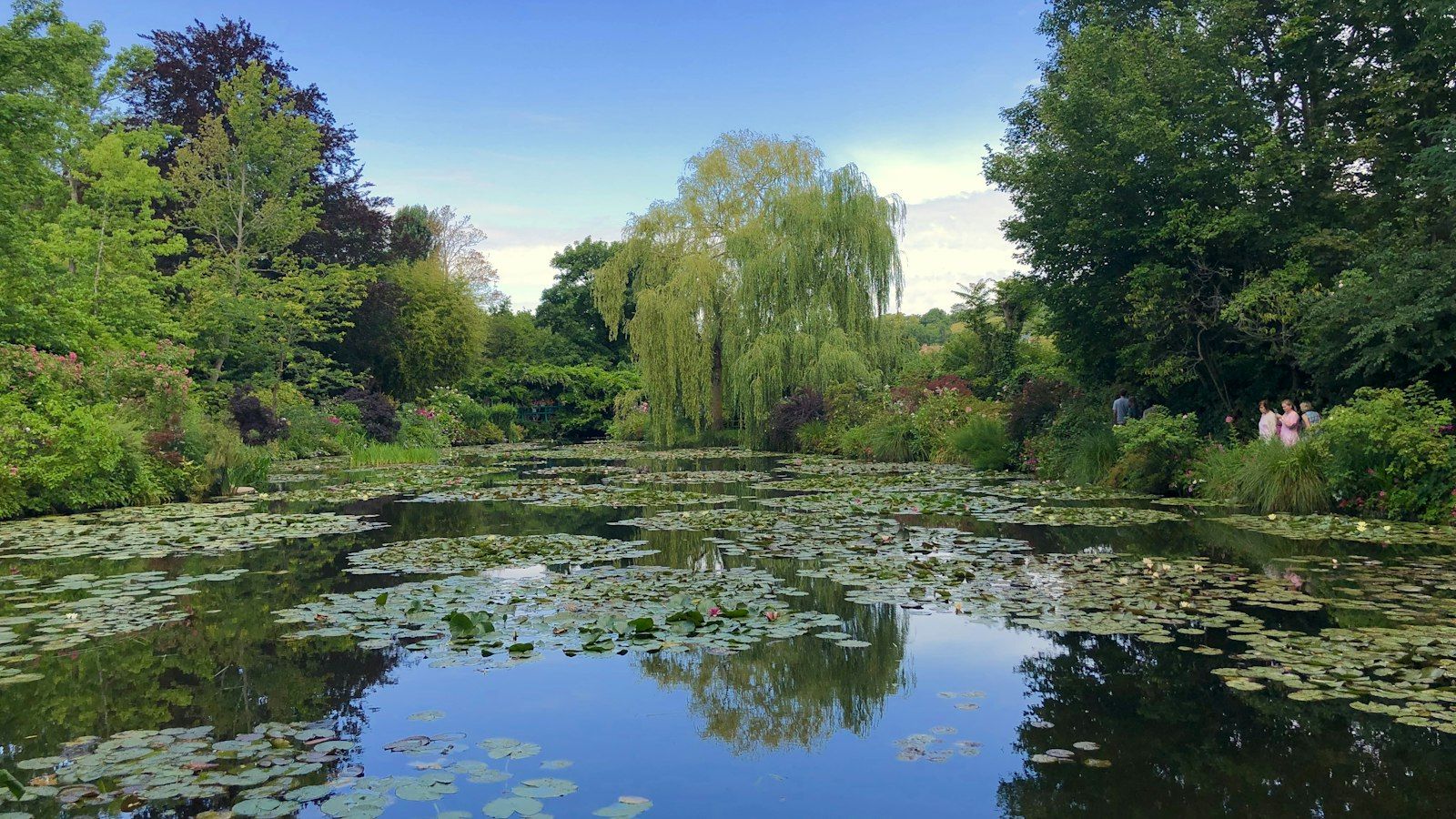
Monet's village on the Seine, with the flower garden, the water lilies and the Japanese bridge, plus chalk cliffs, castle ruins and Rouen cathedral within easy reach.
- Best time to visit: May to June and September to October
- Daily budget (budget traveller): $95 to $300 USD
- Ideal trip length: 3 to 7 days
Giverny is a village of a few hundred people on the Normandy bank of the Seine, about 75km west of Paris. Claude Monet moved here in 1883 and stayed until he died in 1926. He planted the garden that he then spent decades painting. His pink house, the Clos Normand flower garden and the water garden with its green Japanese bridge are why most visitors come, usually on a rushed day trip by coach. If you stay the night, you get a different place. Early mornings are quiet, the tour groups leave in the late afternoon, and you can walk the hillside paths above the village with the meadows and poplars below you, the same views the Impressionists painted. Base yourself in Giverny or in Vernon, the market town 5km away with the railway station. From there you can cycle a flat greenway, visit Richard the Lionheart's ruined Château Gaillard, explore La Roche-Guyon's château cut into the chalk cliff, and take the train to Rouen to see the cathedral Monet painted more than 30 times. The gardens open only from spring to autumn, so plan around that. In season, this is one of the easiest and most rewarding solo trips from Paris.
Giverny is one street, a church, two museums and a few hundred residents, and in season up to several thousand visitors a day. Most arrive on a coach from Paris at 10am and leave by 4pm, so the village has two personalities. At midday Rue Claude Monet is a slow queue of selfie sticks. At 8am or 7pm it is a Norman village again, with lime-washed walls, roses on the gates and swallows over the meadows. Monet rented the pink house in 1883, bought it a few years later and spent the rest of his life making the garden he painted. The Académie des beaux-arts restored it from the late 1970s, and it is now one of the most visited sites in Normandy. Nothing here is cheap, and there are no hostels. But a solo traveller who stays nearby, walks or cycles in, and eats the lunch menus gets far more than the day-trippers do.
The practical base is Vernon, the market town 5km away, with the railway station, supermarkets, cheaper rooms and a seasonal shuttle to Giverny for €5 each way. Stay in Giverny itself if you want the empty evening lanes and do not mind paying more. Trains run from Paris Saint-Lazare in about 45 to 60 minutes and continue to Rouen. Beyond the gardens, the Seine valley rewards a few extra days. La Roche-Guyon has a château carved into the chalk cliff. Château Gaillard, Richard the Lionheart's fortress, looms over Les Andelys. Rouen has the cathedral Monet painted again and again. Hire a bike or a car for a day for the castles, because buses barely reach them.
Timing decides everything. Monet's house and gardens open only from spring to autumn. In 2026 that was 1 April to 1 November, and a similar season is expected in 2027, so check before booking. Spring brings tulips, irises and wisteria on the Japanese bridge. Summer brings the water lilies, along with the biggest crowds. September and October bring dahlias, sunflowers and nasturtiums spilling across the Grande Allée, plus softer light and fewer people. Weekends, French bank holidays and river-cruise days are busiest. If you want nightlife, go back to Paris. If you want a garden at opening time, a cider lunch and a sunset walk on the hillside, you are in the right place.
Giverny itinerary
Train from Paris, settle into Vernon
Morning: Take a TER Nomad train from Paris Saint-Lazare to Vernon-Giverny (about 45 to 60 minutes). Drop your bags at your hotel in Vernon old town.
Afternoon: Walk the old town's half-timbered lanes to the Collégiale Notre-Dame, which Monet painted from the far bank. Pick up cheese and fruit for tomorrow.
Evening: Cross the bridge for the Vieux Moulin perched on its old piers at dusk, then have dinner at a brasserie in Vernon.
Monet's house and gardens
Morning: Take the first shuttle or cycle the greenway to Giverny. Be at the gate for 10am opening with a timed e-ticket. Do the house first, then the Clos Normand, then the underpass to the water garden and Japanese bridge.
Afternoon: Lunch at Les Nymphéas or a picnic outside the garden walls (no picnics inside). Then visit the Musée des impressionnismes (about €12) and its garden.
Evening: Walk east along Rue Claude Monet to Monet's grave at Église Sainte-Radegonde. Have an early dinner on the terrace of the Ancien Hôtel Baudy if it is open, then take a booked taxi back to Vernon.
Hillside walk, Vernon museum and late garden light
Morning: Walk the footpaths up the hillside behind the village for views over the Seine meadows and poplars. Go early, before the coaches arrive.
Afternoon: Cycle or take the shuttle back to Vernon. Visit the Musée de Vernon for its Seine valley painters, then have a slow coffee by the river.
Evening: Optional second garden visit on a 4pm e-ticket for the quieter last hour and long shadows on the pond (last entry 5:30pm). Simple dinner in Vernon.
La Roche-Guyon and Vétheuil
Morning: Bike, taxi or hire car about 15km upriver to the Château de La Roche-Guyon (€9.50, daily 10am to 6pm in season). Climb the chalk tunnels to the keep for the river view.
Afternoon: Visit the château's kitchen garden, then lunch in the village. Continue a few kilometres to Vétheuil to see the hilltop church Monet painted before Giverny.
Evening: Back to base. Have cider and a tarte normande, and get an early night before the castle hike.
Château Gaillard and Les Andelys
Morning: Taxi or car to Les Andelys, about 25 to 30 minutes from Vernon. Climb to Château Gaillard (€3.50, Wednesday to Sunday only in season, 10am to 12:30pm and 2pm to 6pm). Wear proper shoes.
Afternoon: Lunch by the Seine at Petit Andely, then walk the riverbank under the cliffs for the classic view back up to the ruins.
Evening: Return to Vernon or Giverny. If today is a Monday or Tuesday, swap it with day 4.
Day trip to Rouen
Morning: Train from Vernon-Giverny to Rouen (about 40 to 50 minutes). Start at the cathedral facade from Monet's series, then walk under the Gros-Horloge.
Afternoon: Visit the Musée des Beaux-Arts (permanent collection free, check closing days) to see Monet's Rouen Cathedral canvas. Then wander the half-timbered lanes around Place du Vieux-Marché.
Evening: Canard à la rouennaise or a crêpe in the old town, then the train back. Check the last departure before you sit down to dinner.
Back to Paris for the Orangerie water lilies
Morning: Check out and take the train to Paris Saint-Lazare. Leave your bags at a luggage-storage point or your Paris hotel.
Afternoon: See Monet's giant Water Lilies at the Musée de l'Orangerie (about €12 to €13, closed Tuesdays, book a time slot). It is the perfect end after a week in his garden.
Evening: Walk through the Tuileries along the Seine, then have dinner near your Paris base or head to your onward train or flight.
Best neighbourhoods
- Rue Claude Monet (Giverny): The village's single main street, linking Monet's house, the Musée des impressionnismes, the old Hôtel Baudy and most cafés and galleries. It is busy at midday, then almost empty after 6pm in season.
- Sainte-Radegonde end and the hillside (Giverny): The quieter eastern end of the village around the little church where Monet is buried, with footpaths climbing behind the houses to views over the Seine meadows.
- Vernon old town: A working market town with the railway station, supermarkets, cheaper hotels and restaurants, half-timbered houses and the collegiate church that Monet painted from across the river. It is the practical, cheaper base.
- Vernonnet (Vernon): The east-bank district across the bridge from Vernon, home to the photogenic Vieux Moulin perched on old bridge piers and the start of the flat route to Giverny.
- Rouen old town: Normandy's historic capital, about 40 to 50 minutes from Vernon by train. Its half-timbered lanes, cathedral and free fine-arts museum make it a strong alternative base or a full day trip.
Must-do experiences
- Walk Monet's house and Clos Normand: Tour the rooms with Monet's Japanese prints and the yellow dining room, then wander the flower beds and the Grande Allée under its iron arches. Arrive at 10am opening or after 4pm to beat the coaches.
- Cross the Japanese bridge in the water garden: Take the underpass beneath the road to the lily pond, with its weeping willows, bamboo and the green bridge. The water lilies are at their best in high summer.
- See the Musée des impressionnismes: A modern museum a few minutes' walk from Monet's house. It runs seasonal exhibitions on Impressionism and its influence, and has a garden of colour-blocked flower beds.
- Cycle the greenway from Vernon: Follow the flat path along the old railway line between Vernon and Giverny, about 5km of meadows and poplars. It is the nicest way to arrive.
- Climb to Château Gaillard: Hike up to the ruins of Richard the Lionheart's 1198 fortress above Les Andelys for one of the finest views of a Seine meander anywhere in Normandy.
- Explore the Château de La Roche-Guyon: Climb through tunnels cut into the chalk to the medieval keep, then visit the restored kitchen garden in this cliffside château about 15km upriver from Giverny.
- Take the train to Rouen cathedral: See the Gothic facade from Monet's famous series in person, then compare it with his canvas at the Musée des Beaux-Arts a short walk away.
Hidden gems
- Monet's family grave in the churchyard of Église Sainte-Radegonde at the eastern end of Giverny, a quiet and free stop most coach groups skip
- The footpaths climbing the hillside behind Rue Claude Monet, where you can look down over the Seine meadows, poplars and village rooftops in the soft evening light
- Vernon's Vieux Moulin, a half-timbered mill balanced on the piers of a long-gone medieval bridge, best seen at dusk from the Vernon bank
- The Musée de Vernon, a small town museum whose collection includes works by Monet and other painters of the Seine valley, usually without a crowd
- Vétheuil, a few kilometres beyond La Roche-Guyon, where Monet lived before Giverny and painted the hilltop church you can still walk up to
Daily budget
- Accommodation: budget €60-95 / night (simple hotel or B&B room in Vernon), mid-range €110-180 (chambre d'hôtes or small hotel in Giverny), splurge €250+ (rooms at Le Jardin des Plumes). There are no hostels in Giverny or Vernon. Giverny's few rooms sell out early for May, June and weekends, so book months ahead. Some places add a small tourist tax per night.
- Food: budget €30-45 / day (boulangerie breakfast, supermarket picnic, one plat du jour), mid-range €60-90 (lunch menu plus a brasserie dinner), splurge €150+ (a Michelin-starred tasting menu). Lunch menus (formules) are the best value. Giverny prices are higher than Vernon's, so stock up on cheese, fruit and bread in Vernon. Most Giverny restaurants follow the garden season.
- Transport: budget €0-15 / day (walking, Vernon shuttle €5 single or €10 return), mid-range €20-45 (bike hire, TER train to Rouen and back), splurge €60-120 (taxis or a day of car hire for the castles). Paris to Vernon-Giverny is about €6 to €18 each way on TER Nomad, depending on how early you book. Check SNCF Connect for live fares. Taxis must be booked ahead, especially in the evening.
- Activities: budget €13-25 / day (one paid site, free walks and churches), mid-range €25-45 (two sites plus an audioguide or guided tour), splurge €230+ (private guided tour of Monet's gardens, ticket extra). Monet's house and gardens cost €13 at the gate (€13.50 online), the Musée des impressionnismes about €12 (free under 18), Château Gaillard €3.50 and La Roche-Guyon €9.50. Check prices for the coming season.
- Drinks & nightlife: budget €5-12 (a cider or glass of wine on a terrace), mid-range €20-40 (aperitif, wine with dinner, a calvados), splurge €60+ (wine pairing at a gastronomic table). There is no nightlife in Giverny, just a drink on a terrace before the village goes quiet. Vernon has a few bars. Buy cider and calvados from producers or supermarkets, where they are cheaper than restaurant prices.
Where to stay
- Social hostel in Paris (Canal Saint-Martin or Gare du Nord) (€35-65 / night (dorm bed)): Neither Giverny nor Vernon has a hostel. If you want dorm company, stay in a big Paris hostel such as Generator Paris or St Christopher's Inn Gare du Nord and visit Giverny as a long day trip from Saint-Lazare.
- Boutique hotel in Rue Claude Monet, Giverny (€120-200 / night (check seasonal rates)): La Musardière is a long-running hotel-restaurant a short walk from Monet's gate, so you can be first in line at 10am and stroll the empty village after the coaches leave.
- Apartment in Vernon old town (€70-120 / night): A self-catering flat or gîte near the station puts you close to markets and supermarkets and on the shuttle and train routes. Cooking a few meals saves a lot in an expensive corner of Normandy.
- Splurge in Giverny village (€250-450+ / night (check current rates)): Le Jardin des Plumes has rooms in a pretty house with a Michelin-starred restaurant run by chef David Gallienne, a few minutes' walk from Monet's gardens.
What to eat
- Camembert, Pont-l'Évêque, Livarot and Neufchâtel: Normandy's four big cheeses, best bought from a market stall or cheesemonger in Vernon for a picnic outside the garden walls
- Cidre, pommeau and calvados: dry farmhouse cider with lunch, a pommeau aperitif, and an apple brandy to finish, all made a short drive away
- Tarte normande: an apple tart set in an egg and cream custard, often finished with a splash of calvados
- Moules or poisson à la normande: mussels or white fish in a sauce of cream, cider and butter, a staple of brasserie menus
- Teurgoule: a slow-baked cinnamon rice pudding with a caramelised skin, served at Norman markets and in traditional restaurants
- Canard à la rouennaise: Rouen's famous duck dish with a rich, red-wine-based sauce, worth ordering on a day trip to the city
Day trips
- Rouen (About 40 to 50 minutes by train from Vernon-Giverny): Monet's cathedral, the Gros-Horloge clock, half-timbered lanes and the Musée des Beaux-Arts, whose free permanent collection includes one of his Rouen Cathedral paintings. Joan of Arc history is everywhere. Take a TER train from Vernon-Giverny to Rouen Rive-Droite, then walk about 15 minutes downhill to the cathedral. Check return times and fares on SNCF Connect.
- Château de La Roche-Guyon and Vétheuil (About 15km upriver from Giverny): A château built into the chalk cliff, with tunnels up to the medieval keep and a restored kitchen garden. Nearby Vétheuil is where Monet lived and painted before Giverny. Cycle the riverside roads, take a taxi, or hire a car, because public transport is impractical. In 2026 the château opened daily 10am to 6pm from 1 April to 1 November, with adult entry at €9.50.
- Château Gaillard and Les Andelys (About 25km downriver from Vernon): Richard the Lionheart's 1198 fortress on a chalk spur above a huge Seine meander, with the riverside village of Petit Andely below. The views alone justify the climb. Taxi or car from Vernon in about 25 to 30 minutes, or train to Gaillon-Aubevoye then a local bus (check Nomad timetables). In 2026 it opened late March to 1 November, Wednesday to Sunday, with entry at €3.50. The lower bailey is open all year.
When to visit
- Spring (April - May): 12-20°C, fresh mornings, showers likely. Crowds: Moderate, very busy on May bank holidays and weekends. Tulips, forget-me-nots and irises fill the Clos Normand, and wisteria drapes the Japanese bridge in late May. Book timed tickets for any bank holiday.
- Early summer (June - July): 19-26°C, long light evenings, occasional heatwaves. Crowds: Peak, with coach groups and river cruises daily. Roses and the first water lilies make this the classic postcard season. Go at 10am opening or after 4pm, and book everything early.
- Late summer and autumn (August - October): 14-25°C, cooling through October, misty mornings. Crowds: Busy in August, then noticeably calmer from mid-September. The locals' pick. Water lilies last into September, then dahlias, sunflowers and nasturtiums take over. The gold light suits the Seine valley perfectly.
- Winter (November - March): 3-10°C, grey and damp, short days. Crowds: Very low. Monet's house, the gardens and the Musée des impressionnismes are closed, and many restaurants shut. See Monet's paintings in Rouen and Paris instead, and save Giverny for spring.
Entry rules for your passport
Visa rules for France depend on the passport you travel on. Check the official source before you book: European Commission: Schengen visa policy
Getting there
The nearest big airports are Paris Charles de Gaulle and Orly. From either, get to central Paris and on to Gare Saint-Lazare (allow about 1 to 1.5 hours). Regional TER Nomad trains run from Saint-Lazare to Vernon-Giverny roughly hourly in about 45 to 60 minutes. Fares run from about €6 booked early to around €18 on the day, so check SNCF Connect, especially for weekend engineering works. The same line continues to Rouen. From Vernon station, follow the signs to the shuttle buses, which are timed to Paris trains during the garden season and cost €5 one way or €10 return, by cash or card on board. The ride takes about 15 minutes and drops you at Giverny's main car park. Out of season, use a taxi, walk about an hour, or cycle the greenway. By car, Giverny is roughly 75km from Paris, with free car parks in the village. There is no direct public bus from Paris. Several Seine river cruises also stop at Vernon. Non-EU visitors should expect biometric Entry/Exit System checks at their first Schengen border.
Border checks: non-EU visitors (other than Swiss, Norwegian, Icelandic, Liechtenstein, Andorran, Monegasque, San Marinese and Vatican citizens, and holders of an EU residence permit or long-stay visa) are registered in the EU's Entry/Exit System (EES) instead of getting a passport stamp. On your first crossing, officers take your photo and/or fingerprints, so allow extra time at passport control. ETIAS, the planned travel authorisation, is not in operation yet, so don't pay any website for one.
Getting around
Giverny is tiny and entirely walkable. Everything from Monet's house to the church is on or just off Rue Claude Monet, about 15 minutes end to end. The nearest station is Vernon-Giverny, about 5 to 7km away across the Seine. During the garden season, a shuttle bus timed to Paris trains links the station with Giverny's main car park for €5 single or €10 return, payable by cash or card on board. You can also walk it in about an hour, cycle the flat greenway, or take a taxi or Uber for roughly €15 to €20. Regional TER Nomad trains run from Vernon-Giverny to Paris Saint-Lazare and to Rouen. There is no handy public transport to La Roche-Guyon or Château Gaillard, so a bike, a taxi or a one-day car hire works best. Book taxis ahead, because few work the area in the evening. Out of season the shuttle stops, so check the Normandy transport network timetables before you travel.
Safety
Giverny and Vernon are very safe, and violent crime against visitors is rare. The main risk of petty theft is in Paris, especially pickpockets around Gare Saint-Lazare and on crowded trains, so keep your phone and wallet zipped away. In the village, crowds in the garden lanes are more of an annoyance than a danger. The roads around Giverny are narrow with no pavements in places, so use the greenway when cycling or walking to Vernon and wear something visible at dusk. On the steep, rough paths up to Château Gaillard, wear proper shoes. Ticks live in the long grass on hillside walks, so check your legs afterwards. Summer days can be hot, and the gardens have little shade, so carry water. Rural taxis are scarce late at night, so book your return ahead. The European emergency number is 112.
Solo travel tips
- Sleep nearby, beat the coaches: Day-trippers arrive mid-morning and leave mid-afternoon. Staying in Giverny or Vernon lets you be at the gate at 10am, come back for the last hour, and have the village lanes to yourself at sunset.
- Book timed tickets, then check the train: Online garden tickets are for a set date and slot, are non-refundable, and later in the season cannot be changed. Weekend engineering works on the Paris to Vernon line happen, so check SNCF Connect before you commit.
- Let Vernon do the heavy lifting: Vernon has the station, supermarkets, cheaper rooms and more restaurants open on Sundays and Mondays. Use it as your base and treat Giverny as a 15-minute shuttle ride or an easy cycle.
- Eat your big meal at lunch: Lunch menus are far cheaper than dinner, and many Giverny kitchens close early or follow the garden season. Have a proper lunch, then make dinner a picnic of Normandy cheese, bread and cider.
- Safety for solo travellers: The area is very safe, including for women alone. The real risks are pickpockets at Saint-Lazare, narrow roads without pavements, and the lack of taxis late at night. Use the greenway, wear something bright at dusk and book your ride home in advance.
- Meet people on two wheels or a walk: The Seine à Vélo cycle route and the Vernon greenway are full of friendly cyclists. The Musée des impressionnismes runs small guided walks in season, mostly in French. Ask your B&B host for walking routes, because they usually know the best ones.
Cultural etiquette
- Always say 'Bonjour' when you walk into a shop, café or B&B, and 'Merci, au revoir' when you leave. Skipping the greeting reads as rude in France.
- In Monet's gardens, stay on the paths, do not touch or pick the plants, and remember that picnics, painting and drawing are not allowed inside.
- Giverny is a lived-in village. Do not lean over garden walls or step into private gateways for photos, and keep your voice down in the lanes in the evening.
- Meal times are fixed. Lunch runs roughly 12pm to 2pm and kitchens often close in between, so do not expect a hot meal at 3pm.
- Many shops and some restaurants close on Sundays and Mondays, especially in Vernon and smaller villages, so plan picnics and supermarket runs ahead.
- Dress respectfully and keep quiet in churches, including Sainte-Radegonde, where Monet's grave lies in the churchyard.
- Service is included in French bills. Rounding up or leaving a euro or two for good service is appreciated but not expected.
Frequently asked questions
How do I get from Paris to Giverny?
Take a regional TER Nomad train from Paris Saint-Lazare to Vernon-Giverny, which takes about 45 to 60 minutes. Trains run roughly hourly, and fares range from about €6 for an advance ticket to around €18 on the day. From Vernon station, the seasonal shuttle to Giverny costs €5 one way or €10 return and is timed to meet Paris trains. You can also walk (about an hour), cycle or take a taxi. Weekend engineering works sometimes affect this line, so check the timetable on SNCF Connect before you buy garden tickets.
How many days do I need in Giverny?
One day covers Monet's house, the gardens and the Musée des impressionnismes, but staying one or two nights means you can see the gardens before or after the coach crowds. With five to seven days, use Giverny or Vernon as a base for La Roche-Guyon, Château Gaillard and Rouen, and end with the Orangerie water lilies in Paris.
When are Monet's house and gardens open?
The house and gardens open only from spring to autumn. In 2026 they were open every day from 1 April to 1 November, 10am to 6pm, with last entry at 5:30pm. Adult tickets cost €13 at the gate and €13.50 online. They close in winter, and 2027 dates should follow a similar pattern, but check the official Fondation Claude Monet website before you plan.
Do I need to book tickets in advance?
It is strongly recommended for weekends, bank holidays and May to June. Online tickets are for a set date and time slot and use a separate entrance. They are non-refundable, and later in the season they cannot be changed. Tickets are also sold at the gate every day, but queues can be long at midday. There is no skip-the-line ticket, and on Heritage Days in September tickets are sold on site only.
Can I visit Giverny in winter?
You can walk the village, visit Monet's grave and stroll the lanes, but Monet's house and gardens and the Musée des impressionnismes close from early November until spring, and many restaurants close too. In winter, base yourself in Rouen or Paris and see Monet's work at the Musée des Beaux-Arts de Rouen, the Orangerie or the Musée Marmottan Monet.
Is there anywhere to leave luggage in Giverny?
No. Monet's house and gardens have no luggage storage, and large bags are not allowed under French security rules. Picnics, painting and drawing are also banned inside the gardens. Leave your bags at your hotel, or travel light on a day trip from Paris.
Is Giverny safe for solo female travellers?
Yes. Giverny and Vernon are quiet, friendly and low-crime, and walking around the village in the evening feels relaxed. Use normal precautions: avoid walking unlit country roads alone after dark, book taxis rather than hoping to find one, and watch your belongings on Paris trains and at Saint-Lazare.
What entry rules apply to travellers visiting France in 2026?
France is in the Schengen Area. Since 10 April 2026, the EU Entry/Exit System has been fully operational, so non-EU visitors have their fingerprints and a facial image recorded at their first border crossing instead of getting a passport stamp. Allow extra time at the border. The separate ETIAS travel authorisation, expected to cost €20, was not yet in operation in late 2026 and had no confirmed start date. Visa-free visitors can generally stay 90 days in any 180. Rules change, so always confirm on the official French government site (France-Visas or France Diplomatie), the EU's official travel website and your own government's travel advice before you book.
Tours and activities in Giverny | Giverny in 2 days | Giverny in 3 days | Giverny in 4 days | Giverny in 5 days | Giverny in 7 days
Joy Plus home | Destinations | Itineraries | Activities | Flights | Budget planner | Calendar | Map | Blog | Lifetime access