Destinations / Europe
Gjirokastër, Albania travel guide
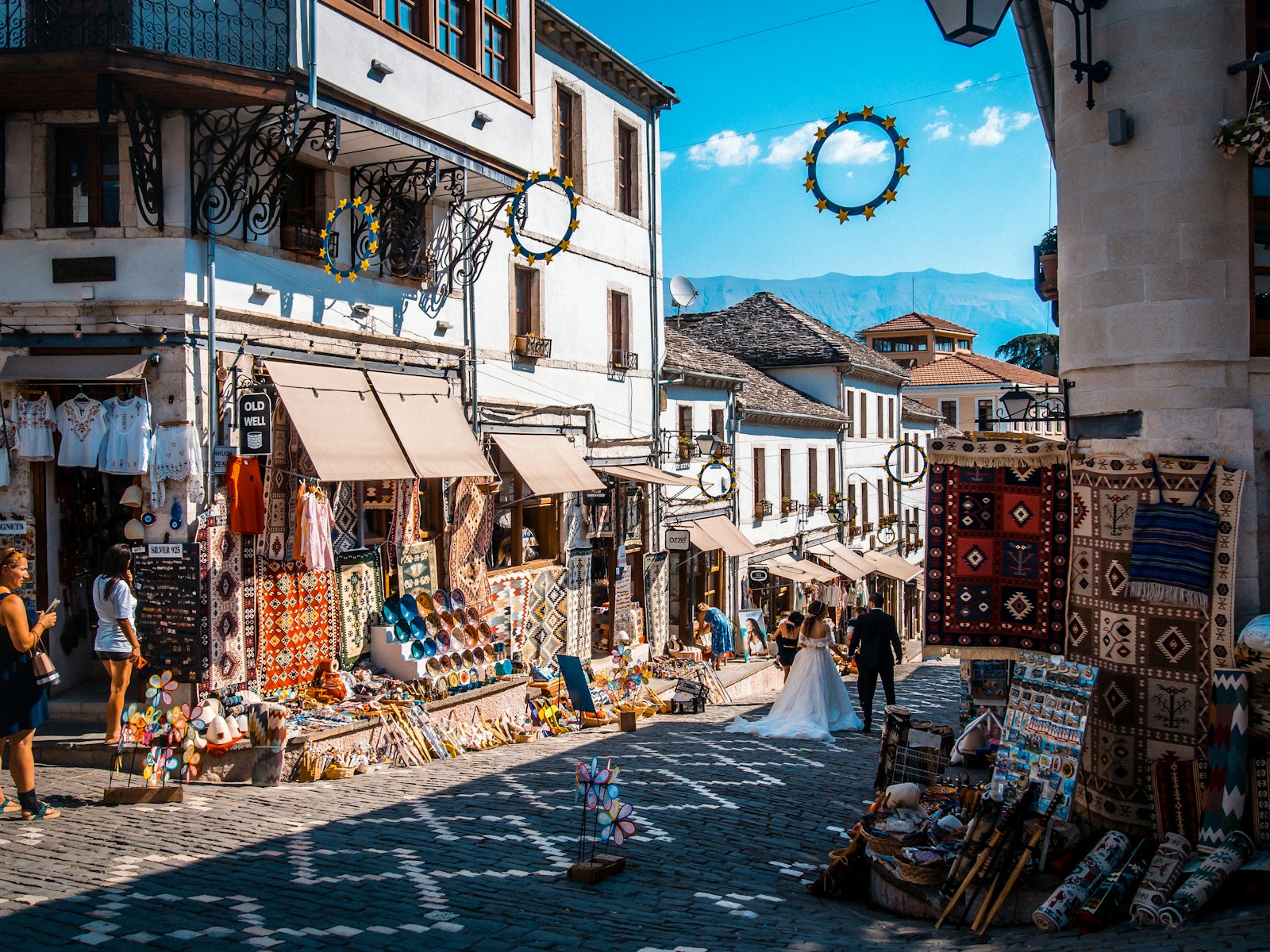
A grey stone town on a steep hillside above the Drino valley, with a huge castle, Ottoman tower houses, a cobbled bazaar and slate roofs, close to the Blue Eye and Antigonea.
- Best time to visit: April to June and September to October
- Daily budget (budget traveller): $40 to $130 USD
- Ideal trip length: 2 to 5 days
Gjirokastër sits in southern Albania, about four hours by bus from Tirana and roughly an hour from Sarandë on the coast. It is often called the Stone City. The old town climbs a steep slope below one of the largest castles in the Balkans. Its tall Ottoman tower houses have thick stone walls and heavy slate roofs. Together with Berat, it is on the UNESCO World Heritage list. The old town is small and steep, so you can walk everywhere if your legs are up to it. In a couple of days you can see the castle and its museums, the Old Bazaar and the restored family houses, and go down into a Cold War tunnel under the town. With more time, it makes a good base for the Blue Eye spring, the hilltop ruins of Antigonea and the villages of the Drino valley. Gjirokastër is cheap by European standards. Dorm beds, family-run guesthouses and hearty local dishes keep a solo budget low, though you need cash for almost everything. It is quiet, safe and friendly. Evenings mean a slow walk through the bazaar and a long dinner on a terrace with views over the valley.
Gjirokastër is a hillside town of grey stone above the Drino valley in southern Albania. About 20,000 people live here. The old town, with its fortified tower houses and stone-slab roofs, is a UNESCO World Heritage site alongside Berat. Most visitors see it in a few hours on a day trip from Sarandë: the castle, a coffee in the bazaar, back on the bus. That works, but you miss the best of it. Stay a couple of nights and you get the castle in the cool of the morning, a family tower house with the owner showing you round, a guided walk through a communist-era bunker under the streets, and dinner on a terrace as the valley goes dark. It is also cheap. Dorm beds, family guesthouses with breakfast, filling plates of qifqi and pasha qofte and bus fares of a few hundred lek keep costs well below the coast.
Getting here is easy if you take the bus. Buses from Tirana take about four hours and cost around 1,000-1,200 lek cash. From Sarandë it is roughly an hour and 400-500 lek. All buses stop on the main road in the new town. From there, take a taxi or a short, steep walk up to the bazaar. Base yourself in or near the Old Bazaar for convenience, or in Palorto or Varosh for quiet lanes and views. Do the castle and the walk to Ali Pasha's Bridge early in the day. Leave tower houses, which keep loose hours, and the Cold War Tunnel, which runs hourly guided tours, for the middle of the day. Carry cash at all times.
Timing makes a big difference. Spring brings green hills and comfortable walking weather. Autumn is warm and settled, with a harvest feel in the villages. July and August are hot and busier, and the cobbles hold the heat. Winter is quiet, often wet, and some places shorten their hours. Albanian is the main language. Greek is widely spoken this close to the border, and younger people often speak English or Italian. Nightlife is low-key: a raki, a long dinner and a walk. If you want beaches and bars, go to the coast. If you want history, mountain views and a slow, cheap few days, stay here.
Gjirokastër itinerary
Arrive and find your feet in the bazaar
Morning: Take a morning bus from Tirana (about four hours, 1,000-1,200 lek) or from Sarandë (about an hour). Get off on the main road and take a short taxi up to your guesthouse.
Afternoon: Drop your bag, withdraw cash and wander the Old Bazaar lanes. Look in at the Bazaar Mosque, then stop for coffee and a plate of qifqi.
Evening: Watch the light change on the castle walls from a bazaar terrace, then have dinner at Kujtimi or Odaja. Early night, because tomorrow starts early.
Castle and Cold War Tunnel
Morning: Be at the castle gate when it opens. Allow two hours for the galleries, the artillery, the plane on the ramparts and the museum. Budget about 600 lek in cash for both tickets.
Afternoon: Go down for lunch, then join a guided Cold War Tunnel tour. Buy your 200 lek ticket at the office by the municipality building, as tours run hourly.
Evening: Walk up through Palorto at golden hour, then have a relaxed dinner and a glass of local wine.
Tower houses and Ali Pasha's Bridge
Morning: Walk the 30-40 minutes out to Ali Pasha's Bridge through Varosh and Dunavat while it is cool. Wear shoes with real grip.
Afternoon: Back in town, tour Skenduli House, then climb to Zekate House for the best rooftop views. Add the Ethnographic Museum or Kadare's House if you have the energy.
Evening: Sunset from the castle side of town, then pasha qofte and oshaf for dessert.
Antigonea and Libohovë
Morning: Take a taxi or hire car to the Antigonea ruins, about 14km away. Walk the walls, stoa and agora, and admire the valley views. Entry is 200-300 lek, and the booth is sometimes unmanned.
Afternoon: Cross the valley to Libohovë for its ruined castle and a long lunch in the village. Agree the driver's waiting time in advance.
Evening: Back to Gjirokastër. A simple dinner of byrek and kos keeps the budget in check.
The Blue Eye
Morning: Ask at the bus stop the day before about a morning service via the SH99 past Muzinë (about 400 lek). Otherwise take a taxi. Walk the 2km shaded path to the spring. Entry is 50 lek in cash, and swimming in the spring itself is not allowed.
Afternoon: Picnic by the river, then either catch a bus back or continue to Sarandë for a swim in the sea and return on an afternoon bus.
Evening: A quiet evening back in the bazaar. Book tomorrow's transport if you are doing Përmet.
Përmet and the Benja hot springs
Morning: Leave early by furgon, hire car or private driver for Përmet, which takes roughly two hours via Tepelenë along the Vjosa valley. Confirm return times before you go.
Afternoon: Soak in the free Benja thermal pools below the old Ottoman stone bridge, then eat in Përmet, which is known for its gliko (fruit preserves) and raki.
Evening: Head back to Gjirokastër, or stay overnight in Përmet if the last bus has gone and you prefer not to rush.
Slow morning and move on
Morning: Have breakfast on your guesthouse terrace, then pick up crafts in the bazaar, such as carved wood, embroidered textiles or a small carved stone roof tile.
Afternoon: Catch a bus north to Berat or Tirana, south to Sarandë or towards the Kakavia border for Greece.
Evening: Arrive at your next stop. If you are heading home from Tirana, allow a buffer day before your flight.
Best neighbourhoods
- Old Bazaar (Pazari): The historic centre where several cobbled streets meet below the castle. It has the Bazaar Mosque, craft shops, cafés and many of the town's best-known restaurants. It is the most convenient base for a short stay, but expect some evening noise in summer.
- Palorto: The old residential quarter on the slopes north and west of the bazaar. Skenduli House, the Ethnographic Museum and Ismail Kadare's House are here, and Zekate House is further up the hill. It is quiet, steep and atmospheric, with guesthouses in restored stone houses.
- Varosh: The old Christian quarter to the south and east of the castle, with lanes of stone houses and the church of Saint Sotira. It sees fewer visitors than the bazaar, and staying here puts you on the walking route towards Ali Pasha's Bridge.
- Dunavat: An older neighbourhood on the eastern slope, crossed by the path down to Ali Pasha's Bridge. It has few places to stay, but it is good for a walk past traditional houses that families still live in.
- New town (Rruga 18 Shtatori): The flat, modern part of town down in the valley, around the main boulevard. It has the roadside bus stops, supermarkets, ATMs, phone shops and cheaper cafés. It is practical rather than pretty, and a short taxi or local bus ride below the old town.
Must-do experiences
- Explore Gjirokastër Castle: Walk the vaulted galleries, the old artillery collection and the US Air Force plane on the ramparts, then look out over the Drino valley. Recent visitors report 400 lek for entry plus about 200 lek for the museum inside. Bring cash and go early in summer.
- Go down into the Cold War Tunnel: A bunker complex built under the town in the communist era to shelter the local leadership. You can only enter with a guide on a short tour, which costs about 200 lek in cash. Buy tickets at the office by the municipality building and arrive a few minutes before the hour.
- Tour an Ottoman tower house: Skenduli House and Zekate House are both still owned by the families who built them, and the owners often show you round in person. Zekate has the better view and Skenduli the better-preserved interior. Each costs roughly 200-300 lek.
- Wander the Old Bazaar: Stone-paved lanes of craft shops, carpets, carved wood and cafés below the castle. Go early in the morning before the day-trip groups arrive, or at dusk when the stones glow and the terraces fill.
- Walk to Ali Pasha's Bridge: Also called the Dunavat Bridge, this is a surviving section of an Ottoman aqueduct that once carried water to the castle. Allow about 30-40 minutes each way from the centre on steep paths, and wear shoes with grip.
- Visit the Ethnographic Museum and Kadare's House: The Ethnographic Museum stands on the site of Enver Hoxha's birthplace and shows how a traditional house worked. Nearby, the rebuilt family home of the novelist Ismail Kadare has been reported at about 500 lek. Read his novel 'Chronicle in Stone' before you come.
- Day trip to Antigonea: The ruins of a city founded by King Pyrrhus around 300 BC sit on a hill about 14km from town, with sweeping views of the valley. You will see walls, a stoa, the agora and a church mosaic. Entry has been 200-300 lek, and you need a car or taxi.
Hidden gems
- Zekate House's upper floor at sunset, where the windows look across the slate roofs to the castle and the valley beyond
- The Bazaar Mosque, a small 18th-century mosque at the heart of the old town, best seen in the quiet early morning
- The lanes of Varosh, where you mostly meet neighbours rather than tour groups, on the way towards Ali Pasha's Bridge
- Libohovë, a small town across the valley with a ruined castle linked to Ali Pasha's sister Shanisha, which few visitors reach
- Benja thermal pools near Përmet, natural hot springs below an old Ottoman stone bridge, free to use and a long but rewarding day out
Daily budget
- Accommodation: budget 1,000-2,000 lek / night (hostel dorm), mid-range 3,500-7,000 lek (guesthouse or boutique hotel in a restored house), splurge 9,000+ lek (hilltop resort with a pool). Many guesthouses include a big homemade breakfast. Book ahead for July and August. Some rooms are up long flights of stone steps, so check if you have heavy luggage.
- Food: budget 1,000-1,800 lek / day (byrek, bakery food, one cheap restaurant meal), mid-range 2,500-4,000 lek (two sit-down meals with wine), splurge 5,000+ lek (long terrace dinners, cooking class). Traditional mains in the old town usually cost around 700-1,200 lek. A coffee is about 100-150 lek. Restaurants in the new town are cheaper. Prices are rough guides.
- Transport: budget 0-500 lek / day (walking, local bus, one short taxi), mid-range 1,000-3,000 lek (bus day trips plus taxis), splurge 6,000+ lek (hire car or private driver for the day). Tirana to Gjirokastër costs about 1,000-1,200 lek cash, and Sarandë about 400-500 lek. Agree taxi fares before you set off, especially for Antigonea and Libohovë, where the driver waits.
- Activities: budget 400-800 lek / day (castle or one tower house plus a free walk), mid-range 1,000-1,500 lek (castle, museum, tunnel and a house), splurge 5,000+ lek (private guide or guided day tour). Recent fees: castle about 400 lek plus 200 lek for the museum, Cold War Tunnel 200 lek, Skenduli about 300 lek, Zekate about 200-250 lek, Kadare House about 500 lek, Blue Eye 50 lek, Antigonea 200-300 lek. Nearly all are cash only.
- Drinks & nightlife: budget 200-500 lek (beer or raki at a bazaar café), mid-range 800-1,500 lek (wine with dinner, a couple of drinks), splurge 2,500+ lek (cocktails and terrace views). Nightlife is quiet: cafés, terrace bars and the evening stroll. A local beer costs roughly 200-300 lek, and raki is often offered by hosts.
Where to stay
- Social hostel in Near the Old Bazaar (1,000-2,000 lek / night): Stone City Hostel is a long-running backpacker favourite in a restored old house, with a sociable atmosphere and helpful advice on buses and day trips. The bazaar and castle are a short walk away.
- Boutique hotel in Palorto (5,000-8,000 lek / night): Hotel Kalemi is a family-run hotel in traditional stone houses, with carved wooden ceilings and valley views, on a quiet lane near Skenduli House.
- Apartment in Old Bazaar or Varosh (3,000-6,000 lek / night): Rooms and small apartments in restored houses let you self-cater and spread out for a longer stay. Hotel Gjirokastra and similar family places near the bazaar are also good value. Check how many steps lead up from the road.
- Splurge in Hillside above the old town (9,000-15,000+ lek / night): Kerculla Resort sits high above town with a pool and wide views over the castle and valley. It is a good treat in summer heat, but you will want taxis to and from the bazaar.
What to eat
- Qifqi: Gjirokastër's own dish of fried rice balls bound with egg and fresh herbs, sold all over the bazaar
- Pasha qofte: meatballs baked in a creamy yoghurt or milk sauce, a local favourite at family-run restaurants
- Shapkat: cornbread baked with leeks or greens and cheese, rustic and filling
- Oshaf: a sweet pudding of dried figs and sheep's milk, made in the Gjirokastër area
- Byrek and kos: flaky pastry from a bakery with a cup of thick local yoghurt, the cheapest good breakfast in town
- A slow dinner at Kujtimi or Odaja in the old town, both long-running places for traditional southern Albanian cooking
Day trips
- The Blue Eye (Syri i Kaltër) (About 35-40km southwest, around 50 minutes by car): A deep karst spring that rises from an underwater cave in a startling shade of blue, at the head of the Bistricë river. A 2km shaded path leads from the car park. Swimming in the spring itself is banned. A few morning buses towards Sarandë have still used the old SH99 road past Muzinë, for about 400 lek. Ask the day before. Otherwise take a taxi, go via Sarandë or join a tour. Entry is 50 lek in cash.
- Antigonea Archaeological Park (About 14km, 25-30 minutes by car): A Hellenistic city traditionally said to have been founded by Pyrrhus of Epirus around 295 BC and destroyed by Rome in 167 BC. The site has walls, paved streets, a stoa and a church mosaic, with huge views over the Drino valley. There is no reliable bus to the gate, so take a taxi with waiting time or a hire car. Entry has been 200-300 lek, and the booth is sometimes unmanned out of season.
- Përmet and Benja thermal baths (About 60km northeast, roughly 2 hours by road): A small riverside town known for gliko preserves and raki, with free natural hot pools at Benja nearby. The pools sit below an Ottoman stone bridge in a canyon. Take an early furgon towards Përmet, then a taxi to Benja, or drive yourself. Return transport thins out in the afternoon, so check times or stay overnight.
When to visit
- Spring (April - June): 16-30°C, mostly dry by May, cooler nights. Crowds: Low to moderate, with more coach groups from late May. The best all-round window. The hills are green, walking to Ali Pasha's Bridge and Antigonea is comfortable, and guesthouse prices are still low.
- Summer (July - August): 30-37°C in the valley, very dry. Crowds: Busy, with day-trippers from the coast. Long opening hours and full bus timetables, but the heat is hard on steep cobbles. Sightsee before 11am and after 5pm, and book rooms ahead.
- Autumn (September - October): 18-30°C, settled, rain returning late October. Crowds: Moderate, easing through October. The local pick. It is warm enough for the Blue Eye and Benja, quieter in the bazaar, and the light on the stone is lovely.
- Winter (November - March): 3-14°C, frequent rain, snow on the surrounding peaks. Crowds: Very quiet. Cheap and atmospheric, with smoke from wood stoves over the roofs. Some guesthouses close, opening hours shrink and the cobbles are slippery, so bring layers and good boots.
Entry rules for your passport
Visa rules for Albania depend on the passport you travel on. Check the official source before you book: Albania Ministry for Europe and Foreign Affairs
Getting there
Most international visitors fly into Tirana International Airport. From central Tirana, buses for Gjirokastër leave the South and North Regional Bus Terminal throughout the day. The trip takes about four hours and costs around 1,000-1,200 lek in cash, or about €13.50 if you book online. Some buses also run direct from Tirana Airport. From Sarandë, several daily buses take about an hour and cost 400-500 lek, and Corfu ferries to Sarandë make that a handy way in from Greece. Buses also link Gjirokastër with Berat, Fier, Vlorë and Përmet. Greece is about 30km south via the Kakavia border crossing, and shuttles run to the border. A daily bus to Meteora has been reported, so ask locally for current times. In Gjirokastër, buses and furgons stop on the main road at the northern edge of the new town, not at a proper terminal. A short taxi takes you up to the old town. Many nationalities, including UK, EU and US citizens, can usually visit Albania visa-free for up to 90 days, but check before you travel.
Getting around
The old town is best explored on foot, but it is steep and the stones are slippery, especially when wet. Wear shoes with real grip. Distances are short. The bazaar to the castle gate is a few minutes' climb, and Ali Pasha's Bridge is about 30-40 minutes' walk from the centre. Long-distance buses and furgons (shared minibuses) stop along the main road in the new town, not in the old town. A taxi up the hill costs a couple of euros, or a few hundred lek, and is worth it with luggage. A basic local bus loop connects the new town with the upper streets for a few dozen lek. For day trips, buses run to Sarandë and northwards to Tirana and Përmet. Antigonea and Libohovë really need a taxi or hire car, so agree the fare and waiting time before you set off. Driving is manageable on the main roads, but village roads are narrow and parking in the old town is tight.
Safety
Gjirokastër is very safe, and crime against visitors is rare. The real hazards are physical. The polished cobbles are slick after rain and steep everywhere, so falls and twisted ankles are the most common problem. Summer afternoons in the valley can go well above 35°C, so carry water and do the castle and walks early or late. Inside the castle, watch for low walls and uneven floors. The Cold War Tunnel is narrow and enclosed, which matters if you are claustrophobic. Driving at night on mountain roads is risky, because of poor lighting, livestock and fast overtaking. Stray dogs are common but usually harmless. Do not feed or approach them. Southern Albania is in an earthquake zone, so know your accommodation's exits. Tap water is generally considered safe in town, but many people drink bottled. Medical care is basic, so get travel insurance that includes evacuation.
Solo travel tips
- Stay close to the bazaar: Everything is uphill from the bus stop. A bed within five minutes of the bazaar means you can walk to dinner, the castle and the tunnel without taking taxis every evening.
- Pick a hostel or family guesthouse for company: Stone City Hostel and the many family guesthouses are where solo travellers meet. Hosts often share raki, tips and up-to-date bus times over breakfast.
- Check bus times in person: Timetables online are often out of date. Ask your host or the drivers at the roadside stops the day before, especially for the Blue Eye route and Përmet.
- Carry cash in small notes: Museums, the tunnel, buses and bakeries rarely take cards. Keep 100, 200 and 500 lek notes and coins for tickets.
- Safety for solo travellers: The main risks are slippery cobbles, summer heat and night driving on mountain roads. Wear good shoes, carry water and arrange taxis through your guesthouse after dark.
- Share a taxi for day trips: Antigonea and Libohovë are much cheaper split two or three ways. Ask at your hostel, because other travellers are often planning the same loop. Download offline maps too, since village signal can drop.
Cultural etiquette
- Greet people with 'Përshëndetje' (hello) or 'Mirëdita' (good day), and say 'Faleminderit' (thank you).
- Watch the head gestures. Older Albanians may nod to mean no and shake their head to mean yes, so confirm with words.
- Dress modestly at the Bazaar Mosque and churches. Cover shoulders and knees, women should bring a scarf for the mosque, and take shoes off where asked.
- Hospitality is taken seriously. If a host offers raki, coffee or homemade sweets, accept at least a little, as refusing outright can seem cold.
- Ask before photographing people, especially older residents in Palorto and the villages.
- The tower houses are still family homes. Knock or call ahead, keep voices down and follow the owner's lead.
- Communist history is personal here. Listen more than you joke when locals talk about the Hoxha years or the tunnel.
Frequently asked questions
How do I get to Gjirokastër from Tirana?
Buses leave Tirana's South and North Regional Bus Terminal throughout the day and take about four hours. Recent prices are 1,000-1,200 lek in cash on board, or about €13.50 if you book online. There are also some direct buses from Tirana Airport. Buses drop you on the main road in the new town, so take a short taxi uphill to the old town.
How many days do I need in Gjirokastër?
Two full days cover the castle, the bazaar, a tower house, the Cold War Tunnel and Ali Pasha's Bridge. Three to five days lets you add Antigonea, the Blue Eye and Libohovë at a relaxed pace. A day trip from Sarandë shows you the castle, but you miss the quiet evenings and early mornings.
When is the best time to visit Gjirokastër?
April to June and September to October are best, with warm days, green hills and fewer crowds. July and August are hot in the valley and busy with day trips from the coast. Winters are cool and wet. Some sights shorten their hours, and a few guesthouses close.
How much does the castle cost, and when is it open?
Most 2026 visitor reports give 400 lek for the castle grounds plus around 200 lek for the museum inside, cash only. Some older sources quote 200 lek, so carry a little extra. In summer it is open from about 9am into the early evening, with shorter hours in winter. Confirm on the day.
Can I visit the Blue Eye from Gjirokastër by public transport?
Yes, but options are limited. Most buses to Sarandë now take a newer road that skips the Blue Eye, though a few morning services have still used the old SH99 route past Muzinë for about 400 lek. Ask at the bus stop the day before. Otherwise go via Sarandë, take a taxi or join a tour. Entry is 50 lek in cash, and the walk from the car park is about 2km.
Do I need cash in Gjirokastër?
Yes. Museum tickets, the Cold War Tunnel, buses, bakeries and many guesthouses are cash only. There are ATMs in the new town and near the bazaar, but bring some lek from Tirana or Sarandë in case a machine is empty. Euros are sometimes accepted, but at poor rates.
Is Gjirokastër safe for solo female travellers?
Yes, it is one of the most relaxed towns in Albania for travelling alone. Locals are hospitable, and the old town is quiet at night. Usual precautions apply: use licensed taxis or ones your guesthouse calls, avoid hitching on empty roads, and dress a little more modestly in villages and at religious sites.
What are the entry rules for Albania in 2026?
Citizens of the UK, EU, US, Canada, Australia and many other countries can usually enter Albania without a visa for up to 90 days in any 180-day period. Your passport should be valid for your whole stay. Albania is not in the Schengen area. Rules vary by nationality and can change, so check Albania's official government guidance and your own government's travel advice before you go.
Tours and activities in Gjirokastër | Gjirokastër in 2 days | Gjirokastër in 3 days | Gjirokastër in 4 days | Gjirokastër in 5 days | Gjirokastër in 7 days
Joy Plus home | Destinations | Itineraries | Activities | Flights | Budget planner | Calendar | Map | Blog | Lifetime access