Destinations / Asia
Gokarna, India travel guide
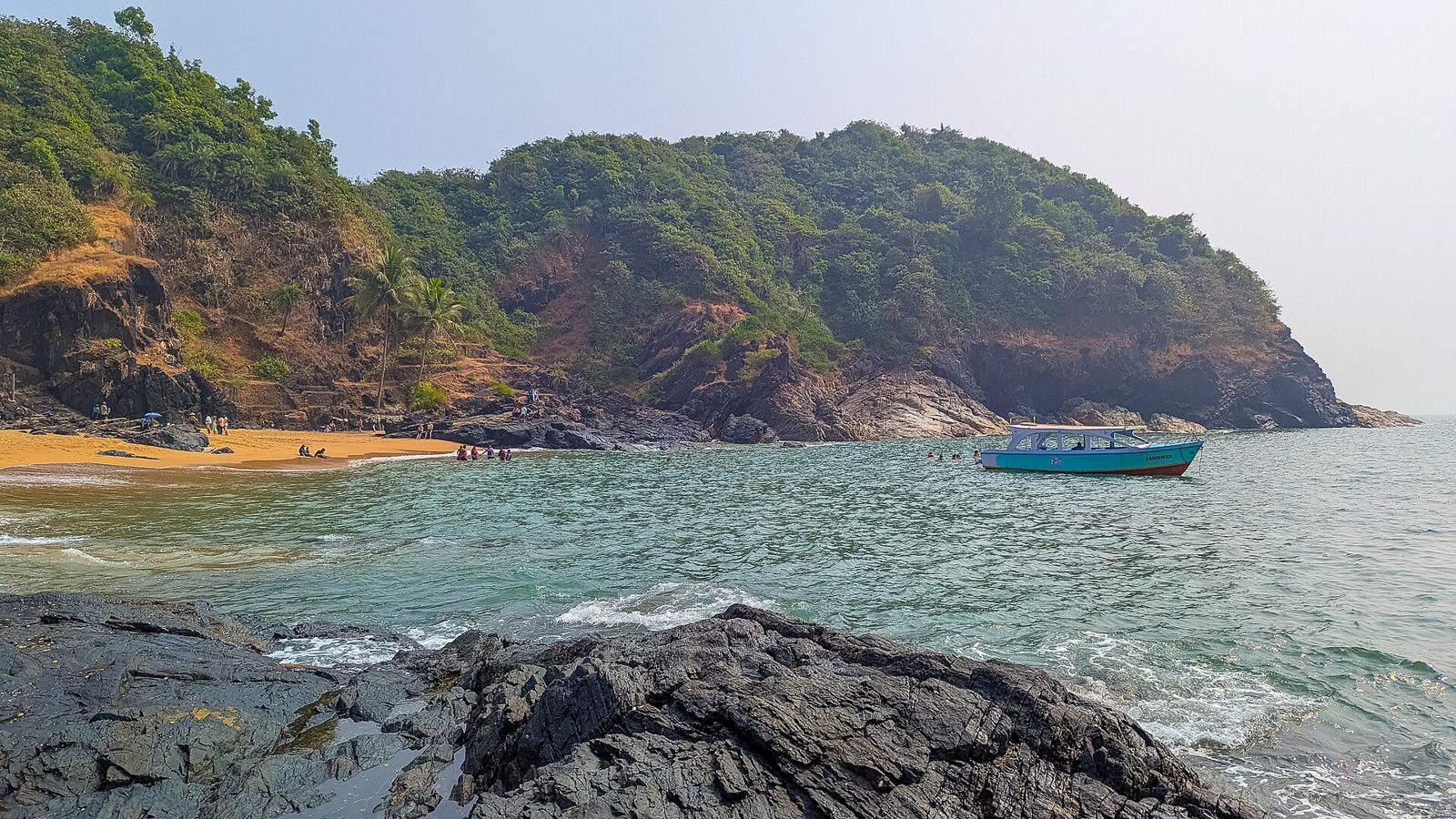
A Hindu pilgrimage town on the Karnataka coast with a string of beaches that you reach on cliff paths. You walk barefoot past the temple in the morning, hike from cove to cove at midday and eat a fish thali at Kudle as the sun goes into the Arabian Sea.
- Best time to visit: November to February
- Daily budget (budget traveller): $20 to $90 USD
- Ideal trip length: 3 to 6 days
Gokarna is a small temple town on the coast of Uttara Kannada in Karnataka, about three hours' drive south of Goa. It runs on two calendars at once. Pilgrims come to the Mahabaleshwar Temple, one of the holiest Shiva shrines in south India. Travellers come for the beaches south of town, a row of coves divided by laterite headlands. The town is a short grid of streets around Car Street, with wooden houses, temple stalls, bathing tanks and a busy main beach where pilgrims take a ritual dip. Walk 20 minutes over the hill and you reach Kudle, a long curve of sand lined with guesthouses and cafés. Om Beach is further south. Half Moon and Paradise have no road at all, so you get there on foot along a cliff path or by fishing boat. It is quieter and more conservative than Goa. There are no big clubs or resorts, beer is low-key and the temple sets the tone in town. The season runs from roughly October to May, and in the monsoon the boats stop and swimming is unsafe. Dorm beds are cheap, a thali costs a couple of dollars and the beaches are free, so it is an easy and good-value place for a solo traveller to slow down for a few days.
Gokarna sits on a sandy strip between the Gangavali and Aghanashini rivers on the Karnataka coast. It is a temple town first and a beach town second. The Mahabaleshwar Temple dates back to around the 4th century, and pilgrims call the town Dakshina Kashi, the Varanasi of the south. Legend says the demon king Ravana was tricked into setting down Shiva's Atmalinga here, and it has stayed put ever since. Backpackers found the coves south of town decades ago, when Goa got too busy. The beach huts of that era have mostly been cleared, but the feel remains: cafés on the sand, cheap rooms, sunsets and very little to do except swim, walk and eat. Stay a few nights and you get both sides of Gokarna, with bells and bathing tanks in the morning and fish curry by the sea at night.
Getting here takes a little planning. Overnight buses from Bengaluru arrive early in the morning. Konkan Railway trains stop at Gokarna Road, about 9km out of town, and the Panchaganga Express runs daily from Bengaluru's Yesvantpur station. If you fly, Dabolim and Mopa in Goa and Hubballi are all about three to four hours away by road, and you can combine Dabolim with a train from Madgaon. Once you are here, walk. The cliff paths link town, Kudle and Om, and autos and a slow local bus cover the roads. Base yourself at Kudle for a sociable beach, at Om for more choice and water sports, or on Car Street for temple life and cheap thalis.
Timing shapes the trip. November to February brings dry days, calm water and the busiest cafés. October is green and quiet, and March to May is hot, so you'll want to be on the trail by 7am. The monsoon, from June to September, is dramatic but the sea is dangerous, boats stop and many places close. Maha Shivaratri, usually in February or March, fills the town with pilgrims, and the chariot festival follows. Gokarna is quieter and more traditional than Goa. Dress modestly in town, keep beer to licensed cafés and leave the drugs alone. If you want parties, go north. If you want a long walk, a cold swim and a thali by the sea, stay here.
Gokarna itinerary
Arrive and find your feet
Morning: Arrive on the overnight bus from Bengaluru or a train to Gokarna Road, then take an auto into town (about ₹200-300). Drop your bag and have dosa and filter coffee on Car Street.
Afternoon: Nap through the heat, then walk to Gokarna Main Beach and watch the pilgrims at the water's edge.
Evening: Walk over the headland to Kudle before dark for sunset, and eat a fish thali on the sand. Take an auto back if you are staying in town.
Temple town
Morning: Go to Kotiteertha tank at sunrise, then join the queue at the Mahabaleshwar Temple (opens 6am) in a dhoti, saree or salwar suit. Visit the Maha Ganapati shrine next door.
Afternoon: Shelter from the midday sun with a thali on Car Street. Later, walk up to Ramatirtha for the view over Main Beach and Kudle.
Evening: Stroll Car Street as the temple lamps come on, and try a gadbad ice cream at Prema.
The beach trek
Morning: Set off from Kudle by 7am with two litres of water. Walk to Om, then on through the forest to Half Moon for a swim.
Afternoon: Scramble over the rocks to Paradise, swim at knee depth and rest in the shade. Take a shared boat back to Om well before the last one, around 5:30pm.
Evening: Watch the sunset from the north end of Om Beach, then dinner at one of the cafés behind the sand.
Slow day at Om
Morning: Book a beginner surf lesson or hire a kayak at Om Beach while the sea is calm.
Afternoon: Long lunch, a book and a swim in the lifeguarded part of the bay. Walk up to the viewpoint on the road to see the Om shape.
Evening: Head back to Kudle for a quiet drink and music at a café.
Mirjan Fort and the estuary
Morning: Take a scooter or taxi about 22km to Mirjan Fort, a 16th-century laterite fort on the Aghanashini river. It is free and opens from around 8am.
Afternoon: Stop in Kumta for lunch, then head to Belekan and the estuary, or join a boat trip from Tadri harbour (about ₹499-799).
Evening: Back to your beach for sunset. An early night before a long day out.
Yana Rocks
Morning: Leave early by taxi or scooter for Yana, about two hours inland through forest. Pay the small entry fee and walk up to the huge black limestone pinnacles.
Afternoon: Take your time around the rocks and the cave shrine, then have a simple lunch near the car park before driving back.
Evening: A farewell fish dinner at Kudle and a last sunset on the sand.
Slow morning and depart
Morning: One last early swim, or the cliff walk between Kudle and town before the heat.
Afternoon: Pick up your bag and take an auto to Gokarna Road for your train, or to the bus stand. Check times the day before.
Evening: Board the overnight bus to Bengaluru, or carry on north to Goa or south to Murudeshwar and Udupi.
Best neighbourhoods
- Car Street and the temple town: The old heart of Gokarna, a long street running from the Mahabaleshwar Temple towards the Kotiteertha tank, lined with wooden houses, puja shops and cheap vegetarian restaurants. You have the bus stand, ATMs and the main beach close by. It is lively and very local, with temple bells from dawn. Pick it for culture and easy transport, not for sea views.
- Gokarna Main Beach: The town beach, right behind the temple. It is long, sandy and busy with pilgrims and Indian families, especially at weekends and festival times. A few simple guesthouses and cafés sit at the southern end. It is handy for town, but the sea is rough and it feels less like a holiday beach than the coves further south.
- Kudle Beach: The most popular base for travellers, a 20-minute walk over the headland from town or a short auto ride by road. You get a long beach, rows of cafés with cushions on the sand, guesthouses, hostels and sunsets straight out to sea. It is sociable but still relaxed. Expect steps down from the road, so pack light.
- Om Beach: About 6.5km from town by road, with two curved bays that together look like the Om symbol from the viewpoint above. It has water sports, surf lessons, cafés, lifeguards on the main stretch and the boats to Half Moon and Paradise. It is a little busier with day trippers than Kudle, but has more choice of mid-range rooms.
- Belekan and the south: Belekan is the quiet village at the southern end of the beach trek, near the mouth of the Aghanashini river. There are a few homestays and fenced campsites, plus boat trips from Tadri harbour nearby. It suits you if you want peace and don't mind relying on autos, the local bus or a rented scooter to get anywhere.
Must-do experiences
- Walk the beach trek: Follow the cliff path from Main Beach to Kudle, Om, Half Moon and Paradise, about 8km with swims along the way. It is free and needs no permit. Start by 7am, carry two litres of water, wear proper shoes rather than flip-flops and take a boat back from Paradise or Half Moon if your legs are done.
- Visit the Mahabaleshwar Temple: The temple holds the Atmalinga, and only its tip is visible through the pedestal. It opens from 6am to 12:30pm and from 5pm to 8pm, and entry is free. The dress code is strict: men wear a dhoti and go bare-chested, women wear a saree or salwar suit, and jeans and shorts are not allowed.
- Watch the sunset from Kudle: Kudle faces due west, and in the evening the whole beach turns towards the sea. Order a fresh lime soda or a fish thali at one of the cafés on the sand and stay for the dusk. Walk back along the lit road rather than the headland path if you are heading into town.
- Take a boat to Half Moon and Paradise: Fishing boats leave from Om Beach in season and drop you at the two road-free coves. Shared seats usually cost ₹200-500 per person and the trip takes about 15 minutes. The last boats back tend to go around 5:30pm, so check the time with the boatman before you settle in.
- See the town wake up at Kotiteertha: Walk to the large stone bathing tank in the middle of town at sunrise, when pilgrims bathe and perform rites before going to the temple. It is free. Keep a respectful distance, don't photograph people bathing and carry on down Car Street for coffee and breakfast.
- Learn to surf at Om Beach: Om Beach has small, forgiving waves in the post-monsoon months and a handful of surf schools that run beginner lessons. Expect roughly ₹2,000-3,000 for a lesson with board hire. Go in October to December, when the swell is most reliable, and always surf where the instructors tell you to.
- Eat a temple meal: The Mahabaleshwar Temple serves free Prasada Bhojana to pilgrims twice a day, at around 12:30pm and 7:30pm. You sit in rows and eat rice, sambar and curries from a banana leaf with your right hand. Dress as you would for the temple, and leave a small donation if you wish.
Hidden gems
- Ramatirtha, a small spring and shrine on the headland between Main Beach and Kudle, with a viewpoint over both beaches that most people walk straight past
- The viewpoint on the road above Om Beach, the only place where the two bays actually look like the Om symbol
- Small Hell Beach, a tiny rocky cove on the spur between Half Moon and Paradise that sees few visitors
- Bhadrakali Temple on the edge of town, linked to the same Ravana legend as the Mahabaleshwar Temple and far quieter
- The Aghanashini estuary by Belekan in the late afternoon, with fishing boats, mangroves and birdlife instead of beach cafés
Daily budget
- Accommodation: budget $8-15 / night (hostel dorm), mid-range $30-70 (beach guesthouse or cottage with private bathroom), splurge $230+ (SwaSwara at Om Beach). Prices roughly double over Christmas and New Year and rise on long weekends. Rooms by the beach are simple, so check for hot water and power backup. Book December and January ahead.
- Food: budget $5-10 / day (thalis, dosa breakfasts, chai), mid-range $12-25 (café meals and a fish dinner), splurge $35+ (fresh seafood platters, resort dining). A veg thali is about ₹150-250, a café main ₹250-450 and fresh fish is priced by size, so ask first. The temple serves free meals twice a day.
- Transport: budget $1-4 / day (walking, local bus, the odd auto), mid-range $6-12 (scooter hire plus fuel, or regular autos), splurge $40-60 (taxi for a day trip to Yana or Murudeshwar). Station to town by auto is about ₹200-300 and town to Om roughly ₹250-300. Scooters cost around ₹400-700 a day. Boats to Half Moon and Paradise cost ₹200-500 per person.
- Activities: budget $0-5 / day (beaches, trek, temple, Mirjan Fort all free), mid-range $5-15 (boat hopping, Yana entry, kayaking), splurge $25+ (surf lessons, dolphin boat trips, yoga courses). Yana charges a few rupees plus parking. Three-hour boat trips from Om or Tadri cost about ₹499-799. Surf lessons cost roughly ₹2,000-3,000.
- Drinks & nightlife: budget $2-5 (fresh juice, lassi or a beer), mid-range $8-15 (a few beers at a beach café), splurge $25+ (cocktails at a resort). Chai costs about ₹20-30 and a beer at a licensed café about ₹200-350. Nightlife means sunset drinks and occasional music at Kudle or Om, not clubs. Drinking on the beach is not allowed.
Where to stay
- Social hostel in Kudle and the road above Om ($8-15 / night (dorm)): Hostel chains such as Zostel and goSTOPS have dorms on the hill above the beaches, with common areas, group activities and lockers. You can walk to the sand and easily find trek partners.
- Beach guesthouse in Kudle Beach ($25-60 / night): Simple cottages and rooms set back from the sand, many with a café downstairs. You wake to the sea and walk to town in 20 minutes. Check for hot water, mosquito nets and power backup.
- Town guesthouse in Car Street and the temple area ($12-35 / night): Plain, clean rooms run by local families, close to the bus stand, the temple and cheap thali places. Good for an early bus or for the festivals, though not for sea views.
- Splurge in Om Beach ($230-450+ / night): SwaSwara is a quiet wellness retreat in laterite villas above Om Beach, with yoga, Ayurveda and a spa. It usually sells multi-night packages, so book well ahead.
What to eat
- South Indian thali: unlimited rice, sambar, rasam, curries and pickles on Car Street at simple vegetarian places such as Pai Restaurant, for around ₹150-250
- Fish thali or fish fry: kingfish, mackerel or pomfret fried in a spicy masala, served at beach cafés in Kudle and Om. Ask the price before you order fresh fish
- Masala dosa and goli baje: crisp dosa and fried batter balls for breakfast in town, often with filter coffee
- Gadbad ice cream: a coastal Karnataka sundae of layered ice cream, jelly, fruit and nuts, served at Prema Restaurant near the temple
- Neer dosa with coconut fish curry: soft, lacy rice pancakes with a sour kokum or coconut curry, a speciality of this coast
- Banana pancakes, smoothie bowls and chai at the beach cafés, the classic backpacker breakfast at Kudle and Om
Day trips
- Mirjan Fort (About 22km from Gokarna, 35 to 45 minutes by road): A 16th-century laterite fort on the Aghanashini river, with high walls, watchtowers, wells and a moat. It is free to visit, often nearly empty and best early in the morning. Bring water, as there are no shops on site. Take a scooter, auto or taxi south along NH66 towards Kumta. It opens from around 8am to late afternoon. Combine it with lunch in Kumta and a stop at the estuary near Belekan.
- Yana Rocks (About 60km inland, roughly two hours by road): Two enormous black karst pinnacles rising out of Western Ghats forest, with a cave shrine to Shiva at the base. A forest walk leads up from the car park. Hire a taxi (about ₹1,500-2,000 each way) or ride a scooter via Kumta, as public transport is impractical. Entry is a few rupees plus parking, and it opens from about 8am to 6pm. Go from October to March, as the paths get slippery in the monsoon.
- Murudeshwar (About 80km south, roughly 1.5 to two hours): A seaside temple town with a huge Shiva statue and a tall gopuram right on the shore. Dive operators run trips from here to Netrani Island in the dry season. Take a Konkan Railway train from Gokarna Road to Murudeshwar, or a bus via Kumta and Honnavar. Leave early and check the times of return trains before you go.
When to visit
- Post-monsoon (October - November): 24-32°C, humid, green hills, occasional showers in October. Crowds: Low to moderate, busier around Diwali and long weekends. A lovely time to visit, with lush headlands and the best surf. Some cafés and boats are still getting going in early October.
- Peak season (December - February): 20-32°C, dry and sunny, cooler nights, calm sea. Crowds: Busy, very busy at Christmas, New Year and on weekends. The best weather for trekking and swimming. Book rooms ahead for late December, and expect higher prices.
- Hot season (March - May): 26-35°C, hot and very humid, sea warm. Crowds: Moderate in March, quieter by May, with Indian school holidays in April and May. Still good for beach days if you trek at dawn and rest at midday. Some cafés start to close in May ahead of the rains.
- Monsoon (June - September): 24-30°C, very heavy rain, rough sea and strong winds. Crowds: Very low, apart from pilgrims. Only for rain lovers. Swimming is unsafe and effectively banned, beach boats stop, trails are slippery and many shacks shut. Rooms are cheap.
Entry rules for your passport
Visa rules for India depend on the passport you travel on. Check the official source before you book: Government of India e-Visa portal
Getting there
There is no airport in Gokarna. The nearest are Dabolim in Goa, about 140km and three to 3.5 hours by road, Mopa in north Goa, further still, and Hubballi, about 150km and three to four hours. Taxis from the Goa airports cost a few thousand rupees, so agree the fare beforehand or book through your accommodation. A cheaper option is to get from Dabolim to Madgaon and take a Konkan Railway train to Gokarna Road, roughly two hours. From Bengaluru, overnight KSRTC and private buses (VRL, SRS and others) take about 10 to 12 hours for ₹800-1,800, arriving early in the morning at the town bus stand or the junction on the highway. Book sleeper seats in advance in peak season. The Panchaganga Express runs daily from Yesvantpur to Gokarna Road in about 12 hours, and Mumbai to Gokarna Road takes around 10 to 12 hours. The station is about 9km from town, and an auto costs ₹200-300. If you drive, NH66 runs past Gokarna Cross, and parking near Om and Kudle is limited.
Getting around
Gokarna town is small enough to walk, and Car Street to Main Beach takes five minutes. The beaches are linked by cliff paths, so many people walk from town to Kudle in 20 minutes and from Kudle to Om in about 40. Wear shoes with grip and don't walk the forest stretches after dark. By road, autos wait near the bus stand and above the beaches. Agree the fare before you get in. Town to Om Beach costs roughly ₹250-300. KSRTC local buses run from the bus stand towards Om and Belekan for about ₹20, but they are infrequent. Scooters can be rented in town for around ₹400-700 a day, plus fuel. You need a valid licence with an International Driving Permit, and you should wear a helmet. Roads have potholes, cattle and steep bends. Boats between Om, Half Moon and Paradise run only in season and stop in the late afternoon. For Mirjan Fort or Yana, hire a taxi or auto for the day or take a scooter.
Safety
Gokarna is generally safe for visitors, and violent crime is rare. The main danger is the sea. Rip currents are strong, people drown here every year, and swimming is effectively banned from June to September. Only swim where lifeguards are on duty, stay within your depth at Paradise and Half Moon, and never swim after drinking. On the trek, the rocks are slippery when wet, there is little shade and the forest sections between Om, Half Moon, Paradise and Belekan are quiet. Do them in daylight and preferably with others. Camping on the open beaches is banned, and police check the coves before dark. Drugs are illegal in India, penalties are severe and plain-clothes checks happen. Avoid street dogs at night, and use bottled or filtered water. Many cafés will refill your bottle. The national emergency number is 112. Carry travel insurance with medical cover. The nearest larger hospitals are in Kumta, Karwar and Manipal.
Solo travel tips
- Stay at Kudle for company: Kudle has the best mix of hostels, cafés and other solo travellers, and town is a short walk over the hill. Om is good too, but quieter after dark.
- Start the trek at dawn: The headlands have little shade, and by 11am the rock radiates heat. Leave by 7am, swim along the way and be on a boat or in a café by early afternoon.
- Pack one temple outfit: Bring or buy a dhoti, or a salwar suit or saree, on Car Street for a few hundred rupees. Without one you can't go into the main temple.
- Carry cash: Most cafés take UPI, but foreign cards often fail and boatmen want cash. Keep ₹1,000-2,000 in small notes, as there are no ATMs at Half Moon or Paradise.
- Safety for solo travellers: The real risks are the sea and the quiet forest paths. Swim only near lifeguards, never alone at Paradise, and don't walk between beaches late in the day. Take an auto rather than the headland path at night.
- Meet people on the trail: Hostels often organise group treks, sunset walks and boat trips, which is the easiest way to find company. Yoga classes and surf lessons at Om are also good places to start a conversation.
Cultural etiquette
- Greet people with 'namaskara' (the Kannada greeting) or 'namaste', and say 'dhanyavadagalu' or simply 'thank you'.
- Cover up in town. Swimwear is for the beaches only, and shoulders and knees should be covered on Car Street.
- Follow the temple dress code. Leave your shoes outside, don't take photos inside and let pilgrims go first in the queue.
- Eat and pass things with your right hand, especially at temple meals and thali restaurants.
- Don't photograph people bathing at Kotiteertha or doing rituals on the beach without asking.
- Drink only at licensed cafés, never on the beach or in town, and steer clear of drugs, which are illegal and harshly punished.
- Pack out your rubbish on the trek and the remote beaches, where there are no bins or collections.
Frequently asked questions
How do I get to Gokarna and from the station to my room?
Most travellers come by overnight bus from Bengaluru, which takes about 10 to 12 hours and costs roughly ₹800-1,800, or by Konkan Railway train to Gokarna Road station. From Goa, fly into Dabolim or Mopa and take a taxi of about three hours, or catch a train from Madgaon. Gokarna Road station is about 9km from town, and an auto costs around ₹200-300. Agree the price first. Buses drop you at the town bus stand, from where Kudle is a short auto ride and Om a little longer.
How many days do I need in Gokarna?
Two nights covers the temple town, a Kudle sunset and the beach trek. Three to five nights lets you add a lazy day at Om, a surf lesson, Mirjan Fort and the Aghanashini estuary. A week works if you want to slow right down or add day trips to Yana and Murudeshwar.
When is the best time to visit Gokarna?
November to February is the sweet spot, with dry weather, calm seas and comfortable trekking. October is green and quiet but some cafés are still setting up. March to May gets hot and humid, so trek early. From June to September the monsoon brings heavy rain, the beach boats stop, swimming is unsafe and many cafés close. Christmas, New Year and long Indian weekends are the busiest and most expensive times.
Can foreigners visit the Mahabaleshwar Temple?
You can visit the temple complex, but non-Hindus may be restricted from the inner sanctum, and practice can vary, so ask politely at the entrance. The dress code is strictly enforced. Men wear a dhoti and go bare-chested, women wear a saree or salwar suit, and jeans, shorts and beachwear are not allowed. Photography is banned inside. Opening hours are 6am to 12:30pm and 5pm to 8pm daily, and entry is free.
Do I need a permit or guide for the beach trek?
No. The classic route from Main Beach to Paradise and Belekan follows public paths, so it is free and needs no booking. Look out for painted arrows on the rocks. Start early, carry water and snacks, and wear proper shoes. If you get tired, boats from Half Moon or Paradise to Om run in season for a few hundred rupees. Avoid the trek in the monsoon and after dark.
Can I camp on the beaches?
Not on the open sand. Police have banned beach camping at Paradise and Half Moon, partly because night tides reach the tree line and rescue boats can't land on the rocks in the dark, and they clear tents before nightfall. Older blog posts that suggest otherwise are out of date. If you want to sleep outdoors, book a licensed, fenced campsite near Kudle, Om or Belekan.
Is Gokarna safe for solo female travellers?
Generally yes. Kudle and Om have plenty of solo women in season, and hostels are an easy way to find trekking company. Dress modestly in town and around the temple, and keep swimwear for the beaches. Don't walk the forest sections of the trek or the headland paths alone late in the day, take an auto after dark, and watch your drink at beach parties.
What entry rules apply to India in 2026?
Most visitors, including those from the UK, US, EU, Canada and Australia, need a visa, and there is no visa on arrival for these nationalities. Apply for an e-Tourist visa on the official site, indianvisaonline.gov.in, between 4 and 120 days before you arrive. The 30-day visa costs $25 from July to March and $10 from April to June, and the one-year visa costs $40, plus a bank charge. Five-year fees vary by nationality. Every foreign visitor must also file a free e-Arrival Card online in the 72 hours before landing. Ignore lookalike sites that charge for it, and check the official sites and your government's travel advice before you go.
Tours and activities in Gokarna | Gokarna in 2 days | Gokarna in 3 days | Gokarna in 4 days | Gokarna in 5 days | Gokarna in 7 days
Can't decide? Compare Gokarna with...
Joy Plus home | Destinations | Itineraries | Activities | Flights | Budget planner | Calendar | Map | Blog | Lifetime access