Destinations / Europe
Gordes, France travel guide
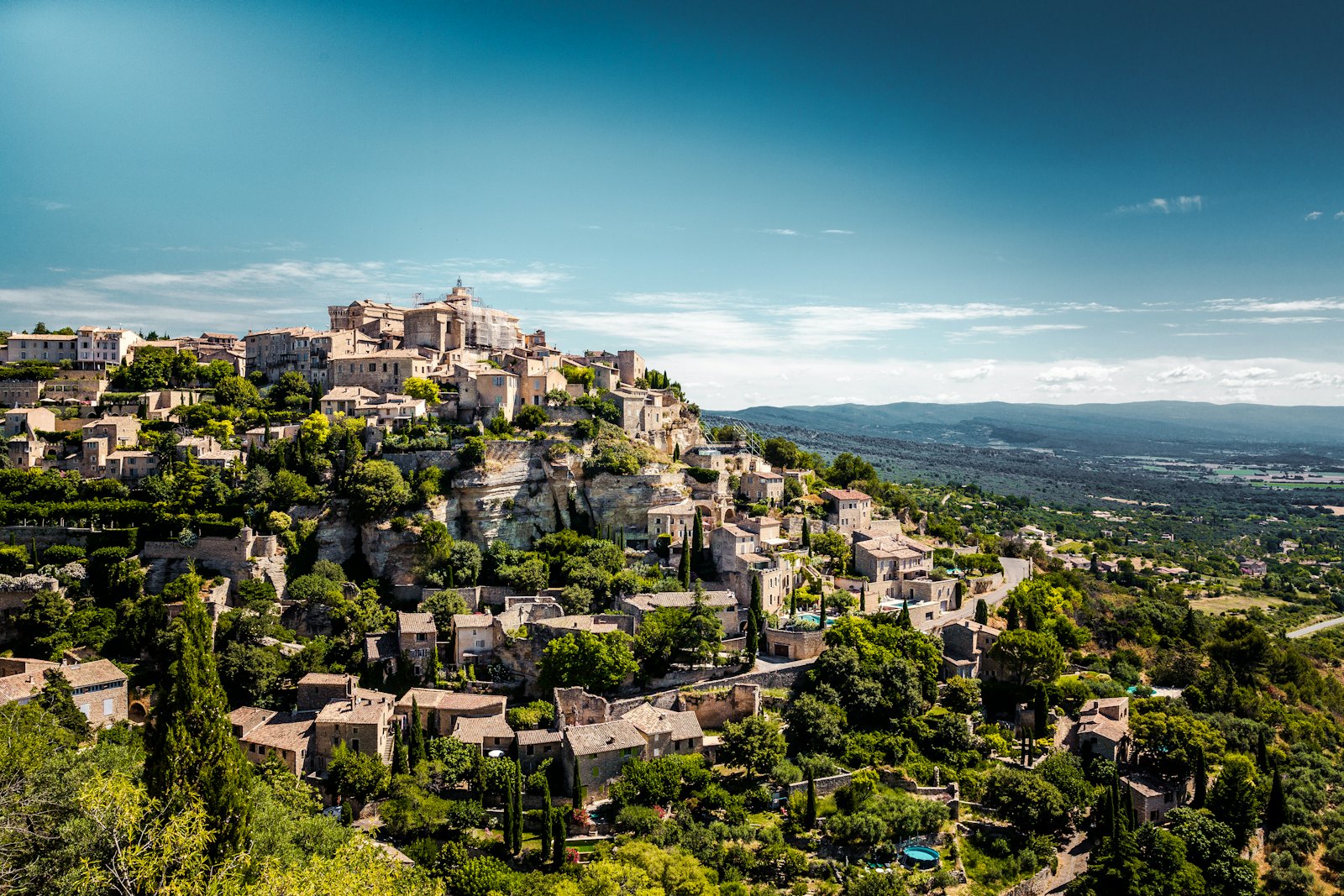
A stone village stacked on a cliff above the Luberon, with a lavender-lined abbey down the valley, dry-stone huts in the fields and a Tuesday market under the château.
- Best time to visit: April to June, and September to October
- Daily budget (budget traveller): $120 to $485 USD
- Ideal trip length: 3 to 5 days
Gordes is a hilltop village of about 2,000 people on the southern edge of the Monts de Vaucluse, looking south across the Luberon valley. It is listed as one of the 'Plus Beaux Villages de France', and you will see why the first time you round the bend on the road below. Pale stone houses climb the rock up to a Renaissance château and the church of Saint-Firmin. Inside the village there are steep lanes, vaulted passages and rock-cut cellars. Most people come for a few hours, take the photo, see the lavender at the Abbaye de Sénanque and leave. Stay a few nights and it is calmer: early walks to the abbey, the Tuesday market, and evenings when the coaches have gone and the valley turns pink. Gordes is expensive. Hotels are mostly upmarket, and buses are rare. Still, a solo traveller can make it work with a chambre d'hôte or a cheaper base nearby, market picnics, free walks and a few low-cost sights. It is small, safe and easy to walk around, as long as you are fine with hills.
Gordes sits on a rocky spur of the Monts de Vaucluse, inside the Luberon Regional Natural Park. Its houses climb in tiers to the château, which dates back to the 11th century and was rebuilt during the Renaissance. Most visitors come on a tour from Avignon, see the abbey and the viewpoint and move on to Roussillon. That is fine if time is short, but it means fighting the crowds at midday. Stay a few nights and the village shows a quieter side: the market setting up at dawn, swifts over the château in the evening and the walk down to Sénanque before the car park fills. Gordes is not a budget place. There are no hostels, rooms are pricey and single supplements are common. But the best things here are cheap or free: walks, views, markets, and a handful of sights that cost €6-8 each.
Getting here takes a little planning. The nearest TGV station is Avignon TGV, about 40km away, and Marseille Provence Airport is roughly 75 minutes by car. Without a car, take a train or bus to Cavaillon, then the Zou! 917 bus up to Gordes, which only runs a few times a day. With a car, the whole Luberon opens up, from the ochre cliffs of Roussillon to the Sunday markets at Coustellet and L'Isle-sur-la-Sorgue. Stay in the old village if you want to walk everywhere, or at Les Imberts or in Cavaillon to save money. Book the abbey in advance, and plan market days early, because they shape the week.
Timing matters more than usual. Lavender peaks from late June to mid-July, which is also when the coaches, heat and prices peak. May, June and September are the sweet spot, with warm days, open sights and room to breathe. July and August bring the lavender, outdoor festivals and 35°C afternoons. From November to March the village goes quiet, many restaurants close and the mistral blows cold, but the light is lovely and the walks are empty. Gordes is very safe, and French is the everyday language, although English is widely understood in hotels and shops. A few words of French go a long way at the market.
Gordes itinerary
Arrive and find your feet
Morning: This plan assumes a Monday arrival. Take the TGV to Avignon, then a train or the 907 bus to Cavaillon, and pick up a hire car or catch the 917 bus to Gordes.
Afternoon: Check in, then wander the lanes around Place du Château and the church of Saint-Firmin. Visit the château (€6) for its fireplace and the current exhibition.
Evening: Walk down to the viewpoint on the road below the village for golden hour, then have an early dinner on a terrace in the village.
Tuesday market and the cellars
Morning: The Tuesday market fills the square from early morning. Buy cheese, olives, bread and fruit for lunch before the crowds arrive.
Afternoon: Go underground at the Caves du Palais Saint-Firmin (€6, open early April to 1 November), then picnic in the shade and take a slow afternoon.
Evening: Aperitif with a view over the valley. Book tomorrow's Sénanque slot tonight if you have not already.
Walk to Sénanque
Morning: Set off at about 8am on the marked path down to the abbey, roughly an hour each way. Take your booked visit (about €8) and see the lavender in front if it is the season.
Afternoon: Walk back up to Gordes, which is slow work in the heat, then have a late lunch and a rest.
Evening: A quiet evening in the village once the day-trippers have left. Pick a set menu to keep costs down.
Bories and Roussillon
Morning: Visit the Village des Bories (€8) at opening time, when it is cool and empty. Allow about an hour.
Afternoon: Drive or take the 917 bus to Roussillon. Walk the Sentier des Ocres (€3.50, closed in January) and wander the ochre-coloured village.
Evening: Stay for sunset, when the cliffs turn deep red, then head back to Gordes.
Murs, Joucas and the plague wall
Morning: Drive the winding road north to Murs for coffee and a walk to the Mur de la Peste.
Afternoon: Loop back via Joucas, a tiny perched village. Picnic on market leftovers somewhere with a view.
Evening: Dinner in Gordes or at Les Imberts, where prices are a little lower.
Fontaine-de-Vaucluse and the valley
Morning: Visit the spring at Fontaine-de-Vaucluse early, before the crowds. Walk the riverside path up to the cave where the Sorgue rises.
Afternoon: Drive to Coustellet for the Musée de la Lavande, or hire a bike for a flat stretch of the Véloroute du Calavon.
Evening: Farewell dinner in Gordes with a glass of Luberon wine. Pack, and check tomorrow's train times.
Sunday markets and leave
Morning: Coustellet's Sunday farmers' market, then on to L'Isle-sur-la-Sorgue for its Sunday antiques and food market along the canals. Note that Sénanque is closed on Sunday mornings.
Afternoon: Lunch by the water in L'Isle-sur-la-Sorgue, then drive or take the train to Avignon.
Evening: Catch your onward train from Avignon, or stay a night in Avignon to see the Palais des Papes.
Best neighbourhoods
- The old village: The historic centre around Place du Château and the church of Saint-Firmin. Here you are close to the Tuesday market, the château, the Caves du Palais Saint-Firmin, cafés and the bus stop. Rooms are pricey and lanes are steep, but you can step out at dawn before the day-trippers arrive.
- Les Imberts: A flat hamlet in the valley, a few kilometres south-west of the village on the road to Coustellet. It has more affordable guesthouses and small hotels, including Le Mas de la Sénancole, and a stop on the 917 bus. You will want a car or a bike to get up to the village in the evening.
- The countryside north of the village: Scattered stone houses, gîtes and upmarket hotels along the roads towards Sénanque and Murs, with garrigue, oak woods and wide views. It is quiet and good for walkers, since the abbey path starts close by. Without a car it is isolated.
- Coustellet: A practical crossroads village about 10km south-west in the valley, with supermarkets, the Musée de la Lavande, a Sunday farmers' market and access to the Véloroute du Calavon cycle path. It is cheaper than Gordes and handy for driving around the Luberon, but it has no hilltop charm.
- Cavaillon: A working market town on the plain with a train station and the start of the 917 bus to Gordes. Hotels are cheaper and restaurants are more local. It suits a car-free traveller who is happy to do Gordes as day trips.
Must-do experiences
- Visit the Abbaye de Sénanque: A working Cistercian monastery founded in 1148, set in a narrow valley with lavender rows in front. Adult entry is about €8. Book a guided slot or a self-guided HistoPad visit online, because places are limited. It is closed on Sunday mornings.
- Walk to Sénanque from the village: A marked path drops from Gordes into the valley and reaches the abbey in roughly an hour. Go early in summer, carry water and wear proper shoes, because the path is stony. Coming back is uphill.
- Explore the Village des Bories: A restored hamlet of dry-stone huts, open daily all year, about 1.5km from the village. Adult entry is €8. Allow about an hour, and go at opening time in summer, when the stone is still cool.
- Go underground at the Caves du Palais Saint-Firmin: Rock-cut cellars beneath the village, with old oil presses, cisterns and stairways, plus an audioguide. Adult entry is €6. In 2026 they opened daily from early April to late September, then Wednesday to Saturday until 1 November.
- See the château and its fireplace: The Renaissance château above Place du Château now holds art exhibitions. Its huge carved fireplace has been a listed monument since 1902. Adult entry is €6, and 30 to 45 minutes is enough.
- Shop the Tuesday market: Every Tuesday morning, stalls fill the square and lanes around the château with cheese, olives, soaps, linens and roast chicken. Arrive by 8.30am in summer, before the car parks fill.
- Watch the village light up at dusk: The famous view of Gordes stacked on its rock is from the road just below the village. Walk down at golden hour, when the stone turns honey-coloured, and keep well in on the verge, as cars pass close.
Hidden gems
- Murs, a small, quiet village about 8km north on a winding road, with a castle, a few cafés and walks through the oak woods
- The Mur de la Peste near Murs, a dry-stone wall built in the 1720s to try to keep plague out of the Comtat Venaissin, with long stretches you can walk beside
- Joucas, a tiny perched village between Gordes and Roussillon that sees a fraction of the crowds
- The Véloroute du Calavon, a flat greenway on an old railway line through Coustellet towards Apt, easy on a hired bike
- The Sénanque valley in winter, when the abbey is calm, the light is low and you may have the path to yourself
Daily budget
- Accommodation: budget €70-130 / night (chambre d'hôte, campsite cabin or a hotel in Cavaillon), mid-range €150-280 (small hotel or guesthouse with a pool), splurge €500+ (Airelles Gordes La Bastide, Hôtel Les Bories & Spa). There are no hostels in Gordes. Single rooms are rare, so expect to pay the double rate. Book months ahead for June and July, and check that parking is included.
- Food: budget €30-45 / day (market picnics, bakery breakfasts, one simple meal), mid-range €60-90 (café lunch and a bistro dinner), splurge €150+ (tasting menus at top hotel restaurants). Set lunch menus (the formule) are the best-value way to eat out. Village café prices are higher than in the valley. Many places close one or two days a week, and some close entirely in winter.
- Transport: budget €0-10 / day (walking, Zou! bus), mid-range €45-80 (small hire car plus fuel and parking), splurge €120+ (taxis or a private driver). The 917 bus costs a few euros but is infrequent. Taxis from Avignon TGV run at roughly €90-130. Village car parks are paid and fill early in summer.
- Activities: budget €0-15 / day (walks, viewpoints, one paid sight), mid-range €20-35 (abbey, Bories and cellars over a couple of days), splurge €80+ (guided tours, wine tastings, private guide). In 2026, Sénanque cost about €8, the Village des Bories €8, the château €6, the Caves du Palais Saint-Firmin €6 and Roussillon's Sentier des Ocres €3.50. Minibus tours from Avignon cost about €65-80.
- Drinks & nightlife: budget €5-15 (a glass of rosé at a café), mid-range €25-50 (aperitif and wine with dinner), splurge €80+ (cocktails at a top hotel terrace). Nightlife means a terrace drink at sunset and dinner. Most places wind down by 10pm, and in winter the village is very quiet.
Where to stay
- Social hostel in Gordes countryside or Cavaillon (€30-110 / night): There are no hostels in or near Gordes. The closest budget options are Camping Les Sources just outside the village, for tents or cabins in season, or a simple chambre d'hôte where breakfast with the hosts gives you some company.
- Boutique hotel in Les Imberts (€150-280 / night): Le Mas de la Sénancole is a small hotel in the valley below Gordes, with a pool and calmer rates than the village. It suits travellers with a car and is on the 917 bus route.
- Apartment in The old village (€100-200 / night): A self-catering gîte or studio in the old village lets you shop at the Tuesday market and cook, which saves a lot on food. You can walk everywhere, but expect stairs and no parking at the door.
- Splurge in The old village or the Sénanque road (€500-1,500+ / night): Airelles Gordes La Bastide sits on the edge of the old village with views across the valley, and Hôtel Les Bories & Spa is set among the garrigue on the road to the abbey.
What to eat
- Tapenade and anchoïade: olive and anchovy spreads sold at the Tuesday market, perfect with bread for a picnic
- Tian and ratatouille: slow-baked Provençal vegetables, often on lunch menus in summer
- Goat's cheese from local farms, sold fresh, aged or rolled in herbs at the markets
- Cavaillon melons in summer, sweet and orange-fleshed, sold at stalls all over the valley
- Luberon and Ventoux wines, with good-value rosé and reds poured by the glass in village cafés
- Local olive oil and honey, cheap souvenirs that pack well if you bring a sealable bag
Day trips
- Roussillon and the Sentier des Ocres (About 10km east, 15 minutes by car): A red-and-ochre village on a hill above old ochre quarries. The Sentier des Ocres has a 30-minute loop and a 50-minute loop through orange cliffs and pine. Come early or late to avoid the midday crowds. Drive, or take the Zou! 917 bus, which stops in Roussillon. The trail costs €3.50, is open from February to December and does not need booking. Paid car parks cost about €4 a day.
- Fontaine-de-Vaucluse and L'Isle-sur-la-Sorgue (About 15-20km west, 20-30 minutes by car): A riverside village where the Sorgue rises from a deep spring at the foot of a cliff, and a nearby canal town known for its Sunday antiques and food market. Easiest by car. Combine both in a morning, and go to L'Isle-sur-la-Sorgue on a Sunday for the market. Arrive early, as parking fills fast.
- Ménerbes, Lacoste and Bonnieux (About 15-20km south across the valley, 20-30 minutes by car): A chain of perched villages on the north face of the Luberon, each with a different character, from Ménerbes' long ridge to Bonnieux's terraces and views back to Gordes. By car, as buses are very limited. Drive a loop and stop for lunch in one village. Roads are narrow and twisty, so allow more time than the map suggests.
When to visit
- Spring (April - May): 15-24°C, fresh mornings, the odd mistral and showers. Crowds: Moderate, busier at Easter and on May bank holidays. Fresh green countryside, wild flowers and good walking weather. The Caves du Palais Saint-Firmin reopen in early April. Bring a warm layer for windy days.
- Early summer and lavender (June - July): 25-33°C, dry and sunny. Crowds: High, with peak coach traffic at Sénanque in July. The classic lavender window. Go to the abbey early in the morning and book your slot. June is calmer than July, and you will still see the lavender if it blooms early.
- High summer (August): 28-35°C, hot afternoons, occasional storms. Crowds: Very high, with French holidaymakers everywhere. The lavender has been cut, prices are at their peak and parking is a battle. Come only if you must, and plan every outing for early morning or evening.
- Autumn (September - October): 18-27°C, golden light, the grape harvest. Crowds: Moderate, dropping in October. The locals' favourite. Warm days, the wine harvest, open sights and lower rates. Many seasonal places start closing after the October half-term.
- Winter (November - March): 3-13°C, sunny days but a cold mistral. Crowds: Very low. Peaceful and cheap, with the abbey and Bories still open. Many restaurants and some hotels close, and the cellars shut after early November. Good for walkers who want quiet.
Entry rules for your passport
Visa rules for France depend on the passport you travel on. Check the official source before you book: European Commission: Schengen visa policy
Getting there
The nearest TGV station is Avignon TGV, about 2 hours 40 minutes from Paris Gare de Lyon. From London, take the Eurostar and change in Paris or Lille. Marseille Provence Airport is about 75 minutes away by car and has wide European connections. Gordes has no train station. Without a car, take a regional train from Avignon Centre to Cavaillon (about 30 minutes) or the Zou! 907 bus from Avignon, then the Zou! 917 Cavaillon to Apt bus, which stops at Place du Château in Gordes after roughly 25 minutes. The 917 only runs a few times a day, with reduced weekend and holiday service, so check the Zou! timetable first. A taxi from Avignon TGV costs roughly €90-130 and should be booked ahead. Most visitors hire a car at Avignon TGV or Marseille Airport. The drive from Avignon takes 45-50 minutes. Half-day minibus tours from Avignon covering Sénanque, Gordes and Roussillon cost about €65-80.
Border checks: non-EU visitors (other than Swiss, Norwegian, Icelandic, Liechtenstein, Andorran, Monegasque, San Marinese and Vatican citizens, and holders of an EU residence permit or long-stay visa) are registered in the EU's Entry/Exit System (EES) instead of getting a passport stamp. On your first crossing, officers take your photo and/or fingerprints, so allow extra time at passport control. ETIAS, the planned travel authorisation, is not in operation yet, so don't pay any website for one.
Getting around
The village itself is walkable but steep, with cobbles that get slippery in the rain. Beyond it, a car makes life much easier. The Zou! bus line 917 runs between Cavaillon, Gordes, Roussillon and Apt, with stops at Place du Château, Les Bories and Les Imberts, but only a few buses a day and fewer at weekends and outside term time. Check the timetable on the Zou! website before relying on it. A single costs a few euros. Car hire from Avignon TGV station or Avignon centre is the usual choice. Gordes has paid car parks around the edge of the village, and they fill by mid-morning in summer. Taxis must be booked ahead, and a ride from Avignon TGV costs roughly €90-130. Walking works well for Sénanque, the Bories and the viewpoint. Cycling is popular, but the roads up to Gordes and Murs are steep, so hire an e-bike in the valley if you are not used to climbs. Half-day minibus tours from Avignon to Sénanque, Gordes and Roussillon run at about €65-80.
Safety
Gordes is very safe, and crime against visitors is rare. The real risks are physical. Lanes and steps are steep, uneven and slippery after rain, so wear shoes with grip. Summer days often pass 33°C, so walk early, carry water and wear a hat on the Sénanque path. In summer, the Vaucluse limits access to forest areas when wildfire risk is high, and some trails may be closed on red-alert days, so check the daily map before you hike. The mistral can blow hard and cold for days at a time, especially in winter and spring. Car break-ins happen at busy car parks and trailheads, so leave nothing on show. Roads are narrow with tight bends and stone walls. Take care driving, and keep to the edge when walking along the roadside. The emergency number is 112.
Solo travel tips
- Sleep in the village at least once: Gordes is at its best early and late, when the coaches are gone. Even one night in the old village lets you walk to the viewpoint at dusk and reach the abbey path at dawn.
- Plan around the 917 bus: It only runs a few times a day. Screenshot the timetable, know the last bus back and have a taxi number saved before you rely on it.
- Eat your main meal at lunch: The set lunch menu is far cheaper than dinner, and solo diners get a table more easily at midday. Picnic or snack in the evening.
- Join a small-group tour for company: Minibus tours from Avignon to Sénanque, Gordes and Roussillon are an easy way to meet people, and you do not need to drive. Pick small groups over big coaches.
- Safety for solo travellers: The main risks are heat, steep cobbles and roadside walking. Walk early in summer, carry water, check fire-risk closures before you hike and leave nothing visible in a parked car.
- Use markets to meet locals: Stallholders are happy to chat, especially if you try a little French. Ask for a taste of olive oil or cheese, and you will get recommendations for where to eat too.
Cultural etiquette
- Say 'Bonjour' when you walk into any shop, café or bakery, and 'Au revoir' when you leave. Skipping it comes across as rude.
- Sénanque is a working monastery. Keep quiet inside, cover your shoulders and knees, and do not walk into the lavender rows or picnic in them.
- Lavender fields are private farmland. Photograph them from the edge, and do not pick flowers or trample the rows.
- At markets, let the stallholder pick your produce unless they invite you to choose. Bring small change and your own bag.
- Lunch runs from about noon to 2pm, and kitchens close promptly. Many shops close for a long lunch, and some places shut on Sunday afternoons and Mondays.
- Keep noise down in the old village at night. Sound carries in the stone lanes, and people live here all year.
- Fires, barbecues and smoking in forests are banned in summer. Take fire-risk closures seriously.
Frequently asked questions
How do I get to Gordes without a car?
Take a TGV to Avignon, then a regional train or the Zou! 907 bus to Cavaillon. From Cavaillon, the Zou! 917 bus runs to Gordes in roughly 25 minutes and stops at Place du Château. There are only a few buses a day, with fewer at weekends, so check the timetable and plan your connection. A taxi from Avignon TGV costs roughly €90-130.
Do I need a car in Gordes?
Not for the village, the Bories or the walk to Sénanque. For Roussillon, Fontaine-de-Vaucluse, L'Isle-sur-la-Sorgue and the smaller villages, a car saves a lot of time. A good compromise is two or three car-free days in Gordes, then hiring a car for a day or two, or joining a minibus tour from Avignon.
When does the lavender bloom at Sénanque?
Usually from late June to mid or late July, with the best colour in early to mid July. The monks harvest soon after, so by late July the rows can be bare. Exact timing changes each year with the weather, so check recent photos before you book.
Do I need to book the Abbaye de Sénanque?
Yes, booking ahead online is strongly recommended, and in summer it is close to essential. Adult tickets cost about €8. Guided tours are in French, and the HistoPad self-guided visit is available in several languages. The abbey closes on Sunday mornings and a few other dates, and the valley has weak mobile signal, so download your ticket.
How many days should I spend in Gordes?
Two or three nights covers the village, the abbey, the Bories and the market. Four or five lets you add Roussillon, Fontaine-de-Vaucluse and L'Isle-sur-la-Sorgue at an easy pace. A week works if you want a slow base for walking and touring the Luberon.
Is Gordes expensive for solo travellers?
Yes, it is one of the priciest villages in Provence, and single rooms are rare. Save money by staying in a chambre d'hôte, at Les Imberts or in Cavaillon, eating market picnics at lunch and making the most of free walks. Most paid sights cost €6-8.
Is Gordes safe for solo female travellers?
Yes. It is quiet and friendly, and violent crime is rare. The village gets very quiet after dark outside summer, so keep a torch for the lanes and book taxis ahead if you are staying out of the centre. On country walks, tell your host where you are going and carry water and a charged phone.
What entry rules apply to France in 2026?
France is in the Schengen Area. Many non-EU visitors can stay visa-free for up to 90 days in any 180-day period. The EU's Entry/Exit System now records biometric data at the border, and the ETIAS travel authorisation is due to follow. Rules depend on nationality and can change, so check official French and EU sites and your own government's travel advice before booking.
Tours and activities in Gordes | Gordes in 2 days | Gordes in 3 days | Gordes in 4 days | Gordes in 5 days | Gordes in 7 days
Joy Plus home | Destinations | Itineraries | Activities | Flights | Budget planner | Calendar | Map | Blog | Lifetime access