Destinations / Europe
Gozo, Malta travel guide
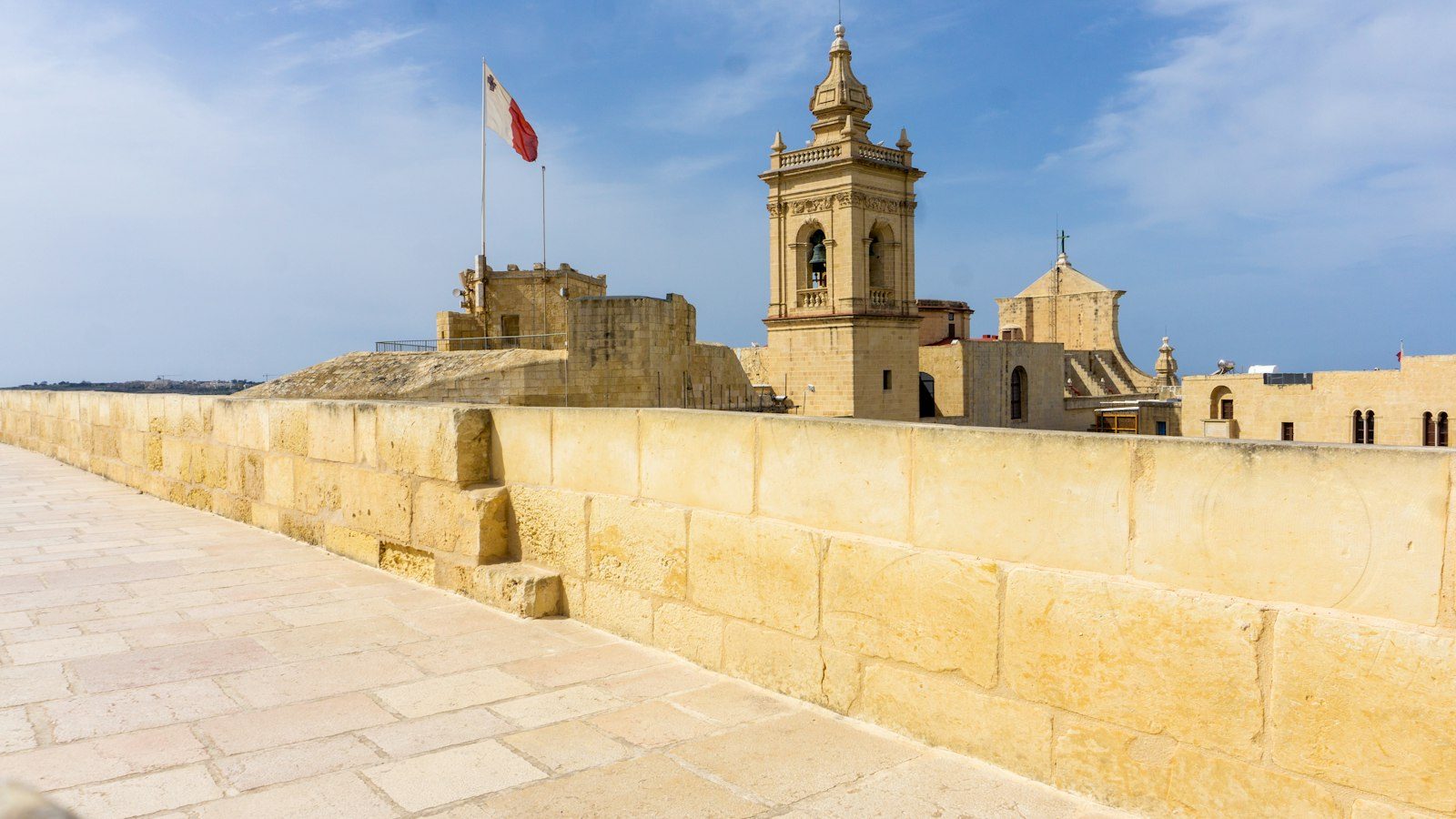
Malta's smaller, greener sister island, a 25-minute ferry ride from the main island. You walk the walls of a hilltop citadel, swim in deep blue coves under limestone cliffs and eat Gozitan ftira in villages where the bus comes once an hour.
- Best time to visit: May to June and September to October
- Daily budget (budget traveller): $80 to $250 USD
- Ideal trip length: 4 to 7 days
Gozo is the second island of the Maltese archipelago. It is about 14km long and sits just north-west of Malta, across a short stretch of sea called the Gozo Channel. It feels a long way from the hotels and traffic of Sliema and St Julian's. Most people live in small villages of honey-coloured stone, each built around a large baroque church, and the landscape is a patchwork of terraced fields, flat-topped hills and high cliffs. The capital, Victoria, which locals still call Rabat, is crowned by the Cittadella, a walled citadel you can see from almost anywhere on the island. Near Xagħra are the Ġgantija temples, older than Stonehenge. The coast is the main draw, though. You get the red sand of Ramla Bay, the salt pans near Marsalforn, the narrow gorge at Wied il-Għasri and the Inland Sea at Dwejra, where the Azure Window stood until it collapsed in 2017. Gozo is also one of the best places to dive in the Mediterranean. Day trippers fill the main sights from mid-morning to late afternoon, but they leave on the evening ferries. Stay a few nights and you get quiet bays, empty lanes and sunsets over the cliffs. Buses are cheap but slow and mostly hourly, so it suits travellers who are happy to take things at an island pace.
Gozo is about a third the size of Malta and has a much slower pace. Around 40,000 people live here, spread across 14 villages and the capital, Victoria. Locals are proud to be Gozitan first and Maltese second, and the island has its own traditions and dialect. Even its bread is different. Many visitors come for a few hours on a coach tour, see the Cittadella and Ġgantija, and catch the late afternoon ferry back. Stay a few nights and you get the better version: the citadel walls before the coaches arrive, a swim at Xlendi in the evening, the salt pans in soft morning light and a plate of ftira on a village square. Prices are a little lower than in Malta's resort towns. With cheap buses, free swimming and free walking, it is easy to keep a solo budget sensible, even though there are very few hostels.
Getting here is easy. The Gozo Channel ferry from Ċirkewwa runs around the clock, takes about 25 minutes and costs €4.65 return for foot passengers until the end of 2026. Fast ferries from Valletta, Sliema and Buġibba cost €6.50 to €8.50 each way and are handy if you are staying near Malta's capital. On the island, buses fan out from Victoria and cost €2.50 in summer. They are slow, so pick a base to match your plans. Victoria is best for bus links, Marsalforn and Xlendi are best for swimming and seafront dinners, and Mġarr is best for hopping between islands. A car or scooter for a day or two makes the west coast and the quieter bays easier to reach.
Timing matters. Spring and autumn bring warm days, wild flowers or warm seas, and space on the beaches. July and August are hot and busy, with festas almost every weekend. Winter is mild, green and quiet, which is good for walking, but many seaside restaurants close and windy days can cancel fast ferries. English is an official language, so everything is easy to arrange. Life revolves around the parish church, the village bar and the sea. Do not expect clubs or late nights. Gozo is for swimming, walking, eating well and going to bed early.
Gozo itinerary
Cross over and settle in
Morning: Take the ferry from Ċirkewwa (25 minutes) or the fast ferry from Valletta (about 45 minutes). Catch bus 301 to Victoria and drop your bag.
Afternoon: Wander It-Tokk square and the old lanes of Victoria, then climb to the Cittadella walls for your first view across the island.
Evening: Watch the sun set from the bastions, then have ftira or rabbit stew at a restaurant near the square.
Citadel museums and Ġgantija
Morning: Go back up to the Cittadella for the Old Prison and the Gran Castello Historic House (€5 combo), and look inside the Cathedral with its painted dome.
Afternoon: Bus to Xagħra for the Ġgantija temples and the Ta' Kola Windmill (€10 together, booked online). Have a coffee on Xagħra's church square.
Evening: Walk down to Ramla Bay for a late swim, or stop at Tal-Mixta cave above it. Dinner in Xagħra or back in Victoria.
Dwejra and the west
Morning: Take the bus to Dwejra early. Ride the small boat through the Inland Sea (about €5), then snorkel or swim at the Blue Hole.
Afternoon: Walk or bus to the Ta' Pinu Basilica, then climb Għammar Hill opposite. Pass the chapel of San Dimitri if you have the energy.
Evening: Head to Xlendi for a swim off the rocks and a fish dinner on the bay.
North coast salt pans and gorges
Morning: Start in Marsalforn and walk west along the coast to the Xwejni salt pans while it is cool.
Afternoon: Carry on to Wied il-Għasri and swim in the cove at the bottom of the gorge. Take water and a picnic.
Evening: Back to Marsalforn for an evening on the promenade and dinner by the harbour.
East coast bays and Nadur
Morning: Pick up ftira or pastizzi at a bakery in Nadur, then walk down to San Blas or Dahlet Qorrot for a quiet swim.
Afternoon: Take a bus or taxi to Ħondoq ir-Rummien near Qala and snorkel with Comino in view.
Evening: Head down to Mġarr Harbour for sunset over the marina and grilled fish at one of the harbourside restaurants.
Comino or a try dive
Morning: Take a small boat from Mġarr to Comino and reach the Blue Lagoon early, before the boats from Malta arrive. Or book a try dive or snorkel trip at Xlendi or Dwejra.
Afternoon: On Comino, walk inland to the tower and Santa Marija Bay to get away from the crowds. Check your return boat time before you leave the jetty.
Evening: Rest after a long day in the sun. A simple dinner and a glass of Gozitan wine.
Slow morning and depart
Morning: Have a last swim at Mġarr ix-Xini or Xlendi, or browse the stalls at It-Tokk for ġbejniet and honey to take home.
Afternoon: Take bus 301 to Mġarr for the ferry or fast ferry back to Malta. Check fast ferry times the day before, especially in windy weather.
Evening: Arrive in Valletta, or continue to the airport for your flight.
Best neighbourhoods
- Victoria (Rabat): Gozo's small capital and the hub of the bus network. You have the Cittadella on the hill, It-Tokk square with its market stalls and cafés, the main shops and banks, and buses to everywhere. It is practical rather than pretty in parts, and quiet at night, but no base makes getting around without a car easier.
- Marsalforn: A fishing village turned low-key resort on the north coast, with a small sandy beach, a seafront promenade and plenty of restaurants. You can walk to the salt pans and Wied il-Għasri along the coast. It is lively in summer and very sleepy in winter, when some places close.
- Xlendi: A narrow bay on the south-west coast, closed in by high cliffs, with clear water for swimming and snorkelling and a short promenade of restaurants. It is the prettiest place to stay by the sea and good for sunsets, but it gets crowded on summer weekends and the bus runs only hourly to Victoria.
- Mġarr and Għajnsielem: The harbour where every ferry arrives, plus the village on the hill above it. It is the easiest base if you want to hop over to Malta or Comino, and there are good fish restaurants on the marina. It is less central for the west of the island, so expect longer bus rides.
- Xagħra and Nadur: Two big hilltop villages in the east. Xagħra has the Ġgantija temples and a lovely church square, and Nadur has well-known bakeries and the roads down to Ramla Bay, San Blas and Dahlet Qorrot. Farmhouses with pools are common here. It is quiet and local, with fewer buses than the coast.
Must-do experiences
- Walk the Cittadella walls: Climb up from It-Tokk to the citadel above Victoria. Walking the bastions and lanes is free at any time, and you can see right across the island. A €5 Heritage Malta combo ticket covers the Old Prison, the Gran Castello Historic House and the Visitor Centre. The Archaeology Museum has been closed since April 2026 for redevelopment.
- See the Ġgantija temples: These two megalithic temples above Xagħra date from around 3600 BC and are UNESCO-listed. Adult entry is €10 and includes the Ta' Kola Windmill a short walk away. Book a slot online and go at opening time, before the tour coaches arrive.
- Take the boat through the Inland Sea at Dwejra: At Dwejra on the west coast, small fishing boats take you through a tunnel in the cliff, out to the open sea and along to the Blue Hole and Fungus Rock. It costs about €5 and runs in calm weather. Afterwards, swim or snorkel at the Blue Hole, where the Azure Window used to stand.
- Spend an afternoon on Ramla Bay: Gozo's best-known beach is a sweep of reddish sand between green slopes, below Xagħra and Nadur. Swimming is free and there are a few kiosks in summer. Climb up to Tal-Mixta cave on the hillside above for the classic view over the bay.
- Walk the north coast from Marsalforn to Wied il-Għasri: Follow the coast west from Marsalforn past the Xwejni salt pans, where salt is still harvested in square pools cut into the rock. Carry on to Wied il-Għasri, a narrow gorge with a tiny pebble cove at the bottom. Allow two to three hours, and take water because there is little shade.
- Visit the Ta' Pinu Basilica: This huge neo-Romanesque church stands alone in open country near Għarb. Entry is free. Inside, a side corridor is lined with letters, photos and baby clothes left by people giving thanks for answered prayers. Cover your shoulders and knees, and walk up Għammar Hill opposite for the view.
- Swim and snorkel at Xlendi: Swim from the rocks or the small beach in Xlendi Bay, then follow the path round the cliff to the 17th-century watchtower at the mouth of the bay. The water is clear and deep, and it is a classic first dive site. Stay on for sunset and dinner by the water.
Hidden gems
- Mġarr ix-Xini, a narrow inlet below Xewkija with a watchtower and clear water, much calmer than the big beaches outside summer weekends
- Ħondoq ir-Rummien near Qala, a small rocky cove with views across to Comino, where locals swim in the evening
- The Sanap cliffs near Munxar, a flat clifftop path above the sea that is almost empty at sunset
- The chapel of San Dimitri on the edge of Għarb, alone in the fields above the west coast cliffs
- Tal-Mixta cave above Ramla Bay, a cave mouth framing the red sand below, best reached late in the afternoon
Daily budget
- Accommodation: budget €45-70 / night (guesthouse or B&B room), mid-range €90-160 (farmhouse room or seafront hotel), splurge €250+ (luxury resort or private farmhouse with pool). Gozo has almost no hostels, so a simple guesthouse room is the budget option. Malta's eco contribution of €0.50 per adult per night (capped at €5 a stay) is added on. Book July and August early.
- Food: budget €20-30 / day (pastizzi, ftira, supermarket picnic), mid-range €40-65 (café lunch and a sit-down dinner), splurge €90+ (fish by the kilo, wine, dessert). Pastizzi cost about a euro or less, a ftira is around €8-14 and restaurant mains roughly €15-28. Fish is often sold by weight, so ask first. Prices are rough guides.
- Transport: budget €0-7 / day (walking, buses at €2-2.50), mid-range €15-45 (Bolt rides or a day of scooter or car hire), splurge €80+ (private driver or jeep tour). The Gozo Channel ferry is €4.65 return until the end of 2026, then €11 from January 2027. The fast ferry is €6.50-8.50 each way. A 7-day Explore bus card costs €25.
- Activities: budget €0-10 / day (Cittadella walls free, Dwejra boat about €5), mid-range €10-25 (Ġgantija €10, Cittadella combo €5, Cathedral €5), splurge €60+ (try dive, kayak tour or a boat trip around the island). The Ġgantija ticket includes the Ta' Kola Windmill. Cittadella museums close on some weekdays, so check before you go. Dive prices vary by centre and season.
- Drinks & nightlife: budget €4-8 (a Cisk or a glass of local wine in a village bar), mid-range €15-30 (a few drinks on the seafront), splurge €50+ (cocktails and wine with dinner). A coffee costs about €1.50-2.50 and a beer €2.50-4. Nightlife is low-key, with seafront bars in Marsalforn and Xlendi and summer festas in the villages.
Where to stay
- Guesthouse in Victoria (€45-70 / night): Family-run guesthouses and B&B rooms in Victoria are the closest Gozo has to hostel prices. You are a short walk from the bus terminal, the Cittadella and It-Tokk, so every day trip starts here.
- Seafront hotel in Marsalforn (€90-170 / night): Hotel Calypso sits on the Marsalforn seafront, with harbour views and a rooftop pool. The salt pans walk, restaurants and the bus to Victoria are all on the doorstep.
- Farmhouse in Xagħra, Nadur or Għarb (€80-160 / night (room)): Converted stone farmhouses with rooms or whole houses to rent, often with a pool and a terrace. They are peaceful and very Gozitan, but you will rely on hourly buses or a hire car.
- Splurge in San Lawrenz (€250-450+ / night): Kempinski Hotel San Lawrenz is a low-rise resort with pools and a spa in the countryside near Dwejra. Sunsets on the west coast are a short drive away.
What to eat
- Ftira Għawdxija: Gozo's take on pizza, a thin bread base topped with potatoes, tomatoes, anchovies or ġbejniet. Try Maxokk Bakery in Nadur
- Ġbejniet: small sheep's or goat's milk cheeses, fresh, dried or peppered. Ta' Rikardu in the Cittadella serves them with local bread and wine
- Pastizzi: flaky pastries filled with ricotta or mushy peas, sold for about a euro or less at village bars and bakeries
- Stuffat tal-fenek (rabbit stew): the Maltese national dish, slow-cooked in wine and garlic and served in most traditional restaurants
- Fresh fish and lampuki: grilled catch of the day at Xlendi, Marsalforn or Mġarr. In autumn, look for lampuki (dorado) and lampuki pie. Ask the price per kilo first
- Local wine and Kinnie: Gozitan wines from small producers, Cisk lager and Kinnie, the bitter orange soft drink
Day trips
- Comino and the Blue Lagoon (About 20 minutes by boat from Mġarr Harbour): The tiny, car-free island between Malta and Gozo, famous for the turquoise water of the Blue Lagoon. Arrive early to beat the crowds, then walk to St Mary's Tower and the quieter bays on the far side. Small boats leave from Mġarr Harbour through the season. Agree the return time before you set off. A €5 fee for visiting the Blue Lagoon has been announced from 2027. Take water and shade, as facilities are limited.
- Valletta (About 45 minutes by fast ferry): Malta's compact, grand capital, with St John's Co-Cathedral, the Upper Barrakka Gardens and views over the Grand Harbour. It is a complete change from village life on Gozo. Take the Gozo Highspeed fast ferry from Mġarr to Lascaris Wharf for €7.50 each way, then walk or take the lift up into the city. Check the last return sailing and the wind forecast.
- Mellieħa and northern Malta (25 minutes by ferry to Ċirkewwa, then a short bus ride): Malta's north has Għadira Bay, the island's longest sandy beach, plus Mellieħa village on its ridge and the coastal walks around the Marfa peninsula. Take the Gozo Channel ferry to Ċirkewwa, then a local bus to Mellieħa or Għadira. Your ferry ticket is a return, paid in Mġarr, so there is nothing to pay on the way back.
When to visit
- Spring (March - May): 16-24°C, sunny and fresh, sea still cool until late May. Crowds: Low to moderate, busier at Easter. Ideal for coastal walks, with green fields and wild flowers. Swimming is for the brave until late May. Holy Week processions are worth seeing.
- Early summer (June): 25-29°C, dry and sunny, sea around 22-24°C. Crowds: Moderate, rising towards the end of the month. A great month. Long evenings and warm water, and the bays are still fairly calm on weekdays. Bus fares rise to the summer rate in mid-June.
- High summer (July - August): 29-34°C, hot and humid, sea up to about 27°C. Crowds: Busy, very busy at weekends and around 15 August. Best for swimming, diving and village festas, but rooms cost the most and Ramla and Xlendi fill up. Do sights early, rest at midday and swim late.
- Autumn and winter (September - February): September and October 22-28°C, then 12-18°C in winter with some rain and wind. Crowds: Moderate in September and October, quiet from November. September and October are the locals' pick, with the warmest sea of the year and calm villages. Winter is cheap and good for hiking, but some places close and storms can disrupt fast ferries.
Entry rules for your passport
Visa rules for Malta depend on the passport you travel on. Check the official source before you book: European Commission: Schengen visa policy
Getting there
Gozo has no airport. Fly into Malta International Airport, then take the ferry. For the Gozo Channel ferry, go to Ċirkewwa at the northern tip of Malta. It is about 1.5 hours from the airport by Airport Direct bus or around 45 minutes by taxi or Bolt. The ferry runs 24 hours a day, takes about 25 minutes, carries cars and costs €4.65 return for foot passengers. You pay in Mġarr when you leave Gozo. If you are staying near Valletta, the Gozo Highspeed fast ferry leaves from Lascaris Wharf in the Grand Harbour, takes about 45 minutes and costs €7.50 each way. Since May 2026, fast ferries also run from Sliema (€8.50) and Buġibba (€6.50). Fast ferries are foot passengers only and can sell out on summer weekends, so book ahead. Strong winds can cancel them in winter. From January 2027, the non-resident fare on the Gozo Channel ferry is due to rise to €11, and fast ferry fares by €3 a journey. At Mġarr, bus 301 runs to Victoria every 15 to 30 minutes.
Border checks: non-EU visitors (other than Swiss, Norwegian, Icelandic, Liechtenstein, Andorran, Monegasque, San Marinese and Vatican citizens, and holders of an EU residence permit or long-stay visa) are registered in the EU's Entry/Exit System (EES) instead of getting a passport stamp. On your first crossing, officers take your photo and/or fingerprints, so allow extra time at passport control. ETIAS, the planned travel authorisation, is not in operation yet, so don't pay any website for one.
Getting around
Gozo's buses are run by Malta Public Transport (Tallinja), and almost every route starts and ends at the Victoria bus terminal. A single ticket costs €2.50 in summer (mid-June to mid-October) and €2 the rest of the year, valid for two hours including changes. You can pay in cash, by contactless card or in the Tallinja app. The 7-day Explore card costs €25 and covers buses on Malta and Gozo. Route 301 links Mġarr Harbour and Victoria frequently from early morning until about 11.30pm, but most other routes run only hourly, so a trip between two coastal villages usually means changing in Victoria. The Tallinja app shows buses in real time. Bolt and local taxis work, but you may wait a while, especially late at night. Many visitors hire a car or a scooter for a day or two to reach the west coast and remote bays. Remember that Malta drives on the left and village roads are narrow. E-bikes are another option, though the island is hillier than it looks. For the coast, walking is often the best way to see it.
Safety
Gozo is one of the safest places in Europe, and crime against visitors is rare. The real risks are natural. Cliffs at Dwejra, Ta' Ċenċ and along the north coast have no railings, and the limestone edges can crumble, so stay well back, especially in wind. The rocks along the shore are sharp and slippery, so wear water shoes. Swim where others are swimming, take note of red flags, watch out for jellyfish in summer and avoid swimming alone off rocks in rough seas. Summer heat is intense and there is little shade on coastal walks, so start early and carry plenty of water. Traffic drives on the left and many roads have no pavement. Tap water is safe but desalinated and tastes of it, so many people drink bottled or filtered water. The emergency number is 112. Gozo General Hospital is in Victoria. EU travellers should carry an EHIC and UK travellers a GHIC, and everyone else needs travel insurance with medical cover.
Solo travel tips
- Choose your base for the bus: Victoria is the bus hub and saves you hours of changes. Pick Marsalforn or Xlendi if you would rather swim on your doorstep and do fewer outings.
- Get out before the coaches: Day trippers reach Ġgantija, the Cittadella and Dwejra from late morning and leave on afternoon ferries. Go at opening time or late in the day and you will have them almost to yourself.
- Plan around hourly buses: Most routes run once an hour, so check the Tallinja app before you set off and plan one or two main outings a day. Allow extra time to get to the ferry on your last day.
- Eat cheaply like locals: Pastizzi, ftira from a village bakery and a supermarket picnic on the rocks keep food costs low. Save the fish by the kilo for one good dinner.
- Safety for solo travellers: The main risks are crumbling cliff edges, sharp rocks, rough seas and heat. Tell your host where you are walking, swim near other people and carry more water than you think you need.
- Meet people underwater or at a festa: Dive centres are friendly places to meet other travellers, and solo divers are paired with buddies. In summer, the village festas fill the squares with music, fireworks and food stalls.
Cultural etiquette
- Greet people with 'bonġu' (good morning) or 'bonswa' (good evening), and say 'grazzi' (thank you). Everyone speaks English, but a few Maltese words go down well.
- Cover your shoulders and knees in churches, and keep your voice down if a Mass is on. Ta' Pinu and the Cathedral turn away people in beachwear.
- Cover up when you leave the beach. Walking through villages or shops in swimwear is frowned upon.
- Topless sunbathing is not accepted on Gozo's beaches, so keep your top on.
- Village festas are religious feasts first. Stand aside for processions and do not block the statue's path for a photo.
- Ask the price of fish by the kilo before you order, so the bill is not a surprise.
- Stay on paths in the fields and countryside, do not take stones or salt from the salt pans, and take your rubbish home from beaches and coves.
Frequently asked questions
How do I get to Gozo and from the ferry to my room?
Gozo has no airport, so you arrive by sea at Mġarr Harbour. The Gozo Channel ferry from Ċirkewwa, at the northern tip of Malta, takes about 25 minutes, runs 24 hours a day and costs €4.65 return for a foot passenger. You pay when you leave Gozo. The Gozo Highspeed fast ferry from Valletta takes about 45 minutes and costs €7.50 each way. Since May 2026 there are also fast ferries from Sliema (€8.50) and Buġibba (€6.50). At Mġarr, bus 301 runs to Victoria, where you change for the rest of the island. Taxis and Bolt also wait at the harbour.
How many days do I need in Gozo?
A day trip covers the Cittadella, Ġgantija and one beach, but it feels rushed. Three nights let you see Dwejra, Ramla Bay and a coastal walk at a gentle pace. Five to seven nights give you time for diving or snorkelling, the quieter bays, a day on Comino and a trip back to Valletta.
When is the best time to visit Gozo?
May, June, September and October are the best months. The sea is warm, the walking weather is good and the island is calm. July and August are very hot and busy, especially on weekends and around the Santa Marija feast on 15 August, but they bring village festas with fireworks and band marches. Winter is mild and green and good for hiking, but the sea is cool, some seaside restaurants close and storms can sometimes cancel the fast ferry.
Do I need a car in Gozo?
No, but it helps. Buses are cheap and reach every village, but most run hourly and nearly all go via Victoria, so plan one or two main outings a day. A car or scooter for a day or two makes the west coast and remote bays much easier. Malta drives on the left, roads are narrow and parking in Xlendi and Marsalforn is tight in summer.
Is the ferry to Gozo getting more expensive?
Yes, from 2027. The government has announced that from January 2027 the non-resident foot-passenger fare on the Gozo Channel ferry will rise from €4.65 to €11. Fast ferry fares will go up by €3 per journey for tourists. A €5 charge to visit Comino's Blue Lagoon has also been announced. If you are travelling in 2027, check the current fares before you go.
Is Gozo good for diving and snorkelling?
Very. The water is clear, and there are famous shore dives at the Blue Hole and Inland Sea at Dwejra, Xlendi and Wied il-Mielaħ. Plenty of dive centres offer try dives and courses for beginners, and most will pair solo divers with a buddy. For snorkelling, try Xlendi, Dwejra, Mġarr ix-Xini and Ħondoq ir-Rummien. The sea is warmest from July to October.
Is Gozo safe for solo female travellers?
Yes. Gozo is very safe, friendly and conservative in a gentle way, and solo women rarely report problems. Villages are quiet after dark, so plan how you will get home if the last bus has gone, and book a taxi in advance late at night. Take normal care with drinks at summer festas and in busy bars, and avoid remote clifftop paths alone at dusk.
What entry rules apply to Malta in 2026?
Malta is in the EU and the Schengen area. Many non-EU visitors, including those from the UK, US, Canada and Australia, can stay visa-free for up to 90 days in any 180-day period across Schengen. The EU's Entry/Exit System has been fully operational since 10 April 2026, so non-EU travellers have their fingerprints and photo taken at the border. ETIAS travel authorisation is not running yet, and no start date has been confirmed. A 2027 launch is widely expected. Check the official EU and Maltese government websites and your own government's travel advice before you go.
Tours and activities in Gozo | Gozo in 2 days | Gozo in 3 days | Gozo in 4 days | Gozo in 5 days | Gozo in 7 days
Joy Plus home | Destinations | Itineraries | Activities | Flights | Budget planner | Calendar | Map | Blog | Lifetime access