Destinations / Oceania
Great Ocean Road, Australia travel guide
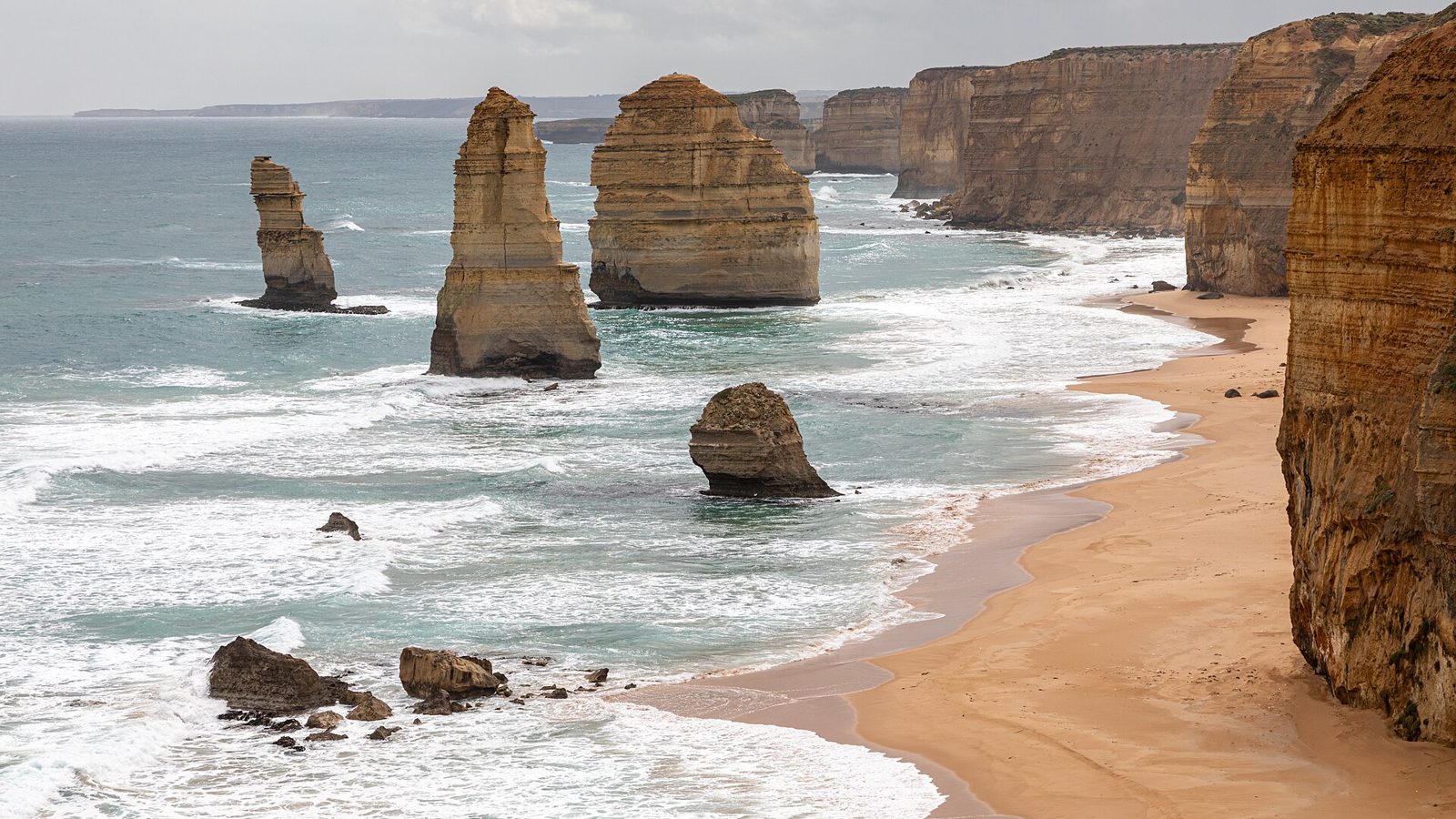
A 243km coastal road west of Melbourne. It winds past surf beaches, through rainforest where koalas sleep in the gum trees, and on to the limestone stacks of the Twelve Apostles. You walk cliff paths by day and eat fish and chips on the harbour wall at sunset.
- Best time to visit: March to May and November
- Daily budget (budget traveller): $70 to $250 USD
- Ideal trip length: 4 to 7 days
The Great Ocean Road runs for 243km along the coast of Victoria, from Torquay, about 1.5 hours south-west of Melbourne, to near Warrnambool. Soldiers back from the First World War built it between 1919 and 1932, and it is still the world's largest war memorial. The first stretch is all surf towns and beaches, with Bells Beach, Anglesea and Lorne. After that the road clings to the cliffs, then cuts inland through the rainforest of the Otway Ranges before reaching the Shipwreck Coast. There the Southern Ocean has carved the soft limestone into the Twelve Apostles, Loch Ard Gorge and a run of arches and stacks. Most visitors try to do it as a day trip from Melbourne, which means 12 hours on a coach. Stay a few nights and it makes much more sense. You can see koalas at Kennett River, walk part of the Great Ocean Walk, find waterfalls in the Otways and reach the Apostles at sunrise before the tour buses. A car makes life easier, but you can manage without one. A hostel bed in Apollo Bay, cheap V/Line coaches and free walks and lookouts keep it affordable on your own, though Australia is not a cheap country.
The Great Ocean Road is one of Australia's classic road trips, a 243km run along the coast of Victoria between Torquay and Allansford, near Warrnambool. It was carved by hand by returned soldiers and opened in full in 1932. The Memorial Arch at Eastern View marks the dedication. Most of the coast is the traditional Country of the Wadawurrung, Gadubanud and Eastern Maar peoples, and the new Twelve Apostles visitor centre tells their stories alongside the geology. Most people see it in a rushed day trip from Melbourne. Stay a few nights and you get the better version: koalas in the trees at Kennett River, a quiet walk through the Otway rainforest, fish and chips on Apollo Bay harbour and the Apostles turning gold at sunset. Australia is not cheap, but hostels, capped coach fares and free walks and lookouts keep costs reasonable.
Getting here is straightforward. Most people pick up a hire car in Melbourne and drive west via Geelong to Torquay, about 1.5 hours. Without a car, take the train to Geelong and a V/Line coach along the coast to Apollo Bay, then a coach on to Warrnambool if it runs that day, and a train back to Melbourne. Victorian public transport is half price until 1 January 2027. Base yourself in Lorne or Apollo Bay for the eastern half and Port Campbell for the Shipwreck Coast. Leave a night for Warrnambool or Port Fairy if you are heading west or catching the train back.
Timing shapes the trip. March to May brings calm, settled weather and quieter towns once the summer holidays end. November is green and fresh with long days. December and January are warm and lively, but the road jams up, rooms double in price and the Apostles are packed. Winter is cold and stormy and the towns go quiet, but the waterfalls are at their best and whales pass Warrnambool from June to September. People are friendly, English is the language and the evenings are low-key. If you want nightlife, stay in Melbourne. If you want a clifftop walk, a cold beer in a pub and a sky full of stars, come here.
Great Ocean Road itinerary
Surf Coast and Lorne
Morning: Pick up a hire car in Melbourne, or take the train to Geelong and the V/Line coach. Stop at Torquay for coffee, then watch the surfers from the Bells Beach lookout.
Afternoon: Drive through Anglesea and Aireys Inlet to see Split Point Lighthouse, then stop at the Memorial Arch at Eastern View for the classic photo.
Evening: Check in at Lorne. Walk out on the pier, then eat fish and chips on the foreshore.
Waterfalls, koalas and Apollo Bay
Morning: Drive up to Teddy's Lookout, then inland to Erskine Falls before the day-trip crowds arrive.
Afternoon: Take the winding cliff road west. Stop at Kennett River and walk up Grey River Road to look for koalas, then carry on to Apollo Bay.
Evening: Climb to Marriners Lookout for sunset over the bay, then have dinner at a harbour-side café or the pub.
Great Ocean Walk day
Morning: Walk the first section of the Great Ocean Walk from Apollo Bay to Marengo and look for the seals on the reef offshore.
Afternoon: Carry on along the coast if you have the legs, or arrange a shuttle back. Rest on the beach in the afternoon.
Evening: Cook in the hostel kitchen and swap tips with other travellers. Look for stars if the sky is clear.
Otway rainforest and Cape Otway
Morning: Walk the Maits Rest rainforest loop, then drive down to Cape Otway Lightstation. Watch for koalas on the access road.
Afternoon: Head up into the ranges for Otway Fly or the free walks at Hopetoun and Triplet Falls, then drive on to Port Campbell.
Evening: Check in at Port Campbell. If you are not too tired, visit Melba Gully for the glow worms on the way.
The Shipwreck Coast
Morning: Use your sunrise booking at the Twelve Apostles, then go up to the rooftop lookout at the visitor centre. Go down Gibson Steps if the tide is low.
Afternoon: Explore Loch Ard Gorge and its paths, then London Bridge, the Grotto and the Bay of Islands near Peterborough.
Evening: Return to the Apostles area for sunset if you booked a second slot, or eat at the pub in Port Campbell.
Food trail and Warrnambool
Morning: Detour inland around Timboon for ice cream, cheese and whisky along the 12 Apostles food trail.
Afternoon: Drive west to Warrnambool. Visit Flagstaff Hill Maritime Village or walk the foreshore, and look out for whales at Logans Beach from June to September.
Evening: Stay in Warrnambool or carry on 30 minutes to Port Fairy for a quiet night by the river.
Port Fairy, Tower Hill and home
Morning: Walk around Griffiths Island in Port Fairy to the lighthouse, then stop at Tower Hill to look for emus and koalas in the old volcano crater.
Afternoon: Drive back to Melbourne on the faster inland highway, or drop the car and take the train from Warrnambool, a little over three hours.
Evening: Arrive in Melbourne, or carry on west towards Adelaide.
Best neighbourhoods
- Torquay: The surf town at the eastern start of the road, about 20 minutes from Geelong. It has Bells Beach, the surf shops, the Australian National Surfing Museum and plenty of cafés. Handy for a first or last night and well served by buses from Geelong. It feels more like a suburb than the rest of the coast.
- Lorne: A lively resort town on a curved bay, backed by forested hills. You get a patrolled beach, a pier, good cafés and easy access to Erskine Falls and Teddy's Lookout. It is busy and expensive in January, so book early or come outside the school holidays.
- Apollo Bay: A working fishing town halfway along the road, and the most practical base for a solo traveller. It has a hostel, a supermarket, a harbour, the start of the Great Ocean Walk and the V/Line coach stop. Kennett River, the Otways and Cape Otway are all within an hour.
- Port Campbell: A small village in a little bay, about 10 minutes from the Twelve Apostles. Staying here means you can catch the Apostles, Loch Ard Gorge and London Bridge at sunrise or sunset without a long drive. It has a few motels, cafés and a pub, and is quiet after dark.
- Warrnambool: A proper regional city at the western end, with a rail link to Melbourne, big supermarkets, Flagstaff Hill Maritime Village and whale-watching at Logans Beach from June to September. It is less pretty than the coastal villages, but it is the easiest place to start or finish without a car.
Must-do experiences
- See the Twelve Apostles at first or last light: Since 16 October 2026, every visitor to the Twelve Apostles needs a timed arrival booking through the new Keerray Woorroong Visitor Centre. Booking is free until a fee is introduced in April 2027. The centre opens 8am to 8pm in daylight saving time and 9am to 5pm in winter, and has a rooftop lookout.
- Walk down to Loch Ard Gorge and Gibson Steps: Loch Ard Gorge is a narrow cove named after the 1878 shipwreck that left only two survivors. Short paths link it with lookouts, a cemetery and the Razorback. At Gibson Steps, 86 steps lead down to the beach below the cliffs, but do not go down at high tide or in big swell.
- Look for koalas at Kennett River: Turn up Grey River Road behind the Kennett River caravan park and scan the gum trees. Wild koalas are often asleep in the forks of branches within a few hundred metres. It is free. Keep your voice down, stay on the verge and never feed the parrots or touch the animals.
- Walk a day section of the Great Ocean Walk: The full trail covers 104km from Apollo Bay to near the Twelve Apostles and takes about a week. For a taste, walk from Apollo Bay to Marengo and its seal colony, or the clifftops near Cape Otway. Hike-in campsites must be booked through Parks Victoria.
- Find the waterfalls of the Otways: Erskine Falls is a short, steep drive inland from Lorne, and Hopetoun and Triplet Falls are deeper in the ranges. All are free. Otway Fly, a steel walkway through the tree canopy, costs about $20 USD (A$30), and the zipline tour costs about $95 USD (A$145).
- Visit Cape Otway Lightstation: The lighthouse dates from 1848 and is the oldest surviving one on mainland Australia, standing on a cliff where Bass Strait meets the Southern Ocean. Full entry is about $14 USD (A$22). Tower climbs were paused in 2026 for heritage repair work, and a cheaper ticket was offered, so check before you go.
- Surf or watch the surfers at Bells Beach: Bells is the home of the Rip Curl Pro surf contest every Easter. Watch from the clifftop lookout, then walk part of the Surf Coast Walk towards Anglesea. Beginners should book a lesson at a patrolled beach in Torquay or Anglesea instead, as Bells is not for learners.
Hidden gems
- Teddy's Lookout above Lorne, where the road curls around the hills below you and the St George River meets the sea
- Maits Rest, a free 30-minute boardwalk loop through myrtle beech rainforest and huge tree ferns just west of Apollo Bay
- Wreck Beach near Moonlight Head, where steep steps lead to the rusting anchors of two 19th-century shipwrecks, visible at low tide
- The Bay of Islands and the Bay of Martyrs near Peterborough, with stacks as dramatic as the Apostles and a fraction of the visitors
- Melba Gully near Lavers Hill after dark, where glow worms light up the banks of a short rainforest track
Daily budget
- Accommodation: budget $25-45 USD / night (hostel dorm), mid-range $110-180 USD (motel, B&B or small apartment), splurge $300+ USD (beachfront resort or eco lodge). Prices roughly double in late December and January and at Easter. Solo rooms are scarce in small towns like Port Campbell, so book ahead.
- Food: budget $25-40 USD / day (bakery breakfast, fish and chips, supermarket picnic), mid-range $50-80 USD (café brunch and a pub dinner), splurge $120+ USD (seafood dinner with wine). A pub main costs about $20-30 USD and a flat white about $3.50-4 USD. Supermarkets in Torquay, Lorne, Apollo Bay and Warrnambool are much cheaper than general stores.
- Transport: budget $3-8 USD / day (V/Line coach at capped fares), mid-range $50-90 USD (car hire plus fuel), splurge $150+ USD (small-group tour or scenic flight). The weekday cap is A$5.70 and the weekend cap A$4 until 1 January 2027, then roughly double. One-way car hire may add a drop-off fee.
- Activities: budget $0-10 USD / day (lookouts, beaches, walks, koala spotting), mid-range $15-35 USD (Otway Fly, Cape Otway, surf lesson share), splurge $95+ USD (Otway Fly zipline or guided wildlife tour). Twelve Apostles bookings are free until April 2027. Cape Otway costs about $14 USD at full price, and Otway Fly about $20 USD.
- Drinks & nightlife: budget $7-12 USD (a pint or glass of wine at the pub), mid-range $25-45 USD (a few drinks and a shared plate), splurge $70+ USD (winery tasting or cocktails in Lorne). Alcohol is expensive in Australia. Buy from a bottle shop for picnics, but drinking in public places is restricted in some towns.
Where to stay
- Social hostel in Apollo Bay ($25-45 USD / night (dorm)): Apollo Bay Eco YHA is a modern, well-run hostel a short walk from the beach, the harbour and the coach stop. It has a big kitchen and a rooftop deck, and it is the best place on the coast to meet other solo travellers.
- Boutique hotel in Lorne ($150-280 USD / night): Mantra Lorne sits on the foreshore across from the beach, with gardens, a pool and the town's cafés a short walk away. It is a comfortable base for Erskine Falls and the cliff drive west.
- Apartment in Port Campbell ($110-200 USD / night): Motel rooms and small apartments in Port Campbell put you 10 minutes from the Twelve Apostles. A kitchen helps, as the village has only a few places to eat.
- Splurge in Cape Otway ($300-500+ USD / night): Great Ocean Ecolodge is a small solar-powered lodge in the bush near Cape Otway, run with a wildlife conservation centre. Guests can join dusk walks to see kangaroos and koalas.
What to eat
- Fish and chips: flake (gummy shark) or local whiting eaten on the harbour wall in Apollo Bay or on Lorne pier, roughly $12-18 USD a serve
- Southern rock lobster and abalone: the region's luxury seafood, on menus in Apollo Bay and Port Campbell when in season. Ask the price first
- Meat pie or a sausage roll from a country bakery, the classic cheap road-trip lunch
- Flat white and brunch: smashed avocado or a bacon and egg roll at a surf café in Torquay or Lorne, around $12-20 USD
- Timboon area produce: ice cream, cheese and whisky from the small producers along the 12 Apostles food trail inland from Port Campbell
- Pinot noir or a craft beer: try a glass from the Geelong wine region or one of the small breweries along the coast
Day trips
- Port Fairy (About 30km west of Warrnambool, 30 minutes by car or coach): A pretty fishing village with old stone cottages, a river harbour full of boats and a walk around Griffiths Island to a small lighthouse. Short-tailed shearwaters return to the island at dusk from late September to April. Drive west from Warrnambool on the Princes Highway, or take the V/Line coach from Warrnambool station towards Portland. Check return times before you set off.
- Tower Hill Wildlife Reserve (About 15km west of Warrnambool, on the way to Port Fairy): A huge extinct volcano whose crater now holds a lake, wetlands and bush. Emus, koalas and kangaroos roam free, and short walking trails climb the cones inside the crater. Easiest by car on the road between Warrnambool and Port Fairy. Go in the morning or late afternoon, when the animals are most active, and keep to the trails.
- Otway Fly and Triplet Falls (About 1 hour inland from Apollo Bay via Lavers Hill or Beech Forest): Walk through the tree canopy on the steel walkway at Otway Fly, then follow the free rainforest loop to Triplet Falls nearby. It is a cool, green break from the coast. You need a car or a tour, as no public transport goes into the ranges. Otway Fly costs about $20 USD (A$30). The roads are narrow and winding, so allow plenty of time and fill up with fuel first.
When to visit
- Summer (December - February): 20-27°C, sunny with hot spells, sea around 17-19°C. Crowds: Very busy, especially around Christmas and January school holidays. Best for beaches, surfing and long evenings, but rooms cost the most and traffic is heavy. Book weeks ahead and watch for fire danger days.
- Autumn (March - May): 16-23°C, often calm and settled, cooling in May. Crowds: Moderate, busy at Easter for the Bells Beach surf contest. Arguably the best time. Mild days, quieter lookouts and good walking weather. Easter weekend is the exception.
- Winter (June - August): 8-14°C, wet, windy and stormy at times. Crowds: Low. Cheap and quiet, with dramatic seas and full waterfalls. Days are short, so plan driving carefully. Whale season off Warrnambool.
- Spring (September - November): 13-21°C, changeable, with sunny spells and showers. Crowds: Low to moderate, rising in November. Green hills, wildflowers and lambs in the fields. November is a sweet spot before the summer rush. Pack a rain jacket.
Entry rules for your passport
Visa rules for Australia depend on the passport you travel on. Check the official source before you book: Australian Department of Home Affairs
Getting there
The nearest major airport is Melbourne (Tullamarine). Avalon Airport, near Geelong, takes some domestic flights and is closer to the coast. From Melbourne it is about 1.5 hours by car to Torquay, the start of the road. Most visitors hire a car at the airport or in the city and drive one way, returning on the faster inland Princes Highway, which takes about 3 hours from Warrnambool. By public transport, take a V/Line train from Southern Cross to Geelong (about an hour), then a V/Line coach along the coast to Apollo Bay, which runs several times a day and takes about 2.5 hours. A coach continues from Apollo Bay via Port Campbell to Warrnambool only a few days a week. From Warrnambool, trains return to Melbourne in a little over three hours. Victorian fares are half price until 1 January 2027, with the weekday cap at A$5.70 (about $4 USD), so a whole day of travel costs very little. In summer, book coach seats in advance. Day tours from Melbourne are cheap and easy but very long.
Getting around
The easiest way to see the road is with a car, as most of the waterfalls, lookouts and walks are not on a bus route. Car hire from Melbourne costs roughly $40-70 USD a day plus fuel, and one-way hire to Warrnambool is possible with some companies. Drive on the left. The road is narrow and twisting, with lots of hairpins between Lorne and Apollo Bay, so use the pull-over bays and let faster cars pass. Avoid driving at dawn and dusk if you can, when kangaroos and wallabies are on the road. Without a car, V/Line runs coaches from Geelong station through Torquay, Anglesea, Lorne and Kennett River to Apollo Bay several times a day, taking about 2.5 hours. The onward coach from Apollo Bay to Port Campbell and Warrnambool runs only a few days a week. Victorian fares are half price until 1 January 2027, with a weekday cap of A$5.70 (about $4 USD) and A$4 at weekends, so check the price again if you travel after that. Small-group tours fill the gaps for the Otways and the Apostles. Taxis are rare outside the towns.
Safety
The Great Ocean Road is safe from crime. The real dangers are the ocean and the road. Rips are strong and many beaches are unpatrolled, so swim only between the red and yellow flags at patrolled beaches such as Lorne, Apollo Bay and Torquay in summer, and never alone. Stay behind the barriers on clifftops, as the limestone edges crumble and waves can sweep people off rock platforms. On the road, drive on the left, take breaks, never stop on a bend for a photo and watch for wildlife at dusk. Snakes are active on trails from spring to autumn. Wear boots, watch your step and leave them alone. UV is fierce even on cloudy days. From December to March, check the VicEmergency app for bushfires and total fire ban days, and check VicTraffic for landslip closures. Tap water is safe. The emergency number is 000. Residents of the UK, Ireland and a few other countries get some public healthcare under reciprocal agreements, but everyone should have travel insurance with medical cover.
Solo travel tips
- Base yourself in Apollo Bay: It is halfway along the road, has a hostel, a supermarket and the coach stop, and is close to the Otways, Cape Otway and Kennett River. It is the easiest place to meet other travellers.
- Book the Apostles early or late: Tour buses from Melbourne arrive in the middle of the day. Book a sunrise or sunset slot and you will have far more room on the platforms and much better light.
- Check coach days before booking beds: The Apollo Bay to Warrnambool coach does not run every day. Fix that leg first, then build the rest of the trip around it.
- Drive short days: Plan two to three hours of driving a day at most, with plenty of stops. Arrive before dusk so you are not driving among kangaroos on dark roads.
- Safety for solo travellers: The main risks are rips, crumbling cliff edges and walking alone. Swim between the flags, stay behind barriers and tell someone your route before a long walk, as there is no phone signal in parts of the Otways.
- Meet people on a tour or a trail: Small-group wildlife tours, surf lessons and hostel kitchens are easy places to chat. Walkers on the Great Ocean Walk often end up camping together.
Cultural etiquette
- Say 'g'day' or 'hi', and 'cheers' or 'thanks'. Australians are informal and use first names quickly.
- Respect the coast as Aboriginal Country. Read the Eastern Maar and Wadawurrung displays and stay off culturally sensitive sites that are marked.
- Never feed or touch wildlife, including koalas, kangaroos and the parrots at Kennett River. Human food makes them sick.
- Use the pull-over bays on the narrow road to let faster cars pass. Locals appreciate it, and it is safer for you.
- Stay behind barriers and on marked paths. Climbing on fragile cliffs damages them and kills people every year.
- In the surf, do not drop in on another surfer's wave. Learners should stay away from the main breaks at Bells and Winki Pop.
- Tipping is not expected, though rounding up or leaving 10% for great service at a restaurant is welcome.
Frequently asked questions
Can I do the Great Ocean Road without a car?
Yes, but plan around the timetable. Take the train from Melbourne's Southern Cross to Geelong (about an hour), then a V/Line coach along the coast to Apollo Bay (about 2.5 hours), which runs several times a day. The coach from Apollo Bay past the Twelve Apostles to Warrnambool runs only a few days a week, so check the days before you book beds. From Warrnambool, trains return to Melbourne in a little over three hours. A small-group tour from Apollo Bay or Port Campbell covers the Otways and lookouts the coach misses.
How many days do I need on the Great Ocean Road?
Three nights lets you drive one way with stops in Lorne, Apollo Bay and Port Campbell. Five nights adds a day hike on the Great Ocean Walk, Cape Otway and time in the rainforest. A week lets you go on to Warrnambool and Port Fairy and travel at a slower pace. Avoid the one-day return trip from Melbourne if you can, as most of the day is spent on a bus.
When is the best time to visit the Great Ocean Road?
March to May is the pick, with settled weather, warm-ish sea and fewer crowds after the summer holidays. November is also good, with long days and green hills. December and January bring the warmest weather but also school holiday crowds and high prices. Winter, from June to August, is cold, wet and windy, but it is the quietest season and the time to see southern right whales off Warrnambool.
Do I need to book to see the Twelve Apostles?
Yes. Since 16 October 2026, all visitors to the main Twelve Apostles precinct need a timed arrival booking, which also reserves a parking space. The viewing platforms are reached through the new Keerray Woorroong Visitor Centre. Booking is free for now, but a fee is due to start in April 2027. Book a slot close to sunrise or sunset for the best light and fewer people.
Is driving the Great Ocean Road difficult?
It is not technically hard, but it needs concentration. Australians drive on the left, the road has many tight bends between Lorne and Apollo Bay, and overtaking spots are limited. Use the pull-over bays to let locals pass and never stop on the road for photos. Plan short driving days and arrive before dusk, when kangaroos and wallabies are most active. Many visitors drive one way and return to Melbourne via the faster inland highway.
Where can I swim safely?
Stick to beaches patrolled by lifesavers and swim between the red and yellow flags. In summer, Torquay, Anglesea, Lorne and Apollo Bay are patrolled on set days. The Shipwreck Coast beaches around the Twelve Apostles are dangerous for swimming, with big waves and strong rips. The water is cool year round, around 14-19°C, so a wetsuit helps if you want to surf.
Is the Great Ocean Road safe for solo female travellers?
Yes. The coastal towns are friendly and relaxed, and many solo women travel here. Hostels, small-group tours and the coach are easy ways to meet people. The main risks are practical ones: tell someone your plans before a long walk, carry water and a charged phone, as signal drops in the Otways, and avoid driving tired or after dark on quiet stretches.
What entry rules apply to Australia in 2026?
Every visitor needs a visa or electronic authority before flying, as there is no visa on arrival. UK and EU passport holders can apply for the free eVisitor (subclass 651) online. US, Canadian, Japanese and some other passport holders use the Electronic Travel Authority (subclass 601), which costs A$20 through the official Australian ETA app. Both allow stays of up to three months per visit. Avoid third-party websites that charge extra, and check the Department of Home Affairs website for current rules and biosecurity declarations.
Tours and activities in Great Ocean Road | Great Ocean Road in 2 days | Great Ocean Road in 3 days | Great Ocean Road in 4 days | Great Ocean Road in 5 days | Great Ocean Road in 7 days
Joy Plus home | Destinations | Itineraries | Activities | Flights | Budget planner | Calendar | Map | Blog | Lifetime access