Destinations / Europe
Hallstatt, Austria travel guide
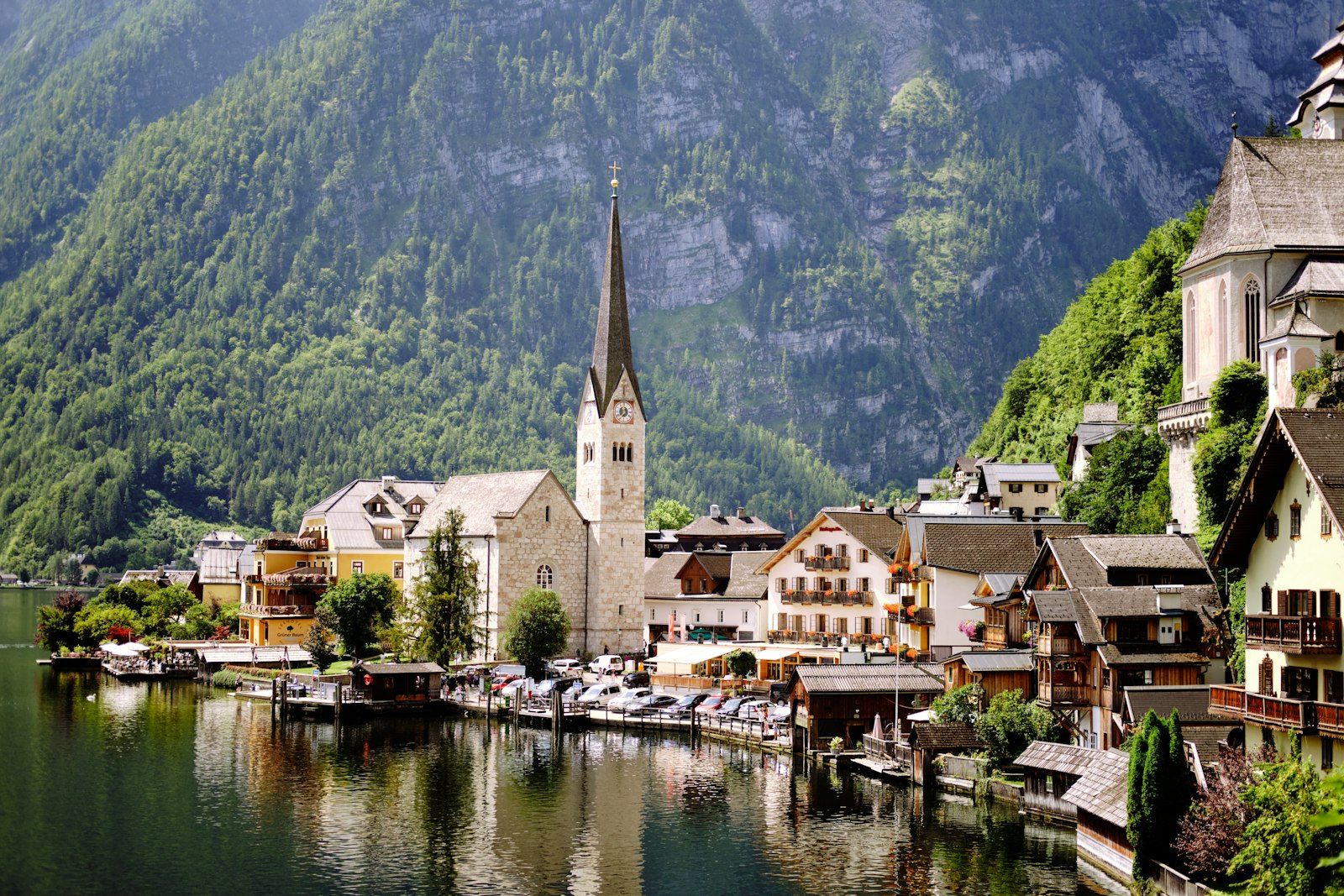
Austria's fairytale lake village. Alpine reflections, ancient salt mines, and Instagram's favourite viewpoint.
- Best time to visit: May-June & September-October
- Daily budget (budget traveller): $100 to $250 USD
- Ideal trip length: 1 to 2 days
Hallstatt is a tiny lakeside village in Austria's Salzkammergut that looks like a fairytale: pastel houses wedged between a glassy lake and steep forested mountains, a slender church spire reflecting in the water, and the world's oldest salt mine in the hills above. It's famously photogenic and very small, so timing is everything. Joy Plus helps you arrive before the day-trippers, catch the classic viewpoint at the right light, and explore the wider Salzkammergut lakes.
Hallstatt has about 700 residents and a postcard so copied that there is a full-scale replica in China. The real one is a thin strip of houses on a ledge between the Hallstätter See and a wall of limestone. A slim Evangelical spire does the heavy lifting in every photo. The village is a UNESCO cultural landscape (listed 1997) built on salt, which is why the mine above the roofs matters more than the pastel facades. People have been digging here since the Bronze Age, and the whole Iron Age period gets its name from this valley.
The catch is arithmetic. On a summer day thousands of day-trippers arrive between roughly 11am and 4pm in a village you can cross in ten minutes. The fix is simple: sleep here. Arrive around 4pm as the coaches leave, shoot the classic viewpoint at 6:30am when the lanes are empty, and be on the first 9am funicular up to the salt mine. By 5pm you have the lakeshore back and the spire turns gold. Most of the village is quiet by 9pm, and the kitchens close not long after.
Hallstatt is pricey by Austrian standards and has almost no nightlife, so treat it as a base for the wider Salzkammergut rather than a destination in itself. Obertraun across the lake has cheaper beds and the Dachstein cable car, Gosausee gives you the mirror-lake photo without the crowd, and Bad Ischl is a proper imperial spa town with real pastry. Joy Plus sequences all of it around bus timetables, ferry times and the tour-coach wave, so you see the one famous view and everything it hides.
How many days in Hallstatt?
For Hallstatt, we recommend 1 to 2 days.
| Trip length | What you'll see | Itinerary |
|---|---|---|
| 2 days · Recommended | Own the village at dusk; Dawn viewpoint, salt mine, Bone House | Hallstatt in 2 days |
| 3 days | Adds: Obertraun, Dachstein and the ice caves | Hallstatt in 3 days |
| 4 days | Adds: Gosausee mirror lake | Hallstatt in 4 days |
| 5 days | Adds: Echerntal walk and a slow lake day | Hallstatt in 5 days |
| 7 days | Adds: Bad Ischl, the emperor's spa town; Salzburg | Hallstatt in 7 days |
Hallstatt itinerary
Arrive late, own the village at dusk
Morning: Regional train from Salzburg Hbf to Attnang-Puchheim (about 1h), change to the Salzkammergutbahn to Hallstatt Bahnhof (about 1h30). Wait for the ferry on the platform, which has its own free postcard view of the village.
Afternoon: Ferry across (about €4), drop bags, then walk Marktplatz, the Evangelical church and the Mühlbach waterfall as the coaches leave around 4pm.
Evening: Dinner at Bräugasthof on Seestraße: Reinanke or schnitzel and a local lager. Golden hour on the lakeshore, bed early.
Dawn viewpoint, salt mine, Bone House
Morning: 6:30am at the classic viewpoint at the north end of Seestraße, a flat walk from Marktplatz, with empty lanes and soft light. First funicular at 9:00 up to Salzwelten (book a timed slot online), then the 350m Welterbeblick Skywalk.
Afternoon: Lunch with the view at Rudolfsturm, then ride down. When the village floods at midday, go indoors: the Bone House (about €2.50) and the Hallstatt Museum on Seestraße 56.
Evening: Rowboat or electric boat from the Seelände pier at 6pm. Dinner on the terrace at Gasthof Zauner Seewirt, with smoked trout and strudel.
Obertraun, Dachstein and the ice caves
Morning: Bus 543 from Hallstatt Lahn to the Dachstein cable car in Obertraun (about 15 min, around €3). Take the 9:00 car up to Krippenstein, then walk to the Five Fingers platform.
Afternoon: Down to Schönbergalm for the Giant Ice Cave or the Mammoth Cave tour (seasonal, roughly May to mid-October, bring a jacket as it is near 0°C inside). Budget €55-70 for cable car plus one cave.
Evening: Back to Hallstatt, early dinner away from Marktplatz where prices are lower, then a sunset walk to the pier.
Gosausee mirror lake
Morning: Bus 543 to Bad Goisern, then Postbus 542 to Gosausee (allow 1h15 to 1h30 and check the timetable the night before). Walk the Vorderer Gosausee loop, about 7km and 2 hours, flat and easy.
Afternoon: Picnic on the shore with the Dachstein glacier in the water. Add the Hinterer See path if the sky is clear.
Evening: Return bus, hot dinner, and an early night, because this is a full day.
Echerntal walk and a slow lake day
Morning: Walk from Hallstatt Lahn into the Echerntal to the Waldbachstrub waterfall (about 1h each way, free, and the coaches never come).
Afternoon: Swim off a public shore or rent a rowboat. If it rains, the Hallstatt Museum covers the Iron Age story properly.
Evening: Kaiserschmarrn and a Melange at a lakeside café. Dinner at Gasthaus Simony, then a last look at the lights on the water.
Bad Ischl, the emperor's spa town
Morning: Ferry to Hallstatt Bahnhof, then train to Bad Ischl (about 30 min). Kaiservilla tour at opening (about €20), with Franz Joseph's summer residence and park.
Afternoon: Pastries at Zauner (Pfarrgasse 7), with the Zaunerstollen as the souvenir. Stroll the Traun riverside and the Kurpark.
Evening: Train back, easy dinner, and your last sunset from the pier.
Slow morning, Salzburg, depart
Morning: Coffee and a pastry by the lake, then catch the ferry and an early train. Check the ferry timing against your train, as they are coordinated.
Afternoon: If your flight is late, 3 hours in Salzburg: Hohensalzburg funicular and Getreidegasse. Store bags at the Hbf lockers.
Evening: Bus 2 or the S-Bahn to Salzburg airport (SZG), or the Westbahn or ÖBB train on to Vienna.
Best neighbourhoods
- Market Square (Marktplatz): The pastel heart of the village with cafés, shops and the lakeside.
- Hallstatt Lahn: The southern part of the village with the bus terminal and the salt-mine funicular.
- Salzberg: The mountain above town with the ancient salt mine and Skywalk viewpoint.
- Obertraun: Across the lake, gateway to the Dachstein ice caves and Five Fingers viewpoint.
- Classic Viewpoint: The iconic photo spot at the northern edge looking back over the village.
Must-do experiences
- The classic village viewpoint: The world-famous photo of Hallstatt reflected in the lake.
- Tour the Salzwelten salt mine: The world's oldest salt mine, with a Skywalk over the village; it reopened in August 2026 with a new funicular after a year's closure.
- Row or cruise the lake: See the village from a wooden boat on the still water.
- Visit the Bone House: The charnel house of painted skulls beside the parish church.
- Day trip to Dachstein: Ice caves and the Five Fingers viewing platform near Obertraun.
- Explore the Salzkammergut lakes: Nearby Gosausee and Wolfgangsee for fewer crowds.
Hidden gems
- Gosausee lake with its mirror reflection of the Dachstein glacier.
- The quiet morning hours before the tour buses and crowds arrive.
- The waterfall and Mühlbach stream running through the upper village.
- Sunset from the lakeshore once the day-trippers have left.
Daily budget
- Accommodation: budget €35-55 / night (Obertraun hostel dorm or guesthouse), mid-range €160-260 (double at Gasthof Zauner Seewirt or similar), splurge €320-500 (Heritage Hotel Hallstatt, Seehotel Grüner Baum lake view). Add about €3 per person per night in local tax. Peak-season rooms in the village sell out months ahead, and cheaper beds sit a short bus ride away.
- Food: budget €25-35 / day (bakery breakfast, Würstel, supermarket picnic), mid-range €55-85 (Reinanke or schnitzel dinner, Kaiserschmarrn), splurge €110+ (multi-course dinner at Seehotel Grüner Baum). Lake whitefish (Reinanke) is €24-32 and schnitzel €18-25. Kitchens close around 8:30 to 9pm. Stock up in Bad Ischl, not in the village.
- Transport: budget €8-15 (ferry, bus 543 hops), mid-range €25-40 (train from Salzburg, ferry, bus), splurge €180+ (private transfer from Salzburg airport). The village is walkable. Hallstatt Bahnhof sits across the lake, so budget about €4 each way for the ferry. Parking in lot P1 or P2 runs about €20 a day.
- Activities: budget €20-30 (funicular return plus Skywalk, free walks), mid-range €60-90 (Salzwelten mine around €40, Bone House, boat), splurge €150+ (Krippenstein cable car and ice caves, private boat). Salzwelten plus funicular is roughly €40 and the Skywalk is free with the funicular ticket. Krippenstein with one cave is roughly €55-70.
- Drinks & nightlife: budget €8-12 (half-litre of Austrian lager €5-6), mid-range €20-30 (dinner wine, Aperol on the terrace), splurge €60+ (cocktails at a lakeside hotel bar). There is no nightlife to speak of. Evenings are terrace drinks and bed by 10pm. For a real bar scene, go to Bad Ischl.
Where to stay
- Social hostel in Obertraun (€30-50 / night): Jugendherberge Obertraun (HI hostel) across the lake. Simple dorms and privates, hikers and school groups, 15 min by bus 543 or one train stop from Hallstatt Bahnhof. It is the only realistic budget base.
- Boutique hotel in Marktplatz (€160-260 / night): Gasthof Zauner Seewirt or Seehotel Grüner Baum, right on the square with lake terraces and traditional Gasthof breakfasts. You step out for the dawn view in two minutes.
- Apartment in Hallstatt Lahn (€120-200 / night): Ferienwohnungen with kitchenettes on the quiet southern edge, five minutes from the bus stop and funicular. Cooking breakfast and lunch saves around €40 a day. Book 4 to 6 months ahead for summer.
- Splurge in Lakefront (€320-500 / night): Heritage Hotel Hallstatt or a lake-view suite at Seehotel Grüner Baum, with water views from the balcony and the village to yourself after 5pm.
What to eat
- Fresh lake whitefish (Reinanke), grilled or smoked
- Austrian schnitzel with potato salad
- Kaiserschmarrn, the fluffy shredded pancake dessert
- Apple strudel with a lakeside coffee
Day trips
- Dachstein Krippenstein and the ice caves (15 min by bus + 25 min by cable car): Cable car to 2,100m, the Five Fingers viewing platform over a 400m drop, and the Giant Ice Cave and Mammoth Cave tours. Cave season runs roughly May to mid-October. Go early, as clouds roll in by afternoon. Bus 543 from Hallstatt Lahn to the Dachstein cable car stop in Obertraun (about €3). Cable car return about €38, caves extra, combo tickets around €55-70.
- Gosausee (About 1h15 to 1h30 by bus): A mirror lake under the Dachstein glacier with a flat 7km loop, about 2 hours. Far fewer people than the village, and the best reflection photo in the region. Bus 543 to Bad Goisern, then Postbus 542 to Gosausee. Check the timetable the night before, as services thin out in the evening.
- Bad Ischl (30 min by train + ferry): Emperor Franz Joseph's summer spa town. Kaiservilla tour, Zauner pastries on Pfarrgasse, riverside walks and real restaurants after quiet Hallstatt. Ferry to Hallstatt Bahnhof, then train to Bad Ischl (about €7). Bus 543 also runs the route in about 50 min.
When to visit
- Spring (April - June): 8-20°C, fresh green slopes, snow still on the Dachstein, frequent showers. Crowds: Building from May, manageable midweek. Great waterfalls and empty trails. Some Dachstein lifts and ice caves only open from May, so check dates before you book.
- Summer (July - August): 20-27°C, lake swimmable at around 20-23°C, afternoon thunderstorms. Crowds: Heavy, coaches and day-trippers 11am to 4pm. Warm and busy. Stay overnight, do the viewpoint at dawn and hide on the lake or in Obertraun midday.
- Autumn (September - October): 8-18°C, golden beech and larch, misty mornings. Crowds: Moderate, drops sharply after mid-October. The best light for photos and the best balance of open attractions and calm lanes. Book rooms early for weekends.
- Winter (November - March): -4 to 4°C, snow on the roofs, short days. Crowds: Low, tiny Advent bump in December. Cheapest and quietest, and the village is genuinely magical in snow. Ice caves and some boats are closed, a few guesthouses shut in November, and the salt mine runs reduced hours.
Entry rules for your passport
Visa rules for Austria depend on the passport you travel on. Check the official source before you book: European Commission: Schengen visa policy
Getting there
The nearest airport is Salzburg (SZG), about 1h45 away, and Vienna (VIE) is roughly 3h45 by road or rail. From Salzburg Hbf take the regional train to Attnang-Puchheim (about 1h), then the Salzkammergutbahn to Hallstatt Bahnhof (about 1h30), for around €20-35 depending on the fare. From Vienna, take ÖBB to Attnang-Puchheim and change, roughly 4h, with Sparschiene fares from about €25. The station sits on the east shore, so a short ferry (about €4, timed to the trains) carries you over to the village. By bus, Postbus 150 runs from Salzburg to Bad Ischl (about 1h30), then bus 543 on to Hallstatt Lahn (about 50 min). Private transfers from Salzburg airport run €180-250. If you drive, park in lot P1 or P2 outside the village (about €20 a day) and walk 10 to 15 minutes, since cars are restricted inside.
Border checks: non-EU visitors (other than Swiss, Norwegian, Icelandic, Liechtenstein, Andorran, Monegasque, San Marinese and Vatican citizens, and holders of an EU residence permit or long-stay visa) are registered in the EU's Entry/Exit System (EES) instead of getting a passport stamp. On your first crossing, officers take your photo and/or fingerprints, so allow extra time at passport control. ETIAS, the planned travel authorisation, is not in operation yet, so don't pay any website for one.
Getting around
Hallstatt itself is tiny and entirely walkable, with cars restricted in the centre. Most visitors arrive by car (parking in lots outside the village), by bus from Salzkammergut towns, or by the scenic train to Hallstatt station followed by a short ferry across the lake. A funicular climbs to the salt mine and Skywalk. To explore the wider region, a car or organised tour helps reach Gosausee, Dachstein and the other lakes.
Safety
Hallstatt is extremely safe, with the main issues being overcrowding, narrow lanes and slippery lakeside paths rather than crime. Be respectful, as it's a small residential village, not a theme park, and stick to public areas. Mountain weather can change quickly for hikes and the Dachstein excursions, so carry layers. The funicular and salt-mine tours are well run. Solo travellers, including women, feel completely comfortable here at any time of day.
Solo travel tips
- Sleep in the village at least one night: Day-trippers vanish by 5pm and the lakeshore turns peaceful. A solo traveller who stays gets dawn light, quiet lanes and a terrace table without queueing.
- Hostel pick: Obertraun: Hallstatt has no party hostel. The nearest budget beds are in Obertraun, a 15-minute bus or short train hop across the lake, at roughly €30-50 with breakfast. It is the best place to meet other hikers heading for Dachstein.
- Eat at the pub counter: Gasthaus tables fill with tour groups at lunchtime. Sit at the Stammtisch or the bar at Bräugasthof, order the day's special and nod to the locals. You will have a chat within ten minutes.
- Check the last ferry and bus: The ferry from Hallstatt Bahnhof is timed to trains and does not run all night, and the last bus 543 leaves early evening. Screenshot the timetable before dinner so you are not stranded.
- Solo female travellers: Hallstatt is one of the safest places in Europe at any hour. The real risks are wet lakeside planks and slippery steps. Walk the Echerntal and Salzberg trails in daylight, and tell your host where you are hiking.
- Find your tribe on a hike or the lake: The Echerntal and Gosausee loops are full of solo walkers, and the cable car queue at Obertraun is a friendly lottery. Hallstatt's Seestraße terraces are good for a quiet coffee with a view.
Cultural etiquette
- Say 'Grüß Gott' or 'Servus' when you walk into a shop or Gasthaus. Silence reads as rude, and a greeting gets you a better table.
- People live here. Do not step into gardens, look through windows, or block doorways for a photo. Drones are not welcome without a permit.
- At restaurants, tell the server the total including tip as you pay (5-10%). Do not leave coins on the table, because that is the Austrian habit for 'keep it'.
- Carry your wheelie bag over the cobbles before 7am and after 9pm, as the rattle carries across the whole village.
- Treat the Bone House as a memorial, not a photo set. Keep your voice down, no flash, and no posing with the skulls.
- Many Gasthöfe close one day a week (Ruhetag), and shops are shut on Sundays and public holidays. Check before you plan a lunch.
- Stay off the road when taking photos at the classic viewpoint, because delivery vans and residents use it.
Frequently asked questions
How many days do you need in Hallstatt?
One to two days is enough for the village itself. A single day lets you see the famous viewpoint, tour the salt mine, visit the Bone House and stroll the lakeside, especially if you arrive early. Staying overnight is highly recommended, though, because it lets you enjoy the village in the peaceful early morning and evening once the day-trippers leave, and gives you time to explore the wider Salzkammergut lakes and the Dachstein caves.
Is Hallstatt good for solo travellers?
Yes, it's extremely safe and peaceful, ideal for a quiet, scenic solo escape, though it's small and romantic rather than a social party spot. The village is walkable and easy to navigate, and the surrounding region offers great solo hiking and lake activities. Accommodation is limited and books up fast, so reserve early. Solo women travellers feel completely comfortable. Many solo visitors combine Hallstatt with Salzburg or the wider Salzkammergut for more variety.
When is the best time to visit Hallstatt?
Late spring (May-June) and early autumn (September-October) offer pleasant weather, lush or golden scenery and slightly thinner crowds than midsummer. July and August are warmest but busiest, with peak day-tripper numbers. Winter is quiet and magical, with a dusting of snow and Christmas-card scenes, though some activities and boat services reduce. Whenever you visit, arriving early in the day or staying overnight is the key to avoiding the densest crowds.
How do you get to Hallstatt?
Hallstatt is about an hour and a half from Salzburg by car or organised tour, and roughly three to four hours from Vienna. By public transport, you can take a train to Hallstatt station and then a short, scenic ferry across the lake to the village, or take buses from Salzkammergut towns like Bad Ischl. Cars must park in lots outside the restricted centre. Many visitors come on day trips, but staying overnight is far more rewarding.
Is Hallstatt too crowded to enjoy?
It can feel crowded in the middle of the day during peak season, when tour buses and day-trippers fill the small centre. The secret is timing: arrive early in the morning or stay overnight so you can enjoy the village in the calm hours before and after the crowds. Exploring the salt mine, taking a boat on the lake, or visiting nearby lakes like Gosausee also lets you escape the busiest spots.
Is the Hallstatt salt mine worth visiting?
Yes, the Salzwelten salt mine is one of Hallstatt's top attractions and the oldest known salt mine in the world. Reached by a new funicular, opened in August 2026 after the site had been closed for a year, the tour takes you underground with wooden miners' slides, an underground salt lake and exhibits on the area's ancient salt-mining history. The same hilltop has the Skywalk viewing platform, offering a spectacular panorama over the village and lake. Allow a few hours for the funicular, viewpoint and mine tour together.
What is there to do near Hallstatt?
The surrounding Salzkammergut region is full of attractions. Across the lake at Obertraun you'll find the Dachstein ice caves and the Five Fingers viewing platform. Nearby Gosausee offers a stunning mirror-lake reflection of the Dachstein glacier, while lakes like Wolfgangsee and towns like Bad Ischl and St. Gilgen are easy excursions. There's excellent hiking, lake swimming in summer, and the elegant city of Salzburg within easy reach.
Tours and activities in Hallstatt | Hallstatt in 2 days | Hallstatt in 3 days | Hallstatt in 4 days | Hallstatt in 5 days | Hallstatt in 7 days
Can't decide? Compare Hallstatt with...
Joy Plus home | Destinations | Itineraries | Activities | Flights | Budget planner | Calendar | Map | Blog | Lifetime access