Destinations / Europe
Honfleur, France travel guide
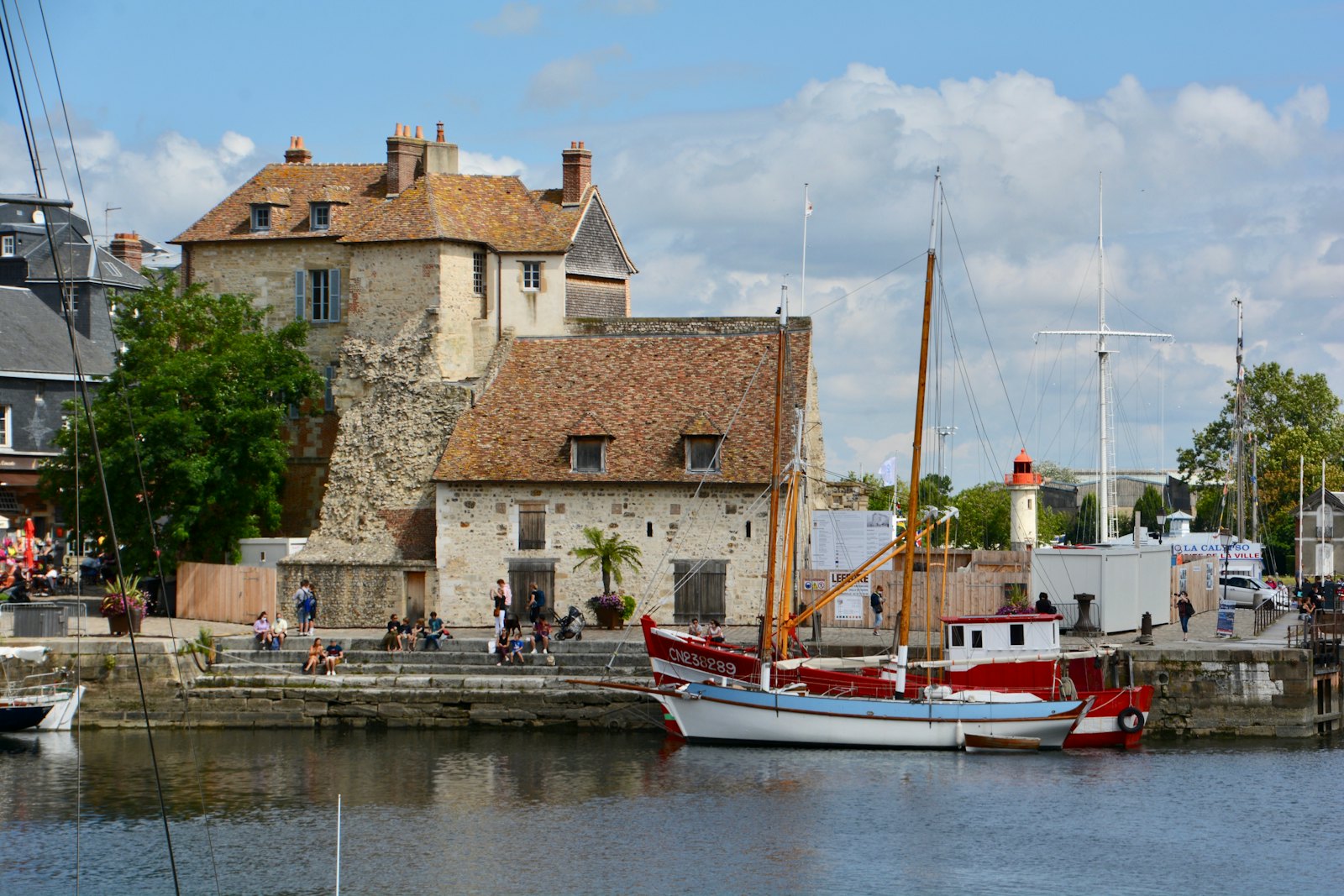
A small working harbour on the Seine estuary, with tall slate-fronted houses around the old dock, a wooden church built by shipwrights, and the painters' light that drew Boudin and Monet.
- Best time to visit: May to September
- Daily budget (budget traveller): $95 to $300 USD
- Ideal trip length: 3 to 5 days
Honfleur sits on the south bank of the Seine estuary, across the water from Le Havre and next to the Pont de Normandie. Around 7,000 people live here. It is a small town, but it has a long history. Samuel de Champlain sailed from here in 1608 to found Quebec. Later, painters such as Eugène Boudin, who was born here, and the young Monet came for the soft estuary light. Today the town is built around the Vieux Bassin, a 17th-century dock lined with tall, narrow houses. Close by are the wooden church of Sainte-Catherine, a handful of good small museums and streets full of galleries. Day trippers fill the quays at weekends and in summer. Stay a few nights and you get the quiet version: the dock at dawn, the Saturday market, a walk up to the Côte de Grâce and a boat trip under the bridge. Honfleur is not cheap, and it has no railway station. Still, cheap regional buses, free walks and a museum pass make it workable for a solo traveller. You can cross the whole town on foot in 15 minutes.
Honfleur is a small port at the mouth of the Seine, just across the estuary from Le Havre. Its centre is the Vieux Bassin, a 17th-century dock where yachts now moor below narrow houses of slate, timber and stone. Around it you will find the wooden church of Sainte-Catherine, the Lieutenance gateway, the old sailors' streets of rue Haute and a steady stream of galleries. The town's painting history is real rather than invented. Eugène Boudin was born here, Monet painted alongside him, and the Ferme Saint-Siméon inn on the hill was a meeting place for artists. Most visitors come for a few hours from Paris, a cruise ship or Deauville. Stay a few nights instead and you get the version they miss: an empty quay at dawn, the Saturday market, a climb to the Côte de Grâce and a boat ride under the Pont de Normandie in evening light.
Getting here takes a little planning, because there is no station. Take a train from Paris Saint-Lazare to Trouville-Deauville or Le Havre, then a regional Nomad Car bus for about €3. The whole trip takes roughly 2 hours 45 minutes. From Caen, line 122 costs about €7.50. Once you arrive, you can walk everywhere. Base yourself in Sainte-Catherine to be in the middle of things, or in Saint-Léonard for slightly lower prices and quieter nights. Plan museum days around the closures. The Boudin and the Maisons Satie shut on Tuesdays and the Vieux Honfleur museums on Mondays, so these are good days for boats and day trips.
Timing shapes the trip. Summer weekends bring coachloads of visitors, and rooms on the dock sell out. Spring and September are calmer and still have boat trips and long evenings. The Fête des Marins at Whitsun, when fishing boats are blessed and decorated, is the town's big traditional festival. Winter is grey and windy but very peaceful, though some museums close for several weeks in January and early February. Honfleur is safe, and evenings are low-key, centred on dinner and a glass of cider rather than bars. If you want nightlife, go to Le Havre. If you want shrimps, a painting and a sunset over the estuary in one day, stay here.
Honfleur itinerary
Arrive and see the Vieux Bassin
Morning: This plan assumes you arrive on a Friday. Take a train from Paris to Le Havre or Trouville-Deauville, then the Nomad Car bus (about €3) to the Gare Routière on rue des Vases.
Afternoon: Drop your bags and walk the Vieux Bassin, the Lieutenance and the lanes of L'Enclos. Pick up a map and bus timetables at the tourist office.
Evening: Watch the light change on Quai Sainte-Catherine from the opposite side of the dock, then have a bowl of shrimps and a cider. Early night.
Saturday market and Sainte-Catherine
Morning: The Saturday market on Place Sainte-Catherine, ideally before 10am. Go inside the wooden church, then climb the separate bell tower if it is open.
Afternoon: The Musée Eugène Boudin (about €9, or buy the €18 Multipass), then browse the galleries on rue de l'Homme de Bois and nearby lanes.
Evening: Picnic on the quay with market cheese and bread, or have a galette in Sainte-Catherine. Walk the dock again once the day trippers have left.
Satie, sailors and the Côte de Grâce
Morning: The Maisons Satie (about €7) when they open at 10am, then walk the length of rue Haute past the old shipowners' houses.
Afternoon: The Musée de la Marine in the old Saint-Étienne church and the Musée d'Ethnographie behind it, both covered by the Multipass.
Evening: Climb to the Chapelle Notre-Dame-de-Grâce for the sunset over the estuary, then walk back down for dinner.
Étretat via Le Havre
Morning: The Vieux Honfleur museums close on Mondays, so head out. Take the early bus to Le Havre (about €3), then a regional bus on to Étretat. Allow about 2 hours in total.
Afternoon: Walk the clifftop paths to the arches and needle on both sides of the beach. Wear proper shoes, keep back from the edges and check the tides before going down to the shingle.
Evening: Bus back to Le Havre, with time for a walk around Perret's rebuilt centre, then the bus to Honfleur. Check the last departure time before you leave.
Estuary boat and the waterside
Morning: The Boudin and Satie close on Tuesdays, so this is a boat day. Take the Aventura's 90-minute estuary trip (about €20) through the lock and under the Pont de Normandie. Departures depend on the season and weather.
Afternoon: The Naturospace butterfly house (about €11), then the free Jardin des Personnalités, then the coastal path past the Phare de l'Hôpital to the Plage du Butin.
Evening: Sunset on the beach, then walk back into town for moules à la normande.
Organic market and Trouville
Morning: The Wednesday organic market on Place Sainte-Catherine, then the line 111 bus to Deauville (about €3, around 40 minutes).
Afternoon: Walk across the river to Trouville for lunch near the fish market, then stroll the boardwalk and beach at Deauville.
Evening: Bus back to Honfleur. Farewell dinner in Sainte-Catherine, with a calvados to finish.
Pont de Normandie and depart
Morning: For the energetic, walk out onto the Pont de Normandie, which is free for pedestrians (allow about 2 hours return and expect wind). Or have a slow breakfast on the dock.
Afternoon: Buy cider, cheese or a small painting to take home, then catch your bus to Le Havre, Deauville or Caen for onward trains.
Evening: Connect to Paris or your ferry, or stay a night in Le Havre or Caen if your journey starts early the next day.
Best neighbourhoods
- Vieux Bassin and L'Enclos: The old dock and the oldest part of town just behind it, once enclosed by walls. The Lieutenance, the Musée de la Marine in the old Saint-Étienne church and the busiest café terraces are all here. It is lovely early and late in the day, and very crowded at lunchtime in summer.
- Sainte-Catherine: The quarter on the west side of the dock, built around the wooden church and its separate bell tower. The Saturday market fills the square, and the steep lanes behind it are full of galleries, crêperies and small hotels. This is the most central base.
- Saint-Léonard: The quieter, more residential area to the south-east, around the Église Saint-Léonard. Rooms and holiday flats are often a little cheaper here, and you are only a 10-minute walk from the dock.
- Côte de Grâce: The wooded hill west of the centre, with the Chapelle Notre-Dame-de-Grâce and views over the estuary. La Ferme Saint-Siméon, the old painters' inn turned luxury hotel, is on the road below. It is peaceful, but the walk back up from town is steep.
- Boulevard Charles V and the estuary edge: The flatter, more modern strip along the estuary, north of the centre. The Maisons Satie, the Naturospace and the Jardin des Personnalités are here, and the coastal path leads on to the Plage du Butin. The bus station is close by, which helps if you are arriving by bus with luggage.
Must-do experiences
- Walk the Vieux Bassin early in the morning: Get to the old dock before 9am, when the water is still and the slate-fronted houses on Quai Sainte-Catherine are reflected in it. Walk round to the Lieutenance gateway, then have a coffee before the tour groups arrive.
- Visit the Église Sainte-Catherine and its bell tower: This is often called the largest wooden church in France. Local shipwrights built it after the Hundred Years War, and the roof looks like two upturned hulls. Entry to the church is free. The bell tower across the square is included in the town's museum Multipass in summer.
- See the Musée Eugène Boudin: The town's art museum has Boudin's skies and beaches alongside other painters of the Normandy coast, plus a folk art collection upstairs. A full ticket costs about €9. It closes on Tuesdays and for part of the winter.
- Wander through the Maisons Satie: The house where Erik Satie was born in 1866 has been turned into a strange, playful sound-and-light route through his music. It is unlike any other museum. Entry is about €7, it closes on Tuesdays, and the audio guide is available in English.
- Walk up to the Côte de Grâce: Climb the steep lanes west of Sainte-Catherine to the Chapelle Notre-Dame-de-Grâce, a sailors' chapel full of ex-votos. Then take in the view over the estuary to Le Havre. Allow about 30 minutes each way.
- Take a boat under the Pont de Normandie: Boats leave from the harbour between spring and autumn. They pass through the lock, then go out into the estuary and under the huge cable-stayed bridge. Aventura's 90-minute trip costs about €20, and shorter harbour tours start at around €10.
- Shop at the Saturday market: On Saturday mornings, stalls fill Place Sainte-Catherine with cheese, cider, shrimps, bread and flowers. Go before 10am, buy a picnic and eat it on the quay. There is a smaller organic market on Wednesday mornings.
Hidden gems
- Rue Haute, the long, quiet street of old sailors' and shipowners' houses running parallel to the estuary, where Satie's birthplace is
- The Greniers à Sel, two large 17th-century stone salt stores on rue de la Ville that now host exhibitions and events, so check what is on
- The Jardin des Personnalités, a free waterside garden on reclaimed land, with plants and busts honouring famous people linked to Honfleur
- The coastal walk west to the Plage du Butin, past the small Phare de l'Hôpital lighthouse, which is quiet on weekdays even in summer
- The Musée d'Ethnographie et d'Art Populaire Normand, a set of furnished old rooms and shops off the Vieux Bassin that most day trippers walk straight past
Daily budget
- Accommodation: budget €65-110 / night (simple chambre d'hôte or budget hotel room), mid-range €130-220 (small hotel in Sainte-Catherine or a holiday flat), splurge €350+ (La Ferme Saint-Siméon, top rooms at Les Maisons de Léa). There is no hostel in Honfleur. Prices rise sharply on summer weekends, and some places set minimum stays. Weekday nights and rooms in Saint-Léonard are cheaper.
- Food: budget €25-40 / day (market picnic, bakery lunch, galettes), mid-range €50-80 (set-menu lunch plus a sit-down dinner), splurge €120+ (seafood platters, gastronomic dinners). Lunchtime set menus (formules) are the best value. Galettes cost roughly €10-15 and a quayside bowl of mussels and chips about €18-25. Prices are rough guides, so check.
- Transport: budget €0-6 / day (walking, the odd €3 regional bus), mid-range €10-20 (bus day trips to Caen or Étretat via Le Havre), splurge €60+ (hire car or taxis). Regional buses to Le Havre and Deauville cost about €3, and to Caen about €7.50. Crossing the Pont de Normandie by car costs about €6. The train from Paris is extra, so book early for the best fares.
- Activities: budget €0-10 / day (church, gardens, coastal walks, one museum), mid-range €18-30 (Multipass plus a boat trip), splurge €60+ (guided tours, cider farm visits by car). The Multipass costs about €18, the Boudin about €9 on its own, and Satie and the Vieux Honfleur museums about €7 each. Aventura boat trips are about €20, the Naturospace about €11.
- Drinks & nightlife: budget €5-10 (a bottle of farm cider from the market), mid-range €15-30 (an apéritif and a glass of wine on the quay), splurge €50+ (calvados tasting, cocktails at a hotel bar). A bolée of cider or a glass of wine costs roughly €4-7, more on the Vieux Bassin. Evenings are quiet, and most kitchens stop serving around 9.30pm.
Where to stay
- Social hostel in Saint-Léonard (€65-110 / night): Honfleur has no hostel. The closest thing is a simple chambre d'hôte or budget hotel room in Saint-Léonard, where hosts often share breakfast and local tips, and the dock is a 10-minute walk away.
- Boutique hotel in Sainte-Catherine (€160-300 / night): Les Maisons de Léa sits on Place Sainte-Catherine, opposite the wooden church, in a row of old houses. You step straight out into the market and the galleries.
- Apartment in L'Enclos or Saint-Léonard (€90-170 / night): A holiday flat with a kitchen lets you cook with market produce and cuts food costs. Look for listings in the old streets behind the dock, and check for steep stairs and minimum stays in summer.
- Splurge in Côte de Grâce (€400-900+ / night): La Ferme Saint-Siméon is the old inn where painters gathered, now a luxury hotel with a spa and estuary views. It is a pleasant walk along the shore into town.
What to eat
- Crevettes grises: tiny brown estuary shrimps, served by the bowl with bread and butter as an apéritif, a Honfleur classic
- Moules à la normande: mussels cooked in cider and cream, often served with chips on the quayside terraces
- Pont-l'Évêque cheese: a soft, square cheese from a town just inland, best bought at the Saturday market alongside Livarot and Camembert
- Cider, pommeau and calvados: apple drinks from the Pays d'Auge orchards, from light farm cider to aged apple brandy after dinner
- Teurgoule: a slow-baked Normandy rice pudding flavoured with cinnamon, sold in bakeries and some crêperies
- Galettes and crêpes: buckwheat galettes with ham, egg and cheese make a cheap sit-down lunch in the lanes of Sainte-Catherine
Day trips
- Le Havre (About 25km, roughly 30 minutes by bus across the Pont de Normandie): Auguste Perret's rebuilt concrete centre is a UNESCO World Heritage Site and feels very different from Honfleur. There is a good Impressionist collection at the MuMa art museum, a long beach and plenty of cafés. It is also the jumping-off point for Étretat. Nomad Car lines 122, 111 or 123 from Honfleur's Gare Routière, about €3 each way. Check the return times before you go.
- Trouville and Deauville (About 15km west, roughly 40 minutes by bus): Two seaside towns facing each other across a river. Trouville has a busy fish market and a working harbour, and Deauville has the famous boardwalk, beach umbrellas and grand villas. Nomad Car line 111 to Deauville's bus station, about €3. Trouville is a short walk across the bridge from the station area.
- Étretat (About 55km north via Le Havre, roughly 1 hour 45 minutes to 2 hours by bus): Chalk cliffs, natural arches and a needle rock that Monet painted many times. The clifftop paths on both sides of the beach give the best views. Take a bus to Le Havre, then a regional bus on to Étretat. Leave early, wear good shoes, keep back from the cliff edges and check the times of the last bus back.
When to visit
- Spring (March - May): 9-17°C, mild with showers, longer evenings from April. Crowds: Low to moderate, with busy Easter and May bank holiday weekends. A good-value window. Boat trips start up, gardens and orchards are in blossom, and the Fête des Marins falls at Whitsun. Pack a rain jacket.
- Summer (June - August): 16-23°C, mostly dry and breezy, light until late. Crowds: Very busy, especially on weekends and in August. The fullest version of Honfleur, with every terrace and boat running. Book rooms well ahead, see the dock early or late and use busy days for trips out.
- Autumn (September - October): 11-19°C, settled in September, wetter in October. Crowds: Moderate in September, quieter in October outside weekends. The locals' pick. Softer light for photos, the apple harvest inland and easier rooms. Boat trips run until around November, weather permitting.
- Winter (November - February): 3-9°C, grey, damp and windy. Crowds: Quiet, except over Christmas and New Year. Cheap and peaceful, with cosy restaurants and empty quays. Some museums close for part of January and early February and opening hours are shorter, so check before you go.
Entry rules for your passport
Visa rules for France depend on the passport you travel on. Check the official source before you book: European Commission: Schengen visa policy
Getting there
Honfleur has no railway station. From Paris Saint-Lazare, take a train to Trouville-Deauville or Le Havre, then a Nomad Car regional bus to Honfleur's Gare Routière. The whole trip takes about 2 hours 45 minutes. Line 111 runs from Deauville and lines 111 and 122 from Le Havre, each costing about €3 and taking roughly 30-40 minutes. Line 122 also links Caen and Honfleur for about €7.50, and line 123 connects with trains at Lisieux. You normally buy tickets from the driver. Some routes carry bikes if you book ahead. The nearest major airports are Paris Charles de Gaulle and Orly, and Deauville-Normandie airport has a small number of seasonal flights. From the UK, ferries sail from Portsmouth to Le Havre and to Caen (Ouistreham). Le Havre is the closest, about 30 minutes away by bus or taxi, so check current schedules. If you drive from Le Havre, the Pont de Normandie toll costs about €6.
Border checks: non-EU visitors (other than Swiss, Norwegian, Icelandic, Liechtenstein, Andorran, Monegasque, San Marinese and Vatican citizens, and holders of an EU residence permit or long-stay visa) are registered in the EU's Entry/Exit System (EES) instead of getting a passport stamp. On your first crossing, officers take your photo and/or fingerprints, so allow extra time at passport control. ETIAS, the planned travel authorisation, is not in operation yet, so don't pay any website for one.
Getting around
Honfleur is best on foot. The centre is compact, and you can walk from the bus station to the Vieux Bassin in about five minutes and to Sainte-Catherine in ten. The streets are cobbled and some are steep, especially up to the Côte de Grâce, so bring comfortable shoes. The town has a small local bus network, Ho'Bus, which is useful mainly for the outskirts. For trips further afield, the regional Nomad Car buses leave from the Gare Routière on rue des Vases. Line 122 runs to Le Havre and Caen, line 111 to Deauville and Le Havre, and line 123 to Lisieux. Le Havre and Deauville each cost about €3, and Caen about €7.50. You usually pay the driver. Timetables change in July and August and again in September, so check the Nomad website or the Atoumod journey planner. There is no railway station in Honfleur. Taxis exist but need booking, especially in the evening. A car helps for cider farms and villages inland, but parking in town is tight and paid in summer.
Safety
Honfleur is a very safe town, and crime against visitors is rare. Pickpockets can work the crowded quays on summer weekends, so keep your phone and wallet zipped away. The biggest everyday hazards are wet cobbles and harbour edges without railings, especially after dark or a drink. The estuary has strong tides and currents, so do not swim far out from the Plage du Butin, and check the tide before walking on the sand and mud. If you walk across the Pont de Normandie, expect strong wind. The tourist office advises against cycling across it because the cycle lane is narrow. Evenings are quiet, and walking back to your room alone is generally fine. The European emergency number is 112. Pharmacies are easy to find, and the nearest large hospitals are in Le Havre and Caen.
Solo travel tips
- Stay in Sainte-Catherine or Saint-Léonard: Both are a short walk from the dock, the market and the bus station, so you will never be walking far alone at night. Sainte-Catherine is livelier, and Saint-Léonard is quieter and often cheaper.
- Eat your main meal at lunch: Set lunch menus are much cheaper than dinner, and a solo diner gets a table more easily at noon. Keep evenings light with market food, galettes or a bowl of shrimps.
- Plan around the museum closures: The Boudin and Satie close on Tuesdays and the Vieux Honfleur museums on Mondays. Use those days for boat trips and day trips. Buy the Multipass if you plan to see three or more sites.
- Check the last bus before you leave town: Regional buses are cheap but not frequent, and timetables change in July, August and September. Screenshot your return times from the Nomad website before day trips.
- Safety for solo travellers: Honfleur is very safe. The real risks are slipping on wet cobbles, harbour edges at night and estuary tides on the beach. Keep valuables zipped away in summer crowds and walk the well-lit quays after dark.
- Join a guided walk or a boat trip: The tourist office runs guided town walks in season, and the estuary boats have live commentary. Both are easy ways to talk to other people. Download offline maps for the coastal paths too.
Cultural etiquette
- Say 'bonjour' when you walk into a shop, café or bakery, and 'merci, au revoir' when you leave. Skipping it comes across as rude.
- Lunch runs from around noon to 2pm, and many kitchens stop serving promptly. Dinner usually starts from 7pm and finishes by about 9.30pm.
- Ask for the bill ('l'addition, s'il vous plaît'). Waiters will not bring it until you ask, because rushing you would be impolite.
- Sainte-Catherine is a working church. Keep your voice down, take hats off and avoid wandering around during Mass.
- Do not touch or photograph an artist's work in a gallery or on an easel without asking first. Many galleries do not allow photos.
- On the narrow quays, give way to locals, cyclists and delivery vans, and do not block the path while you take photos.
- Try a few words of French. Even a simple greeting makes conversations easier, although English is common in hotels and museums.
Frequently asked questions
How do I get to Honfleur without a car?
Honfleur has no railway station. Take a train from Paris Saint-Lazare to Trouville-Deauville or Le Havre, then a Nomad Car bus to Honfleur's Gare Routière. Line 111 runs from Deauville and lines 122 and 111 run from Le Havre, each for about €3. The whole trip from Paris takes roughly 2 hours 45 minutes. From Caen, line 122 costs about €7.50, and line 123 connects with trains at Lisieux.
How many days do I need in Honfleur?
Two or three nights covers the dock, the church, the main museums and the Côte de Grâce at a relaxed pace. Four or five nights lets you add a boat trip and day trips to Le Havre, Trouville or Étretat. A day trip from Paris is possible but long, and you miss the quiet mornings and evenings.
When is the best time to visit Honfleur?
May to September has the longest days, the boat trips are running and the café terraces are open. July, August and summer weekends are very crowded, and rooms cost more. September is the local favourite. Winter is quiet and cheaper, but some museums close for several weeks after the New Year holidays.
Is the museum pass worth it?
Usually, yes. Single tickets cost about €9 for the Musée Eugène Boudin and €7 each for the Maisons Satie and the Musées du Vieux Honfleur. The Multipass costs about €18, is valid for a year and also includes the Lieutenance and, in summer, the Sainte-Catherine bell tower. Under-16s go free. Remember that the Boudin and Satie close on Tuesdays and the Vieux Honfleur museums on Mondays.
Is Honfleur expensive for a solo traveller?
It is one of the pricier small towns in Normandy, especially rooms on the dock in summer. Keep costs down by staying in Saint-Léonard or in a chambre d'hôte, eating market picnics and galettes at lunch, using the €3 regional buses and walking everywhere. The dock, the churches, the gardens and the coastal walks are all free.
Do I need a car?
Not for Honfleur itself, or for Le Havre, Trouville, Deauville or Caen, which are all linked by regional buses. A car is useful for the cider route, Beuvron-en-Auge and the D-Day beaches, though tours are available from Caen and Bayeux. If you hire one, park outside the centre and walk in.
Is Honfleur safe for solo female travellers?
Yes. It is a calm, friendly town with plenty of people about during the day and a quiet evening scene. The main precautions are ordinary ones: keep valuables secure in crowds, take care on slippery quays at night and plan your last bus back if you go out to Le Havre or Deauville for the evening.
What entry rules apply to France in 2026?
France is in the Schengen Area. Many non-EU visitors, including those from the UK, US, Canada and Australia, can stay up to 90 days in any 180 without a visa. The EU's Entry/Exit System now registers non-EU travellers' fingerprints and photos at the border, and the ETIAS travel authorisation is planned for later. Rules can change, so check the official EU and French government websites and your own government's travel advice before you book.
Tours and activities in Honfleur | Honfleur in 2 days | Honfleur in 3 days | Honfleur in 4 days | Honfleur in 5 days | Honfleur in 7 days
Can't decide? Compare Honfleur with...
Joy Plus home | Destinations | Itineraries | Activities | Flights | Budget planner | Calendar | Map | Blog | Lifetime access