Destinations / South America
Huacachina, Peru travel guide
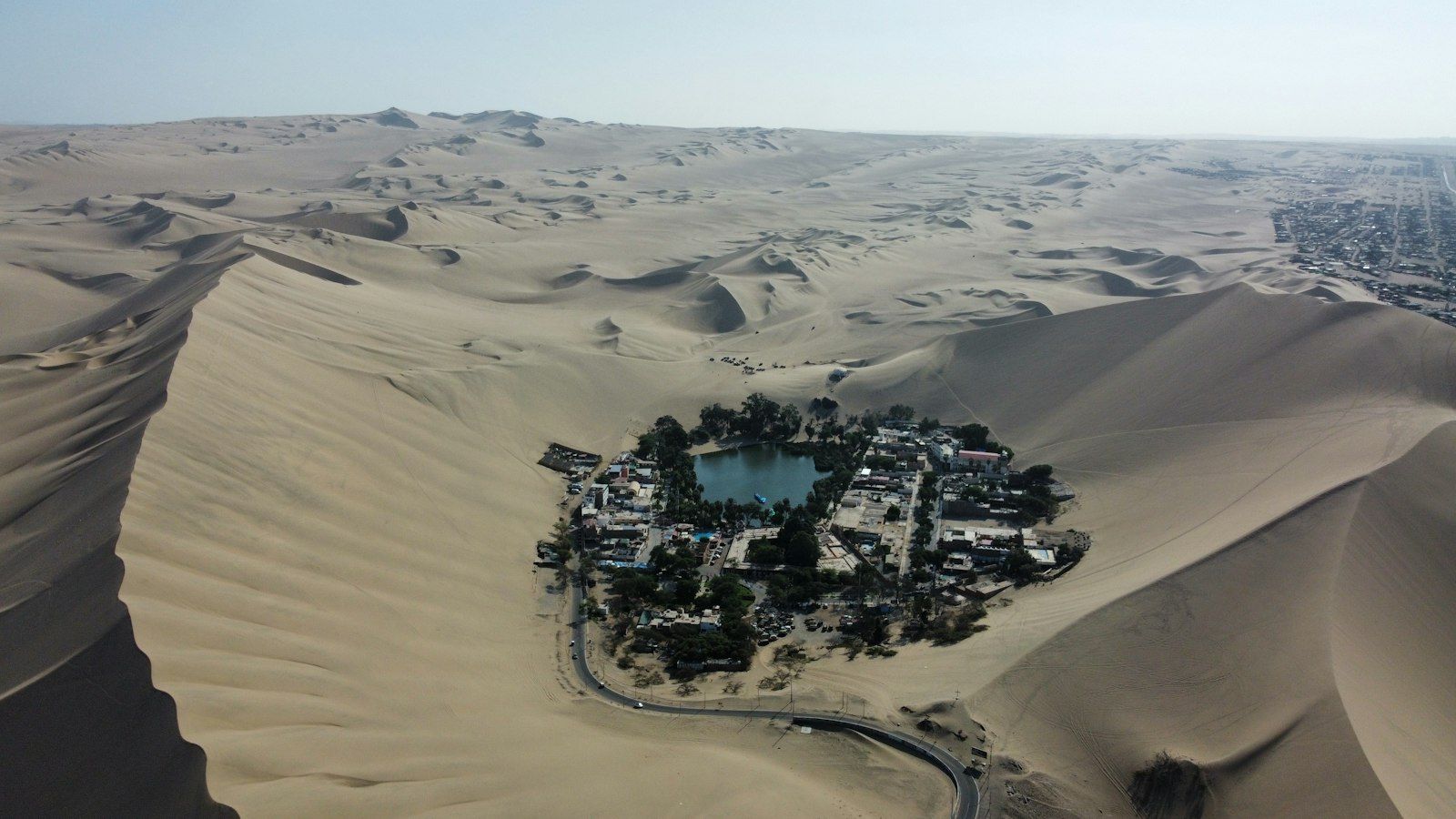
A palm-ringed lagoon in a sea of giant sand dunes, with sunset buggy rides, sandboarding, pisco bodegas next door and the Ballestas Islands and Nazca Lines within reach.
- Best time to visit: March to May and September to November
- Daily budget (budget traveller): $40 to $120 USD
- Ideal trip length: 3 to 7 days
Huacachina is a tiny oasis about 5 km west of the city of Ica, roughly 300 km south of Lima. A green lagoon lined with palms and old balustraded villas sits inside a ring of sand dunes, some well over 100 metres high. A few hundred metres of lakeside promenade hold almost everything: hostels with pools, tour desks, pizza joints and pisco bars. Most people stay one night, do the sunset dune buggy ride and leave, and that rush is why the place gets called a backpacker trap. Stay longer and it makes more sense. Ica's valley has some of Peru's oldest vineyards and pisco distilleries, the regional museum holds Paracas-culture mummies, and the coast at Paracas is about 1.5 hours away by road. The Ballestas Islands have sea lions and Humboldt penguins. The Nazca Lines are a long but doable day trip south. The desert is dry and sunny nearly all year, buses from Lima are cheap and frequent, and the hostels make it easy to meet people. Huacachina works best as a base for the whole Ica region, not just a quick stop for photos.
Huacachina is the only desert oasis most travellers in South America ever see, and it's tiny. A green lagoon, a ring of palms and a few dozen buildings sit inside a horseshoe of dunes on the edge of Ica, about 300 km south of Lima. A lot of people come down on Peru's southern backpacker trail, stay one night, do the 4pm buggy ride and leave the next morning, and the oasis has adapted to that. Touts sell tours on every corner, hostels throw pool parties, and the promenade can feel like a stage set. Stay a few nights and you'll find the better side: dawn on the dunes before the engines start, cheap set lunches in Ica, and bodegas that have been making pisco since colonial times.
Use the oasis as a base for the whole region. The bodegas of the Ica valley are a 15 to 25-minute taxi ride away. Tacama and Vista Alegre are the big historic estates, while El Catador and Lazo are smaller and more traditional. Ica's regional museum holds Paracas-culture mummies and textiles. On the coast at Paracas, two-hour boat trips run out past the Candelabra geoglyph to the Ballestas Islands, which are packed with sea lions and Humboldt penguins. Further south, Nazca's geoglyphs are a long day trip, best seen from a small plane. Buses link all of these cheaply, and taxis from the oasis to Ica cost about S/8 to S/15.
The desert barely sees rain, so the weather decision is about heat and crowds rather than storms. Peruvian summer (December to March) is hot and the busiest time for domestic visitors, especially at New Year, Carnival and Easter. March brings Ica's grape harvest and the Vendimia festival. June to August is cooler, with cold nights, hazy mornings on the coast and a spike for the late-July national holidays. Spring and autumn are the sweet spots. Solo travel here is easy: the hostels are social, the buggy tours seat you with strangers, and Spanish helps but isn't essential on the oasis. In Ica city and on local buses, a few phrases go a long way.
Huacachina itinerary
Bus from Lima, first sunset on the dunes
Morning: Take an early Cruz del Sur, Oltursa or Soyuz bus from Lima to Ica (about 4.5 to 5 hours). Allow extra time for Lima traffic on the way to the terminal.
Afternoon: Taxi from the Ica terminal to Huacachina (about S/8 to S/15, agree the price first). Check in, then cool off in the hostel pool.
Evening: Pay the dune fee (about S/3.60 to S/4, cash) and climb the ridge above the lagoon from about 4:30pm for sunset. Dinner on the promenade, then an early night.
Sunrise walk, buggy and sandboard tour
Morning: Climb the dunes at sunrise while the sand is cool and the oasis is silent. Breakfast at your hostel, then a slow loop of the lagoon.
Afternoon: Rest through the midday heat. At about 4pm, join a shared two-hour buggy and sandboarding tour (about S/40 to S/80 booked locally). Check the seatbelts and ask if the dune fee is included.
Evening: Shake the sand out, then have pizza or burgers on the promenade and a pisco sour at a hostel bar.
The Ica valley pisco route
Morning: Taxi to Bodega El Catador in Subtanjalla for a walk past the stills and a tasting of pisco, cachina and pisco creams.
Afternoon: Lunch at a bodega restaurant, then continue to Lazo or to Tacama or Vista Alegre (entry around S/20 at the big estates). A group pisco tour from Ica costs about US$25 to US$45.
Evening: Back to the oasis. Light dinner and plenty of water after a day of tastings.
Ica city, museum and sweets
Morning: Taxi into Ica. Visit the Museo Regional de Ica for Paracas mummies, textiles and elongated skulls (small entry fee, check opening hours).
Afternoon: Menú del día near the Plaza de Armas (about S/12 to S/20), then walk to the Señor de Luren sanctuary. Pick up a box of tejas to take home.
Evening: Withdraw cash for tomorrow's fees, then head back to Huacachina. Book your Paracas pickup and go to bed early.
Paracas and the Ballestas Islands
Morning: Early pickup (often around 5:30 to 6am, confirm the night before) for Paracas. Two-hour boat trip to the Ballestas Islands past the Candelabra geoglyph. Pay the reserve and pier fees in cash.
Afternoon: Ceviche lunch in El Chaco, then a land tour of the Paracas National Reserve's red and ochre beaches and cliffs.
Evening: Return to Huacachina in the evening. Book your Nazca bus and flight for tomorrow if you haven't already.
Day trip to the Nazca Lines
Morning: First bus from Ica to Nazca (about 2.5 to 3 hours), or a pre-booked flight package from Ica's airport. Skip breakfast if you get airsick.
Afternoon: Fly over the Hummingbird, Monkey and Spider from the Nazca aerodrome (about US$80 to US$100, plus an airport tax of around S/30 in cash). Visit the roadside viewing tower on the drive back if time allows.
Evening: Late bus back to Ica and taxi to the oasis. Simple dinner and sleep.
Slow last morning, bus to Lima
Morning: A final sunrise on the dunes, or rent a stand-up sandboard (about S/20 to S/50) and try riding upright on the small slopes near the oasis.
Afternoon: Pool time, then taxi to Ica for an afternoon bus back to Lima. Pack bottled pisco well in your bag.
Evening: Arrive in Lima in the evening. Allow for Friday and Sunday traffic if you have a flight the next day.
Best neighbourhoods
- The Lagoon Promenade (Huacachina): The short lakeside loop where the hostels, tour desks, cafés and pedal boats sit. Everything is a five-minute walk, the dunes rise straight behind the buildings, and the sunset crowd gathers here every evening.
- Avenida Angela de Perotti (Huacachina): The road along the oasis edge, home to bigger hostels with pools such as Casa de Arena, Banana's Adventure and Wild Rover. It has the most social energy, especially at weekends, so pick your hostel by how much you want to sleep.
- Ica Centre: A working Peruvian city about 15 minutes away by taxi, with the Plaza de Armas, the Señor de Luren sanctuary, cheap set-lunch restaurants, banks, supermarkets and the main bus terminals. Base yourself here for lower prices and real local life.
- Subtanjalla and La Tinguiña (Ica Valley): The vineyard districts north and east of Ica, where bodegas such as El Catador, Lazo, Tacama and Vista Alegre make wine and pisco. Easy to reach by taxi for a half-day tasting run.
- El Chaco (Paracas): The small seafront town that serves as the jumping-off point for the Ballestas Islands and the Paracas National Reserve. It has a pier, seafood restaurants and a breezier, beachier feel than the desert.
Must-do experiences
- Ride a sunset dune buggy and sandboard: The classic two-hour tour leaves around 4pm, tears across the dunes in a roll-caged buggy and stops at several slopes so you can sandboard down on your belly, with the sunset as the finale.
- Climb the dune above the lagoon: Pay the small dune fee and slog up the ridge behind the oasis for the classic view down over the palms and the water. Go for sunrise or late afternoon. The climb takes 20 to 30 minutes.
- Taste pisco on the Ica valley bodega route: Visit an artisanal bodega such as El Catador or Lazo and a historic estate such as Tacama or Vista Alegre to see copper stills and clay botijas, then taste pisco, wine and cachina.
- See the sea lions of the Ballestas Islands: Take a two-hour boat trip from Paracas past the Candelabra geoglyph to rocky islands crowded with sea lions, Humboldt penguins, boobies and cormorants.
- Fly over the Nazca Lines: Take a small plane over the giant geoglyphs, including the Hummingbird, Monkey and Spider. Go from Nazca's aerodrome for the cheapest flights, or from Ica's airport if you want to skip the long bus ride.
- Explore Ica's regional museum: The Museo Regional de Ica holds Paracas textiles, mummies and elongated skulls, and it's the best place to understand the desert cultures you'll be driving past all week.
- Drive through the Paracas National Reserve: Combine the Ballestas boat with a land tour of red and ochre desert beaches, wind-carved cliffs and fossil-rich coastline south of Paracas.
Hidden gems
- Huacachina at sunrise, when the dunes are cool, nobody else is around and you can walk the ridges for the view before the buggies start up
- Cañón de los Perdidos, a dry canyon deep in the Ica desert, reached on a long 4x4 tour from Ica, with fossils and silence instead of crowds
- The Señor de Luren sanctuary in Ica, the city's most important church, at the heart of big religious processions during Holy Week and in October
- Lunch at a family-run artisanal bodega in the Ica valley, where you can eat under the vines, taste toasted pisco and pisco creams and buy a bottle straight from the producer
- The quieter dunes on the far side of the oasis away from the main entrance ramp, where you can sit with a sandboard and no engines in earshot
Daily budget
- Accommodation: budget S/40-60 / night (hostel dorm bed), mid-range S/150-300 (private room or small guesthouse), splurge S/450-900+ (Hotel Las Dunas in Ica, DM Hoteles Mossone on the lagoon). Dorms run roughly US$10 to US$15. Weekends and Peruvian holidays push prices up and fill the social hostels, so book Friday and Saturday nights ahead. Some places are cash-only, so check before arrival.
- Food: budget S/45-70 / day (Ica set lunches, hostel breakfast, a pizza), mid-range S/90-150 (bodega lunch, sit-down dinner on the promenade), splurge S/200+ (tasting menus and seafood in Paracas). An Ica menú del día with soup and a main is roughly S/12 to S/20. Oasis restaurants charge tourist prices, often S/30 to S/50 a main. Buy water and snacks at Ica supermarkets.
- Transport: budget S/15-30 / day (Ica taxis, the occasional local bus), mid-range S/60-120 (intercity buses to Paracas or Nazca on trip days), splurge S/250+ (private driver for the bodegas or Paracas). Lima to Ica economy fares run about S/35 to S/55, and semi-cama about S/65 to S/90. Taxis between Huacachina and Ica cost about S/8 to S/15. Peru Hop passes cost more but include oasis drop-off and some stops along the way.
- Activities: budget S/40-90 / day (shared buggy and sandboard tour, dune fee, bodega tastings), mid-range S/150-250 (Paracas and Ballestas tour, museum, pro sandboard hire), splurge S/400-900+ (Nazca Lines flight, private buggy). The dune fee is around S/3.60 to S/4, cash. Ballestas fees are roughly S/16 for the reserve plus S/5 at the pier, cash, so check on the day. Nazca flights from the Nazca aerodrome cost about US$80 to US$100 plus an airport tax of around S/30, and further fees may apply.
- Drinks & nightlife: budget S/15-30 (a beer and a pisco sour at happy hour), mid-range S/50-90 (a few cocktails at the hostel bars), splurge S/150+ (bottle of premium pisco from the bodega, big night out). Hostel bars like Wild Rover run pool parties and happy hours. Casa de Arena's club opens on Friday and Saturday nights. Bodegas sell pisco by the bottle for much less than Lima prices.
Where to stay
- Social hostel in Avenida Angela de Perotti, Huacachina (S/40-60 dorm / S/120-250 private): Banana's Adventure has a pool, rooftop terraces and good food, and it's social without being chaotic. Wild Rover next door is the louder, party-first choice. Both organise buggy tours and group nights out.
- Boutique hotel in Huacachina lagoon (S/150-350 / night): Senoma Hotel is adults-only, and Wild Olive Guest House is in a renovated colonial building with bright rooms and a female-only dorm option. Both give you calm on the main strip while staying walkable to everything.
- Apartment in Ica centre or San Isidro (Ica) (S/120-250 / night): Holiday rentals in Ica cost less than the oasis, put you near markets, supermarkets and bus terminals, and give you a kitchen. Huacachina is a 15-minute taxi away for sunsets.
- Splurge in Ica valley or lagoon front (S/450-900+ / night): Hotel Las Dunas in Ica is a long-running resort with big gardens and pools. DM Hoteles Mossone is a historic hotel on the lagoon itself. Both are good for a quiet night after the hostels.
What to eat
- Carapulcra con sopa seca: a slow-cooked dried-potato and pork stew served next to a spiced noodle dish, the southern coast's classic Sunday plate
- Pallares: Ica's famous butter beans, eaten as a creamy picante or in salads, and grown in the valley around the city
- Tejas: Ica's signature sweet, a pecan, fig or dried-fruit filling wrapped in manjar blanco and coated in fondant or chocolate, sold by the box around town
- Pisco sour: Peru's national cocktail of pisco, lime, sugar, egg white and bitters, best ordered in the valley where the spirit is made
- Cachina: a young, lightly fermented and sweetish wine poured at artisanal bodegas, a cheap and very local taste of the harvest
- Ceviche in Paracas: raw fish cured in lime with onion, chilli, sweetcorn and sweet potato, eaten at lunchtime by the pier after a morning on the boat
Day trips
- Paracas and the Ballestas Islands (About 1 to 1.5 hours by road from Ica): Two-hour boat trips run past the Candelabra geoglyph to islands packed with sea lions, Humboldt penguins and seabirds, and most tours then add the Paracas National Reserve's desert coast. Ceviche by the pier in El Chaco makes a good lunch. Book a day tour in Huacachina, often around S/90 to S/170 with pickup, or take a bus to Paracas and book the boat at the pier (from about S/35 to S/60). Boats leave around 8am and 10am. Bring cash for the reserve fee (about S/16) and pier tax (about S/5), and check current fees.
- Nazca Lines (About 2.5 to 3 hours by bus from Ica): Small planes circle geoglyphs such as the Hummingbird, Monkey, Spider and Astronaut on a flight of about 30 minutes. A roadside viewing tower gives a ground-level glimpse if you skip the flight. Take an early bus from Ica to Nazca and a taxi to the aerodrome. Flights cost about US$80 to US$100, plus an airport tax of around S/30 and possibly a tourist fee, cash. Flight packages from Ica's airport cost roughly US$175 to US$250. Book a day ahead and expect weather delays.
- Cañón de los Perdidos (Several hours' round trip by 4x4 from Ica): A deep, dry canyon cut into the empty desert south-east of Ica, with fossil beds, strange rock layers and almost no other visitors. A long day, but the quietest landscape in the region. Only reachable on organised 4x4 tours from Ica or Huacachina. Prices vary a lot with group size, so compare several agencies and check exactly what's included before paying.
When to visit
- Peruvian summer (December - March): 30-36°C by day, scorching sand, almost no rain. Crowds: Heavy at New Year, Carnival and weekends, with Peruvian families and Lima weekenders. Hot and busy, with the best pool-party atmosphere. Do the dunes at dawn or after 4pm only. The March harvest and Vendimia festival are a highlight for pisco lovers.
- Autumn (April - May): 26-31°C by day, warm evenings, clear skies. Crowds: Moderate, with an Easter bump. One of the best windows. The sand is comfortable to climb, bodegas are calm after the harvest, and Paracas boat trips usually run smoothly. Book Holy Week early.
- Winter (June - August): 22-27°C by day, 10-14°C at night, hazy coastal mornings. Crowds: Moderate, with a peak around the late-July national holidays. Pleasant days for hiking the dunes, but pack a fleece for the nights and the early Ballestas boat. Paracas can be grey and windy, and Nazca flights sometimes wait for haze to clear.
- Spring (September - November): 25-31°C by day, warming week by week, dry. Crowds: Low to moderate, with an October festival bump in Ica. The local favourite. It's warm without the summer burn, and fewer people are on the buggies. The Señor de Luren celebrations fill Ica in October.
Entry rules for your passport
Visa rules for Peru depend on the passport you travel on. Check the official source before you book: Peru Ministry of Foreign Affairs
Getting there
Ica has no regular commercial passenger flights, so international travellers fly into Lima's Jorge Chávez International Airport and continue by road. Buses from Lima to Ica run all day, with Cruz del Sur, Oltursa, Soyuz/Peru Bus, Civa and others on the route. Expect about 4.5 to 5 hours on the Panamericana Sur, and longer on Friday afternoons and Sunday evenings. Economy fares are roughly S/35 to S/55 and semi-cama about S/65 to S/90, so book ahead online for holidays. Each company has its own terminal in Lima and in Ica, so check which one before you take a taxi. From the Ica terminal, a taxi to Huacachina takes about 15 minutes and costs roughly S/8 to S/15. Peru Hop's hop-on hop-off backpacker bus is a pricier alternative that picks up from Lima hostels, stops in Paracas and drops you at the oasis itself. From the south, buses run from Nazca (about 2.5 to 3 hours) and on to Arequipa overnight.
Getting around
Huacachina itself is walkable in ten minutes. For Ica, take a taxi, which costs roughly S/8 to S/15 each way depending on time and traffic. Agree the fare before you get in, or use an app like Uber or InDrive where available. Ica's bus companies cluster near the city centre, so you'll always need a taxi between the terminal and the oasis. Long-distance buses run by Cruz del Sur, Oltursa, Soyuz/Peru Bus and others link Ica with Lima (about 4.5 to 5 hours), Paracas and Pisco (about 1 to 1.5 hours) and Nazca (about 2.5 to 3 hours). Peru Hop's backpacker bus is an alternative with hostel pickups and an English-speaking host, at a higher price. For the bodega route, hire a taxi for a few hours or join a group tour. Dune trips are always by buggy or on foot, since there's no public transport into the desert.
Safety
Huacachina and the Ica region's main tourist spots are generally safe, but the biggest real risk is the buggy ride itself. Pick an established operator, check your seatbelt works, and ask the driver to slow down if it feels reckless. When sandboarding, keep your elbows in, dig your toes in to brake, and don't board on slopes you're not happy with. Heat and sun are fierce from December to March, so carry water, a hat and high-factor sunscreen. Don't walk alone in the dunes after dark, as people do get lost and robberies have been reported. The party hostels are fun but watch your drink and your phone. In Ica city, take registered or app taxis at night and keep valuables out of sight at the bus terminals. ATMs in the oasis are limited, so withdraw cash in Ica during the day. Peru is an earthquake zone, so note the evacuation signs in your accommodation.
Solo travel tips
- Choose your hostel by noise level: Wild Rover is the full party option, with a pool scene and big nights. Banana's Adventure is social but sleepable. Smaller guesthouses on the lagoon are quieter. If you're staying several nights, mix them up.
- Book the buggy in person, not online: The same two-hour sunset tour often costs much less at the tour desks in the oasis than through booking sites. Compare two or three, look at the buggy and seatbelts, and confirm whether the dune fee and boards are included.
- Carry small soles everywhere: The dune fee, the Ballestas pier and reserve fees, the Nazca airport tax, taxis and many small eateries are cash-only. Withdraw in Ica, where ATMs are reliable, and break big notes at supermarkets.
- Plan your days around the heat: Do the dunes at sunrise or after 4pm, sleep or swim at midday, and save the bodegas and the museum for the hottest hours. Even in winter the desert sun is strong.
- Safety for solo travellers: The oasis is generally safe, but don't walk into the dunes alone after dark, and keep your phone zipped away on the buggy. Use app or registered taxis in Ica at night and keep an eye on your drink at hostel parties.
- Make friends on the tours: Shared buggies seat strangers together, and pisco tours and Paracas trips are mostly small groups. Say yes to the hostel's group dinner or happy hour and you'll have company for Nazca by the next morning.
Cultural etiquette
- Greet people before asking for anything. A 'buenos días' or 'buenas tardes' to shopkeepers, drivers and tour desks makes a big difference, and 'gracias' does the rest.
- Haggle politely on the oasis tour desks and with taxis, but don't squeeze the price too low. Drivers' margins are thin, and cheap buggies sometimes cut corners on safety.
- Dress for the town, not just the pool. Swimwear is fine at hostels, but cover up for Ica's churches, the museum and the bodegas.
- Respect the archaeology. Don't walk on the Nazca Lines, touch artefacts in the museum, or climb on fenced-off geoglyphs and ruins.
- Peruvians take pisco seriously and it's a protected national spirit. Taste slowly, ask questions at the bodega, and don't call it Chilean.
- Lunch is the main meal, so the cheapest menú del día is found between about 12:30pm and 3pm. Many places don't serve it in the evening.
- Ask before photographing people, especially vendors and children in Ica, and keep the drone at home unless you've checked the rules.
Frequently asked questions
How do I get from Lima to Huacachina?
Fly into Lima's Jorge Chávez airport, then take a bus from a Lima terminal to Ica with Cruz del Sur, Oltursa, Soyuz/Peru Bus or another company. The ride takes about 4.5 to 5 hours, and economy fares are roughly S/35 to S/55, more for semi-cama seats. Buses stop in Ica, not at the oasis, so add a 15-minute taxi of roughly S/8 to S/15. Peru Hop drops you at the oasis itself but costs more.
How many days do I need in Huacachina?
Two nights covers the dunes and a pisco tasting. Three to four lets you add Ica's museum and a Paracas day trip without rushing. A full week lets you use the oasis as a base for the Ballestas Islands, the Nazca Lines and a slow final day by the pool.
How much does a dune buggy and sandboarding tour cost?
A shared two-hour tour booked directly in Huacachina usually costs about S/40 to S/80. Online listings run higher, around US$15 to US$40. On top of that there is a small municipal dune fee of around S/3.60 to S/4, paid in cash at the entrance, so check whether your tour includes it. Private buggies cost several hundred soles per group.
When is the best time to visit Huacachina?
The desert is dry and sunny all year. March to May and September to November bring warm days without the full summer heat, and March is wine-harvest season in Ica. December to March is hottest and busiest with Peruvian holidaymakers. June to August is cooler, with chilly nights and hazier mornings on the coast at Paracas.
Is Huacachina safe for solo female travellers?
Generally yes. The oasis is small and full of other travellers. Use standard precautions: choose a reputable buggy operator, don't walk the dunes alone at night, watch your drink at party hostels, and use registered or app taxis in Ica after dark. Wild Olive Guest House has a female-only dorm option, but check availability when you book.
Do I need cash in Huacachina?
Yes. ATMs in the oasis are few and unreliable, and the dune fee, the Ballestas pier and reserve fees, the Nazca airport tax and many small restaurants and tour desks only take cash. Hostels and larger restaurants usually accept cards. Withdraw soles in Ica and carry small notes.
Can I see the Ballestas Islands and Nazca Lines from Huacachina?
Yes, both are day trips. Tours to Paracas pick up very early for the 8am or 10am Ballestas boats and often add the national reserve. For Nazca, you can take a bus of about 2.5 to 3 hours and fly from the Nazca aerodrome, or book a pricier flight package from Ica's airport. Book Nazca flights a day or two ahead and expect weather delays.
What are Peru's entry rules for travellers in 2026?
Citizens of the UK, US, Canada, Australia and most EU countries don't need a tourist visa. You'll need a passport valid for at least six months from your arrival date, and you may be asked for proof of onward or return travel. The immigration officer decides how long you can stay, so check the stamp or digital record when you arrive. Reports of new online registration steps have circulated, and rules can change, so always confirm on the official Superintendencia Nacional de Migraciones site (gob.pe/migraciones) and your own government's travel advice before you fly.
Tours and activities in Huacachina | Huacachina in 2 days | Huacachina in 3 days | Huacachina in 4 days | Huacachina in 5 days | Huacachina in 7 days
Can't decide? Compare Huacachina with...
Joy Plus home | Destinations | Itineraries | Activities | Flights | Budget planner | Calendar | Map | Blog | Lifetime access