Destinations / Asia
Huangshan, China travel guide
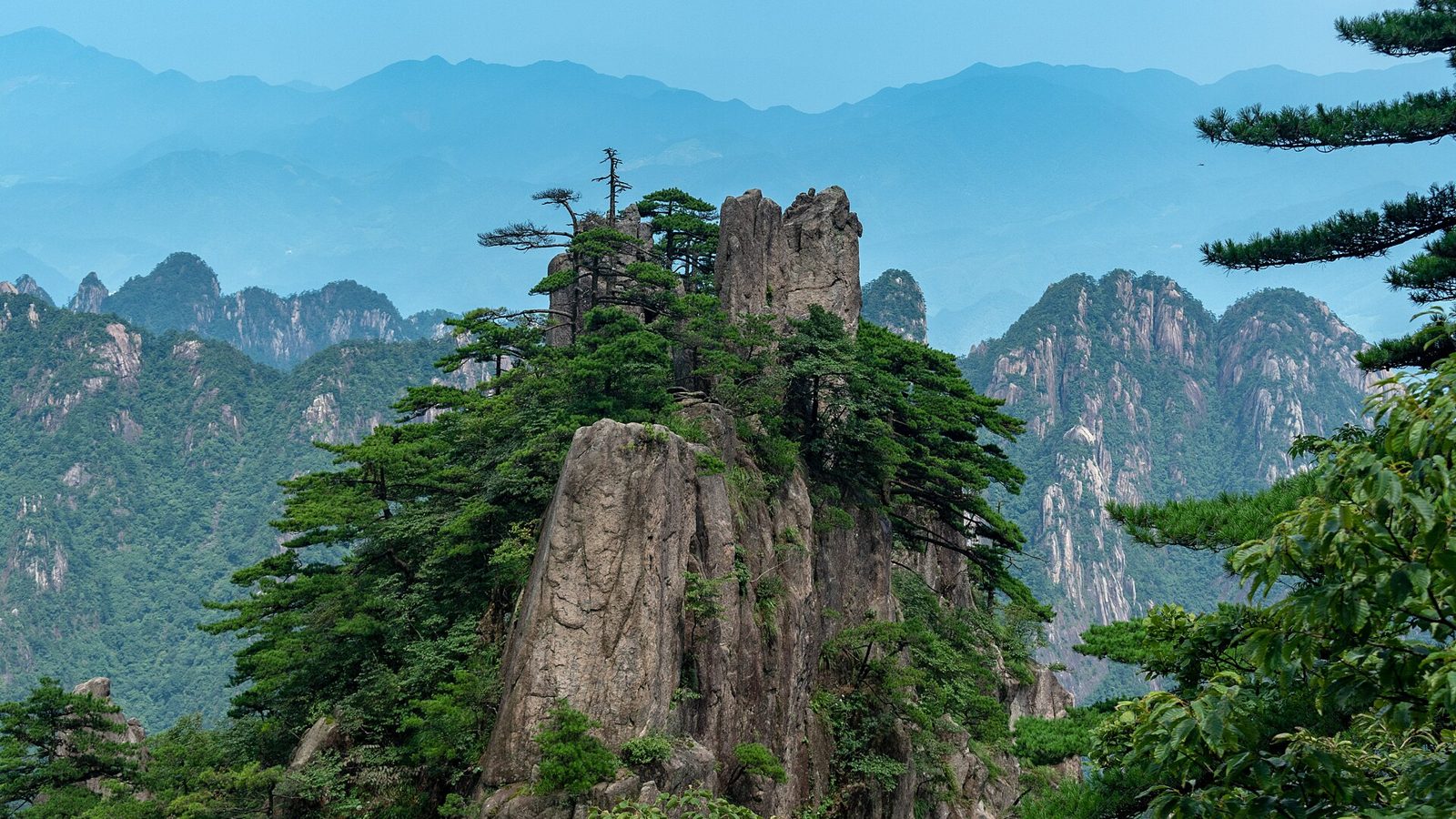
Granite peaks, twisted pines and seas of cloud in southern Anhui. You climb stone steps cut into the cliffs, sleep on the summit to catch the sunrise, then go down to whitewashed Huizhou villages and eat hairy tofu in the lanes of Tunxi.
- Best time to visit: April to May and late September to November
- Daily budget (budget traveller): $60 to $220 USD
- Ideal trip length: 4 to 7 days
Huangshan, the Yellow Mountain, is a range of granite peaks in the south of Anhui province, about three hours from Shanghai and under two from Hangzhou by high-speed train. It is one of China's most famous landscapes. For centuries painters and poets have come for the same things: sheer rock pillars, pines growing out of bare stone and the cloud that fills the valleys below the summit. The name covers both the mountain and the city at its foot, which can confuse people. Huangshan City is spread out. Tunxi, the old centre, sits about an hour from the mountain's South Gate at Tangkou. Nobody drives up the peaks. You take a cable car or climb thousands of stone steps, then walk between viewpoints on paved paths. The classic plan is to stay one night on the summit for sunset and sunrise. Below the mountain are Hongcun and Xidi, two UNESCO-listed villages of white walls, black-tiled roofs and carved wooden halls. The mountain is not cheap. Entry, shuttles and cable cars add up quickly, and summit hotels charge a lot for a bed. Even so, a dorm in Tunxi, cheap village buses and a pair of strong legs make it a very good trip for a solo traveller.
Huangshan is the mountain Chinese landscape painting is built on. It is a cluster of granite peaks in southern Anhui, with the highest points at more than 1,800m, and it has been a UNESCO World Heritage Site since 1990. Painters and poets shaped how China pictured mountains here, and you will recognise the scene before you arrive: needles of rock, flat-topped pines clinging to cliffs and cloud pouring through the valleys. Today, millions of Chinese visitors come each year, mostly on a single long day. Stay a night on top and you see it differently. You get the sunset from Danxia Peak, a sky full of stars and the walk out in the dark to watch the sun rise over the cloud. It is not a cheap mountain. Entry, the shuttle and two cable car rides come to well over ¥350 before you have eaten. But hostels in Tunxi, cheap buses and walking the steps yourself keep costs reasonable.
Getting here is easy if you follow the right order. High-speed trains from Shanghai, Hangzhou, Hefei and further away arrive at Huangshan North. Buses from the hub next door go to the South Gate at Tangkou, to Tunxi and to the villages. Tunxi airport has domestic flights and a few international routes. Inside the park, pay for the shuttle to a cable car station, then ride up or climb. On top, everything is on foot, linked by paved paths and steps. Base yourself in Tunxi for food and cheap beds, in Tangkou the night before you climb and on the summit for one or two nights. Then spend at least a night in Hongcun or Xidi, because the villages are a big part of why people love this region.
Timing matters more here than almost anywhere. Spring and autumn bring the best chance of cloud seas and clear sunrises. Chinese public holidays bring huge crowds, so avoid the first days of May and early October if you can. Summer is humid, with afternoon storms, while winter brings ice, short days and occasional snow on the pines, along with lower prices. Peaks such as Tiandu and Lotus close in turn for rest and repairs, so check which is open. English is limited away from the main ticket offices. A translation app and an offline map will help a lot, and Alipay or WeChat Pay linked to a foreign card makes buses and meals simple. If you want comfort and convenience, this is hard work. If you want to stand above the clouds on a cold morning, it is worth every step.
Huangshan itinerary
Arrive in Tunxi
Morning: Take a morning high-speed train from Shanghai or Hangzhou to Huangshan North. Take a city bus or taxi into Tunxi and drop your bag at a hostel near Old Street.
Afternoon: Walk the length of Tunxi Old Street and the side lanes behind it. Taste Maofeng tea in one of the tea shops and buy snacks for the mountain.
Evening: Eat hairy tofu and shaobing from the stalls, then sit down to a Hui dinner. Book your mountain ticket and summit bed if you have not already.
Down to Tangkou
Morning: Take a bus to Tangkou and leave your big bag at a hotel there. Pack a small overnight bag for the summit.
Afternoon: Walk among the pools and waterfalls of Emerald Valley, a short ride from Tangkou. It makes a good warm-up for the steps.
Evening: Have an early dinner on Tangkou's main street, buy water and snacks and check the weather and cable car status for the morning.
Up the mountain
Morning: Take the first shuttles from the South Gate transfer centre to Yungu Temple. Ride the cable car (¥80) or climb the Eastern Steps, then stop at Beginning-to-Believe Peak.
Afternoon: Check in at your summit hotel near Beihai or Xihai and walk the Xihai Grand Canyon loop. Use the monorail (¥100) if your legs are done.
Evening: Watch the sunset from Danxia Peak or Paiyun Pavilion, then have dinner at your hotel and go to bed early.
Sunrise and the Front Mountain
Morning: Walk out in the dark to Bright Summit or Lion Peak for sunrise. Then follow the paths south past Lotus Peak, or Tiandu if it is open, to Yuping Tower and the Welcoming Guest Pine.
Afternoon: Walk down the Front Mountain steps to Ciguang Pavilion or ride the Yuping cable car (¥90). Take the shuttle back to the South Gate and collect your bag in Tangkou.
Evening: Rest your legs in Tangkou, or take a bus to Hongcun if you have energy left. A big bowl of noodles either way.
Hongcun
Morning: Travel to Hongcun, about an hour by bus from Tangkou, and check into a courtyard guesthouse. Walk around South Lake while the light is soft.
Afternoon: Buy your village ticket and explore the lanes, the Moon Pond and the old clan halls. Walk out to Lucun for its carved houses if you want something quieter.
Evening: Walk through the village after the day visitors leave, and watch the lights reflect in the lake. Eat at a family-run place with local bamboo shoots and ham.
Xidi and back to Tunxi
Morning: Walk Hongcun's pond at dawn before the crowds arrive. Then take a bus or taxi (¥30 to ¥40) to Xidi.
Afternoon: Explore Xidi's merchant houses, stone archway and carved doorways, and climb to the hillside viewpoint. In autumn, add a trip to Tachuan for the leaves.
Evening: Take a bus back to Tunxi. Have a last dinner on Old Street and try stinky mandarin fish if you are brave.
Shexian and depart
Morning: Take a short ride to Shexian to see the Huizhou Ancient City walls and the Tangyue memorial archways, standing in a row in the fields.
Afternoon: Head back to Huangshan North for your train to Shanghai or Hangzhou. Check your train time the day before.
Evening: Arrive in Shanghai or Hangzhou, or carry on to your next stop.
Best neighbourhoods
- Tunxi and Old Street: The old heart of Huangshan City, built around Laojie, a long lane of Ming and Qing-style shopfronts selling tea, ink stones and snacks. You will find the cheapest hostels, the best range of food and buses to the mountain, the villages and the airport. It is a good base for your first and last nights, but it is about an hour from the South Gate.
- Tangkou: The small town at the South Gate, set along a river at the foot of the mountain. It is mostly hotels, restaurants, gear shops and the bus station. It is not pretty, but it is the practical base the night before you climb, and you can leave spare luggage here while you sleep on the summit.
- The summit: Beihai and Xihai: The plateau at the top of the mountain, with a handful of hotels near Beihai, Xihai and Bright Summit. Prices are high and dorms are basic, but you are a short walk from the sunrise and sunset spots before the day visitors arrive. Book ahead for weekends and holidays.
- Around Huangshan North station: The new district around the high-speed station, with chain hotels and the tourist bus hub next door. It has little character, but it works if you arrive late or leave on an early train, as buses for Tangkou, Hongcun and Xidi all start here.
- Hongcun and Yixian villages: Yixian county, west of the mountain, has the UNESCO villages of Hongcun and Xidi and many smaller ones. Staying in a courtyard guesthouse lets you see the lanes at dawn and after dark, when the tour groups have gone. Buses are less frequent, so plan your onward travel.
Must-do experiences
- Watch sunrise from the summit: Sleep on the mountain and walk out before dawn to Bright Summit, Lion Peak or Qingliang Terrace. On a good morning, the sea of clouds fills the valleys below you. Check the sunrise time at your hotel the night before, and take a torch and a warm layer.
- Walk the Xihai Grand Canyon: This loop of steps and narrow ledges drops into a deep gorge of rock pillars on the west side of the summit. Allow three to four hours. A sightseeing monorail costs about ¥100 one way if you do not want to climb back out.
- Climb up or down the stone steps: Cable cars cost about ¥80 to ¥90 one way, but walking at least one direction is the real Huangshan. The Eastern Steps from Yungu Temple are the gentler climb. The Front Mountain steps from Ciguang Pavilion are steeper and take you past the finest peaks.
- See the Welcoming Guest Pine: The most famous tree in China grows from the rock beside Yuping Tower, with one branch reaching out like a host's arm. It is busy from mid-morning, so pass by early. Nearby Lotus Peak or Tiandu Peak, whichever is open, gives the best view of the range.
- Wander Hongcun at dawn: Hongcun is laid out around a crescent-shaped pond and a larger lake, with whitewashed houses reflected in the water. Entry is roughly ¥94 to ¥104. Stay overnight and walk the lanes before the groups arrive, when the reflections are still.
- Explore Xidi's carved halls: Xidi is quieter than Hongcun, with old merchant houses, stone archways and fine wood and brick carvings. A separate ticket of roughly ¥94 to ¥104 covers the open houses. Climb to the hillside viewpoint for the view over the rooftops.
- Eat your way down Tunxi Old Street: Walk Laojie in the evening, when the lanterns are lit. Try hairy tofu and sesame shaobing from the stalls, then sit down to Hui dishes in a back-lane restaurant. The tea shops will let you taste Huangshan Maofeng before you buy.
Hidden gems
- Beginning-to-Believe Peak (Shixin Feng) near the top of the Yungu cable car, a short detour with cliff-edge pines that most groups walk straight past
- Danxia Peak and Paiyun Pavilion at sunset, quieter than the sunrise spots and facing west over the Xihai canyon
- Lucun, a small village close to Hongcun, known for the elaborate wood carvings inside its old family houses
- Tachuan in late October and early November, when the trees around the village turn red and gold
- Emerald Valley near Tangkou, a cool walk past green pools and waterfalls, good for the day before you climb
Daily budget
- Accommodation: budget $15-30 / night (hostel dorm in Tunxi or Tangkou), mid-range $50-110 (Tangkou hotel or village courtyard guesthouse), splurge $200+ (private room in a summit hotel). Summit hotels cost much more than those below, even for dorm beds, and prices climb on weekends and holidays. Book the summit night first and plan the rest around it.
- Food: budget $10-18 / day (buns, noodles, street snacks, supermarket supplies), mid-range $25-45 (sit-down Hui meals and a summit buffet), splurge $60+ (stinky mandarin fish, ham dishes and tea tastings). Prices on the summit are several times higher than in Tangkou because everything is carried up. Bring water and snacks from below. Fish is priced by weight.
- Transport: budget $5-15 / day (local buses and the park shuttle), mid-range $25-40 (shuttles plus two cable car rides), splurge $45-75 (private car to the villages for a day). Shanghai to Huangshan North by high-speed train costs roughly ¥190 to ¥280 in second class. The bus to Tangkou is about ¥30. Cable cars cost ¥80 to ¥90 one way, and the Xihai monorail ¥100.
- Activities: budget $27-40 / day (mountain entry at ¥190, or one village), mid-range $40-60 (entry plus the Xihai monorail or both villages), splurge $80+ (private guide on the mountain). Mountain entry is ¥190 until 19 December 2026, and half price is ¥95. Hongcun and Xidi each charge roughly ¥94 to ¥104. Winter rates for the mountain and cable cars are lower.
- Drinks & nightlife: budget $2-5 (a bottle of beer or a pot of local tea), mid-range $8-15 (a tea tasting or a few drinks in Tunxi), splurge $30+ (premium Maofeng tea to take home). Nightlife is quiet. Evenings mean Old Street, tea houses and early nights before sunrise starts. A coffee in Tunxi costs about ¥20 to ¥35.
Where to stay
- Social hostel in Tunxi, near Old Street ($15-30 / night (dorm)): Hostels in the lanes around Old Street are the cheapest beds in the area, close to food stalls, buses and tea shops. Staff usually help with mountain tickets and bus times, and the common rooms are good for meeting other travellers.
- Mountain hotel in Summit, Beihai and Xihai ($60-150 / night (dorm bed to simple room)): The summit hotels near Beihai, Xihai, Bright Summit and Paiyun Pavilion offer basic dorms and private rooms within walking distance of the sunrise and sunset spots. You pay for the location, not the décor.
- Courtyard guesthouse in Hongcun and Xidi ($40-100 / night): Restored Huizhou houses with wooden galleries, small courtyards and home cooking. You can see the village at dawn and after dark, and many hosts can arrange transport onward.
- Splurge in Summit or Tunxi ($200-400+ / night): A private room with a view in one of the better summit hotels, or a boutique Huizhou-style hotel in Tunxi with a spa and a garden. Book the summit option early for weekends and autumn.
What to eat
- Stinky mandarin fish (chou guiyu): the signature Hui dish, fermented then braised. It smells strong but tastes rich and mild. Ask the price first, as it is sold by weight
- Hairy tofu (maodoufu): fermented tofu fried in a hot pan with chilli sauce, sold from stalls on Tunxi Old Street
- Huangshan shaobing: small, flaky baked pastries filled with pork and preserved vegetables, cheap and good for the climb
- Bamboo shoots and Hui ham: a slow-cooked local stew, best in spring when the shoots are fresh
- Huangshan Maofeng tea: the local green tea, sold everywhere from Tunxi to the villages. Taste a few grades before you buy
- Buns, eggs and noodles at Tangkou breakfast stalls. Food and water on the summit cost several times more, so carry snacks up
Day trips
- Hongcun (About 1 hour by bus from Tangkou, 1.5 hours from Tunxi): A UNESCO-listed village built around a crescent pond and a lake, with white walls reflected in still water. Very popular, so arrive early or stay overnight. Take a bus from the Huangshan North hub, Tunxi bus station or Tangkou for roughly ¥20 to ¥35. Entry is roughly ¥94 to ¥104, so check the current price at the gate.
- Xidi (About 10 to 12km from Hongcun, 1 to 1.5 hours from Tunxi): A quieter UNESCO village of merchant houses, stone archways and fine carvings, with a hillside viewpoint over the rooftops. It combines easily with Hongcun. Buses to Hongcun from Huangshan North pass through Xidi, so tell the driver where you want to get off. A taxi between the two villages costs about ¥30 to ¥40.
- Shexian and the Tangyue archways (About 30 minutes from Tunxi): The old Huizhou prefecture town, with city walls, an old quarter and a line of seven memorial archways in the fields at Tangyue. It is far less busy than the UNESCO villages. Take a local bus or Didi from Tunxi. Shexian also has a station on the high-speed line, so it is easy to visit on your way in or out.
When to visit
- Spring (March - May): Tunxi 12-26°C, summit 5-15°C, misty with frequent cloud seas. Crowds: Moderate, very busy during the May Day holiday. A lovely time to go, with blossom in the villages, fresh bamboo shoots and good odds of cloud. Avoid the first days of May.
- Summer (June - August): Tunxi 28-35°C and humid, summit around 20°C, with rain and storms. Crowds: Busy, with school holidays from July. The summit is a cool escape, but June brings plum rains and the afternoons bring storms. Hike early and expect cable car stoppages.
- Autumn (September - November): Tunxi 15-28°C, summit 5-18°C, clearer skies. Crowds: Very busy in Golden Week, then calmer through November. The best season overall, with crisp sunrises and red leaves in the villages from late October. Go in late October or November to dodge the holiday crush.
- Winter (December - February): Tunxi 2-12°C, summit often below freezing, with ice and some snow. Crowds: Quiet, except around Chinese New Year. Cold and icy, but tickets and cable cars cost less and snow on the pines is spectacular. Bring traction spikes and expect shorter days.
Entry rules for your passport
Visa rules for China depend on the passport you travel on. Check the official source before you book: China National Immigration Administration
Getting there
Most people arrive by high-speed train at Huangshan North. From Shanghai Hongqiao, the journey takes roughly 2.5 to 3.5 hours and costs about ¥190 to ¥280 in second class. From Hangzhou, frequent trains take about 1.5 to 2 hours for around ¥110 to ¥160. From Hefei, it is about 90 minutes. Book on the official 12306 app or through Trip.com with your passport, and carry the same passport to the station. Next to Huangshan North, the tourist bus hub runs buses to the South Gate at Tangkou for about ¥30, which take around an hour. It also runs buses to Hongcun and Xidi, and there are city buses to Tunxi. Huangshan Tunxi International Airport is about 15km from Huangshan North and has domestic flights and a few international routes. It is also an entry point for the 240-hour visa-free transit. Long-distance buses link Tunxi with Shanghai and Hangzhou, but the train is faster. Taxis from the station to Tangkou cost roughly ¥140 to ¥180. Agree the price first or use Didi.
Getting around
There are three zones, and you move between them by bus. High-speed trains stop at Huangshan North, about 15km from Tunxi and 50km from the South Gate. The tourist bus hub next to the station runs buses to the South Gate at Tangkou for about ¥30. They take around an hour and run from early morning until early evening. Buses also go to Hongcun and Xidi for roughly ¥25 to ¥35, and the cheap city buses go to Tunxi. Inside the park, all transport is paid separately from the entry ticket. A park shuttle runs from the South Gate transfer centre to the Yungu Temple and Ciguang Pavilion cable car stations for ¥19 each way. The Yungu and Taiping cable cars cost ¥80 one way, Yuping costs ¥90 and the Xihai monorail ¥100. Fares drop in winter. On the summit, you walk. The paths are paved but steep, with endless steps. Porters carry goods up but not people, so pack light. Taxis and Didi work in Tunxi and Tangkou, but are scarce in the villages. A taxi between Hongcun and Xidi costs about ¥30 to ¥40.
Safety
Huangshan is very safe, and crime against visitors is rare. The real dangers are the mountain itself. The steps are long and steep, and some ledges in the Xihai canyon and on Tiandu Peak are narrow, with long drops. Go at your own pace, rest often and turn back if the weather closes in. In summer, thunderstorms build in the afternoon, and cable cars stop in high wind or lightning. From December to February, ice and snow cover the steps, so take crampons or traction spikes, which are sold in Tangkou. Summit temperatures are often 10°C colder than in Tunxi. On national holidays, especially Golden Week in early October, the paths can jam with crowds. Watch out for persistent touts at stations offering hotels and tours. Do not drink the tap water. Bottled water is cheap below and expensive on top. Call 110 for police and 120 for an ambulance. Travel insurance with medical and evacuation cover is essential.
Solo travel tips
- Sleep at least one night on top: It costs more than the valley, but sunset and sunrise from the summit are the whole point. You also get the paths almost to yourself before the first cable cars arrive.
- Go midweek and avoid holidays: Weekends are busy and national holidays are overwhelming, with long queues for shuttles and cable cars. A Tuesday in late October feels like a different mountain.
- Set up mobile payments: Link a foreign card to Alipay or WeChat Pay before you arrive, and carry some cash in small notes for village buses and stalls. Download a translation app and an offline map that works in China.
- Pack light and carry snacks: You carry everything up thousands of steps, so leave your big bag in Tangkou or Tunxi. Food and water on the summit are very expensive, so bring supplies from below.
- Safety for solo travellers: The main risks are steep steps, storms and darkness. Start down with plenty of daylight, keep to marked paths and tell your hotel your plan. Do not try ice-covered steps without traction spikes.
- Meet people on the trail and in hostels: Chinese hikers are friendly and often curious about solo foreigners, and many students speak some English. Tunxi hostels are good places to find people to share a car to the villages.
Cultural etiquette
- Learn 'nǐ hǎo' (hello) and 'xièxie' (thank you). A smile and a few words go a long way where little English is spoken.
- Carry your passport at all times. You need it for train tickets, park entry and every hotel check-in.
- Expect queues to be crowded and loud at cable cars and shuttles. Hold your place calmly, as getting angry achieves nothing.
- Be respectful in the clan halls and family homes of Hongcun and Xidi. People still live there, so do not walk into private courtyards.
- Do not carve names or tie things to the pines and railings. Love locks belong only where they are already allowed.
- Tipping is not expected in restaurants, taxis or hotels, though guides and porters appreciate a little extra.
- Take your rubbish down with you. Everything on the summit is carried up and down by porters.
Frequently asked questions
How do I get to Huangshan and up the mountain?
Take a high-speed train to Huangshan North. It is roughly 2.5 to 3.5 hours from Shanghai Hongqiao and about 1.5 to 2 hours from Hangzhou, with many trains a day. From the tourist bus hub beside the station, buses run to the South Gate at Tangkou in about an hour for around ¥30. There, buy the park shuttle (¥19) to Yungu Temple or Ciguang Pavilion. Then ride the cable car or climb the steps. Leave a full day for travel if you are coming from Shanghai.
How many days do I need in Huangshan?
Two days on the mountain, with one night on the summit, is the minimum to see sunrise and the main peaks without rushing. Four to five days lets you add a night in Hongcun, a day at Xidi and an evening on Tunxi Old Street. A week gives you time for spare weather days, quieter villages such as Lucun and Tachuan, and Shexian.
When is the best time to visit Huangshan?
April and May bring blossom and frequent cloud seas. Late September to November brings clear air, autumn colour and crisp sunrises. Avoid the first week of May and Golden Week in early October, when the paths are packed. Summer is green but hot and wet, with storms. Winter is cold and icy, but snow on the pines is spectacular and tickets and cable cars cost less.
Should I stay overnight on the summit?
If you can, yes. Day visitors arrive mid-morning and leave mid-afternoon, so you have sunset and sunrise with far fewer people. Summit hotels are expensive and basic for the price, and dorm beds cost much more than in Tunxi. Book ahead, especially at weekends. Leave your big bag in Tangkou and carry only a small overnight pack.
Should I take the cable car or hike?
Most people do a mix. A popular plan is to ride the Yungu cable car up and walk down the Front Mountain steps, or the other way round. The Eastern Steps take around three hours up and are the easier climb. The Front Mountain steps are steeper but more dramatic. Cable cars cost ¥80 to ¥90 one way in the main season, and queues on busy days can last over an hour.
How do tickets work in 2026?
Adult entry is ¥190 until 19 December 2026, and a half-price ticket costs ¥95. A cheaper winter price normally applies after that, so check before you book. Tickets are booked online in your real name, so use your passport details exactly. The shuttle and each cable car ride are paid separately. Daily visitor numbers are capped on peak days, so book early for holidays.
Is Huangshan safe for solo female travellers?
Yes. China is generally very safe for women travelling alone, and the mountain is busy with Chinese hikers, many of them solo or in small groups. The main risks are physical: steep steps, weather and getting caught out after dark. Start descents with plenty of daylight, tell your hotel your route and ignore touts at stations who offer rides or rooms.
What entry rules apply to China in 2026?
Citizens of around 50 countries, including the UK, Canada, Australia, New Zealand and most of Europe, can enter visa-free for up to 30 days until 31 December 2026. US citizens are not on that list. They need a visa, or can use the 240-hour visa-free transit if they fly in from one country and on to a different one, with a confirmed onward ticket. Anhui is a permitted area, and Huangshan Tunxi and Hefei airports are eligible entry points. Rules change often, so check with the Chinese embassy and your own government's travel advice before you go.
Tours and activities in Huangshan | Huangshan in 2 days | Huangshan in 3 days | Huangshan in 4 days | Huangshan in 5 days | Huangshan in 7 days
Can't decide? Compare Huangshan with...
Joy Plus home | Destinations | Itineraries | Activities | Flights | Budget planner | Calendar | Map | Blog | Lifetime access