Destinations / South America
Huaraz, Peru travel guide
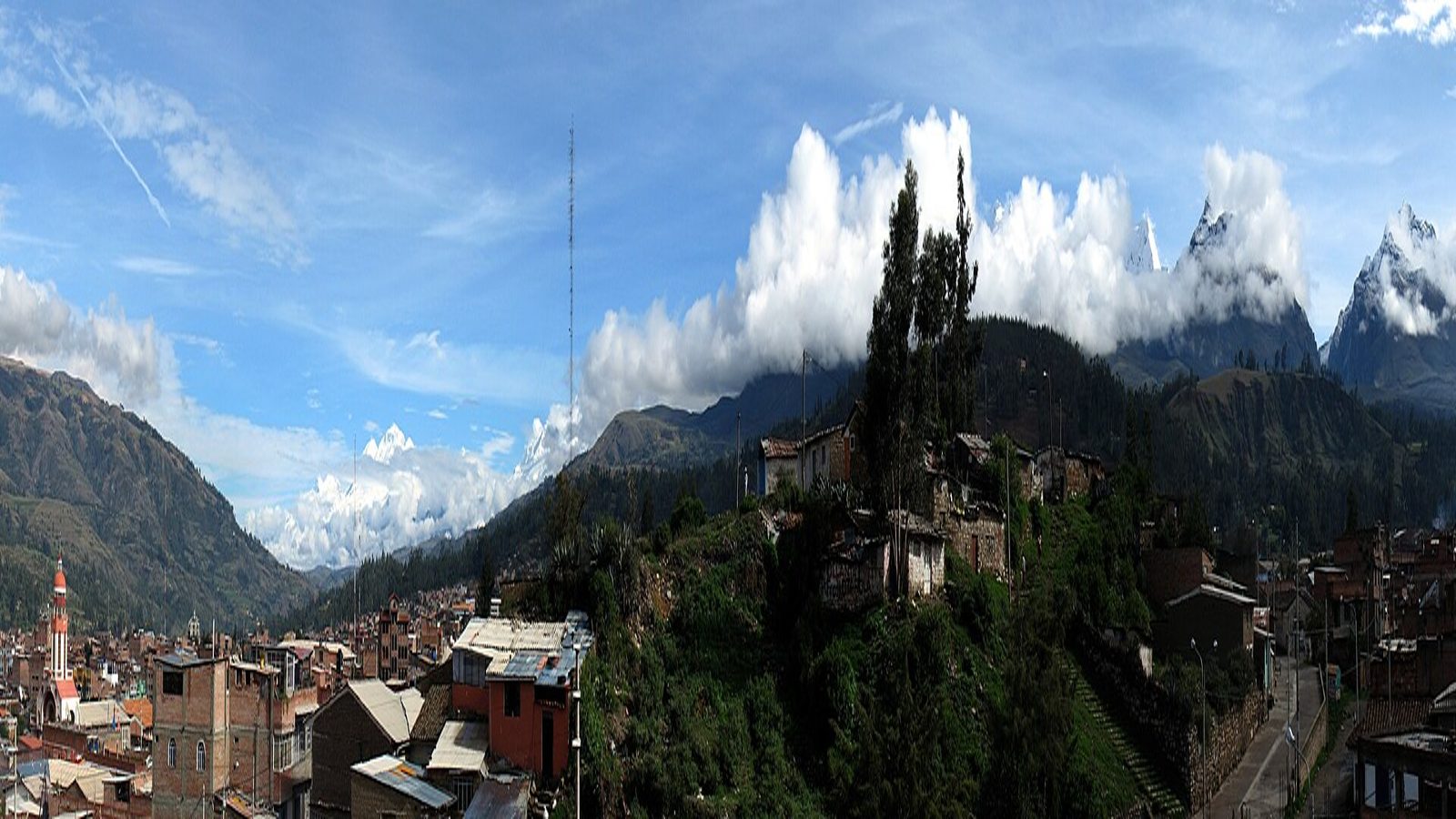
A busy Andean market town at 3,050m, right below the Cordillera Blanca, the highest tropical mountain range in the world. You spend a few days getting used to the altitude, then hike to turquoise glacial lakes, walk under 6,000m peaks and visit a temple that is older than the Incas.
- Best time to visit: May to September
- Daily budget (budget traveller): $30 to $120 USD
- Ideal trip length: 5 to 7 days
Huaraz is the capital of Peru's Áncash region. It sits at about 3,050m in the Callejón de Huaylas, the long valley between the snowy Cordillera Blanca and the bare Cordillera Negra. Most of the town was rebuilt after the 1970 earthquake, so it is not pretty in the colonial way Cusco is. It is a working place of concrete blocks, busy markets and colectivos, and nobody comes for the architecture. People come for what you can see at the end of almost every street: Huascarán, Peru's highest mountain at 6,768m, and a row of other glaciated peaks. Huascarán National Park starts just outside town. Day hikes lead to lakes such as Laguna 69 and Laguna Churup, and multi-day treks like Santa Cruz and Huayhuash go further in. Climbers use Huaraz as their base in the dry season. The altitude is the one thing you cannot rush. Give yourself a day or two of easy walking before anything above 4,000m. A dorm bed, a market lunch for a few soles and a shared van to the trailhead keep costs very low. Hostels are full of other hikers looking for company on the trail, so Huaraz is one of the easiest places in Peru to visit alone.
Huaraz is the gateway to the Cordillera Blanca, a range of more than 30 peaks over 6,000m, with hundreds of glacial lakes. Most of it is protected as Huascarán National Park, a UNESCO World Heritage Site. The town has about 120,000 people and is rough around the edges. Most of it was flattened by the 1970 earthquake and rebuilt quickly in concrete, so the plaza and streets are functional rather than charming. Women in tall hats and layered skirts sell potatoes and cheese at the market, and colectivos crowd every corner. Then the clouds lift and the snowy peaks fill the view at the end of the street. People come to hike and climb. A few days here can take you to turquoise lakes, a giant tropical glacier and a 3,000-year-old temple, all from a cheap hostel bed.
Getting here is simple. Overnight buses from Lima take 8 to 9 hours and cost roughly $15 to $50 USD, with Cruz del Sur, Movil, Línea and others running more than a dozen departures a day. LATAM also flies from Lima to Anta airport in about an hour, about 40 minutes by road from town. Once you arrive, walk around the centre, use cheap colectivos to reach the valley towns and nearby trailheads, and take tours for the long drives to Laguna 69, Pastoruri and Chavín. Base yourself near Parque Ginebra for agencies and company, in La Soledad for quieter nights and mountain views, or in Monterrey if you want hot springs and gardens.
Timing makes a big difference. The dry season, from May to September, brings blue skies, cold nights and the best trail conditions. It is also when climbers arrive and the hostels fill, especially in July and August. October and November are quieter, with more cloud. From December to March, rain usually arrives in the afternoons and some routes become muddy or unsafe. Plan your trip around the altitude: easy days first, the big hikes later. Huaraz is not a party town, and most people are asleep by 10pm before a 5am pick-up. It is friendly, cheap and full of other solo hikers, which is all you need.
Huaraz itinerary
Arrive and take it slowly
Morning: Arrive on the overnight bus from Lima or the morning flight. Check in, have breakfast and sleep a bit if you need to.
Afternoon: Take a gentle walk around the Plaza de Armas and the Áncash Archaeological Museum, then the Mercado Central. Drink lots of water and try a mate de coca.
Evening: Head to Parque Ginebra to compare tour agencies and book your Laguna 69 trip for later in the week. Have an early dinner and an early night.
Wilcacocha and the hot springs
Morning: Take colectivo 10 or E to the Wilcacocha trailhead and walk up slowly to the lake at about 3,725m.
Afternoon: Come back down for a market lunch, then take a colectivo north to the Monterrey hot springs for a soak.
Evening: Have dinner near Parque Ginebra. Lay out your warm layers for an early start tomorrow.
Laguna Churup
Morning: Catch the 7am van to Pitec from Avenida Agustín Gamarra (about S/20 return). Pay the S/30 park fee and climb steadily to the lake at 4,450m.
Afternoon: Rest at the lake, then walk down to meet the van. Most leave Pitec between 1pm and 4pm, so check the time with your driver.
Evening: Have a big, warm dinner. Llunca kashki or trout are good choices. Sleep well.
Chavín de Huántar
Morning: Join a Chavín tour or take an Olguita Tours bus (about S/15). Stop at Laguna Querococha, then go through the Cahuish tunnel at about 4,500m. Avoid Mondays.
Afternoon: Explore the temple and its underground galleries with a guide, then visit the national museum to see the carved stone heads.
Evening: Return to Huaraz after dark. Have a simple dinner and an early night before Laguna 69.
Laguna 69
Morning: You will be collected at about 5am. Have breakfast in Yungay, stop at the Llanganuco lakes, then start walking from Cebollapampa.
Afternoon: Reach the lake at about 4,600m under Chacraraju's glacier. Eat lunch, then head down in time to meet the van.
Evening: Arrive back in the evening, tired. Treat yourself to dinner and a drink with people from your tour.
Pastoruri or a rest day
Morning: If you feel strong, take a tour to Pastoruri glacier at around 5,000m, with Puya Raimondi plants on the way. If not, have a slow breakfast in La Soledad.
Afternoon: Walk the short climate change route at Pastoruri, or take a colectivo to Willkawain for its ruins and quiet lakes.
Evening: If it is Sunday, go to Jirón José Olaya for pachamanca and local food. Otherwise, try a traveller café.
Yungay and departure
Morning: Take a colectivo up the valley to Yungay's Campo Santo memorial, stopping in Carhuaz for ice cream on the way back.
Afternoon: Buy souvenirs at the market, have a last menú del día and pack. Keep your bag at your hostel if your bus leaves at night.
Evening: Take the overnight bus to Lima, or stay on for a multi-day trek.
Best neighbourhoods
- Centro and Plaza de Armas: The middle of town, around the main square, the rebuilt cathedral and the Áncash Archaeological Museum. Banks, the main market and most of the bus offices are a few blocks away. It is handy and lively, but there is traffic noise and car horns from early morning, so ask for a room at the back.
- Parque Ginebra and Avenida Luzuriaga: The traveller hub just north of the plaza. Tour agencies, gear rental shops, cafés, pizza places and bars line the streets around the small square. The Casa de Guías mountain guides' association is here too. It is the easiest base for booking tours and meeting other hikers, though it gets loud on weekend nights.
- La Soledad: A quieter, slightly higher barrio about 10 minutes' walk east of the plaza, around the Soledad church. Family-run guesthouses and hostels here often have roof terraces with views of the Cordillera Blanca. The walk back up after dinner is steep, but it is good training for the altitude.
- Jirón José Olaya: One of the few streets that survived the 1970 earthquake, a short walk east of the centre. It has old adobe houses with wooden balconies and on Sundays turns into a local food street. There are few places to stay right on it, but nearby lanes are calm and close to everything.
- Monterrey: A small village about 7km north up the valley, known for its hot springs. A handful of lodges and country hotels with gardens sit here. Colectivos run to Huaraz in about 20 minutes. Stay here if you want peace and a soak after a big hike, but expect early nights.
Must-do experiences
- Acclimatise at Laguna Wilcacocha: Take colectivo number 10 or E from near the central market for a sol or two, and get off at the bridge for the trail. The walk climbs through farmland to a small lake at about 3,725m, with a view across the valley to the Cordillera Blanca. It is free, easy and the ideal first outing.
- Hike to Laguna Churup: A shared van to the village of Pitec costs about S/20 ($6) return. Vans leave around 7am from Avenida Agustín Gamarra, near Antonio Raymondi. The trail climbs to a turquoise lake at 4,450m, with a short scramble on fixed ropes near the top. The park fee is S/30, paid in cash at a hut on the way up.
- Walk to Laguna 69: This is the most famous day hike in Peru. You drive past the Llanganuco lakes, then climb about 750m from Cebollapampa to a bright blue lake at roughly 4,600m under Chacraraju's glacier. Tours cost around $15-25 plus the S/30 park fee, leave at 5am and get back in the evening. Only go once you have acclimatised.
- Explore Chavín de Huántar: The temple at Chavín de Huántar is about 3,000 years old. It is around three hours from Huaraz over a high pass and through the Cahuish tunnel. You can walk through dark underground galleries to the carved Lanzón stone, then see the stone heads in the national museum. Site entry is about S/15 and the museum about S/10. Tours cost roughly $27-35.
- See Pastoruri glacier and the Puya Raimondi: A day tour south of town climbs to around 5,000m at the snout of a fast-shrinking glacier. The signposted 'climate change route' explains how much ice has gone. On the way you stop at stands of Puya Raimondi, a giant plant whose flower spike can reach 10m. Wrap up well, walk slowly and pay the park fee on top of the tour.
- Visit Yungay's Campo Santo: In 1970, an earthquake-triggered avalanche from Huascarán buried the old town of Yungay and most of its people in minutes. The site is now a quiet memorial garden, with the tops of palm trees and the ruined cathedral front still showing. Entry is a small fee, and most Laguna 69 and Llanganuco tours stop here.
- Soak in the Monterrey hot springs: Take a colectivo 20 minutes north to the thermal pools at Monterrey. Entry costs a few soles. Go on a weekday morning, when it is quieter, and combine it with the Willkawain ruins just up the hill. It is a good rest day between big hikes.
Hidden gems
- Jirón José Olaya on a Sunday, when the old adobe street fills with stalls selling pachamanca, picante de cuy and local sweets
- The Willkawain ruins, a small Wari-era site about 7km north, with stone buildings you can step inside and far fewer visitors than Chavín
- The loop of lakes above Willkawain, including Laguna Ahuac, a quiet acclimatisation hike that most visitors never hear of
- The garden of stone monoliths behind the Áncash Archaeological Museum, carved by the Recuay culture and easy to miss from the plaza
- Carhuaz, a small valley town north of Huaraz, known for its Sunday market and homemade ice cream
Daily budget
- Accommodation: budget $8-15 / night (hostel dorm), mid-range $35-70 (private room in a guesthouse or 3-star hotel), splurge $120+ (mountain lodge or boutique hotel with views). Prices rise in July and August and at Easter. Many guesthouses include breakfast and store bags while you are on a trek. Single rooms are easy to find outside peak season.
- Food: budget $8-15 / day (market menú del día, bakery, street snacks), mid-range $20-35 (traveller cafés and sit-down dinners), splurge $50+ (best restaurants in town, wine). A market lunch costs about S/8-12. Café meals and pizzas are about S/25-45. Pack snacks for hikes, as there is little to buy on the trails.
- Transport: budget $1-6 / day (walking, colectivos), mid-range $10-20 (taxis plus the Churup van), splurge $55+ (Lima flight one way). Buses from Lima cost roughly $15-50 USD. Town taxis are about S/5-7. Colectivos in the valley cost S/1-5, and the Churup van is about S/20 return.
- Activities: budget $8-20 / day (park fee at S/30, self-guided hikes), mid-range $25-45 (day tours to Laguna 69, Chavín or Pastoruri), splurge $150+ (guided multi-day treks or climbs). Park day tickets cost S/30, with passes of about S/60 for two or three days. Chavín costs about S/15 plus about S/10 for the museum. Tour prices rarely include park fees.
- Drinks & nightlife: budget $3-6 (a beer or pisco sour), mid-range $10-20 (a few drinks in a Parque Ginebra bar), splurge $30+ (a big night out, which is rare here). Coffee costs S/6-10 at traveller cafés. A bottle of beer is about S/8-12. Go easy on alcohol for the first few days at altitude.
Where to stay
- Social hostel in La Soledad ($10-35 / night): Hostal Churup is a long-running, family-run favourite with dorms and private rooms. It has a terrace with mountain views and helpful hosts who know the hikes and tours. It is a short walk uphill from the plaza.
- Boutique hotel in Above the centre ($70-140 / night): Andino Club Hotel is a calm, well-run hotel on the slopes above the centre, with balconies facing the Cordillera Blanca. It is a quiet place to recover after big hikes, and town is a short taxi ride away.
- Apartment in Centro and Parque Ginebra ($30-60 / night): Simple flats near the centre come with a kitchen, so you can cook and pack your own hiking food. Heating is rare, so check for extra blankets or a heater in winter.
- Splurge in Hills east of Huaraz ($120-250 / night): The Lazy Dog Inn is an eco-lodge built from adobe in the hills towards the Cordillera Blanca. It has fireplaces, home cooking and trails from the door. It is quiet, but you will need transport into town.
What to eat
- Menú del día: soup, a main course and a drink for around S/8-12 at the Mercado Central and small local places, the cheapest proper meal in town
- Trout (trucha): farmed in the mountain lakes and rivers, served fried, grilled or as ceviche across Huaraz
- Pachamanca and picante de cuy: meats and potatoes cooked in an earth oven, and spicy guinea pig, best on Sundays on Jirón José Olaya
- Llunca kashki: a filling Áncash soup of cracked wheat and chicken, good on a cold evening
- Ceviche de chocho: a vegetarian Andean ceviche made with lupin beans, onion and lime, sold at stalls and markets
- Mate de coca and chicha morada: coca leaf tea to help with the altitude, and a sweet purple corn drink, plus coffee and cake at traveller cafés such as Café Andino
Day trips
- Laguna 69 and the Llanganuco lakes (About 3 hours each way by road, via Yungay): Turquoise lakes in a deep granite valley below Huascarán, then a hard climb to a bright blue lake at about 4,600m under a hanging glacier. It is the classic Huaraz day out. Join a day tour from Huaraz (around $15-25 plus the S/30 park fee). Pick-ups are at about 5am and you are back in the evening. Bring lunch, water and warm layers.
- Chavín de Huántar (About 110km south-east, 3 hours each way): An ancient ceremonial centre from roughly 1200 to 200 BC, with underground galleries, the carved Lanzón stone and a national museum full of carved stone heads. The drive over the Cahuish pass is spectacular. Take a day tour (roughly $27-35) or an Olguita Tours bus (about S/15 each way). Entry is about S/15, and about S/10 more for the museum. It is usually closed on Mondays, so check before you go.
- Pastoruri glacier (About 70km south, 2.5 hours each way): A shrinking tropical glacier at around 5,000m, reached by a short, steep walk, with signs explaining climate change. The road passes forests of giant Puya Raimondi plants. Join a day tour (around $25-35, with the park fee extra). Only go after a few days of acclimatising, and bring warm clothes, sunscreen and snacks.
When to visit
- Early dry season (May - June): Days 18-23°C, nights 2-6°C, mostly clear and dry. Crowds: Moderate, busier around the Señor de la Soledad festival in May. An excellent time to go. The hills are still green after the rains, skies clear and trails are open, and hostels are not yet full.
- Peak dry season (July - August): Days 18-24°C, nights can drop below 0°C, very dry and sunny. Crowds: Busy, with Peruvian holidays in late July and climbers everywhere. The most reliable weather for big hikes, treks and climbing. Book hostels and treks ahead, and pack properly for freezing nights.
- Shoulder season (September - November): Days 18-23°C, more cloud building, showers from October. Crowds: Moderate in September, quiet from October. September is the pick, with good conditions and fewer people. In October and November, start early, as clouds often gather around midday.
- Rainy season (December - April): Days 16-21°C, frequent afternoon rain, snow higher up, cloudy peaks. Crowds: Low, except at Easter, when Semana Santa is big in Huaraz. Cheap and quiet, but views are hit and miss and trails can be muddy. Some treks close. Do short morning hikes and keep your plans flexible.
Entry rules for your passport
Visa rules for Peru depend on the passport you travel on. Check the official source before you book: Peru Ministry of Foreign Affairs
Getting there
Huaraz has its own small airport at Anta, about 20km north-west of town. LATAM flies there from Lima in about an hour, roughly daily and often twice a day, with one-way fares sometimes as low as about $55. From the airport, a shuttle or taxi takes about 40 minutes into town. Most travellers take the bus. Cruz del Sur, Movil, Línea, Oltursa and others run more than a dozen buses a day from their Lima terminals and Plaza Norte. The trip takes about 8 to 9 hours and costs roughly $15 to $50 USD, depending on the company and seat class. Overnight buses leave at around 9:30 to 10pm and arrive at about 6am. Pay a little more for a reputable company and a semi-cama or cama (reclining) seat. The road climbs from sea level to over 4,000m, so drink water and bring a warm layer. Buses also link Huaraz with Trujillo and Chimbote on the north coast. Bus offices are spread around the centre, and most are a short walk or cheap taxi ride from your hostel.
Getting around
Central Huaraz is compact, and you can walk between the plaza, Parque Ginebra and La Soledad in 10 to 15 minutes. Go slowly for the first couple of days, as even small hills feel hard at 3,050m. Taxis are cheap and everywhere. Short trips across town cost around S/5-7. There are no meters, so agree the fare before you get in, and at night ask your hostel to call one. Numbered colectivos (shared vans) run up and down the valley for a sol or two. They go to Monterrey, the Wilcacocha trailhead and further north to Carhuaz, Yungay and Caraz. The Churup van to Pitec leaves from Avenida Agustín Gamarra at around 7am and costs about S/20 return. Most other trailheads, including Laguna 69 and Pastoruri, are far enough away that a tour is the simplest option. Tours usually include hotel pick-up and cost roughly $15-35. Local buses to Chavín take about three hours and cost around S/15 each way. Bring cash in small notes for all of these, plus the S/30 park fee.
Safety
Altitude is the main danger here, not crime. Spend at least one or two days at Huaraz's height before going above 4,000m. Drink plenty of water, go easy on alcohol, and turn back if you get a bad headache, confusion or breathlessness at rest. Mountain weather changes fast, and afternoon storms and hail are common, even in the dry season. Start early and carry warm, waterproof layers. Do not hike glaciers or high passes without a qualified guide, and check with the Casa de Guías before going anywhere remote. There have been robberies at the Rataquenua cross viewpoint above town and on some quiet paths, so go in a group or take a taxi. In the centre, watch your phone in markets and on busy evenings. Use well-known bus companies for the overnight trip from Lima. Stray dogs can be a nuisance on rural trails. Tap water is not safe to drink. Peru's emergency numbers are 105 (police), 106 (ambulance) and 116 (fire). Take out travel insurance that covers trekking at altitude and mountain rescue.
Solo travel tips
- Plan your altitude: Put the easy hikes first and the big ones last. Wilcacocha, then Churup, then Laguna 69 or Pastoruri is the order most guides recommend, and you will enjoy each one more.
- Bring cash in small notes: Park fees, colectivos, market food and many tours are cash only. Take soles out at the banks on Avenida Luzuriaga, and carry small notes, as drivers often have no change.
- Use Parque Ginebra to find company: Agencies here group solo travellers on the same tours, and hostel boards fill with people looking for hiking partners. You will rarely have to do a hike alone.
- Start early, finish early: Clouds and storms often build in the afternoon, even in the dry season. Morning starts give you the best views and get you down before bad weather arrives.
- Safety for solo travellers: Altitude and weather are the real risks. Tell your hostel where you are going, avoid the Rataquenua viewpoint and isolated trails on your own, and use a licensed guide for anything remote or on ice.
- Leave your bags safely: Most hostels and guesthouses will store luggage while you are on a trek or a day tour. Ask before you book, and keep your passport and cards on you.
Cultural etiquette
- Greet people with 'buenos días' or 'buenas tardes' before asking anything. Many older people in the valley speak Quechua, and 'allillanchu' (hello) gets a smile.
- Ask before photographing people, especially women in traditional dress, and expect that some will want a small tip.
- Haggle lightly at craft stalls, but not over food at the market or bus fares, which are already low.
- Respect the coca leaf. It is a legal and traditional part of Andean life, but do not try to take it home, as it is illegal in most other countries.
- Dress modestly in churches, and keep quiet if a service is on.
- Tip guides, cooks and porters on treks and day tours. It makes up a large part of their income.
- Stay on the trails, take all rubbish home and do not swim in or climb around the glacial lakes, which are fragile and very cold.
Frequently asked questions
How do I get to Huaraz from Lima?
Most people take the bus. More than a dozen buses a day run with companies such as Cruz del Sur, Movil, Línea and Oltursa. The trip takes about 8 to 9 hours, and fares range from roughly $15 to $50 USD depending on the seat class. Overnight buses leave Lima at around 9:30 to 10pm and arrive at about 6am, which saves you a night's accommodation. You can also fly. LATAM runs short flights of about an hour from Lima to Anta airport, 20km north-west of Huaraz, with one-way fares sometimes as low as about $55. From the airport, a shuttle or taxi takes about 40 minutes into town.
How many days do I need in Huaraz?
Plan at least five days. You need one or two easy days to adjust to the altitude before Churup or Laguna 69. Five days covers Wilcacocha, Churup, Laguna 69 and either Chavín or Pastoruri. A week lets you do all of these at a gentler pace and add Yungay and the hot springs. Add another four to ten days for the Santa Cruz or Huayhuash treks.
When is the best time to visit Huaraz?
May to September is the dry season. Skies are clear, trails are in good condition and the mountains are in full view. June to August is the busiest time and also the main climbing season. Nights can drop below freezing. September and October are still good and quieter. From December to March, heavy afternoon rain, cloud and muddy trails make hiking harder, and some treks and tours stop running.
How bad is the altitude in Huaraz?
Huaraz is at about 3,050m, and the popular lakes are between 3,700m and 4,600m. Pastoruri is around 5,000m. Most people feel short of breath and some get headaches for the first day or two. Arrive, rest, drink water and coca tea, then build up from Wilcacocha to Churup before trying Laguna 69. Ask a doctor before you go about altitude medication. If symptoms get worse, go down.
Can I hike without a tour?
Yes, for some hikes. Wilcacocha and Churup are easy to do on your own by colectivo, and the trails are well used. Laguna 69 is far away, and most people go with one of the many cheap tours. Recent visitors say independent access has been limited, so check locally. Multi-day treks, Huayhuash and anything on glaciers are best done with a licensed guide or a reputable agency. Whatever you do, pay the S/30 park fee in cash.
How much does Huascarán National Park cost?
Foreign visitors pay S/30 (about $8-9) for a day ticket. Multi-day passes cost about S/60 and are sold for two or three days. A pass of around S/150 covers longer stays of up to a month. If you plan several hikes inside the park, ask at the first ticket point which pass works out cheapest. Bring cash and your passport, and keep your ticket with you.
Is Huaraz safe for solo female travellers?
Generally, yes. Huaraz is full of independent hikers, and the hostels and tour groups make it easy to find company on the trail. Take normal care in town at night, use taxis called by your hostel, and avoid the Rataquenua viewpoint and isolated paths on your own. On remote hikes, join a group or a reputable tour rather than going alone.
What entry rules apply to Peru in 2026?
Many visitors, including those from the UK, EU, US, Canada and Australia, can enter Peru as tourists without a visa. The border officer decides how long you can stay. Ninety days is common, and the legal maximum is 183 days. Your passport should be valid for at least six months, and you may be asked for proof of onward travel. The Andean migration card (TAM) is now digital. Peru's entry rules have been changing, so check official Peruvian government sites and your own government's travel advice before you fly.
Tours and activities in Huaraz | Huaraz in 2 days | Huaraz in 3 days | Huaraz in 4 days | Huaraz in 5 days | Huaraz in 7 days
Joy Plus home | Destinations | Itineraries | Activities | Flights | Budget planner | Calendar | Map | Blog | Lifetime access