Destinations / Europe
Hydra, Greece travel guide
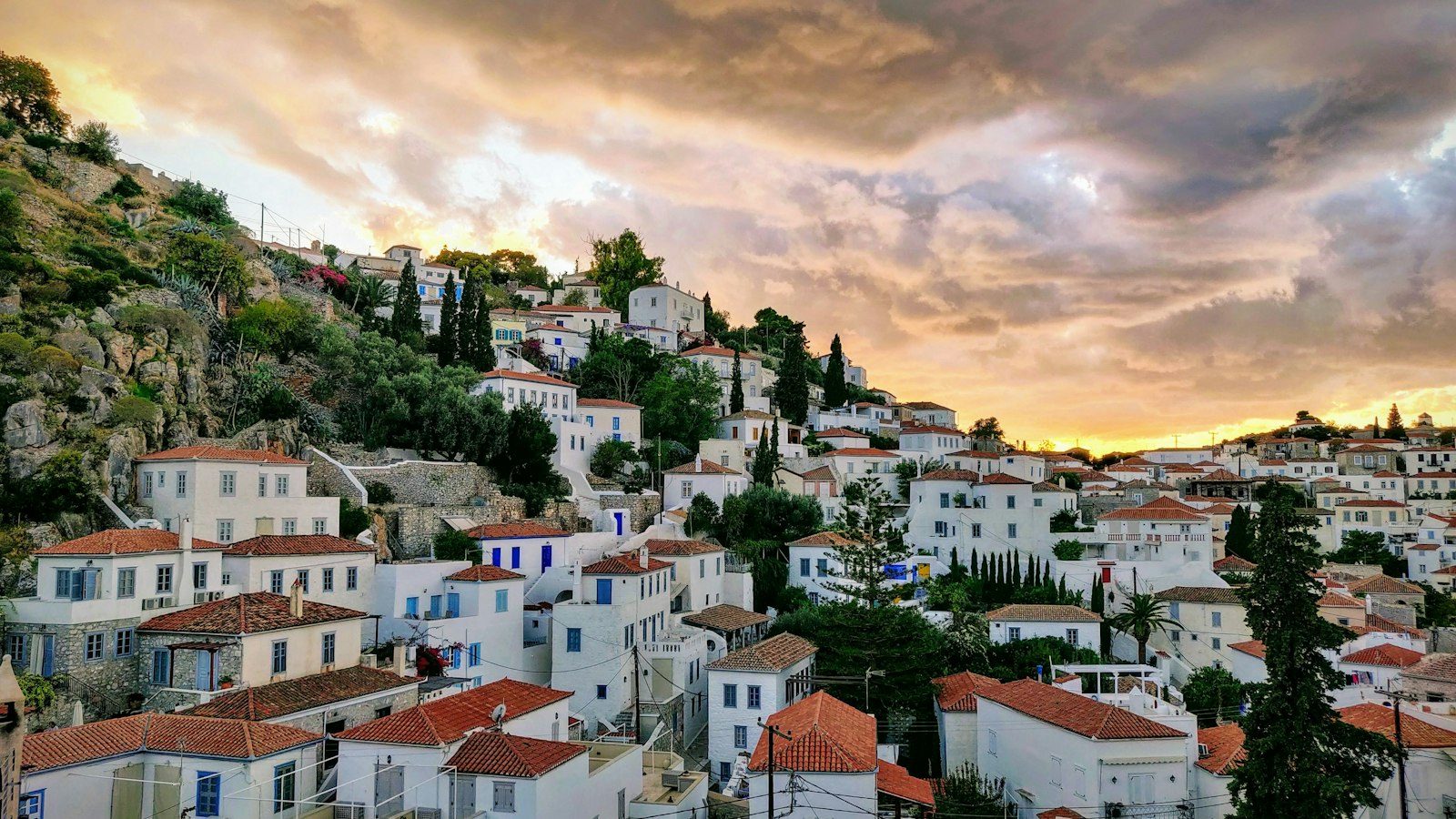
A car-free island in the Saronic Gulf, about two hours by fast boat from Athens. You walk stone lanes past old captains' mansions, swim off the rocks below the harbour cannons and eat grilled fish at a taverna in Kamini as the sun goes down over the Peloponnese.
- Best time to visit: May to June and September to early October
- Daily budget (budget traveller): $110 to $325 USD
- Ideal trip length: 3 to 5 days
Hydra is a long, rocky island off the eastern Peloponnese. Fast boats from Piraeus get there in roughly 1 to 2 hours. There are no cars, scooters or bikes. You walk, ride a mule or take a water taxi. The town climbs from a horseshoe harbour in tiers of grey stone mansions built by the shipowners who grew rich here in the 18th and 19th centuries and later funded much of the Greek fleet in the War of Independence. Artists and writers followed in the 20th century, Leonard Cohen among them, and the island still has galleries and a summer art space in the old slaughterhouse. There is not much sand. People swim from the rocks at Spilia just below the harbour cannons, or walk the coast path west to Kamini and Vlychos. Climb to the Prophet Elias monastery for the view, then come down for grilled fish by the water. Hydra is not cheap. There are no hostels, and rooms cost more than on many islands. Even so, free rock swimming, coast walks and cheap beach boats make it a good place for a solo traveller to spend a slow few days.
Hydra is a narrow ridge of rock about 18km long, lying off the eastern Peloponnese in the Saronic Gulf. Roughly 2,000 people live here, almost all of them in and around the one town. In the late 18th and early 19th centuries Hydra had one of the biggest merchant fleets in Greece. Its captains built the grey stone mansions that still stand above the harbour, and their ships fought in the War of Independence of 1821. Later, the island's light and its lack of cars drew painters, writers and musicians, and that artistic side has never quite gone away. Most visitors come for a few hours from Athens. Stay a few nights and you get the better version: the quay empty at 7am, a swim at Spilia before breakfast, the walk to Kamini for lunch and the cannons at sunset. It is not a budget island, but free swimming, coast walks and simple tavernas keep costs reasonable.
Getting here is straightforward. Fast boats from Piraeus take about 1 to 2 hours, with fares of around €32-40 one way, and there are many sailings a day in summer and fewer in winter. From Athens airport, the X96 express bus runs to Piraeus, or you can take the metro from the city centre. Once you are here, you walk. The town is small but steep, and the coast paths east and west are the best way to explore. Base yourself near the harbour for convenience and nightlife, in the upper town for quiet and views, or in Kamini for village life. Use water taxis and shared beach boats for the coves you cannot walk to.
Timing shapes the trip. May, June, September and early October bring warm sea, comfortable walking and fewer crowds. July and August are hot, busy and expensive, with day-trip boats and big yachts filling the harbour, though the DESTE art space in the old slaughterhouse is open for its summer show. Greek Easter is famous here, and in late June the Miaoulia festival ends with a ship set alight in the harbour. From November to March, Hydra is quiet and mild, but many hotels and tavernas close and boats are fewer. The island is very safe, and English is widely spoken. Evenings are about long dinners and a drink on the quay rather than clubs. If you want a swim, a hill walk and a plate of grilled fish by the water, this is the place.
Hydra itinerary
Arrive and find your feet
Morning: Take a morning fast boat from Piraeus (about 1 to 2 hours). Drop your bag at your pension, using a mule if it is up the hill, and have a coffee on the quay.
Afternoon: Look into the Monastery of the Assumption in the harbour, then walk west past the cannons for a first swim off the rocks at Spilia.
Evening: Watch the sunset from the cannons, then have dinner at a back-lane taverna such as Xeri Elia Douskos.
Coast path to Kamini and Vlychos
Morning: Walk the coast path west while it is still cool. Stop at the ladders at Avlaki, then carry on through Kamini to Vlychos (35 to 45 minutes in all).
Afternoon: Swim at Vlychos and have a long lunch at a beach taverna. Take the beach boat or a water taxi back if it is too hot to walk.
Evening: Walk back out to Kamini for grilled fish at Kodylenia's, which has views of the sunset. Return on foot along the coast or by water taxi.
Mansions and museums
Morning: Climb to the Lazaros Koundouriotis Mansion (around €10, closed Mondays) for the house and the harbour view. Then wander the upper lanes towards Kala Pigadia.
Afternoon: Escape the heat in the Historical Archives Museum (about €5). In summer, visit the DESTE art space in the old slaughterhouse. Then swim again.
Evening: A drink at a rock-side bar at Spilia, then a simple dinner of meze and house wine.
Hike to Prophet Elias
Morning: Set off by 7.30am through Kala Pigadia to the Prophet Elias monastery (about 1 to 1.5 hours up). Cover your shoulders and knees, and take plenty of water and a snack.
Afternoon: Come down slowly and recover with a long swim and a late lunch near the harbour.
Evening: Buy amygdalota from a bakery and eat them on the quay as the last boats come in.
Bisti and Agios Nikolaos
Morning: Catch the shared beach boat from the harbour (around €17-20 return) to Bisti on the western tip. Bring a snorkel, water and some cash.
Afternoon: Swim and snorkel among the rocks under the pines, or try Agios Nikolaos instead. Check the return boat time before you settle in.
Evening: Back in town, have a sunset drink by the cannons and a fish dinner somewhere a few lanes back from the harbour.
A day on Spetses
Morning: Take a morning fast boat south to Spetses (roughly 30 to 45 minutes). Walk from the Dapia harbour to the old harbour and the lighthouse.
Afternoon: Visit Bouboulina's house museum, or rent a bike, since Spetses allows them, and ride the coast road to a beach. Lunch by the water.
Evening: Catch the boat back to Hydra in time for a late swim and a farewell dinner in Kamini.
Slow morning and depart
Morning: Have a last early swim at Spilia and a bakery breakfast on the quay before the day trippers arrive.
Afternoon: Buy almond sweets for home, then take an afternoon boat to Piraeus. Book ahead and keep a buffer if you have a flight.
Evening: Arrive in Athens or carry on to your next stop.
Best neighbourhoods
- Hydra Town and the harbour: The heart of the island, where the boats come in. Cafés, tavernas, jewellery shops, the Monastery of the Assumption with its clock tower and the water taxi stand all line the quay. It is lively until late in summer, so if you sleep lightly, choose a room a few lanes back from the water.
- Upper town and Kala Pigadia: The steep lanes behind the harbour, where whitewashed houses and walled gardens climb towards the old wells at Kala Pigadia. It is quieter and greener, and the views are better. The trade-off is lots of steps, so pack light or pay a mule to carry your bag.
- Kamini: A small fishing village about 20 minutes' walk west along the coast path, with a tiny harbour, a pebbly beach and a couple of well-loved tavernas. It feels local and calm, and the sunsets are excellent. Getting back into town after dinner means a dark but easy walk or a short water taxi ride.
- Vlychos and Plakes: Further west, roughly 35 to 45 minutes on foot from the harbour. Vlychos has a pebble and sand beach, a few tavernas and rooms. Plakes is home to the Four Seasons hotel. It suits you if you want beach days and quiet nights, but most evenings out mean a walk or a boat back to town.
- Mandraki: A sheltered bay about 25 minutes' walk east of the harbour, with a beach club and resort-style hotel. The water is calm and it is quiet out of season. It is a good half-day swim spot, but too isolated for most solo travellers to use as a base.
Must-do experiences
- Swim off the rocks at Spilia: Walk west from the harbour past the cannons to the concrete platforms and ladders below the old fortifications. It is free, and the water is deep and very clear. Bars such as Hydronetta rent loungers, but you can just lay a towel on the rocks.
- Walk the coast path to Kamini and Vlychos: A paved path follows the shore west out of town. It takes about 20 minutes to Kamini and around 35 to 45 minutes to Vlychos. Swim at either, have lunch at a taverna and catch a beach boat or water taxi back if the heat gets to you.
- Hike up to the Prophet Elias monastery: Climb from the upper town through Kala Pigadia to the monastery on the ridge above Hydra. Allow about 1 to 1.5 hours up on a rough, steep path with little shade. Go early, cover your shoulders and knees, and take plenty of water.
- Tour the Lazaros Koundouriotis Mansion: This ochre captain's house on the hill west of the harbour belongs to the National Historical Museum. It shows how Hydra's ruling shipowning families lived, and the views from the courtyard are excellent. Adult entry is around €10, it is closed on Mondays and hours change with the season, so check before you climb.
- Learn the island's naval history: The Historical Archives Museum sits on the east side of the harbour. It covers Hydra's ships, its captains and its role in the 1821 revolution. Entry is about €5. It is open daily, with extra evening hours in summer, so it works well for a hot afternoon.
- Take the beach boat to Bisti: Bisti and Agios Nikolaos are pine-backed coves on the island's far western tip. A private water taxi costs €100 or more, but in season shared beach boats leave the harbour in the morning and come back in the afternoon for around €17-20 return. Take snorkel gear.
- Watch the sunset from the cannons: The old guns on the western side of the harbour face the Peloponnese, and at sunset the mountains and the sea turn orange. It costs nothing. Go 20 minutes early in summer for a spot on the wall, or buy a drink at a terrace bar nearby.
Hidden gems
- Kala Pigadia, the old wells in the upper town, a quiet spot among walled gardens and the spot locals once came to for drinking water
- The tiny fishing harbour at Kamini early in the morning, when the boats come in and the cafés are just opening
- The Tetsis Home and Studio, the house of the painter Panayiotis Tetsis, run as part of the National Historical Museum's Hydra branch
- The swimming ladders at Avlaki, below the coast path between town and Kamini, usually much quieter than Spilia
- The Zourva monastery at the island's far eastern end, a long, empty hike for those who want a full day on the hills
Daily budget
- Accommodation: budget €60-90 / night (simple pension room), mid-range €120-220 (guesthouse or boutique hotel), splurge €500+ (Four Seasons Hydra at Plakes). There are no hostels, so a single room in a pension is the cheapest option. A climate resilience fee is added per room per night: €2 for rented rooms and €5 for 3-star hotels from April to October, less in winter. Book June to September early.
- Food: budget €25-35 / day (bakery breakfast, gyros or pie lunch, supermarket picnic), mid-range €50-75 (taverna lunch and a sit-down fish dinner), splurge €100+ (whole fish by the kilo, wine, harbour-view dinner). Harbourfront cafés and tavernas charge more than places a few lanes back. Whole fish is priced per kilo, so ask before ordering. Prices are rough guides.
- Transport: budget €0-10 / day (walking, a shared beach boat), mid-range €20-50 (a water taxi or two, mule for luggage), splurge €100-140 (private water taxi to Bisti or Agios Nikolaos). The fast boat from Piraeus costs about €32-40 each way. Water taxis are priced per boat for up to eight people, with up to 50% extra after dark.
- Activities: budget €0-10 / day (swimming, hikes, Historical Archives Museum at about €5), mid-range €10-25 (Koundouriotis Mansion at around €10, sunbeds), splurge €50+ (boat trips round the island, private tours). Swimming, coast walks and the monastery hikes are free. The DESTE summer show in the old slaughterhouse is usually free too. Sunbeds at beach bars cost extra.
- Drinks & nightlife: budget €5-10 (a beer or a glass of house wine), mid-range €20-35 (a few drinks at a harbour bar), splurge €60+ (cocktails at a rock-side bar at sunset). A freddo espresso costs about €3.50-5 on the harbour. Nightlife means bars on the quay and at Spilia, often open until late in summer.
Where to stay
- Budget pension in Hydra Town, a few lanes behind the harbour (€60-100 / night): Simple family-run places such as Pension Erofili or Andrea Pension on Miaouli Street offer plain, clean rooms a short walk from the boats. As there are no hostels on the island, these are the best value for a solo traveller.
- Boutique hotel in Hydra Town (€180-300 / night): Bratsera Hotel is set in a restored 19th-century sponge factory, with a pool, a courtyard restaurant and rooms full of old wood and stone. It is only a few minutes from the harbour.
- Apartment in Upper town or Kamini (€90-180 / night): Small apartments in old stone houses give you a kitchen, a terrace and a local feel. Expect lots of steps and check the exact location and route from the port before you book.
- Splurge in Plakes, near Vlychos (€500-1,000+ / night): Four Seasons Hydra is a small luxury hotel on its own bay west of Vlychos. You get a beach, a restaurant and boat connections, with the town a short boat ride or a long coastal walk away.
What to eat
- Grilled fish and fried squid: a whole fish sold by weight or a plate of kalamari at a harbour or Kamini taverna such as Kodylenia's. Ask the price per kilo first
- Hydra amygdalota: soft almond sweets dusted with icing sugar and flavoured with rose water, sold at bakeries and sweet shops around the harbour
- Taverna classics: Greek salad, fava, grilled octopus and slow-cooked lamb at back-lane places such as Xeri Elia Douskos, set under a big tree
- Bakery breakfast: tiropita (cheese pie), spanakopita (spinach pie) or koulouri bread rings from a bakery in town, for a few euros
- Greek wine and ouzo: house wine by the carafe and a small ouzo or tsipouro with meze, the cheapest way to make an evening last
- Frappé or freddo espresso: iced coffee on the quay to watch the boats come in, with a spoonful of Greek yoghurt and honey if you want a light lunch
Day trips
- Spetses (About 30 to 45 minutes south by fast boat): A greener, more relaxed island with pine woods, an old harbour lined with boatyards and the house museum of the revolutionary heroine Bouboulina. Unlike Hydra, you can rent a bike or scooter to explore the coast road. Take one of the daily fast boats on the Piraeus to Spetses line from Hydra's harbour. Check the return times before you go, since there are fewer sailings in the afternoon outside summer.
- Poros (About 30 minutes north-west by fast boat): A small island separated from the Peloponnese by a narrow channel, with a hilltop clock tower, a busy waterfront and pine-backed beaches. It feels more lived-in and is a little cheaper than Hydra. Fast boats heading back towards Piraeus stop at Poros. Climb the clock tower for the view, then have lunch on the waterfront before the boat back.
- Bisti and Agios Nikolaos (About 20 to 30 minutes by boat to Hydra's western tip): Two pine-fringed coves with clear water, good snorkelling and simple snack bars. They are the island's most beautiful swimming spots and are much quieter than the town. In season, shared beach boats leave the harbour in the morning and return in the afternoon for around €17-20 return. A private water taxi costs €100-140. Bring water and cash.
When to visit
- Spring (April - May): 17-25°C, sunny and fresh, sea still cool until late May. Crowds: Low to moderate, very busy over Greek Easter. Great for hiking to the monasteries and wildflowers on the hills. Easter weekend is unforgettable but book months ahead. Swimming is for the brave until late May.
- Early summer (June): 25-30°C, sunny, sea around 22-24°C. Crowds: Moderate, rising towards the end of the month. Arguably the best month. Warm water, long evenings and the harbour not yet packed. The Miaoulia festival takes place in late June.
- High summer (July - August): 30-35°C, hot and dry, sea up to about 26°C, meltemi winds. Crowds: Busy, very busy at weekends and in August. Best for swimming and beach boats, but rooms cost the most and day trippers fill the harbour. Swim early, hide at midday and save hikes for spring or autumn.
- Autumn and winter (September - March): September 24-29°C, cooling to 10-15°C in winter, with rain and wind. Crowds: Moderate in September, quiet from late October. September and early October are the locals' pick, with warm water and calm lanes. Winter is peaceful and cheaper, but many places close and boats can be cancelled in bad weather.
Entry rules for your passport
Visa rules for Greece depend on the passport you travel on. Check the official source before you book: European Commission: Schengen visa policy
Getting there
There is no airport on Hydra. Fly into Athens, then get to the port of Piraeus. The X96 express bus runs from the airport to Piraeus, and from central Athens the metro takes you to the port. Fast boats run from Piraeus to Hydra every day of the year, operated by Alpha Lines, Hellenic Seaways and Magic Sea Ferries. The crossing takes about 1 to 2 hours depending on the boat and stops, and standard fares are around €32-40 one way. In summer there can be more than ten sailings a day, but in winter there may be only about three. Book ahead on summer weekends and holidays and check the departure gate, because Piraeus is huge. Fast boats also link Hydra with Poros, Spetses, Ermioni and Porto Heli. If you are driving, head to Metochi on the Peloponnese coast opposite the island, park and cross by water taxi or local boat in about 15 to 20 minutes. Cars are not allowed on Hydra, so leave yours behind.
Border checks: non-EU visitors (other than Swiss, Norwegian, Icelandic, Liechtenstein, Andorran, Monegasque, San Marinese and Vatican citizens, and holders of an EU residence permit or long-stay visa) are registered in the EU's Entry/Exit System (EES) instead of getting a passport stamp. On your first crossing, officers take your photo and/or fingerprints, so allow extra time at passport control. ETIAS, the planned travel authorisation, is not in operation yet, so don't pay any website for one.
Getting around
Hydra has no cars, scooters or bicycles, apart from the rubbish trucks, so you walk almost everywhere. Hydra Town is compact, but it is built on a slope, so expect lots of steep stone steps. It takes about 20 minutes on the coast path to Kamini, 35 to 45 minutes to Vlychos and about 25 minutes east to Mandraki. Mules and donkeys wait at the harbour to carry luggage uphill, usually for about €10-20 a load. Agree the price first. Water taxis run on a fixed tariff per boat for up to eight people. Expect about €19 to Kamini, €25 to Vlychos or Mandraki and €35 to Plakes. Fares rise by up to 50% after dark, and the remote western coves cost €100 or more. In season, shared beach boats run to Vlychos, Plakes, Bisti and Agios Nikolaos at set times and are much cheaper. Some beach hotels run their own shuttle boats too. Wear shoes with grip, because the marble-smooth steps get slippery.
Safety
Hydra is very safe, and crime against visitors is rare. The main risks are physical: slippery stone steps, the summer heat and the sea. Wear proper shoes in town and on hill paths, and do not hike to the monasteries in the middle of a summer day. Carry more water than you think you need. Swim near other people at Spilia and Avlaki, use the ladders, watch for boat wash near the harbour and look out for sea urchins on rocky entry points. Give mules and donkeys plenty of room in narrow lanes. Strong winds can cancel fast boats, so do not plan a tight connection back to Athens on the day of a flight. Tap water is desalinated, and most people drink bottled water. The EU emergency number is 112. EU travellers should carry an EHIC and UK travellers a GHIC, and everyone else needs travel insurance with medical cover.
Solo travel tips
- Pack light for the steps: Every room up the hill means stone stairs. A small backpack saves you mule fees and sore arms, and lets you change rooms or walk to Kamini without fuss.
- Share water taxis: Water taxis charge per boat, so a solo ride is the most expensive way to travel. Ask at the stand whether anyone is heading your way, or use the shared beach boats in season.
- Buffer your boat back: Strong winds can cancel fast boats. Do not leave Hydra on the morning of a flight. Travel back to Athens the day before if you can.
- Eat back from the harbour: Quayside tables come with a view and higher prices. Walk two or three lanes up for cheaper tavernas, and use bakeries for breakfast and lunch on the go.
- Safety for solo travellers: The main risks are slippery steps, heat on hill paths and swimming alone off deep rocks. Hike early, tell your host your route, swim near others and take a water taxi after dark if the coast path feels too quiet.
- Meet people on the quay: There are no hostels, so meeting people happens at Spilia, on a walking tour, on the beach boats and at harbour bars at sunset. Guesthouse breakfasts are also an easy way to start a conversation.
Cultural etiquette
- Greet people with 'kalimera' (good morning) or 'kalispera' (good evening), and say 'efharisto' (thank you). A little Greek goes a long way.
- Cover up when you leave the rocks. Walking through town or into shops in swimwear is frowned upon.
- Dress modestly in churches and monasteries, covering your shoulders and knees. Some monasteries lend wraps, but bring your own.
- Keep noise down in the lanes at night. Sound carries between the stone houses, and people live above the shops and tavernas.
- Ask the price of whole fish per kilo and agree water taxi and mule prices before you set off.
- Rounding up or leaving 5-10% for good table service is appreciated, though not compulsory.
- Give mules and donkeys space in the lanes, do not feed or pat them without asking, and take your rubbish with you from the rocks and paths.
Frequently asked questions
How do I get to Hydra and from the port to my room?
Fast boats run from Piraeus every day of the year, run by Alpha Lines, Hellenic Seaways and Magic Sea Ferries. The crossing takes about 1 to 2 hours depending on the boat and stops, and standard fares are around €32-40 one way. In summer there are more than ten sailings a day, but in winter there may be only about three, so book ahead for weekends and holidays. Boats dock right on the harbour. If your room is up the hill, a mule can carry your bag for about €10-20, or ask your host to meet you.
How many days do I need on Hydra?
A day trip from Athens shows you the harbour and a swim, but you miss the quiet evenings. Two nights covers the town, Spilia, the walk to Kamini and a museum. Three to five nights lets you add the monastery hike, a beach boat to Bisti and a day trip to Spetses or Poros. A week works if you want to slow right down.
When is the best time to visit Hydra?
May, June, September and early October are best. The sea is warm enough to swim, walking is comfortable and the harbour is calmer. July and August are very hot and busy, with day trippers and yachts, and rooms cost the most. Greek Easter and the Miaoulia festival in late June are spectacular but book up early. From November to March the island is quiet, many places close and boats are fewer.
Can I bring a car or scooter to Hydra?
No. Private vehicles are not allowed on the island. If you are driving in Greece, leave the car in a car park at Piraeus or drive round to Metochi on the Peloponnese, opposite Hydra, park there and take a water taxi or a short boat across. Everything on the island is reached on foot, by mule or by boat.
Where can I swim on Hydra?
The easiest spot is the rocks at Spilia, just west of the harbour below the cannons, with ladders into deep water. It is free. Walk on to Avlaki, Kamini or Vlychos for pebble beaches, or go east to Mandraki for a calm bay. For the prettiest coves, take a beach boat in season to Bisti or Agios Nikolaos on the western tip, which costs about €17-20 return.
How do water taxis work on Hydra?
Water taxis wait at the harbour and work on a fixed tariff. The price is per boat for up to eight people, not per person. Expect roughly €19 to Kamini, €25 to Vlychos or Mandraki and €35 to Plakes, with a night surcharge of up to 50%. Solo travellers can save money by sharing a boat with other people at the stand or by using the shared beach boats, which run at set times.
Is Hydra safe for solo female travellers?
Yes. Hydra is one of the calmest islands in Greece, and the harbour is busy and well lit until late in summer. Take normal care with drinks in bars and let someone know your plans if you hike alone to the monasteries. After dark, the coast path to Kamini is mostly lit but quiet. Walk with others or take a water taxi if you feel unsure.
What entry rules apply to Greece in 2026?
Greece is in the EU and the Schengen area. Many non-EU visitors, including those from the UK, US, Canada and Australia, can stay visa-free for up to 90 days in any 180-day period across Schengen. The EU's Entry/Exit System has been fully running since April 2026 and records non-EU travellers' fingerprints and photos at the border. ETIAS had not started as of November 2026 and no start date had been announced, so check before you travel. Confirm the rules on official EU and Greek government websites and check your own government's travel advice.
Tours and activities in Hydra | Hydra in 2 days | Hydra in 3 days | Hydra in 4 days | Hydra in 5 days | Hydra in 7 days
Joy Plus home | Destinations | Itineraries | Activities | Flights | Budget planner | Calendar | Map | Blog | Lifetime access