Destinations / South America
Iguazu Falls, Argentina / Brazil travel guide
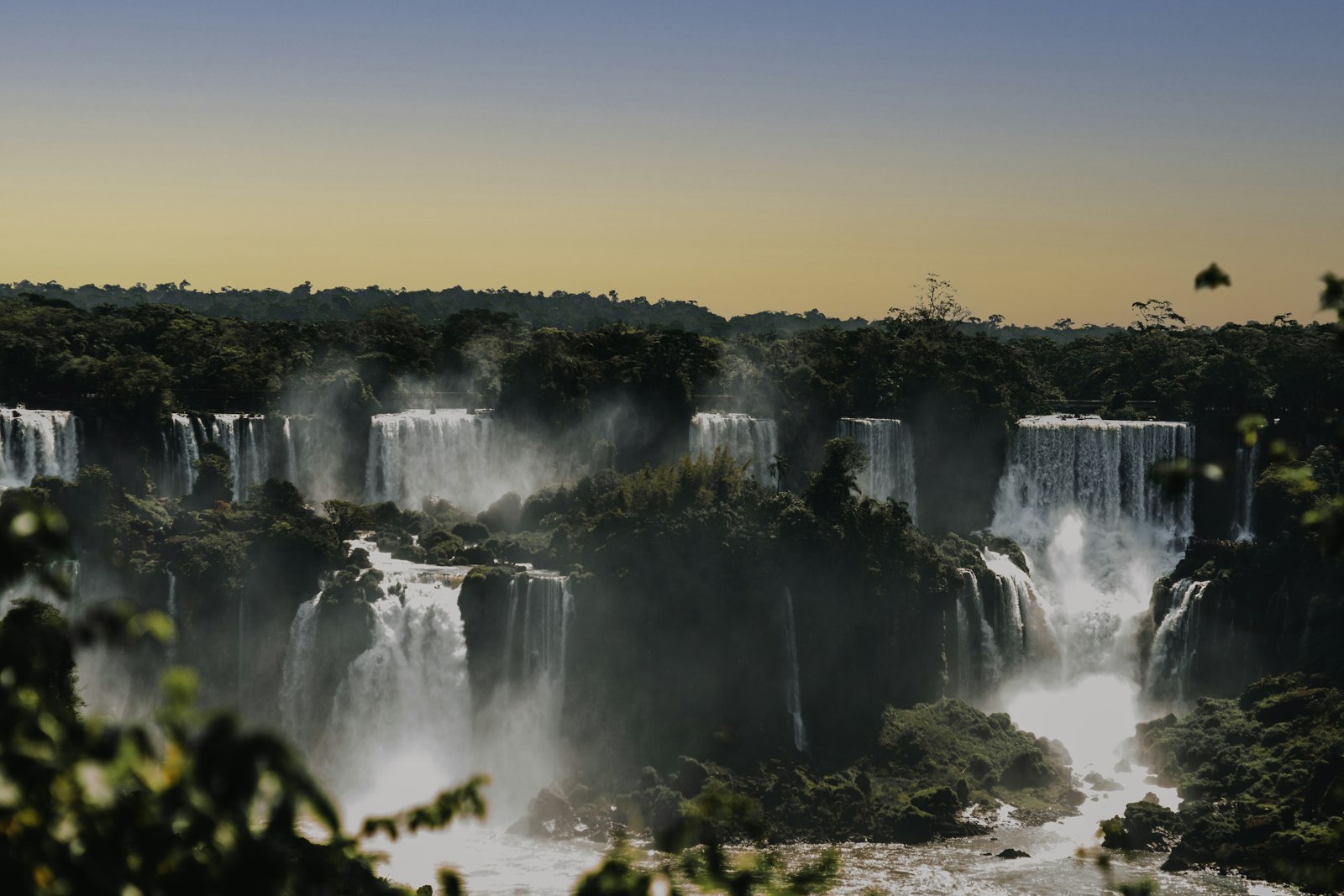
The thundering wall of waterfalls where Brazil and Argentina meet the jungle.
- Best time to visit: March-May and September-November (mild, fewer crowds)
- Daily budget (budget traveller): $50 to $120 USD
- Ideal trip length: 2 to 3 days
Iguazu Falls is one of the planet's great natural wonders, a sprawling system of around 275 cascades stretching nearly three kilometres along the border of Brazil and Argentina, set in lush subtropical rainforest alive with toucans, coatis and butterflies. The sheer scale, the spray, the roar and the rainbows, dwarfs Niagara and leaves visitors speechless. Each country offers a different perspective: panoramic from Brazil (Foz do Iguaçu), up-close and immersive from Argentina (Puerto Iguazú). Joy Plus times both sides and the boat trips so you catch the falls at their most spectacular.
Iguazu is not one waterfall, it is about 275 of them strung along nearly three kilometres of cliff, with the Iguaçu River dumping itself into a canyon on the Brazil/Argentina border. The noise reaches you before the view does. Then you turn a corner on the trail and the spray hits your face, a rainbow sits across the gorge, and a coati is trying to unzip your bag. Plan for the water, but also for the rainforest around it. This is Atlantic Forest, and toucans, black vultures, giant butterflies and the occasional caiman come with the ticket.
The one decision that matters is how you split the two countries. Brazil gives you the panorama: a 1.2 km trail, a walkway out into the mist, a lift to the top, and you are done in 3 to 4 hours. Argentina gives you the immersion: upper and lower circuits, a jungle train, and the Garganta del Diablo (Devil's Throat), where about half the river drops into a U-shaped abyss under your feet. Foz do Iguaçu is the easier base, with the airport, the bus terminal and the best value beds. Puerto Iguazú is smaller, greener and cheaper for dinner. Crossing takes anywhere from 30 minutes to 2 hours at the Tancredo Neves bridge, so build that into your day.
Do it right and 3 days is plenty: Brazil first for the big picture, Argentina for two mornings (the second day of the Argentine ticket is discounted), and a slow afternoon for Parque das Aves or the Itaipu Dam. Go early, carry a poncho, and keep your passport in a zip bag. Prices in this guide are in Brazilian reais (R$) and rounded for 2026, with Argentine park costs given in pesos because they move often. Check the official park sites the week you travel, and check them again if it has rained hard, because the Devil's Throat walkway closes when the river runs too high.
How many days in Iguazu Falls?
For Iguazu Falls, we recommend 2 to 3 days. With more time, add a day trip to Ciudad del Este and Saltos del Monday.
| Trip length | What you'll see | Itinerary |
|---|---|---|
| 2 days · Recommended | Foz, sunset at the triple border; Brazilian side and the bird park | Iguazu Falls in 2 days |
| 3 days · Recommended | Adds: Macuco Safari and Itaipu | Iguazu Falls in 3 days |
| 4 days | Adds: Cross to Argentina, Devil's Throat and the circuits | Iguazu Falls in 4 days |
| 5 days | Adds: Argentine side, second day | Iguazu Falls in 5 days |
| 7 days | Adds: Paraguay in a half day (or San Ignacio Miní); Temple | Iguazu Falls in 7 days |
Iguazu Falls itinerary
Arrive in Foz, sunset at the triple border
Morning: Land at Cataratas International (IGU). Take Uber or 99 into town (R$ 45-70) or bus 120 (about R$ 6) toward the downtown TTU terminal. Drop bags at your hostel or pousada.
Afternoon: Coffee and a pastel de queijo at a lanchonete on Avenida Brasil, then a slow walk to orient yourself. Rest up, the next three days are early starts.
Evening: Taxi or Uber to the Marco das Três Fronteiras for sunset over the Paraná and Iguaçu confluence, where Brazil, Argentina and Paraguay meet. Dinner at a por quilo place in the centre, early bed.
Brazilian side and the bird park
Morning: Be at the Parque Nacional do Iguaçu gate for the 9am open. Ride the double-decker bus to the Trilha das Cataratas, walk the 1.2 km trail to Salto Floriano, then out onto the walkway that puts you in the spray. Take the lift up at the end.
Afternoon: Lunch at Porto Canoas inside the park, then the short drive back to Parque das Aves next to the gate. Walk through the walk-in aviaries with toucans, scarlet ibis and macaws.
Evening: Dinner at Rafain Churrascaria Show: unlimited grilled meats and a Latin American dance performance. Book ahead and ask for the show seating.
Macuco Safari and Itaipu
Morning: Macuco Safari at 9am: an electric jeep through the forest, a short walk, and a boat that takes you right under Salto Três Mosqueteiros. You will be soaked.
Afternoon: Hotel or lunch, dry off, then the Itaipu Dam Panoramic Tour (from about R$ 40). Book online, bring your passport and closed shoes.
Evening: Back to the Marco das Três Fronteiras for the evening show, then a caipirinha on Avenida Jorge Schimmelpfeng.
Cross to Argentina, Devil's Throat and the circuits
Morning: Catch the 7am international bus from Foz's TTU to Puerto Iguazú (R$ 20-30). Switch to the park bus (about ARS 12,000-15,000 return). Be at the gate for 8am, ride the Tren Ecológico de la Selva straight to the Garganta del Diablo, but check first that its walkway has reopened (it was taken down in August 2026).
Afternoon: Walk the Upper Circuit, then drop down to the Lower Circuit to the foot of Salto Bossetti. Have a sandwich from your bag, park food is expensive and coatis are persistent.
Evening: Late dinner at La Rueda 1975 or Cabeza de Vaca in Puerto Iguazú (parrilla, red wine, huge portions). Take the last bus back to Foz.
Argentine side, second day
Morning: Show your day-one stamp for the discounted second-day ticket. Walk the Sendero Macuco forest trail to Salto Arrechea, the best wildlife chance of the trip.
Afternoon: Gran Aventura boat tour: truck through the jungle, then a speedboat beneath the falls. Book at the park, it often sells out by midday.
Evening: Sunset at the Hito Tres Fronteras in Puerto Iguazú, then dinner at Aqva on Avenida Tres Fronteras. Bus back to Foz.
Paraguay in a half day (or San Ignacio Miní)
Morning: Cross the Ponte da Amizade by taxi or bus to Saltos del Monday near Ciudad del Este, a smaller and rarely crowded waterfall. Entry is a few thousand guaraníes.
Afternoon: Ciudad del Este for electronics and bargains, but stay in the main shopping streets and leave by 4pm. Longer option: swap this day for San Ignacio Miní, the Jesuit ruins, which is a full day.
Evening: Back in Foz. Rest, laundry, and a quiet dinner in the centre.
Slow morning, temple, depart
Morning: Sleep in. Breakfast with pão de queijo and Brazilian coffee, then visit the Chen Tien Buddhist Temple, a calm, free stop in the city.
Afternoon: Last lunch por quilo, buy souvenirs, then Uber or bus 120 to IGU. Arrive 2 hours before a domestic flight, 3 for international.
Evening: Fly home or onward. If your flight is late, leave your bags at the hotel and take one last walk on Avenida Brasil.
Best neighbourhoods
- Foz do Iguaçu (Brazil): The Brazilian gateway city with hotels, restaurants and access to the panoramic falls views.
- Puerto Iguazú (Argentina): The smaller, relaxed Argentine town near the immersive trails and Devil's Throat.
- Brazilian National Park: The forested park offering sweeping panoramas and the famous walkway into the spray.
- Argentine National Park: The larger park with extensive trails, walkways and the Devil's Throat lookout.
- Tres Fronteras: The viewpoint marking the triple border of Brazil, Argentina and Paraguay.
Must-do experiences
- Walk the Brazilian side: Take in the sweeping panoramas and the walkway out into the spray of the falls.
- Explore the Argentine trails: Wander the upper and lower circuits for close-up cascade views.
- Stand at the Devil's Throat: See the U-shaped abyss where the most powerful waters plunge together. The Argentine walkway over it has been closed since 3 August 2026, taken down as a precaution against forecast floods, with no reopening date, so for now the view is from the Brazilian side.
- Take a speedboat under the falls: Get drenched on the thrilling Macuco Safari or Gran Aventura boat ride.
- Spot rainforest wildlife: Watch for toucans, coatis, monkeys and butterflies along the park trails.
- Visit the triple border: See where Brazil, Argentina and Paraguay meet at the Tres Fronteras landmark.
Hidden gems
- The Parque das Aves bird sanctuary on the Brazilian side, full of toucans and macaws.
- Sunrise or early-entry visits before the tour buses arrive.
- Moonlight 'full-moon walks' to the Argentine falls on select nights, when the Devil's Throat walkway is open.
- The lesser-visited Itaipu Dam tour near Foz do Iguaçu.
Daily budget
- Accommodation: budget R$ 70-120 / night (hostel dorm), mid-range R$ 350-600 (pousada or 4-star double), splurge R$ 2,800+ (Belmond Hotel das Cataratas). Foz do Iguaçu is cheaper than Puerto Iguazú for the same quality. The Belmond is the only hotel inside the Brazilian park, with falls views from the terrace.
- Food: budget R$ 60-90 / day (prato feito, pastel, por quilo), mid-range R$ 150-250 (one churrascaria rodízio), splurge R$ 450+ (Rafain show dinner or Belmond tasting menu). Por quilo (pay by weight) lunches at R$ 70-100 per kg are the hack. In Argentina, a parrilla for two at La Rueda 1975 will run about ARS 60,000-90,000.
- Transport: budget R$ 25-40 / day (city buses, park shuttles), mid-range R$ 80-150 (Uber/99 plus one border taxi), splurge R$ 600-900 (private driver for both sides). The Foz city bus (line 120) is about R$ 6 each way. The international bus to Puerto Iguazú is about R$ 25. Inside both parks, shuttles and the Argentine train are included in your ticket.
- Activities: budget R$ 130-150 / day (one park ticket), mid-range R$ 350-600 (park plus Macuco Safari or Parque das Aves), splurge R$ 1,300+ (helicopter flight, boat and both parks). Brazilian park is about R$ 130. Argentine park is roughly ARS 60,000-75,000 for foreigners, and the second consecutive day is discounted. Helicopter over the falls is about R$ 1,000 for 10 minutes.
- Drinks & nightlife: budget R$ 25 (two caipirinhas or beers), mid-range R$ 80-120 (craft beer and cocktails), splurge R$ 250+ (Belmond bar, wine pairing). Foz is quiet after 10pm. Caipirinhas are R$ 20-28, a long-neck beer R$ 12-18. In Puerto Iguazú, Fernet con Coca is the local drink.
Where to stay
- Social hostel in Centro, Foz do Iguaçu (R$ 70-130 / night): Paudimar Falls has a pool, mixed dorms and private rooms, shared kitchen and tour desk. 10 minutes by Uber to the bus terminal, easy to meet other travellers.
- Boutique hotel in Centro, Foz do Iguaçu (R$ 350-600 / night): Pousada Evelina Navarrete is a small, garden-filled guesthouse with a pool and a proper breakfast, a short ride from the bus terminal and Avenida Brasil.
- Apartment in Vila Yolanda, Foz do Iguaçu (R$ 220-400 / night): Quiet residential area between town and the Cataratas road, close to Parque das Aves. A furnished flat with a kitchen suits a 4+ night stay and saves on restaurants.
- Splurge in Inside the Brazilian National Park (R$ 2,800-5,000 / night): Belmond Hotel das Cataratas, a pink colonial hotel steps from the walkway. You get the falls without the crowds at dawn and dusk, and a pool in the trees.
What to eat
- Brazilian churrasco (all-you-can-eat grilled meats)
- Argentine asado and empanadas across the border
- Fresh river fish like surubí and dorado
- Chipa, the cheesy cassava bread popular in the border region
Day trips
- Itaipu Dam (20 min by car from Foz): One of the world's largest hydroelectric plants, shared by Brazil and Paraguay. The panoramic tour takes you over the spillway and shows the scale. Great for a rainy afternoon. Uber or 99 from the centre is R$ 30-50. Book the Panoramic Tour (from about R$ 40) online at Itaipu Binacional. Bring your passport.
- Ciudad del Este and Saltos del Monday (30 min across the Friendship Bridge): Paraguay's duty-free shopping city, plus the Saltos del Monday waterfall, a smaller, quieter cascade. A fast, cheap way to tick a third country. Taxi or local bus from Foz to the Ponte da Amizade, then taxi in Paraguay. Go in daylight and leave before dark. Many nationalities need to show their passport.
- San Ignacio Miní (4 hours by bus from Puerto Iguazú): UNESCO-listed Jesuit-Guaraní ruins in red sandstone, with a small museum and a light show at night. Better as an overnight, but doable as a very long day. Direct bus from Puerto Iguazú bus terminal, about ARS 20,000-30,000 each way. Or a guided tour from your hotel.
When to visit
- Autumn (March - May): 20-28°C, lower humidity, short afternoon showers. Crowds: Moderate, quiet outside Easter week. The sweet spot. Comfortable hiking temperatures and strong water flow. Avoid Semana Santa (Easter week), when Brazilian and Argentine families fill both parks.
- Winter (June - August): 10-22°C, cool mornings, mostly dry, nights can drop to 5-8°C. Crowds: Light, except the July school holidays. The locals' pick for walking. No sweat, clear skies and green forest. Skip the first three weeks of July when Brazilian school holidays send tour buses to the gates.
- Spring (September - November): 22-32°C, warming fast, thunderstorms by November. Crowds: Moderate, building toward the October holidays. Great light, butterflies everywhere, and the river often at its most photogenic. Book boat tours ahead for October long weekends.
- Summer (December - February): 30-38°C, very humid, violent afternoon storms. Crowds: Heavy, peak over Christmas, New Year and Carnival. Highest water and the loudest falls, but also heat, queues and the risk that the Devil's Throat walkway closes after heavy rain. Go at opening and finish by 1pm.
Entry rules for your passport
Visa rules for Brazil depend on the passport you travel on. Check the official source before you book: Brazil Ministry of Foreign Affairs
Getting there
Two airports serve the falls. Cataratas International (IGU) in Foz is about 15 km from the centre, with domestic flights from São Paulo, Rio, Curitiba and Brasília, and a few international routes. Cataratas del Iguazú (IGR) in Argentina is 20 km from Puerto Iguazú, with most flights from Buenos Aires Aeroparque. From IGU, bus 120 runs along the Cataratas road to the downtown TTU for about R$ 6, and an Uber or 99 to the centre is R$ 45-70. Long-distance buses to Foz are cheap but slow: about 10 hours from Curitiba and 16 from São Paulo, and about 18 hours from Buenos Aires to Puerto Iguazú. Visas matter: Brazil now requires an e-visa for US, Canadian and Australian citizens, even for a day visit to the Brazilian side, while EU, UK and US citizens need no visa for Argentina, so check both a month before. Bring your passport, not a copy, for every border crossing and park entry.
Getting around
The two sides of the falls sit in different countries, so getting around means crossing the international border, which most nationalities can do easily with a passport (check visa rules in advance). Local buses run between Foz do Iguaçu, Puerto Iguazú and both park entrances, but they can be slow and infrequent; taxis, ride apps and organised tours are far more convenient for hopping between sides and the airports. Within each park, free shuttle buses and a panoramic train (on the Argentine side) carry visitors between trailheads. A hired driver or tour for the full falls experience saves time and removes the border hassle.
Safety
The Iguazu region is generally safe and very tourist-oriented, but take standard precautions. Secure valuables and watch for the cheeky coatis, which raid bags and bite if you feed them, so never offer food. On the boat trips and walkways you will get soaked, so protect phones and cameras in waterproof cases. The border area sees some smuggling activity, but tourists sticking to the parks and main towns are rarely affected; avoid crossing into Ciudad del Este (Paraguay) casually after dark. Use registered taxis or tours for border crossings, stay hydrated in the heat, and follow park rules on the slippery walkways.
Solo travel tips
- Beat the crowds, not the clock: Both parks fill by 10:30am. Argentina opens at 8am, Brazil at 9am. Go straight to the Devil's Throat in Argentina (check its walkway has reopened), then work backwards through the lower circuits while the tour buses queue for the train.
- Hostel pick: Paudimar Falls (Foz) or Hostel Inn Iguazu (Puerto Iguazú): Both have pools and easy group chat for solos. Paudimar runs free caipirinha nights and shares tour prices. Ask at the desk to be put on the Macuco Safari or Gran Aventura sign-up sheet.
- Cross the border like a local: Use the international bus (R$ 20-30) from the TTU, keep your ticket, and get off at each immigration post. The bus does not always wait, but the next one takes you with the same ticket. Never use unofficial guys offering 'shortcut' taxis at the bridge.
- Book the boat as a single seat: Macuco Safari and Gran Aventura both sell single seats, and you share a boat with strangers. It is the fastest way to meet people. Get a waterproof pouch for your phone, there is no dry spot.
- Solo female travellers: Foz centre and Puerto Iguazú are used to women travelling alone. Standard rules: use Uber or 99 after dark, skip the empty streets near the bus terminal late at night, keep drinks in sight, and never walk back from the Marco das Três Fronteiras after the show.
- Join the full-moon walk: On clear nights near the full moon, when the Devil's Throat walkway is open, Argentina runs a guided walk to the Garganta del Diablo. It is a small group, no tour bus crowd, and the best way to share the falls with other solos. Book through the Argentine park website, it sells out days ahead.
Cultural etiquette
- Brazil speaks Portuguese, Argentina speaks Spanish. Do not mix them up. Obrigado (or obrigada) in Foz, gracias in Puerto Iguazú, and a smile helps in both.
- Brazilian restaurants usually add a 10% service charge (serviço) to the bill. In Argentina, tip about 10% in cash, it is not included.
- Rodízio (all-you-can-eat) uses a card: green side up means more meat, red side up means stop. Do not take two cuts at once.
- Never feed the coatis. They bite, carry parasites, and the park fines people. Keep food zipped in your bag and eat in the designated areas.
- In Argentina, mate is shared. If someone passes you the gourd, drink it all, say gracias, and do not stir the bombilla. In Brazil, chimarrão is similar in the south.
- Lunch in Brazil is 11:30am to 2:30pm, dinner 7:30pm to 10pm. In Argentina, dinner starts at 9pm and runs late. Arrive earlier and you eat alone.
- Stay on boardwalks, do not climb railings, and do not fly drones. Park staff will stop you, and the cliffs are slippery.
Frequently asked questions
How many days do you need at Iguazu Falls?
Two to three days is ideal because the falls span two countries with separate parks. Plan half a day for the Brazilian side, which offers sweeping panoramic views and the dramatic walkway into the spray, and a full day for the larger Argentine side, with its extensive trails, the upper and lower circuits, and the Devil's Throat, if its walkway has reopened. A third day allows for a boat trip under the falls, the Parque das Aves bird park, or extras like the Itaipu Dam. Rushing both sides into one day is possible but leaves you exhausted and shortchanged.
Which side of Iguazu Falls is better, Brazil or Argentina?
Both are worth visiting, and they offer different experiences rather than one being clearly better. The Brazilian side (Foz do Iguaçu) gives you the big-picture panoramas, sweeping views of the entire falls system and a walkway that takes you out into the mist, perfect for photos and best done in half a day. The Argentine side (Puerto Iguazú) is more immersive, with hours of trails and walkways that bring you right up to individual cascades and the spectacular Devil's Throat lookout. If you have time, do both; if forced to choose one, Argentina offers more to explore. One caveat: the Argentine Devil's Throat walkway has been closed since August 2026, with no confirmed reopening date, so check its status before you choose.
When is the best time to visit Iguazu Falls?
The shoulder seasons of March-May (autumn) and September-November (spring) are ideal, offering mild temperatures, lower humidity and fewer crowds than the peak summer and holiday periods. Water flow is strong year-round but peaks in the wetter summer months (December-February), which are also hot, humid and busy. Winter (June-August) is cooler and pleasant for walking. Avoid major holidays when domestic crowds surge. Water levels can occasionally be very high (closing some walkways) or low, but the falls are spectacular in any season, so timing is more about comfort and crowds than the spectacle itself.
Do I need a visa or passport to see both sides of Iguazu?
Yes, because the falls straddle the Brazil-Argentina border, you'll cross an international frontier to see both sides, so a passport is essential. Most visitors, including EU, UK and US citizens, need no visa for Argentina. For Brazil, EU and UK citizens need none, but US, Canadian and Australian citizens need an e-visa, even for a day visit to the Brazilian side. When crossing for the day, carry your passport and get the entry/exit stamps as required. Organised tours and private drivers handle the logistics smoothly. Don't assume you can skip immigration just because it's a day trip.
Can you swim or take a boat at Iguazu Falls?
You can't swim at the falls themselves, the currents are far too powerful and dangerous, but the iconic experience is a speedboat ride that takes you right up under the cascades, soaking you completely. On the Argentine side this is the Gran Aventura, and on the Brazilian side the Macuco Safari; both are thrilling and highly recommended. Wear quick-dry clothes, bring a change, and protect your phone and camera in waterproof bags, as you will get drenched. These boat trips are one of the most exhilarating ways to feel the raw power of Iguazu up close.
What's the difference between Foz do Iguaçu and Puerto Iguazú?
Foz do Iguaçu is the larger Brazilian city on the falls, a bigger urban hub with more hotels and restaurants and access to the panoramic Brazilian side of the falls, plus attractions like the Itaipu Dam and Parque das Aves. Puerto Iguazú is the smaller, more laid-back Argentine town, closer to the immersive Argentine national park with its extensive trails and the Devil's Throat. Many travellers base themselves on one side and day-trip across the border to the other. Both make good bases; Brazil offers more amenities, Argentina a quieter, more relaxed feel.
Is Iguazu Falls good for solo travellers?
Yes, Iguazu is a straightforward and rewarding destination for solo travellers. The parks are safe, well-organised and very tourist-friendly, with clear trails, shuttle buses and plenty of guided tour options that make it easy to manage the two-country logistics and meet other travellers. Both gateway towns have hostels and a relaxed traveller scene. Solo female travellers generally feel comfortable with standard precautions. The main considerations are practical, carrying your passport for the border, protecting valuables on the boat trips, and arranging transport between the sides, all of which are simple to handle independently or via day tours.
Do I need a visa for Brazil?
Citizens of the EU and the UK can enter Brazil visa-free for up to 90 days in any 180-day period. Citizens of the US, Canada and Australia have needed an e-visa since 10 April 2025, applied for online before travel for US$80.90. Check current requirements before you book, as rules can change.
Tours and activities in Iguazu Falls | Iguazu Falls in 2 days | Iguazu Falls in 3 days | Iguazu Falls in 4 days | Iguazu Falls in 5 days | Iguazu Falls in 7 days
Joy Plus home | Destinations | Itineraries | Activities | Flights | Budget planner | Calendar | Map | Blog | Lifetime access