Destinations / Europe
Innsbruck, Austria travel guide
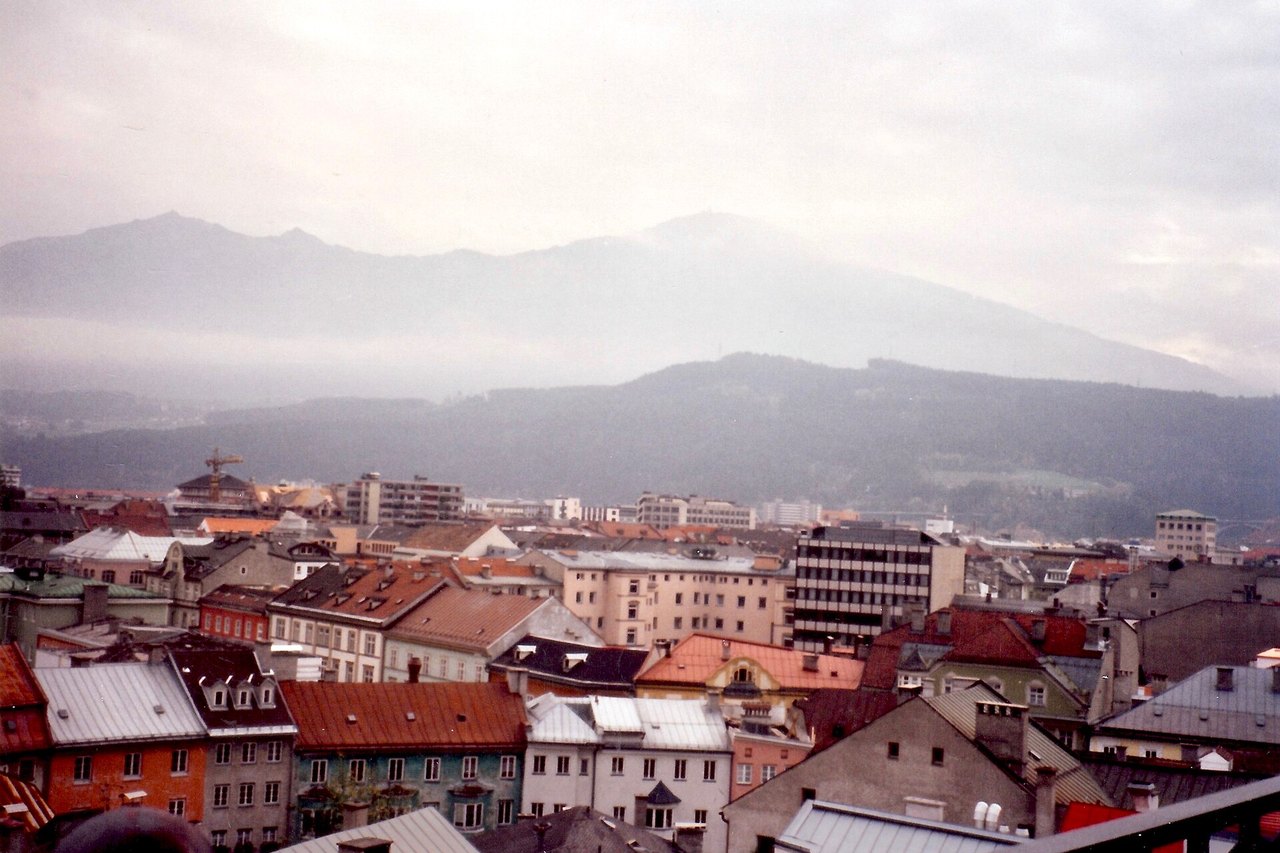
An alpine city where imperial Habsburg palaces sit beneath sheer mountain peaks you can reach by cable car.
- Best time to visit: June-September (hiking) or December-March (skiing)
- Daily budget (budget traveller): $90 to $150 USD
- Ideal trip length: 3 to 4 days
Innsbruck is Austria's alpine capital: a colourful medieval old town, Habsburg palaces, and the Nordkette mountains rising so close you can be on a summit an hour after leaving your hotel. It's a city for people who want culture and crag in the same day. Joy Plus times the cable cars, the palace visits, and the mountain huts so you get both without the queues.
Innsbruck is the rare capital where the skyline is a mountain range. The Nordkette wall rises directly behind the pastel Altstadt, and the Zaha Hadid-designed Hungerburgbahn funicular leaves from a station a ten-minute walk from the Goldenes Dachl, the 2,657 gilded copper tiles Maximilian I had fitted above a balcony in 1500 so he could watch tournaments in comfort. Within the hour you can be at 1,905m on the Seegrube terrace with a Kaspressknödelsuppe, or at 2,256m on Hafelekar with the Karwendel range laid out below. The city hosted the Winter Olympics in 1964 and 1976, and it still behaves like a ski town that happens to own a Habsburg court.
It is compact and it is not cheap, closer to Salzburg than Vienna. A half-litre of beer is about €4.50 to €5.50, a Gröstl about €15 to €19, and the Nordkette return is roughly €40. The trick is to let the sky run your plan. Clear mornings go to the mountain, because cloud builds around the peaks by early afternoon. Grey or wet days go to the Hofburg, the Hofkirche, Swarovski Kristallwelten and a long Kaffee und Kuchen at Café Munding. Watch for the Föhn, the warm southern wind that makes the peaks look close enough to touch and gives half the city a headache. And remember that Austrian shops close on Sundays.
Innsbruck suits people who want a city break and a proper mountain day in the same trip, without hiring a car. Munich is under two hours by train, so it works as a long weekend, but 4 to 5 days lets you do Hall in Tirol, the Stubai Valley and a mountain hut lunch without rushing. Locals take the cable car after work and ski the Nordkette until the last descent. In summer you can copy them: go up late, drink something cold at Seegrube, and watch the valley lights come on. Check last-ride times, which shift by season.
How many days in Innsbruck?
For Innsbruck, we recommend 3 to 4 days.
| Trip length | What you'll see | Itinerary |
|---|---|---|
| 2 days | Altstadt and the Golden Roof; Nordkette to Hafelekar | Innsbruck in 2 days |
| 3 days · Recommended | Adds: Imperial Innsbruck and Bergisel | Innsbruck in 3 days |
| 4 days · Recommended | Adds: Swarovski Kristallwelten and Hall in Tirol | Innsbruck in 4 days |
| 5 days | Adds: Stubai Valley and alpine lakes | Innsbruck in 5 days |
| 7 days | Adds: Mountain hut day and Wilten; Ambras | Innsbruck in 7 days |
Innsbruck itinerary
Arrive, Altstadt and the Golden Roof
Morning: Land at INN, bus F to the centre, or take the train from Munich to Hauptbahnhof. Drop bags and have a coffee and Apfelstrudel at Café Munding (Kiebachgasse 16).
Afternoon: Walk Herzog-Friedrich-Straße to the Goldenes Dachl. Climb the Stadtturm (about 150 steps) for the first mountain view. Wander Maria-Theresien-Straße to the Annasäule.
Evening: Dinner at Gasthaus Weisses Rössl (Kiebachgasse 8), order the Tiroler Gröstl. One beer at Bierstindl. Early bed, tomorrow's a clear-sky day.
Nordkette to Hafelekar
Morning: Ride the Hungerburgbahn from Congress station, then up to Seegrube and Hafelekar on the first cars (check seasonal first ride, around 8:00 to 9:00). Walk the short summit loop at 2,256m.
Afternoon: Lunch at Restaurant Seegrube (Kaspressknödelsuppe, Gröstl). Ride down, or walk down towards Hungerburg.
Evening: Dinner at Weinhaus Happ (Herzog-Friedrich-Straße 14), terrace opposite the Goldenes Dachl. Reserve ahead in summer.
Imperial Innsbruck and Bergisel
Morning: Hofburg at 9:00 opening, then the Hofkirche for Maximilian's tomb and the 28 bronze 'Black Men'. Walk through the Hofgarten.
Afternoon: Quick lunch at the Markthalle (Mon-Fri to 18:30, Sat to 13:00). Tram 1 to Bergisel: ski jump tower for views, then the Tirol Panorama next door.
Evening: Dinner at Gasthof Goldener Adler (Herzog-Friedrich-Straße 6), then live music or a beer at Treibhaus (Angerzellgasse 8).
Swarovski Kristallwelten and Hall in Tirol
Morning: Bus from Hauptbahnhof towards Wattens (30-40 min). Swarovski Kristallwelten at 9:00 opening, start with the Chambers of Wonder and finish at the Giant fountain. Entry is around €24.
Afternoon: Onward by bus to Hall in Tirol (check the VVT app). Burg Hasegg mint and its tower, the Oberer Stadtplatz and the old salt-town lanes.
Evening: Train back to Innsbruck (about 10 min). Dinner at Ottoburg (Herzog-Friedrich-Straße 1), a Tyrolean menu inside a medieval tower.
Stubai Valley and alpine lakes
Morning: Stubaitalbahn tram from the city centre to Fulpmes (about 1 hour), then bus up the valley to the Stubai Glacier.
Afternoon: Ride up to Top of Tyrol (3,210m). Pack layers, it's cold even in July. Back down, swim in an alpine lake such as the Lanser See, just above the city.
Evening: Back to town. Sunset Radler in the Café Hofgarten beer garden (Rennweg 6a), then an easy dinner nearby.
Mountain hut day and Wilten
Morning: Hungerburgbahn to Hungerburg, then a 45-60 min walk to Arzler Alm. Kaspressknödel, Almkäse and a coffee on the terrace.
Afternoon: Walk back down or continue to Umbrüggler Alm. Visit the Wilten Basilica (rococo interior) and wander the residential streets.
Evening: Reservation at Lichtblick (Maria-Theresien-Straße 18, 7th floor) for sunset over the Nordkette.
Slow morning, Ambras, depart
Morning: Sleep in. Short bus or tram to Schloss Ambras (Renaissance castle, check seasonal hours) and its Kunst- und Wunderkammer.
Afternoon: Last Kaiserschmarrn at Café Sacher (Rennweg 1) or a final Apfelstrudel at Café Munding. Stock up on Zirbenschnaps and Speck.
Evening: Bus F to INN or an ÖBB railjet to Munich (about 1h50).
Best neighbourhoods
- Altstadt (Old Town): The medieval core: the Golden Roof, Hofburg, and the colourful Maria-Theresien-Straße.
- Wilten: The district south of the centre: the Wilten Basilica, the Bergisel ski jump, and a more local, residential feel.
- Hötting: The hillside above the old town: traditional houses, forest trails, and city views.
- Pradl: East of the centre: the Olympic ice stadium and Tivoli arena, with a residential, local feel.
- Arzl: A quiet northern district with access to the Nordkette foothills and local restaurants.
Must-do experiences
- Nordkette cable car to Hafelekar: From the city centre to 2,300m in about half an hour. Hiking trails, alpine views, and marmots.
- Altstadt and the Golden Roof: The Habsburg heart of the city: the Golden Roof, Hofburg, and baroque St James's Cathedral.
- Swarovski Crystal Worlds: A fantastical art-and-crystal experience in Wattens, 20 minutes by bus.
- Bergisel ski jump tower: Zaha Hadid's architectural masterpiece with a café and panoramic views.
Hidden gems
- The Hofgarten park at dawn, empty, with the mountains glowing behind the trees.
- A traditional Tyrolean meal at a mountain hut (Alm) reached by cable car and short walk.
- The Court Church (Hofkirche) and its row of giant bronze statues of Habsburg ancestors.
- A swim in an alpine lake such as the Lanser See, just above the city.
Daily budget
- Accommodation: budget €30-50 / night (hostel dorm), mid-range €130-200 (boutique double), splurge €320+ (Hotel Schwarzer Adler, Grand Hotel Europa). A small city tax is added per person per night. Many hotels give a guest card with free guided hikes in summer, so ask at check-in.
- Food: budget €25-35 / day (bakery, MPREIS supermarket, Markthalle), mid-range €55-85 (Gasthaus lunch and a proper dinner), splurge €120+ (tasting menu at Lichtblick or Weinhaus Happ). Gasthäuser run weekday Mittagsmenü deals at €11-15. MPREIS is the Tyrolean chain with decent hot counters.
- Transport: budget ~€6 / day (IVB 24h ticket), mid-range €10-20 (day ticket plus a regional train or bus), splurge €50+ (taxi transfers, private driver to the Stubai Glacier). Walk the Altstadt. Don't rent a car, parking is expensive and trams and buses cover the city.
- Activities: budget €10-25 / day (free walks, one museum or Hofgarten), mid-range €45-70 (Nordkette return about €40, plus the Hofburg), splurge €120+ (private guide, via ferrata, helicopter flight). Innsbruck Card starts around €50 for 24h and includes a Nordkette ascent, public transport, and most major sights. Worth it if you hit three or more.
- Drinks & nightlife: budget €8-12 (two beers or a Seidel and a Zirbenschnaps), mid-range €20-35 (Altstadt bar crawl), splurge €60+ (hotel rooftop cocktails, Seegrube sunset). Innsbruck is a student town. Wed and Thu are livelier than you'd expect, and the Altstadt quietens down by about midnight.
Where to stay
- Social hostel in Pradl / Reichenau (€30-50 / night): Jugendherberge Innsbruck on Reichenauer Strasse, ten minutes by tram to the Altstadt, shared kitchen, dorms and plenty of hikers.
- Boutique hotel in Altstadt (€150-240 / night): Hotel Weisses Kreuz (Herzog-Friedrich-Straße 31, over 500 years old, Mozart slept here) or Nala Individuellhotel (Müllerstraße), design-led and central.
- Apartment in Wilten or Hötting (€85-140 / night): Residential streets, bakery on the corner and a bus or tram to the centre. Best value for 4+ nights, and the balcony often has a Nordkette view.
- Splurge in Maria-Theresien-Straße / Kaiserjägerstraße (€320-520 / night): Hotel Schwarzer Adler (historic Tyrolean luxury, 5 minutes to the Altstadt) or Grand Hotel Europa (near the station), spa, fine dining and mountain views.
What to eat
- Tiroler Gröstl (pan-fried potato and meat hash)
- Kaiserschmarrn (shredded pancake with fruit compote)
- Speckknödel (bacon dumplings) in broth
- A glass of Austrian white wine or a Tyrolean schnapps
Day trips
- Hall in Tirol (10 min by train): Perfectly preserved medieval salt-and-silver town. Burg Hasegg mint (where the early thaler, and ultimately the word 'dollar', began), the Münzerturm tower and Oberer Stadtplatz cafés. Train or S-Bahn from Innsbruck Hbf, about €4 each way, or VVT bus. Covered by the Innsbruck Card in some zones, check before you buy.
- Stubai Valley (1h to Fulpmes, 1h30 to the glacier): Tram, bus, then glacier. Alpine meadows and the Top of Tyrol viewing platform at 3,210m. Stay overnight in Neustift if you want to hike. Stubaitalbahn tram from the city to Fulpmes (about €6 each way), then the regional bus up the valley to the glacier.
- Seefeld in Tirol (40 min by train): Olympic Nordic plateau with lakes, forest walks and the Rosshütte cable car. Take the scenic Mittenwaldbahn along the cliffs. Good rain-or-shine pick, or add Leutasch Gorge. Train from Innsbruck Hbf, around €8-10 each way, roughly hourly. The village is 10 minutes' walk from the station.
When to visit
- Spring (April - May): 8-18°C in town, snow still above 1,800m, frequent showers. Crowds: Low. Quiet and cheap, but a shoulder season. Many high trails and huts stay shut, so stick to the old town, museums and valley walks.
- Summer (June - August): 20-27°C, afternoon thunderstorms common, 5-12°C at Hafelekar. Crowds: Heavy in July and August. Prime hiking, alpine lakes and every hut open. Go up early, be off ridges by 2pm when storms build.
- Autumn (September - October): 8-20°C, crisp, clear, golden larches. Crowds: Moderate, thinning fast in October. The locals' pick. Stable weather, cattle-drive festivals (Almabtrieb) in September, lower prices and empty trails.
- Winter (November - March): -5 to 3°C, snow on the mountains and often in town. Crowds: Heavy at Christmas and February half-term, dead in November. Christmas markets, ski lifts on the Nordkette and Stubai Glacier. Skip early November, when huts close and the weather turns muddy and grey.
Entry rules for your passport
Visa rules for Austria depend on the passport you travel on. Check the official source before you book: European Commission: Schengen visa policy
Getting there
Innsbruck airport (INN) is 4km west of the centre, with seasonal flights from London, Amsterdam, Frankfurt, Vienna and Zurich, and many more in winter. IVB bus F runs to Marktplatz and the Hauptbahnhof roughly every 10 to 20 minutes, about 20 minutes and around €3.50 a ticket. A taxi to the Altstadt is €15-20. Most visitors arrive by train: Munich Hbf to Innsbruck Hbf is about 1h50 on the ÖBB Railjet, with Sparschiene fares from about €20 booked a few weeks ahead on the ÖBB app. Salzburg is about 1h45, Zurich about 3h30, Verona about 3h via the Brenner, Vienna about 4h45. FlixBus from Munich is €10-20 but slower. The Hauptbahnhof is a 10 minute walk from the Altstadt.
Border checks: non-EU visitors (other than Swiss, Norwegian, Icelandic, Liechtenstein, Andorran, Monegasque, San Marinese and Vatican citizens, and holders of an EU residence permit or long-stay visa) are registered in the EU's Entry/Exit System (EES) instead of getting a passport stamp. On your first crossing, officers take your photo and/or fingerprints, so allow extra time at passport control. ETIAS, the planned travel authorisation, is not in operation yet, so don't pay any website for one.
Getting around
Innsbruck's old town is small and entirely walkable. The Nordkette cable car starts from the city centre. Buses and trams cover the wider area efficiently. For the Stubai Valley, Swarovski, and Hall in Tirol, regional buses or a rental car work best. The train station connects to Munich, Salzburg, and the rest of Austria.
Safety
Innsbruck is very safe, with low crime and a welcoming atmosphere. Mountain activities require proper preparation: check weather, wear sturdy shoes, carry layers, and don't attempt high trails without experience. Summer thunderstorms can form quickly in the Alps.
Solo travel tips
- Share the table, it's normal: In a Gasthaus, asking 'Ist hier noch frei?' to join a long table is standard. The Markthalle is also easy for solos: stand-up counters, no awkward silence, and you'll chat with locals buying cheese.
- Get the hotel guest card: Many Innsbruck hotels and pensions issue a visitor card that includes free guided mountain hikes in summer (book at the tourist office the day before). It's the easiest way to meet other solos without paying a guide.
- Hostel pick: Jugendherberge Innsbruck: Reichenauer Strasse 147, about ten minutes by tram from the Altstadt. Shared kitchen, dorms and plenty of hikers swapping route tips. Quieter than a party hostel, which suits the early starts.
- Tell someone before you go up: Download an offline map (Komoot or Bergfex), tell your host your route and turn-back time, and know the Alpine emergency number: 140 (or 112). Weather can swing 10°C in an hour above 2,000m.
- Solo female travellers: Innsbruck is among the safest cities in Austria. Standard rules apply: watch your drink, use the IVB night buses on weekends, and keep to marked trails in daylight. Hbf is busy but fine at night.
- Find your tribe at the climbing gym or on a via ferrata: The Kletterzentrum Innsbruck is full of solos looking for partners, and guided half-day via ferrata or canyoning trips usually pair strangers. Treibhaus has live music and a relaxed garden for conversation.
Cultural etiquette
- Say 'Grüß Gott' when entering shops, cafés and mountain huts. It's the default Tyrolean greeting and the silence otherwise is noticed. Use 'Servus' with younger locals and hikers on trails.
- Tipping is 5-10%, not 20%. Round up and tell the server the total when you pay ('Stimmt so'). Don't leave coins on the table.
- Tap water is excellent. Ask for 'Leitungswasser' in restaurants, it's usually free or very cheap, and mountain fountains are safe to refill from.
- Shops close on Sundays and many Gasthäuser take a Ruhetag (rest day), often Monday or Tuesday. The Hauptbahnhof supermarket is the exception.
- On trails, uphill walkers have right of way. Close pasture gates behind you, keep dogs on a leash and never walk between a cow and her calf (Mutterkuh warnings are serious).
- Eye contact and 'Prost' when clinking glasses, especially with Zirbenschnaps (stone-pine liqueur). It's rude to look away.
- Don't cross on red even if the road is empty. Locals wait, and children are watching.
Frequently asked questions
How many days do you need in Innsbruck?
Three to four days covers the old town, the Nordkette, a mountain hut lunch, Swarovski, and a day trip to Hall in Tirol or the Stubai Valley.
Is Innsbruck good for solo travellers?
Yes. It's safe, compact, and English is widely spoken. Group cable-car trips and mountain hut dining make the alpine experience accessible alone.
When is the best time to visit Innsbruck?
June to September for hiking, alpine lakes, and long days. December to March for skiing, Christmas markets, and the full winter Alpine experience.
How much does a trip to Innsbruck cost?
Budget around $90 to $150 USD per person per day, covering a hostel bed or simple room, local transport, two or three meals out and an activity or entry ticket. You can go lower with markets and free walking tours, or far higher with boutique hotels and private guides.
What should I eat in Innsbruck?
Start with Tiroler Gröstl (pan-fried potato and meat hash), Kaiserschmarrn (shredded pancake with fruit compote), Speckknödel (bacon dumplings) in broth. Eating where locals queue is the simplest rule, and markets are usually the cheapest and best introduction to the food in Innsbruck.
How much does a solo trip to Innsbruck cost?
Budget on roughly $90-$150 USD per day in Innsbruck as a solo traveller. That covers a hostel bed or simple room, local food, getting around and a couple of paid sights. Mid-range comfort with private rooms, sit-down dinners and the odd tour runs closer to double, while shoestring travellers who cook and stick to street food can come in under it.
Is Innsbruck safe for solo female travellers?
Innsbruck is generally a comfortable place to travel solo, including for women, as long as you use normal city sense. Innsbruck is very safe, with low crime and a welcoming atmosphere. Mountain activities require proper preparation: check weather, wear sturdy shoes, carry layers, and don't attempt high trails without experience. Summer thunderstorms can form quickly in the Alps.
How do you get around Innsbruck?
Innsbruck's old town is small and entirely walkable. The Nordkette cable car starts from the city centre. Buses and trams cover the wider area efficiently. For the Stubai Valley, Swarovski, and Hall in Tirol, regional buses or a rental car work best. The train station connects to Munich, Salzburg, and the rest of Austria.
Tours and activities in Innsbruck | Innsbruck in 2 days | Innsbruck in 3 days | Innsbruck in 4 days | Innsbruck in 5 days | Innsbruck in 7 days
Can't decide? Compare Innsbruck with...
Joy Plus home | Destinations | Itineraries | Activities | Flights | Budget planner | Calendar | Map | Blog | Lifetime access