Destinations / Asia
Jiufen, Taiwan travel guide
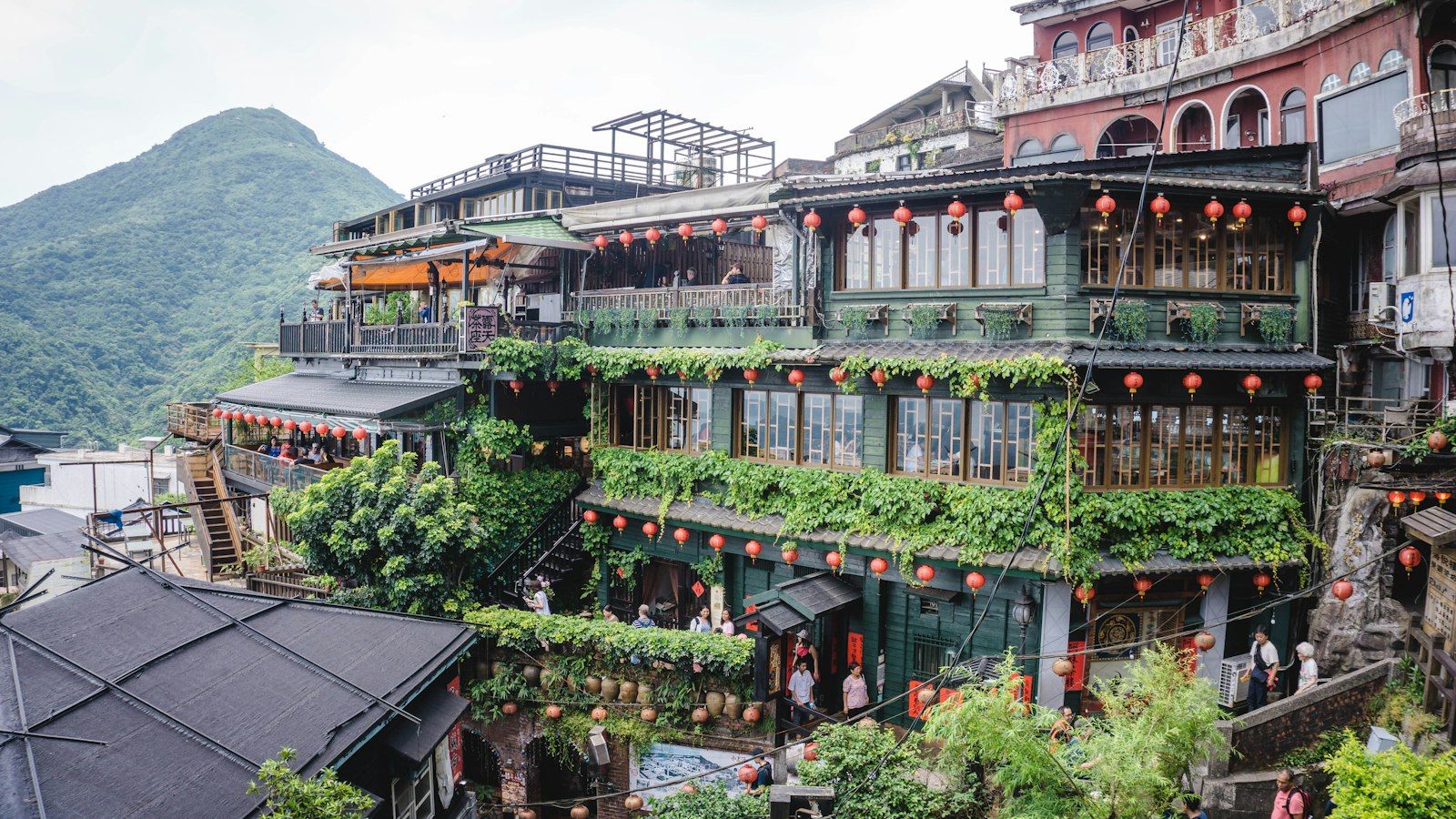
A former gold-rush town on a steep hillside above the Pacific, with lantern-lit stairways, old teahouses, mining ruins and some of northern Taiwan's best short hikes.
- Best time to visit: March to May and October to November
- Daily budget (budget traveller): $50 to $170 USD
- Ideal trip length: 3 to 7 days
Jiufen sits on the side of Keelung Mountain in New Taipei's Ruifang District, roughly an hour from Taipei by bus. Gold built the town in the late 1800s, and when the mines closed it nearly emptied. Film crews and teahouse owners brought it back. Most visitors arrive on a day trip, squeeze along Jishan Street (the Old Street), photograph the A-Mei Tea House and leave on a crowded bus. The solo traveller who stays the night gets a different town. The day-trippers have gone by about 8pm, the red lanterns glow over the Shuqi Road steps, and in the early morning you have the alleys mostly to yourself. Stay a few days and Jiufen works as a cheap, easy base for the whole northeast corner. Next door is Jinguashi, where the Gold Museum sits among old Japanese-era mine buildings and the Teapot Mountain trail starts. Below on the coast you get the Yin Yang Sea and the Golden Waterfall, and down in the valley the Pingxi Line runs past Houtong cat village and Shifen. It rains often, especially in winter, but the mist suits the place. Taiwan is one of the safest countries in Asia for travelling alone.
Jiufen began as a village of nine families, which is where the name comes from, and became a gold-rush boom town after gold was found in the 1890s. Under Japanese rule the mines at Jiufen and neighbouring Jinguashi were some of the richest in Asia. When they closed in the 1970s the town faded. It came back on the strength of film. Hou Hsiao-hsien's A City of Sadness was shot here in 1989, and the long-running rumour of a Spirited Away connection turned it into one of Taiwan's most-visited day trips. Today Jishan Street is a covered lane of snack stalls, Shuqi Road is a lantern-hung stairway, and the A-Mei Tea House is on every phone. None of this is a secret, but the crowds follow a strict timetable. That is good news for anyone willing to stay the night.
The solo plan is simple. Base yourself in Jiufen, ideally within five minutes' walk of the 7-Eleven bus stop, and do the Old Street at its quiet ends: after dark and before 9am. Spend the middle of the day away from it, at the Gold Museum in Jinguashi, on the Teapot Mountain ridge, on the Pingxi Line or down at the Golden Waterfall. Transport is cheap and simple. The direct 1062 bus from Taipei costs about NT$105, local buses down to Ruifang station cost very little on an EasyCard, and a Pingxi Line day pass is NT$80. A dorm bed costs roughly NT$500 to NT$700 and a bowl of taro balls is pocket change, so a careful solo traveller can do Jiufen on NT$1,600 to NT$2,400 a day.
Weather decides the rhythm. Jiufen faces the northeast monsoon, and from roughly November to March drizzle and fog roll in for days at a time. The town still looks good in it, but the hiking views disappear. Spring and autumn are the best months for trails, while summer is hot, sticky and exposed to typhoons. The town also goes to bed early. Many stalls shut around 8pm, and the evening entertainment is a teahouse balcony or a bus to the Keelung night market. If you want clubs, stay in Taipei. If you want a hill town with a gold-mining past, a ridge walk and a pot of oolong on the same day, this is the place.
Jiufen itinerary
Up the hill to Jiufen, lanterns at dusk
Morning: From Taipei, take bus 1062 from beside Zhongxiao Fuxing MRT (about NT$105, around an hour in light traffic) and get off at Jiufen Old Street. Or take a TRA train to Ruifang and a 15-minute local bus up.
Afternoon: Drop bags near the 7-Eleven. Have lunch from the stalls at the far end of Jishan Street, then find a quiet café on Qingbian Road while the crowds peak.
Evening: Walk Shuqi Road as the lanterns light up, and photograph the A-Mei Tea House from the steps by Shengping Theatre. Fish ball soup for dinner before the stalls close.
Keelung Mountain sunrise, tea and taro balls
Morning: Head out before dawn for the steep stepped climb up Keelung Mountain (588m) for views over Jiufen, Keelung harbour and the coast. Allow about 1.5 to 2 hours return and turn back in fog.
Afternoon: Visit Shengping Theatre, Taiwan's oldest surviving cinema (check opening days). Then climb to A Gan Yi Taro Balls on Shuqi Road and eat them with the sea view.
Evening: A slow gongfu tea session at the Jiufen Teahouse or the A-Mei Tea House, then an empty Old Street on the walk home.
Jinguashi Gold Museum and Teapot Mountain
Morning: Bus five minutes to Jinguashi. The Gold Museum opens at 9:30am (NT$80; closes 5pm on weekdays and 6pm at weekends). See the gold bar, the Benshan Fifth Tunnel and the Japanese-era dormitories.
Afternoon: Walk Qitang Old Street and the rainbow staircase to Quanji Temple, fill your water bottle, and hike Teapot Mountain (about 1.5 to 2 hours return).
Evening: Bus back to Jiufen. Pick up caozai guo from Ah Lan on the Old Street and have an early night.
Pingxi Line: Houtong, Shifen and Jingtong
Morning: Bus down to Ruifang station and buy the NT$80 Pingxi Line day pass. First stop Houtong, the old coal-mining village now known for its cats.
Afternoon: Shifen Old Street, where trains pass between the shops, then walk to Shifen Waterfall (free). Release a sky lantern if you want to (about NT$200-250), then ride on to quiet Pingxi or Jingtong.
Evening: Train back to Ruifang and bus up to Jiufen. Check the last bus the day before, and look up Taiwan Railway notices if it has been raining heavily.
Golden Waterfall and the Yin Yang Sea
Morning: Bus to Jinguashi and walk downhill to the Golden Waterfall, about an hour there and back from the Gold Museum. A few buses also go down there.
Afternoon: Carry on to the Thirteen Levels smelter ruins and the Yin Yang Sea viewpoints. Look, but do not swim. Bus or walk back uphill.
Evening: Sunset from a Qingbian Road café, then a lantern-lit wander once the day-trippers have gone.
Keelung harbour and Miaokou Night Market
Morning: Take a bus to Keelung (around 40 to 60 minutes depending on traffic and route). Walk the harbour front and climb to Zhongzheng Park for city views.
Afternoon: Taxi or bus out to Heping Island Geopark for sea-eroded rocks and the coastal walk. Check the entry fee and opening hours on the day.
Evening: Graze through the Miaokou Night Market around Dianji Temple: tianbula fish cake, nutritious sandwiches, seafood soup. Check the last bus back to Jiufen, or budget for a taxi.
Slow morning, back to Taipei
Morning: Be on Shuqi Road at 8am for the stairs without the crowds. Have breakfast at a teahouse, or join the coffee queue at Hima if it is short.
Afternoon: Buy pineapple cakes and tea, then take bus 1062 or 965 back to Taipei. Leave before 2pm at weekends, when the queues get long.
Evening: Arrive in Taipei with time to spare, or head straight to the airport via Taipei Main Station.
Best neighbourhoods
- Jishan Street (Jiufen Old Street): The narrow covered lane of snack stalls, tea shops and souvenir counters that starts by the 7-Eleven near the bus stop. It is packed from late morning to late afternoon and quiet early and late. On My Way Jiufen Hostel and Box Inn Jiufen are a few minutes' walk away.
- Shuqi Road and Qingbian Road: The steep stone stairway that cuts down through Jishan Street is the classic lantern view, with the A-Mei Tea House and Shengping Theatre close by. Qingbian Road runs along the slope just below it, quieter and lined with sea-view B&Bs.
- Jinguashi: The quieter mining village five minutes further along the bus route, home to the Gold Museum, Japanese-era wooden dormitories, the Qitang Old Street staircase and the trailheads for Teapot Mountain. It is a good base if you would rather hike than shop.
- Ruifang: The working town at the bottom of the hill, with the railway station for Taipei trains and the Pingxi Line. Accommodation is cheaper and the bus up to Jiufen takes about 15 minutes, but evenings here are plain.
- Keelung (Miaokou area): The rainy port city a bus ride to the northwest, with a famous night market around Dianji Temple, a working harbour and the sea-eroded rocks of Heping Island. A useful half-day change from mountain-town life.
Must-do experiences
- Walk Jishan Street and Shuqi Road after dark: Wait for the tour buses to leave, then walk the Old Street and the Shuqi Road stairs as the red lanterns come on. The classic photo of the A-Mei Tea House is taken from the steps near Shengping Theatre.
- Sit down for tea with a view: Book a slow oolong session at the A-Mei Tea House or the Jiufen Teahouse. You brew the tea yourself at the table, and the balconies look over the town and down to the coast.
- Eat taro balls at A Gan Yi: Climb the stairs to A Gan Yi Taro Balls on Shuqi Road, near Jiufen Elementary School, for chewy taro and sweet potato balls, hot in soup or cold on shaved ice, with an ocean view. Lai Ah Po on Jishan Street is the rival.
- Explore the Gold Museum in Jinguashi: Walk the open-air mining park, touch the huge gold bar in the Gold Building, put on a hard hat for the Benshan Fifth Tunnel and wander the Japanese-era dormitories. General admission is NT$80.
- Hike Teapot Mountain: Start at Quanji Temple in Jinguashi and climb about 1.4km of steps and ridge path to the teapot-shaped rock, with views over the Yin Yang Sea and Keelung Mountain. Allow 1.5 to 2 hours return, and longer if you continue to Banping Mountain.
- Climb Keelung Mountain for sunrise or sunset: A steep, stepped trail climbs from the edge of Jiufen to the 588m summit, giving you the whole town, the harbour at Keelung and the north coast in one view. Go early on a clear morning and allow about 1.5 to 2 hours return.
- Ride the Pingxi Line: From Ruifang, ride the little branch line to Houtong cat village, Shifen Old Street and Shifen Waterfall, and on to quiet Pingxi and Jingtong. A one-day pass costs NT$80.
- See the Yin Yang Sea and Golden Waterfall: Walk or bus downhill from Jinguashi to the Golden Waterfall, stained orange by mineral run-off, then on to the two-tone bay of the Yin Yang Sea and the ruins of the Thirteen Levels smelter.
Hidden gems
- Keelung Mountain at dawn, when the summit is almost empty and you can watch the sun come up over the Pacific before the first bus arrives in town
- The ruins of the Jinguashi Shrine, a Japanese-era Shinto site reached by stone steps above the Gold Museum, with torii gates and views of the sea and Teapot Mountain
- Qitang Old Street in Jinguashi, a short lane of village houses with a painted rainbow staircase that leads up to Quanji Temple and the Teapot Mountain trail
- The Thirteen Levels (Shuinandong smelter ruins), a vast terraced concrete shell on the coast road that looks best from the roadside viewpoints in late afternoon light
- Jiufen's quieter teahouses and coffee shops on Qingbian Road and the lower lanes, where you can sit out a rain shower with a sea view and no queue
Daily budget
- Accommodation: budget NT$500-800 / night (dorm at On My Way Jiufen or Box Inn Jiufen), mid-range NT$2,500-4,000 (B&B double with a sea view), splurge NT$5,000-9,000+ (best-view rooms at Something Easy Inn or Windsor Han-Guan B&B). Weekend and holiday rates can jump sharply, so stay Sunday to Thursday if you can. Many B&Bs sit up or down long flights of stairs with no lift, so pack light. Check-in desks often close early in the evening.
- Food: budget NT$400-600 / day (Old Street snacks, noodle shops, 7-Eleven breakfast), mid-range NT$800-1,300 (teahouse session, sit-down dinner), splurge NT$2,000+ (seafood feast in Keelung, long tea-and-snack afternoon). Most Old Street snacks cost about NT$30 to NT$100. Many stalls close around 7 to 8pm, so eat dinner early or stock up at the convenience store.
- Transport: budget NT$60-250 / day (local buses on EasyCard, Pingxi Line pass NT$80), mid-range NT$400-900 (a few taxis, Ruifang to Jiufen about NT$200-250), splurge NT$3,000+ (private driver for a coast-and-Pingxi day). Bus 1062 from Zhongxiao Fuxing is about NT$105 and the 965 from Ximen about NT$90. Trains from Taipei to Ruifang cost roughly NT$49 to NT$76 depending on the class. Fares change, so check before travelling.
- Activities: budget NT$0-200 / day (free hikes, Gold Museum NT$80), mid-range NT$400-900 (teahouse session, Shifen sky lantern), splurge NT$2,000+ (guided Teapot Mountain hike, private tour). Most hikes, the Old Street, Shifen Waterfall and the coastal viewpoints are free. A sky lantern at Shifen is roughly NT$200 to NT$250. Teahouse prices vary, so check the menu and any per-person water charge.
- Drinks & nightlife: budget NT$50-150 (convenience-store Taiwan Beer, bubble tea), mid-range NT$300-600 (café coffee and cake with a view), splurge NT$1,000+ (cocktails back in Taipei). Jiufen has no real bar scene and goes quiet by about 9pm. A balcony, a tea set and the lantern view are the night out. Keelung's night market keeps going later.
Where to stay
- Social hostel in Jishan Street, Jiufen (NT$500-800 / night (dorm bed)): On My Way Jiufen Hostel is a short walk from the 7-Eleven bus stop and the Old Street, with a friendly common room that suits solo travellers. Box Inn Jiufen on Jishan Street is a calmer capsule-style alternative.
- Boutique hotel in Old Street and Qingbian Road, Jiufen (NT$2,500-4,000 / night): Small B&Bs such as Chiu Chunt Dint Inn on the Old Street, or The Ore Easy Stay at the end of it, give you the town on your doorstep and sea-view rooms for a few thousand NT$.
- Apartment in Ruifang, near the station (NT$1,500-2,800 / night): Jiufen has few true apartments. For a kitchen and a lower nightly rate, look at self-catering rooms and flats in Ruifang, with trains to Taipei and the Pingxi Line at the door and a 15-minute bus up to Jiufen.
- Splurge in Upper slopes of Jiufen (NT$5,000-9,000+ / night): Jiufen does not do five-star resorts. The splurge here is a top-floor sea-view room at a design-led B&B such as Something Easy Inn or Windsor Han-Guan B&B, with the lanterns below and the Pacific beyond.
What to eat
- Taro balls: chewy balls of taro and sweet potato served hot in sweet soup or cold over shaved ice with red beans and mung beans, Jiufen's signature dessert
- Peanut ice cream roll: shaved peanut brittle and scoops of ice cream wrapped in a thin crêpe, often with fresh coriander, sold from carts along Jishan Street
- Caozai guo (herbal glutinous rice cake): green, chewy rice cakes made with herbs and filled with savoury radish or sweet red bean, best from Ah Lan on the Old Street
- Fish ball soup: springy fish balls in a light, clear broth, a cheap warm-up on a wet Jiufen afternoon
- Taiwanese high mountain oolong: brewed gongfu-style in a Jiufen teahouse, often with small plates of tea snacks and plum sweets
- Keelung night market snacks: tianbula (Taiwanese fish cake), nutritious sandwiches and seafood soups at the Miaokou Night Market, a short bus ride away
Day trips
- Pingxi Line: Houtong, Shifen and Jingtong (About 15 minutes by bus to Ruifang, then 30 minutes by train to Shifen): A 12.9km branch line built for coal in 1921. Houtong is the cat village, Shifen has trains running down its old street and a wide waterfall, and Pingxi and Jingtong are quieter lantern villages. Bus down to Ruifang station and buy the NT$80 one-day pass, or pay single fares (about NT$19-30) with an EasyCard. The line is sometimes suspended after heavy rain, with replacement buses, so check Taiwan Railway notices first.
- Golden Waterfall, Thirteen Levels and Yin Yang Sea (About 3-5km downhill from Jinguashi): Orange-stained rock where mineral water pours over the cliff, the giant terraced ruins of a copper smelter, and a bay split into blue and yellow-brown water by mineral run-off. Take any Jiufen bus on to Jinguashi, then walk down (about an hour there and back from the Gold Museum to the waterfall) or catch one of the limited buses that continue to the coast. Check return times.
- Keelung and Miaokou Night Market (Around 40-60 minutes by bus): A working harbour city with Zhongzheng Park's hilltop views, the sea-carved rocks of Heping Island and one of Taiwan's best-known night markets, centred on Dianji Temple. Take a Keelung-bound bus from Jiufen, or a bus to Ruifang and a train to Keelung. Note the last return bus, or allow for a taxi back up the hill.
When to visit
- Spring (March - May): 17-26°C, mild, mixed sun and showers, plum rains start in May. Crowds: Moderate, heavy at weekends and holidays. The best all-rounder. Good hiking weather, clear days for Teapot Mountain, and greenery on the ridges. Expect rain to build towards late May.
- Summer (June - September): 27-34°C, hot and humid, afternoon storms, typhoon risk. Crowds: Busy, with school holidays and domestic tourists. Long days and clear sea views, but hiking in the midday heat is punishing. Hike at dawn, rest in a teahouse, and watch typhoon warnings closely.
- Autumn (October - November): 19-27°C, cooler and fresher, drizzle increases in November. Crowds: Moderate, weekends still busy. The local favourite for walking. Comfortable trails and soft light. Some autumn typhoons, and rain can disrupt the Pingxi Line, so keep a flexible day.
- Northeast monsoon (December - February): 11-18°C, damp, frequent drizzle and fog, chilly wind. Crowds: Quieter on weekdays, very busy around Lunar New Year. Moody and photogenic, with mist over the lanterns, but views from the hikes often vanish. Pack layers and a proper rain jacket, and book well ahead for Lunar New Year.
Entry rules for your passport
Visa rules for Taiwan depend on the passport you travel on. Check the official source before you book: Taiwan Bureau of Consular Affairs
Getting there
Most travellers fly into Taiwan Taoyuan International Airport (TPE), about 75km from Jiufen, or Taipei Songshan (TSA) for regional flights from Japan, Korea and China. From Taoyuan, the Airport MRT reaches Taipei Main Station in about 35 to 40 minutes on the express service. From there you have two easy options. You can take a TRA train to Ruifang (roughly 40 to 60 minutes) and a local bus such as the 788, 827 or 965 up to Jiufen in about 15 minutes. Or you can take the MRT to Zhongxiao Fuxing and ride Keelung Bus 1062 straight to the Jiufen Old Street stop (about NT$105). Bus 965 from Ximen and Banqiao costs about NT$90 and suits travellers staying in western Taipei. Journeys take longer at weekends, when traffic on the hill road backs up. Most Western nationalities can enter visa-free for up to 90 days but must complete the online Taiwan Arrival Card before arrival, so have your onward flight and accommodation address ready.
Getting around
Jiufen is small, steep and walkable, though nearly every route is made of stairs. Buses do the rest. Keelung Bus 1062 runs from beside Zhongxiao Fuxing MRT in Taipei to Jiufen Old Street and on to Jinguashi, with a full fare of about NT$105. Bus 965 runs from Ximen and Banqiao for about NT$90. From Ruifang railway station, local buses such as the 788 and 827, plus the 965, climb to Jiufen in about 15 minutes. Taxis between Ruifang and Jiufen cost roughly NT$200 to NT$250. Almost every Jiufen bus carries on for about five minutes to Jinguashi, and a few continue down to the Golden Waterfall. Otherwise it is roughly an hour's walk there and back from the Gold Museum. Pay with an EasyCard, which also works on Taipei's MRT and TRA trains. For the Pingxi Line, take a bus down to Ruifang and change there. On weekend afternoons the queues for buses back to Taipei can run past 30 minutes, so leave earlier or take the bus down to Ruifang and catch a train.
Safety
Jiufen and Taiwan as a whole are very safe for solo travellers, and violent crime against visitors is rare. The real hazards are physical. Stone stairs and alleys get slippery in the frequent rain, so wear shoes with grip and take the Shuqi Road steps slowly. Weekend crowds on Jishan Street can be dense, so keep phones and wallets in a zipped pocket. On Teapot Mountain and Keelung Mountain, the weather turns fast and parts of the trails are steep and exposed. Carry water, a rain layer and a charged phone, and turn back in fog or strong wind. There is no water on the Teapot trail itself. Typhoons can hit between roughly July and October, and heavy rain can close trails and suspend the Pingxi Line, so check forecasts and Taiwan Railway notices. Do not swim at the Yin Yang Sea or other unsupervised coastal spots. Taiwan has occasional earthquakes, so learn where the exits are in your B&B.
Solo travel tips
- Stay the night, not just the afternoon: The single best move in Jiufen. Day-trippers fill the Old Street from late morning until late afternoon. Sleep here and you get the lanterns, the stairs and the views at both ends of the day with far fewer people around.
- Pick a hostel near the 7-Eleven: On My Way Jiufen Hostel and Box Inn Jiufen are a few minutes from the main bus stop and the Old Street. That matters when every other route is a staircase with a backpack. Hostel common rooms are also the easiest place to find hiking company.
- Beat the bus queues: Board the 1062 at Zhongxiao Fuxing, where it starts, to get a seat. Coming back, avoid weekend afternoons. If the queue is huge, take any downhill bus to Ruifang and catch a train to Taipei instead.
- Hike with the weather, not the plan: Keep Teapot Mountain and Keelung Mountain as flexible days and go on the first clear morning. Carry water, a rain shell and offline maps, tell someone your route, and turn back in fog. Ridge paths can be steep and slippery after rain.
- Get an EasyCard on day one: It covers Taipei MRT, the Jiufen buses, TRA trains to Ruifang and the Pingxi Line, and it works in convenience stores. Top it up at any 7-Eleven or FamilyMart and you will rarely need coins.
- Safety for solo travellers: Taiwan is very safe for travelling alone, including for women. The main risks are slips on wet stairs, heat on summer hikes and typhoons. Check the Central Weather Administration forecast, keep a little cash for a taxi if you miss the last bus, and never swim at unsupervised coastal spots.
Cultural etiquette
- Queue properly. Taiwanese people line up neatly for buses, MRT doors and popular food stalls, and pushing in is frowned on.
- Keep the noise down in the lanes after dark. Many B&Bs and homes share the same staircases, and the town sleeps early.
- Carry your rubbish. Public bins are rare, so take litter back to your hostel or a convenience store, where it is sorted for recycling.
- Do not eat or drink on the Taipei MRT or in its stations, as fines apply, and leave the priority seats for those who need them.
- At temples such as Quanji Temple, dress respectfully, do not step on the raised threshold, and avoid pointing at the deities or blocking worshippers.
- In teahouses, take your time. Staff will often show you how to brew the first pot, and lingering over several infusions is the point.
- Take your shoes off where you see slippers at the door, which is common in B&Bs and some guesthouses, and ask before photographing stallholders.
Frequently asked questions
How do I get from Taoyuan Airport to Jiufen?
Take the Taoyuan Airport MRT to Taipei Main Station (about 35 to 40 minutes on the express). From there, either catch a TRA train to Ruifang and a local bus up the hill, or cross town to Zhongxiao Fuxing MRT for the direct 1062 bus. Allow around 2.5 to 3 hours in total. A taxi all the way is much faster but costs several thousand NT$, so check a quote first.
How many days do I need in Jiufen?
One night is the minimum, because you want to see the town after the day-trippers leave and again early the next morning. Three days covers Jiufen, Jinguashi and Teapot Mountain comfortably. With five to seven days you can add the Pingxi Line, the Golden Waterfall coast and Keelung.
When is the best time to visit Jiufen?
March to May and October to November usually give you the most comfortable hiking weather. Summer is hot and humid, with typhoon risk from about July to October. From about November to March the northeast monsoon brings frequent drizzle and fog. It is atmospheric, but views from the trails often disappear.
Can I use cards in Jiufen?
Some B&Bs, teahouses and convenience stores take cards, but most Old Street snack stalls are cash only. Carry NT$ in small notes and coins, and load an EasyCard for buses, trains and 7-Eleven purchases. There are ATMs in convenience stores near the Jiufen bus stop and in Ruifang.
Is Jiufen worth staying overnight?
Yes, and it is the best tip in this guide. Between late morning and late afternoon the Old Street can be shoulder to shoulder. After about 8pm, and before 9am, the lantern-lit stairs and teahouse views are far calmer, and you are already in place for a Keelung Mountain sunrise or an early start at the Gold Museum.
Is Jiufen the town from Spirited Away?
Jiufen is often linked to the film, and the A-Mei Tea House in particular is compared to the bathhouse. Studio Ghibli has never confirmed it as an inspiration, though. Go for the real thing: a hillside mining town with its own history, food and views.
Is Jiufen safe for solo female travellers?
Yes. Taiwan is regularly rated one of the safest places in Asia for women travelling alone, and Jiufen's lanes are quiet and well lit in the evening. The usual precautions apply. Avoid hiking alone in poor weather, tell your hostel where you are going, and take a licensed taxi if you miss the last bus.
What entry rules apply to travellers visiting Taiwan in 2026?
Passport holders from many countries, including the UK, US, most of the EU, Canada, Australia and New Zealand, can currently visit Taiwan visa-free for up to 90 days for tourism. Visitors also generally need to complete the free online Taiwan Arrival Card (TWAC), which you can submit up to seven days before arrival. You will need a valid passport, an onward ticket and your accommodation address. Rules differ by nationality and can change, so always confirm on the official Bureau of Consular Affairs and National Immigration Agency websites before you travel.
Tours and activities in Jiufen | Jiufen in 2 days | Jiufen in 3 days | Jiufen in 4 days | Jiufen in 5 days | Jiufen in 7 days
Can't decide? Compare Jiufen with...
Joy Plus home | Destinations | Itineraries | Activities | Flights | Budget planner | Calendar | Map | Blog | Lifetime access