Destinations / Oceania
Kaikoura, New Zealand travel guide
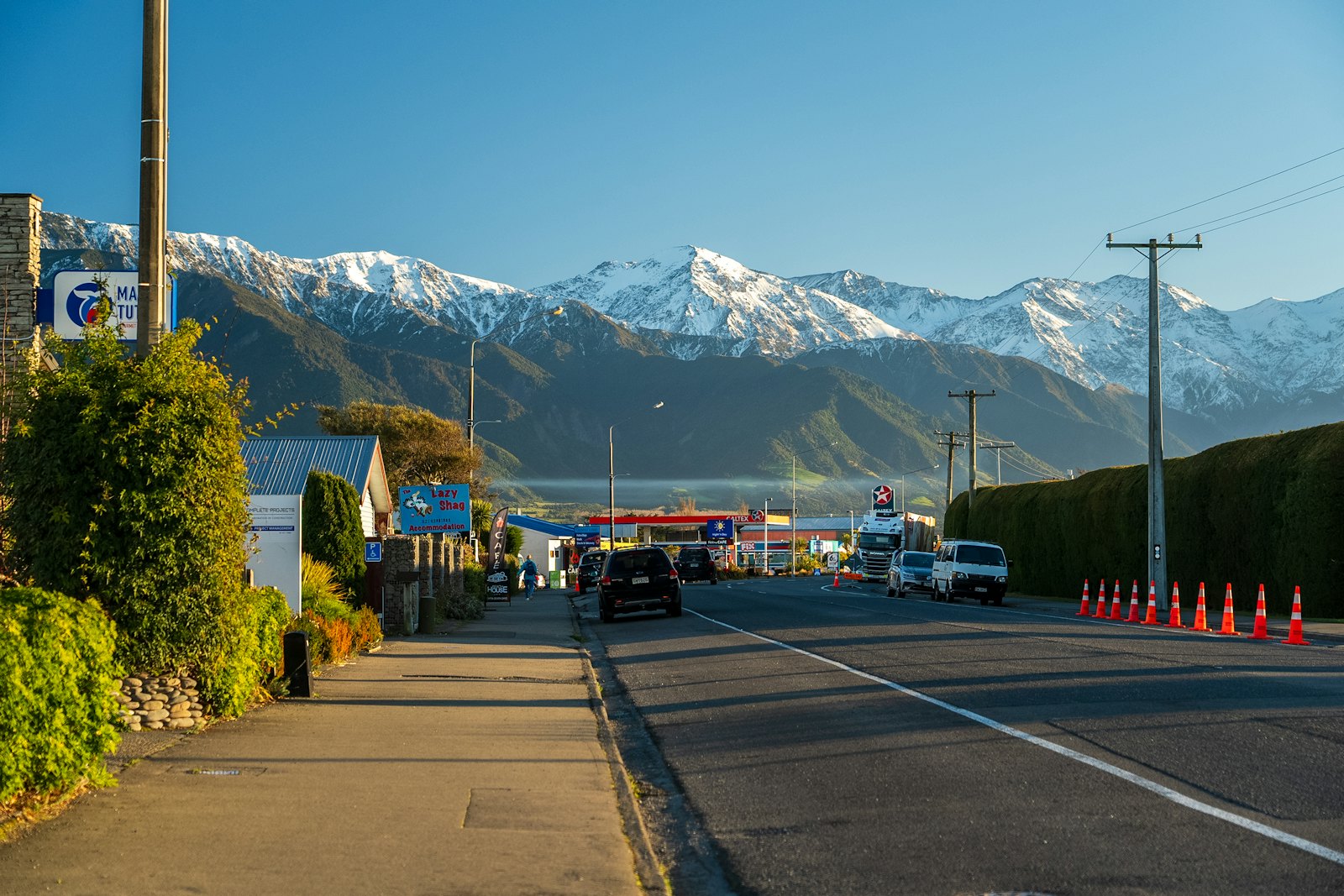
A small seaside town where snow-capped mountains drop almost straight into the sea, sperm whales feed just offshore and crayfish comes from a roadside barbecue.
- Best time to visit: November to April
- Daily budget (budget traveller): $70 to $265 USD
- Ideal trip length: 3 to 5 days
Kaikoura sits on the east coast of New Zealand's South Island, about two and a half hours north of Christchurch by road. It is a small town of a few thousand people, spread along a curved bay and out onto a rocky peninsula. Behind it, the Seaward Kaikōura Range rises steeply and keeps snow on its peaks for much of the year. The reason people come is out at sea. A deep undersea canyon runs very close to shore and brings cold, food-rich water to the surface. That feeds sperm whales all year round, along with dusky dolphins, fur seals and albatrosses. The name comes from Māori: kai means food and kōura means crayfish, and crayfish is still the local treat. A powerful earthquake in November 2016 lifted parts of the seabed out of the water and closed the roads for months. Today the town is fully open again, and the raised reefs are part of the walk around the peninsula. For a solo traveller it works well. The town is compact, there is a good hostel, the bus and the summer train stop in town, and you can walk to seals.
Kaikoura is a small coastal town on the South Island's east coast, roughly halfway between Christchurch and Picton. The Kaikōura Canyon, a deep trench in the seabed, runs unusually close to shore, and cold water rising from it feeds a food chain that brings sperm whales here all year. Dusky dolphins travel in pods of hundreds, fur seals sleep on the rocks at Point Kean and albatrosses glide behind the fishing boats. On land, the Seaward Kaikōura Range climbs steeply behind town, so on a clear winter morning you can watch a whale blow with snow-covered peaks behind it. The local Māori people are Ngāti Kurī, and the town's name means a meal of crayfish. In November 2016 a magnitude 7.8 earthquake shook the region and lifted parts of the seabed by up to a couple of metres. The town is fully back on its feet now, and the raised reefs have become part of the walk.
Logistics are simple. InterCity buses run from Christchurch twice a day and also run from Picton. From September to April, the Coastal Pacific train runs along the coast, with services from Thursday to Sunday from September to December and daily from January until late April. The town itself is walkable. Base yourself near the centre or on the Esplanade, and you can reach the whale and dolphin bases, the seals and the bus stop on foot. The big costs here are the boat trips rather than the beds. A dorm at Dusky Lodge costs much less than a whale trip, so plan the budget around one or two trips and fill the rest with free walks.
Weather and sea conditions shape everything. Boats are cancelled when the swell gets up, so book whale and dolphin trips for early in your stay and leave a spare day. Summer, from December to February, is warm and busy. Autumn is often calm and quieter. Winter is cold and crisp, with snow on the range, fewer visitors and humpback whales passing through. Spring can be windy, and it is whitebait season. Kaikoura is not a nightlife town. Most kitchens close early and the streets go quiet after dark. It suits travellers who like early starts, sea air and fish and chips on a stony beach.
Kaikoura itinerary
Arrive and walk out to the seals
Morning: Take the 7.30am InterCity bus from Christchurch, or the 7am Coastal Pacific train on days it runs. You reach Kaikoura at about 10am. Drop your bags at your hostel or motel.
Afternoon: Walk the Esplanade towards the peninsula, about an hour at an easy pace, to the Point Kean car park. Watch the fur seals from at least 20m away and wander the rocks if the tide is low.
Evening: Eat crayfish or paua fritters at Kaikoura Seafood BBQ on the way back, if it is open, or grab fish and chips in town. Confirm tomorrow's whale trip.
Whale Watch and Fyffe House
Morning: Check in at Whale Watch on Whaleway Station Road for an early trip, which is often calmer. Take seasickness tablets before you board. The whole trip takes about three and a half hours.
Afternoon: Visit Fyffe House on Avoca Street (NZ$12, check winter opening days) to see the whale-bone foundations and the whaling story, then walk along Fyffe Quay.
Evening: A pint and a meal on the deck at The Pier Hotel as the light fades on the mountains.
Peninsula Walkway
Morning: Check the tide times. Start at Point Kean and follow the clifftop track over the peninsula towards South Bay, with views of the coast and the Seaward Kaikōura Range.
Afternoon: Drop down to the South Bay reef platforms at low tide to explore rock pools, then loop back to town. Allow three to four hours for the whole walk.
Evening: Cook at the hostel and swap whale photos in the common room. Head to bed early for the dolphins.
Dolphin swim and a slow afternoon
Morning: Check in at Encounter Kaikoura on the Esplanade for the morning dolphin swim (about NZ$245-265) or the watch-only trip. Expect around two and a half hours on the water.
Afternoon: Warm up with a hot drink and lunch in town, then spend an hour at the Kaikoura Museum on West End for Ngāti Kurī history and the 2016 earthquake.
Evening: Sunset along the Esplanade, then blue cod and chips from Coopers Catch, eaten on the beach wall.
Mt Fyffe
Morning: In settled weather, get a lift or drive to the Mt Fyffe car park at first light. Climb the steep track past Mt Fyffe Hut towards the 1,602m summit. Carry plenty of water, warm layers and food.
Afternoon: Take in the view over the whole peninsula and coast, then head down slowly. Allow seven to nine hours return. If it is cloudy, turn back at the hut or swap this day for a bike ride on the Whale Trail.
Evening: Soak tired legs in the hostel spa if yours has one. A cheap dinner and an early night.
The north coast drive
Morning: Hire a car for the day and drive north on State Highway 1, stopping at Mangamaunu to watch the surfers.
Afternoon: Continue to the Ohau Point lookout to see the seal colony on the rocks below, then have a late crayfish lunch at Nin's Bin. Check the road status before you set off.
Evening: Drive back for sunset at the north end of town, then a farewell meal in town.
Sea kayak and leave
Morning: Join a morning sea kayak tour around the peninsula for seals and seabirds at water level, roughly NZ$100-150. Or, if your whale trip was cancelled earlier, use this as your backup slot.
Afternoon: Return the car if you hired one for longer, pick up your bags and buy picnic food for the journey.
Evening: Take the 4.25pm Coastal Pacific to Christchurch (it gets in at about 7.30pm) or the afternoon InterCity bus, or head north to Picton for the ferry the next day.
Best neighbourhoods
- Town centre and West End: The main street, where the InterCity bus stops. Here you will find the supermarket, cafés, fish and chip shops, the Kaikoura Museum and the i-SITE. It is practical, flat and a short walk from the beach.
- The Esplanade: The seafront road that runs from town towards the peninsula, lined with motels, B&Bs and Encounter Kaikoura's base. You get sea and mountain views from many rooms, and it is an easy walk or ride to Point Kean.
- Beach Road: The northern end of town along State Highway 1, with Dusky Lodge, the Top 10 Holiday Park and a couple of takeaways. It is a ten-minute walk to the centre and close to the bus stop and the station.
- South Bay: The quieter southern side of the peninsula, with the marina where the whale boats leave, a stony beach and reef platforms. There are holiday homes and a few lodges, but you will want a bike or car.
- Hāpuku and Mangamaunu: Rural coast about 10 to 15 minutes north of town, with Hapuku Lodge, farm stays and the Mangamaunu surf break. It is a base for drivers who want quiet nights and mountain views.
Must-do experiences
- Go whale watching by boat: Whale Watch Kaikoura runs year-round trips of about three and a half hours in total, mainly to see sperm whales. You check in at the old railway station on Whaleway Station Road and a bus takes you to the boats at South Bay. Adults pay roughly NZ$165-175, and the company refunds 80% if you see no whale.
- Swim with dusky dolphins: Encounter Kaikoura, on the Esplanade, takes swimmers out in wetsuits to large pods of dusky dolphins. Recent prices are around NZ$245-265 to swim and roughly NZ$135-150 to watch from the boat. You need to be a confident swimmer, because the water is cold and deep.
- Walk the Peninsula Walkway: Start at the Point Kean car park, where fur seals sleep on the rocks, then follow the clifftop to South Bay. The loop is about 12km and takes three to four hours. Go around low tide if you want to explore the reef platforms below.
- Visit Fyffe House: Kaikoura's oldest surviving building is a pink cottage from a whaling station set up in 1842, standing on whale vertebrae. Heritage New Zealand lists entry at NZ$12 for adults. It opens Wednesday to Monday from October to April, and Friday to Monday in winter.
- Climb Mt Fyffe: The 1,602m summit behind town gives the best view in the area, over the peninsula and down the coast. It is a long, steep day of about 16km return, so most people allow seven to nine hours. Go only in settled weather.
- See whales from the air: A 30-minute whale-watching flight with Wings Over Whales costs roughly NZ$195-220, and helicopter trips start at about NZ$420. Flights are less affected by swell than boats and are a good backup if your boat trip gets cancelled.
- Eat crayfish by the sea: Kaikoura Seafood BBQ is a roadside stall near Fyffe House that sells crayfish, paua fritters and mussels to eat at outdoor tables. Crayfish is priced by size and costs a lot, so ask before they cook it.
Hidden gems
- The reef platforms at South Bay at low tide, raised by the 2016 earthquake, with rock pools, kelp and the odd seal, and far fewer people than Point Kean
- Nin's Bin, a long-running crayfish caravan on the coast road north of town, worth the drive for the setting alone
- The Hāpuku to Kaikōura section of the Whale Trail, a flat 13km stretch of cycle path that is open and an easy half-day ride on a hire bike
- Mangamaunu, a right-hand point break about 15 minutes north, where you can watch local surfers from the roadside even if you do not surf
- The Kaikoura Museum on West End, a small, modern museum on Māori history, whaling and the 2016 earthquake, good for a wet afternoon
Daily budget
- Accommodation: budget NZ$38-55 / night (dorm bed at Dusky Lodge), mid-range NZ$150-250 (motel unit on the Esplanade or a private hostel room), splurge NZ$900+ (Hapuku Lodge tree house). Book summer and the Christmas holidays early. Motel units with kitchens are good value if you plan to cook. Prices drop noticeably from May to September.
- Food: budget NZ$30-50 / day (supermarket and hostel kitchen, one takeaway), mid-range NZ$70-110 (café breakfast, fish and chips, pub dinner), splurge NZ$180+ (crayfish and a restaurant dinner with wine). Fish and chips costs roughly NZ$15-25. A whole crayfish costs far more and is priced by weight, so ask first. The supermarket in town closes in the evening.
- Transport: budget NZ$0-30 / day (walking or bike hire), mid-range NZ$60-100 (a day's car hire plus fuel), splurge NZ$150+ (Coastal Pacific train, taxis, private transfers). The InterCity bus from Christchurch often costs about NZ$20-45. The train costs roughly NZ$150 and up one way. Fuel has been about NZ$2.60-3.00 a litre.
- Activities: budget NZ$0-40 / day (Peninsula Walkway, Mt Fyffe, Point Kean, one paid trip spread across the stay), mid-range NZ$165-265 (whale boat or dolphin swim), splurge NZ$420+ (helicopter whale watch). Whale Watch adults pay about NZ$165-175. A dolphin swim costs around NZ$245-265, or about NZ$135-150 to watch. Fyffe House costs NZ$12. Wings Over Whales flights cost roughly NZ$195-220. Look for last-minute deals on Bookme.
- Drinks & nightlife: budget NZ$10-20 (supermarket beer at the hostel), mid-range NZ$30-60 (a few pints at The Pier Hotel), splurge NZ$100+ (wine with a seafood dinner). Nightlife is a pub, a hostel common room and the stars. Expect bar pints at about NZ$10-14. Most places are quiet by 9pm, especially in winter.
Where to stay
- Social hostel in Beach Road (NZ$38-55 / night (dorm), NZ$90-140 (private room)): Dusky Lodge & Backpackers is the largest hostel in town, with dorms, private rooms, several kitchens, a pool and a spa. It is about ten minutes' walk from the centre and handy for the bus and the station.
- Boutique hotel in The Esplanade (NZ$220-400 / night): The White Morph is a small, smart hotel on the seafront with sea and mountain views. You can walk to Encounter Kaikoura, the restaurants and the path to Point Kean.
- Apartment in Beach Road (NZ$120-220 / night): Kaikoura Top 10 Holiday Park has self-contained motel units and cabins with kitchens. They work well if you want privacy and want to cook for yourself, and the park is close to the bus stop.
- Splurge in Hāpuku (NZ$900-1,800+ / night): Hapuku Lodge & Tree Houses sits about 10 minutes north of town on a deer farm, with tree house rooms looking at the mountains and the sea and a highly rated restaurant. You will need a car.
What to eat
- Crayfish (kōura): grilled with garlic butter or served cold with salad, at Kaikoura Seafood BBQ or Nin's Bin
- Paua fritters: minced abalone fried in a thick batter, often sold from the same roadside stalls as crayfish
- Blue cod and chips: the classic South Island takeaway, from Coopers Catch on West End, eaten on the beach
- Whitebait fritters: tiny fish bound with egg and pan-fried, a spring treat when the season is open, roughly September to November
- A pub meal and a pint at The Pier Hotel, a historic hotel near Fyffe House with a deck looking at the mountains
- Green-lipped mussels: steamed or in chowder, on most café and pub menus in town
Day trips
- Ohau Point and Nin's Bin (About 20-30 minutes north by car on State Highway 1): A spectacular coastal drive between cliffs and surf. Ohau Point has a lookout above a large fur seal colony, and Nin's Bin is a crayfish caravan right by the sea. Stop at Mangamaunu on the way to watch the surfers. Drive or join a local tour. There is no public transport to the stops. Check the NZ Transport Agency journey planner first, because slips sometimes close this stretch.
- Hanmer Springs (About 2 hours inland by car via the Inland Road and Waiau): An alpine village with Hanmer Springs Thermal Pools and Spa, forest walks and mountain-bike trails. It makes a relaxing contrast to the coast, especially in winter. Self-drive is the realistic option. Drive in by the Inland Road and back the same way, or carry on to Christchurch. Allow a full day and check the road and weather in winter.
- Whale Trail to Hāpuku (About 13km north of town by bike or on foot): The open Hāpuku to Kaikōura section of the Whale Trail, a long cycle route being built between Picton and Kaikoura. It is a gentle coastal ride with mountain views and a good rest day after Mt Fyffe. Hire a bike in town and ride north. Check which sections are open on the trail's website before you go, because parts of the wider route are still being finished.
When to visit
- Summer (December - February): 18-23°C by day, long evenings, some windy days. Crowds: Busy, especially during NZ school holidays from late December to late January. Warmest seas and the full train timetable. Book whale and dolphin trips and beds well ahead, and expect higher prices around New Year.
- Autumn (March - May): 15-20°C, often settled, cooler nights. Crowds: Moderate in March, quiet by May. The locals' pick. Calmer seas, clearer air and easier bookings. The train stops running at the end of April.
- Winter (June - August): 11-14°C by day, frosty nights, snow on the mountains. Crowds: Low. Cold but often clear, with snow-covered peaks behind the sea and humpbacks passing in June and July. More boat cancellations, fewer dolphin departures and no train.
- Spring (September - November): 14-18°C, changeable and sometimes very windy. Crowds: Low to moderate, rising in November. The train returns, it is whitebait season and there are new seal pups on the rocks. Pack for four seasons in a day and allow spare days for the sea.
Entry rules for your passport
Visa rules for New Zealand depend on the passport you travel on. Check the official source before you book: Immigration New Zealand
Getting there
Most international travellers fly into Christchurch Airport (CHC). InterCity buses run from central Christchurch to Kaikoura twice a day, taking about 2 hours 40 minutes to 2 hours 50 minutes, and fares are often around NZ$20-45 if you book early. There is no direct bus from the airport, so get to the city first. Buses also run south from Picton, where the Interislander and Bluebridge ferries arrive from Wellington. In Kaikoura, buses stop on West End. The Coastal Pacific scenic train runs between Christchurch and Picton from 1 September 2026 to 30 April 2027. It runs from Thursday to Sunday from September to December, then daily from January. The northbound train leaves Christchurch at 7am and reaches Kaikoura at about 10am. The southbound train leaves Kaikoura at 4.25pm. Fares start at roughly NZ$150 one way, so book online, because standing is not allowed. By car, the drive from Christchurch takes about two and a half hours on State Highway 1, or longer if you take the Inland Road (Route 70) via Waiau. Kaikoura has a small airfield used by scenic flights, but there are no scheduled passenger flights.
Getting around
Kaikoura has no town bus, but the centre is flat and easy on foot. The Esplanade to Point Kean is about 4km, so you can walk there in under an hour or hire a bike. Several bike shops and some hostels rent bikes. Whale Watch runs its own bus from Whaleway Station to the boats at South Bay, and Encounter Kaikoura's trips leave from its base on the Esplanade. There are only a few taxis, so book ahead for early starts. To get out of town to Mt Fyffe, Ohau Point, Nin's Bin or Hanmer Springs, you need a car. Most people hire one in Christchurch or Picton. Traffic drives on the left. State Highway 1 north and south of town follows the coast through cliffs and tunnels, and slips can close it after heavy rain, so check the NZ Transport Agency journey planner before you drive. Fuel is cheaper in Christchurch than in Kaikoura.
Safety
Kaikoura is a safe, friendly small town, and crime against visitors is rare. Lock your car and keep valuables out of sight at walk car parks. Keep at least 20m from fur seals, never get between a seal and the sea, and keep well clear of pups. Seals bite, and they move faster than they look. On the peninsula, check tide times before walking on the reef and stay off the clifftop edges. Mt Fyffe is a serious mountain climb. The weather turns quickly, and there can be snow and ice from autumn to spring, so take layers, food and water and tell someone your plans. The sea is cold all year, and boat trips can be rough, so take seasickness tablets before you board. Kaikoura sits on active fault lines. If you feel a long or strong earthquake near the coast, move to higher ground straight away without waiting for an official warning. Sandflies bite at dusk, so pack repellent.
Solo travel tips
- Book your boat early in the trip: The sea decides everything here. Put your whale or dolphin trip on your first full day so a cancellation still leaves time to rebook.
- Stay at a social hostel: Dusky Lodge is big, with several kitchens, a pool and a spa, so it is easy to meet people heading out on the same trips. Some travellers share car hire for Mt Fyffe or the north coast.
- Use the free wildlife: Point Kean seals, the peninsula walk and the albatrosses following the fishing boats cost nothing. Spend your budget on one big trip and let the free stuff fill the rest.
- Check last-minute deals: Tour operators sometimes discount unsold seats on Bookme a few days out. It suits solo travellers, who only need one seat.
- Safety for solo travellers: The real risks are cold water, changeable mountain weather and getting too close to seals. Tell your hostel when you head up Mt Fyffe, carry a torch after dark and follow the crew's instructions on the water.
- Download offline maps: Mobile coverage is good in town but drops on the coast road and the mountain tracks. Save maps, tide times and your tickets before you go out.
Cultural etiquette
- Greet people with 'kia ora'. Ngāti Kurī are the local hapū (subtribe), and you will see their stories in the museum, Fyffe House and on the whale boats.
- If you are invited onto a marae, follow your host's lead. Take your shoes off before entering the meeting house, and do not eat or drink inside.
- Some coastal sites are tapu (sacred) or under customary management. Respect signs, do not climb on carvings and do not move stones or bones.
- Fishing and shellfish gathering have strict rules on size, numbers and seasons, and some areas are closed. Check the rules with Fisheries New Zealand before you collect anything.
- Give wildlife space. Stay at least 20m from seals, never feed them and keep dogs and drones away from colonies.
- Freedom camping is restricted around Kaikoura. Use campsites or designated spots, and take your rubbish away with you.
- Tipping is not expected in New Zealand. Thank the crew and the café staff, and leave a tip only if the service was exceptional.
Frequently asked questions
How do I get to Kaikoura without a car?
InterCity runs buses from Christchurch twice a day, taking about 2 hours 40 minutes to 2 hours 50 minutes. Fares are often around NZ$20-45 if you book ahead. Buses also run from Picton. In Kaikoura they stop on West End, at either 77 or 86 West End depending on the service. From September to April you can also take the Coastal Pacific train, which reaches Kaikoura at about 10am going north and leaves at 4.25pm going south.
How many days do I need in Kaikoura?
Three days covers a whale trip, a dolphin trip and the peninsula walk, with a spare morning in case the sea cancels a boat. Five days lets you add Mt Fyffe and a drive up the north coast. A day trip from Christchurch is possible, but it is a long day and leaves no room for bad weather.
When is the best time to visit Kaikoura?
November to April is warmest and the train is running. Late summer and early autumn often bring calmer seas and fewer crowds. Sperm whales are here all year. Winter is cold but often clear, with snow on the mountains, and humpback whales pass by in June and July. Book ahead for the New Zealand summer holidays, from late December to late January.
What happens if my whale watch trip is cancelled?
Boats only go out when the crew think conditions are safe, and swell cancels trips fairly often, especially in winter. You are offered a refund or a later trip. Book your boat for your first full day so you can rebook if needed. Whale Watch Kaikoura also refunds 80% if a trip goes out and sees no whales. If boats keep getting cancelled, a whale-watching flight is a good backup.
Do I need to be a strong swimmer for the dolphin swim?
You need to be comfortable in deep, open sea. You cannot touch the bottom, and the water is cold even in summer. Encounter Kaikoura provides a thick wetsuit, mask, snorkel and fins. Swimmers must be at least 8 years old. If you are not confident in the water, the watch-only trip goes out on the same boat for a much lower price.
Do I need a car in Kaikoura?
Not for the main sights. The town, the Esplanade, Point Kean, the whale and dolphin bases and Fyffe House are all reachable on foot or by bike. A car helps for the Mt Fyffe car park, Ohau Point, Nin's Bin and Hanmer Springs. Some travellers hire one for a single day rather than the whole trip.
Is Kaikoura safe for solo female travellers?
Yes. It is a quiet, friendly town where hostel guests, tour crews and locals are used to people travelling alone. Normal care applies: walk with a torch at night, as street lighting fades quickly outside the centre, tell someone your plans before a long hike and lock your room in shared accommodation.
What entry rules apply to New Zealand in 2026?
Visitors from visa-waiver countries, including the UK, the EU and the US, usually need an NZeTA (New Zealand Electronic Travel Authority) before travel. Most also pay the International Visitor Conservation and Tourism Levy, which rose to NZ$100 in 2024. Australians do not need an NZeTA. You also have to complete the New Zealand Traveller Declaration and declare any food, hiking boots or outdoor gear at the border. Rules change, so check Immigration New Zealand's website and your own government's travel advice before you book.
Tours and activities in Kaikoura | Kaikoura in 2 days | Kaikoura in 3 days | Kaikoura in 4 days | Kaikoura in 5 days | Kaikoura in 7 days
Joy Plus home | Destinations | Itineraries | Activities | Flights | Budget planner | Calendar | Map | Blog | Lifetime access