Destinations / Oceania
Kangaroo Island, Australia travel guide
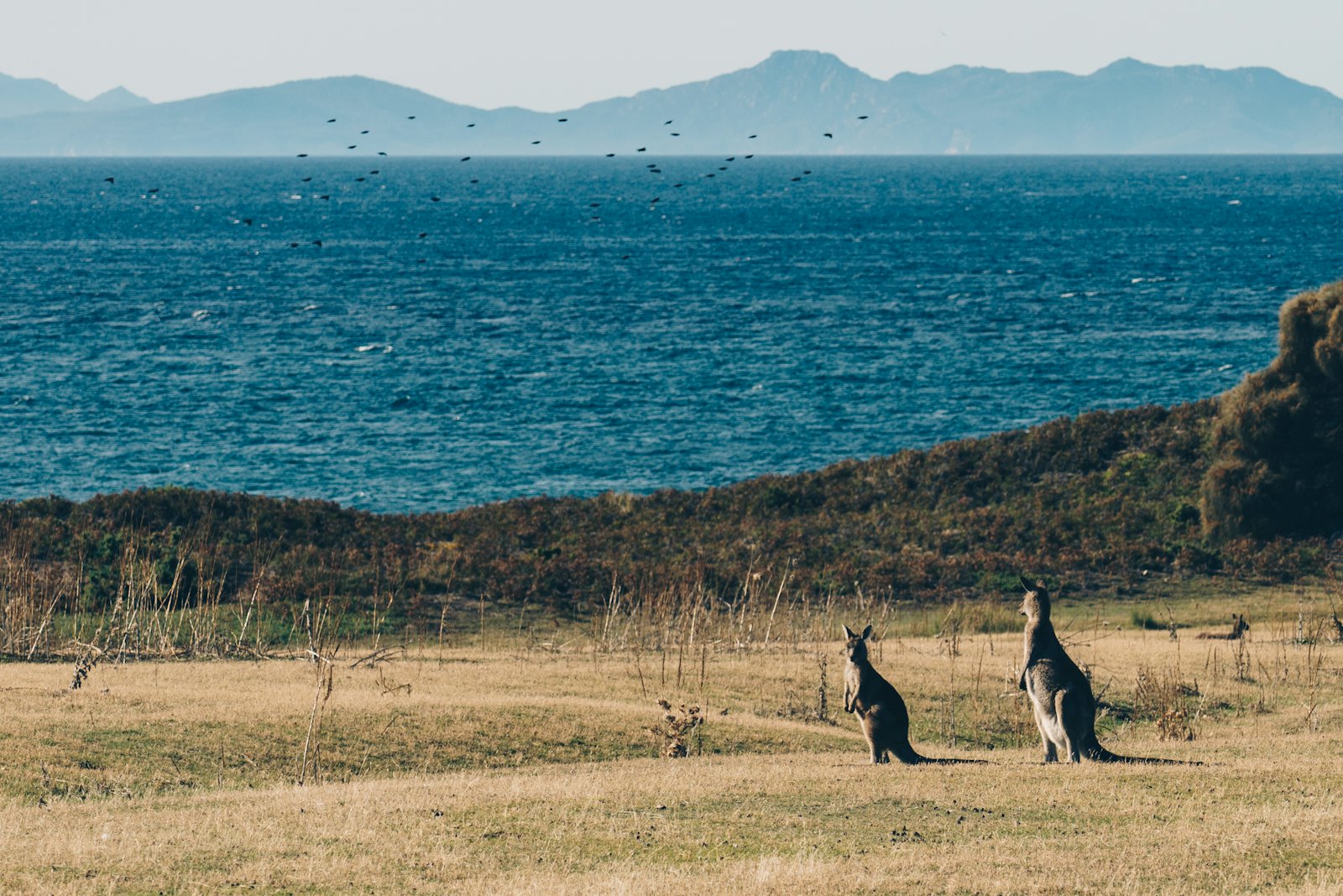
A big, quiet island off South Australia where you drive red dirt roads between sea lion beaches, wind-carved granite, honey farms and long empty bays, and kangaroos come out at dusk.
- Best time to visit: October to April
- Daily budget (budget traveller): $110 to $390 USD
- Ideal trip length: 4 to 7 days
Kangaroo Island lies off the tip of the Fleurieu Peninsula, a 45-minute ferry ride from Cape Jervis or a short flight from Adelaide. It is Australia's third-largest island, roughly 155km long and 55km wide, and only a few thousand people live here. Most of them live in Kingscote, Penneshaw and American River. People come for the wildlife. There are Australian sea lions at Seal Bay, fur seals below Admirals Arch, koalas in the gum trees, echidnas crossing the road and kangaroos on every verge at dusk. The west is wild and windswept, with Flinders Chase National Park and the orange-lichened Remarkable Rocks. The north coast has calm, sheltered beaches such as Emu Bay and Stokes Bay. In between there is farmland, cellar doors, oyster sheds and honey from the island's Ligurian bees. Distances are bigger than they look, and there is next to no public transport, so a solo trip here is really a road trip. Fly or ferry in, hire a car, and give it at least four days. It is safe, slow and easy, and you will want a long weekend more than you expect.
Kangaroo Island is big. It is about 155km from end to end, with more than 500km of coastline. It feels empty because it largely is. Farms and bush fill the middle, and the coast swings between sheltered northern bays and the rough Southern Ocean side. The 2019-20 bushfires burned roughly half the island, including most of Flinders Chase. The bush has been growing back since, and the rebuilt visitor centre tells the story. Many people try to see it in one long day from Adelaide. That shows you the highlights, but you spend much of it on a coach. Stay a few nights and the island slows down: kangaroos on the verge at dusk, oysters by the inlet at American River, the sea lions at Seal Bay and the empty roads out west.
Getting here is easy, but you need to plan ahead. The SeaLink ferry crosses from Cape Jervis to Penneshaw in about 45 minutes, and a coach from Adelaide meets the morning and evening sailings. QantasLink flies from Adelaide to Kingscote in about 40-45 minutes, and car hire desks are at the airport and the Penneshaw ferry terminal. Book the car when you book your crossing, because cars run out in summer. Split the island into zones. Spend a night or two in the east around Penneshaw or American River, then Kingscote for the north coast, then the south coast or the western end for Seal Bay and Flinders Chase. Driving from Kingscote to the west and back in a day is possible, but tiring.
Seasons matter here. Summer is warm and busy, with long light evenings, but it also brings bushfire danger and full campgrounds. Autumn is calm, mild and quieter. Winter is cool, wet and windy, and the ferry is occasionally cancelled in big swells, but prices drop and the island turns green. Spring brings wildflowers and joeys. In 2026 H5 bird flu reached the island, and beach tours at Seal Bay were paused, so check park alerts before you go. Shops in the smaller settlements close early. Fuel and supermarkets are mostly in Kingscote. If you like a long walk, a good meal and a quiet night, you will like it here.
Kangaroo Island itinerary
Ferry across and settle into Penneshaw
Morning: Drive or take the 6.45am coach from Adelaide to Cape Jervis, then cross on the ferry to Penneshaw in about 45 minutes. Collect your hire car at the terminal.
Afternoon: Walk Penneshaw's little beach and foreshore, buy supplies at the general store and drive the short loop around the Dudley Peninsula.
Evening: A pub dinner in Penneshaw, then an early night. Avoid driving far at dusk, when kangaroos are everywhere.
Cape Willoughby and the narrow neck
Morning: Drive the gravel road to Cape Willoughby Lightstation, which is covered by the Tour Pass, and walk around the cliffs.
Afternoon: Climb the steps at Prospect Hill, have a look at the surf at Pennington Bay, then eat oysters at The Oyster Farm Shop in American River.
Evening: Drive on to Kingscote before dusk. Walk the foreshore and have dinner in town.
Kingscote and the north coast
Morning: Visit the Island Beehive in Kingscote, then Kangaroo Island Spirits near Cygnet River for a gin tasting. Only drink if someone else is driving.
Afternoon: Head west along the north coast to Emu Bay for a swim, then on to Stokes Bay, where you squeeze through the rock tunnel to the rock pool.
Evening: Back to Kingscote. Fish and chips from Kangaroo Island Fresh Seafoods, eaten by the water.
Seal Bay and the south coast
Morning: Drive about 45 minutes to Seal Bay, arriving near the 9am opening. Walk the boardwalk to the platforms above the sea lion colony, as beach access has been paused.
Afternoon: Walk up into the dunes at Little Sahara or hire a sandboard, then have a late lunch and a walk at Vivonne Bay.
Evening: Check into the Western KI Caravan Park or a cottage out west. Look for koalas in the gums around camp.
Flinders Chase National Park
Morning: Pay your entry at the Flinders Chase Visitor Centre, then drive to Remarkable Rocks early, while the light is low and the crowds are small.
Afternoon: Take the boardwalk at Admirals Arch to watch the fur seals, then do one of the short walks near the visitor centre.
Evening: A quiet self-catered dinner at your base. On clear nights the stars out here are superb.
Caves and Hanson Bay
Morning: Join a guided tour at Kelly Hill Caves, followed by a short bush walk.
Afternoon: Visit Hanson Bay Wildlife Sanctuary to spot koalas on its walking trail, then go to Hanson Bay beach. Look at the sea, but do not swim here.
Evening: Drive back towards Parndana or Kingscote before dusk. A last pub dinner and an early night.
Marron, honey and the ferry home
Morning: Lunch early at Andermel Marron near Parndana, or stop at Clifford's Honey Farm for honey ice cream on the way east.
Afternoon: Fill up with fuel, return your car at Penneshaw and catch an afternoon or evening ferry. The petrol station at Aldinga is the nearest one open late on the mainland side.
Evening: Take the connecting coach back to Adelaide, or drive the two hours north from Cape Jervis.
Best neighbourhoods
- Kingscote: The island's main town, on Nepean Bay about 15 minutes from the airport. It has the supermarket, banks, fuel, a hospital, pubs and the widest choice of places to stay and eat. It is central for the north coast and a sensible first or last base.
- Penneshaw: The ferry town on the east end, with a small beach, a pub, a general store and a handful of cafés and holiday cottages. Stay here if you arrive late on the ferry or want an easy start for Cape Willoughby.
- American River: A small fishing settlement on a sheltered inlet between Penneshaw and Kingscote. It is quiet, with pelicans, waterbirds and The Oyster Farm Shop. It suits a calm night or two halfway along the island.
- Vivonne Bay and the south coast: A long sweeping beach with a general store, campground and scattered holiday homes. It sits between Seal Bay, Little Sahara and Kelly Hill Caves, so it is a good middle base for the south and west.
- The western end: The country around Flinders Chase and Hanson Bay. Options here include the Western KI Caravan Park, park cottages and the luxury Southern Ocean Lodge. Sleep here and you can be at Remarkable Rocks at sunrise without a three-hour drive.
Must-do experiences
- See the sea lions at Seal Bay: Seal Bay is home to a breeding colony of endangered Australian sea lions. In 2026 beach access was paused because of H5 bird flu, but the 900m boardwalk and viewing platforms are open from 9am to 5pm, with last entry at 4pm. You buy tickets at the visitor centre.
- Walk out to Remarkable Rocks: These huge granite boulders sit on a dome above the Southern Ocean in Flinders Chase National Park. The wind and the sea have carved them into strange shapes, and they are coated in orange lichen. Go early or late, when the light is low and the car park is quiet.
- Watch fur seals at Admirals Arch: A boardwalk runs down from the Cape du Couedic lighthouse to a sea-carved arch hung with stalactites. New Zealand fur seals haul out on the rocks below. It is a five-minute drive from Remarkable Rocks, so pair the two.
- Slide down the dunes at Little Sahara: A field of white sand dunes sits inland near Vivonne Bay. Walk up for the views, or hire a sandboard from the operator at the entrance. Go in the morning, before the sand gets hot and the wind picks up.
- Swim at Stokes Bay: On the north coast, you squeeze through a short tunnel in the rocks to reach a sheltered beach with a natural rock pool. The pool is the safest swimming spot on that side of the island. There is a seasonal café by the car park.
- Go underground at Kelly Hill Caves: A guided tour takes you through limestone caves full of formations. Several tours run daily. It is a good plan for a wet or windy day in the west, and there are short bush walks above ground.
- Eat your way along the middle: Stop at The Oyster Farm Shop in American River, the Island Beehive in Kingscote and Kangaroo Island Spirits near Cygnet River, then have honey ice cream at Clifford's Honey Farm. It is an easy half-day that breaks up the long drives.
Hidden gems
- Prospect Hill near Pennington Bay, a set of steps up a sand hill with views across both sides of the narrow neck of the island
- Pennington Bay, a wild surf beach on the south coast a few minutes from the Hog Bay Road, good for a walk but not a swim
- Cape Borda Lightstation on the remote northwest tip, with cliffs, a square lighthouse and very few visitors
- Emu Bay at sunset, a long white beach on the north coast where you can drive onto the sand at low tide in a suitable vehicle
- Andermel Marron near Parndana, a farm café serving the freshwater crayfish raised in its own ponds
Daily budget
- Accommodation: budget A$40-120 / night (campsite or caravan park cabin), mid-range A$180-320 (motel, hotel room or self-contained cottage), splurge A$3,000+ (Southern Ocean Lodge). There are almost no dorm hostels. Caravan park cabins and national park campgrounds are the budget option. Summer weekends and school holidays sell out early.
- Food: budget A$40-60 / day (supermarket plus a bakery or takeaway), mid-range A$80-130 (café lunch, pub dinner), splurge A$200+ (degustation, long winery lunch). The main supermarket is in Kingscote, and stores elsewhere are small and dearer. Pub mains cost roughly A$28-42. Cafés in remote spots can close early or for the season.
- Transport: budget A$90-130 / day (small hire car plus fuel), mid-range A$130-200 (larger car, summer rates), splurge A$300+ (private guided touring). The ferry is around A$50-60 each way for a foot passenger, or roughly A$230-280 return with a small car. Flights from Adelaide vary widely, often A$100-250 each way. Fuel costs more than on the mainland.
- Activities: budget A$0-40 / day (beaches, walks, Tour Pass spread over the trip), mid-range A$60-120 (Seal Bay, caves, sandboarding, tastings), splurge A$250+ (full-day guided wildlife tour or ocean safari). Flinders Chase entry is around A$22, and the Seal Bay boardwalk about A$21. The Tour Pass covers the main park sites for 12 months, so check the current price.
- Drinks & nightlife: budget A$10-25 (bottle shop beer or wine at your stay), mid-range A$40-70 (cellar door tasting, pub drinks), splurge A$120+ (wine flight with a long lunch). Nightlife means the pubs in Kingscote and Penneshaw. Many cellar doors charge a small tasting fee, sometimes refunded when you buy a bottle.
Where to stay
- Social hostel in Western end near Flinders Chase (A$40-160 / night): There is very little true hostel accommodation on the island. The friendliest budget option is the Western KI Caravan Park, with cabins and campsites, a camp kitchen and koalas in the trees. You will often share the kitchen with other travellers.
- Boutique hotel in Kingscote (A$200-380 / night): The Aurora Ozone Hotel sits on the Kingscote foreshore, with a bar and restaurant downstairs. You can walk to the shops, the wharf and other places to eat, which is handy when you do not want to drive at night.
- Apartment in Penneshaw or American River (A$160-300 / night): Self-contained cottages and holiday homes are the island's most common stay. A kitchen helps your food budget a lot, and both towns are well placed for the ferry and the east.
- Splurge in Hanson Bay, south coast (A$3,000+ / night): Southern Ocean Lodge was rebuilt after the bushfires and sits on the cliffs above Hanson Bay. Meals, drinks and guided excursions are included, and Flinders Chase is right on the doorstep.
What to eat
- Marron: a large freshwater crayfish farmed on the island, served grilled or in a salad at Andermel Marron
- Oysters from The Oyster Farm Shop in American River, shucked to order and eaten at outdoor tables by the water
- Ligurian honey: the island has a sanctuary for these bees, and you can taste it at the Island Beehive in Kingscote or as ice cream at Clifford's Honey Farm
- Gin from Kangaroo Island Spirits, made with native botanicals and served at the cellar door near Cygnet River
- Sheep's milk cheese and yoghurt from the island's dairy near Cygnet River
- Fish and chips from Kangaroo Island Fresh Seafoods in Kingscote, a no-frills counter that locals rate
Day trips
- Cape Willoughby Lightstation (About 30 minutes' drive southeast of Penneshaw, partly on gravel): South Australia's first lighthouse stands on the far eastern tip of the island, looking across Backstairs Passage. It has cliffs, crashing seas and a small heritage precinct. Drive from Penneshaw on Willoughby Road. Lightstation tours are covered by the Kangaroo Island Tour Pass. Check tour times with National Parks SA.
- Cape Borda and the northwest (About 1.5-2 hours' drive west of Kingscote): A square lighthouse sits on high cliffs at the remote northwest corner. There are lighthouse keepers' graves and some of the quietest coastline on the island. Self-drive via the Playford Highway, the last stretch on gravel. Entry to the precinct is included in the Tour Pass. Fill up with fuel in Kingscote or Parndana first.
- Stokes Bay and Snelling Beach (About 50 minutes' drive west of Kingscote along the north coast): Stokes Bay has its rock tunnel and natural swimming pool. Snelling Beach, further west, is a wide sandy bay below rolling hills, with a fine lookout on the road down. Self-drive on the North Coast Road. Go on a calm day and combine it with Emu Bay on the way back to Kingscote.
When to visit
- Summer (December - February): 20-30°C, dry, occasional hot days over 35°C. Crowds: Busy, especially over Christmas and January school holidays. The best beach weather and long evenings. Book ferry, car and beds well ahead, and check daily fire danger ratings.
- Autumn (March - May): 17-25°C, settled, calm mornings. Crowds: Moderate, with an Easter bump. The locals' pick. The sea is still warm enough for a swim and the light is soft, the roads are quiet and prices ease after summer.
- Winter (June - August): 12-17°C, wet, windy, cold nights. Crowds: Low. Cheap, green and moody, with dramatic seas in the west. Pack layers, expect some ferry disruption and plan short driving days.
- Spring (September - November): 15-23°C, changeable, windy at times. Crowds: Low to moderate, busier in late spring. Wildflowers, joeys in pouches and fresh green bush. The weather can turn quickly, so carry a rain jacket.
Entry rules for your passport
Visa rules for Australia depend on the passport you travel on. Check the official source before you book: Australian Department of Home Affairs
Getting there
Fly into Adelaide, which has domestic links across Australia and some international flights. From there you have two options. The SeaLink ferry runs daily, except Christmas Day, from Cape Jervis to Penneshaw in about 45 minutes. Cape Jervis is roughly two hours' drive south of Adelaide, and a LinkSA coach from Adelaide Central Bus Station meets the morning and evening sailings. Adult foot passenger fares have been around A$50-60 each way, and a car up to 5m costs roughly A$100-120 each way. A temporary fuel surcharge applied in late 2026, and fares rise at busy times. The new ferry Wanggami entered service on 27 October 2026, running on the existing timetable alongside Sealion 2000, and a bigger timetable is planned once the second new ferry, Ruwi, arrives. On the island, a Peninsula Coaches shuttle links Penneshaw, American River and Kingscote. Alternatively, QantasLink flies Dash 8 turboprops from Adelaide to Kingscote Airport at Cygnet River in about 40-45 minutes. One-way fares usually fall between A$100 and A$250, and car hire desks are at the terminal. The ferry can be cancelled in heavy swells, so do not plan a tight connection to an onward flight.
Getting around
You really need a car. There is no public transport around the island, only a Peninsula Coaches shuttle between Penneshaw, American River and Kingscote that is timed to meet the ferries. Budget and Hertz have desks at Kingscote Airport and the Penneshaw ferry terminal, and Kangaroo Island Connect hires cars from Penneshaw. Expect roughly A$90-150 a day for a small car, more in summer, and book early. Many Adelaide rental firms do not allow their cars on the ferry, so check before you book a mainland car. Distances are long. Penneshaw to Kingscote takes about an hour, and Kingscote to Flinders Chase is about 110km. The main roads are sealed, but many side roads are gravel, so slow down, keep your headlights on and watch for corrugations. Fuel is available in Kingscote, Penneshaw, American River, Parndana and Vivonne Bay, so fill up whenever you can. If you would rather not drive, guided day and multi-day tours from Penneshaw or Kingscote are the alternative.
Safety
Kangaroo Island is very safe, and crime against visitors is rare. The real dangers are on the roads. Kangaroos, wallabies and echidnas are everywhere at dawn and dusk, so avoid driving after dark if you can. Take gravel roads slowly, and never swerve hard for an animal. Many beaches on the south coast have strong rips and big swells, so swim only at sheltered spots such as Stokes Bay's rock pool or Emu Bay, and stay well back from cliff edges and wave-washed rocks at Remarkable Rocks and Admirals Arch. Summer brings high bushfire danger. Check the CFS website and park alerts, and follow total fire ban rules. In 2026 H5 bird flu reached the island's seabirds and sea lions, so never touch sick or dead birds, seals or sea lions, and keep pets away from wildlife. Mobile coverage is patchy in the west, so tell someone your plans if you walk alone. The ferry can be cancelled in big swells, so leave some slack before an onward flight.
Solo travel tips
- Book the car with the crossing: Hire cars on the island are limited and sell out in summer. Book the ferry or flight and the car together, and check whether a mainland hire company will let its car on the ferry.
- Drive in daylight: Dawn and dusk are when wildlife strikes happen. Plan driving days so you reach your bed before sunset, and save the wildlife watching for when you are parked.
- Join a tour for one day: A small-group tour is the easiest way to meet people here. Guides know where the koalas and echidnas are, and it gives you a break from driving.
- Stock up in Kingscote: Kingscote has the main supermarket and most of the ATMs. Out west the stores are small and close early, so carry water, snacks and a full tank.
- Safety for solo travellers: The risks are roads, rips and remoteness, not people. Tell your host your plans for the day, stay back from cliff edges and wave-washed rocks, and do not swim on the south coast alone.
- Get a Telstra connection: Telstra is the only network you can really rely on beyond the towns. Download offline maps and screenshot park tickets and bookings before you head west.
Cultural etiquette
- Kangaroo Island is called Karta Pintingga, 'island of the dead', in the Kaurna and Ngarrindjeri traditions. Read the signs at sites that mention this history.
- Wave or lift a finger off the wheel to oncoming drivers on country roads. Locals do it, and it is good manners.
- Stay on boardwalks and marked paths, keep well back from sea lions and seals, and never feed wildlife.
- Much of the island is private farmland. Do not open gates, drive on farm tracks or camp outside designated sites.
- Pay your park fees and book campsites in advance. The money goes straight back into conservation and bushfire recovery.
- Shops and cafés keep country hours, opening early and closing by mid-afternoon in smaller places. Some close for a season or on quiet days without much notice.
- Leave no trace. Take your rubbish with you, because bins are scarce outside the towns and the wildlife will raid them.
Frequently asked questions
How do I get to Kangaroo Island?
Most people take the SeaLink ferry from Cape Jervis to Penneshaw, which takes about 45 minutes and runs daily except Christmas Day. Adult foot passenger fares have been around A$50-60 each way, and a small car costs roughly A$100-120 each way. A temporary fuel surcharge applied in late 2026. The new ferry Wanggami started on 27 October 2026, and an expanded timetable is due once the second ferry, Ruwi, arrives. You can also fly from Adelaide to Kingscote with QantasLink in about 40-45 minutes.
Can I visit without a car?
Yes, but it is limited. A LinkSA coach runs from Adelaide to Cape Jervis to meet the ferry, and a Peninsula Coaches shuttle links Penneshaw, American River and Kingscote. Beyond that there is no public transport, so you would rely on guided tours. Most solo travellers either hire a car on the island or join a one-day or multi-day tour from Adelaide.
How many days do I need?
Four days is a sensible minimum. That gives you a day for the east, one for the north coast and Kingscote, one for Seal Bay and the south coast, and one for Flinders Chase. With six or seven days you can stay out west, add Cape Borda and Kelly Hill Caves, and still have a slow beach day. Day trips from Adelaide exist, but they make for a very long day.
Is Seal Bay open in 2026?
Yes, but with changes. Beach access was paused in mid-2026 after H5 bird flu was detected at Seal Bay, so you cannot currently walk among the sea lions on the sand. The boardwalk and viewing platforms are open daily from 9am to 5pm, with last entry at 4pm, and you buy tickets at the visitor centre. Check the National Parks and Wildlife Service South Australia website before you go.
What do the parks cost?
Flinders Chase National Park entry was listed at around A$22 per person, and the self-guided Seal Bay boardwalk at about A$21 for an adult. The Kangaroo Island Tour Pass covers Flinders Chase, Seal Bay, Kelly Hill Caves and the Cape Willoughby and Cape Borda lightstations for 12 months. It was A$95 for an adult under a promotion that ended in April 2026, so check the current price. Buy it if you plan to visit three or more sites.
When is the best time to visit?
October to April brings the warmest, driest weather, and March to May is calm and mild with fewer people. December and January are busiest and carry bushfire risk. Winter, from June to August, is cool, wet and windy, but it is also quiet and cheap and the island is green. Wildlife is out all year.
Is Kangaroo Island good for solo travellers?
Yes, if you are happy with your own company and a lot of driving. It is safe and friendly, and locals are used to visitors asking for directions. It is not a social scene, though. There are few hostels and little nightlife, so if you want company, join a small-group tour for a day or eat at the pub counter in Kingscote or Penneshaw.
Will my phone work on the island?
Telstra has the best coverage by far and is the only carrier you can rely on in many areas. Other networks work around Kingscote and Penneshaw but drop out across much of the west and south. Download offline maps and save your bookings before you leave town.
Tours and activities in Kangaroo Island | Kangaroo Island in 2 days | Kangaroo Island in 3 days | Kangaroo Island in 4 days | Kangaroo Island in 5 days | Kangaroo Island in 7 days
Joy Plus home | Destinations | Itineraries | Activities | Flights | Budget planner | Calendar | Map | Blog | Lifetime access