Destinations / Europe
Karlovy Vary, Czech Republic travel guide
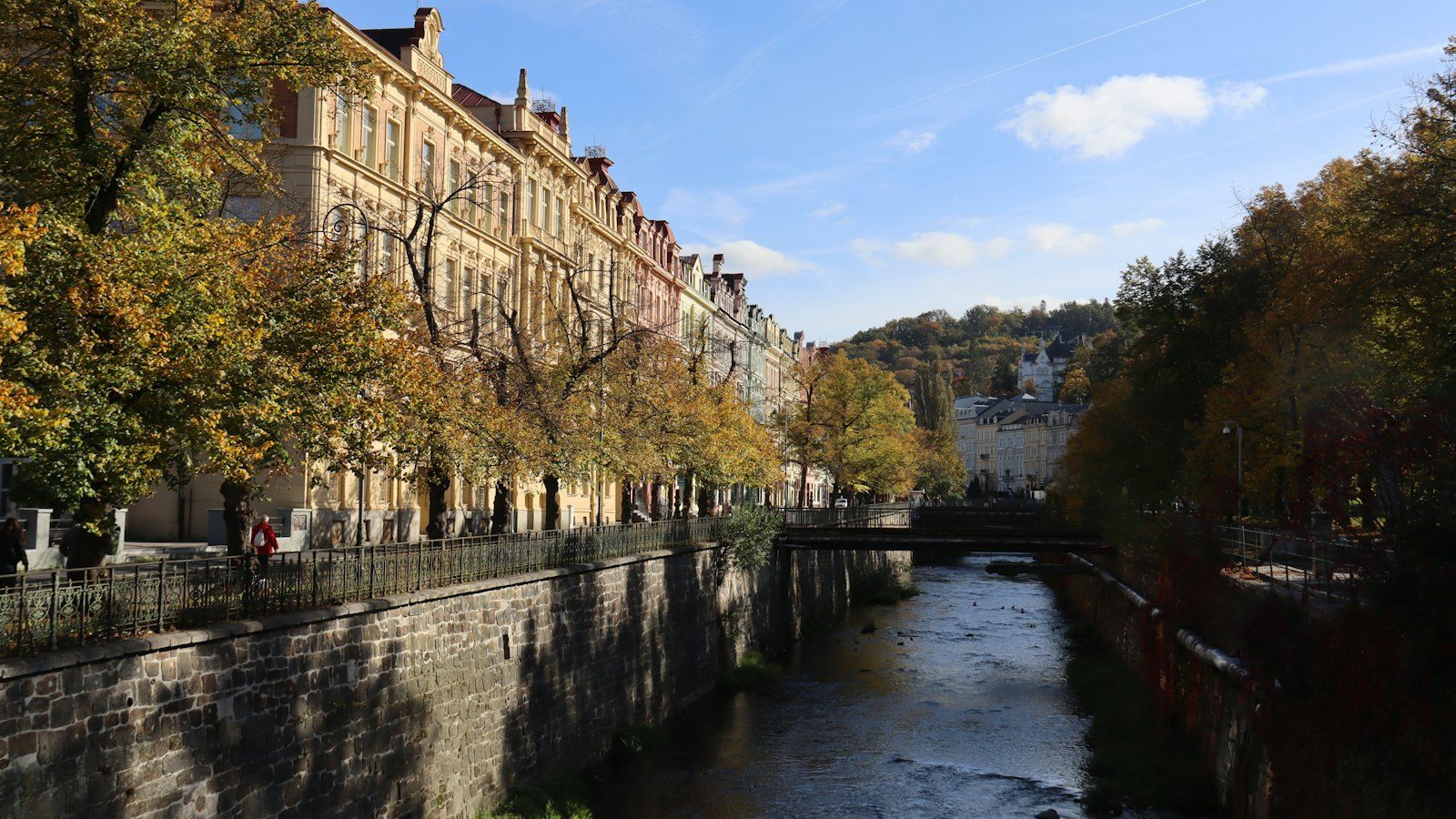
A grand old spa town in a steep wooded valley in West Bohemia. You sip warm mineral water from a porcelain cup under ornate colonnades, ride a funicular up to a lookout tower and finish the day with a glass of Becherovka.
- Best time to visit: May to June and September
- Daily budget (budget traveller): $60 to $200 USD
- Ideal trip length: 3 to 5 days
Karlovy Vary sits in the narrow valley of the Teplá river in West Bohemia, about two hours by bus from Prague. Legend says Charles IV founded it in the 14th century after a hunting party stumbled on a hot spring. It became one of the great spa resorts of Europe, and much of what you see dates from its 19th-century heyday: pastel hotels stacked up the hillsides, a wooden colonnade, a stone colonnade with Corinthian columns and the huge Grandhotel Pupp at the end of the promenade. The main thing to do is simple. Buy a spa cup, walk from spring to spring and taste the warm, salty, iron-rich water, which gets hotter the closer you get to the Hot Spring geyser. Then take the funicular up to the free Diana lookout tower, walk the forest paths back down and visit the Becherovka museum or the Moser glassworks. The spa zone can feel formal and expensive, and many hotels are built for long medical stays rather than short city breaks. Even so, frequent cheap buses from Prague, free springs, free viewpoints and a good choice of pensions make it an easy and relaxing place for a solo traveller to spend a few slow days.
Karlovy Vary is the biggest and grandest of the West Bohemian spa towns, known in German as Karlsbad. Around 13 hot springs rise in the narrow valley of the Teplá, and for centuries emperors, composers and writers came here to drink the water and walk the promenades. You can still see that history everywhere: in the stone Mill Colonnade, the carved wooden Market Colonnade, the cast-iron Sadová colonnade and the big pastel hotels climbing the slopes. Many visitors come on a day trip from Prague. Stay a few nights and you get the better version: the colonnades almost empty at 7am, a cup of warm water before breakfast, a walk up through the spa forest and the town lit up along the river at night. It is not the cheapest place in Czechia, but free springs, free viewpoints and cheap pub food keep costs reasonable.
Getting here is easy. RegioJet and FlixBus buses from Prague take around 2 hours and often cost about $7-12 USD, and RegioJet runs direct buses from Prague airport too. Trains exist but are slow. Once you are here, walk. The spa zone runs for about 2km along the river, from the Mill Colonnade to Grandhotel Pupp, and the funicular takes you up to Diana. Base yourself in the spa zone for the full atmosphere, or in the town centre near the bus station for cheaper rooms and easier arrivals. Use regional buses and trains for Loket, Mariánské Lázně and the Ore Mountains.
Timing shapes the trip. May, June and September bring mild weather, green forests and lighter crowds. The international film festival in early July fills the town with screenings, parties and film fans, but rooms are scarce and expensive. July and August are warm and busy with coach tours. From November to March, the town is quiet and often frosty, spa hotels offer deals and the hills may have snow, but the Hot Spring Colonnade usually closes for a short maintenance break. Karlovy Vary is very safe. Older locals may speak German or Russian more readily than English, but staff in hotels and cafés are used to visitors. Evenings are calm rather than wild. If you want nightlife, go to Prague. If you want a warm cup of spring water, a forest walk and a glass of Becherovka, stay here.
Karlovy Vary itinerary
Arrive and find your feet
Morning: Take a morning bus from Prague (about 2 hours). Drop your bag at your pension and walk along the river from the Tržnice bus station towards the spa zone.
Afternoon: Buy a spa cup and walk the colonnades, starting at the Sadová colonnade and the Mill Colonnade. Taste a few springs, slowly.
Evening: Watch the Hot Spring geyser in the Hot Spring Colonnade, then have a pub dinner of goulash and dumplings in the town centre.
Diana and the spa forest
Morning: Ride the funicular from beside Grandhotel Pupp (165 CZK return) and climb the free Diana tower before the crowds.
Afternoon: Walk the woodland paths to Mayer's Gloriette and the Linhart game reserve, then down to the river. Pack water and a snack.
Evening: Coffee and cake in a grand café on Stará Louka, then an evening stroll along the lit promenade.
Becherovka and Moser
Morning: Take a city bus to the Moser glassworks in Dvory to see the museum and the glassblowers at work.
Afternoon: Back in town, join a pre-booked tour of the home of Becherovka (about 290 CZK), finishing with a tasting.
Evening: Climb to the Deer Jump lookout for sunset views over the spa zone, then dinner at a pension restaurant.
Loket castle town
Morning: Take a bus or train to Loket (about 20 to 30 minutes). Walk the bridge over the Ohře and explore the lanes below the castle.
Afternoon: Visit Loket Castle and walk the riverside path below the rocks. Lunch in the small square.
Evening: Return to Karlovy Vary for a last glass of Becherovka or a 'Beton' in a wine bar.
Mariánské Lázně
Morning: Take a bus or train to Mariánské Lázně, a quieter, greener spa town about an hour or more away. Check times the night before.
Afternoon: See the cast-iron colonnade and the Singing Fountain, then walk in the parks and woods above the town.
Evening: Head back to Karlovy Vary for dinner in the town centre.
Ore Mountains
Morning: Take a regional bus to Jáchymov, an old silver and radium mining town, and on towards Klínovec, the highest peak in the Ore Mountains.
Afternoon: Walk on the ridge in summer or ski or sledge in winter. The views stretch into Germany on a clear day.
Evening: Back in Karlovy Vary, a farewell dinner and a slow walk along Stará Louka.
Slow morning and depart
Morning: Have a last cup at your favourite spring and breakfast in a café before the coach groups arrive.
Afternoon: Buy wafers, Becherovka or glass for home, then catch an afternoon bus to Prague or Prague airport.
Evening: Arrive in Prague, or carry on to your next stop.
Best neighbourhoods
- Spa zone and Stará Louka: The heart of Karlovy Vary, along the Teplá from the Hot Spring Colonnade south to Grandhotel Pupp. You have the colonnades, the cafés, the glass and porcelain shops and the funicular to Diana. It is beautiful and quiet at night, but rooms and coffees cost the most here, and the streets are steep once you leave the river.
- Mill Colonnade and Sadová: The northern end of the spa zone, around the Mill Colonnade, the Sadová colonnade and Dvořák Park. It is a good middle ground, with older spa hotels and guesthouses, the Russian Orthodox church a short climb away and the town centre ten minutes' walk north. Expect hills and steps.
- Town centre and T. G. Masaryka: The modern centre north of the spa zone, around the pedestrian street T. G. Masaryka, the Tržnice bus station and the Becherovka museum. It is less pretty, but you will find cheaper hotels, supermarkets, ordinary pubs and the easiest arrival by bus. The springs are 10 to 15 minutes away on foot along the river.
- Westend: A leafy hillside quarter of grand villas above the Sadová colonnade, now mostly spa hotels and apartments. It is calm and green, with good views over the valley, but the walk back up from the colonnades is steep. It suits you if you want peace and do not mind the climb.
- Loket: A small castle town on a loop of the Ohře river, about 20 to 30 minutes away by bus or train. Rooms are often cheaper and the evenings are very quiet. It works as a base if you prefer a village feel and are happy to travel into Karlovy Vary for the springs.
Must-do experiences
- Walk the colonnades and taste the springs: Buy a porcelain spa cup with a spout from a stall or shop (roughly 100-250 CZK, about $5-12 USD) and walk the colonnades from north to south. The springs are free and run at different temperatures. Sip slowly, as the water is salty and strong, and a few cups a day is plenty.
- Watch the Hot Spring geyser: Inside the 1975 Hot Spring Colonnade, the Vřídlo shoots water at about 73°C up to 12 metres high. Entry is free, and the drinking fountains are in the hall next door. The colonnade usually closes for a short maintenance break in winter, so check if you visit in January or February.
- Ride the funicular to Diana: The lower station is beside Grandhotel Pupp, and the ride takes about five minutes. A return ticket costs 165 CZK (about $8 USD), or 110 CZK one way. The lookout tower at the top is free, with a lift or 150 steps, and has views across the valley to the Ore Mountains.
- Walk the spa forest trails: Take the funicular up and walk down, or climb from the river to the Deer Jump statue and the lookouts above the town. The paths are well marked, free and quiet early in the day. Wear proper shoes, as the slopes are steep.
- Tour the home of Becherovka: The herbal liqueur known as the town's 13th spring was made in this building on T. G. Masaryka for well over a century. The basic guided tour with a tasting of four products costs about 290 CZK (roughly $14 USD). Book ahead, as groups are small.
- Visit the Moser glassworks: Moser has made fine crystal in Karlovy Vary since 1857, and its museum and glassworks sit in the Dvory district west of the centre. You can watch glassblowers at the furnace and see pieces made for royalty. Check current prices and tour times on the Moser website before you go.
- Promenade along Stará Louka to Grandhotel Pupp: Walk the riverside street past cafés, jewellers and spa hotels to the huge Grandhotel Pupp. Coffee and cake in one of the grand cafés costs more than in town, but you are paying for the setting. Go early in the morning or in the evening when the day-trip coaches have left.
Hidden gems
- The Russian Orthodox Church of Saints Peter and Paul in Westend, with its gilded onion domes, a short climb above the Sadová colonnade
- The white cast-iron Sadová colonnade in Dvořák Park, where the Snake Spring flows from a bronze snake's head
- Mayer's Gloriette, a small classical pavilion on the forest slopes with one of the best quiet views over the spa zone
- The Linhart game reserve, about a kilometre's walk through the woods from the Diana lookout tower, where you can see deer and wild boar
- The riverside path north of the town centre in the early morning, when locals walk dogs and the spa zone is still asleep
Daily budget
- Accommodation: budget $30-50 USD / night (hostel bed or simple pension room), mid-range $80-150 USD (spa-zone pension or 3-star hotel), splurge $300+ USD (Grandhotel Pupp or a luxury spa hotel). Prices jump during the film festival and on summer weekends. A local fee of 50 CZK per adult per night is added on top. Single rooms in pensions are often good value.
- Food: budget $15-25 USD / day (bakery breakfast, pub lunch, supermarket picnic), mid-range $30-50 USD (café lunch and a sit-down dinner), splurge $80+ USD (fine dining, wine and a grand café). A pub main course is roughly $8-14 USD and a half-litre of beer around $2.50-3.50 USD. Prices on Stará Louka are higher than in the town centre. Prices are rough guides.
- Transport: budget $0-5 USD / day (walking, city bus), mid-range $8-15 USD (funicular plus a regional bus or train), splurge $100+ USD (private transfer from Prague). The bus from Prague is about $7-12 USD each way. The Diana funicular costs 165 CZK return (about $8 USD). Loket is a short, cheap bus or train ride.
- Activities: budget $0-10 USD / day (springs, Diana tower, forest trails), mid-range $15-30 USD (Becherovka tour, Moser museum), splurge $50+ USD (spa treatments, guided tours). The springs and the Diana lookout tower are free. The basic Becherovka tour is about 290 CZK (roughly $14 USD). The Region Card can cut costs if you plan several paid sights.
- Drinks & nightlife: budget $5-10 USD (a beer or two in a pub), mid-range $15-30 USD (cocktails or wine in a bar), splurge $50+ USD (hotel bars or the casino). A coffee costs about $2.50-4 USD in town and more on the promenade. Nightlife means wine bars, hotel bars and the casino rather than clubs, except during the film festival.
Where to stay
- Social hostel in Town centre ($25-45 USD / night (dorm)): Karlovy Vary has only a few hostels, mostly in the town centre close to the bus station and supermarkets. They are basic but cheap, and a short walk along the river takes you to the springs.
- Boutique hotel in Spa zone, near the Hot Spring Colonnade ($100-200 USD / night): Small historic hotels around Tržiště and Stará Louka put you right by the springs and cafés. Many have spa treatments and good breakfasts, and the Hot Spring is on your doorstep.
- Apartment in Westend and Sadová ($70-130 USD / night): Apartments in old villas give you a kitchen, more space and quiet nights. Expect steep streets and stairs, and check the exact location if you have heavy luggage.
- Splurge in Stará Louka ($350-600+ USD / night): Grandhotel Pupp is the town's famous grand hotel, at the end of the promenade beside the Diana funicular. You get chandeliers, a spa and a film-star setting during the festival.
What to eat
- Spa wafers (lázeňské oplatky): thin, round wafers filled with hazelnut, chocolate or vanilla, sold warm from stalls along the colonnades
- Becherovka: the bittersweet herbal liqueur, drunk neat as a digestif or mixed with tonic as a 'Beton'
- Carlsbad dumplings (karlovarský knedlík): bread dumplings served with roast pork, goulash or svíčková, beef in a creamy vegetable sauce
- Czech beer: a half-litre of Pilsner or a local brew in a pub in the town centre, usually much cheaper than a coffee on Stará Louka
- Coffee and cake in a grand café: apple strudel, honey cake or a cream slice, best taken slowly in the afternoon
- Mattoni and other local mineral waters, plus fruit dumplings and bramboráky (potato pancakes) for a cheap lunch
Day trips
- Loket (About 12km south-west, 20 to 30 minutes by bus or train): A small medieval town on a tight loop of the Ohře river, with a Gothic castle on the rocks and a pretty square. It is one of the best half-days in West Bohemia. Take a regional bus from Karlovy Vary or a train to Loket předměstí, then walk into town. You can also walk or cycle along the river in good weather.
- Mariánské Lázně (About 50km south, 1 to 2 hours by bus or train): A greener, quieter spa town with a long cast-iron colonnade, the Singing Fountain and wooded parks. Together with Karlovy Vary it is part of the Great Spa Towns of Europe on the UNESCO list. Take a bus, or a train via the slow, scenic line or via Cheb. Check the return times before you set off, as evening services are limited.
- Jáchymov and Klínovec (About 20 to 30km north, 30 to 50 minutes by bus): An old mining town famous for silver and radium, and the highest peak in the Ore Mountains above it. Expect hiking in summer and skiing in winter. Take a regional bus from the Tržnice terminal to Jáchymov, then a bus or the chairlift towards Klínovec in season. Bring warm clothes, as the ridge is much colder than the valley.
When to visit
- Spring (April - May): 8-19°C, fresh, with blossom and some rain. Crowds: Low to moderate, busier at Easter and on May weekends. Good for walking, forest trails and fair room prices. The spa season traditionally opens in early May with a festive weekend of music and blessing the springs.
- Early summer (June): 16-24°C, mostly mild and sunny. Crowds: Moderate. Arguably the best month. Long evenings, green hills and the colonnades busy but pleasant. Book early if your dates run into July.
- High summer (July - August): 18-27°C, warm, with occasional thunderstorms. Crowds: Busy, especially during the film festival in early July. Lively and fun, but rooms cost the most and day-trip coaches crowd the colonnades. Explore early or late in the day.
- Autumn and winter (September - March): September 12-20°C, then cooling to around -3 to 4°C in winter, with frost and some snow. Crowds: Moderate in September, quiet from November. September is the locals' pick, with warm colours in the forests. Winter is cheap and peaceful, but the Hot Spring Colonnade usually closes for a couple of weeks of maintenance.
Entry rules for your passport
Visa rules for the Czech Republic depend on the passport you travel on. Check the official source before you book: European Commission: Schengen visa policy
Getting there
Karlovy Vary has a small airport with few or no regular scheduled flights, so most people fly into Prague, about 1 hour 45 minutes away by bus. RegioJet runs direct buses from Prague airport to Karlovy Vary, often for around $8-14 USD. From central Prague, RegioJet and FlixBus buses leave Florenc bus station and Hradčanská many times a day. The journey takes about 2 to 2.25 hours, and fares are often $7-12 USD if booked ahead. Most buses stop at the Tržnice terminal in the town centre. Trains from Prague are slower and usually take over three hours, though the line is scenic. From Germany, buses and trains link Karlovy Vary with Nuremberg, Munich and Berlin, sometimes via Cheb. If you drive, Czech motorways need an e-vignette, so buy one online before you set off, and park in a garage in the centre, as the spa zone has traffic restrictions.
Border checks: non-EU visitors (other than Swiss, Norwegian, Icelandic, Liechtenstein, Andorran, Monegasque, San Marinese and Vatican citizens, and holders of an EU residence permit or long-stay visa) are registered in the EU's Entry/Exit System (EES) instead of getting a passport stamp. On your first crossing, officers take your photo and/or fingerprints, so allow extra time at passport control. ETIAS, the planned travel authorisation, is not in operation yet, so don't pay any website for one.
Getting around
The spa zone is long and narrow, so you will mostly walk. It takes about 20 to 25 minutes from the Tržnice bus station to Grandhotel Pupp along the river, longer if you stop at every spring. The streets either side of the Teplá are steep, with plenty of steps, so pack shoes with grip and travel light. The Diana funicular starts beside Grandhotel Pupp and costs 110 CZK one way or 165 CZK return (about $5-8 USD). You can pay in Czech crowns or by card. Local DPKV city buses link the centre with the main train station, the Moser glassworks in Dvory and the outer districts. Single tickets are cheap, and you can buy them from machines or by card on many buses, so check the current options. The KarlovyVARY Region Card gives free or discounted entry to the funicular, the Becherovka tour and other sights, and is worth pricing up if you plan a busy few days. Regional buses and trains reach Loket, Mariánské Lázně, Cheb and the Ore Mountains. Taxis are fine for late arrivals, but agree the fare or use an app first. Driving into the spa zone is restricted, so leave a car in a garage in the centre.
Safety
Karlovy Vary is very safe, and violent crime against visitors is rare. Watch your bag in the crowded colonnades, at the bus station and on busy summer afternoons on Stará Louka. The real risks are steep slippery steps, especially in rain or winter ice, and the spring water itself. The Hot Spring runs at about 73°C, so take care at the fountains, and do not drink large amounts of mineral water on your first day, as it can upset your stomach. Some cafés and souvenir shops on the promenade charge tourist prices, so check menus and the exchange rate before you pay. Forest trails are well marked but quiet, so tell someone your route if you walk alone. Tap water is safe to drink. The EU emergency number is 112. EU travellers should carry an EHIC and UK travellers a GHIC, and everyone else needs travel insurance with medical cover.
Solo travel tips
- Stay near the springs: A pension in the spa zone means you can drink from the springs before breakfast and walk home in minutes after dinner. The town centre is cheaper but less atmospheric.
- Go early or late: Coach tours from Prague arrive mid-morning and leave by late afternoon. Do the colonnades, the Hot Spring and Stará Louka before 10am or after 5pm and they are much calmer.
- Book the festival or avoid it: The film festival in early July fills every bed in town. Book months ahead if you want to go, or choose other dates if you just want a quiet spa trip.
- Eat in the town centre: Pub lunches, bakeries and supermarkets in the centre cost far less than cafés on the promenade. Save the grand café for one afternoon treat.
- Safety for solo travellers: The main risks are steep, slippery steps, quiet forest trails and scalding water at the Hot Spring. Keep to marked paths, share your route on long walks and walk back along the lit river at night.
- Meet people on a tour or in a pub: The Becherovka tour, guided walks of the spa zone and festival screenings are easy places to chat. Pubs in the centre are friendly, and a few words of Czech go a long way.
Cultural etiquette
- Greet people with 'dobrý den' (good day) and say 'děkuji' (thank you). Older locals may also speak German.
- Keep your voice down in the colonnades. Many people around you are on a medical cure and come for the calm.
- Do not wash your hands, fill large bottles or let children play in the spring fountains. Drink from your own cup and move on.
- Dress neatly in grand cafés and hotel restaurants, and take off your hat in churches.
- Wait to be seated in restaurants, and ask for the bill when you are ready, as staff will not bring it unprompted.
- Tell the server the total you want to pay when you pay, rounding up or adding about 10% for good service.
- Stay on marked forest paths and take your rubbish with you from the viewpoints.
Frequently asked questions
How do I get to Karlovy Vary from Prague?
Take a bus. RegioJet and FlixBus run frequent services from Prague's Florenc bus station and Hradčanská, taking about 2 to 2.25 hours, with fares often around $7-12 USD when booked ahead. RegioJet also runs direct buses from Prague airport, which take about 1 hour 45 minutes. Most buses stop at Tržnice in the town centre, about 10 to 15 minutes' walk from the first colonnades. The train is much slower, so only use it if you want the scenery.
How many days do I need in Karlovy Vary?
Two nights covers the colonnades, the Hot Spring, the Diana funicular and the Becherovka museum. Three to five nights lets you add the forest trails, the Moser glassworks and a day trip to Loket. A week works if you want to slow down, follow a light drinking cure or add Mariánské Lázně and the Ore Mountains.
When is the best time to visit Karlovy Vary?
May, June and September are the sweet spot, with mild weather, green forests and fewer coach groups than in high summer. The film festival in early July is fun, but rooms sell out and prices jump. Winter is cold and quiet, with snow in the hills and cheaper spa hotels, though the Hot Spring Colonnade usually closes for a couple of weeks of maintenance, and some sights keep shorter hours.
Can I drink the spring water, and do I need a spa cup?
Yes. The springs in the colonnades are free and open to everyone. A spa cup with a spout makes it easier and is a classic souvenir, but any cup will do. The water is high in minerals and can have a laxative effect, so start with a few small cups a day. Spa guests on a cure follow doctors' advice about which springs to drink and when.
Is there a tourist tax in Karlovy Vary?
Yes. Karlovy Vary charges a local accommodation fee of 50 CZK (about $2.40 USD) per adult per night, which is the maximum allowed in Czechia. Hotels and pensions usually add it to your bill at check-in or check-out. Under-18s and some other groups are exempt.
Do I need Czech crowns, or can I pay in euros?
Czechia uses the Czech crown (CZK), not the euro. Some hotels and shops in the spa zone accept euros, but the rate is usually poor. Cards are widely accepted, including at the Diana funicular. Use bank ATMs rather than standalone machines, and always choose to be charged in CZK.
Is Karlovy Vary safe for solo female travellers?
Yes. It is a calm, well-kept town with a lot of older spa guests and a relaxed evening atmosphere. The promenade is lit and busy until late in summer. Take normal care with drinks in bars and casinos, watch your bag in crowds and avoid the forest trails after dark.
What entry rules apply to Czechia in 2026?
Czechia is in the EU and the Schengen area. Many non-EU visitors, including those from the UK, US, Canada and Australia, can stay visa-free for up to 90 days in any 180-day period across Schengen. The EU's Entry/Exit System now records non-EU travellers' fingerprints and photos at the external border, and the ETIAS travel authorisation is due to follow, so check whether it has started before you travel. Carry your passport, as your hotel must register your stay. Confirm the rules on official EU and Czech government websites and check your own government's travel advice.
Tours and activities in Karlovy Vary | Karlovy Vary in 2 days | Karlovy Vary in 3 days | Karlovy Vary in 4 days | Karlovy Vary in 5 days | Karlovy Vary in 7 days
Joy Plus home | Destinations | Itineraries | Activities | Flights | Budget planner | Calendar | Map | Blog | Lifetime access