Destinations / Asia
Kazbegi (Stepantsminda), Georgia travel guide
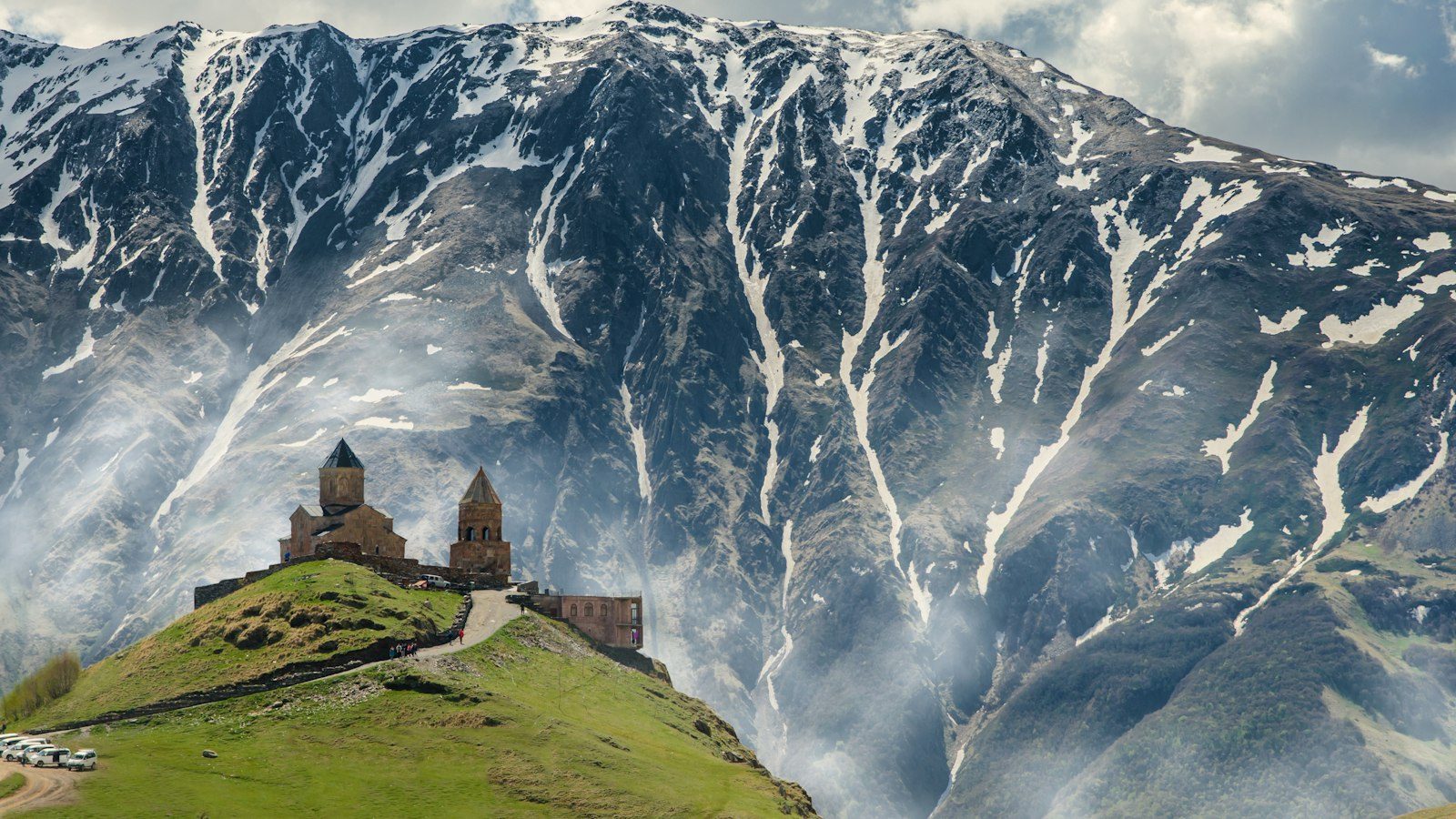
A mountain village at 1,740m in Georgia's High Caucasus, three hours north of Tbilisi and close to the Russian border. You walk up to a 14th-century church on a bare ridge, watch Mount Kazbek turn pink at sunset and spend your days hiking side valleys full of springs, towers and summer flowers.
- Best time to visit: June to September
- Daily budget (budget traveller): $35 to $140 USD
- Ideal trip length: 3 to 5 days
Stepantsminda is still called Kazbegi by almost everyone. It is the main village of the Khevi region and sits on the Georgian Military Highway, about 150km north of Tbilisi and only a few kilometres short of the Russian border at Upper Lars. The village itself is plain: a main square, guesthouses with tin roofs, a few cafés and a petrol station. What makes it worth the trip is the setting. Gergeti Trinity Church stands alone on a ridge at 2,170m above the village, and Mount Kazbek, at 5,047m, rises straight behind it. Most visitors come on a day tour from Tbilisi and get about half an hour at the church. Stay a few nights instead and you can walk up to Gergeti at dawn, ride out to Juta under the jagged Chaukhi peaks, follow the Truso Valley past mineral springs and empty villages, and eat khinkali in a family guesthouse in the evening. Shared minibuses from Tbilisi are cheap, family guesthouses with breakfast are easy to find, and walking costs nothing, so Kazbegi suits a solo traveller on almost any budget. Winter brings deep snow, a quieter village and the occasional closure of the road over the Jvari Pass.
Stepantsminda is the main village of Khevi, a high valley on the Georgian side of the Great Caucasus where the Terek river cuts north through the Dariali Gorge into Russia. Around 2,000 people live here at 1,740m. For much of the 20th century it was officially called Kazbegi, after the writer Alexander Kazbegi, whose family came from here, and the old name has stuck. The village grew up on the Georgian Military Highway, the old route between Tbilisi and Vladikavkaz, and lorries still rumble through on their way to the Upper Lars border. Most people visit on a day tour and leave after a quick look at Gergeti Trinity Church. Stay a few nights and you get the better version: the church at dawn with no one else on the ridge, a day in the meadows under the Chaukhi spires and home cooking in a family guesthouse. Rooms are cheap, walking is free and the shared transport costs little.
Getting here is straightforward. Marshrutkas leave Tbilisi's Didube station from about 8am for 15 to 20 GEL ($6 to $8 USD) and take 3 to 3.5 hours. For photo stops at Ananuri Fortress, the Friendship Monument and the Jvari Pass, take a shared taxi or a private driver from about 210 GEL ($80 USD) per car. Once you are here, walk. The church trail starts in Gergeti village across the river. For the side valleys, use the summer shuttle from June or a shared jeep from the main square. Base yourself in the centre if you rely on transport, in Gergeti village for early starts on the church trail, or in upper Stepantsminda for the best views of Kazbek.
Timing shapes everything. From June to September the trails are open, the valleys are green and the shuttles run. July and August are busiest, but the crowds thin out once you are a kilometre from a road. Late spring and autumn are quieter, with snow on the high ground and some valleys still closed. Winter turns Stepantsminda into a snowbound village with clear, freezing nights, but Truso and Juta are mostly cut off and the Jvari Pass sometimes closes for hours or days. Kazbegi is safe and welcoming. Younger people often speak some English, and older locals speak Russian. Evenings are quiet: a long dinner, a glass of wine and an early night before the next hike.
Kazbegi (Stepantsminda) itinerary
Up the Military Highway
Morning: Take a morning marshrutka from Didube in Tbilisi (3 to 3.5 hours). Sit on the right-hand side for the best views of the Aragvi valley.
Afternoon: Check in to your guesthouse, then walk around the main square, the Alexander Kazbegi House Museum and over the bridge to Gergeti village.
Evening: Watch Kazbek catch the last light from your balcony or the Rooms Hotel terrace. Have a guesthouse dinner and an early night.
Gergeti Trinity Church
Morning: Leave at dawn and walk up from Gergeti village to the church (about one and a quarter to two hours). You will have the ridge almost to yourself before the tours arrive.
Afternoon: Walk a little way up the ridge behind the church for wider views, then head down for a late khinkali lunch in the centre.
Evening: Rest your legs, buy picnic supplies and book a seat on the next day's Juta shuttle by WhatsApp.
Juta and the Chaukhi spires
Morning: Take the summer shuttle (about 45 GEL return) through Sno to Juta, and stop at the Sno stone heads if the driver will pause.
Afternoon: Walk up the valley to the meadows below the Chaukhi peaks and have tea at a hut café. Turn round when you have had enough, or plan a separate day for the pass.
Evening: Back in Stepantsminda for dinner. Ask your host about the weather forecast for the glacier hike.
Truso Valley
Morning: Ride to the start of the Truso track near Kobi by shuttle or shared jeep. Carry your passport for the border zone.
Afternoon: Walk past mineral springs, travertine terraces and the empty village of Ketrisi to the Zakagori fortress, then turn back. Pack lunch and water.
Evening: A simple dinner in the village. Try mtsvadi and a glass of Saperavi.
Gergeti Glacier viewpoint
Morning: Start very early and climb past the church onto the open ridge towards the Arsha Pass. Only go in settled weather, with plenty of water and warm layers.
Afternoon: Reach the viewpoint over the glacier, eat lunch and turn back by early afternoon. Do not go onto the ice without a guide.
Evening: A slow, well-earned dinner. Your legs will thank you for an easy day tomorrow.
Gveleti and Dariali
Morning: Share a taxi or take the shuttle north towards the border. Walk the short trail to the Gveleti waterfall (about an hour return).
Afternoon: Visit Dariali Monastery in the narrow gorge, then stop in Tsdo on the way back. In the late afternoon, sit with a coffee and watch the clouds over Kazbek.
Evening: Farewell dinner. Book a shared taxi or driver for tomorrow if you want photo stops on the way down.
Back to Tbilisi with stops
Morning: Have a last look at Kazbek over breakfast, then leave by shared taxi or private driver.
Afternoon: Stop at the Jvari Pass, the Friendship Monument above Gudauri and Ananuri Fortress on the Zhinvali Reservoir.
Evening: Arrive in Tbilisi for sulphur baths and dinner, or carry on to your next stop.
Best neighbourhoods
- Stepantsminda centre: The area around the main square, the statue of the writer Alexander Kazbegi and the marshrutka stop. You have the shops, cafés, ATMs, the shared 4x4 drivers and most of the small hotels within a few minutes' walk. It is the easiest base if you arrive by bus or plan to use jeeps for day trips, though traffic heading to the border runs right past.
- Upper Stepantsminda: The streets climbing the eastern slope above the main road, where Rooms Hotel and a string of newer guesthouses face Kazbek across the valley. The views from balconies here are the best in the village. Expect a steep walk back from the square with shopping bags, and a longer walk to the Gergeti trail.
- Gergeti village: The older village across the Terek river, on the west bank directly below the church. The hiking trail to Gergeti Trinity starts in its lanes, and many family guesthouses sit here with gardens and cows next door. It is quieter than the centre and about 10 to 15 minutes' walk from the bus stop over the bridge.
- Sno: A small village about 6km south-east of town at the mouth of the Sno valley, known for its giant stone heads of Georgian writers and an old defensive tower. It has a few guesthouses and very little else. It is calm and on the way to Juta, but you need a taxi or the summer shuttle to get anywhere.
- Juta: The last village up the Sno valley, at about 2,200m under the Chaukhi towers, 20km from Stepantsminda. In summer a few guesthouses, hut cafés and campsites open for hikers heading over the Chaukhi Pass. It is wonderful for a night or two in July and August, but almost everything closes once the snow arrives.
Must-do experiences
- Walk up to Gergeti Trinity Church: The trail climbs from Gergeti village through birch woods and meadows to the 14th-century church at 2,170m. It is about 7km return with roughly 400m of climbing, and most people take one and a quarter to two hours up. Entry is free. Start early to beat the day tours, or take a shared 4x4 for around 20 to 30 GEL ($8 to $12 USD) a seat.
- Hike to the Gergeti Glacier viewpoint: Carry on above the church across the open ridge towards the Arsha Pass and the glacier tongue under Kazbek. It is a long, full day of 8 to 10 hours return from town, with no shops or water on the upper trail. Go only in settled weather between July and September, and do not go onto the glacier itself without a guide.
- Spend a day in the Juta valley: Juta sits under the Chaukhi massif, a row of rock spires that look like the Dolomites. Walk up the valley to the meadows below the peaks and have tea at one of the hut cafés. In summer a shared shuttle from town costs about 45 GEL ($17 USD) return, and fit hikers can cross the 3,340m Chaukhi Pass to Roshka.
- Follow the Truso Valley: An almost flat jeep track runs up this gorge west of Kobi, past bubbling mineral springs, orange travertine terraces, abandoned Ossetian villages and the old Zakagori fortress. It is free, but carry your passport because the upper valley is a border zone. Snow usually closes it from November to late May.
- See Gveleti waterfall and Dariali Monastery: Head north towards the border for a short walk of about an hour return up a side gorge to the Gveleti waterfall. Then carry on to the large modern Dariali Monastery, built in the narrow gorge almost at the Upper Lars checkpoint. Share a taxi or use the summer shuttle, and agree the waiting time first.
- Watch sunset over Kazbek: In clear weather the snow on Kazbek turns pink and gold for a few minutes after the village falls into shadow. Watch it from your guesthouse balcony, the terrace at Rooms Hotel or the slopes above Gergeti. Clouds often build in the afternoon, so mornings and evenings give you the best chance of seeing the summit.
- Stop at the Friendship Monument and Jvari Pass: On the drive up from Tbilisi, the curved Soviet-era mosaic panorama above Gudauri looks over the Devil's Valley. The road then climbs to the Jvari Pass at 2,379m, where orange mineral deposits stain the slopes by the road. The marshrutka will not stop, so ask a shared taxi or private driver to include them.
Hidden gems
- The stone heads in Sno, huge carved portraits of Georgian poets and writers set in a field at the edge of the village, a short taxi ride from town
- The tiny village of Tsdo, on the road north towards Dariali, with a handful of residents and old shrines on the hillside above the river
- The Alexander Kazbegi House Museum in the centre, the family home of the 19th-century writer whose name the village carried for decades
- The abandoned stone houses of Ketrisi in the Truso Valley, where most walkers turn back before reaching them
- The forest path from Gergeti village to the church in the hour after sunrise, when the trail is empty and Kazbek is usually clear
Daily budget
- Accommodation: budget $12 to $25 USD / night (hostel dorm or guesthouse bed), mid-range $30 to $60 USD (private room in a family guesthouse or small hotel), splurge $200 USD+ (Rooms Hotel Kazbegi). Family guesthouse rooms cost roughly 72 to 150 GEL ($28 to $57 USD), often with breakfast. Prices rise on summer weekends. Rooms Hotel often sells out, so book early.
- Food: budget $10 to $15 USD / day (guesthouse breakfast, bakery bread, khinkali), mid-range $20 to $30 USD (café lunch and a guesthouse or restaurant dinner), splurge $45 USD+ (dinner with wine at Rooms Hotel). Khinkali cost about 1 to 2 GEL each, and a guesthouse dinner is often 20 to 30 GEL. Many restaurants add a 10% service charge. Prices are rough guides.
- Transport: budget $0 to $8 USD / day (walking, a shared 4x4 seat), mid-range $15 to $25 USD (summer shuttle to Juta or Truso), splurge $80 USD+ (private driver from Tbilisi with stops). The Tbilisi marshrutka is 15 to 20 GEL ($6 to $8 USD) each way. A private taxi to Truso and back is about 120 to 140 GEL per car. Most fares are cash only.
- Activities: budget $0 USD / day (church, hiking trails, Truso), mid-range $5 to $15 USD (museum, a guided walk), splurge $50 USD+ (horse ride to the church, guided glacier trek). Gergeti Trinity Church, Truso and the main trails are free. Horse rides to the church cost about 80 to 120 GEL. Glacier and Kazbek trips need a licensed guide and cost much more.
- Drinks & nightlife: budget $2 to $5 USD (a beer or a glass of house wine), mid-range $10 to $20 USD (a bottle of Georgian wine with dinner), splurge $30 USD+ (cocktails on the Rooms Hotel terrace). A coffee costs about 4 to 8 GEL. There is no real nightlife, just cafés, restaurant terraces and guesthouse tables with homemade chacha.
Where to stay
- Social hostel in Stepantsminda centre ($12 to $20 USD / night (dorm)): A handful of small hostels sit in the streets around the main square, close to the bus stop and the shared 4x4s. They are basic, but they are the cheapest beds in town and good for finding people to share jeeps.
- Family guesthouse in Gergeti village and the centre ($28 to $45 USD / night): Guesthouses such as Shorena & Nino or Guest House Tamta give you a private room, a big breakfast and often a home-cooked dinner. Those in Gergeti village are right by the church trail.
- Mountain-view hotel in Stepantsminda centre ($50 to $70 USD / night): Hotel Horizon Kazbegi is a small, well-reviewed hotel in the centre, with glacier-view rooms, breakfast and parking. It is a comfortable step up from a guesthouse without the Rooms Hotel price.
- Splurge in Upper Stepantsminda ($200 to $350 USD+ / night): Rooms Hotel Kazbegi is a converted Soviet sanatorium with a long terrace facing Kazbek, a pool and spa, and the best restaurant in town. It often sells out on summer weekends, so book well ahead.
What to eat
- Khinkali: big meat dumplings, a mountain dish from this side of Georgia, sold by the piece. Hold them by the knot, sip the broth and leave the knot on the plate
- Khachapuri: cheese bread, either the round Imeruli kind or the oval Adjarian boat with an egg and butter, good fuel before a hike
- Guesthouse dinner: home cooking such as lobio (bean stew), salads with walnut paste, fresh bread and cheese, often for 20 to 30 GEL ($8 to $12 USD) if you ask when booking
- Mtsvadi: pork or lamb grilled on skewers over vine wood, served with raw onion and sour plum sauce
- Mountain cheese, honey and thyme tea: sold by families in the village and at roadside stalls, and good for picnics on the trail
- Chacha and Georgian wine: the strong grape spirit is often offered by hosts, and Saperavi red or amber Kakhetian wines are on most menus. Pace yourself before a hike
Day trips
- Juta and the Chaukhi massif (About 20km south-east of Stepantsminda, 45 minutes to 1 hour by 4x4): A high village at about 2,200m under a wall of rock spires, with flower meadows, hut cafés in summer and the trail over the 3,340m Chaukhi Pass to Roshka. It is one of the most beautiful easy walks in Georgia. From June, take the shared shuttle from the Mountain Travel Agency on the main road for about 45 GEL return, or hire a jeep taxi from the main square. The last stretch of road needs a 4x4.
- Truso Valley (About 10km south-west of Stepantsminda to the trailhead near Kobi): A wide, quiet gorge with mineral springs, orange travertine terraces, abandoned villages and the Zakagori fortress. The jeep track is almost flat, and the full walk is about 21km return. Take the summer shuttle, or a taxi for roughly 120 to 140 GEL return per car. Carry your passport for the border zone. Snow usually closes the valley from November to late May.
- Gveleti waterfall and Dariali Monastery (About 7 to 12km north of Stepantsminda, towards the Upper Lars border): A short hike up a side gorge to a tall waterfall, then a large modern monastery built in the narrow Dariali Gorge. A good half-day when the weather is too poor for high walks. Share a taxi from the main square and agree the waiting time, or join the summer shuttle. Do not walk towards the border checkpoint beyond the monastery.
When to visit
- Spring (April - May): 5-15°C by day, frosty nights, snow lingering above 2,200m. Crowds: Low, busier on May holidays. Good for the village, the church and lower walks, with cheap rooms. Truso and Juta are usually still snowbound, and the Jvari Pass can close in late storms.
- Early summer (June): 14-20°C, fresh, with afternoon showers and wildflowers. Crowds: Moderate. A lovely month. The meadows are at their greenest and the summer shuttles start, though high passes such as Chaukhi may still have snow early in the month.
- High summer (July - September): 17-23°C by day, 6-10°C at night, storms build some afternoons. Crowds: Busy in July and August, easing in September. The best time for hiking, the glacier viewpoint and Juta. Book guesthouses ahead for weekends, start early and expect day-tour crowds at the church from late morning.
- Autumn and winter (October - March): October 5-15°C, then around -8 to 0°C in midwinter with deep snow. Crowds: Quiet, with ski traffic from Gudauri at weekends. October brings golden birch woods and empty trails. Winter is magical and cheap, but most valleys close, and the Jvari Pass can shut the only road for hours or days.
Entry rules for your passport
Visa rules for Georgia depend on the passport you travel on. Check the official source before you book: Georgia Ministry of Foreign Affairs
Getting there
There is no airport in Kazbegi. Fly into Tbilisi, about 150km and three hours away by road. Flying into Kutaisi adds several hours. From Tbilisi, take the metro to Didube station, where marshrutkas to Stepantsminda leave from about 8am, roughly 11 times a day in summer and less often in winter. Most departures are between 8am and 11am. The fare is about 15 to 20 GEL ($6 to $8 USD), plus around 5 GEL for a big bag, and it is cash only. The ride takes 3 to 3.5 hours. Coming back, the last van usually leaves Stepantsminda in mid-afternoon. Shared taxis from Didube cost roughly 30 to 60 GEL a seat and leave when full. A private driver, booked through a fixed-price service such as GoTrip, costs from around 210 GEL ($80 USD) per car and includes stops at Ananuri, the Friendship Monument and the Jvari Pass. The highway is paved all the way, but in winter the Gudauri to Kobi section over the Jvari Pass closes during heavy snow and high avalanche risk. Check the Roads Department restrictions on georoad.ge before travelling. If you rent a car, use winter tyres from November to April.
Getting around
Stepantsminda is small and you can walk across it in 15 minutes. The bus stop is on the main square, and Gergeti village and the church trail are over the bridge to the west. There are no local buses to the side valleys. Shared 4x4s wait in the main square to take people up to Gergeti Trinity Church for about 20 to 30 GEL ($8 to $12 USD) a seat, or 60 to 100 GEL ($23 to $38 USD) for a private car with a wait at the top. For Juta, Truso, Gveleti and Dariali, the Mountain Travel Agency on the main road runs shared minibuses from June for around 45 GEL ($17 USD) return. Book them by WhatsApp because seats are limited. Otherwise, hire a jeep taxi from the square. A taxi to Truso and back costs roughly 120 to 140 GEL ($46 to $54 USD) per car, so look for other travellers to share. Always agree the price, route and waiting time before you set off. Most fares are cash only. If you drive, the highway is paved and an ordinary car can usually reach Gergeti church, but you need a 4x4 for Juta and the Truso track.
Safety
Kazbegi is very safe, and crime against visitors is rare. The real risks are the mountains and the road. Weather changes quickly, with afternoon storms in summer and snow on high trails well into June, so start hikes early, carry layers and turn back if cloud comes in. Do not go onto the Gergeti Glacier or climb Kazbek without a qualified guide. Large shepherd dogs guard flocks in the valleys. Keep your distance, walk calmly and do not run. Georgian driving is fast and overtaking on bends is common, so choose drivers who seem careful and wear a seatbelt. The Russian border is just north of Dariali, and Truso is a border zone, so carry your passport and never stray towards the boundary. In winter, the Jvari Pass can close because of avalanche risk. Since 1 January 2026, all tourists must hold health and accident insurance with at least 30,000 GEL of cover, and you should make sure it covers hiking. The emergency number is 112.
Solo travel tips
- Stay at least one night: Day tours give you about half an hour at the church at the busiest time of day. One night lets you see Kazbek at sunset and the church at dawn, when the mountain is most likely to be clear.
- Start early: Clouds and storms often build around midday, and day tours reach town from late morning. Start hikes at first light and you get clearer views, emptier trails and safer weather.
- Book the shuttle ahead: The summer shuttle is the cheapest way for a solo traveller to reach Juta and Truso. Seats are limited, so book the day before by WhatsApp, or ask other guests at breakfast if they want to share a jeep.
- Bring cash from Tbilisi: Marshrutkas, jeeps, the shuttle and many guesthouses take cash only, and the few ATMs in the village can run dry on busy weekends. Bring enough lari for your whole stay.
- Safety for solo travellers: Tell your host your route and return time before longer hikes, download offline maps and do not go beyond the glacier viewpoint alone. Keep well away from shepherd dogs and their flocks.
- Meet people at dinner: Family guesthouses often serve dinner at one long table, which is the easiest way to meet other hikers and find hiking partners. The shuttle and the church at sunrise are good places to start a conversation too.
Cultural etiquette
- Greet people with 'gamarjoba' (hello) and say 'madloba' (thank you). Many older people speak Russian, and younger people often speak some English.
- Dress modestly in churches. Women should cover their shoulders and hair and wear a skirt, and wraps are usually provided at Gergeti. Men should avoid shorts.
- Keep your voice low inside churches and monasteries. Do not photograph services or monks and priests without asking first.
- If you are invited to a meal, expect toasts led by a toastmaster (tamada). Wait for the toast before drinking, and it is fine to sip rather than down your glass.
- Hospitality is generous, but you can politely decline more food or chacha. A firm, friendly 'ara, madloba' (no, thank you) works.
- Be careful with politics. Russia's occupation of South Ossetia and Abkhazia is a painful subject, and the border is very close here.
- Leave gates as you find them, give shepherds and their flocks room and carry your rubbish down from the trails, as there are almost no bins in the mountains.
Frequently asked questions
How do I get to Kazbegi from Tbilisi?
Take the metro to Didube station and find the Kazbegi marshrutka. Minibuses leave from about 8am, with roughly 11 a day in summer and fewer in winter. The fare is around 15 to 20 GEL ($6 to $8 USD), plus about 5 GEL for a large bag, paid in cash. The ride takes 3 to 3.5 hours with no photo stops. Shared taxis from Didube cost about 30 to 60 GEL a seat, and a private driver costs from around 210 GEL ($80 USD) per car with stops on the way. The van drops you on the main square, and most guesthouses are within a 15-minute walk.
How many days do I need in Kazbegi?
One night is the minimum. It gives you Gergeti Trinity Church at sunset or dawn without the day-tour crowds. Three days lets you add Juta and the Truso Valley. Five days covers the glacier viewpoint, Gveleti and Dariali, and a spare day for bad weather. A week suits keen hikers who want to cross the Chaukhi Pass to Roshka or just slow down.
When is the best time to visit Kazbegi?
June to September. The trails are clear of snow, the meadows are green, the summer shuttles run and Juta's huts are open. July and August are the busiest months. Late September and early October bring autumn colours and fewer people, but colder nights. From November to April, the village is snowy and quiet, Truso and Juta are mostly out of reach and the road over the Jvari Pass can close in storms.
Is the road to Kazbegi open in winter?
Mostly, yes. The Military Highway is kept open all year, but the Gudauri to Kobi section over the Jvari Pass closes when snow and avalanche risk are high. It closed 13 times in the 2025-26 winter, sometimes for a few hours and once for several days in April. There is no other road. Check the Roads Department restrictions on georoad.ge on the morning you travel, and leave a spare day either side of a winter trip.
Do I need a guide or a 4x4 to reach Gergeti Trinity Church?
No. The walk from Gergeti village is well trodden and takes about one and a quarter to two hours up for most people. If you would rather ride, shared 4x4s leave from the main square for about 20 to 30 GEL a seat. The church is free to enter, though donations are welcome. You need a guide only if you plan to go beyond the glacier viewpoint onto the ice or up Kazbek.
Can I get to Juta and Truso without a car?
Yes, but not by public bus. From June, the Mountain Travel Agency runs shared minibuses from Stepantsminda to Juta, Truso, Dariali and Gergeti for about 45 GEL return. Book a seat by WhatsApp. Otherwise, hire a jeep taxi from the main square and split the cost with other travellers. For Truso, carry your passport because the valley is a border zone.
Is Kazbegi safe for solo female travellers?
Yes. It is a small, friendly village where families run most of the guesthouses, and many women travel and hike here alone. Take the usual care with drivers by agreeing prices in advance and choosing the shared shuttle or a host-recommended taxi. On quieter trails such as the glacier route, tell your host where you are going and when you expect to be back. Georgian hospitality can involve a lot of chacha, and it is fine to say no politely.
What entry rules apply to Georgia in 2026?
Citizens of more than 90 countries, including the UK, US, EU, Canada and Australia, can enter visa-free and stay for up to a year. EU citizens can use a national ID card. Since 1 January 2026, every tourist must show valid health and accident insurance covering the whole stay, with at least 30,000 GEL of cover, in English or Georgian. Without it, you can be fined or refused entry. Check the Georgian Ministry of Foreign Affairs website and your own government's travel advice before you go.
Tours and activities in Kazbegi (Stepantsminda) | Kazbegi (Stepantsminda) in 2 days | Kazbegi (Stepantsminda) in 3 days | Kazbegi (Stepantsminda) in 4 days | Kazbegi (Stepantsminda) in 5 days | Kazbegi (Stepantsminda) in 7 days
Joy Plus home | Destinations | Itineraries | Activities | Flights | Budget planner | Calendar | Map | Blog | Lifetime access