Destinations / Europe
Kefalonia, Greece travel guide
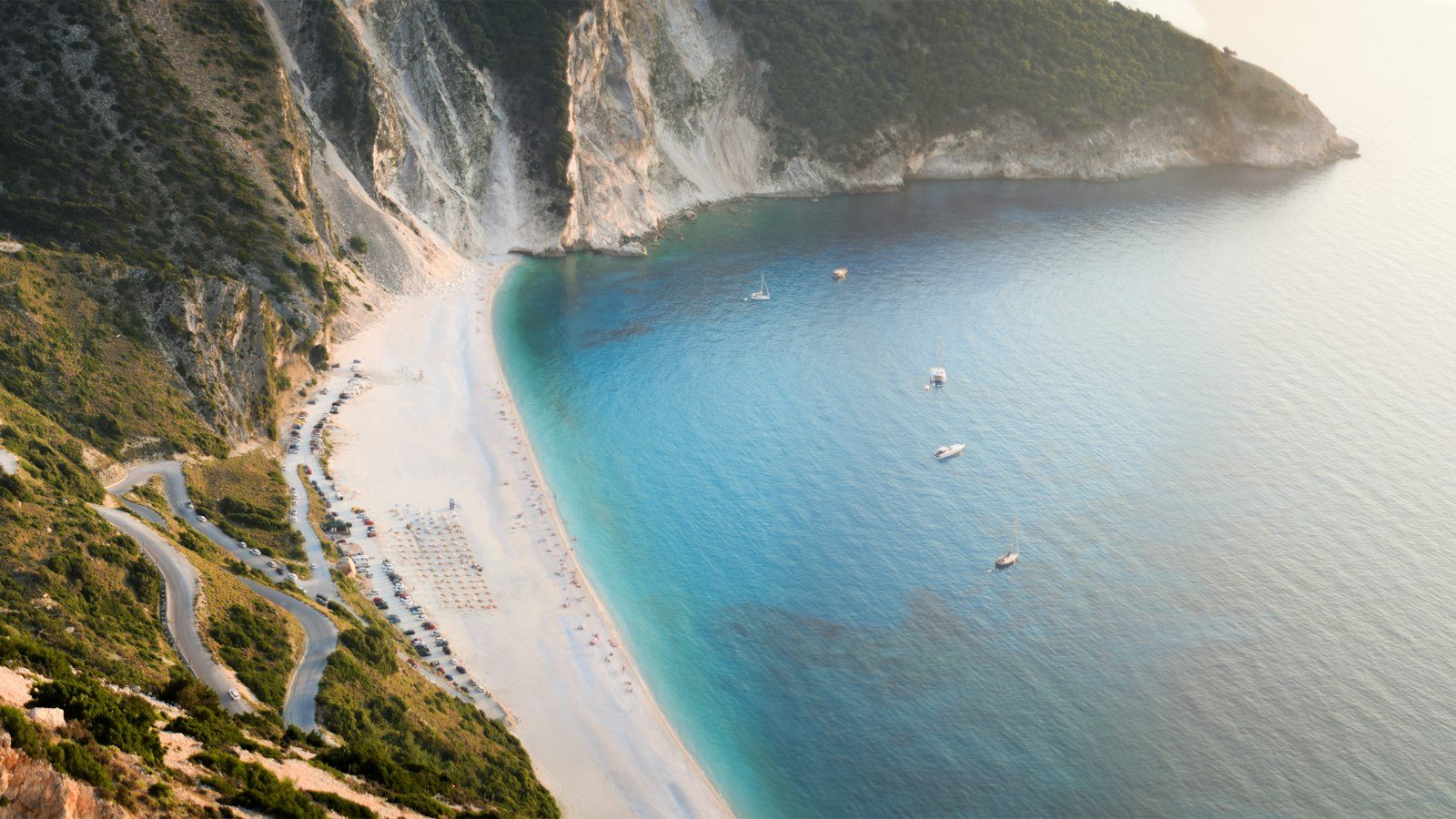
The largest of the Ionian islands, with high mountains, white-pebble coves and an underground lake lit by the midday sun. You watch sea turtles by the Argostoli fish boats, swim below the cliffs at Myrtos and eat meat pie with a glass of Robola in a harbour village.
- Best time to visit: May to June and September
- Daily budget (budget traveller): $70 to $240 USD
- Ideal trip length: 5 to 7 days
Kefalonia is the biggest island in the Ionian Sea, off Greece's west coast between Corfu and Zakynthos. It is larger and wilder than most people expect. A mountain ridge runs down the middle, topped by Mount Ainos at 1,628m, and the coast is a long run of cliffs, coves and small harbours. The 1953 earthquake flattened almost every town, so Argostoli, the capital, looks mostly modern. Fiskardo in the far north survived and still has its old painted houses. Most visitors come for the beaches, especially Myrtos, a curve of white pebbles below a high limestone cliff, and for Melissani, a cave lake where boatmen row you through blue water lit from a hole in the roof. Loggerhead turtles turn up most mornings by the fishing boats on the Argostoli waterfront. Distances are long and the buses are thin, so this is not an island to rush. Base yourself in Argostoli for buses and ferries, then move north for a few nights or hire a car for a couple of days. Rooms to let, taverna lunches and free beaches keep costs reasonable for a solo traveller, especially outside August.
Kefalonia is the largest of the Ionian islands, a mountainous block of limestone with a long, broken coastline and roughly 35,000 people. The Venetians held it for centuries, followed by the British, and the island kept a strong local identity, its own wine and a reputation for stubborn, witty people. The 1953 earthquake destroyed most of its towns, so Argostoli, Sami and Lixouri were rebuilt in a plain modern style, while Fiskardo in the north survived almost untouched. The island became famous after Captain Corelli's Mandolin was filmed around Sami. Most visitors still come for Myrtos, Melissani and the boat trips, but the slower pleasures are just as good: turtles by the fish boats, an evening ferry across the bay to Lixouri, fir forests on Mount Ainos and long lunches in village tavernas.
Getting here is easy in summer, with many direct flights to the airport just south of Argostoli. In winter you fly via Athens, or take the KTEL coach from Athens, which crosses on the year-round ferry from Kyllini to Poros. On the island, buses run from Argostoli, but routes to the north have only one return a day, so plan your days around the last bus back. A good plan for a solo traveller without a car is a few nights in Argostoli, then a few in Sami, Agia Efimia or Fiskardo, with a car or taxi for a day or two. Ithaca is a short, cheap ferry ride from Sami, and Lefkada and Zakynthos are reachable by summer boats.
Timing matters a lot. May, June and September bring warm water, open tavernas and running buses without the August crowds and prices. July and August are hot, busy and expensive, and the beaches near Argostoli and Lassi fill up. From November to March many hotels close, the caves keep short hours and buses drop to a few a week, but the island is green and quiet and rooms are cheap. Kefalonia is safe and relaxed, and English is widely spoken in tourist areas. Nightlife is mostly bars in Argostoli and Lassi. Come for swimming, walking, wine and village evenings rather than clubs.
Kefalonia itinerary
Arrive in Argostoli
Morning: Fly in or arrive by ferry and bus. Take the airport bus or a taxi into Argostoli and drop your bag at your room.
Afternoon: Walk the Lithostroto shopping street to Vallianou Square, then cross the lagoon on the old stone De Bosset Bridge.
Evening: Have dinner at a traditional taverna such as Tzivras, with meat pie and a glass of Robola.
Turtles, lighthouse and Lassi
Morning: Be at the waterfront fish market early to watch the loggerhead turtles by the boats. Then walk the shore road to the Katavothres and the Agioi Theodoroi lighthouse.
Afternoon: Carry on to Lassi and swim at Makris Gialos or Platis Gialos. Have a gyros for lunch.
Evening: Walk or take a taxi back to Argostoli for a drink on Vallianou Square.
Lixouri and Xi Beach
Morning: Take the ferry across the bay to Lixouri (€3.50, paid on board) and have coffee on the main square.
Afternoon: Take a taxi to Xi Beach for red clay cliffs and shallow water, or to Petani for a wilder cove. Arrange your pickup in advance.
Evening: Take a late ferry back to Argostoli as the sun drops behind the Paliki hills.
Melissani, Drogarati and Sami
Morning: Take the bus from Argostoli to Sami and continue to Karavomylos for Melissani Cave (€10). Aim to be on the lake around midday for the best light.
Afternoon: Visit Drogarati Cave (€4 with your Melissani ticket), then go to Antisamos for a swim. Use a taxi for the steep road.
Evening: Stay in Sami or Agia Efimia and eat by the harbour.
A day on Ithaca
Morning: Take the ferry from Sami to Pisaetos on Ithaca, and have a pre-booked taxi waiting to take you to Vathy.
Afternoon: Walk around Vathy harbour, swim at a cove nearby and have lunch on the waterfront.
Evening: Take the ferry back to Sami. Check return times before you leave, as they change by season.
Myrtos, Assos and Fiskardo
Morning: Hire a car for the day or take the bus north. Stop at the Myrtos viewpoint, then go down for an early swim.
Afternoon: Climb to the Venetian castle at Assos, then drive on to Fiskardo and walk out to the lighthouse.
Evening: Have fish by the harbour in Fiskardo, at Tassia or similar, and stay the night if you can.
Mount Ainos and depart
Morning: If you have the car, drive up Mount Ainos for a short walk in the fir forest, or visit the castle of Agios Georgios above Peratata.
Afternoon: Stop at the Robola cooperative in the Omala valley for a tasting and buy mandoles in Argostoli, then head to the airport or ferry.
Evening: Fly out, or catch the Kyllini ferry to the mainland and carry on to your next stop.
Best neighbourhoods
- Argostoli centre: The capital and transport hub, set around Vallianou Square and the Lithostroto shopping street. You have the bus station, the fish market where the turtles gather, banks, supermarkets and most of the year-round restaurants. It is lively until late in summer and the most practical base if you do not drive.
- Lassi: The resort strip about 3km west of Argostoli, with the sandy beaches of Makris Gialos and Platis Gialos, plenty of hotels, bars and car hire offices. It is close to the airport and has the summer airport bus. It suits you if you want beaches on the doorstep and a walk into town.
- Lixouri: The island's second town, across the bay on the Paliki peninsula and linked to Argostoli by a cheap car ferry. It is quieter and more local, with a big square of cafés. Xi and Petani beaches are nearby, but you need a taxi or car to reach them.
- Sami and Agia Efimia: Two harbour towns on the east coast, close to Melissani and Drogarati caves and the beach at Antisamos. Sami has the ferries to Ithaca, and Agia Efimia is smaller and prettier. It is a good middle base, though evenings are quiet outside summer.
- Fiskardo and Assos: The north of the island, with the best-looking villages. Fiskardo is a polished yacht harbour with old houses, and Assos is a tiny village on a narrow isthmus below a Venetian castle. Rooms cost more and buses are rare, so stay a few nights rather than visiting by day.
Must-do experiences
- Row across Melissani's cave lake: Near Sami, a collapsed cave roof lets sunlight onto a brackish blue lake, and a boatman rows you round in about 10 to 15 minutes. Adult tickets are €10, sold at the desk only. Go around midday for the best light, and show your ticket at Drogarati Cave nearby for a cheaper entry.
- Look down on Myrtos Beach: The island's most famous beach is a long arc of white pebbles below steep cliffs on the north-west coast. Stop at the viewpoint on the road above first, then drive or ride down the hairpins to swim. The water gets deep fast and waves can be strong, so check the sea before you go in.
- Climb to the castle at Assos: Walk up from the little harbour at Assos to the Venetian castle on the headland. The path is long and exposed, so go early or late with water. From the top you look back over the village and the isthmus, and the climb is free.
- Spend an evening in Fiskardo: Fiskardo escaped the worst of the 1953 earthquake, so it still has its old pastel houses around the harbour. Walk the path to the lighthouse and the ruined church on the point, swim at a small cove and stay for dinner when the day boats have gone.
- Watch the turtles in Argostoli: Loggerhead turtles often swim up to the fishing boats by the waterfront fish market in the morning. It is free. Watch from the quay, do not feed or touch them, then walk the shore road out to the Agioi Theodoroi lighthouse and the Katavothres sinkholes.
- Walk on Mount Ainos: The island's highest mountain is a national park, covered in the dark Kefalonian fir that grows almost nowhere else. A road climbs most of the way, and paths lead on to the summit area at 1,628m. You may see wild horses. Bring a warm layer, as it is much cooler than the coast.
- Take the ferry to Lixouri: The car ferry crosses the bay from Argostoli to Lixouri about every half hour in summer, takes 20 to 30 minutes and costs €3.50 for a foot passenger, paid on board. Have coffee on Lixouri's big square, then take a taxi to Xi Beach with its red clay cliffs.
Hidden gems
- The Venetian Castle of Agios Georgios above Peratata, once the island's capital, with wide views over the south coast and few visitors
- The Katavothres on the Lassi peninsula, sinkholes where sea water drains into the rock and flows underground across the island towards Melissani
- Kourkoumelata, a small village rebuilt after the 1953 earthquake in a neat neoclassical style, a short drive south of Argostoli
- The Omala valley, home to the Monastery of Agios Gerasimos, the island's patron saint, and the Robola wine cooperative next door
- The Korgialenio History and Folklore Museum in Argostoli, which shows photos of the town before 1953 and gives you a sense of what was lost
Daily budget
- Accommodation: budget €40-65 / night (room to let or simple studio), mid-range €90-160 (3-star hotel or sea-view apartment), splurge €300+ (5-star resort in the north). There are almost no hostels, so budget travellers use rooms to let (domatia). Prices peak in August. The climate resilience fee is added per room per night, from €2 for rooms to let to €15 at 5-star hotels from April to October, and much less in winter.
- Food: budget €20-30 / day (bakery pie, gyros, supermarket picnic), mid-range €40-60 (taverna lunch and dinner), splurge €90+ (fish by the kilo in Fiskardo with wine). A gyros pita costs around €4 and taverna mains about €12-20. Fresh fish is priced by the kilo, so ask first. Prices are rough guides.
- Transport: budget €3-10 / day (buses, Lixouri ferry), mid-range €30-60 (car hire for a day plus fuel), splurge €80-150 (private boat hire or long taxi rides). The Lixouri ferry is €3.50 for a foot passenger. Sami to Ithaca costs a few euros. Car hire is cheapest in May, June and September and costs much more in August.
- Activities: budget €0-10 / day (beaches, castles, walks), mid-range €15-30 (Melissani at €10, Drogarati at €4-6, museums), splurge €60+ (boat tours, guided cave and beach trips). Show your Melissani ticket at Drogarati to pay €4 instead of €6. Most beaches are free, but sunbeds cost extra at the busy ones.
- Drinks & nightlife: budget €5-10 (a beer or glass of Robola), mid-range €15-30 (a few drinks at a waterfront bar), splurge €50+ (cocktails at a Lassi beach bar). A freddo espresso costs about €3-4 and a beer €4-6. Nightlife is mostly bars around Vallianou Square and in Lassi.
Where to stay
- Budget room in Argostoli centre (€40-65 / night): Family-run rooms to let and simple studios are the island's budget option, as there are almost no hostels. Pick one within walking distance of the bus station and Vallianou Square so you can travel without a car.
- Boutique hotel in Vallianou Square, Argostoli (€100-180 / night): Ionian Plaza Hotel sits right on the main square, close to the bus station, the waterfront and the restaurants. It is a comfortable, central base for buses, ferries and evenings out.
- Apartment in Assos or Agia Efimia (€80-150 / night): Small studios with a kitchen and a balcony suit slow days in the north. Expect steep steps in Assos and few shops, and check how you will get there without a car.
- Splurge in Fiskardo (€300-600+ / night): Emelisse Nature Resort sits above a quiet bay just outside Fiskardo, with an infinity pool and views towards Ithaca. It is a peaceful place to end a trip, and the harbour is a short ride away.
What to eat
- Kefalonian meat pie (kreatopita): a rich pie of meat, rice and spices, sold in bakeries and served in old tavernas such as Tzivras in Argostoli
- Aliada with bakaliaros: a sharp garlic and potato dip served with fried salt cod, a cheap local classic
- Robola: the dry white wine grown in the mountain vineyards around Omala, at a few euros a glass in most tavernas
- Mandoles: red, sugar-coated almonds sold in bags in Argostoli shops, good for taking home
- Fresh fish in Fiskardo or by the Argostoli quay, sold by the kilo. Ask the price before you order
- Gyros pita or souvlaki for a cheap lunch, and a freddo espresso to keep you going in the afternoon heat
Day trips
- Ithaca (Ferry from Sami to Pisaetos, then about 15 to 20 minutes by road to Vathy): Odysseus's island is smaller, greener and quieter than Kefalonia. Vathy is a pretty harbour town tucked deep in a bay, with waterfront cafés and coves nearby. Take the bus from Argostoli to Sami, then the ferry to Pisaetos for a few euros. Book a taxi to Vathy in advance, as Pisaetos has few facilities. Check the return sailing first.
- Myrtos, Assos and Fiskardo (About 40km to Myrtos and 50km to Fiskardo from Argostoli, 1 to 1.5 hours by road): The best stretch of Kefalonia's coast, with the famous beach, a castle village and an old harbour that survived the 1953 earthquake. It makes a long but rewarding day. In summer, one KTEL bus a day runs to Myrtos and one to Fiskardo, returning around 17:00. A hire car lets you see all three in one day, or you can stay a night in the north.
- Mount Ainos National Park (About 25 to 30km east of Argostoli, 45 minutes by car): Dark fir forest, wild horses and huge views over the island and out to Zakynthos. It is a cool escape from the coast in summer. There is no useful bus, so hire a car or take a taxi. Drive up the mountain road and walk the marked paths. Access can be closed on days of very high fire risk.
When to visit
- Spring (April - May): 17-25°C, mild and green, sea still cool until late May. Crowds: Low to moderate, busier at Greek Easter. Good for walking, Mount Ainos and cheap rooms. Some tavernas and boats only open properly from May. Swimming is bracing until the end of the month.
- Early summer (June): 24-29°C, sunny and dry, sea around 22-24°C. Crowds: Moderate, rising towards July. One of the best months. Long days, warm water, full bus timetables and room prices below the peak.
- High summer (July - August): 29-33°C, hot and dry, sea up to about 26°C. Crowds: Very busy, especially in mid-August. Perfect for swimming and boat trips, but rooms cost the most, beaches fill by late morning and fire risk is high. Book early and travel in the morning.
- Autumn and winter (September - March): September 25-29°C, then cooling to 10-16°C in winter, with heavy rain at times. Crowds: Moderate in September, very quiet from November. September is the pick, with the warmest sea and calmer beaches. Winter is cheap and peaceful, but many places close and buses run only on some days.
Entry rules for your passport
Visa rules for Greece depend on the passport you travel on. Check the official source before you book: European Commission: Schengen visa policy
Getting there
Kefalonia airport is about 9km south of Argostoli. From spring to October there are many direct flights from the UK and Europe. In winter, you usually connect through Athens on a short domestic flight. A KTEL bus links the airport with Argostoli and Lassi until around 20 October, and taxis meet every flight. KTEL coaches also run from Athens to Argostoli in about 7.5 hours, crossing on the ferry. Levante Ferries runs from Kyllini on the mainland to Poros in the south-east all year, taking about 1.5 hours, from around €14.50 for a foot passenger. Sami has cheap ferries to Ithaca, and in summer boats link Fiskardo with Vasiliki on Lefkada and Pessada with Agios Nikolaos on Zakynthos. Ferry timetables change by month and are cut back in winter, so check them before you plan connections.
Border checks: non-EU visitors (other than Swiss, Norwegian, Icelandic, Liechtenstein, Andorran, Monegasque, San Marinese and Vatican citizens, and holders of an EU residence permit or long-stay visa) are registered in the EU's Entry/Exit System (EES) instead of getting a passport stamp. On your first crossing, officers take your photo and/or fingerprints, so allow extra time at passport control. ETIAS, the planned travel authorisation, is not in operation yet, so don't pay any website for one.
Getting around
Kefalonia is big, and getting around is the main thing to plan. KTEL Kefalonia runs buses from the station on the Argostoli waterfront to Sami, Agia Efimia, Fiskardo, Myrtos, Skala, Poros and Lassi, and to the airport in summer. Fares are a few euros, paid at the kiosk or to the driver. The network is thin, though. In summer there is usually one bus a day to Fiskardo and one to Myrtos, and the last buses back leave around 17:00 to 17:15. In winter many routes run only on certain weekdays, and Fiskardo may get just one bus a week. Check the timetable at the station and plan each day around the return. The Lixouri ferry costs €3.50 for a foot passenger, paid on board, and crosses the bay in 20 to 30 minutes. Taxis wait in Argostoli, Sami, Fiskardo and at the airport. They are useful for beaches the buses miss, but long rides add up. Hiring a car for a day or two opens up Myrtos, Assos, Mount Ainos and the south, but the mountain roads are narrow and winding, and you may meet goats. Scooters and quads are not a good idea on these roads.
Safety
Kefalonia is very safe, and crime against visitors is rare. Keep an eye on your bag on busy buses and at crowded beaches, and do not leave valuables in a hire car. The real risks are the roads, the sun and the sea. Mountain roads are steep, narrow and poorly lit, so drive slowly and avoid driving at night if you are not used to them. At Myrtos and other west-coast beaches the water deepens quickly and waves can be strong, so swim near other people. Carry water and a hat for castle and mountain walks. In summer, forests and some nature areas can be closed on days of very high fire risk. Kefalonia sits in an earthquake zone, so read the safety notice in your room. Many locals drink bottled water, so ask your host about the tap water. The EU emergency number is 112. EU travellers should carry an EHIC and UK travellers a GHIC, and everyone else needs travel insurance with medical cover.
Solo travel tips
- Plan around the last bus: The Fiskardo and Myrtos buses come back only once a day, and nothing waits if you miss it. Check the return time at the Argostoli station before you set off.
- Split your stay: Argostoli is best for buses, ferries and evenings out, while the north has the prettiest villages. Two bases save hours of travel and make day trips easier.
- Hire a car for a day or two: You do not need a car for the whole trip, but one or two days with one opens up Mount Ainos, the castle and quiet beaches. Book early for summer and drive the mountain roads slowly.
- Eat well on a budget: Bakery pies, gyros and supermarket picnics keep daily costs low. Save money for one long taverna dinner or a fish meal in Fiskardo.
- Safety for solo travellers: The main risks are winding roads, strong waves at Myrtos and walking in the heat. Swim near other people, carry water and tell someone your plans before remote hikes.
- Meet people on a boat: Join a day boat trip from Fiskardo or Agia Efimia, or a small-group tour to the caves. Shared tables in tavernas and the bars on Vallianou Square are also easy places to chat.
Cultural etiquette
- Greet people with 'kalimera' (good morning) or 'kalispera' (good evening) and say 'efharisto' (thank you). A little Greek goes a long way in villages.
- Cover your shoulders and knees in churches and monasteries. At Agios Gerasimos, wraps are often provided at the door.
- Cover up when you leave the beach. Swimwear in shops, tavernas and village streets is frowned upon.
- Keep noise down in the afternoon and late at night in villages, where people still rest after lunch.
- Never feed or touch the turtles in Argostoli harbour. Watch them quietly from the quay.
- Put toilet paper in the bin, not the toilet, as old drains block easily.
- Leaving 5-10% or rounding up for good taverna service is appreciated but not compulsory.
Frequently asked questions
How do I get to Kefalonia and from the airport to my room?
In summer, many direct flights from the UK and Europe land at Kefalonia airport, about 9km south of Argostoli. In winter you usually connect through Athens. From late spring to around 20 October, a KTEL bus links the airport with Argostoli and Lassi a few times a day. Otherwise, take a taxi to Argostoli, which takes about 20 minutes. Overland, KTEL coaches run from Athens to Argostoli in about 7.5 hours, using the ferry from Kyllini to Poros.
How many days do I need in Kefalonia?
Three days covers Argostoli, Melissani and a trip north to Myrtos, Assos or Fiskardo, but it feels rushed without a car. Five to seven days lets you add Lixouri and Xi Beach, a day on Ithaca, Mount Ainos and a couple of slow beach days. With a week, split your stay between Argostoli and the north.
When is the best time to visit Kefalonia?
May, June and September are best. The sea is warm enough to swim, the buses and boats run, and rooms cost less than in high summer. July and August are hot, crowded and the most expensive, especially in mid-August. From November to March the island is green and quiet, but many hotels and tavernas close, the caves keep shorter hours and buses run only on some days.
Can I see Kefalonia without a car?
Yes, but you need to plan. Argostoli, Lassi, Lixouri, Sami and Melissani are easy by bus or ferry. Fiskardo and Myrtos have only one bus a day in summer, and the last one back leaves around 17:00. For Mount Ainos, the castle of Agios Georgios and quieter beaches, hire a car for a day, take a taxi or join a tour.
How much do the caves cost and when are they open?
Melissani costs €10 for adults and Drogarati €6, or €4 if you show your Melissani ticket. Tickets are sold at the desk only. Both caves are run by the Municipality of Sami and open daily in season. From 13 October 2026 the hours are 10:00 to 15:00, with last entry at 14:30. Winter hours can change, so check before you go.
Can I visit Ithaca or other islands from Kefalonia?
Yes. Ferries run from Sami to Pisaetos on Ithaca for just a few euros. Pisaetos is a lonely port, so book a taxi to Vathy in advance. In summer, boats also run from Fiskardo to Vasiliki on Lefkada and from Pessada to Agios Nikolaos on Zakynthos. Levante Ferries runs from Poros to Kyllini on the mainland all year, taking about 1.5 hours, from around €14.50.
Is Kefalonia safe for solo female travellers?
Yes. It is a calm, family-oriented island, and locals are used to visitors. Argostoli's squares and waterfront are busy and well lit in the evening. Take normal care with drinks in resort bars, let someone know your plans before remote walks and avoid hitching or long drives on empty mountain roads after dark.
What entry rules apply to Greece in 2026?
Greece is in the EU and the Schengen area. Many non-EU visitors, including those from the UK, US, Canada and Australia, can stay visa-free for up to 90 days in any 180-day period across Schengen. The EU's Entry/Exit System has been fully running since April 2026 and records fingerprints and a photo at the border. ETIAS, a €20 online travel authorisation, is expected to start in late 2026. Check official EU and Greek government websites and your own government's travel advice before you travel.
Tours and activities in Kefalonia | Kefalonia in 2 days | Kefalonia in 3 days | Kefalonia in 4 days | Kefalonia in 5 days | Kefalonia in 7 days
Can't decide? Compare Kefalonia with...
Joy Plus home | Destinations | Itineraries | Activities | Flights | Budget planner | Calendar | Map | Blog | Lifetime access