Destinations / Asia
Khiva, Uzbekistan travel guide
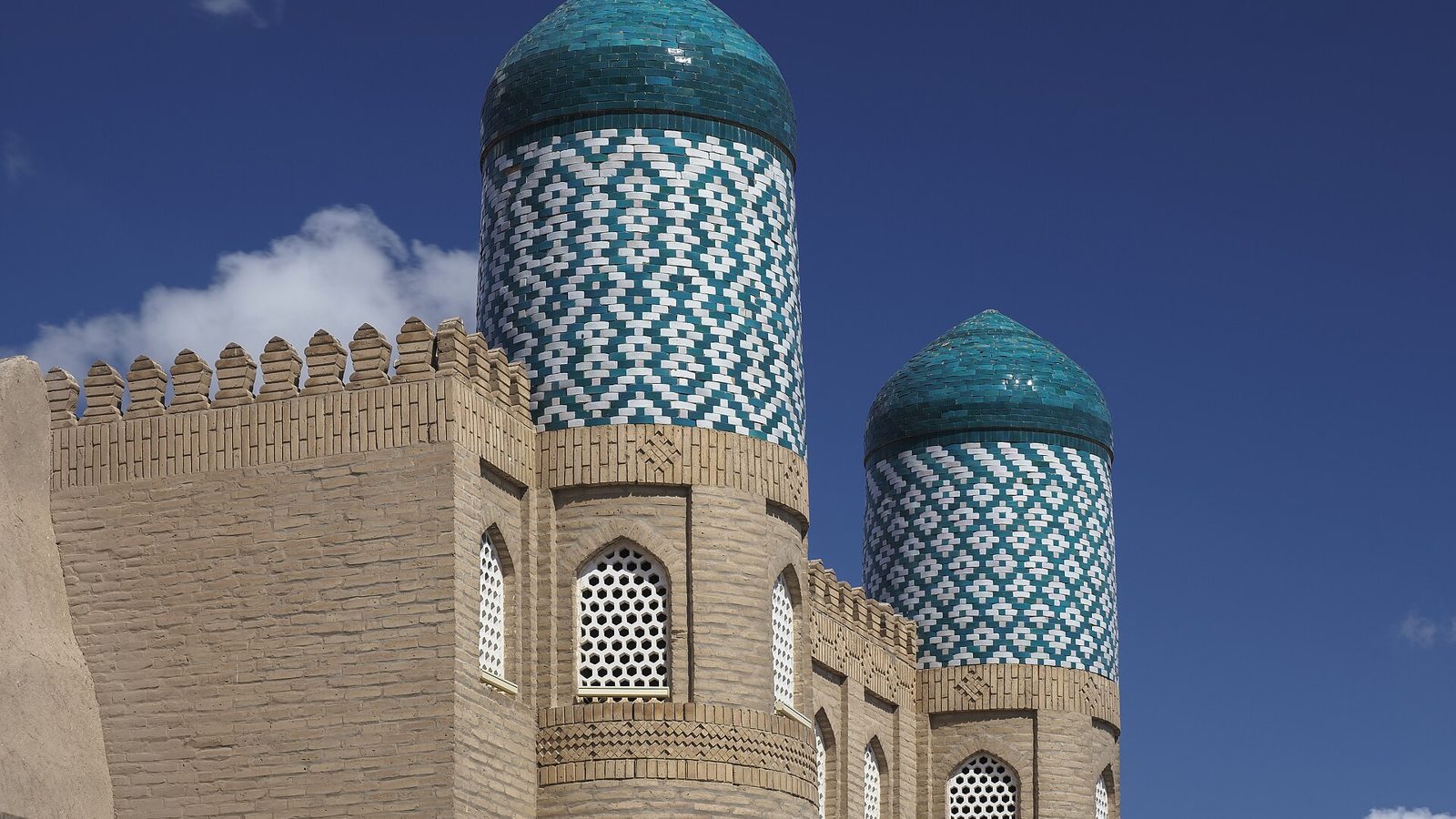
A walled Silk Road town on the edge of the Kyzylkum desert, with turquoise minarets, mud-brick ramparts and families still living inside the old walls. You climb a minaret at dawn, watch the sunset from the ramparts and eat dill-green noodles in a courtyard.
- Best time to visit: April to May and September to October
- Daily budget (budget traveller): $35 to $150 USD
- Ideal trip length: 2 to 4 days
Khiva sits in the Khorezm region of western Uzbekistan, about 30km from the regional capital Urgench and close to the Turkmen border. Its inner walled town, Itchan Kala, became Uzbekistan's first UNESCO World Heritage Site in 1990. Inside the mud-brick walls are more than 50 historic monuments and a few hundred houses, and around 2,600 people still live there. It is compact, flat and easy to walk, and after the day groups leave it turns into a quiet neighbourhood of lit lanes and teahouses. You can walk the lanes for free, but most monuments are covered by one combined ticket, valid for two days. Climb the Islam Khoja minaret for the view over the domes, walk a stretch of the ramparts at sunset and take a day trip to the ruined desert fortresses of ancient Khorezm. Khiva is busier than it used to be, especially since National Geographic put it on its Best of the World list for 2026. Even so, cheap family guesthouses, a new fast train from Tashkent and short distances make it an easy, good-value stop for a solo traveller.
Khiva is the most complete of Uzbekistan's Silk Road towns. It is a walled town of sand-coloured mud brick, glazed tiles and carved wooden doors on the edge of the Kyzylkum desert. Local legend says it is 2,500 years old, though most of what you see dates from the 18th and 19th centuries, when the Khiva Khanate was rich, isolated and known for its slave market. Most visitors come for a day from Bukhara or arrive by plane, rush through the madrasas and leave. Stay a couple of nights and you get the better version: the Kalta Minor glowing at dawn before the groups arrive, tea in a guesthouse courtyard and the walls turning orange at sunset. It is cheap by most standards. A family guesthouse bed, a bowl of shivit oshi and a two-day monument ticket will not break a solo budget.
Getting here is much easier than it used to be. Since May 2026, the Jaloliddin Manguberdi high-speed train has linked Tashkent and Khiva in about 7.5 hours, stopping at Samarkand and Bukhara. The sleeper train is still there for those on a tight budget. A new electric train now runs from Bukhara, and another links Khiva with Urgench airport, where flights from Tashkent take about 1.5 hours. Once you arrive, you walk. Itchan Kala is car-free and small enough to cross in 15 minutes. Stay inside the walls for atmosphere and early starts, or just outside the West Gate for bigger rooms. Use taxis or the trolleybus for Urgench and a hired car for the desert fortresses.
Timing shapes the trip. Spring and autumn are warm and bright, but they are also when tour groups arrive and trains sell out. Summer brings fierce desert heat, so plan your days around early mornings and evenings. Winter is cold and very quiet, and some guesthouses close. Khiva is safe and friendly, and people are used to visitors. English is spoken in guesthouses and cafés, while Russian and Uzbek cover everything else. Evenings are slow rather than lively, with tea, a roof terrace and a walk through the lit lanes. If you want nightlife, go to Tashkent. Here, you get a minaret at sunrise and the desert on your doorstep.
Khiva itinerary
Arrive and find your feet
Morning: Arrive on the morning train or flight. If you fly, take a taxi or the electric train from Urgench airport. Drop your bag at your guesthouse.
Afternoon: Walk the lanes of Itchan Kala without a plan. Look at the Kalta Minor from outside and get your bearings between the West and East gates.
Evening: Watch sunset over the walls from outside the West Gate, then have dinner with shivit oshi on a roof terrace.
Ticket day one: the western half
Morning: Buy the two-day ticket at the West Gate at opening time. See the Kunya Ark, the Muhammad Amin Khan madrasa and the Kalta Minor up close before the groups arrive.
Afternoon: Escape the heat in the cool hall of the Juma Mosque and the small museums in the madrasas. Rest at your guesthouse in the early afternoon.
Evening: Climb the Ak Sheikh Bobo watchtower in the Kunya Ark for sunset (about 100,000 som extra).
Ticket day two: minaret and palaces
Morning: Climb the Islam Khoja minaret early for the clearest views. Then visit the Pahlavan Mahmud Mausoleum, dressed modestly.
Afternoon: Visit the Tash Hauli Palace and its harem courtyard, then the Allakuli Khan madrasa. Stop at the silk carpet workshop to watch the weavers.
Evening: Walk the ramparts near the North Gate at golden hour, then have a slow dinner in a guesthouse courtyard.
Desert fortresses
Morning: Leave at about 8am with a hired driver. Cross the Amu Darya and visit Toprak Kala, an ancient palace city on a mound.
Afternoon: Climb up to Ayaz Kala for views over the Kyzylkum, then stop at Akchakul Lake. Bring water, snacks and cash for small entry fees.
Evening: Drive back to Khiva for a late dinner, or stay overnight in the yurt camp below Ayaz Kala.
Dishan Kala and the bazaar
Morning: Go through the East Gate to the Dekhkan Bazaar for bread, dried fruit and people-watching. Look into the Anusha Khan bathhouse on the way.
Afternoon: Visit the Nurullabay Palace just outside the walls, then take a wood-carving taster or a cooking class.
Evening: Eat plov or a cheap local meal in Dishan Kala, then walk back through the lit lanes.
Urgench by trolleybus
Morning: Ride trolleybus line 2 from near the North Gate to Urgench (about an hour) through cotton fields and villages.
Afternoon: Wander Urgench's big bazaar and Soviet-era avenues for a contrast with Khiva. Return by shared taxi or the electric train.
Evening: Sunrise is better than sunset in the old town, so have an early night and plan a dawn walk for tomorrow.
Dawn walk and depart
Morning: Be at the West Gate at first light to photograph the Kalta Minor in the empty square. Then have breakfast at your guesthouse.
Afternoon: Buy a carved board or suzani embroidery, then catch the train to Bukhara or Tashkent, or a flight from Urgench.
Evening: Arrive in Bukhara or Tashkent, or carry on to your next stop.
Best neighbourhoods
- Itchan Kala: The walled inner town, about 650m by 400m, with the minarets, madrasas, palaces and most of the guesthouses. Staying here means you can be at the Kalta Minor before the tour groups arrive and walk home under the lights at night. Rooms are small and often up steep stairs, but the location is hard to beat.
- West Gate (Ota Darvoza): The main entrance, with the ticket office, cafés with roof terraces, money changers and taxis. Several mid-range hotels sit just outside the walls here, with bigger rooms and easier access by car. It is busy by day and calm in the evening.
- Dishan Kala and the bazaar: The outer town beyond the East Gate (Polvon Darvoza), where locals shop, eat and live. The Dekhkan Bazaar, cheap canteens and the old bathhouses are here. It suits you if you want lower prices and everyday street life, and the old town is still only a few minutes' walk away.
- North Gate and the station road: The quieter northern side of the walls, near the Nurullabay Palace and the stop for the trolleybus and shared taxis to Urgench. Newer hotels and guesthouses line the roads towards the railway station. It is practical for early trains, but less atmospheric at night.
- Urgench: The modern regional capital, about 30km north-east, with the airport, the main railway station and Soviet-era avenues. There is little to see, but hotels are cheaper and it is the hub for shared taxis. Most people pass through rather than stay.
Must-do experiences
- Buy the two-day ticket and work through the monuments: The combined Itchan Kala ticket costs about 250,000 som (around $20) and is sold at the West and East gates. It covers roughly 16 sites, including the Kunya Ark, Juma Mosque and Tash Hauli Palace. Your ticket is checked at each one, so keep it handy.
- Climb the Islam Khoja minaret: This is the tallest minaret in Khiva, and the dark, narrow spiral stairs lead to a window-lit platform with views across every dome in town. It costs about 100,000 som on top of the main ticket. Go early in the morning, when the light is soft and the stairs are empty.
- Watch sunset from the Kunya Ark watchtower: The Ak Sheikh Bobo bastion in the old citadel is the classic sunset viewpoint over the Kalta Minor and the Islam Khoja minaret. Entry is about 100,000 som extra. Arrive half an hour early in peak season, as the small platform fills quickly.
- Walk the ramparts: A stretch of the thick mud-brick walls near the North Gate is open to walk for about 40,000 som. You look down into courtyards and across to the desert edge. It is free to admire the walls from outside, and the light on them is lovely at dusk.
- Stand among the pillars of the Juma Mosque: The Friday Mosque is a dim hall held up by more than 200 carved wooden columns, some of them centuries old. It is included in the combined ticket. Visit at midday, when light falls through the roof openings and the hall stays cool.
- Visit the Pahlavan Mahmud Mausoleum: Khiva's most loved shrine honours a poet, wrestler and furrier who became the town's patron saint. The tiled interior is the finest in the old town. It is still a place of pilgrimage, so dress modestly and expect a separate small fee of about 25,000 to 50,000 som.
- Take a craft workshop: Khiva has a long wood-carving tradition, and you can see carvers at work in small shops around the old town. Some offer short classes, and you can also try a shivit oshi cooking session. The silk carpet workshop is a good free stop where you can watch the weavers.
Hidden gems
- The Anusha Khan bathhouse by the East Gate, a 17th-century bathhouse half buried underground to keep the heat in
- The small Sayid Alauddin Mausoleum, one of the oldest buildings inside the walls, quiet even when the main lanes are packed
- The residential lanes in the north and south of Itchan Kala, where children play football against madrasa walls and nobody sells anything
- The Nurullabay Palace just outside the walls, with its European-style reception rooms built for the last khans and far fewer visitors
- The Dekhkan Bazaar beyond the East Gate in the morning, with piles of bread, dried apricots and, in late summer, Khorezm melons
Daily budget
- Accommodation: budget $10-25 / night (hostel dorm or simple guesthouse room), mid-range $45-90 (boutique guesthouse or hotel by the walls), splurge $120+ (madrasa hotel room or a yurt night with meals). Breakfast is almost always included. Prices rise in April, May, September and October. A small tourist tax per night is usually included in the rate or added at check-in.
- Food: budget $8-15 / day (plov canteens, bazaar bread and fruit, guesthouse breakfast), mid-range $20-35 (terrace lunch and a sit-down dinner), splurge $45+ (best restaurants, set menus with wine). Restaurants in the old town often add a 10-15% service charge. Local canteens in Dishan Kala are much cheaper than terraces by the West Gate.
- Transport: budget $0-3 / day (walking, trolleybus, electric train), mid-range $5-15 (taxis around town and to Urgench), splurge $60-100 (private driver to the desert fortresses). The high-speed train from Tashkent costs 780,000 som in economy. The airport electric train is about 25,000 som. Agree taxi fares before you set off.
- Activities: budget $20 (two-day Itchan Kala ticket), mid-range $30-45 (ticket plus minaret, watchtower and wall walk), splurge $60+ (private guide, workshops, fortress tour). The combined ticket is about 250,000 som. The Islam Khoja minaret and Ak Sheikh Bobo watchtower each cost about 100,000 som, and the wall walk is about 40,000 som.
- Drinks & nightlife: budget $1-3 (pot of tea or a soft drink), mid-range $5-12 (local beer or wine on a roof terrace), splurge $20+ (imported wine with dinner). Khiva is quiet at night. Alcohol is sold in some restaurants and shops, but not everywhere, and nightlife means a terrace at sunset.
Where to stay
- Social hostel in Itchan Kala and the North Gate ($10-20 / night (dorm)): A handful of small hostels and family guesthouses with dorms sit inside or just outside the walls. You get cheap beds, a shared breakfast table and other travellers to split taxis and fortress trips with.
- Boutique hotel in West Gate (Ota Darvoza) ($50-100 / night): Hotel Asia Khiva and similar mid-range hotels just outside the walls have bigger rooms, reliable air conditioning and easy taxi access. The ticket office and sunset spots are a short walk away.
- Apartment in Itchan Kala lanes ($30-60 / night): Family-run guesthouses such as Meros B&B feel like staying in a home, with courtyard breakfasts and roof terraces. Rooms are compact and stairs are steep, so check before booking if you have heavy luggage.
- Splurge in Inside the walls or Ayaz Kala ($80-150+ / night): Sleep in a converted student cell at Orient Star, in a 19th-century madrasa next to the Kalta Minor, or book a yurt night with dinner below the Ayaz Kala fortress. Neither is luxury in the usual sense, but both are memorable.
What to eat
- Shivit oshi: Khiva's signature dish of bright green dill noodles topped with a meat and vegetable stew and a spoonful of yoghurt
- Tukhum barak: soft boiled dumplings filled with egg and served with sour cream, a Khorezm speciality you rarely find elsewhere
- Khorezm plov: the rice and carrot dish cooked in huge pans, best at lunchtime in local canteens for a few dollars
- Gutab: thin flatbreads folded around greens or meat and cooked on a griddle, good as a cheap snack
- Green tea and non: a pot of tea and a round of fresh bread come with almost every meal and cost very little
- Khorezm melons and dried fruit: from the bazaar in late summer and autumn, along with apricots, raisins and nuts
Day trips
- Ayaz Kala and Akchakul Lake (About 1.5 to 2 hours' drive north-east of Khiva): A cluster of ruined mud-brick fortresses on hills above the Kyzylkum desert, with a yurt camp below and a salty lake nearby. It is the most dramatic of the Khorezm fortresses. Hire a driver through your guesthouse or book a private day trip, which costs roughly $40-100 for the car. Entry is about $1-2. Add a yurt night with dinner and breakfast if you have time.
- Toprak Kala (About 1.5 hours' drive from Khiva, on the way to Ayaz Kala): The ruins of a palace city that was a Khorezm capital in the early centuries AD, rising on a huge mound. Archaeologists found wall paintings and archives here. Usually combined with Ayaz Kala on the same day trip by car. Bring water, snacks and cash, as facilities are basic.
- Urgench (About 30km north-east, 30 minutes to an hour): The modern regional capital, with a big bazaar and wide Soviet-era streets. It is not pretty, but it gives you a look at everyday Khorezm life and a ride on Uzbekistan's last trolleybus line. Take trolleybus line 2 from near Khiva's North Gate (about an hour, very cheap), a shared taxi (about 30 minutes) or the new electric train.
When to visit
- Spring (April - May): 20-30°C, sunny and dry, cool evenings. Crowds: Busy, especially with tour groups in late April and May. One of the best times to go. Good light and comfortable walking, but book trains and rooms early.
- Summer (June - August): 35-45°C, intense dry heat, almost no rain. Crowds: Moderate, quieter at midday. Hard going. Sightsee from 7am to 11am and after 5pm, and rest in between. Rooms are cheaper, but make sure yours has air conditioning.
- Autumn (September - October): 20-32°C in September, cooling to 15-22°C by late October. Crowds: Busy, the second peak of the year. The locals' pick. Warm days, melon season and soft evening light on the walls. Popular trains sell out fast.
- Winter (November - March): Around -5 to 10°C, cold nights, occasional snow. Crowds: Very quiet. Bleak but beautiful, with empty lanes and cheap rooms. Some guesthouses and cafés close, and monument hours are shorter. Pack warm layers.
Entry rules for your passport
Visa rules for Uzbekistan depend on the passport you travel on. Check the official source before you book: Uzbekistan Ministry of Foreign Affairs
Getting there
Khiva has its own railway station but no airport. The nearest airport is Urgench, about 30km away, with flights from Tashkent taking around 1.5 hours and some international routes. From Urgench airport, a taxi to Khiva takes about 30 to 40 minutes. Since September 2026, an electric train has also run from the airport to Khiva via Urgench station for about 25,000 som, though only a few times a day. The Jaloliddin Manguberdi high-speed train links Tashkent and Khiva in about 7.5 hours via Samarkand and Bukhara, with economy seats at 780,000 som. At launch in May 2026, it left Tashkent at 07:00 on Tuesdays, Thursdays and Saturdays and returned on Wednesdays, Fridays and Sundays. Check the current timetable. The overnight sleeper takes about 14 hours, and berths cost from around 245,000 som. A new electric train runs between Khiva and Bukhara on most days. Book all trains on eticket.railway.uz. Shared taxis via Urgench remain a slower backup for Bukhara.
Getting around
Itchan Kala is car-free and small enough to cross in 10 to 15 minutes, so you will walk almost everywhere. The ground is flat, but the minaret stairs and wall steps are steep and uneven. Taxis wait outside the West and North gates, and short rides across town cost a dollar or two. Agree the price first or use the Yandex Go app. Trolleybus line 2 runs between Khiva and Urgench, leaving from near the North Gate. It is very cheap but takes about an hour. Shared taxis on the same route leave when full and take around half an hour. Since September 2026, a new electric train links Khiva with Urgench station and Urgench airport, with tickets around 25,000 som (about $2). It runs only a few times a day, so check the times. For the desert fortresses, you need a private driver or a tour, as there is no useful public transport.
Safety
Khiva is very safe, and violent crime against visitors is rare. The real risks are the heat and the stairs. From June to August, temperatures often go above 40°C, so sightsee early and late, rest at midday and carry water. The minaret stairs are steep, dark and narrow, so use a phone torch and take care coming down. Agree taxi fares before you set off, and count your change at money changers. Tap water is not safe to drink, so buy bottled water or use a filter. Uzbekistan has strict drug laws, and some medicines containing codeine or similar ingredients are controlled, so carry prescriptions. For police, call 102, and for an ambulance, call 103. Travel insurance with medical cover is essential, as serious cases go to Urgench or Tashkent.
Solo travel tips
- Stay inside the walls: A family guesthouse in Itchan Kala lets you see the monuments at dawn and walk home safely at night. You also get breakfast with other travellers, which is an easy way to share a fortress driver.
- Book trains as soon as they open: The fast Tashkent train and the sleeper to Khiva sell out in spring and autumn. Check eticket.railway.uz as soon as your dates are fixed, and plan the rest of the trip around the train.
- Split the fortress trip: A private car to the desert fortresses is priced per vehicle. Ask at your guesthouse or post in traveller groups to find others to share with, and the cost per person drops fast.
- Carry cash in som: Small cafés, the bazaar, taxis and fortress entry fees are cash only. Use ATMs at the West Gate or in Urgench, and keep small notes for tickets and tea.
- Safety for solo travellers: The main risks are heat and steep, dark minaret stairs. Sightsee early and late in summer, carry water and a torch, and agree taxi fares before you get in.
- Meet people over tea: Guesthouse courtyards, roof terraces at sunset and craft workshops are the easiest places to start a conversation. Many hosts are happy to talk about Khorezm life over a pot of green tea.
Cultural etiquette
- Greet people with 'assalomu alaykum' and say 'rahmat' (thank you). A hand on the heart with a small nod is a polite greeting, especially between men and women.
- Dress modestly in town, with shoulders and knees covered. Women should bring a scarf for the Pahlavan Mahmud Mausoleum and working mosques.
- Take your shoes off when you step onto carpets in homes, mosques and on teahouse platforms.
- Treat bread with respect. Never put it upside down or throw it away, and tear it by hand rather than cutting it.
- Ask before photographing people, especially women and pilgrims at the shrine.
- Accept tea when it is offered, even if you only take a few sips. Refusing outright can seem cold.
- Bargain politely at souvenir stalls, but do not haggle over fixed prices at monuments or in canteens.
Frequently asked questions
How do I get to Khiva and from the station to my room?
The easiest way is the Jaloliddin Manguberdi high-speed train from Tashkent. It takes about 7.5 hours and economy seats cost 780,000 som. When it launched in May 2026, it ran three days a week in each direction. The cheaper sleeper train takes about 14 hours. You can also fly from Tashkent to Urgench in about 1.5 hours. Khiva station is a short taxi ride from the walls. From Urgench airport, take a taxi, the trolleybus or the new electric train.
How many days do I need in Khiva?
One full day covers the main monuments, but two days let you use the whole two-day ticket at a slower pace and see the sunrise and sunset. Three or four days lets you add a desert fortress trip, a craft workshop and the bazaar. Stay longer only if you want a yurt night or slow days in the guesthouse.
When is the best time to visit Khiva?
April, May, September and October are best, with warm days, cool evenings and good light. They are also the busiest months, so book trains and rooms early. June to August is very hot, often above 40°C. Winter is cold, sometimes below freezing, and very quiet. Some guesthouses close, but you may have the minarets to yourself.
Is the Itchan Kala ticket worth it?
Yes, if you want to go inside the monuments. Walking the lanes is free, but the combined ticket costs about 250,000 som (around $20), lasts two days and covers roughly 16 sites. The Islam Khoja minaret, the Kunya Ark watchtower and the wall walk cost extra, and so does the Pahlavan Mahmud Mausoleum. Buy it at the West or East gate. If you are staying inside the walls, show your booking at the gate.
How do I visit the desert fortresses?
Ayaz Kala and Toprak Kala are ruined Khorezm fortresses 1.5 to 2 hours' drive from Khiva, across the Amu Darya river. Hire a driver through your guesthouse or book a private day trip, which costs roughly $40-100 for the car. Entry to each fortress is only a dollar or two. For a longer trip, add a night in the yurt camp below Ayaz Kala.
Can I take the train from Khiva to Bukhara?
Yes. Since September 2026, a new electric train has run between Khiva and Bukhara on most days, leaving Khiva in the morning. The Tashkent high-speed train also stops in Bukhara and Samarkand. Book on eticket.railway.uz, because tickets sell out in spring and autumn. Shared taxis via Urgench are the backup, but they are slower and less comfortable.
Is Khiva safe for solo female travellers?
Yes. Khiva is calm and safe, and the old town stays lit and busy until late. Expect some curious looks and the odd request for a photo, which you can politely decline. Dress modestly, with shoulders and knees covered, especially at shrines. Family guesthouses inside the walls are a comfortable and sociable choice.
What entry rules apply to Uzbekistan in 2026?
Citizens of the EU, the UK and many other countries can stay visa-free for up to 30 days. Since 1 January 2026, this has also applied to US citizens. You cannot extend a visa-free stay. Foreigners must be registered within three days of arrival, and hotels and licensed guesthouses do this for you at check-in. Keep the slips or check your e-registration. Confirm the rules with official Uzbek sources and your own government's travel advice before you go.
Tours and activities in Khiva | Khiva in 2 days | Khiva in 3 days | Khiva in 4 days | Khiva in 5 days | Khiva in 7 days
Can't decide? Compare Khiva with...
Joy Plus home | Destinations | Itineraries | Activities | Flights | Budget planner | Calendar | Map | Blog | Lifetime access