Destinations / Europe
Korčula, Croatia travel guide
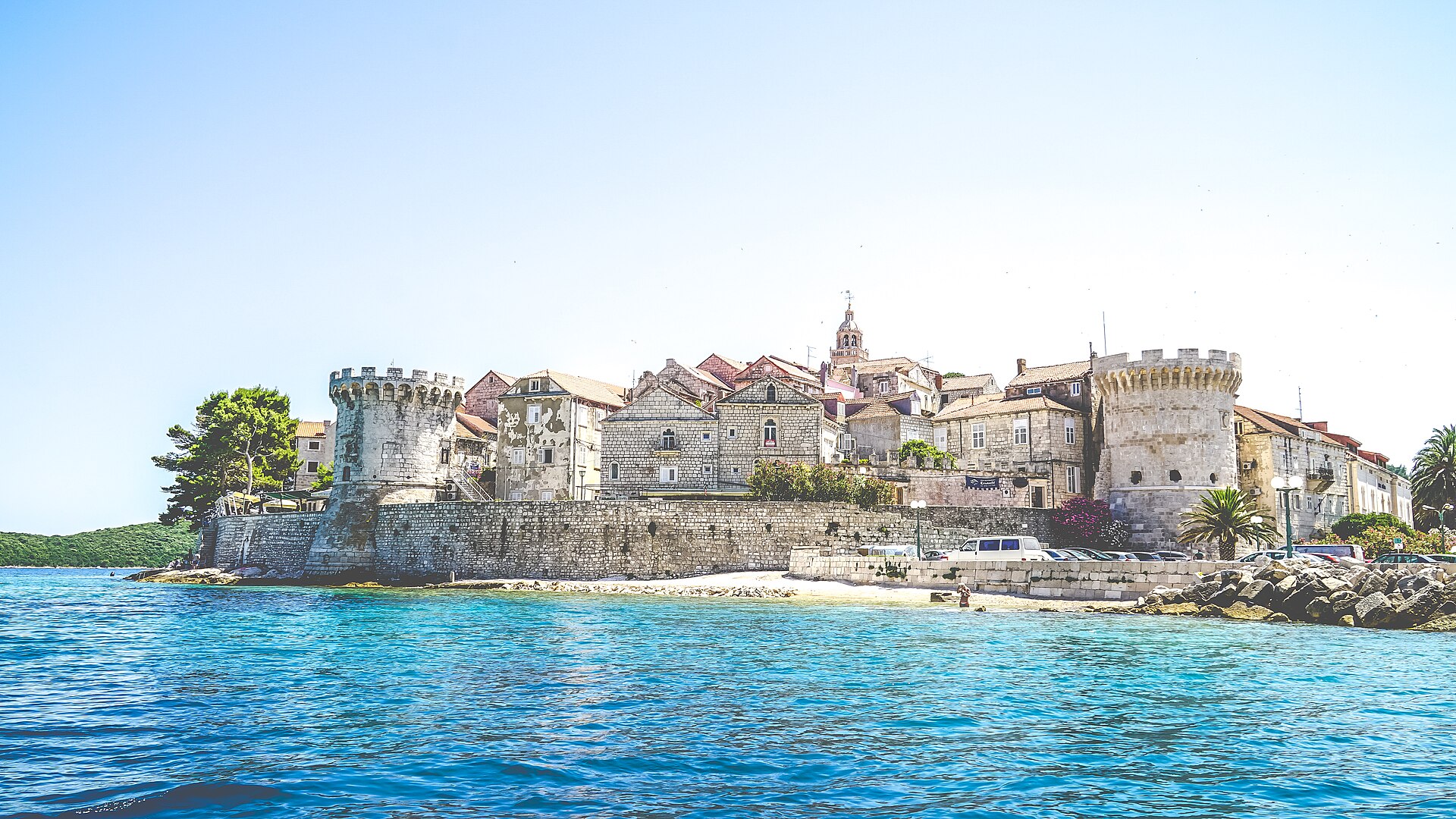
A walled stone town on a small peninsula, ringed by vineyards, olive groves and quiet coves, where you eat handmade pasta, drink Pošip and watch a 17th-century sword dance.
- Best time to visit: May to June, September to early October
- Daily budget (budget traveller): $75 to $430 USD
- Ideal trip length: 4 to 7 days
Korčula is a long, green island in southern Dalmatia, about halfway between Split and Dubrovnik. Its main town sits on a small oval peninsula. The streets are laid out like a fish skeleton: one main street, with narrow lanes running off it, which keeps out the worst of the wind and sun. Inside the walls you get St Mark's Cathedral, small museums, a house that claims to be Marco Polo's birthplace and tower-top bars. Outside the walls are vineyards, pine woods and wine villages. Lumbarda grows the rare white Grk, Smokvica and Čara grow Pošip, and Vela Luka at the far western end has a prehistoric cave. On summer evenings, local dancers perform the Moreška sword dance by the walls, as Korčula groups have done for centuries. Korčula is busier and pricier in July and August, but it is still calmer than Hvar. For a solo traveller it works well: catamarans from Split and Dubrovnik land right at the old town, cheap local buses reach the beaches and villages, and the town is small enough to walk everywhere.
Korčula is one of the larger Dalmatian islands, about 47km long and covered in pine, olive groves and vineyards. Most visitors head for Korčula Town on its eastern tip, a walled medieval town that looks across a narrow channel to the mountains of Pelješac. It was shaped by centuries of Venetian rule, and stone carving and shipbuilding made it rich. The streets inside the walls run in a herringbone pattern, and you can cross the whole old town in ten minutes. Beyond town, the island gets quieter fast. Lumbarda has sandy coves and Grk vineyards. The inland villages make pasta, olive oil and Pošip wine. Vela Luka, at the western end, is a working port with a prehistoric cave above it.
Getting here is simple in season. Catamarans from Split and Dubrovnik land right by the old town, and the Krilo boat also stops at Pomena on Mljet, which makes an easy day trip. Year-round, ferries from Split reach Vela Luka, and buses from Dubrovnik cross the Pelješac peninsula to the short car ferry at Orebić. Base yourself in or near Korčula Town for your first nights. Use buses and taxi boats for Lumbarda and Badija, then hire a scooter or take the bus for one day out west. Keep at least one buffer day before an onward flight, because strong wind can cancel catamarans.
Timing changes the feel of the island. July and August bring full catamarans, yachts in the harbour, higher prices and late, busy evenings. Late May, June and September are warm and easier, with a sea that is good for swimming and Moreška nights twice a week. October is quieter and cheaper, but some places start to close. From November to March, many hotels and restaurants shut and boats run less often. Korčula is safe, English is widely spoken and the pace is gentle. If you want clubbing, go to Hvar. If you want a swim, a glass of Pošip and a sword dance under the walls, stay here.
Korčula itinerary
Arrive by catamaran and walk the old town
Morning: This plan assumes you arrive on a Sunday in season. Take the morning Krilo catamaran from Split (08:00) or the afternoon boat from Dubrovnik. Book online and sit outside if you can.
Afternoon: Drop your bag, then enter through the Land Gate and wander the main street to St Mark's Square. Pick up klajun or cukarini at Cukarin for later.
Evening: Walk the western sea wall for sunset, then dinner a few streets back from the waterfront. Finish with a drink on the walls.
Cathedral, Badija and the Moreška
Morning: Climb the bell tower of St Mark's Cathedral early, before the heat. Then visit the Town Museum, the abbey treasury and the Marco Polo house, which has a small fee and a tower view.
Afternoon: Take a taxi boat from the harbour to Badija. Swim off the rocks, see the Franciscan monastery and meet the fallow deer.
Evening: Moreška at 9pm in the Ljetno kino (€20). Arrive 30 minutes early for a good seat. Late dinner in the old town.
Lumbarda beaches and Grk wine
Morning: Bus to Lumbarda (about 15 minutes, around €2.70). Walk down to Pržina for a morning swim on the sand.
Afternoon: Lunch in the village, then a Grk tasting at a family winery such as Bire. Book ahead in summer.
Evening: Last bus back to Korčula Town, or stay for sunset and take a taxi. Light dinner of pizza or grilled fish.
Inland villages and south coast coves
Morning: Hire a scooter or e-bike in town. Ride to Žrnovo and through the hamlets, then climb to the stone village of Pupnat.
Afternoon: Drop down to Pupnatska Luka for a swim in clear water. Bring snacks, because services are seasonal.
Evening: Dinner at Konoba Mate in Pupnat, known for makaruni and local produce. Book ahead and ride back slowly before dark.
West to Vela Luka
Morning: Early bus to Vela Luka (about an hour). Walk up to Vela Spila before the midday heat. It is often reported closed on Sundays.
Afternoon: Lunch on the seafront, then a summer boat to Proizd for white rocks and turquoise water, if boats are running.
Evening: Bus back to Korčula Town, or stay the night in Vela Luka for a quieter, cheaper evening.
Day trip to Mljet
Morning: Catch the Krilo catamaran from Korčula Town at about 10:30 to Pomena on Mljet (€20). Buy the national park ticket and walk to the lakes.
Afternoon: Take the park boat to St Mary's island and monastery, then swim in the lakes or hire a bike for the lake loop.
Evening: The return catamaran leaves Pomena at about 16:50 and reaches Korčula Town at about 17:30. Farewell dinner and a final walk on the walls.
Orebić and onward
Morning: Cross to Orebić on the ferry from Dominče (20 minutes). Walk up to the Franciscan monastery for the view back over Korčula.
Afternoon: Swim at Orebić's long pebble beach, then return for your bag. Or take the bus from Orebić to Dubrovnik if you planned it with your luggage.
Evening: Head on to Dubrovnik or Split by catamaran or bus. Keep a buffer before flights in case wind cancels the boat.
Best neighbourhoods
- Korčula Old Town: The walled peninsula where the catamarans dock. St Mark's Cathedral, the museums, the Land Gate and most restaurants and bars are here. It is beautiful and walkable, but rooms cost more and the stone streets hold the heat in July and August.
- Borak and the west harbour: The streets just south and west of the walls, around the bus station and the Ljetno kino, the open-air venue where the Moreška is danced. You get private rooms and apartments a few minutes' walk from the old town, plus supermarkets and sunset views over the channel.
- Dominče and Banje: The coast east of town, near the car ferry from Orebić. It is quieter, with rocky swimming spots, larger hotels and cheaper apartments. The walk along the shore into the old town takes about 20 to 30 minutes.
- Lumbarda: A wine village about 15 minutes by bus from Korčula Town. It has the island's best sandy beaches, Pržina and Bilin Žal, plus family wineries making Grk. It suits a beach-and-wine stay, and buses run back to town several times a day.
- Vela Luka: The working port town at the western end of the island, about an hour by bus from Korčula Town. Ferries from Split also land here. It is less polished and cheaper, with the Vela Spila cave above town and boats to the island of Proizd in summer.
Must-do experiences
- Walk the old town and the walls at sunset: Enter through the Land Gate below the Revelin Tower, then follow the main street up to St Mark's Square. In the evening, walk the western sea wall for sunset over the Pelješac channel. It is free, and the light on the stone is the best of the day.
- Climb the bell tower of St Mark's Cathedral: The cathedral is the heart of the old town, built from local stone with a carved portal. Climb the narrow tower for views over red roofs to Pelješac. There is a small fee, and the stairs are steep and tight.
- Watch the Moreška sword dance: The Moreška is a mock battle danced with two swords to a live wind band, and it has been performed in Korčula since at least the 17th century. In 2026 the season runs from late April to mid-October at 9pm in the Ljetno kino, with tickets at €20 for adults. Seats are first come, first served, so arrive early.
- Take a taxi boat to Badija: Badija is a wooded island just off town, with a Franciscan monastery, quiet swimming spots and tame fallow deer. Taxi boats leave from the harbour in summer. Bring water and snacks, because facilities are basic.
- Swim and taste Grk in Lumbarda: Catch the local bus to Lumbarda, swim at the sandy cove of Pržina, then taste Grk, a dry white grown mainly in Lumbarda's sandy soil. Family wineries such as Bire offer tastings. Book ahead in high season.
- Visit Vela Spila above Vela Luka: Vela Spila is a huge cave with holes in its roof, used by people from at least 20,000 years ago. It is a short, steep walk from Vela Luka's seafront, with wide views over the bay. Entry is a few euros, and opening hours are seasonal.
- Day trip to Mljet National Park: Take the morning catamaran to Pomena, walk or cycle around the saltwater lakes and catch the little boat out to the island monastery of St Mary. The park ticket is extra and changes by month, so check before you go.
Hidden gems
- St Anthony's Hill (Sv. Antun), a cypress-lined stairway to a small chapel above the coast west of town, quiet at sunset and a good short walk
- Pupnatska Luka, a pebble cove below the village of Pupnat on the south coast, with clear water, best reached by car or scooter
- Žrnovo, a string of stone hamlets just inland from town where people still make makaruni, the island's hand-rolled pasta
- Vrnik, a tiny island off Lumbarda with old stone quarries that supplied Korčula's buildings, reached by taxi boat or kayak
- The Korčula Sword Dance Festival in early September, when village groups perform their own sword dances across the island, with free entry
Daily budget
- Accommodation: budget €30-60 / night (hostel dorm or simple private room), mid-range €90-170 (apartment or small hotel), splurge €350+ (heritage hotel or palace suite in the old town). Private rooms (sobe) and apartments are the backbone of Korčula's accommodation. July and August often have minimum stays and prices up to double. A tourist tax is added per night.
- Food: budget €25-40 / day (bakery breakfast, supermarket lunch, pizza or grill dinner), mid-range €50-80 (konoba lunch and a sit-down dinner with wine), splurge €120+ (tasting menu at a top restaurant). Old town waterfront restaurants charge the most. Walk a few streets back or go to village konobas for better value. Fish priced by the kilo can surprise you, so ask the weight first.
- Transport: budget €3-10 / day (local buses, walking), mid-range €25-50 (scooter or e-bike hire), splurge €80+ (car hire in summer, private boat transfers). Catamarans cost about €25 from Dubrovnik and €30 from Split one way. The Orebić car ferry costs €2.50-4.40 for a foot passenger. The Lumbarda bus costs around €2.70.
- Activities: budget €0-15 / day (beaches, walls, Badija taxi boat), mid-range €20-60 (Moreška ticket, museums, wine tasting), splurge €100+ (private boat day, guided wine tours). The Moreška is €20, museums and the bell tower are a few euros each, and the Mljet day costs about €40 in catamaran fares plus the park ticket.
- Drinks & nightlife: budget €5-15 (shop wine or a beer on the walls), mid-range €25-45 (wine bar and a cocktail), splurge €70+ (tower-top cocktails, fine wine). Nightlife is low-key: wine bars, cocktails in the old towers and a few late bars. A local beer runs to roughly €4-6 in bars and a glass of local white about €5-8.
Where to stay
- Social hostel in Old Town edge and west harbour (€30-60 / night): Korčula has only a handful of small hostels, mostly near the old town and the bus station. They suit solo travellers who want company and walking access to the walls, but beds are few, so book early for summer.
- Boutique hotel in Old Town waterfront (€150-300 / night): Aminess Korčula Heritage Hotel sits on the western waterfront by the walls, with sunset views over the channel. It is small, historic and steps from the catamaran dock.
- Apartment in Borak, Dominče or Lumbarda (€60-140 / night): A private room or studio with a kitchen keeps food costs down. Borak is closest to the old town, Dominče is near the Orebić ferry and Lumbarda is best for beaches.
- Splurge in Old Town (€500-1,200+ / night): Lešić Dimitri Palace has suites in restored old town buildings and is home to LD Restaurant, one of the best tables on the island.
What to eat
- Žrnovski makaruni: hand-rolled pasta tubes from Žrnovo, served with a slow-cooked meat sauce
- Klajun: a crisp pastry filled with walnuts and honey, sold in bakeries and at Cukarin in the old town
- Cukarini: small, lemony biscuits, a Korčula speciality that makes a good snack for boat days
- Brudet: a fish stew with tomato, wine and polenta, best ordered in a konoba that buys from local fishermen
- Pošip and Grk: Pošip is a full white wine from Čara and Smokvica, and Grk is the rare dry white of Lumbarda
- Peka: meat or octopus slow-cooked under an iron bell in embers, usually ordered a day ahead at countryside konobas
Day trips
- Mljet National Park (About 35 minutes by catamaran from Korčula Town to Pomena): A green island with two saltwater lakes, pine forest and a Benedictine monastery on the islet of St Mary. Walk, cycle or swim, then catch the afternoon boat back. Take the Krilo catamaran from Korčula Town to Pomena (€20 one way). It leaves at about 10:30 and returns at about 16:50. Buy the national park ticket at Pomena, and check the price by month.
- Orebić and the Pelješac wine coast (About 20 minutes by ferry to Orebić, then 20-30 minutes by road to the Dingač vineyards): Orebić has a long pebble beach and a Franciscan monastery with views over Korčula. Further along the coast, steep Dingač and Postup slopes grow Plavac Mali, Croatia's best-known red. Take the Dominče to Orebić ferry (€2.50-4.40), then walk or take a local bus. For wineries, join a tour or hire a car or scooter, because buses are infrequent.
- Vela Luka and Proizd (About 1 hour by bus from Korčula Town, then a short boat ride in summer): Vela Luka is a working port with the Vela Spila cave above town. Proizd is a small island with smooth white rocks and very clear water. Take the Arriva bus from Korčula Town to Vela Luka. In summer, small boats run from the seafront to Proizd. Check the last return times.
When to visit
- Spring (April - May): 17-24°C, mostly dry, sea still cool for swimming. Crowds: Low, with Easter and May bank holiday bumps. Good for walking, cycling and the old town without crowds. Catamarans start in April and the Moreška season opens in late April, but the sea is only for the brave until late May.
- Early summer (June): 24-29°C, sunny, sea warming to around 22-24°C. Crowds: Moderate, rising towards July. The best month for many people. Long days, warm water, everything open and prices still below their peak. Book catamarans and rooms a few weeks ahead.
- Peak summer (July - August): 28-33°C, hot and dry, warm sea. Crowds: Very busy, with yachts and day-trippers. Lively evenings and every boat running, but expect high prices, full beaches and hot stone streets. Do sights early, rest at midday and book everything ahead.
- Autumn (September - October): 20-27°C, mostly sunny, sea still warm in September. Crowds: Moderate in September, quiet by October. The locals' pick. Grape harvest, the sword dance festival in early September and warm swims. By late October, catamarans stop and some restaurants close.
- Winter (November - March): 8-15°C, wetter, windy days. Crowds: Very quiet. Cheap and peaceful, but many hotels, restaurants and tours shut and boats run less often. Better for a slow, local stay than a first visit.
Entry rules for your passport
Visa rules for Croatia depend on the passport you travel on. Check the official source before you book: European Commission: Schengen visa policy
Getting there
The nearest airports are Dubrovnik (DBV) and Split (SPU), both with plenty of summer flights from the UK and Europe. From April to October, the Krilo catamaran runs daily from Split via Milna, Hvar and Korčula Town to Mljet and Dubrovnik. In 2026 it left Split at 08:00 and reached Korčula about two and a half hours later. The return left Dubrovnik at 15:30 and reached Korčula at about 17:30. One-way fares were €30 from Split and €25 from Dubrovnik. TP Line ran a similar service from May to October. Year-round, state ferries and catamarans link Split with Vela Luka at the western end of the island, where buses meet the boats for Korčula Town. By road, Arriva buses from Dubrovnik and Split cross the Pelješac peninsula to Orebić. From there, Jadrolinija's car ferry crosses to Dominče, near Korčula Town, in about 20 minutes. In 2026 it cost €2.50 per passenger off season and €4.40 from late May to late September. Catamarans can be cancelled in strong wind, so leave a buffer before flights.
Border checks: non-EU visitors (other than Swiss, Norwegian, Icelandic, Liechtenstein, Andorran, Monegasque, San Marinese and Vatican citizens, and holders of an EU residence permit or long-stay visa) are registered in the EU's Entry/Exit System (EES) instead of getting a passport stamp. On your first crossing, officers take your photo and/or fingerprints, so allow extra time at passport control. ETIAS, the planned travel authorisation, is not in operation yet, so don't pay any website for one.
Getting around
Korčula Town is small and walkable. Inside the old town, everything is on foot. Arriva buses link Korčula Town with Lumbarda in about 15 minutes for around €2.70, and with Žrnovo, Pupnat, Smokvica, Blato and Vela Luka, which takes about an hour. Timetables are thin on Sundays and outside summer, so check them at the bus station by the harbour. Taxi boats run in summer from the harbour to Badija, Vrnik and the nearby islets. Agree the price before you leave. Scooters, e-bikes and small cars can be hired in town, and they are the easiest way to reach south coast coves and inland villages. The island's main road runs about 45km from end to end. It is winding, and summer traffic can be heavy. Driving in Croatia is on the right. Cycling is pleasant on the flatter Lumbarda side, but the inland roads are hilly and the summer heat is strong.
Safety
Korčula is very safe, and crime against visitors is rare. The real risks are heat, sun and the sea. July and August often reach the low 30s°C, so carry water and plan walks for the morning or evening. Sea urchins are common on rocky shores, so wear water shoes. Stay clear of boat lanes when swimming, especially around the harbour and the channel to Badija, and use a bright swim buoy if you swim alone. Strong winds such as the bura and jugo can make the sea rough and cancel catamarans, so keep a buffer day before an onward flight. Scooter crashes happen on the narrow, twisting roads, so ride carefully and avoid riding after drinking. Wildfire risk is high in summer. Never light fires, and follow any closures. Korčula Town has a health centre (Dom zdravlja), and serious cases go to Dubrovnik. Carry a GHIC or EHIC if you have one, plus travel insurance.
Solo travel tips
- Stay just outside the walls: Rooms around Borak and the west harbour are a few minutes from the old town, usually cheaper and cooler at night. You can still walk home late.
- Book boats early, keep a buffer: Catamarans sell out in July and August, and strong winds can cancel sailings. Book online, and never plan the last boat on the day of your flight.
- Join a group tour for company: Wine tours to Lumbarda and Pelješac, kayak trips and boat days are the easiest way to meet people. Small groups often share tables at lunch.
- Eat a big lunch, not a big dinner: Many konobas offer good-value lunches. Pair that with bakery breakfasts and a supermarket picnic, and a pricey island stays manageable.
- Safety for solo travellers: The main risks are heat, sea urchins, scooter crashes and swimming near boat lanes. Wear water shoes, use a swim buoy if you swim alone and avoid riding after drinking.
- Check the Moreška dates first: Performances are only on certain evenings. Plan your arrival around one, and download offline maps, because signal drops in some coves and inland valleys.
Cultural etiquette
- Greet people with 'Dobar dan' (good day) and say 'hvala' (thank you). A small effort in Croatian goes a long way in villages.
- Cover your shoulders and knees in churches, including St Mark's Cathedral, and keep beachwear for the beach.
- Don't walk around the old town in swimwear or shirtless. Locals dislike it, and some Croatian towns fine people for it.
- At the Moreška, stay seated and quiet during the performance, and do not use flash.
- Respect private land. Olive groves and vineyards belong to families, so do not pick fruit or grapes.
- Lunch is the main meal for many locals. Some places close in the mid-afternoon heat, especially outside high season.
- Tipping is appreciated but not compulsory. Rounding up or leaving about 10% for good service is normal.
Frequently asked questions
How do I get to Korčula from Split or Dubrovnik?
From April to October, Krilo catamarans run Split to Dubrovnik via Korčula Town and back every day. In 2026 the fares were €30 from Split and €25 from Dubrovnik. TP Line runs a similar summer service. Year-round, ferries and catamarans from Split also land at Vela Luka, and buses from Dubrovnik and Split cross Pelješac to the Orebić car ferry. In 2026 the ferry fare was €2.50 to €4.40 per passenger, depending on the season.
How many days do I need on Korčula?
Three days covers the old town, Badija, the Moreška and Lumbarda. Five days adds the inland villages and Vela Luka. A week gives you time for Mljet or the Pelješac wine coast, plus slow beach days.
When is the best time to visit Korčula?
Late May, June and September are the best balance of warm sea, open restaurants and smaller crowds. July and August are hot, busy and expensive. The Moreška runs from late April to mid-October. Many hotels and restaurants close or cut their hours from November to March.
Is Korčula good for solo travellers?
Yes. The old town is compact, safe and lively in the evenings without being a party island. Group wine tours, kayak trips and boat excursions are easy ways to meet people. Dorm beds are limited, so book early or use private rooms.
When can I see the Moreška and how much does it cost?
In 2026 performances ran from 29 April to 14 October at 9pm in the Ljetno kino, mostly on Mondays plus a Wednesday or Thursday. Adult tickets cost €20. It lasts about an hour and moves indoors to the cultural centre if it rains. On 29 July, St Theodore's Day, there is a traditional performance.
Can I get around Korčula without a car?
Mostly, yes. You can walk anywhere in Korčula Town, buses reach Lumbarda and Vela Luka, and taxi boats cover the nearby islands. For south coast coves and wineries, hire a scooter or e-bike for a day, or join a tour.
Do I need cash on Korčula?
Croatia uses the euro, and cards are widely accepted in Korčula Town. Carry some cash for taxi boats, buses, bakeries, small konobas and family wineries. There are ATMs in Korčula Town, Lumbarda and Vela Luka. Use bank-branded machines rather than standalone ones to avoid high fees.
What entry rules apply to Croatia in 2026?
Croatia is in the EU and the Schengen Area, so the 90 days in any 180 rule applies to most non-EU visitors. The EU's Entry/Exit System now records fingerprints and photos at the external border, and the ETIAS travel authorisation is due to follow. Check the official EU and Croatian government websites and your own government's travel advice before you book.
Tours and activities in Korčula | Korčula in 2 days | Korčula in 3 days | Korčula in 4 days | Korčula in 5 days | Korčula in 7 days
Can't decide? Compare Korčula with...
Joy Plus home | Destinations | Itineraries | Activities | Flights | Budget planner | Calendar | Map | Blog | Lifetime access