Destinations / Europe
Kutná Hora, Czech Republic travel guide
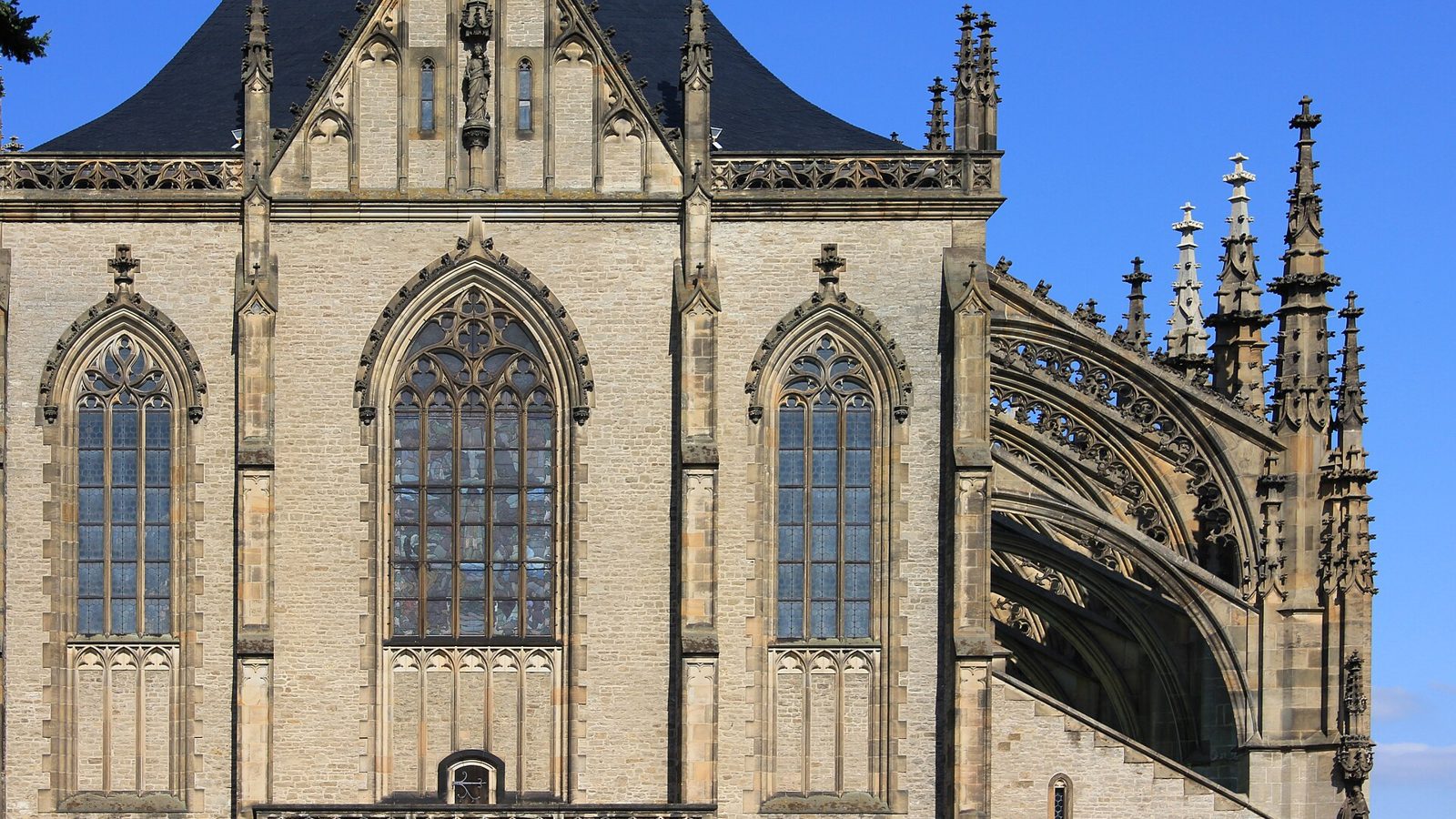
A medieval silver town an hour east of Prague, with a chapel decorated with human bones, a Gothic church topped by a roof like a row of tents and a real mine tunnel under the streets. Most visitors stay for an afternoon. Stay the night and you get the town to yourself.
- Best time to visit: May to June and September
- Daily budget (budget traveller): $60 to $180 USD
- Ideal trip length: 2 to 4 days
Kutná Hora sits in the gentle farmland of Central Bohemia, about 80km east of Prague and less than an hour away by direct train. In the Middle Ages, silver from the hills under the town made it one of the richest places in Europe. The royal mint struck the Prague groschen here, and the people who grew rich from mining paid for St Barbara's Church, a huge Gothic church built to rival anything in Prague. The town and the Sedlec cathedral are now a UNESCO World Heritage Site. Most people know it for the Sedlec Ossuary, a small chapel decorated with the bones of about 40,000 people, including a chandelier made of skulls. Coach tours bring day trippers by the thousand, and most are gone by late afternoon. Stay a night or two and you can walk Barborská street at dusk, have St Barbara's almost to yourself at opening time and drink cheap Czech beer in a back-lane pub. You can also go down a medieval mine in a helmet and miner's coat, mint your own coin at the Italian Court and take cheap trains out to Kolín, Kačina and Žleby. The town is small, safe, cheaper than Prague and easy to walk around, which makes it a good base for a solo traveller who wants a slower few days.
Kutná Hora was once second only to Prague in Bohemia. Silver was found here in the 13th century, a royal mint followed in the Italian Court, and for about two hundred years the town's mines supplied much of Europe's silver. That wealth paid for St Barbara's, the Gothic churches and the stone houses that still line its sloping lanes. Today it is a quiet town of around 20,000 people, and the old town and the Sedlec cathedral are listed together by UNESCO. Most visitors only see the bone chapel and St Barbara's on a coach tour. Stay a few nights and you get the better version: Barborská street empty at 8am, a cheap lunch menu in a local pub, the mine under your feet in the afternoon and the church lit up across the valley after dark. It costs noticeably less than Prague, and everything is close together.
Getting here is easy. Direct trains from Prague's main station take about 50 minutes to an hour and cost around 166 CZK one way. They arrive at Kutná Hora hl.n., on the edge of Sedlec, about 15 minutes' walk from the ossuary. From there, bus 801 or a little shuttle train takes you to the old town. Once you are settled, walk. The centre is small, though hilly, and the walk from St Barbara's to the main square takes 10 minutes. Base yourself near Palackého náměstí for restaurants and buses, or on the Barborská side for views and quiet. Use the trains for Kolín, Čáslav and Žleby, and a bus or bike for Kačina.
Timing matters more than you would expect for such a small place. Ossuary slots sell out on summer days. Hrádek is closed on Mondays, and Saturday weddings can shut St Barbara's for part of the morning. From November to March, the sights open later and close earlier, and some seasonal castles nearby close completely. May, June and September are the best months for walking and day trips, and June usually brings the Royal Silver festival, with costumed parades and markets. The town is very safe and quiet in the evenings, and staff at the sights usually speak English. If you want nightlife, go back to Prague. If you want Gothic stone, good beer and a slow, cheap few days, stay here.
Kutná Hora itinerary
Arrive and see Sedlec
Morning: Take a morning train from Prague to Kutná Hora hl.n. (about 50 minutes). Walk 15 minutes to Sedlec for your booked ossuary slot.
Afternoon: Visit the Sedlec cathedral on the same ticket, then take bus 801 or the shuttle train into town and drop your bag.
Evening: Walk around Palackého náměstí as the day trippers leave, then have dinner and a beer at Pivnice Dačický.
St Barbara's and the royal mint
Morning: Be at St Barbara's at opening time (180 CZK, or use your combined ticket). Then walk back along Barborská street past the saints' statues.
Afternoon: Look into GASK in the Jesuit College, then take the full tour of the Italian Court (around 220-260 CZK) and strike your own coin.
Evening: Walk down into the Vrchlice valley before dark, then come back up to the terrace to see St Barbara's lit up.
Underground silver
Morning: Take the Hrádek 'Way of Silver' mine tour (200 CZK, closed on Mondays). Book ahead and wear shoes with grip.
Afternoon: Do the above-ground silver museum, then wander to the Church of St James, the Stone House and the Stone Fountain.
Evening: Have a cheap dinner in a local pub away from the square, such as U Hrnčíře or V Ruthardce.
Kačina and the countryside
Morning: Take a bus, taxi or bike to Kačina, an Empire-style chateau set in a large landscaped park east of town.
Afternoon: Walk the park paths and visit the chateau if it is open for the season. Pack a picnic.
Evening: Head back for a quiet dinner and an early night in the old town.
Kolín by train
Morning: Take a short train to Kolín. See the main square and the Gothic Church of St Bartholomew above the river.
Afternoon: Visit the old Jewish quarter and synagogue, then walk to the Jewish cemetery. Check opening times before you go.
Evening: Take the train back to Kutná Hora and have dinner near the main square.
Žleby Castle and Čáslav
Morning: Take the train south towards Čáslav and Žleby. The romantic castle at Žleby is mainly open in the warmer months, so check the season first.
Afternoon: Tour the castle and walk in the surrounding park, then stop in Čáslav for coffee on its big square.
Evening: Train back, then have a farewell dinner with svíčková and a glass of Moravian wine.
Slow morning and depart
Morning: Have a last coffee on Barborská while it is still empty, and buy a silver groschen replica or local honey to take home.
Afternoon: Take the shuttle train or bus 801 to the main station for a train to Prague. Check times the day before.
Evening: Arrive in Prague, or carry on east towards Brno or Vienna.
Best neighbourhoods
- Palackého náměstí and the old town: The main square and the lanes around it, with the bus stops, cafés, the information centre and most restaurants. The Italian Court and the Church of St James are a few minutes' walk away. It is the most practical base, and evenings are quiet once the tour groups have left.
- Barborská and St Barbara's: The southern edge of the old town, where the statue-lined Barborská street runs past the Jesuit College to St Barbara's. There are a few guesthouses and cafés here and great views over the Vrchlice valley. It is lovely early and late, and only five to ten minutes from the main square.
- Rejskovo náměstí and the eastern old town: A quieter corner around the Gothic Stone Fountain, with older houses, small pensions and fewer visitors. It is a short walk to the main square and the bus station. It suits you if you want a local feel and lower prices.
- Sedlec: The separate district about 2.5km north-east of the centre, home to the ossuary, the Sedlec cathedral and the old tobacco factory. The main railway station is close by. It is handy for an early ossuary slot or an early train, but it feels like a suburb, and you need the bus or a 30 to 40 minute walk to reach the old town.
- Around the main railway station: Kutná Hora hl.n. stands at the edge of Sedlec, with a few simple guesthouses nearby. It is only worth staying here if you have an early or late train. The ossuary is about 15 minutes on foot, and bus 801 runs into town.
Must-do experiences
- See the Sedlec Ossuary: The bone chapel under the Cemetery Church of All Saints is the reason most people come. The Sedlec area ticket costs 220 CZK (about $10) and includes the Sedlec cathedral. Entry is timed, so book a slot online or at the information centre opposite. Photos are banned inside, and you get about 30 minutes in the lower chapel.
- Stand inside St Barbara's Church: Building started in 1388 and took centuries. Look for the ribbed vaulting, the miners and minters painted on the chapel walls and the flying buttresses outside. Adult entry is 180 CZK (about $8.50), and from April to October it opens 9am to 6pm. Arrive at opening time to have it nearly to yourself.
- Walk Barborská street: The path to St Barbara's runs past the long Jesuit College and a row of Baroque saints' statues on a balustrade above the valley. Walking it is free. The college houses GASK, the Central Bohemian art gallery, which has changing modern exhibitions and is closed on Mondays.
- Mint a coin at the Italian Court: This was the royal mint where the Prague groschen was struck, and later a royal residence. The full guided tour takes about an hour and costs around 220-260 CZK. You see the mint workshops, the royal rooms and the chapel, and can strike your own coin. Fans of Kingdom Come: Deliverance II can book a themed Kuttenberg tour.
- Go down a medieval silver mine: At Hrádek, the Czech Museum of Silver runs 'The Way of Silver', a guided tour of about 90 minutes for 200 CZK. You put on a helmet, a lamp and a miner's coat and walk a 250m medieval gallery. Some passages are about 40cm wide, so skip it if you are claustrophobic. It is closed on Mondays.
- Visit the Sedlec cathedral: The Cathedral of the Assumption of Our Lady and St John the Baptist is a few minutes' walk from the ossuary and is included in the same ticket. It was rebuilt by Santini in his unusual Baroque Gothic style, and it is bright, calm and much quieter than the bone chapel.
- Wander the old town lanes: Walk from the Church of St James past the Stone House, with its carved Gothic gable, to the 15th-century Stone Fountain on Rejskovo náměstí. It is free and takes an hour. The streets follow the twists of the old mine workings, so expect slopes, steps and the odd dead end.
Hidden gems
- The terrace behind St Barbara's at dusk, when the church is lit up and you can see over the Vrchlice valley with no one else around
- The Corpus Christi Chapel under St Barbara's, sometimes on the same ticket, which is easy to miss if you are heading straight for the nave
- The Stone Fountain on Rejskovo náměstí, a twelve-sided Gothic water tank that once stored water for a town that had dug itself dry
- The footpath down into the Vrchlice valley below the Jesuit College, which gives the best free view of the town walls and the church
- The cellar route at the Italian Court, a short, cheap add-on that most coach groups skip
Daily budget
- Accommodation: budget $35 to $55 USD / night (simple pension or budget room), mid-range $80 to $130 USD (3-star hotel on or near the main square), splurge $150 to $250 USD (best rooms in a historic hotel). Kutná Hora has few true hostels, so a single room in a pension is often the cheapest option. A small local fee per night may be added. Book June weekends early.
- Food: budget $15 to $25 USD / day (bakery breakfast, pub lunch menu, supermarket picnic), mid-range $30 to $50 USD (café lunch and a sit-down Czech dinner), splurge $70+ USD (tasting menu or long dinner with wine). A weekday lunch menu costs about 160-220 CZK and a pub main roughly 250-400 CZK. Prices are rough guides.
- Transport: budget $0 to $3 USD / day (walking, bus 801), mid-range $8 to $20 USD (Prague train plus local trains or taxis), splurge $60+ USD (guided day tour or private transfer). The Prague train costs about 166 CZK (around $8) one way. A local bus fare is about 20-30 CZK, paid by contactless card on board.
- Activities: budget $10 to $20 USD / day (ossuary at 220 CZK or the combined ticket at about 360 CZK), mid-range $20 to $35 USD (adding Hrádek at 200 CZK and the Italian Court), splurge $40+ USD (themed or private guided tours). The combined ticket covers the ossuary, the Sedlec cathedral and St Barbara's. Hrádek is closed on Mondays. Barborská street and the valley walks are free.
- Drinks & nightlife: budget $3 to $6 USD (a half litre or two in a local pub), mid-range $10 to $20 USD (a few beers or wines over dinner), splurge $30+ USD (wine bar evening). A half litre of beer costs about 50-65 CZK and a coffee 60-80 CZK. Nightlife means pubs and wine bars, and most close fairly early.
Where to stay
- Social hostel in Old town and around the main station ($35 to $55 USD / night): There are very few true hostels in Kutná Hora, so the budget choice is a simple pension or guesthouse room. Many have shared kitchens or breakfast rooms where you meet other travellers, and you get a single room for not much more than a Prague dorm bed.
- Boutique hotel in Palackého náměstí ($80 to $130 USD / night): Small hotels on and around the main square put you close to the buses, restaurants and the information centre. St Barbara's and the Italian Court are a short walk away.
- Apartment in Barborská and the eastern old town ($60 to $110 USD / night): Apartments in old townhouses give you a kitchen, thick stone walls and a quiet street. Expect steep stairs and no lift, and check how far it is from a bus stop if you have heavy luggage.
- Splurge in Old town ($150 to $250 USD / night): Hotel Zlatá Stoupa is a grand historic hotel near the centre, with large rooms and an old-world feel. It is the most comfortable base for a slow few days.
What to eat
- Polední menu (lunch menu): soup and a main for about 160-220 CZK in pubs on weekdays, the cheapest proper meal in town
- Svíčková: braised beef in a creamy vegetable sauce with bread dumplings and cranberries, on most traditional menus
- Roast pork knee or duck with cabbage and dumplings at Pivnice Dačický, a big, old-fashioned beer hall near the main square
- Czech lager on tap: a half litre costs about 50-65 CZK, and many pubs serve Pilsner Urquell or local Bohemian brews
- Trdelník and koláče: the sweet rolled pastry sold to tourists and the traditional filled buns from local bakeries, which locals actually eat
- Moravian and Bohemian wine by the glass, plus smažený sýr (fried cheese) with tartare sauce as the classic cheap pub meal
Day trips
- Kolín (About 15km north-west, around 15 minutes by train): A busy river town with a big main square, the Gothic Church of St Bartholomew and one of Bohemia's best-preserved Jewish quarters, which includes a synagogue and an old cemetery. Take a frequent train from Kutná Hora hl.n. to Kolín. Check synagogue and cemetery opening times before you go, as they vary by season.
- Kačina Chateau (About 8km north-east of the old town): A large Empire-style chateau in a landscaped English park, with a museum of rural life and agriculture. It makes a peaceful half day after the crowds at Sedlec. Take a regional bus or a taxi, or cycle along quiet country roads. The chateau interiors are mainly open in the warmer months, but the park makes a good walk all year.
- Žleby Castle (About 20km south-east, near Čáslav): A fairy-tale castle rebuilt in a romantic Gothic style, with rich interiors and a park nearby. You can combine it with a coffee on Čáslav's big square. Take a train from Kutná Hora towards Čáslav, then on to Žleby. The castle opens mainly from spring to autumn, so check the season and tour times first.
When to visit
- Spring (April - May): 10-20°C, fresh, with some showery days. Crowds: Moderate, busy on Easter weekends and at the ossuary on May weekends. Good for walking and cheaper rooms. Summer opening hours start in April, and the castles nearby reopen for the season.
- Early summer (June): 20-25°C, long, warm days. Crowds: Moderate, busier on festival weekends. Probably the best month. Long evenings, green valleys and the Royal Silver festival, which is usually held in June.
- High summer (July - August): 23-29°C, warm, with occasional thunderstorms. Crowds: Busy at the ossuary and St Barbara's from late morning, quiet in the evenings. Fine if you book ossuary slots early and visit the big sights at opening time. The cool mine tunnel is a relief on hot days.
- Autumn and winter (September - March): September 15-21°C, cooling to about -3 to 4°C in winter. Crowds: Moderate in September, quiet from November. September is the pick for mild weather and calm streets. Winter is cheap and atmospheric, but hours are shorter, some castles close and the cobbles can be icy.
Entry rules for your passport
Visa rules for the Czech Republic depend on the passport you travel on. Check the official source before you book: European Commission: Schengen visa policy
Getting there
There is no airport in Kutná Hora. Fly into Prague's Václav Havel Airport, take a bus or taxi to Praha hlavní nádraží and catch a direct train east. Trains run all day, and the fastest take about 50 minutes. A standard one-way adult fare is about 166 CZK (around $8), and tickets bought through the PID app can be cheaper. Direct trains stop at Kutná Hora hl.n., on the edge of Sedlec. From there, walk about 15 minutes to the ossuary, take bus 801 into the centre or change to the shuttle train to Kutná Hora město. If your ticket is to město, the shuttle is included. Buses from Prague also run, but the train is usually quicker and more comfortable. If you drive, it takes about an hour from Prague. Czech motorways need an electronic vignette, so buy one online before you use them, then park below St Barbara's or near the centre.
Border checks: non-EU visitors (other than Swiss, Norwegian, Icelandic, Liechtenstein, Andorran, Monegasque, San Marinese and Vatican citizens, and holders of an EU residence permit or long-stay visa) are registered in the EU's Entry/Exit System (EES) instead of getting a passport stamp. On your first crossing, officers take your photo and/or fingerprints, so allow extra time at passport control. ETIAS, the planned travel authorisation, is not in operation yet, so don't pay any website for one.
Getting around
Kutná Hora is in two parts. The old town, with St Barbara's, the Italian Court and Hrádek, is compact and easy to walk, but the lanes are steep and the cobbles uneven. Sedlec, with the ossuary and the main railway station, is about 2.5km north-east. It takes 30 to 40 minutes on foot along ordinary streets. Local bus 801 links the main station, the Sedlec ossuary stop (Sedlec, kostnice) and the town centre. A single fare is about 20-30 CZK, and you can tap a contactless card on the reader inside. A small shuttle train also runs from the main station (Kutná Hora hl.n.) to Kutná Hora město, the station closest to the old town, stopping at Kutná Hora-Sedlec on the way. If you buy your Prague ticket through to Kutná Hora město, the shuttle is included. Taxis wait near the main square, but agree the price first. The town is part of the Prague integrated transport system (PID), so the PID Lítačka app is useful for local tickets. For day trips, trains to Kolín take around 15 minutes, and Čáslav and Žleby are on the line south.
Safety
Kutná Hora is very safe, and crime against visitors is rare. Watch your bag when coach groups crowd the ossuary and the information centre. The main risks are physical: steep, uneven cobbles, wet steps in the churches and the narrow, slippery passages of the Hrádek mine, which is not suitable for anyone with claustrophobia or breathing or mobility problems. The valley paths are unlit, so walk them in daylight. In winter, ice on the slopes can be treacherous. Tap water is safe to drink. The EU emergency number is 112. EU travellers should carry an EHIC and UK travellers a GHIC, and everyone else needs travel insurance with medical cover.
Solo travel tips
- Stay at least one night: Coach groups arrive mid-morning and leave by about 4pm. After that, the town is quiet, the light is good and the lit-up church is yours.
- Book the ossuary first: Ossuary slots are timed and sell out in summer. Choose your slot, then plan your train and the rest of the day around it.
- Buy your train ticket through to město: Prague trains stop at the main station in Sedlec. A ticket to Kutná Hora město includes the shuttle into town, which saves you buying a second ticket.
- Eat the lunch menu: Pubs serve soup and a main at weekday lunchtime for much less than the dinner prices. Make lunch your big meal and have something light in the evening.
- Safety for solo travellers: The main risks are steep cobbles, ice in winter and the tight passages in the mine. Stay on lit streets at night, wear shoes with grip and tell the guide if you feel uneasy underground.
- Meet people on a tour: The Italian Court and Hrádek tours are in small groups and easy places to start a conversation. Pubs with shared tables are another, and locals are friendly once you try a word of Czech.
Cultural etiquette
- Greet people with 'dobrý den' (good day) when you walk into a shop, pub or museum, and say 'děkuji' (thank you).
- Cover your shoulders in the ossuary and churches, and keep your voice down. The ossuary is a consecrated burial place.
- Do not take photos in the ossuary or the Sedlec church. The ban is enforced.
- In pubs, a waiter may keep refilling your beer until you put a beer mat on top of your glass.
- Say 'na zdraví' and look people in the eye when you clink glasses.
- Rounding up or adding about 10% for good table service is normal. Tell the server the total you want to pay rather than leaving cash on the table.
- Do not walk through a church during a service or wedding. Check the door for notices about closures.
Frequently asked questions
How do I get to Kutná Hora from Prague?
Take a direct České dráhy train from Praha hlavní nádraží. The fastest services take about 50 minutes, and a standard one-way adult fare is around 166 CZK (about $8). Direct trains stop at Kutná Hora hl.n., near Sedlec, not in the town. Walk about 15 minutes to the ossuary, take bus 801 into the centre or change to the small shuttle train to Kutná Hora město. Buy your ticket through to město and the shuttle is included.
How many days do I need in Kutná Hora?
One full day covers the ossuary, St Barbara's and a walk through the old town. Two or three nights let you add the Hrádek mine, the Italian Court and quiet evenings after the day trippers leave. Five to seven days works if you use the town as a cheap base for Kolín, Kačina, Žleby Castle and a day back in Prague.
Do I need to book the Sedlec Ossuary in advance?
It is strongly recommended. Entry is by timed slot because the chapel is small. The Sedlec area ticket costs 220 CZK for adults and 150 CZK for students and seniors, and covers the ossuary and the Sedlec cathedral. Book on the official Sedlec website or at the information centre opposite the chapel, and arrive on time. Photos are not allowed inside, and you need to cover your shoulders.
When is the best time to visit Kutná Hora?
May, June and September are the most pleasant months, with mild weather and long days. Weekday crowds are manageable. July and August are warm and the ossuary is at its busiest, so book early slots. Winter is cold and quiet, and opening hours are shorter. In January and February, for example, St Barbara's opens only 10am to 4pm, though there are December markets and you have the town to yourself.
Is there a combined ticket?
Yes. A combined ticket for the Sedlec Ossuary, the Sedlec cathedral and St Barbara's costs about 360 CZK for adults, saving a little compared with buying them separately. The Italian Court and the Hrádek silver museum are run separately and need their own tickets. Hrádek is closed on Mondays.
Is the silver mine tour worth it?
It is if you are fine in tight spaces. The Hrádek 'Way of Silver' tour takes about 90 minutes and costs 200 CZK, plus a small fee for a foreign-language commentary. You wear a helmet and a miner's coat and walk a 250m medieval gallery, with stairs, slippery floors and very narrow, low sections. Book ahead in summer, and choose the above-ground Tour I if you are claustrophobic.
Is Kutná Hora safe for solo female travellers?
Yes. It is a calm, small town where walking alone is normal and the old town is lit at night. Take ordinary care with drinks in pubs and keep your bag close in ossuary crowds. Stay on the lit streets between Sedlec and the centre after dark rather than taking the valley paths.
What entry rules apply to Czechia in 2026?
Czechia is in the EU and the Schengen area. Many non-EU visitors, including those from the UK, US, Canada and Australia, can stay visa-free for up to 90 days in any 180-day period across Schengen. The EU's Entry/Exit System has been fully running since 10 April 2026 and records non-EU travellers' fingerprints and photos at the external border. ETIAS had no announced start date as of late October 2026, and a 2027 launch is widely expected. Check official EU and Czech government sites before you travel.
Tours and activities in Kutná Hora | Kutná Hora in 2 days | Kutná Hora in 3 days | Kutná Hora in 4 days | Kutná Hora in 5 days | Kutná Hora in 7 days
Joy Plus home | Destinations | Itineraries | Activities | Flights | Budget planner | Calendar | Map | Blog | Lifetime access