Destinations / Middle East
Kuwait City, Kuwait travel guide
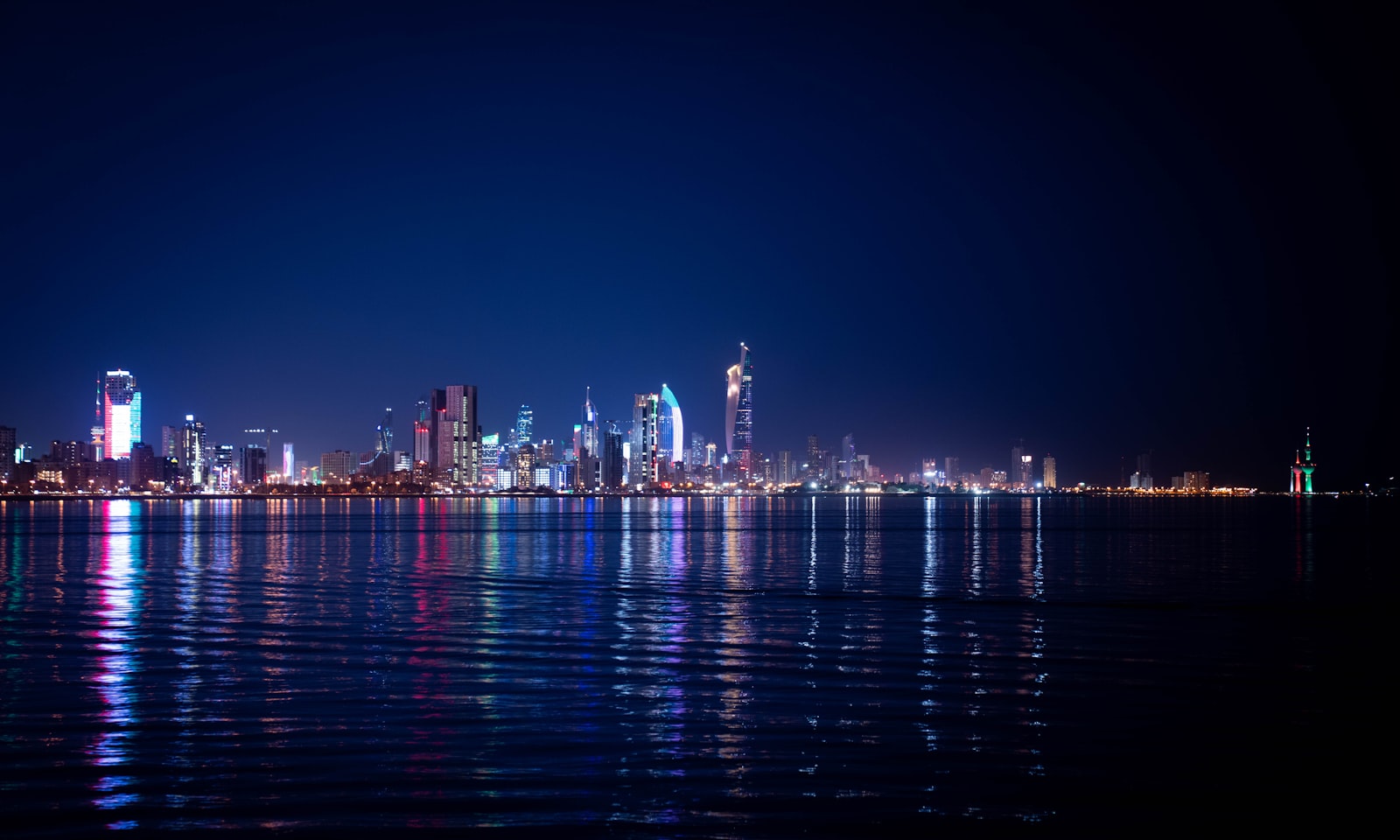
The Gulf's understated capital. Iconic water towers, world-class museums, a long Corniche, and one of the region's best food scenes.
- Best time to visit: November-March
- Daily budget (budget traveller): $70 to $170 USD
- Ideal trip length: 2 to 3 days
Kuwait City is the often-overlooked capital of a small, oil-rich Gulf state, and that low profile is part of its appeal. The landmark Kuwait Towers and a long seafront Corniche meet ambitious cultural projects like the Sheikh Abdullah Al-Salem Cultural Centre, alongside traditional souks and one of the most celebrated food scenes in the Gulf. It's calmer and more local-feeling than its flashier neighbours, with genuine warmth once you scratch the surface. Joy Plus navigates a car-centric city to its museums, souks and waterfront, timing everything around the heat and prayer rhythms.
Kuwait City does not perform for you. There is no skyline stunt, no beach-club scene, no neon strip. What you get is a Gulf capital that works for the people who live in it: families on the Corniche at 9pm, men trading dates and cardamom in Souk Al-Mubarakiya, teenagers queuing for karak chai at midnight. The icon is Kuwait Towers, three slim spires with a blue-tiled sphere, and from the observation deck you see the whole peninsula spread along the Gulf. After that, the city rewards curiosity more than checklists.
The surprise is the depth. The Sheikh Abdullah Al-Salem Cultural Centre is one of the biggest museum complexes in the region, covering space, natural history and Islamic science under one roof. Tareq Rajab Museum holds a private collection of manuscripts, jewellery and textiles in a quiet villa in Jabriya. The Grand Mosque runs free guided tours. And the food, from Kuwaiti machboos and balaleet to Iranian bakeries and Gulf hammour, is the real headline. Alcohol is illegal everywhere, so the social life runs on coffee, karak, shisha and very long dinners.
Plan around three things: heat, prayer and car distances. October to April is comfortable; June to September is genuinely dangerous midday. Friday morning is quiet, and many venues pause for prayer. The sights are spread along the coast with no walkable chain between them, so Careem and Uber are your friends (KWD 1.5 to 3 for most cross-town hops). Cluster by area, do the outdoors at dawn or sunset, and use the middle of the day for museums and malls. Two to three days covers the core, five to seven lets you add Failaka Island, Al Jahra and a proper slow café life. Prices below are 2026 estimates in Kuwaiti dinar (KWD), which is roughly US$3.25 per dinar.
How many days in Kuwait City?
For Kuwait City, we recommend 2 to 3 days. With more time, add a day trip to Al Khiran.
| Trip length | What you'll see | Itinerary |
|---|---|---|
| 2 days · Recommended | Sharq and Kuwait Towers at sunset; Grand Mosque and Mubarakiya | Kuwait City in 2 days |
| 3 days · Recommended | Adds: Museum day at the Cultural Centre | Kuwait City in 3 days |
| 4 days | Adds: Failaka Island | Kuwait City in 4 days |
| 5 days | Adds: Al Jahra and Red Fort | Kuwait City in 5 days |
| 7 days | Adds: Salmiya, malls and the Scientific Center; Tareq Rajab Museum | Kuwait City in 7 days |
Kuwait City itinerary
Land, Sharq and Kuwait Towers at sunset
Morning: Land at KWI, grab a Careem or Uber to Sharq (KWD 4-6, 25 min). Drop bags, nap if you came overnight.
Afternoon: Walk Souk Sharq and its marina, then the seafront promenade toward Green Island. Wait until the heat breaks, 4pm is plenty early.
Evening: Go up Kuwait Towers for sunset and city lights. Dinner at Mais Alghanim: machboos, murabyan (shrimp rice) and gers ogaily biscuits.
Grand Mosque and Mubarakiya
Morning: Take the free Grand Mosque tour (mornings only, check the day, closed Friday mornings). Women are lent an abaya and scarf.
Afternoon: Late lunch in Souk Al-Mubarakiya: Iranian flatbread, kebabs, dates. Shops lull between about 1 and 4pm, so retreat to your hotel or a café.
Evening: Return when the souk reopens. Spice shops, oud, antiques, then karak chai and a sweet like khabees or luqaimat.
Museum day at the Cultural Centre
Morning: Sheikh Abdullah Al-Salem Cultural Centre at opening. Start with the Natural History and Space halls, then the Arab Islamic Science museum.
Afternoon: Lunch in the complex, then continue until early afternoon. It is big, so do not try everything.
Evening: Sunset at Al Shaheed Park, the city's green roof-park. Dinner in Hawalli for casual local food.
Failaka Island
Morning: Early ferry from Ras Salmiya (book ahead and bring your passport). About 1 hr to 1.5 hrs each way depending on the boat.
Afternoon: Greek and Bronze Age ruins, abandoned villas, beach time. Keep water and sun cover, shade is thin.
Evening: Ferry back, grilled fish dinner in Salmiya, early night.
Al Jahra and Red Fort
Morning: Ride to Al Jahra (35 to 45 min, KWD 6-9 by app). Visit the Red Fort (Qasr Al Ahmar), a clay and stone relic of the 1920 battle.
Afternoon: Local lunch in Jahra, then the nature reserve for birdwatching if it's winter.
Evening: Back to Salmiya. Stroll Marina Crescent and have a shisha or dessert with the sea breeze.
Salmiya, malls and the Scientific Center
Morning: Slow breakfast of balaleet, then the Scientific Center aquarium in Salmiya.
Afternoon: Malls are real social spaces here: Marina Mall, The Avenues or 360 Mall for air-conditioned wandering and shopping.
Evening: Dinner at Freej Swaileh for traditional Kuwaiti dishes. Late karak and a last walk by the water.
Tareq Rajab Museum and depart
Morning: Tareq Rajab Museum in Jabriya, which has Islamic calligraphy, jewellery and costumes in a villa. Check opening hours first.
Afternoon: Last coffee and pastries, souvenir dates and spices from Mubarakiya or a mall.
Evening: Careem to KWI, arriving 3 hours before international departures.
Best neighbourhoods
- Sharq & the Corniche: The waterfront heart with Kuwait Towers, Souk Sharq and the seafront promenade.
- Kuwait City Centre (Mubarakiya): The historic souk district, the city's most atmospheric quarter for food and shopping.
- Salmiya: A buzzing shopping and dining suburb with malls and the Scientific Center.
- Dasman & Bnaid Al Qar: Coastal districts near the towers and cultural centres.
- Hawalli: A dense, lively residential and dining area popular for casual eats.
Must-do experiences
- Kuwait Towers: The country's icon, with an observation deck and revolving views over the Gulf.
- Souk Al-Mubarakiya: The historic market for spices, dates, antiques and superb traditional food.
- Sheikh Abdullah Al-Salem Cultural Centre: One of the world's largest museum complexes, spanning science, history and the arts.
- Grand Mosque tour: Kuwait's largest mosque, open to visitors on free guided tours.
- Walk the Corniche: A long seafront promenade ideal at sunset, with beaches and cafés.
- Tareq Rajab Museum: A private collection of Islamic art, manuscripts and jewellery in a quiet villa.
Hidden gems
- Failaka Island, a short ferry ride with Bronze Age and Greek ruins and abandoned villages.
- The traditional dhow harbour and the Maritime Museum.
- Hidden Bahraini and Iranian eateries tucked into Mubarakiya's lanes.
- The Al Shaheed Park, a vast green roof-park with museums and walking trails.
Daily budget
- Accommodation: budget KWD 15-25 / night (budget hotel or simple studio), mid-range KWD 45-80 (four-star double in Salmiya or Sharq), splurge KWD 120+ (Four Seasons Kuwait at Burj Alshaya, JW Marriott, Jumeirah Messilah Beach). True hostels barely exist. Salmiya gives the best value, Sharq the best location for the towers and souks.
- Food: budget KWD 6-10 / day (shawarma, falafel, Iranian bread, karak), mid-range KWD 15-25 (one sit-down machboos or seafood dinner), splurge KWD 40+ (hotel fine dining, seafood by the kilo). Lunch at a local restaurant like Mais Alghanim or Freej Swaileh is usually KWD 5-9 a head. Many places have separate family and singles sections.
- Transport: budget KWD 3-6 / day (a few Careem or Uber hops), mid-range KWD 8-15 (apps plus a few longer rides), splurge KWD 30+ (private driver for a half or full day). Most cross-town rides are KWD 1.5 to 3. Fuel is among the cheapest in the world, so a rental car (about KWD 12-20 / day) is cheap if you can handle the driving.
- Activities: budget KWD 3-8 / day (Grand Mosque is free, Corniche is free, one small museum), mid-range KWD 10-20 (Kuwait Towers, Cultural Centre, Scientific Center), splurge KWD 40+ (private Failaka boat or guide, dhow charter). Many Kuwaiti museums are low-cost or free. Check opening days, as Friday mornings are dead.
- Drinks & nightlife: budget KWD 1-2 (karak chai, juice, Arabic coffee), mid-range KWD 4-8 (specialty coffee, shisha, mocktail at a seaside café), splurge KWD 15+ (hotel lounge, premium shisha, dessert crawl). No alcohol anywhere, by law. Nightlife is café-based and peaks 9pm to 1am, especially at Marina Crescent in Salmiya and around Souk Sharq.
Where to stay
- Social hostel in Salmiya (KWD 15-30 / night): Kuwait has almost no real hostels. The budget social option is a simple hotel or studio off Salem Al Mubarak Street, with cafés, malls and the Marina Crescent waterfront close by.
- Boutique hotel in Salmiya or Sharq (KWD 55-95 / night): Design-led four-stars such as Symphony Style Hotel give comfort, a pool and a short ride to Sharq or Kuwait Towers. Best balance of price and location.
- Apartment in Salmiya near Marina Crescent (KWD 30-60 / night): Hotel apartments with a kitchenette suit stays of 4+ nights. You are within walking distance of cafés, supermarkets and the sea breeze.
- Splurge in Sharq or the beach strip (KWD 120-220 / night): Four Seasons Kuwait at Burj Alshaya, JW Marriott Kuwait City or Jumeirah Messilah Beach Hotel: top service, spas and the city's best hotel dining.
What to eat
- Machboos (spiced rice with meat or fish), Kuwait's national dish
- Fresh Gulf seafood and grilled hammour
- Iranian and Bahraini street food in Souk Al-Mubarakiya
- Kuwait's renowned café and dessert scene
Day trips
- Failaka Island (About 20km offshore, 1 to 1.5 hrs by ferry): Bronze Age and Greek ruins, abandoned villas and quiet beaches. Go early in winter, shade is limited. Ferry from Ras Salmiya terminal, about KWD 5-10 return (check the current operator and book ahead). Bring your passport.
- Al Jahra and the Red Fort (About 35km, 35-45 min by car): The clay-brick Red Fort (Qasr Al Ahmar), Jahra's local markets and the nature reserve with winter birdlife. Careem or Uber from central Kuwait City, KWD 6-9 each way. Arrange return ahead, apps can be scarce.
- Al Khiran (About 90km south, about 1 hr by car): Kuwait's southern coast with calm water, resort-style beaches and weekend family life. Best Nov to March. Rental car is easiest (KWD 12-20 / day). A private driver is KWD 25-35 round trip.
When to visit
- Winter (November - March): 10-24°C, dry and sunny, cold nights in Jan, occasional short rain and dust. Crowds: Moderate, busiest around National Day (25 Feb) and weekends. The best window by far. Corniche, souk and Failaka are all comfortable. Note Ramadan runs about 8 Feb to 9 Mar in 2027, so daytime dining is restricted and hours shift.
- Spring (April - May): 26-38°C, rising fast, dust storms possible. Crowds: Low to moderate. Good in April, hot by mid-May. Do outdoor sights before 10am or after 5pm. Eid al-Adha lands about 16 or 17 May in 2027 and closes much of the city for a few days.
- Summer (June - September): 42-50°C, humid on the coast, overnight lows still 30°C+. Crowds: Low, locals travel abroad. Skip it unless you're only here for air-conditioned museums and malls. Walking outdoors midday is a health risk. Hotels are cheapest, but the city is half empty.
- Autumn (October): 28-36°C early, cooling through the month. Crowds: Low, picking up in November. A shoulder bargain. The sea breeze is back by evening, the Corniche refills, and hotels have not yet hiked winter prices.
Entry rules for your passport
Visa rules for Kuwait depend on the passport you travel on. Check the official source before you book: Kuwait Ministry of Interior
Getting there
Kuwait International Airport (KWI) is about 16km south of the centre. The Foster + Partners Terminal 2 handles many international airlines, while Kuwait Airways and Jazeera Airways use their own terminals, so check yours before the ride. A Careem or Uber to Sharq or Salmiya is usually KWD 4-7 and takes 20 to 35 min depending on traffic. Airport taxis cost about KWD 6-10. Nationals on Kuwait's eligible list, including the UK, the US, Canada, Australia and most EU states, can get a tourist visa online through the official Kuwait portal before travel or on arrival at Kuwait International Airport, so check your eligibility and the current fee. Jazeera Airways links Kuwait to Dubai, Istanbul, Cairo and many South Asian cities cheaply. Remember: alcohol and drones are a serious customs problem, so leave both at home.
Getting around
Kuwait City is built for cars, with sights spread along the coast and few walkable links, so taxis and ride apps (Uber, Careem) are the easiest way around and are reasonably priced. Renting a car gives the most freedom and the roads are good, though traffic can be heavy. Public buses exist but are slow and aimed at commuters. Walking works within Mubarakiya souk and along the Corniche. Plan around the fierce summer heat and brief prayer-time closures at some venues.
Safety
Check official advice before booking: a war between the US and Iran began on 28 February 2026 and Iran has struck targets in Gulf states. An agreement was announced in June, but strikes resumed in July. Airports have reopened and airlines are flying scheduled services, though flights can still be cancelled at short notice. The US raised its advice for the Gulf states to 'Reconsider travel' in March 2026, and European regulators have issued an advisory for this airspace. Kuwait's international airport has been hit several times, including a drone strike on a passenger terminal on 3 June 2026 that killed one person and closed the airport for a time, so check it is operating. Kuwait has very low crime and Kuwait City feels safe day and night, including for solo travellers. It is a conservative country, so dress modestly with shoulders and knees covered, and note that alcohol is strictly illegal with serious penalties. The biggest practical hazard is traffic, as local driving can be aggressive. Solo female travellers are generally safe but may attract attention and the social scene is family-oriented rather than backpacker-driven. Respect Islamic customs, especially during Ramadan, when eating in public during daylight is prohibited.
Solo travel tips
- Ask for the right section: Many restaurants split into family and singles sections. Solo women should sit in the family section, where it is calmer and more welcoming. Solo men may be directed to the singles area.
- Use ride apps, not street hails: Careem and Uber show a fixed fare and driver details. Share your trip with a friend and sit in the back. Cash taxis can quote tourist prices.
- Do outdoor sights at dawn and dusk: The Corniche is best from 6am to 8am or after 5pm. Midday is for museums, malls and cafés, and the city is built for that rhythm.
- Build a café routine: Kuwait's social life is cafés. Pick one near your hotel in Salmiya or Sharq, go daily, and you will end up chatting to locals. Karak chai is KWD 0.25 to 0.5 at a stall.
- Solo female travellers: Kuwait is very safe, but expect stares. Cover shoulders and knees, carry a light scarf, avoid empty roads late at night, and decline lifts from strangers. Your hotel can arrange trusted drivers.
- Meet people through guided stops: A Grand Mosque tour, a Failaka ferry day or a small-group walking tour are the easiest ways to meet others. Locals are curious about visitors and often invite you for coffee.
Cultural etiquette
- Dress modestly: shoulders and knees covered for everyone, loose clothing for women. Carry a light scarf for mosques.
- Alcohol and pork products are illegal or restricted. Never try to bring alcohol in, penalties include jail and deportation.
- Friday is the holy day and weekends are Friday and Saturday. Many venues open late or close on Friday mornings.
- Shake hands only if the other person offers, especially across genders. A hand on the heart is a safe, respectful greeting.
- Accept Arabic coffee when offered and drink with your right hand. Shake the cup gently from side to side when you want to stop.
- During Ramadan, do not eat, drink or smoke in public in daylight. Many restaurants only reopen around sunset.
- Ask before photographing people, especially women, and never photograph military, oil or government sites.
Frequently asked questions
How many days do you need in Kuwait City?
Two to three days covers the highlights comfortably. One day takes in the waterfront landmarks, the Kuwait Towers, the Corniche and Souk Al-Mubarakiya, plus a Grand Mosque tour. A second day suits the impressive cultural centres and museums, such as the Sheikh Abdullah Al-Salem Cultural Centre and Al Shaheed Park, along with the city's excellent restaurants. A third day allows a trip to Failaka Island or a slower pace. Kuwait is compact, so it also works well as a short Gulf stopover.
Is Kuwait City safe for solo travellers?
Yes. Kuwait has very low crime and the city feels safe by day and night, with solo travellers rarely encountering problems beyond aggressive local driving. As a conservative country, the key is respecting customs: dress modestly, avoid alcohol (which is strictly illegal), and be mindful during Ramadan. Solo female travellers are generally safe but the scene is family-oriented rather than social or backpacker-focused, so it suits independent, low-key travel. Using ride-hailing apps and dressing conservatively make moving around comfortable and trouble-free.
When is the best time to visit Kuwait City?
November to March, when temperatures are a pleasant 14-25°C and ideal for the Corniche, souk and outdoor sightseeing. This cooler season is by far the most comfortable and includes National and Liberation Day celebrations in February. Spring and autumn shoulder months are warm but manageable. Avoid the summer (June-September), when Kuwait records some of the hottest temperatures on earth, regularly above 45°C and occasionally near 50°C, making daytime outdoor activity genuinely dangerous and confining you to air-conditioned spaces.
Can you drink alcohol in Kuwait?
No. Alcohol is strictly illegal throughout Kuwait, one of the region's toughest stances, with no bars, clubs or shops and significant penalties for possession, consumption or importation, which applies to visitors as well as residents. Do not attempt to bring any alcohol into the country, including in duty-free, as it will be confiscated and can lead to serious trouble. Kuwait's social life instead revolves around its excellent restaurant, café and dessert scene, which is among the best in the Gulf, so plan an alcohol-free trip.
Do you need a visa to visit Kuwait?
Many nationalities can obtain a Kuwait visa, historically via an e-visa or visa on arrival, though policies have changed at times, so it's essential to check the current rules for your passport well before travel. You'll typically need a passport valid for at least six months, proof of onward travel and accommodation, and sometimes a local sponsor or hotel booking. Visit visas also require health insurance from approved local insurers, arranged as part of the visa application. GCC citizens don't need a visa. Because Kuwait's entry requirements can be less predictable than other Gulf states, confirm the latest official guidance before booking.
Is Kuwait City worth visiting?
Yes, if you appreciate a quieter, more local-feeling Gulf city over flashy mega-attractions. Kuwait City offers iconic architecture in the Kuwait Towers, genuinely world-class museums and cultural centres, an atmospheric historic souk, a long seafront Corniche, and arguably the best and most authentic food scene in the region. It's calmer and less touristy than Dubai or Doha, which appeals to travellers wanting substance over spectacle. As a short break or a Gulf stopover it rewards curiosity, though it suits cultural and culinary visitors more than party-seekers.
What is Souk Al-Mubarakiya?
Souk Al-Mubarakiya is Kuwait City's historic central market and its most atmospheric quarter, a centuries-old maze of covered lanes selling spices, dates, perfumes, textiles, gold, antiques and household goods. Beyond shopping, it's one of the best places to eat in the city, with traditional Kuwaiti, Iranian and Bahraini restaurants and street food stalls drawing locals day and night. Restored but still authentic, it offers a glimpse of old Kuwait before the oil boom and is the natural place to soak up local life over a meal or coffee.
Tours and activities in Kuwait City | Kuwait City in 2 days | Kuwait City in 3 days | Kuwait City in 4 days | Kuwait City in 5 days | Kuwait City in 7 days
Joy Plus home | Destinations | Itineraries | Activities | Flights | Budget planner | Calendar | Map | Blog | Lifetime access